Disclosure: As an Amazon Associate, reviewstook.com earns from qualifying purchases. Links to Amazon on this page are affiliate links; they cost you nothing extra.
Most people shopping for a home printer are really deciding between three things: how much they print, whether they need color, and how they want to pay for ink or toner over the years. The model name matters less than getting those three answers right.
This guide covers seven printers across the main types: refillable ink tank, everyday color inkjet, compact monochrome laser, and color laser. Each entry says who it suits, where it falls short, and who should look elsewhere. We built the list from published specifications and manufacturer documentation, and we have not used these printers ourselves, so confirm details on each product page before you buy.
Quick verdict: For most households that print often, the Epson EcoTank ET-2850 is the safest starting point, because ink tanks tend to lower the cost per page. If you only print text, the Brother HL-L2350DW is the simple choice.
Last updated: October 30, 2026. How we pick printers.

How We Choose These Printers
We do not test printers ourselves. We compare manufacturer specifications, published page yields and ink policies, and what buyers commonly report about setup and reliability, then pick one model for each type and need. Every entry says who it suits and who should skip it. Prices change daily, so we do not list them: use the button on each entry to see the current price and availability on Amazon.
In this guide
Quick Picks
| Pick | Printer | Type | Best for |
|---|---|---|---|
| Best for High-Volume Printing | Epson EcoTank ET-2850 | Ink tank all-in-one | Families who print a lot and want low running costs |
| Best for Home Offices | HP OfficeJet Pro 9125 | Color inkjet all-in-one | Home offices that scan multi-page documents |
| Best for Occasional Use | Canon PIXMA TR4720 | Color inkjet all-in-one | Light, occasional printing in a small space |
| Best Compact Color | Brother Work Smart 1360 | Color inkjet all-in-one | Compact everyday color printing |
| Best for Text Only | Brother HL-L2350DW | Monochrome laser | Text-only printing: forms, school work, shipping paperwork |
| Best Laser All-in-One | Brother MFC-L2820DW | Monochrome laser all-in-one | Black-and-white offices that also scan and fax |
| Best Color Laser | HP Color LaserJet Pro MFP 3301sdw | Color laser all-in-one | Sharp text plus color for a busy workspace |
The 7 Best Printers for Home Use
Top pick
1. Epson EcoTank ET-2850: Best for High-Volume Printing
The EcoTank line replaces small cartridges with refillable ink tanks, which is why it keeps coming up for households that print every week. It is an all-in-one, so it also scans and copies, and it connects over wireless.
Good for: Students, families and anyone who prints enough pages that cartridge refills would feel constant. Strengths: Ink tanks usually mean a lower cost per page than cartridge printers, and a full set of ink goes a long way. Weaknesses: The printer itself usually costs more up front than a basic cartridge model, and like any inkjet it can clog if it sits unused for weeks. Skip it if you print a handful of pages a month; the savings never catch up with the higher entry cost.
Best for remote workers who scan contracts and receipts
2. HP OfficeJet Pro 9125: Best for Home Offices
A color inkjet all-in-one built around a document feeder and two-sided printing.
Good for: Remote workers who scan contracts and receipts. Strengths: Automatic duplex printing and a feeder speed up longer jobs. Weaknesses: Tied to the manufacturer’s ink program; check the cartridge policy first. Skip it if you print rarely or want third-party ink.

3. Canon PIXMA TR4720: Best for Occasional Use
A small, plain color inkjet all-in-one for people who want the basics: print, copy, scan. It does not try to be an office workhorse, which is the point.
Good for: A spare room, a dorm or an apartment where the printer comes out a few times a month. Strengths: Compact footprint and a simple feature set. Weaknesses: Small starter cartridges and a modest feature list mean it is not suited to heavy use. Skip it if you print daily; a tank or laser model will cost less over time.
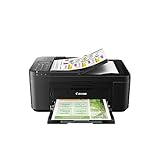

4. Brother Work Smart 1360: Best Compact Color
A compact color inkjet all-in-one that prints, scans and copies, from Brother’s Work Smart line.
Good for: Households that want occasional color without a bulky machine. Strengths: Small size and a basic, easy feature set. Weaknesses: Cartridge refills add up if volume grows. Skip it if you need a document feeder; check the product page.


Best for homework, forms, tax paperwork and shipping documents
5. Brother HL-L2350DW: Best for Text Only
A compact monochrome laser printer with wireless and automatic two-sided printing. It prints text only, but it does that quietly and reliably, and toner does not dry out the way ink can.
Good for: Homework, forms, tax paperwork and shipping documents. Strengths: Toner keeps for long stretches between uses, and text comes out crisp. Weaknesses: No color, and it does not scan or copy. Skip it if you ever print photos or colored charts, or you need a scanner.


Best for freelancers and small sellers who live on paperwork
6. Brother MFC-L2820DW: Best Laser All-in-One
A compact monochrome laser all-in-one that prints, copies, scans and faxes, with two-sided printing.
Good for: Freelancers and small sellers who live on paperwork. Strengths: Laser text quality with copy, scan, fax and duplex in one body. Weaknesses: No color, and larger than a compact inkjet. Skip it if color matters or desk space is tight.


Best for a home office printing reports and charts
7. HP Color LaserJet Pro MFP 3301sdw: Best Color Laser
A current color laser all-in-one from HP’s Color LaserJet Pro line with wireless and two-sided printing.
Good for: A home office printing reports and charts. Strengths: Laser text quality with color, and prints resist smearing. Weaknesses: Color toner sets are expensive and the body is big. Skip it if you mostly print black-and-white.

What a Printer Really Costs Over Three Years
The sticker price is only the start. Your own figures will differ, so check price on Amazon for the models you are comparing and use our cost-per-page guide.
Which Type Fits You
Print color or photos often: choose an ink tank or a photo-oriented inkjet. Print text in batches or rarely: choose a monochrome laser. Print a few pages a month: choose a cheap inkjet, or print elsewhere. Read types of printers explained and printer terms explained if any of the terms above are new.
Best Picks by Category
These labels group the picks by use case. They are not hands-on test results.
- Top rated: Canon PIXMA TR4720: Best for Occasional Use — check price on Amazon.
- Most reviewed: Brother HL-L2350DW: Best for Text Only — check price on Amazon.
- Best value: Canon PIXMA TR4720: Best for Occasional Use — budget tier; check price on Amazon.
- Lowest price: Brother Work Smart 1360: Best Compact Color — budget tier; check price on Amazon.
- Premium option: Brother MFC-L2820DW: Best Laser All-in-One — premium tier; check price on Amazon.
Price, Rating and Review Comparison
The table groups the picks by price tier. Prices change often, so confirm the current price on Amazon.
| Product | Price | Rating | Ratings | Price tier |
|---|---|---|---|---|
| Brother Work Smart 1360: Best Compact Color | Check price on Amazon | n/a | n/a | Budget |
| HP Color LaserJet Pro MFP 3301sdw: Best Color Laser | Check price on Amazon | n/a | n/a | Budget |
| Canon PIXMA TR4720: Best for Occasional Use | Check price on Amazon | n/a | n/a | Budget |
| Epson EcoTank ET-2850: Best for High-Volume Printing | Check price on Amazon | n/a | n/a | Mid-range |
| HP OfficeJet Pro 9125: Best for Home Offices | Check price on Amazon | n/a | n/a | Mid-range |
| Brother MFC-L2820DW: Best Laser All-in-One | Check price on Amazon | n/a | n/a | Premium |
| Brother HL-L2350DW: Best for Text Only | Check price on Amazon | n/a | n/a | n/a |
How Much Feedback Backs Each Rating
A high average from a handful of ratings is weaker evidence than a slightly lower average from thousands. Here is how the sample size looks for each pick.
How to Choose a Home Printer
Start with pages per month
Under about 20 pages a month, a cheap cartridge inkjet or a monochrome laser is fine. Somewhere around 50 to 100 pages a month, running cost starts to matter more than the purchase cost. Above that, an ink tank or a laser usually wins.
Decide whether you need color at all
Color is the single biggest driver of running cost. If you print color a few times a year, a monochrome laser plus the occasional trip to a print shop is often cheaper than owning a color printer.
Compare cost per page, not the box
Divide the replacement ink or toner cost by the rated page yield for that cartridge. The result is your cost per page. Use the real figures from the product page, and remember that rated yields assume a standard amount of coverage on the page.
Check what comes in the box
Some printers ship with starter cartridges that are only partly filled, so you may buy replacements within weeks. Others ship with full sets of ink. The product page usually states which.
Look at the connection and the scanner
Wireless is standard now, but confirm support for the way you print: from a phone, from a Mac, or from a shared network. If you scan stacks of paper, look for an automatic document feeder rather than a flatbed alone.
Which Printer Fits Which Situation
- A family that prints school work every week: the Epson EcoTank ET-2850 for its low running cost.
- A remote worker who scans contracts: the HP OfficeJet Pro 9125 for its feeder and two-sided printing.
- Text only, rarely used: the Brother HL-L2350DW, because toner does not dry out.
- Small space, a few pages a month: the Canon PIXMA TR4720 or the Brother Work Smart 1360.
- A home office that needs color and sharp text: the HP Color LaserJet Pro MFP 3301sdw.
Common Mistakes When Buying a Printer
- Choosing by the cheapest sticker and ignoring ink or toner cost, which usually ends up costing far more than the printer itself.
- Buying a color printer when you print color rarely.
- Letting an inkjet sit unused for weeks, which is how nozzles clog. Print a test page now and then.
- Not reading the ink policy of the brand, including whether third-party cartridges are supported.
- Ignoring size. Laser all-in-ones are noticeably bigger than compact inkjets.
- Assuming the starter ink is a full set.
Choosing a Home Printer by How You Actually Print
The seven printers in this guide look similar on a shelf but behave very differently over three years of use. The decision that matters most is not the brand but how much you print, whether you need color and how you feel about buying ink or toner. This section is a framework for that decision. As with all our guides, it is built from product listings and manufacturer information, not our own testing, so confirm details on each product page.
Start with a realistic page count
Think about a typical month. Do you print a handful of pages, a few dozen or hundreds? A household that prints a few pages a month is best served by a low-cost printer that tolerates sitting idle. A household with students and a home office that prints every week benefits from a printer with a low cost per page. The page count changes which printer is cheapest overall, which is why a printer that looks expensive on day one can be the cheapest by year three.
Cost per page, explained
Cost per page is the price of a set of ink or toner divided by the number of pages it prints (its page yield). Cartridge inkjets usually have the highest cost per page, ink tank printers such as the Epson EcoTank ET-2850 generally have the lowest for color and mixed printing, and monochrome lasers such as the Brother HL-L2350DW and MFC-L2820DW are typically cheap per page for black text. To compare two printers, look up the replacement ink or toner price and the yield on the product page and do the division. Be cautious with starter cartridges: the ink that comes in the box is often only partly filled, so the first refill arrives sooner than you expect.
An illustrative example
Check price on Amazon and the yields for the models you are considering and plug them in.
Ink tank, cartridge inkjet or laser?
Ink tank: higher price, lowest running cost for color and photos, best for steady use. Ink can dry in the nozzles if the printer sits idle for weeks, so print something occasionally. Cartridge inkjet: low purchase price, higher running cost, best for occasional use and for people who want color without a big outlay. Monochrome laser: crisp black text, fast, and toner does not dry out, so it suits occasional paperwork and documents. Color laser: laser text quality with color, but a bigger body and expensive toner sets. Our ink tank vs laser and inkjet vs laser guides compare them more closely.
Do you need scanning and copying?
All-in-one printers add a scanner and copier. They suit home offices where you sign and return documents. If you only print, a print-only laser like the HL-L2350DW is smaller and cheaper. If you scan multi-page documents often, a printer with an automatic document feeder saves time; the HP OfficeJet Pro 9125 is built around one. See printers with a document feeder.
The Seven Printers in Depth
Epson EcoTank ET-2850: Best for High-Volume Printing
The EcoTank line replaces small cartridges with refillable ink tanks, and the ET-2850 is a wireless all-in-one that prints, scans and copies. The appeal is the low cost per page and the long gap between refills. The trade-off is a higher purchase price than a basic cartridge model, and like any inkjet it can clog if it is not used for a long time. It suits households that print weekly, especially students and families, and people who print in color. See our EcoTank printers and how to refill an ink tank printer.
HP OfficeJet Pro 9125: Best for Home Offices
A color inkjet all-in-one built around a document feeder and two-sided printing, which speeds up scanning contracts and printing longer documents. Check HP’s ink program and cartridge policy first, since printers tied to a manufacturer’s ink subscription or program may restrict third-party ink. It suits remote workers who scan and print documents regularly.
Canon PIXMA TR4720: Best for Occasional Use
A small, plain color inkjet all-in-one for people who want the basics. It does not try to be an office workhorse. The compact footprint suits a dorm or an apartment, and the small starter cartridges and modest feature list mean it is not a good fit for heavy use. If you print daily, a tank or laser model will cost less over time.
Brother Work Smart 1360: Best Compact Color
A compact color inkjet all-in-one from Brother’s Work Smart line that prints, scans and copies. The small size is the point for households that want occasional color without a bulky machine. Cartridge costs add up if your volume grows, and the listing does not mention a document feeder, so check the product page if you need one.
Brother HL-L2350DW: Best for Text Only
A compact monochrome laser with wireless and automatic two-sided printing. It prints text only, but it does that quietly and reliably, and toner keeps for long stretches between uses. It suits homework, forms, tax paperwork and shipping documents. It does not scan or copy, and it cannot print color or photos.
Brother MFC-L2820DW: Best Laser All-in-One
A compact monochrome laser all-in-one that prints, copies, scans and faxes, with two-sided printing. It suits freelancers and small sellers who live on paperwork and want one machine for everything in black and white. It is larger than a compact inkjet and does not print in color.
HP Color LaserJet Pro MFP 3301sdw: Best Color Laser
A current color laser all-in-one with wireless and two-sided printing. It suits a home office that prints reports and charts and wants prints that resist smearing. Color toner sets are expensive and the body is big, so it is not for people who mostly print black and white.
Which Printer for Which Household
| Household | Best match | Why |
|---|---|---|
| Students and families who print weekly | Epson EcoTank ET-2850 | Lowest cost per page for mixed printing |
| Remote worker scanning documents | HP OfficeJet Pro 9125 | Document feeder and duplex |
| Dorm or apartment, occasional use | Canon PIXMA TR4720 | Compact and simple |
| Small color printer on a small desk | Brother Work Smart 1360 | Compact color all-in-one |
| Text-only paperwork | Brother HL-L2350DW | Crisp text, toner keeps |
| Freelancer with lots of paperwork | Brother MFC-L2820DW | Laser all-in-one with fax |
| Home office needing color documents | HP Color LaserJet Pro MFP 3301sdw | Color laser quality |
Hidden Costs Beyond the Price Tag
- Ink and toner: the biggest cost over time. Compare yields and prices.
- Manufacturer ink programs: subscriptions can lower the price per page for some users, but may restrict ink choices and require an account. Read the terms.
- Paper: photo paper, cardstock and labels cost more than plain paper. See our paper picks.
- Replacement parts: drums and fusers in lasers and maintenance boxes in tank printers wear out eventually.
- Wasted ink: inkjets use ink to clean the nozzles, especially after sitting idle.
Keeping a Home Printer Working
- Print something every week or two on inkjets so the nozzles do not dry out. A short color test page is enough.
- Keep paper dry and flat, and fan it before loading to avoid jams.
- Use the right paper type setting for glossy or thick paper.
- Update firmware from the maker, which can fix bugs and connection issues.
- Know the basic fixes: see our guides for a printer that will not print, paper jams, cleaning a printhead and stopping ink drying out.
Common Mistakes When Buying a Home Printer
- Buying on purchase price alone. The cheapest printer often costs the most to run.
- Ignoring starter cartridges. They often print far fewer pages than the full-size ones.
- Buying color when you only need black. A monochrome laser is cheaper per page.
- Forgetting about space. Color lasers and office-style inkjets are large.
- Not checking the ink policy. Some printers block third-party ink.
- Skipping the return window. Setup problems appear in the first weeks.
Where to Go Next
Browse printers under $100, under $200, wireless printers, all-in-one printers, laser printers and inkjet printers. Brand lists: Epson, HP, Brother and Canon. For terms see our printer glossary.
How We Chose These Products
We start from products sold on Amazon with a full product name and clear specifications, and we skip results that show only a brand name or a vague title. We then read the listing and any manufacturer information for each one and note the features that matter for printers: print technology, running costs, connectivity and size. We do not run our own lab tests, and this guide contains no hands-on measurements. Use it to build a shortlist, then check current prices, dimensions and return terms on the Amazon page before you buy.
Buying Guide: What to Check Before You Choose
What changes with price
Cheaper printers often cost more to run. Compare ink or toner cost per page and the starter cartridge size.
Ink tank versus cartridge
Ink tank printers use refillable tanks and usually have a lower cost per page, with a higher purchase price. Cartridge printers are cheaper up front but ink can cost more over time. Check the page yield and the cost of refills.
Laser printers
Laser printers print text quickly and sharply and do not clog like inkjets. Color lasers cost more. Check the toner cost and the print speed.
Quick Reference: Which Pick Suits Whom
- Epson EcoTank ET-2850: Best for High-Volume Printing: suits students, families and anyone who prints enough pages that cartridge refills would feel constant
- HP OfficeJet Pro 9125: Best for Home Offices: suits remote workers who scan contracts and receipts
- Canon PIXMA TR4720: Best for Occasional Use: suits A spare room, a dorm or an apartment where the printer comes out a few times a month
- Brother Work Smart 1360: Best Compact Color: suits households that want occasional color without a bulky machine
- Brother HL-L2350DW: Best for Text Only: suits homework, forms, tax paperwork and shipping documents
- Brother MFC-L2820DW: Best Laser All-in-One: suits freelancers and small sellers who live on paperwork
- HP Color LaserJet Pro MFP 3301sdw: Best Color Laser: suits A home office printing reports and charts
Common Mistakes to Avoid
- Judging a printer by its price without considering ink cost.
- Ignoring the starter cartridge size.
- Forgetting the paper types needed.
- Assuming all-in-ones are always better.
- Skipping the return window.
Setup and Care
- Install the maker’s app or driver.
- Connect to Wi-Fi.
- Run an alignment and nozzle check.
- Print regularly to avoid clogs.
Home Printing in Depth: One Machine, Every Household Job
The main sections of this guide cover what to buy and why. This section covers what ownership actually feels like once the home printer is on your desk: the habits, settings and small decisions that decide whether it delights you or nags at you. None of it requires technical skill. It requires only that you set the machine up around your real life once, thoughtfully, instead of rediscovering the same lessons one paper jam at a time.
Mapping a household’s real printing, season by season
Home printing is seasonal, and a printer that fits January may be wrong for September. The school year brings projects, forms and permission slips in bursts. Holidays bring photos, cards, labels and boarding passes. Tax season brings a sudden pile of documents that must be printed, signed, scanned and filed carefully. When you judge the picks in this guide, run each against your household’s busiest season rather than its average week, because a printer is bought for the moments when printing suddenly matters and a queue at a copy shop is not an option.
Notice, too, who prints. A machine used by one careful adult lives an easier life than one shared with children, guests and a home business. Shared use argues for simple controls, a scanner that forgives crooked originals, and running costs that do not punish experimentation. Single use argues for specialising: the photo enthusiast and the document archivist should not compromise on the same machine.
The home office corner: making a printer earn its desk space
A home printer takes desk space every day and gives it back only in convenience, so arrange the corner properly. Leave room for the output tray to extend and for lids and feeders to open fully, because a printer wedged under a shelf that stops its scanner lid opening is a printer whose scanner will not be used. Keep a small stock of each paper you use within arm’s reach, stored flat, and keep the spare ink or toner in the same place so a low warning never becomes a treasure hunt.
Light and dust matter. A printer in direct sun warms unevenly and fades its own plastics; one beside a kitchen hob collects grease in its paper path. A boring corner, out of traffic, away from radiators and kettles, is the right home. Add a small tray or folder for finished prints so pages do not migrate across the desk, and the whole setup stays calm even on the days when everyone prints at once.
Teaching the household: defaults that prevent waste
The best home printing systems run on defaults, not vigilance. Set two-sided printing on where the model allows, standard quality for everyday pages, and a clearly named photo preset for the good paper. Put a small note near the printer if it helps: which tray holds plain paper, where the photo paper lives, and what to do when it flashes a warning. That note saves the classic accidents, the document printed on glossy paper, the photo printed in draft, the jam caused by forcing a lid.
For children, a short demonstration beats a long rulebook: show them how to load paper, how to cancel a job, and how to ask before printing anything long. Households that do this once find their printer lasts longer, their ink lasts longer, and the machine stops being a source of small domestic mysteries.
How the Picks in This Guide Compare in Everyday Use
Specifications separate these machines on paper, but daily life separates them differently. The paragraphs below revisit each pick in this guide strictly in the role the guide itself assigns it, and set that role against the neighbouring picks, so you can feel the shape of the choice rather than just reading it. Read the pick that matches your situation first, then read its neighbours: the right decision usually becomes obvious in the contrast.
Best for High-Volume Printing earns its place in this lineup as an epson EcoTank ET-2850, picked for ink tank all-in-one. In daily use, what that positioning really means is that its strengths arrive exactly where ink tank all-in-one matters, and its compromises fall where that kind of user rarely looks. Readers comparing it with the neighbouring picks should start from their own habits rather than the headline features: the household or office that matches this description will find it quietly dependable, while someone whose printing looks very different will get more from a pick designed around their pattern instead.
Best for High-Volume Printing is the Epson EcoTank ET-2850 option here, chosen for ink tank all-in-one. Set beside the other picks, its character is defined by that role: it is the answer when ink tank all-in-one is the priority, and it is not trying to be the answer to every other question in this guide. That focus is a virtue rather than a limitation. Printers that chase every strength tend to serve no one particularly well, whereas a model with a clear job, matched to the buyer who has that job, tends to be the one still earning praise years later.
Consider Best for Home Offices if your printing centres on color inkjet all-in-one. As a hP OfficeJet Pro 9125 it approaches the work differently from the alternatives around it, and the detailed review above sets out where that approach pays off. The honest skip case matters just as much: if color inkjet all-in-one is something you do rarely, this pick’s particular strengths will sit unused while its trade-offs remain, and another model in this guide will fit you better. Matching the pick to the pattern of use, rather than to the longest feature list, is the decision this whole guide is built around.
Within this guide, Best for Home Offices covers the color inkjet all-in-one ground. Its detailed section explains the specifics; the comparative point is that no other pick here occupies quite the same position. Where two picks seem to overlap, the difference usually shows up in daily rhythm rather than in specifications: how the machine suits the space it will live in, the people who will share it, and the mix of documents it will actually see. Choose on that rhythm, and the specification sheet becomes a confirmation rather than a gamble.
Best for Occasional Use earns its place in this lineup as a canon PIXMA TR4720, picked for color inkjet all-in-one. In daily use, what that positioning really means is that its strengths arrive exactly where color inkjet all-in-one matters, and its compromises fall where that kind of user rarely looks. Readers comparing it with the neighbouring picks should start from their own habits rather than the headline features: the household or office that matches this description will find it quietly dependable, while someone whose printing looks very different will get more from a pick designed around their pattern instead.
Best for Occasional Use is the Canon PIXMA TR4720 option here, chosen for color inkjet all-in-one. Set beside the other picks, its character is defined by that role: it is the answer when color inkjet all-in-one is the priority, and it is not trying to be the answer to every other question in this guide. That focus is a virtue rather than a limitation. Printers that chase every strength tend to serve no one particularly well, whereas a model with a clear job, matched to the buyer who has that job, tends to be the one still earning praise years later.
Consider Best Compact Color if your printing centres on color inkjet all-in-one. As a brother Work Smart 1360 it approaches the work differently from the alternatives around it, and the detailed review above sets out where that approach pays off. The honest skip case matters just as much: if color inkjet all-in-one is something you do rarely, this pick’s particular strengths will sit unused while its trade-offs remain, and another model in this guide will fit you better. Matching the pick to the pattern of use, rather than to the longest feature list, is the decision this whole guide is built around.
Within this guide, Best Compact Color covers the color inkjet all-in-one ground. Its detailed section explains the specifics; the comparative point is that no other pick here occupies quite the same position. Where two picks seem to overlap, the difference usually shows up in daily rhythm rather than in specifications: how the machine suits the space it will live in, the people who will share it, and the mix of documents it will actually see. Choose on that rhythm, and the specification sheet becomes a confirmation rather than a gamble.
Best for Text Only earns its place in this lineup as a brother HL-L2350DW, picked for monochrome laser. In daily use, what that positioning really means is that its strengths arrive exactly where monochrome laser matters, and its compromises fall where that kind of user rarely looks. Readers comparing it with the neighbouring picks should start from their own habits rather than the headline features: the household or office that matches this description will find it quietly dependable, while someone whose printing looks very different will get more from a pick designed around their pattern instead.
Best for Text Only is the Brother HL-L2350DW option here, chosen for monochrome laser. Set beside the other picks, its character is defined by that role: it is the answer when monochrome laser is the priority, and it is not trying to be the answer to every other question in this guide. That focus is a virtue rather than a limitation. Printers that chase every strength tend to serve no one particularly well, whereas a model with a clear job, matched to the buyer who has that job, tends to be the one still earning praise years later.
Consider Best Laser All-in-One if your printing centres on monochrome laser all-in-one. As a brother MFC-L2820DW it approaches the work differently from the alternatives around it, and the detailed review above sets out where that approach pays off. The honest skip case matters just as much: if monochrome laser all-in-one is something you do rarely, this pick’s particular strengths will sit unused while its trade-offs remain, and another model in this guide will fit you better. Matching the pick to the pattern of use, rather than to the longest feature list, is the decision this whole guide is built around.
Within this guide, Best Laser All-in-One covers the monochrome laser all-in-one ground. Its detailed section explains the specifics; the comparative point is that no other pick here occupies quite the same position. Where two picks seem to overlap, the difference usually shows up in daily rhythm rather than in specifications: how the machine suits the space it will live in, the people who will share it, and the mix of documents it will actually see. Choose on that rhythm, and the specification sheet becomes a confirmation rather than a gamble.
Best Color Laser earns its place in this lineup as a hP Color LaserJet Pro MFP 3301sdw, picked for color laser all-in-one. In daily use, what that positioning really means is that its strengths arrive exactly where color laser all-in-one matters, and its compromises fall where that kind of user rarely looks. Readers comparing it with the neighbouring picks should start from their own habits rather than the headline features: the household or office that matches this description will find it quietly dependable, while someone whose printing looks very different will get more from a pick designed around their pattern instead.
Best Color Laser is the HP Color LaserJet Pro MFP 3301sdw option here, chosen for color laser all-in-one. Set beside the other picks, its character is defined by that role: it is the answer when color laser all-in-one is the priority, and it is not trying to be the answer to every other question in this guide. That focus is a virtue rather than a limitation. Printers that chase every strength tend to serve no one particularly well, whereas a model with a clear job, matched to the buyer who has that job, tends to be the one still earning praise years later.
Setup, Workflow and Troubleshooting: The Rest of Ownership
Choosing the right home printer is half the task; the other half is the environment it works in and the routines around it. The topics below are the ones that generate most of the questions owners ask after the first month, whatever model they bought, and each one is cheaper to handle early than late.
Frequently Asked Questions
Are ink tank printers worth it?
For people who print regularly, usually yes: the refillable tanks tend to lower the cost per page. For very light use, the higher up-front cost may not pay back.
Is a laser printer better than an inkjet for home?
It depends on what you print. Lasers are strong at text and tend to cope better with long gaps between uses. Inkjets handle photos and color better and are often smaller.
Do I need a printer that scans and copies?
If you handle paperwork, an all-in-one saves you a separate scanner. If you only print, a single-function printer is cheaper and smaller.
How can I lower my printing costs?
Print in draft mode for everyday pages, use two-sided printing, and pick a model with high-yield or refillable ink options.
Can I print from my phone?
Most wireless printers support printing from a phone or tablet. Check the supported apps and standards on the product page for your device.
Which is cheaper to run, inkjet or laser?
Laser is usually cheaper per page for text, and ink tank printers are cheaper for color and photos.
How do I connect my printer to Wi-Fi?
Use the printer’s setup menu or the maker’s app. See our Wi-Fi guide.
Do I need genuine ink?
Not always, but some printers restrict third-party ink. Check the terms.
Where is the best place in the home for a printer?
Choose a dry, dust-light spot on a stable surface, within easy reach of the people who use it and with room for trays and lids to open fully. Keep it away from radiators, sunny windows, kettles and hobs, and within decent range of your router if it connects wirelessly. A hallway desk or study corner usually beats a kitchen counter. If several rooms need it, a central spot reduces the temptation to buy a second machine.
How do I stop my home printer printing a test page every time I switch it on?
A test or alignment page after cartridge changes is normal, but one on every start usually means an alignment was interrupted and the printer keeps asking to finish it. Complete the alignment fully, including placing the printed page on the scanner if the model asks for that step, and the requests should stop. If they continue, check the maker’s support pages for your model, because a sensor that cannot read the alignment sheet is a known cause.
Should a home printer be left on or switched off?
Follow the design of the type. Inkjet and tank models are happiest sleeping and waking, switched off only with their own button so the print head parks safely. Lasers use little in sleep and can also be left to sleep. What harms printers is being cut off at the wall mid-routine or left baking in a hot room. If the printer will be unused for months, switch it off properly and store the paper separately in a dry place.
Why does my printer print documents in the wrong order or size from some apps?
Each app can remember its own print settings, so a browser printing at a different scale or a photo app printing borderless can surprise you when other programs behave. Open the print dialog’s advanced settings in the app you are using, check paper size, scaling and orientation there, and save a preset once it is right. When several apps disagree, printing from a saved PDF often gives the most predictable result across all of them.
Bottom Line
If you print often, an ink tank model such as the Epson EcoTank ET-2850 is the easiest way to keep costs down. If you print little and only text, a compact monochrome laser like the Brother HL-L2350DW is the low-fuss choice. Work out your monthly pages and your need for color first, and the right type will be obvious.
Related Reading
- 6 Best Basic Printers for Home: Simple, Easy and Reliable
- 6 Best Color Printers for Home and Family Use (Oct 2026)
- 6 Best Printers for Working From Home
- 5 Best 11×17 Tabloid Printers for Home and Office
- 6 Best AirPrint Printers for iPhone, iPad and Mac
- 6 Best Brother Laser Printers for Home and Office
- 4 Best Canon MegaTank Printers for Low Ink Cost
- 6 Best Canon PIXMA Printers for Home and Photos
More Printer Guides
- Best Wireless Laser Printers for Home and Small Office
- Best Wireless Printers for Home Use
- Best All-in-One Printers for Scanning and Printing
- Best Cheap Printers
- Best Color Laser Printers for Home Use

