Where to buy
Check the latest price, availability and delivery on Amazon. Orders are placed on Amazon. We may earn a commission from qualifying purchases.
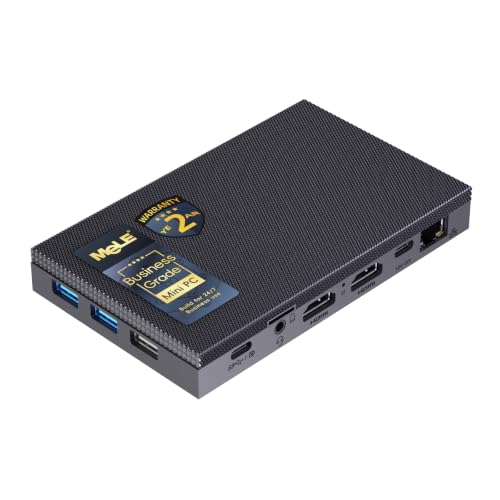
- Best overall fanless mini PC for a small space: MeLE Quieter4C Fanless Mini PC, Intel N100, Windows 11 Pro — Check on Amazon
- Protectli Vault Pro VP2430, Intel N150, 4x 2.5GbE, Coreboot-Ready Barebone — Check on Amazon
- MINIX NEO Z300-0dB Fanless Mini PC, Intel Core i3-N300, 16GB RAM, 512GB SSD — Check on Amazon
- KINGDEL NC3000 Fanless Industrial Mini PC, Core i7-8565U, 16GB RAM, 512GB NVMe — Check on Amazon
- ZOTAC ZBOX CI337 Nano Fanless Mini PC, Intel N100, Barebone — Check on Amazon
See 1 more Amazon option
- Protectli Vault Pro VP4630, Intel Core i3, 6-Port Firewall Appliance — Check on Amazon
Read the full guide ↓
Disclosure: As an Amazon Associate, reviewstook.com earns from qualifying purchases. Links to Amazon on this page are affiliate links; they cost you nothing extra. Listing details such as price and availability change often, so check the current Amazon listing before you buy.
Every mini PC is small in the product photo. The question this guide answers is different: how much room does the machine actually take once it is installed — plugged in, cabled, powered and breathing? For a fanless mini PC that question matters more than for any other kind of computer, because a fanless case is not just a container. It is the cooling system. There is no fan pulling air through the box; the finned metal shell is the heatsink, and it sheds heat into the air touching it on every side. A fanned mini PC can be tucked into a tight corner and will grumble its way through. A fanless one placed the same way — sealed inside a TV cabinet, buried under a stack of books, wedged fin-to-wall in a cubby — slowly cooks in its own warmth and throttles down to protect itself. The smallest PC in this guide is a slab less than an inch thick, and installed carelessly it will perform worse than a bigger box given room to breathe. Small, for a fanless machine, is a property of the installation, not the spec sheet.
So this guide grades installations. Each pick is judged on the space it truly occupies: the chassis itself, the power brick that every one of these machines carries as a separate object with its own need for an address, the cables leaving the back and the bend room they demand, and the clearance the fins need above, below and around. Mounting is claimed only where documentation confirms it — two of the six picks document a VESA mount; the other four are graded honestly as machines that sit somewhere rather than hang somewhere. The silicon story is the category’s usual one: at $800 fanless still means low-power chips (N100, N150, i3-N300, or a 15-watt U-series part) — silent desktop work, media, network duty and light gaming, never modern AAA or native 1440p. What the budget adds is ports, documentation, support and fitted storage. The picks sit in different tiers under the ceiling, and the right move for most small rooms is to buy the installation that fits. Below: the quick picks, six reviews written around placement, a comparison table, the space no spec sheet shows, a five-step measuring routine, the placement mistakes that ruin silent PCs, and the questions small-space buyers ask most.
In this guide
Quick Picks
Short on time, or comparing several options at once? Each row below names a space and a buyer, with the product that fits it and a link to the listing.
| Buyer type | Pick | Why it stands out in a small space | Link |
|---|---|---|---|
| Best overall for small spaces | MeLE Quieter4C (Intel N100) | Documented 5.16 × 3.19 × 0.72 in with a VESA mount — the pick that can occupy zero desk | Check on Amazon |
| Best for a network corner or closet shelf | Protectli Vault Pro VP2430 (Intel N150) | Four Intel 2.5GbE ports and coreboot in a fit-and-forget appliance chassis | Check on Amazon |
| Best silent desktop that still sits on the desk | MINIX NEO Z300-0dB (Intel Core i3-N300) | Eight cores in a documented 123 × 120 × 46 mm footprint — the chunky one, honestly graded | Check on Amazon |
| Best for a workshop shelf or equipment rack | KINGDEL NC3000 (Core i7-8565U) | A documented 9.2 × 5.9 × 2 in metal case — the mass is the heatsink — with serial ports | Check on Amazon |
| Best mount-it-yourself value | ZOTAC ZBOX CI337 Nano (Intel N100) | A documented VESA mount on a barebone — check price on Amazon, build it once, then hang it and forget it | Check on Amazon |
| Best for a segmented network in one spot | Protectli Vault Pro VP4630 (Intel Core i3) | Six 2.5GbE ports in one chassis — but count the six cables as part of its footprint | Check on Amazon |
How These Picks Were Chosen
Two filters decided the list, and the first was the word “fanless” applied without mercy. A pick qualifies only when the manufacturer states passive cooling in its own specifications or datasheet, or a teardown confirms there is no fan inside. This category is mined with lookalikes: finned aluminum boxes that hide a small internal fan over the memory and storage, “quiet” mini PCs whose listings never claim fanless at all, and low-power chips shipped in actively cooled cases. Several well-known models failed the test and were excluded rather than recommended on a guess — in a category whose entire promise is a negative (no fan, no noise, no moving part), documentation is the product.
The second filter was the installation itself. For every candidate we asked what the small-space buyer actually needs to know and refused to print anything the documentation does not support. Dimensions appear in this guide only where the maker’s or the listing’s published figures document them: three of the six picks carry documented measurements, and the rest are graded by form-factor class — slim slab, compact desktop block, industrial case — with readers pointed at the live listing’s spec table for exact numbers. A VESA mount is claimed only for the two picks whose documentation confirms one. No weight, noise figure or brick size is stated for any pick unless the research behind this guide recorded it. Prices change often, so check price on Amazon for the current listing before you buy, and two of the six picks are barebones: their reviews count the extra memory and storage you still need to fit as part of the real cost, and their installation grading includes opening the case before the machine ever reaches its spot.
We did not use these machines ourselves. We read manufacturer listings, datasheets and specification pages, and independent coverage that documents configurations, and we favored makers who publish their numbers in full — port controllers, memory ceilings, thermal design — over listings that hide behind adjectives.
The Space You Cannot See on the Spec Sheet
The brick has an address too. Every machine in this guide runs from an external power brick, and the brick is a second object competing for the same small room. It needs a spot where its own warmth can escape, a cable run to the machine, and enough slack that it is not hanging off a shelf by its cord. Plan the brick’s home with the same care as the PC’s: on an open shelf edge, fixed to the underside of a desk, or on the floor where air moves — not dropped behind a cabinet into the dust, and not buried in the same sealed space you were told to keep the PC out of. One pick below softens this problem in a documented way: the MeLE Quieter4C also accepts USB-C PD power, so in the right setup it can run from a suitable PD supply instead of its own brick. For the rest, the honest installed footprint is chassis plus brick plus the cable between them.
The cable drop sets the real depth. A mini PC’s listed depth is the box. The installed depth is the box plus the plugs in its back plus the distance those cables need to bend without straining — power, display, Ethernet, USB. A machine that measures three inches deep can easily need seven inches of shelf once its cables curve down or back. This matters most for the network picks: a four- or six-port appliance has that many Ethernet cables leaving it in a bundle, and the bundle — stiff, springy, and wider than the box is tall — is the true space claim. Before ordering anything, walk the route each cable will take from the machine to where it ends, and measure the shelf for the route, not the rectangle.
Heat is a placement rule, and fanless makes it stricter. A fanned PC in a tight spot gets loud and unhappy; a fanless PC in a tight spot gets slow, because the fins can only shed heat into air that is free to move away. The rule for all six picks is the same: open air on every side of the case, nothing stacked on top of the fins, no sealed cabinets, no closed cubbies, no direct sun, and no burrowing into paperwork. Behind a monitor on a VESA mount is a legitimate home — the panel’s back is open to the room — provided the fins face outward into that open air rather than pressed flat against a wall or the panel itself. If the only spot you have is enclosed, the honest answer is that a fanless PC is the wrong machine for it, and a fanned mini PC that can force air through a tight space will serve you better.
Access is a dimension. Two picks in this guide are barebones: they arrive without memory or storage, so their first installation happens twice — once on a work surface with the case open and a screwdriver out, and once in their final spot. A third consideration applies to every pick: the day you want to add a drive, swap a stick of RAM or re-seat a cable, the machine has to come out of its hiding place. Mount or wedge a PC somewhere you cannot reach again and every small job becomes furniture removal. Grade any spot by whether a hand and a screwdriver can still reach the machine in a year.
The 6 Best Fanless Mini PCs for Small Spaces Under $800
MeLE Quieter4C Fanless Mini PC (Intel N100)
Who it suits: Anyone whose small space is a desk that is already full — a bedroom setup, a studio corner, a living-room screen — and who wants the PC to stop occupying the desk entirely.
The Quieter4C is the only pick in this guide that can honestly claim zero footprint, and it earns the claim from documentation rather than adjectives. MeLE publishes the chassis at 5.16 × 3.19 × 0.72 inches — thinner than most paperback novels — and includes a VESA mount in the design, so the whole machine screws to the back of a monitor and the desk surface it used to sit on goes back to being a desk. The case top is the heatsink for the Intel N100 inside (four cores, up to 3.4GHz), which is why the mounting discipline matters: fins facing the room, open air behind the panel, nothing pressed over the top surface. Get that right and the installation is genuinely finished — no fan, no vents to clog, nothing to dust off a shelf. It drives three 4K displays at 60Hz across two HDMI ports and a full-function USB-C, Windows 11 Pro is preinstalled, and auto power-on with Wake on LAN suit a machine that lives out of sight and runs unattended.
Two installation details matter here. First, power: alongside its brick, the Quieter4C accepts USB PD power through that USB-C port, so in a setup with a suitable PD supply the brick can leave the equation — one less object to house in a tight room, and the closest thing in this guide to a one-cable install. Second, configuration: the 8GB/128GB build — check price on Amazon — stores its data on eMMC, with an empty M.2 slot beside it as the designed-in fix — fitting that drive is a five-minute job, but it is a job, so plan to do it on a table before the machine goes behind the monitor. The 16GB/512GB build arrives with proper NVMe storage fitted and is the version to mount and forget. Both builds run memory in a single channel, which keeps the integrated graphics in the light-duty class: office work, media, retro and cloud gaming, honestly framed.
- The documented zero-footprint install: 5.16 × 3.19 × 0.72 in chassis with a VESA mount, so the PC lives behind the screen.
- USB-C PD power input means the brick can be retired in the right setup — unique among these six picks.
- Triple 4K@60Hz output and Windows 11 Pro fitted; both the 16GB/512GB and 8GB/128GB builds are available — check price on Amazon.
Honest limitation: The mount only works if the fins breathe — pressed flat against a wall or smothered behind a panel in a closed alcove, the heatsink case has nowhere to put its heat, and a single Gigabit port with Wi-Fi 5 dates the networking.
Choose it if your space problem is a crowded desk and your monitor has a VESA pattern with open air behind it. Skip it if the machine must live somewhere enclosed — no pick in this guide survives that, and this one’s thin case has the least thermal mass to bargain with.

Protectli Vault Pro VP2430 (Intel N150, 4x 2.5GbE)
Who it suits: Anyone whose small space is a network corner — the shelf by the router, the top of a wiring cabinet, a closet shelf with air in it — and who wants the box at the center of the network to be installed once and ignored for years.
The VP2430’s space story is about permanence rather than size. Protectli’s own datasheet describes a fanless, all-aluminum chassis — the case is the heatsink — built around an Intel N150 and four Intel I226-V 2.5GbE ports, the controller that pfSense and OPNsense handle without driver drama. It offers AMI or open-source coreboot firmware, is assembled in the USA, Canada or Germany, and carries US-based support with a published knowledge base and a 30-day money-back guarantee. Machines like this go into the spots other PCs cannot be trusted with: they run 24/7, unattended, in rooms nobody sits in, and the absence of a fan removes the moving part that would otherwise fail first in a dusty corner. The research behind this guide documents no chassis dimensions for this pick, so none are printed — it is graded by its class, a compact appliance block, and the live listing and Protectli’s datasheet carry the exact measurements for your shelf.
Plan the installation in two stages, because this is a barebone. Stage one happens on a workbench: you fit a DDR5 SO-DIMM (Protectli qualifies modules up to 64GB, well beyond Intel’s official figure for the chip) and an M.2 SSD — there are additional M.2 slots for Wi-Fi or a cellular modem, and 32GB of onboard eMMC that can boot a lightweight OS before you add anything. Stage two is the placement itself, and the real space claim is not the box but its four Ethernet cables: four stiff runs leaving one small chassis need bend room, a route to the switch or wall jacks, and slack for the day you pull the unit out. The barebone is listed on Amazon — check price on Amazon — and configured coreboot builds (sold as the VP2430e, the same hardware without the eMMC) are also available. Remember that memory and storage are extra for the barebone, so factor those parts in before you buy.
- Four Intel I226-V 2.5GbE ports — the firewall-friendly controller, four times over — in a fanless aluminum appliance case.
- Coreboot or AMI firmware, a published datasheet and US-based support: the pick built to be forgotten in place.
- Room inside for NVMe storage, Wi-Fi and a cellular modem, so the install can grow without a second box.
Honest limitation: It is a barebone — RAM and SSD are extra, and the case must be opened before it can be placed — and four Ethernet cables give it the widest cable drop in this guide relative to its size.
Choose it if the small space is a network corner and the machine’s job is routing, firewalling or homelab duty for years. Skip it if you want a complete Windows desktop out of the box — that is the MeLE and MINIX territory.

MINIX NEO Z300-0dB Fanless Mini PC (Intel Core i3-N300)
Who it suits: Buyers whose small space still has a desk or shelf the PC is allowed to sit on — and who want the strongest silent desktop that fits on it, complete, with nothing to assemble.
The Z300-0dB is the honest counterweight to this guide’s mounting story: it documents its size, and the size is chunkier than the mini-PC stereotype. MINIX publishes 123 × 120 × 46 mm — roughly a five-inch square nearly two inches tall — because the aluminum and steel chassis is doing the cooling for an Intel Core i3-N300, eight cores up to 3.8GHz, and eight cores need metal. No VESA mount is documented for this pick, so it is graded as what it is: a machine that sits on a desk corner or an open shelf, earning its place by being the most capable complete fanless desktop in the guide. Inside are 16GB of DDR4 in a real SO-DIMM slot (upgradeable to 32GB, rare in this category) and a 512GB PCIe NVMe SSD; dual HDMI 2.0 outputs drive two 4K displays at 60Hz, there is a 2.5G Ethernet port, and Windows 11 Pro is preinstalled. Check price on Amazon for the current listing. One quirk for tidy-desk planners: the USB-C port is data-only, so there is no single-cable power-and-display trick here — the brick keeps its address, and the cable count is what it is.
The placement rule for this pick is the strictest in the guide, and it comes from measurement rather than caution. In independent testing, the N300’s CPU temperature was recorded at 98°C under sustained load — within the chip’s design envelope, and the machine keeps working, but it proves the case surface is a working radiator, not a styling exercise. Give it open air on every side, keep the top fins uncovered, and never let it become the bottom layer of a stack of routers and external drives. Bursty desktop work — documents, tabs, calls, media — never pushes it there. Sustained all-core loads live there permanently, and in a cramped, still-air spot they will arrive sooner and stay longer. Bought for silence during ordinary work and placed with its fins in the breeze, it is the complete-machine ceiling of this category.
- Eight-core i3-N300 — the most CPU in any verified fanless pick here — in a documented 123 × 120 × 46 mm case.
- 16GB of RAM in a slot you can actually upgrade later, a 512GB NVMe SSD fitted, and Windows 11 Pro ready to run.
- Dual 4K@60Hz HDMI and 2.5G Ethernet — a complete machine, no parts bill; check price on Amazon.
Honest limitation: It sits rather than mounts (no VESA documented), it is the thickest chassis among the consumer picks, and its measured 98°C sustained-load temperature makes clearance discipline non-negotiable.
Choose it if you have one open shelf or desk corner and want the silent desktop with real multitasking headroom. Skip it if the only available spot is enclosed or stackable — this is the pick that suffers most from being buried.

KINGDEL NC3000 Fanless Industrial Mini PC (Core i7-8565U)
Who it suits: Buyers placing a silent PC where equipment lives — a workshop bench, a lab shelf, beside point-of-sale or serial-controlled gear — where the space is a shelf slot rather than a desk, and the machine will be connected and ignored.
Judge the NC3000’s footprint the way its maker does: as thermal mass. The listing’s published figures put the all-metal case at 9.2 × 5.9 × 2 inches and about 3.04 lb — the largest and heaviest machine in this guide by a wide margin, and deliberately so. That metal is what lets a 15-watt Core i7-8565U (four cores, eight threads, turbo to 4.6GHz) live without a fan: the case is a finned heat reservoir with room to spare. In installation terms it is a shelf machine, full stop — too big to hide behind a monitor, too heavy to hang from one, and happiest on an equipment shelf or bench where its size is unremarkable. What it brings to that shelf is the port set industry still runs on: two RS232 COM serial ports, HDMI and VGA for dual displays, four USB 3.0 ports, and Wi-Fi with Bluetooth. The configuration most often listed on Amazon pairs 16GB of DDR4 with a 512GB NVMe SSD — check price on Amazon — and the same listing family offers a 32GB/1TB build — confirm which configuration you are ordering, because the listing sells both.
Two placement notes are specific to this pick. First, the cables: serial leads and a VGA connector are thick, stiff and deep, and they leave from a case that is already the deepest here, so the installed depth on the shelf is the box plus the most stubborn cable bend in the guide — measure for the bend, not the box. Second, the platform is from 2018: UHD Graphics 620 drives displays and video, not games, and KINGDEL’s support is a storefront rather than a knowledge base. None of that matters for the job this machine exists to do — run a serial device in a quiet room for years — and everything about its size serves that job. In a small living space it is the wrong shape; on a small workshop shelf it is the only pick speaking the right language.
- Documented 9.2 × 5.9 × 2 in, ~3.04 lb all-metal case — the mass is the heatsink, and it gives a 15W chip genuine passive headroom.
- Two RS232 serial ports and VGA — connections nothing else in this guide offers.
- 16GB RAM and 512GB NVMe — check price on Amazon; a 32GB/1TB configuration exists in the same listing family.
Honest limitation: The biggest installed footprint here once serial and VGA cable bends are counted, on a 2018 platform with dated integrated graphics and thin brand support.
Choose it if the spot is an equipment shelf and the requirement is serial ports, VGA or an industrial install in silence. Skip it if your small space is a living-room desk — the MeLE and MINIX picks are smaller, newer and better supported for that job.

ZOTAC ZBOX CI337 Nano Fanless Mini PC (Intel N100, Barebone)
Who it suits: Tinkerers with a monitor that has open air behind it, who already own — or enjoy choosing — RAM, storage and an operating system, and want the second documented zero-footprint install in this guide as a budget barebone option.
The CI337 Nano is the mount-it-yourself counterpart to the Quieter4C. ZOTAC’s own listing copy states the cooling plainly — fanless, passive, silent — and the kit’s documentation confirms a VESA mount, so after its one-time build this N100 barebone can hang behind a display and vacate the desk just as completely as the MeLE. What the kit includes is unusually generous — check price on Amazon: a DDR5 SO-DIMM slot (up to 16GB), an M.2 NVMe slot plus a 2.5-inch drive bay, dual Gigabit LAN, Wi-Fi 6, and triple-display output across two HDMI 2.0 ports, DisplayPort 1.4 and DisplayPort over USB-C. The research behind this guide records no chassis dimensions for this pick, so none are printed; it is graded by its class — a compact nano slab — and ZOTAC’s published spec sheet carries the exact figures for your mounting check.
The installation has a before and an after, and the before is the honest cost. The kit arrives with no memory, no storage and no OS, so its first hour is spent open on a table: fit the stick, fit the drive, install the system, and only then mount it. Do that accounting before ordering — the kit plus a 16GB DDR5 stick and a 512GB NVMe drive adds up, and the total depends on the parts you choose. The kit wins when parts are already on your shelf, when you want a specific drive, or when you run Linux and refuse to pay for a Windows license you will delete. One technical footnote: the M.2 slot runs at PCIe 3.0 x1, capping NVMe speeds well below the drive’s own ceiling — irrelevant for this machine’s jobs, but do not buy a flagship SSD for it. Mounted with its fins facing the room and its brick given a proper address, it then does the thing this guide values most: it disappears.
- A documented VESA mount on a genuinely fanless barebone from an established brand — check price on Amazon.
- Dual Gigabit LAN, Wi-Fi 6 and triple-display output, plus room inside for both an M.2 drive and a 2.5-inch one.
- You choose the RAM, SSD and OS — the route to a behind-the-monitor PC built exactly your way.
Honest limitation: Barebone means the kit price does not include memory or storage and the build happens before the mount; the x1-lane M.2 slot caps SSD speed, and the N100 is the same light-duty chip as in the complete machines.
Choose it if you have parts, prefer Linux, or enjoy the one-time build in exchange for a vanishing install. Skip it if you want to unbox a working computer — the Quieter4C is the same silicon, complete and mountable.

Protectli Vault Pro VP4630 (Intel Core i3, 6-Port)
Who it suits: Network builders whose small space is one designated spot — a shelf in a closet with air, a corner of a rack, the top of a cabinet — that has to hold the entire segmented network in a single silent box.
The VP4630 is the step up inside Protectli’s own line: six 2.5GbE ports instead of four, an Intel Core i3 of the Tiger Lake class instead of an N-series chip, DDR4 memory and your choice of M.2 NVMe or SATA storage, in the same fanless aluminum Vault chassis, with coreboot available and Protectli’s US-based support behind it. For a home or small-office network split into segments — WAN, LAN, IoT, guest, DMZ, lab — six physical ports end the VLAN gymnastics, and the i3’s AES-NI acceleration keeps encrypted VPN traffic moving at rates the N-series boxes cannot match. Graded as an installation, though, its headline number is not ports but cables: six Ethernet runs, plus power, leaving one compact chassis is the widest cable drop in this guide, and the shelf has to swallow the bundle’s bend radius as well as the box. The research behind this guide documents no dimensions for this pick, so it is graded by class — a compact appliance block — with exact figures on the live listing and Protectli’s datasheet.
Two cautions, both about buying rather than hardware. First, configuration: the Amazon listing most commonly pairs 8GB of RAM with a 120GB SATA SSD, a firewall’s specification rather than a desktop’s — if you want a virtualization host, confirm the configuration on the listing or plan the parts to grow it. Second, price discipline, and this one is a rule rather than a suggestion: pricing for this pick varies widely, so check price on Amazon before you buy and compare it directly with the VP2430 above. If the VP4630 carries a steep premium, walk away: the VP2430 covers most of the same ground, and no fanless box justifies a scarcity premium. Let the live listing choose between the two Protectli picks for you.
- Six 2.5GbE ports and a Core i3 with AES-NI — the most network this budget buys without a fan, in one shelf spot.
- Protectli’s coreboot option, documentation and US-based support in the fanless aluminum Vault chassis.
- DDR4 memory and a choice of NVMe or SATA storage, suited to firewall or light virtualization work.
Honest limitation: Six Ethernet cables make its installed footprint the widest here relative to its size; the commonly listed configuration is a lean 8GB/120GB, and third-party pricing swings widely.
Choose it if one spot must hold six physical ports with vendor support, and the live listing looks reasonable when you check price on Amazon. Skip it if the listing carries a steep premium — at that point the VP2430 plus a managed switch is the smarter network.

Comparison Table
| Product | Processor | Best use in a small space | Link |
|---|---|---|---|
| MeLE Quieter4C | Intel N100 (4-core) | Behind the monitor on its documented VESA mount — zero desk footprint | Check on Amazon |
| Protectli Vault Pro VP2430 | Intel N150 (4-core) | The network corner: four ports, fit-and-forget, vendor support | Check on Amazon |
| MINIX NEO Z300-0dB | Intel Core i3-N300 (8-core) | One open shelf, the most silent-desktop CPU headroom | Check on Amazon |
| KINGDEL NC3000 | Core i7-8565U (4-core, 15W) | An equipment shelf with serial gear — the mass is the heatsink | Check on Amazon |
| ZOTAC ZBOX CI337 Nano | Intel N100 (4-core) | Build it once, then VESA-mount it out of sight | Check on Amazon |
| Protectli Vault Pro VP4630 | Intel Core i3 (6-port) | One spot holding a whole segmented network — count the cables | Check on Amazon |
How to Choose: Measure Before You Buy
Run these five steps in order, with a tape measure and the actual spot in front of you, before any of the six picks goes in a cart. The routine takes ten minutes and prevents every placement failure this category is known for.
- Measure the spot. Write down the width, depth and height of the exact place the PC will live — shelf, desk corner, the back of your monitor — and if you are mounting, confirm the monitor’s VESA pattern and that there is open room behind the panel. Compare against the documented figures where a pick publishes them (the Quieter4C’s 5.16 × 3.19 × 0.72 in, the MINIX’s 123 × 120 × 46 mm, the KINGDEL’s 9.2 × 5.9 × 2 in); for the picks graded by class, take the exact numbers from the live listing’s spec table before ordering. If the spot is a closed cabinet or a cubby with a door, stop here: no fanless pick in this guide belongs in it.
- Reserve ventilation clearance. The fins are the cooling system, so the spot must offer open air on every side of the case — roughly a hand’s breadth of free air above and around is the working rule, more for the eight-core MINIX, whose case is a measured radiator under load. Nothing stacks on top, nothing presses against the finned surfaces, and a behind-monitor mount must leave the fins facing the room, not sandwiched against a wall. If the only way the machine fits is with its fins touching something, it does not fit.
- Give the power supply an address. Every pick runs from an external brick, and the brick needs its own planned home: a shelf edge, a spot under the desk, a floor corner where air moves — with its cable run to the machine measured, not guessed. Decide where the brick sits and where its cord crosses the room before the PC arrives. The one documented exception is the Quieter4C, which can also run from a suitable USB-C PD supply; if your setup already has PD power at the desk, that pick’s brick may never leave its box.
- Walk the cable drop. Stand at the spot and trace every cable from the machine to its destination: display, power, Ethernet, USB. The installed depth is the chassis plus the plugs plus the bend those cables need, and network picks multiply the problem — four Ethernet runs for the VP2430, six for the VP4630, stiff serial and VGA leads for the KINGDEL. If a cable must fold sharply the moment it leaves the port, the spot is too shallow, however perfectly the bare box fits it.
- Then order — and verify on arrival. Only now does the cart open. When the machine lands, check the delivered configuration against the model number before it disappears into its spot: the KINGDEL’s listing family sells both 16GB/512GB and 32GB/1TB builds, the VP4630’s commonly listed configuration is a lean 8GB/120GB, the barebone VP2430 and CI337 need their parts fitted first, and the VP4630’s live price should be checked on Amazon and compared with the VP2430 before you pay. Run the machine in its real spot, under your real workload, inside the return window — a fanless PC that throttles on your shelf is telling you the placement is wrong, and that is cheapest to learn in week one.
Common Buying Mistakes
- Sealing a heatsink in a cabinet. The defining mistake of this category. A fanless PC in a closed entertainment center is an oven with a computer in it: throttling now, shortened life later. A fanned machine can force air through a tight space; a fanless one cannot, so the refusal is absolute — open air, or a different kind of PC.
- Measuring the box instead of the installation. The spec-sheet depth omits the plugs, the cable bends and the brick. Shoppers who measure only the rectangle end up with a machine that fits the shelf and cables that fit nowhere.
- Assuming every mini PC can mount. Only two picks here document a VESA mount — the Quieter4C and the CI337. The others sit. Buying a pick for a behind-the-monitor plan its documentation never promised ends in adhesive pads and regret.
- Stacking gear on the fins. A router, an external drive and a paperback parked on top of a fanless case is a blanket on a radiator. The top surface of these machines is a working part of the cooling system; treat it like one.
- Comparing a barebone’s sticker against complete machines. The VP2430 and CI337 are unfinished by design: add memory, storage and possibly an OS license, and account for those parts before judging either against the complete MeLE and MINIX picks.
- Hiding the machine where you cannot reach it again. A mount or cubby you cannot access turns a five-minute drive swap into furniture removal. Access is a dimension; spend it deliberately.
- Paying the scarcity premium on the VP4630. Its pricing varies widely. Check price on Amazon, compare it with the VP2430, and walk away if it carries a steep premium.
- Expecting the budget to buy gaming performance. Small and silent does not change the silicon ceiling: integrated graphics on 6–15W chips handle retro, indie, esports-at-low-settings and cloud gaming, and that is the whole list — at this budget exactly as at lower budgets. If gaming is the real job, Best Mini Gaming PC Under $1200 is the honest direction, and readers set on a silent 1440p attempt should read Best Fanless Mini PC For 1440p Gaming Under $800 for the reality of that search.
Final Recommendation
- Most small desks: MeLE Quieter4C, in the 16GB/512GB configuration — mounted, it removes the PC from the desk entirely.
- Network corner or closet shelf: Protectli Vault Pro VP2430, once you have budgeted its parts.
- One open shelf, most headroom: MINIX NEO Z300-0dB — placed with its fins in free air.
- Workshop or equipment shelf: KINGDEL NC3000 — the shelf machine with the ports industry still uses.
- Builders who want to mount their own: ZOTAC ZBOX CI337 Nano.
- A whole segmented network in one spot: Protectli Vault Pro VP4630, only when its live listing compares well with the VP2430 — check price on Amazon.
Our top two for a small space are the MeLE Quieter4C — the only pick whose documentation lets it occupy no desk at all, and the complete silent desktop most readers should buy — and the Protectli Vault Pro VP2430, for everyone whose tight spot is really a network corner and who wants a vendor standing behind the box that lives there. Between them they cover the two honest shapes of this search: a computer that vanishes behind the screen, and an appliance that disappears into the infrastructure. If your spot is a single open shelf and the work is a busy desktop, the MINIX Z300-0dB is the step up; if it is an equipment shelf with serial cables, the KINGDEL is the only pick that fits the world it will live in; and if you would rather build the vanishing act yourself, the ZOTAC kit is a budget-friendly honest way in. Readers working with tighter spots or tighter budgets should also see Best Fanless Mini PC For Small Spaces Under $500 and Best Fanless Mini PC For Small Spaces Under $400, and anyone still weighing the wider field can compare Best Mini PC Under $800. Measure the spot, reserve the air, house the brick, walk the cables — then order.
Frequently Asked Questions
Can I put a fanless mini PC inside a TV cabinet or closed cubby?
No — and this is the one placement rule in the guide with no exceptions. A fanless case cools itself by shedding heat from its fins into the surrounding air; seal that air in a cabinet and the machine rebreathes its own warmth until it throttles. That is stricter than the rule for fanned PCs, which can at least move air through a gap. Every pick here needs open air on all sides in its working spot. If your only spot is enclosed, buy a fanned mini PC instead — or move the spot, not the rule.
Which of these can actually mount behind a monitor?
Two, on documentation: the MeLE Quieter4C, whose published dimensions (5.16 × 3.19 × 0.72 in) and VESA mount make it the guide’s zero-footprint pick, and the ZOTAC ZBOX CI337 Nano, whose kit documentation confirms a VESA mount once you have built it. No mount is documented for the MINIX, the KINGDEL or either Protectli in the research behind this guide, so those four are graded as machines that sit — on a desk, a shelf or in a network corner. Check the live listing if a maker has added a mount since, but do not buy any of the four on a mounting plan their documentation does not promise.
Does the power brick really count as part of the size?
Yes, because it has to live somewhere and it makes its own heat. Every pick here runs from an external brick, and the installed footprint is honestly chassis plus brick plus the cable between them. Plan the brick an open-air address of its own — shelf edge, under-desk, floor corner — and never in the same enclosed space the PC itself is banned from. The Quieter4C is the documented exception: it also accepts USB-C PD power, so a suitable PD supply at the desk can replace its brick entirely.
How much clearance does a fanless PC need around it?
Enough that air can move freely past every finned surface — a hand’s breadth of open air above and around the case is the practical rule, with nothing stacked on top and no surface pressed against the fins. The eight-core MINIX deserves the most discipline: its CPU has been measured at 98°C under sustained load, which means its case is working as a radiator and should be treated like one. Behind a monitor is fine, provided the fins face the room rather than a wall.
Is a barebone a good idea in a small space?
It can be the best idea — the CI337 mounts out of sight once built — but count the whole installation. A barebone’s first hour happens open on a workbench while you fit memory and storage, and its sticker omits those parts: add a DDR5 stick and an NVMe drive to the CI337 and the total rises accordingly. Barebones win when you own parts, run Linux, or want the mounting without paying for a bundled configuration. The VP2430 follows the same logic for network corners: budget the RAM and SSD as part of its total cost, and its four Ethernet cables as part of its footprint.
Will a fanless mini PC this small play games?
Light ones, honestly framed. The integrated graphics in these low-power chips handle retro games, emulation, indie titles and esports at modest settings, and they are excellent for cloud gaming and for streaming a real gaming PC from another room. Modern AAA titles and native 1440p gaming are beyond every pick here at any price in this category — the full picture is in Best Fanless Mini PC For 1440p Gaming Under $800. What these machines are genuinely for is silence in a small room: a bedroom desk, a living-room screen, a studio corner — paired with a good monitor, they disappear into it. New buyers who want the plain-English version of the whole category should start with Best Fanless Mini PC For Beginners Under $800, and living-room shoppers with Best Fanless Mini PC For Streaming Under $800.


