Where to buy
Check the latest price, availability and delivery on Amazon. Orders are placed on Amazon. We may earn a commission from qualifying purchases.
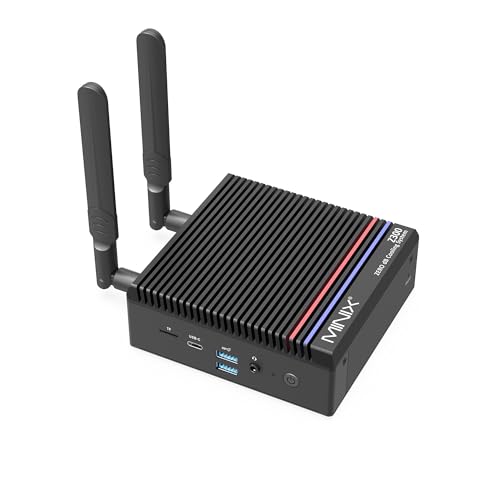
- Best overall fanless mini PC: MINIX NEO Z300-0dB, Intel Core i3-N300, 16GB RAM, 512GB SSD — Check on Amazon
- MeLE Quieter 4C (Intel N150, Business Grade), 8GB RAM, 256GB Storage — Check on Amazon
- CWWK N100 Fanless Firewall Mini PC, 4 x 2.5GbE LAN, 8GB DDR5, 128GB NVMe — Check on Amazon
- Protectli Vault FW4C, 4 Port 2.5GbE Firewall Appliance, 4GB RAM, 32GB Storage — Check on Amazon
- MeLE Quieter 4C (Intel N100, Business Grade), 8GB RAM, 128GB Storage — Check on Amazon
- ZOTAC ZBOX CI337 Nano Fanless Mini PC, Intel N100, Barebone (No RAM / SSD / OS) — Check on Amazon
Read the full guide ↓
Disclosure: As an Amazon Associate, reviewstook.com earns from qualifying purchases. Links to Amazon on this page are affiliate links; they cost you nothing extra. Listing details such as price and availability change often, so check the current Amazon listing before you buy.
Every computer in this guide makes exactly one promise, and it is not speed. It is silence — total, mechanical silence, the kind you cannot get from a quiet fan or a well-tuned fan curve, because these machines have no fan at all. A fanless mini PC cools its processor the way a radiator heats a room: the whole metal case is the heatsink, heat soaks into fins and panels, and the air in the room carries it away. There is nothing to spin, nothing to whine, nothing to clog with dust, and nothing to wear out except the electronics themselves. If you work next to your computer, record audio in the same room, keep a PC in a bedroom or a living room, or run a little server twenty-four hours a day in a space you also live in, that silence is not a luxury feature. It is the entire point of the purchase.
So this guide starts with the honest trade, stated plainly so nothing later surprises you. Fanless PCs are slow on purpose. The processors that can be cooled by a passive metal box top out at Intel’s N-series chips — the N100, N150 and the eight-core Core i3-N300 — because those chips sip between 6 and 15 watts. Under a sustained all-core load, even they get hot: independent testing of the fastest machine in this guide measured its processor at 98°C under continuous load, and every fanless box throttles — slows itself down — when the case can no longer shed heat. That is not a defect in any particular model. It is physics, and it applies to every pick below. What these machines do brilliantly is bursty, everyday work — browsing, documents, media playback, home automation, routing, light photo work — at zero decibels, forever. What they will never do is replace a gaming rig, and the gaming section below is blunt about exactly where the line sits.
The second honest point is about the $500 budget itself, because this price tier works differently from the cheaper fanless tiers. Stepping up to the $500 tier in fanless mini PCs does not buy you a meaningfully faster processor — the chip menu barely changes. What the extra money buys is everything around the chip: four 2.5-gigabit Ethernet ports instead of one, 16GB of memory and a 512GB SSD instead of 8GB and 128GB, a coreboot firmware option and US-based support instead of a marketplace seller, or a bigger finned chassis that holds boost clocks a little longer before physics wins. Two of the six picks below are desktop machines, two are dedicated firewall and router appliances, one is the same excellent desktop in its cheaper configuration, and one is a barebone kit you complete yourself. Below are the quick picks, how each machine’s fanless design was verified, detailed reviews with the limitations stated in the open, a comparison table, a buying guide, the mistakes that waste money in this category, and the questions silent-PC buyers ask most.
In this guide
Quick Picks
Short on time, or comparing several options at once? Each row below names a buyer type and the machine that suits it, with a link to the listing. Check price on Amazon for the current figure, because mini PC prices move constantly.
| Buyer type | Pick | Why it stands out | Link |
|---|---|---|---|
| Best overall fanless mini PC | MINIX NEO Z300-0dB, Core i3-N300, 16GB / 512GB | The fastest chip that can be passively cooled, in an all-metal case — check price on Amazon | Check on Amazon |
| Best silent desktop | MeLE Quieter 4C, Intel N150, 8GB / 256GB | The current chip refresh in the proven Quieter chassis — check price on Amazon | Check on Amazon |
| Best firewall and router box | CWWK N100, 4 x 2.5GbE, 8GB DDR5 / 128GB | Four Intel 2.5GbE ports and DDR5 in a finned case — check price on Amazon | Check on Amazon |
| Best supported firewall | Protectli Vault FW4C, 4GB / 32GB | coreboot option, US support and a two-year warranty — check price on Amazon | Check on Amazon |
| Best value configuration | MeLE Quieter 4C, Intel N100, 8GB / 128GB | The same silent desktop in a more budget-friendly configuration — check price on Amazon | Check on Amazon |
| Best barebone starter | ZOTAC ZBOX CI337 Nano, Intel N100 | A fanless kit you complete with your own RAM and SSD — check price on Amazon | Check on Amazon |
How These Picks Were Chosen
The first filter was the word “fanless” itself, and it eliminated most of the mini PC market. A machine only belongs in this guide if its passive cooling is verified — stated in the manufacturer’s own specifications or product materials, or confirmed by an independent review that opened the case or documented the absence of a fan. Marketing language was not enough. Several popular mini PCs advertise themselves as “quiet” or “silent” while hiding a small fan inside; those machines are excluded, and the best-known examples are named in the notes for this guide. Equally, a machine whose fanless status could not be verified either way — including some router boxes whose product families mix passive and fan-assisted variants — was left out rather than guessed in. Silence is the whole product here, so the standard of proof is the product.
The second filter was the processor. Passive cooling caps a chip at roughly 15 watts of sustained heat, which in practice means Intel’s Alder Lake-N and Twin Lake families: the quad-core N100 and N150, and the eight-core Core i3-N300. Anything faster — a Core i5, a Ryzen 5, any chip with a discrete graphics card — generates more heat than a fanless case of this size can shed, and any listing claiming a fanless design around such a chip should be treated with suspicion. Every pick below uses an N-series chip, and the performance expectations in this guide are calibrated to that class honestly rather than hopefully.
The third filter was price and availability. Each machine needed a verified Amazon listing that fits this guide’s under-$500 budget. Check price on Amazon for the current figure, because prices move. Where a machine is sold in several configurations on Amazon — different memory, different storage, barebone versus complete — we linked one specific configuration with its own ASIN and described exactly that configuration, because on Amazon the configuration is the product.
Finally, we did not use these machines ourselves. We read manufacturer specification pages, listing copy, manuals and independent reviews and teardowns, and compared processors, memory, storage, port selections, firmware options and warranty terms. Where sources disagreed — and with marketplace firewall boxes they sometimes do — the review says what is confirmed, what is claimed, and what to check on the live listing before you order.
What $500 Actually Buys in a Fanless PC
Readers arriving from our cheaper fanless coverage — the Best Fanless Mini PC Under $400 guide — usually ask the same question: what does the extra money get me? The answer is the most important thing in this article, so it gets its own section. It does not get you a faster class of computer. The N100 in a cheaper box and the N100 in a pricier box are the same silicon, and the eight-core i3-N300 at the top of this guide is roughly a third faster in multi-core work than the quad-core chips, not a different world. If you need genuinely more performance, you do not need a bigger fanless budget; you need a fan, and the machines in our Best Mini PC Under $500 and Best Mini Gaming PC Under $500 guides are where that performance lives.
What $500 buys instead falls into four buckets. Ports: the firewall picks below carry four Intel 2.5-gigabit Ethernet ports — the hardware requirement for a serious pfSense or OPNsense router — where a desktop box carries one. Configuration: the top pick’s 16GB of memory and 512GB SSD are simply a bigger, longer-lived specification than the 8GB and 128GB of the budget tier, in a market where late-2026 memory prices make factory-fitted RAM worth real money. Support and firmware: Protectli’s premium buys a coreboot option, published documentation and a US support desk, which matters enormously for a box that guards your network. And thermal mass: bigger finned cases hold boost clocks longer before throttling, which is the only honest performance difference money buys in this category.
On throttling, be clear-eyed. A fanless case can shed a fixed amount of heat per minute, set by its surface area and the temperature of your room. An N-series chip under full load wants to shed more than that, so after some minutes of sustained work — a long video export, a big compile, a full-disk virus scan — the chip reduces its clocks to match what the case can handle, and it stays there until the load stops. Reviewers measured the fastest pick in this guide at 98°C on the processor under sustained load: within specification, and a normal operating condition for these designs, but a clear sign the machine was at its thermal ceiling. Everyday computing is bursty — a page loads, the chip sprints, then idles — and bursty work is barely affected. Sustained work is where fanless machines pay for their silence, and if your workload is sustained, this entire category is the wrong tool, at any budget.
And gaming, since this guide sits in a gaming PC series: keep expectations at the level these chips deserve. The integrated graphics in an N100 or N150 handle older titles, indie games and esports staples at low settings and 720p to 1080p, emulate retro consoles happily, and stream games beautifully from a real gaming PC or a cloud service — a streamed game only needs video decoding, which these chips do in hardware all day. Modern AAA games at native settings are beyond them, and no configuration in this guide changes that. Buy a fanless PC for silence and use it for light gaming on the side, or buy a gaming PC and accept a fan. The one dishonest option is pretending the same $500 buys both.
Detailed Reviews
1. MINIX NEO Z300-0dB — the fastest silent PC under $500
Who it suits: buyers who want the most capable fanless desktop the budget allows — a silent office and home machine with genuine multitasking headroom, a media PC that will never be heard over a film, or a small always-on server that needs more cores than the quad-core boxes offer.
The MINIX NEO Z300-0dB is built around the Intel Core i3-N300, the eight-core flagship of the Alder Lake-N family, and it is the only chip in this guide with eight cores. Around it MINIX fits 16GB of DDR4 memory — in a slot, upgradeable to 32GB, which almost nothing else in this category offers — and a 512GB PCIe SSD in an M.2 2280 slot that accepts drives up to 4TB. Windows 11 Pro is preinstalled. The all-metal chassis, roughly 135 x 122 x 45mm, is the heatsink: MINIX’s “0dB” line is a genuinely fanless design, verified across the maker’s specifications and independent coverage, with no moving parts anywhere in the box. Connectivity is the strongest of any desktop pick here: dual HDMI outputs at 4K, a 2.5-gigabit Ethernet port, Wi-Fi 6, Bluetooth 5.2 and a USB-C port with power delivery and display output. Check price on Amazon — it sits at the premium end of this guide’s budget, at the top of what this category offers, and it earns the position.
- Genuinely fanless: an all-metal chassis with no fan anywhere, verified from the maker’s specifications and independent reviews
- The strongest chip in the guide: eight N300 cores give it multitasking and server headroom the quad-core picks cannot match
- Upgradeable memory: a real SO-DIMM slot, 16GB fitted and 32GB supported, plus an M.2 slot that takes up to 4TB
- Best connectivity here: 2.5GbE, dual 4K HDMI, Wi-Fi 6 and USB-C with display output
Honest limitation: the N300’s extra cores run into the same thermal wall as everything else in this guide, only sooner in relative terms — independent measurement put this processor at 98°C under sustained load, and long all-core jobs will throttle. The eight cores buy you responsiveness and parallel light work, not sustained workstation throughput. It is also the most expensive pick here by a wide margin, sitting at the premium end of this guide’s budget, so check price on Amazon before you buy.
Choose this if you want one silent desktop that does everything in this category well and you can catch it at or under $500. Skip it if your work is mostly single-threaded or bursty — the quad-core picks below feel identical for that use and cost far less. Check on Amazon
2. MeLE Quieter 4C (N150, 8GB / 256GB) — the silent desktop most people should buy
Who it suits: anyone who wants a silent everyday desktop — office work, browsing, media, home-schooling, a kitchen or bedroom PC — in the current chip generation, from the brand that has specialised in fanless mini PCs longer than anyone else in this guide.
The MeLE Quieter 4C in this configuration pairs Intel’s N150 — the Twin Lake refresh of the N100, quad-core with slightly higher clocks — with 8GB of LPDDR5 memory and 256GB of storage, with Windows 11 Pro preinstalled. The Quieter line is fanless by design and by name: the low-profile chassis has no fan, dissipates through its case, and mounts behind a monitor on a VESA bracket, which makes it the easiest pick here to make disappear entirely. Dual HDMI outputs drive two 4K displays, USB-C power delivery means it can run from a suitable monitor or power bank, and Wi-Fi 6, Bluetooth 5.2 and gigabit Ethernet cover connectivity. This business-grade configuration sits in the mid-range of this guide’s budget — check price on Amazon for the current figure.
- Verified fanless: the Quieter series is a passively cooled design, confirmed by the maker and by years of independent reviews
- Current-generation chip: the N150 is the newest quad-core in this guide, with the same 6-watt-class efficiency as the N100
- Desk-invisible: VESA-mounts behind a monitor and can be powered over USB-C
- Business-grade build: this configuration is MeLE’s business line, aimed at 24/7 operation
Honest limitation: the memory is soldered LPDDR5 — 8GB is what you get forever, with no upgrade path — and 8GB is adequate rather than generous for Windows 11 multitasking in 2026. Storage expansion leans on a microSD slot rather than a second internal drive. Check price on Amazon and compare it with the configuration below before you decide.
Choose this if you want the current chip in the proven silent-desktop chassis. Skip it if you need 16GB of memory — that requirement points at the MINIX above — or if you want the same box in a more budget-friendly configuration, which is the next-but-one pick. Check on Amazon
3. CWWK N100 Firewall Mini PC (4 x 2.5GbE, 8GB / 128GB) — the router box to beat
Who it suits: home-lab builders and network enthusiasts who want to run pfSense, OPNsense or a Proxmox host on silent hardware with proper multi-gigabit networking — the single most popular job for a fanless PC that has nothing to do with a desk.
The CWWK N100 four-port is an aluminium, finned, verified-fanless appliance built around the quad-core N100, fitted here with 8GB of DDR5 memory and a 128GB NVMe SSD. Its reason to exist is on the back panel: four Intel i226-V 2.5-gigabit Ethernet ports, the network controllers the firewall community specifically looks for, enough to run a WAN connection, a LAN, and separate IoT and guest networks without a managed switch doing VLAN gymnastics. Two HDMI outputs, USB 3.0 and 2.0 ports and a USB-C port round out a box that doubles as a small server when it is not routing. Check price on Amazon for this configuration, which sits in the upper-mid range of this guide’s budget.
- Four Intel 2.5GbE ports: i226-V controllers, the ones pfSense and OPNsense users actually want
- DDR5 memory: a SO-DIMM slot rather than soldered memory, unusual in this class and welcome for upgrades
- Verified fanless: a finned aluminium case with no fan, designed for 24/7 routing duty
- Doubles as a server: Proxmox, Home Assistant and Docker hosts run happily alongside or instead of firewall duty
Honest limitation: you are paying an Amazon premium for hardware the maker sells directly for less, and support is a marketplace seller rather than a US support desk — documentation and BIOS polish lag the Protectli below. The N100 also has real limits as a firewall: it routes multi-gigabit traffic easily, but heavy intrusion-prevention workloads will tax it, and buyers planning Suricata or Zenarmor on a full gigabit connection should read the firewall forums for this chip before ordering. Check the live listing’s configuration carefully, because this listing family spans several memory and storage variants.
Choose this if you want the best-value four-port 2.5GbE fanless router on Amazon and you are comfortable self-supporting. Skip it if you want documentation, firmware options and a support desk — that is the next pick’s entire reason to cost what it costs. Check on Amazon
4. Protectli Vault FW4C (4GB / 32GB) — the supported, coreboot firewall
Who it suits: buyers who want their firewall to be an appliance in the fullest sense — documented, supported, warrantied and flashable with open firmware — and who value those things over raw specifications.
The Protectli Vault FW4C is a finned, fanless, four-port appliance with Intel i226-V 2.5-gigabit Ethernet throughout, sold by a US company that publishes proper documentation, maintains a knowledge base, answers support tickets and backs the box with a two-year warranty. Its signature feature is firmware choice: the FW4C is offered with a coreboot option, the open-source firmware that security-conscious buyers specifically seek out, alongside the standard AMI BIOS. This Amazon configuration carries 4GB of memory and 32GB of storage — sized for a firewall distribution, which is all it is meant to run — and check price on Amazon for the FW4C, which sits in the mid-range of this guide’s budget. Check the live listing’s exact configuration before ordering, as Protectli sells this model in several memory and storage combinations and through more than one channel.
- coreboot available: open firmware is a genuine differentiator no other pick here offers
- Real support: US-based company, published documentation and a two-year warranty
- Four 2.5GbE Intel ports: the same i226-V controllers as the CWWK, in a fully supported package
- Verified fanless: a finned metal case built for silent 24/7 service
Honest limitation: judged purely as a computer, this is the weakest specification in the guide — its Celeron J3710 platform is a generation older than the N100 boxes, with DDR3 memory and mSATA storage, and it is not close. You are paying for support, firmware and trust, not silicon, and for general-purpose server duty the CWWK above is the stronger machine. Buy the FW4C as a firewall, with a firewall’s modest needs, and it makes sense; buy it as a mini PC and it does not.
Choose this if your network deserves a supported appliance and coreboot matters to you. Skip it if you want one box that routes and serves — the CWWK’s newer platform does both better for similar money. Check on Amazon
5. MeLE Quieter 4C (N100, 8GB / 128GB) — the same silent desktop, bought smarter
Who it suits: patient buyers who want the Quieter 4C desktop experience for the least money — and who understand exactly which configuration they are looking at, because this guide lists the same chassis twice on purpose.
This Quieter 4C configuration is the previous chip generation of pick two: the quad-core N100 instead of the N150, 8GB of LPDDR5 memory, and 128GB of storage instead of 256GB, in the identical fanless, VESA-mountable chassis with the same dual 4K HDMI outputs, USB-C power delivery and Windows 11 Pro. The N100 and N150 are close relatives — the N150 clocks slightly higher — and in the bursty everyday work these machines exist for, most users would not feel the difference across a week of use. What they would feel is the storage: 128GB fills up fast under Windows, and this configuration suits a machine that works from cloud storage, network drives or a microSD card. Check price on Amazon — it is the more budget-friendly route into this chassis in this guide.
- The proven chassis: identical fanless case, mounting and ports to the N150 configuration
- Near-identical experience: the N100 trails the N150 by a small margin in the light work these PCs do
- Budget-friendly route: the lower-cost configuration of the proven Quieter line — check price on Amazon
- Business-grade build: the same 24/7-oriented configuration line as pick two
Honest limitation: 128GB of storage with soldered 8GB memory is the least future-proof specification in the guide, and the better N150 model above offers more storage in the same chassis. Check price on Amazon and compare the two configurations directly before you decide which one earns your money.
Choose this if your storage lives elsewhere and you want the budget-friendly configuration of this chassis. Skip it if you need more storage built in — at that point the N150 configuration above is the rational purchase. Check on Amazon
6. ZOTAC ZBOX CI337 Nano — the fanless barebone you complete yourself
Who it suits: tinkerers with a spare SO-DIMM and SSD on the shelf, and buyers who want the cheapest possible route into a verified-fanless machine from an established brand — and who understand the word “barebone” before they click buy.
The ZOTAC ZBOX CI337 Nano is sold as a kit: an Intel N100 processor in Zotac’s long-running fanless CI-series chassis — the listing itself leads with “Fanless Silent,” and the CI line’s passive design is well documented — with empty slots where your memory, storage and operating system go. There is no RAM, no SSD and no OS in the box. You add a SO-DIMM and an M.2 SSD (confirm the exact memory type and slot specification on Zotac’s product page before ordering parts), install the operating system of your choice — Linux is free and ideal — and the result is a silent N100 desktop with HDMI and DisplayPort outputs, a card reader and VESA mounting. Check price on Amazon for the kit; completing it with a 16GB memory stick and a 512GB SSD still keeps the finished machine comfortably within this guide’s budget, depending on the parts you choose.
- Cheapest way in: a verified-fanless kit from an established brand at a budget-friendly entry point — check price on Amazon
- Your parts, your spec: choose your own memory and storage sizes instead of accepting a fixed configuration
- A documented design: Zotac’s CI series has been the mainstream fanless mini PC line for years
- Linux-friendly: the natural home for a free OS, which keeps the completion cost down
Honest limitation: the sticker price is not a computer — it is most of a computer — and the comparison only flatters the kit if your parts are cheap or already owned. Memory prices in late 2026 are volatile, and a completion built entirely from new retail parts can drift toward the price of the complete Quieter 4C above while adding an hour of assembly and an OS install. There is also no Windows licence in the maths unless you add one. Buy the kit for the pleasure and the parts-bin economics, not as a guaranteed saving.
Choose this if you have compatible parts waiting or you enjoy the build. Skip it if you want a machine that works ten minutes after the box opens — every other pick here is complete. If the kit route appeals, our Best Barebones Mini PC Under $500 guide covers the wider barebones market in the same price band. Check on Amazon
Comparison Table
Every machine in this guide side by side. Check price on Amazon on the live listing before you buy, because pricing and availability for several of these move weekly.
| Machine | Processor | Memory | Storage | Networking | Price | Best for |
|---|---|---|---|---|---|---|
| MINIX NEO Z300-0dB | Core i3-N300, 8 cores | 16GB DDR4, upgradeable to 32GB | 512GB PCIe SSD | 1 x 2.5GbE, Wi-Fi 6 | Check price on Amazon | Most capable silent desktop |
| MeLE Quieter 4C (N150) | Intel N150, 4 cores | 8GB LPDDR5, soldered | 256GB | 1 x GbE, Wi-Fi 6 | Check price on Amazon | Silent everyday desktop |
| CWWK N100 4-Port | Intel N100, 4 cores | 8GB DDR5 | 128GB NVMe | 4 x 2.5GbE Intel i226-V | Check price on Amazon | pfSense / OPNsense router |
| Protectli Vault FW4C | Celeron J3710, 4 cores | 4GB DDR3L | 32GB mSATA | 4 x 2.5GbE Intel i226-V | Check price on Amazon | Supported coreboot firewall |
| MeLE Quieter 4C (N100) | Intel N100, 4 cores | 8GB LPDDR5, soldered | 128GB | 1 x GbE, Wi-Fi 6 | Check price on Amazon | Value configuration |
| ZOTAC ZBOX CI337 Nano | Intel N100, 4 cores | None fitted — add your own | None fitted — add your own | Gigabit Ethernet | Check price on Amazon | Cheapest fanless kit |
How to Choose a Fanless Mini PC
Start with the job, not the chip. Fanless PCs do four jobs well: silent desktops, media and streaming endpoints, always-on home servers, and firewall or router duty. The job decides the ports and the configuration before the processor matters at all. A router needs multiple Intel Ethernet ports; a desktop needs display outputs and storage; a server needs memory headroom and a case that can sit in a warm cupboard. Buyers shopping for a small desk machine might also weigh the Best Compact Gaming PC Under $500 options if any real gaming is on the list, because that category trades a little size for a great deal of graphics performance.
Understand the three chips. The N100 is the default: quad-core, frugal, and fast enough for every job listed above. The N150 is its refresh — same architecture, slightly higher clocks, worth a small premium and no more. The Core i3-N300 doubles the cores to eight and is the right choice for a small server running several services at once or a desktop that multitasks heavily. None of them is a gaming chip, a video-editing chip or a workstation chip, and no fanless case can make them one.
Treat memory and storage as lifetime decisions. Most fanless desktops solder their memory, so the configuration you buy is the configuration you retire. 8GB is the workable minimum for Windows 11; 16GB is the comfortable choice and the main reason the MINIX tops this guide. For storage, 128GB suits a firewall or a cloud-first desktop, 256GB is the sensible desktop minimum, and a machine with a real M.2 slot — rather than fixed eMMC — can grow later. In a year when memory prices have surged, factory-fitted capacity is worth more than it used to be.
Placement is part of the cooling system. A fanless case sheds heat into the room, so give it air: open shelf rather than sealed cupboard, fins unobstructed, out of direct sun and away from radiators. A box that throttles on an open desk in a cool room has a problem; a box that throttles inside a closed TV cabinet in summer is simply obeying physics. If your only available spot is enclosed and warm, this category — not any particular model — is the wrong choice.
Match the purchase to the support you need. A desktop that misbehaves is an annoyance; a firewall that misbehaves is an outage. That asymmetry is why the supported Protectli earns its premium for network duty while the marketplace CWWK wins on hardware value, and why desktop buyers can happily shop on specification alone. Decide which kind of buyer you are before the price comparison starts.
Common Mistakes
- Believing “silent” marketing. Many mini PCs with fans describe themselves as silent or whisper-quiet. If silence is the requirement, verify the absence of a fan from the manufacturer’s specifications — as this guide did for every pick — rather than trusting the adjective.
- Expecting the $500 tier to be faster. The extra money buys ports, capacity, support and thermal mass. A buyer who spends $500 expecting a performance tier above the cheaper machines will be disappointed by silicon that is mostly identical.
- Ignoring throttling until it bites. Rendering, compiling, transcoding and scanning are sustained loads, and sustained loads are exactly what fanless cases cannot feed. If your weekly routine includes them, buy a cooled machine — the Best Home Office PC Under $500 guide covers stronger small desktops in this budget.
- Buying soldered 8GB for a five-year desktop. Memory you cannot upgrade should be bought for the machine’s whole life, not its first year. If the plan is a long-lived main desktop, the 16GB configuration is the honest minimum.
- Comparing a barebone sticker to complete prices. The ZOTAC kit is excellent value for a parts owner and a false economy for everyone else once memory, storage and an OS are added at late-2026 prices. Always compare finished cost to finished cost.
- Sealing the box in furniture. A fanless PC in a closed cabinet is a PC in an oven. Placement is cooling; treat it that way.
Final Recommendation
For most buyers, the MINIX NEO Z300-0dB is the fanless mini PC to buy under $500: the only eight-core chip in the class, 16GB of upgradeable memory, a 512GB SSD and the best connectivity here, in a verified all-metal fanless case — check price on Amazon before you buy. Buyers who mainly want a silent desk companion should take the MeLE Quieter 4C instead. Network builders split by temperament: the CWWK is the hardware value, the Protectli is the supported appliance. And the ZOTAC kit rewards anyone with parts on the shelf. Whichever you choose, choose it for the silence — that is the one thing these machines do that nothing with a fan ever will.
FAQ
Are fanless mini PCs reliable enough to run 24/7? They are arguably the most reliable small computers you can buy, because the fan — the most common mechanical failure in a mini PC — does not exist, and there are no vents pulling dust through the board. Several picks in this guide come from business-grade lines designed for continuous operation. Keep the case in open air, and heat is managed by design.
Can a fanless mini PC play games? Light ones, honestly framed: esports titles and older games at low settings, indie games, retro emulation, and streamed games from a gaming PC or cloud service all work well. Modern AAA games at native settings do not. If gaming is the primary job, the Best Streaming PC Under $500 and wider gaming guides in this series cover machines with fans and real graphics hardware; a fanless box is a streaming endpoint for games, not a games machine.
Why do fanless PCs get so hot to the touch? Because the case is the heatsink — a hot case is the cooling system working, not failing. Surface temperatures that would alarm a laptop user are normal operating conditions for these designs, and the processors are rated for the temperatures reviewers measure under sustained load. Hot to the touch is expected; throttling under sustained load is the real cost, and it is priced into every recommendation here.
N100, N150 or i3-N300 — which chip should I choose? The N100 for a firewall, a media endpoint or a light desktop; the N150 for the same jobs with a small clock bump, if the premium is small; the i3-N300 if the box will run several services at once or multitask heavily all day. The differences are real but modest, and none of the three changes what category of machine you are buying.
Is a fanless PC good for a home server? It is one of the best forms a small home server can take: silent, frugal — these chips idle in single-digit watts — and free of the fan failures that kill always-on boxes. Home Assistant, Pi-hole, a small NAS front-end, media serving and Docker containers all suit the class. Buyers planning heavier virtualisation should read our Best Fanless Mini PC For Streaming Under $500 and Best Fanless Mini PC For Small Spaces Under $500 companion guides for the angle-specific picks, and the Best Fanless Mini PC For Beginners Under $500 guide if this is a first silent PC.


