Where to buy
Check the latest price, availability and delivery on Amazon. Orders are placed on Amazon. We may earn a commission from qualifying purchases.
- Best overall — the closest thing to high end under $1,000: iBUYPOWER Scale Gaming PC, Ryzen 5 7600, GeForce RTX 4060 Ti 8GB, 16GB DDR5, 1TB NVMe SSD — Check on Amazon
- CyberPowerPC Gamer Master Gaming PC, Ryzen 7 8700F, GeForce RTX 4060 Ti 8GB — Check on Amazon
- iBUYPOWER SlateMesh Gaming PC, Ryzen 5 7600, GeForce RTX 4060, 500GB NVMe SSD — Check on Amazon
- CyberPowerPC Gamer Xtreme VR Gaming PC, Intel Core i5-13400F, GeForce RTX 4060 — Check on Amazon
- Skytech Archangel Gaming PC, Intel Core i5-14400F, GeForce RTX 4060, 32GB DDR5, 2TB SSD — Check on Amazon
See 1 more Amazon option
- Skytech Blaze4 Mini Gaming PC, Ryzen 7 5700, GeForce RTX 4060 Ti 8GB, 1TB SSD — Check on Amazon
Read the full guide ↓
Disclosure: As an Amazon Associate, reviewstook.com earns from qualifying purchases. Links to Amazon on this page are affiliate links; they cost you nothing extra. Listing details such as price and availability change often, so check the current Amazon listing before you buy.
Start with the honest part, because this keyword needs it: a genuinely high end gaming PC — the kind that renders demanding games natively at 1440p with high refresh rates, or touches 4K — does not exist under $1,000 in late 2026. That class of machine is built around graphics cards a full two tiers above anything in this guide, and those systems live in the higher tiers above this budget the rest of the year. Component costs have also risen this season — memory, SSDs and graphics cards are all harder to source cheaply than their historical norms — which has pushed even honest mid-range prebuilts upward. So this guide does not pretend otherwise. What it does instead is rank the six machines that get closest to the high end line without crossing the budget: the strongest graphics card this budget can reach, on the platforms with the longest futures, with the fewest corners cut. Check price on Amazon for each pick before you decide, because listings in this tier move often.
Here is what the ceiling of this tier actually looks like when it is shopped well. The graphics card is an RTX 4060 Ti 8GB at the top of the tier, or an RTX 4060 a step below it — that is the line, and every pick below is graded against it. The processor sits on AMD’s AM5 platform in the three picks we would buy first, because AM5 is the socket with years of upgrade runway left; the Intel and older AMD picks are graded down for platforms that have already seen their last new processor generation. Memory is 16GB of DDR5 as the floor — with one pick doubling it — and storage is 1TB as the standard, with the one 500GB exception flagged wherever it appears. Some picks in this tier sit toward the top of the band and others toward the lower end, and their reviews describe that positioning in qualitative terms rather than fixed numbers, so always check the current price on Amazon before comparing them. If your intent is genuinely high end and the budget can move, the step-up ladder section below maps what the next tiers buy, rung by rung, so you can decide by card class rather than a product name with “high end” printed on the box.
In this guide
Quick Picks
Short on time, or comparing several options at once? Each row below names a buyer type and the machine that suits it, with a link to the listing.
| Buyer type | Pick | Why it stands out | Link |
|---|---|---|---|
| Best overall | iBUYPOWER Scale (Ryzen 5 7600, RTX 4060 Ti 8GB) | The tier’s best graphics card on the AM5 platform — check price on Amazon | Check on Amazon |
| Best eight-core AM5 | CyberPowerPC Gamer Master (Ryzen 7 8700F, RTX 4060 Ti 8GB) | Eight Zen 4 cores and the same 4060 Ti — check the current price on Amazon | Check on Amazon |
| Best platform value | iBUYPOWER SlateMesh (Ryzen 5 7600, RTX 4060) | The same AM5 future as the top pick, positioned lower in the tier — check price on Amazon | Check on Amazon |
| Best RTX 4060 value | CyberPowerPC Gamer Xtreme VR (Core i5-13400F, RTX 4060) | A value-positioned pick in this tier with a full 1TB drive — check price on Amazon | Check on Amazon |
| Best for big game libraries | Skytech Archangel (Core i5-14400F, RTX 4060, 32GB / 2TB) | Double the memory and storage of the field — check the current price on Amazon and confirm it fits this budget before ordering | Check on Amazon |
| Best GPU-first value | Skytech Blaze4 Mini (Ryzen 7 5700, RTX 4060 Ti 8GB) | A 4060 Ti on a finished AM4 platform, positioned as a value pick in this tier — check price on Amazon | Check on Amazon |
How These Picks Were Chosen
The budget was applied as a ceiling for this tier: check the current price on Amazon for any pick before you treat it as fitting the budget, because listing prices change often. Anything wearing a graphics card below the RTX 4060 class — the 3050 machines that fill the under-$1,000 search results — was excluded however modern its processor, because at this budget the graphics card is the product. A “high end” guide whose top pick cannot outrun a console has failed before it starts.
We did not use these PCs ourselves. We read the maker listings and specification pages and compared graphics cards, processor platforms, memory configurations and storage, favoring listings that publish their numbers in full. The grading order matters and it is deliberate. Graphics card class first: the RTX 4060 Ti 8GB is this tier’s ceiling card — a genuine step above the RTX 4060 in raw rendering, and the strongest card that fits this budget tier. Both cards carry 8GB of video memory, which is enough for excellent 1080p and negotiated 1440p, and the reviews are plain about where that ceiling shows. Platform life second: AM5 motherboards will accept future Ryzen generations, so a machine bought today can take a processor upgrade years from now; Intel’s LGA1700 and AMD’s AM4 have already received their final processor generations, which caps what those machines can become. Completeness third: 16GB of memory as two sticks rather than one, a 1TB drive rather than 500GB, a published power supply wattage rather than a mystery — the unglamorous details that decide whether a PC feels finished or feels like a starter kit.
One more filter sat on top of all of that: the honesty filter this price band demands. Prebuilt listings in this tier are thick with machines whose marketing says “high end” while the specification says otherwise — last-generation cards, single-stick memory, drives too small for two modern games. Where a pick below has a weakness of that kind, it is named in its review at full size, not footnoted: the single stick of memory in our top pick, the 500GB drive in the value pick, the finished platform under the lower-positioned 4060 Ti pick. You are spending at the top of this budget tier; the least a guide can do is tell you exactly which compromises come in the box.
The 6 Best High End Gaming PCs Under $1,000
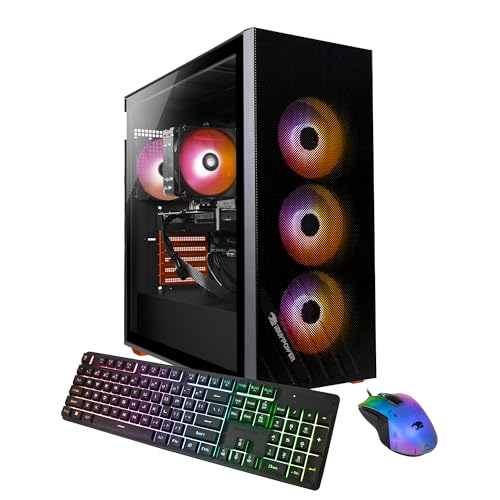
iBUYPOWER Scale Gaming PC — Ryzen 5 7600, GeForce RTX 4060 Ti 8GB (Model SCA5N46T01)
Who it suits: The reader who typed “high end” and means it — who wants the strongest graphics card this budget reaches, on the platform that will still be receiving new processors years from now, and is willing to check the current price on Amazon rather than shop by the calendar alone.
This is the machine in the guide that best balances position in the tier with the correct hierarchy of parts — check price on Amazon to confirm where it sits when you shop. The RTX 4060 Ti 8GB is the tier’s ceiling graphics card, a clear step above the plain 4060 in the picks below — it is a high-settings 1080p card with real headroom, a high-refresh card for competitive titles, and a card that plays at 1440p in a wide range of games with settings chosen sensibly and DLSS doing its share. Underneath it sits AMD’s Ryzen 5 7600 on the AM5 platform: six fast Zen 4 cores that will not hold the card back, DDR5 memory, a 1TB NVMe drive, and — the point that compounds — a motherboard socket with years of processor generations still to come. When this machine eventually feels slow, the fix is a future processor or a future graphics card dropped into the same box, not a new PC.
The supporting details are the right ones for the tier: Windows 11 Home, WiFi ready out of the box, a keyboard and mouse in the carton, and a one-year warranty from a large integrator. The machine’s one real flaw is documented in its own listing and we will not soften it: the 16GB of DDR5-5200 memory ships as a single stick. A lone stick runs the memory in single-channel mode, which costs measurable performance in CPU-sensitive games and leaves the second slot’s bandwidth unused. The fix is genuinely straightforward and easy — a matching second stick, installed in minutes — and it should be treated as part of the purchase from day one. Do that, and this is the most complete answer this budget gives: the best card, the living platform, the full-size drive, positioned at the top of this tier — check the current price on Amazon before you order.
- The tier’s ceiling graphics card — RTX 4060 Ti 8GB — positioned at the top of this budget tier; check price on Amazon.
- AM5 platform with DDR5: a processor upgrade path that stays open for years.
- Full 1TB NVMe storage and a one-year warranty from a major integrator.
Honest limitation: The 16GB of memory ships as a single stick, running single-channel until you add a second — plan for that stick as part of the purchase.
Choose it if you want the closest thing to high end that this budget honestly buys, with an upgrade path. Skip it if you will never open the case to add that memory stick — the picks below with memory already sorted will serve you better.

CyberPowerPC Gamer Master Gaming PC — Ryzen 7 8700F, GeForce RTX 4060 Ti 8GB (Model GMA2900A)
Who it suits: Players whose games lean on the processor as well as the card — simulation, strategy, heavily modded titles, streaming on the side — and who want eight modern cores on the living AM5 platform without leaving the budget.
The Gamer Master matches the top pick’s graphics card and raises its processor. The Ryzen 7 8700F brings eight Zen 4 cores to the Scale’s six, on the same AM5 socket and B650 platform, with 16GB of DDR5 memory and a 1TB PCIe Gen4 SSD. For pure gaming at this level the extra cores are insurance more than necessity — the 4060 Ti is the limiting part in most titles — but for the player who also encodes a stream, runs a modded simulation, or keeps a dozen background tasks alive, eight cores is the configuration that ages gracefully. Its position in the tier can vary by listing and by day, so treat it as a pick to confirm against this budget when you shop — check the current price on Amazon and only proceed if it fits the tier for you.
Two caveats belong in this review at full size. The first is the processor’s missing half: the 8700F has no integrated graphics, so if the graphics card ever fails, the machine has no display output to fall back on while you troubleshoot — a small thing that matters exactly once, on a bad day. The second is about the name rather than this machine: CyberPowerPC sells a wide Gamer Master family under similar model numbers, and newer variants in that family now ship a different graphics card in higher tiers. The ASIN linked here is the verified RTX 4060 Ti configuration; before ordering, read the live listing’s specification block and confirm the card, the processor and the memory match what is described here. Integrators revise configurations under familiar names often enough that the check is worth the thirty seconds it takes.
- Eight Zen 4 cores on AM5 — the strongest processor platform pairing in this guide.
- The same RTX 4060 Ti 8GB ceiling card as the top pick, with a 1TB Gen4 drive.
- Positioned in this budget tier when the listing fits — check price on Amazon before ordering.
Honest limitation: Its position in the tier is not guaranteed on every listing or every day, so confirm it fits this budget before you buy — and the 8700F’s lack of integrated graphics removes your fallback display if the card ever fails.
Choose it if your workload uses eight cores and you are willing to confirm the current listing fits this budget. Skip it if you need a pick whose tier position you do not want to verify at checkout, or the missing integrated graphics worries you — the Scale above is the steadier buy.
iBUYPOWER SlateMesh Gaming PC — Ryzen 5 7600, GeForce RTX 4060 (Model SlateMeshA5N4601)
Who it suits: The patient upgrader: someone who would rather own the right platform and a good card now, positioned lower in this tier, than the best card on a platform with no tomorrow.
The SlateMesh makes a deliberate trade and makes it openly. It keeps the top pick’s processor and platform — Ryzen 5 7600, AM5, 16GB of DDR5-5200 — and steps the graphics card down to the RTX 4060, in exchange for a lower position in this budget tier — check price on Amazon to see where it sits when you shop. That lower positioning changes the balance of the whole guide: this machine leaves more of the budget unspent, which is room for a second memory stick, a second SSD, or a contribution toward a good monitor — or simply budget kept in hand. And the RTX 4060 is no consolation prize: it is a strong 1080p card with DLSS and frame generation, entirely capable of high settings in current games and high refresh rates in competitive ones. What it is not is a 1440p card in the way the 4060 Ti begins to be, and buyers whose sights are set on a 1440p monitor should read the two reviews above this one twice.
The compromises are storage and certainty. The 500GB NVMe drive is the smallest in this guide, and in an era when single game installs routinely run past 100GB, it fills faster than new owners expect — plan on adding a second drive, which the platform makes easy, and treat its lower position in the tier as the headroom that leaves room for it. The listing material reviewed for this guide also did not confirm whether the 16GB of memory ships as one stick or two, so check the live listing and, on arrival, the machine itself; if it is a single stick, the same second-stick advice from the top pick applies. The bundled RGB keyboard and mouse round out a machine whose argument is value with a future: the AM5 socket means the processor can grow, the case takes standard parts, and the card can be replaced when the 4060’s day is done — none of which is true of the finished platforms below.
- AM5 and DDR5 with the same Ryzen 5 7600 as the top pick — the platform is not where the saving was taken.
- Positioned lower in this tier — check the current price on Amazon — leaving budget headroom for the upgrades it eventually wants.
- RTX 4060 with DLSS and frame generation: a genuinely strong 1080p card.
Honest limitation: The 500GB drive is the guide’s smallest and will need a companion drive; the memory stick configuration is unconfirmed in the listing material.
Choose it if platform life and budget headroom beat the last step of graphics performance. Skip it if 1440p is the goal now rather than later — that is what the 4060 Ti picks above are for.

CyberPowerPC Gamer Xtreme VR Gaming PC — Intel Core i5-13400F, GeForce RTX 4060 (Model GXiVR8060A24)
Who it suits: The value hunter on Intel’s side of the fence: a buyer who wants a value-positioned machine in this tier, a full-size drive, and a ten-core processor, and is not troubled by owning a platform that has already seen its last new generation.
The Gamer Xtreme VR’s claim on this guide is its balance of parts for its position in the tier: a value-positioned route here to an RTX 4060 with a full 1TB PCIe Gen4 SSD beside it — check price on Amazon to confirm its current position. The processor deserves its paragraph: the Core i5-13400F mixes performance and efficiency cores for ten cores in total, which makes it a capable gaming chip and a genuinely good multitasker for the player who streams, records or keeps a browser farm open on the second screen. The graphics card is the same RTX 4060 as the SlateMesh above — strong at 1080p, fluent with DLSS, out of its depth at native 1440p in the heaviest titles — and the storage is double the iBUYPOWER’s, which is the honest head-to-head: CyberPower gives you the bigger drive and a value position in the tier; iBUYPOWER gives you the living platform.
That platform is this pick’s stated cost. Intel’s LGA1700 socket has received its final processor generations, so the upgrade path from a 13400F is a step within a finished family rather than a leap to a future one — respectable, but a ceiling. Two listing habits also need naming. CyberPowerPC does not publish this model’s power supply wattage in the material reviewed, which matters if you plan a future graphics card upgrade; check the live listing or the machine on arrival before assuming headroom. And CyberPower reuses its model numbers across configurations more freely than most, so confirm on the live listing that the configuration in the cart is the i5-13400F and RTX 4060 described here. None of this disqualifies the machine — in its value position in this tier it is one of the two best values in the guide — but it should be bought with eyes open and only after you check the current price on Amazon.
- A value-positioned pick in this tier for this card-and-drive combination — check price on Amazon.
- Ten-core i5-13400F is a strong multitasker for players who stream or record.
- Full 1TB Gen4 SSD: double the storage of the similarly positioned iBUYPOWER.
Honest limitation: The LGA1700 platform is finished — no future processor generations are coming — and the power supply wattage is not published in the listing material.
Choose it if you value the drive and the cores over platform runway, after confirming its current position in the tier. Skip it if its current listing no longer sits in a value position in this tier — at the top of this budget the AM5 picks above are the better choice.
Skytech Archangel Gaming PC — Intel Core i5-14400F, GeForce RTX 4060, 32GB DDR5, 2TB SSD (Model ST-ARCH4-1247-W-AM)
Who it suits: The library keeper: a player with a dozen large games in rotation, a mod folder with its own gravity, and no patience for deleting one title to install another — who is willing to check the current price on Amazon and confirm this machine fits this budget before ordering.
Every other pick in this guide asks you to accept 16GB of memory and 1TB of storage as the tier’s standard. The Archangel is the exception, and its specification reads like the finished version of the others: 32GB of DDR5 memory, a 2TB SSD, a published 650W Gold power supply, and a Core i5-14400F driving an RTX 4060, in a white glass case with RGB ring fans. The memory and storage are not decoration. Thirty-two gigabytes is where a gaming PC stops managing its RAM and starts simply having enough — for the game, the browser, the recording software and the launcher zoo all at once — and 2TB is the difference between a library and a rotation. Judged purely as a complete, nothing-to-add machine, this is the most finished PC in the guide.
So why is it fifth? Two reasons, both printed plainly. The graphics card is the plain RTX 4060, a full step below the 4060 Ti picks at the top — the emphasis here is on completeness rather than rendering, and at 1440p that trade shows. And its position relative to this budget can vary, so it belongs in this guide only when its current listing fits this tier. The discipline is simple and we will state it as a rule: when it fits this budget, the Archangel is arguably the best buy here for the library-first player; when its current listing sits in a higher tier, it belongs to a different guide’s budget, and you should look at the other picks instead. Always check the current price on Amazon before you decide. Skytech also notes that the graphics card brand may vary between units — the card model and memory are the contracted specification, the badge on the cooler is not.
- 32GB of DDR5 and a 2TB SSD — double the field on both, the guide’s only nothing-to-add specification.
- Published 650W Gold power supply: the upgrade headroom is a fact here, not a guess.
- A completeness-first pick in this tier when its listing fits the budget — check price on Amazon.
Honest limitation: Its current listing may sit above this budget tier, so confirm it fits before ordering, and the RTX 4060 is a step below the 4060 Ti picks for 1440p play.
Choose it if storage and memory completeness matter more than the last graphics step, and its current listing fits this budget. Skip it if its current listing sits in a higher tier — buy the Scale instead.

Skytech Blaze4 Mini Gaming PC — Ryzen 7 5700, GeForce RTX 4060 Ti 8GB (Model ST-BLAZE4MINI-1266-B-AM)
Who it suits: The graphics-first value hunter who understands exactly what they are trading: the tier’s best graphics card in a value position in this tier, in exchange for a platform with no future — knowingly, and with that trade reflected in its positioning.
The Blaze4 Mini’s specification is a study in putting the emphasis where the frames are. The RTX 4060 Ti 8GB — the same ceiling card as the two picks at the top of this guide — is paired with a Ryzen 7 5700, 16GB of DDR4-3200 memory, a 1TB SSD and a published 650W Gold power supply. Its value position in this tier is the story the review has to respect: check the current price on Amazon, and judge it as a value route to the tier’s best graphics card only when its current listing fits that description. If its listing has moved into a higher tier, it does not belong in this guide’s budget at all.
The trade is platform life, and it is total. The Ryzen 7 5700 sits on AMD’s AM4 socket with DDR4 memory: a mature, well-understood platform that has received its final processor generation, so this machine’s processor and memory are as good as they will ever be. For a buyer who replaces PCs whole rather than upgrading them, that may be no hardship — the 4060 Ti will be the limiting part for years, and by the time it is not, a full replacement may be the plan anyway. For a buyer who upgrades in steps, it is a dead end bought at full knowledge. Two smaller notes: Skytech’s listings state that the graphics card brand may vary, which is normal for these prebuilts and means the card model is the specification, not the cooler badge; and the “Mini” in the name is doing marketing work — check the case dimensions on the live listing against your space rather than trusting the label. In its value position, this is one of the guide’s sharpest value picks. Outside that position, it is a lesson in checking the listing before you buy.
- RTX 4060 Ti 8GB in a value position in this tier — check price on Amazon for the current listing.
- Eight-core Ryzen 7 5700 and a published 650W Gold power supply.
- Full 1TB storage in its value position in the tier.
Honest limitation: The AM4/DDR4 platform is finished — no processor or memory upgrade path — and this pick only makes sense in its value position in this tier; confirm the current listing fits this budget before ordering.
Choose it if you buy PCs whole, replace them whole, and its current listing sits in a value position in this tier. Skip it if you upgrade in steps, or its current listing has moved higher — the AM5 picks at the top are the same card on a living platform.

Comparison Table
| Product | Graphics card | Processor & platform | Memory & storage | Link |
|---|---|---|---|---|
| iBUYPOWER Scale | RTX 4060 Ti 8GB | Ryzen 5 7600 — AM5 (living) | 16GB DDR5 (single stick) / 1TB | Check on Amazon |
| CyberPowerPC Gamer Master | RTX 4060 Ti 8GB | Ryzen 7 8700F — AM5 (living) | 16GB DDR5 / 1TB Gen4 | Check on Amazon |
| iBUYPOWER SlateMesh | RTX 4060 8GB | Ryzen 5 7600 — AM5 (living) | 16GB DDR5 / 500GB | Check on Amazon |
| CyberPowerPC Gamer Xtreme VR | RTX 4060 8GB | Core i5-13400F — LGA1700 (finished) | 16GB DDR5 / 1TB Gen4 | Check on Amazon |
| Skytech Archangel | RTX 4060 8GB | Core i5-14400F — LGA1700 (finished) | 32GB DDR5 / 2TB | Check on Amazon |
| Skytech Blaze4 Mini | RTX 4060 Ti 8GB | Ryzen 7 5700 — AM4 (finished) | 16GB DDR4 / 1TB | Check on Amazon |
How to Choose a High End Gaming PC Under $1,000
- Grade the graphics card before anything else. At this budget the card decides what the machine is. The order is strict: RTX 4060 Ti 8GB first, then RTX 4060, then nothing — a machine in this tier wearing a 3050 is not a bargain at any trim level, however many cores or lights it carries.
- Be precise about 1440p. Native 1440p means the game renders at 2560×1440. This tier’s cards play many games there with settings negotiated, and more with DLSS upscaling rendering internally at a lower resolution — which looks good and is a legitimate way to play, but it is not the native high-refresh 1440p that defines the actual high end. If native 1440p is the requirement, the honest budget starts higher; the ladder section below shows where.
- Buy the socket, not just the processor. AM5 machines in this guide can accept future Ryzen generations; LGA1700 and AM4 machines are already at their platforms’ ceilings. A finished platform is a fair trade only when its position in the tier reflects that trade — as the Blaze4 Mini’s value positioning does — never when it is positioned the same as a living platform.
- Check the memory sticks, not just the gigabytes. Sixteen gigabytes as one stick runs single-channel and leaves performance on the table; as two sticks it is the finished configuration. If a listing does not say, ask or check on arrival, and factor the second stick into any single-stick machine before comparing options.
- Treat 1TB as the storage floor. Modern game installs routinely exceed 100GB. The one 500GB pick in this guide earns its place on platform and tier positioning, with a second drive as a planned purchase — do not let a small drive be a surprise in month two.
- Respect the 8GB video memory reality. Both cards here carry 8GB. That is ample for 1080p and workable at 1440p, but the newest titles at maximum texture settings can press against it at 1440p — one more reason the true high end costs more, and a reason to prefer the 4060 Ti’s extra rendering power where tier positions are close.
- Check the current price, every time. Positions in this tier change often. Check price on Amazon for each pick you are comparing, confirm it still fits this budget, and do not assume a pick’s position from an older listing or a search snippet. At this budget, that check is worth a graphics card tier.
- Confirm the exact configuration before ordering. Integrators sell families under similar names and revise components over time; the Gamer Master family alone spans several cards and tiers. The thirty seconds spent matching the live listing’s specification block to the review is the cheapest insurance in this guide.
- Remember what is not in the box. No pick here includes a monitor, and a high-refresh 1080p or 1440p display is part of the real cost of the experience these machines are bought for. Budget for the screen with the PC, not after it.
The Step-Up Ladder: What the Next $200 and $500 Actually Buy
If you arrived at this guide with high end intent, the most useful thing it can give you is the ladder — what each additional step up in tier purchases in this market, stated in graphics cards rather than adjectives, because every rung of the real high end is a card class, not a trim level. The first rung sits just above this guide, in the next tier up: the graphics card becomes the RTX 4060 Ti 16GB — the same rendering core as this tier’s ceiling card with double the video memory. CyberPowerPC’s Gamer Xtreme VR is an example of a system in that higher tier built around that card class. What the extra memory buys is texture headroom and time: maximum texture settings at 1440p stop pressing the ceiling, and the card stays comfortable a year or two longer. It is the smallest step on the ladder and, for a 1440p-curious buyer who cannot stretch further, a rational one.
The second rung is the one that changes the experience rather than extending it. In the tiers above this guide, the card class becomes the RTX 4070 and 4070 Super — and that is where native 1440p at high refresh rates stops being negotiated and starts being the default, with 1080p performance that treats high-refresh monitors as a given. Current-generation systems built around the RTX 5070 class sit in a similar higher-tier position. Above that, the ladder continues honestly: higher tiers still bring the 5070 Ti class and 1440p with real headroom, and an RTX 5080 system — the first card most players would call high end without qualification — sits in the top tiers well above this budget. Read the ladder as a set of decisions: this guide’s budget buys the strongest negotiated-1440p card there is; stepping up a tier or two, shopped patiently, buys the real thing. Neither answer is wrong. What is wrong is paying a higher-tier price for a machine from this tier because the box said “high end” on it.
Common Buying Mistakes
- Paying at the top of this budget for a machine with a graphics card below the RTX 4060 class because the case, the lights or the word “high end” in the title did the selling. The card is the machine.
- Assuming a pick’s position in the tier without checking: positions in this tier change often, and a pick whose current listing has moved higher can be a poor buy of a good machine. Check the current price on Amazon every time.
- Leaving a single memory stick single. If your PC arrives with one 16GB stick, the second stick is the cheapest performance you will ever buy — install it before you judge the machine.
- Choosing a finished platform positioned the same as a living one. AM4 and LGA1700 picks earn their place only when their positioning reflects the dead end.
- Underestimating storage: filling a 500GB drive with three modern games and discovering that the “savings” became a second drive and an afternoon of reinstalling.
- Assuming 8GB of video memory runs every new release at native 1440p with maximum textures. It runs this tier’s resolution honestly — 1080p in full, 1440p negotiated — and pretending otherwise ends in returns.
- Buying a similarly named sibling configuration by mistake: integrator families span multiple cards under near-identical names, and the difference between them is the whole purchase.
- Spending the entire budget on the tower and playing it on an old 60Hz office monitor. The display is half the experience; if the screen cannot show high refresh rates, the machine’s headroom is invisible.
Final Recommendation
- Most buyers: iBUYPOWER Scale — the ceiling card, the living platform, positioned at the top of this tier; check price on Amazon.
- Eight-core and streaming-leaning players: CyberPowerPC Gamer Master, when its current listing fits this budget.
- Platform-first value shoppers: iBUYPOWER SlateMesh, in its lower position in this tier.
- Value route to a 4060 and 1TB: CyberPowerPC Gamer Xtreme VR, in its value position in this tier.
- Big libraries, nothing to add: Skytech Archangel — only when its current listing fits this budget.
- Graphics-first value above all: Skytech Blaze4 Mini — only in its value position in this tier.
Our top two at this budget are the iBUYPOWER Scale, for putting the tier’s best graphics card on the platform with the longest future at the top of this tier, and the CyberPowerPC Gamer Master, for buyers who will use eight cores and can confirm its current listing fits this budget. Between them they state this guide’s whole thesis: under $1,000, “high end” is not a product you buy but a distance you close — card class first, platform second, completeness third, and careful checking over all of it. Readers whose budget is firmer than their ambition should also see Best Gaming PC Under $800, where the same discipline starts a tier lower, and readers ready to climb the first real rung should go straight to Best High End Gaming PC Under $1200. Check the live price and the exact configuration before you order, plan for the second memory stick where a pick needs one — and at this budget, that homework is the difference between the best machine this budget buys and the most expensive mid-range PC you ever owned.
Frequently Asked Questions
Is a gaming PC under $1,000 really “high end”?
No — and any guide that tells you otherwise is selling something. In late 2026 the high end begins with the RTX 4070 class and native 1440p high-refresh play, in systems that live in the higher tiers at $1,200 to $1,500 and above. What this budget buys at its best is the ceiling of the tier below: an RTX 4060 Ti on a modern platform, which is a genuinely strong gaming PC — excellent at 1080p, capable at negotiated 1440p — and the right purchase for most players. It is a compliment to these machines, not an insult, to describe them accurately.
Can these PCs play games at 1440p?
Yes, with the terms stated. The RTX 4060 Ti picks play a wide range of titles at 2560×1440 with settings chosen sensibly, and more with DLSS upscaling; the RTX 4060 picks are happiest at 1080p and treat 1440p as an occasional, upscaled visit. What none of them does is native 1440p at high refresh rates across the newest releases — that is the 4070-class rung on the ladder, and it is priced like one.
Is the RTX 4060 Ti worth it over the RTX 4060 at this budget?
When the two picks sit in clearly different positions in this tier, with the 4060 Ti pick at the top of the tier and the 4060 pick positioned lower — check price on Amazon for both before you compare — yes: the Ti is a clear step in rendering power, and it is the difference between 1440p as a negotiation and 1440p as a habit in lighter titles. The exception is the library-first buyer, for whom the Archangel’s doubled memory and storage, when its listing fits this budget, may serve better than the faster card. Decide by what you play and how much of it you keep installed.
Should I build my own PC instead at $1,000?
Ordinarily the honest answer at this budget is “building is competitive.” In the current market it comes with an asterisk: with memory, SSD and graphics card costs elevated through late 2026, a well-positioned prebuilt in this tier can compare favorably with the same specification assembled from retail parts. Compare the exact parts list on the day you shop; if the parts win, build with confidence — and if a prebuilt in this guide is sitting in a strong value position in this tier, know that the comparison, unusually, can favor the box. Check the current price on Amazon for the prebuilt before you decide.
AM5, LGA1700 or AM4 — does the platform really matter at $1,000?
It matters on a delay. On day one, two machines with the same graphics card play the same. In year three, the AM5 machine accepts a processor from a newer generation and the others accept only what their finished families already offer. If you replace PCs whole every few years, a finished platform bought in a genuine value position in this tier — the Blaze4 Mini in that position — is a rational trade. If you upgrade in steps, the platform is the purchase, and the AM5 picks are where your money should go.
When is the right time to buy at this tier?
When a pick’s current listing fits this budget and the configuration matches the review. Positions in this tier are not standing offers: check price on Amazon, confirm the exact specification on the live listing, and be willing to wait if a pick you want currently sits in a higher tier — at this budget, timing is not a shopping nicety; it is worth an entire graphics card tier.
- Best High End Gaming PC Under $1000
- Best High End Gaming PC Under $1200
- Best High End Gaming PC Under $1500
- Best High End Gaming PC For Beginners Under $1000
- Best High End Gaming PC For Streaming Under $1000
- Best High End Gaming PC For Small Spaces Under $1000
- Best High End Gaming PC For 1440p Gaming Under $1000
- Best Gaming PC Under $800
- Best Gaming PC Under $1200
- Best 1440p Gaming PC Under $1200
- Best Prebuilt Gaming PC Under $1200
- Best Budget Gaming PC Under $1200