Where to buy
Check the latest price, availability and delivery on Amazon. Orders are placed on Amazon. We may earn a commission from qualifying purchases.
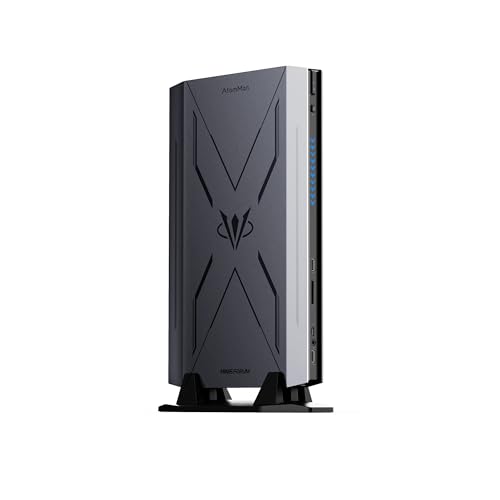
- Best overall barebones kit: AtomMan G7 Pro Barebone, Core i9-14900HX, RTX 5070 Laptop GPU — Check on Amazon
- AtomMan G7 Ti, Core i9-14900HX, RTX 4070 Laptop GPU (140W) — Check on Amazon
- Intel NUC 13 Extreme Kit NUC13RNGi9, Core i9-13900K, PCIe x16 slot — Check on Amazon
- AtomMan G7 Pt, Ryzen 9 7945HX, Radeon RX 7600M XT — Check on Amazon
See 2 more Amazon options
- MINISFORUM MS-A2 Barebone, Ryzen 9 9955HX, dual 10G SFP+ — Check on Amazon
- MINISFORUM MS-01 Barebone, Core i9-13900H, dual 10G SFP+ — Check on Amazon
Read the full guide ↓
Disclosure: As an Amazon Associate, reviewstook.com earns from qualifying purchases. Links to Amazon on this page are affiliate links; they cost you nothing extra. Listing details such as price and availability change often, so check the current Amazon listing before you buy.
Here is the sentence this entire guide is built around, because somebody should say it before you spend anything: there is no barebones mini PC kit on Amazon that legitimately costs anywhere near $3,000. We went looking for one — through every flagship kit the category has — and even the most expensive verified barebones mini PC in this guide, Intel’s NUC 13 Extreme Kit, sits well below this guide’s ceiling; check price on Amazon for its current figure. The strongest GPU-equipped kits, Minisforum’s AtomMan G7 Pro and G7 Ti, sit below it as premium barebones. Between the top verified kits and $3,000 there is, as far as verified Amazon listings show, nothing — an empty band populated only by marketplace sellers marking up budget, mid-range and premium kits to fantasy levels, and by complete, configured machines wearing a “barebone” keyword they do not deserve. If a listing asks close to this budget for a barebones mini PC, it is not a halo product. It is a markup, and this guide will not pretend otherwise to fill a price band.
So what does a $3,000 budget honestly mean here? It means the budget is not the constraint — your parts list is. A barebones kit is a promise with three holes in it: no RAM, no SSD, no operating system. The kit price is the entry fee, not the computer. This guide therefore judges every pick twice: the kit as listed, and the total cost to complete — kit plus memory, storage and an OS — because that second total is the one that should be compared against your $3,000, and against the complete mini PCs that ship ready to run. That second total matters more than usual right now, because DDR5 SO-DIMM prices have spiked hard — check price on Amazon for a 32GB DDR5-5600 laptop-memory kit — and that single fact breaks the old “barebone always saves money” rule for at least one pick below, in a way we will explain rather than assert.
What $3,000 does buy, spent honestly, is the best of a genuinely excellent small category: a console-sized RTX 5070 or RTX 4070 gaming kit you finish with your own memory and storage, a 16-core AMD Advantage-certified gaming kit, a desktop-class Core i9-13900K kit with a real PCIe x16 slot that swallows a full graphics card, and two mini-workstation kits with dual 10-gigabit networking that homelab builders treat as infrastructure. Completed carefully, the gaming kits and the workstations alike finish well inside this budget, and even the NUC — the one pick that can eat a whole budget — only approaches $3,000 if you deliberately feed it a high-end graphics card. Below are the quick picks, the completion picture for all six, detailed reviews, a comparison table, a completion checklist, the mistakes that waste the most money in this category, and the questions barebone buyers ask after the box arrives.
In this guide
Quick Picks
Short on time, or comparing several options at once? Each row below names a buyer type and the kit that suits it, with a note on where each kit sits in the range.
| Buyer type | Pick | Price | Why it stands out | Link |
|---|---|---|---|---|
| Best overall | AtomMan G7 Pro Barebone (i9-14900HX, RTX 5070 Laptop) | Check price on Amazon | Newest GPU in a barebone mini PC, DLSS 4 generation | Check on Amazon |
| Best proven gaming kit | AtomMan G7 Ti (i9-14900HX, RTX 4070 Laptop 140W) | Check price on Amazon | Full-power 140W mobile 4070, reviewed and battle-tested | Check on Amazon |
| Best expandable kit | Intel NUC 13 Extreme Kit NUC13RNGi9 (i9-13900K) | Check price on Amazon | Desktop CPU and a real PCIe x16 slot for your own GPU | Check on Amazon |
| Best AMD gaming kit | AtomMan G7 Pt (Ryzen 9 7945HX, RX 7600M XT) | Check price on Amazon | 16 Zen 4 cores, AMD Advantage certified, most affordable GPU kit here | Check on Amazon |
| Best workstation CPU | MINISFORUM MS-A2 Barebone (Ryzen 9 9955HX) | Check price on Amazon | 16 Zen 5 cores, dual 10G SFP+, PCIe slot — but read the completion warning | Check on Amazon |
| Best homelab value | MINISFORUM MS-01 Barebone (Core i9-13900H) | Check price on Amazon | Dual 10G SFP+, dual 2.5G, PCIe slot, the proven cluster node | Check on Amazon |
How These Picks Were Chosen
Three filters were applied, in this order. The first is the barebone filter, and it is stricter than Amazon’s search results: a pick only counts if the kit genuinely ships without some combination of RAM, storage and operating system for the buyer to supply. Complete mini PCs that surface under barebone searches — and there are many, because sellers keyword-stuff their titles — were excluded, however good they are; they have their own guides, including Best Mini PC Under $3000 and Best Mini Gaming PC Under $3000. Where a pick is sold on one Amazon listing in both barebone and configured styles, the review says so and tells you exactly which style to select, because clicking the wrong style tile is the most common way buyers in this category order the wrong product.
The second filter is verification. Every ASIN below was confirmed against a real Amazon listing — its title, specification table or tracked record — and checked against the listing data Amazon itself publishes to search indexes and price trackers. Amazon’s pages resist automated reading in this environment (one of the six pages opened in full; the rest were verified through that published listing data), so the sources file documents, per product, exactly what was verified where. One well-known kit was deliberately excluded on this filter: Zotac’s Magnus One barebone, a genuinely good RTX 4070 desktop-GPU kit, could not be pinned to a verifiable Amazon US listing in this session — it appears on Amazon UK and third-party stores — so it is named here as an also-consider rather than linked on a guess.
The third filter is total-cost honesty. Each review completes the build on paper: kit, plus a 32GB DDR5 SO-DIMM kit at current Amazon pricing — check price on Amazon, because the memory shortage is the defining fact of this buying season — plus a 1–2TB NVMe SSD and an operating system. Where the completed total makes the barebone a bad deal against the same machine sold configured — and right now, for one pick, it does — the review says so in plain terms and tells you to buy the configured version instead. A buying guide that only ever recommends the thing in its title is an advertisement; this one would rather send you to a configured MS-A2 than let you overpay for the privilege of installing your own RAM at shortage prices.
We did not use these kits ourselves. We read the maker listings, specification pages and independent reviews, and compared what a barebone buyer actually receives: CPU and GPU silicon, memory type and slot count, storage slots, expansion, networking and cooling — the parts that are fixed at purchase and can never be upgraded later, which in a mini PC is most of them.
The 6 Best Barebones Mini PCs Under $3,000
AtomMan G7 Pro Barebone — Core i9-14900HX, RTX 5070 Laptop GPU
Who it suits: The buyer who wants the newest graphics silicon a barebone mini PC has ever shipped with, and who already owns — or is happy to hunt — DDR5 SO-DIMMs and an NVMe drive.
The G7 Pro is the current flagship of the barebone gaming mini PC, and its specification reads like a gaming laptop that lost its screen on purpose: a 24-core Intel Core i9-14900HX (8 performance cores, 16 efficiency cores, up to 5.8GHz), an NVIDIA GeForce RTX 5070 Laptop GPU with 8GB of GDDR7, two DDR5 SO-DIMM slots supporting up to 96GB, and two M.2 2280 SSD slots with up to 8TB of total storage between them, cooled by six heat pipes and dual fans. The Amazon listing for this exact kit — titled, in Amazon’s own words, “Barebone Version Without Storage/OS” — confirms the RTX 5070 with 8GB of graphics memory, the DDR5 memory type and the 14900HX, and Minisforum’s regional listings describe the barebone package as shipping without an operating system, memory or storage. What the RTX 5070 generation buys over the 4070 below is not raw raster speed so much as features: DLSS 4 with multi frame generation, which on a 1080p or 1440p display turns a strong frame rate into a very high-refresh one, provided the base frame rate is already healthy — frame generation multiplies frames, it does not rescue a struggling base rate, and this guide will not sell it as magic.
The completion picture: this is a premium barebone, and Minisforum also sells a configured 32GB/1TB version of the same machine — check price on Amazon for both before you decide. Add a 32GB DDR5 SO-DIMM kit, a 1–2TB NVMe drive and an OS, and the completed machine stays comfortably inside this budget, but compare honestly against the configured version: at memory-shortage prices, the configured unit can be the cheaper route to the identical computer, and the barebone only wins if you already own the RAM and SSD, or catch the memory market on a better week. That is not a flaw in the kit; it is the arithmetic of a memory shortage, and it applies to every DDR5 pick in this guide.
- RTX 5070 Laptop GPU with 8GB GDDR7 — the newest GPU generation available in any barebone mini PC.
- 24-core i9-14900HX and up to 96GB of DDR5 across two SO-DIMM slots.
- Two M.2 slots (up to 8TB total), HDMI 2.1, USB4, WiFi 7 — a complete modern port set.
Honest limitation: The GPU is the laptop RTX 5070 with 8GB of VRAM — not the desktop card — and 8GB is the first ceiling at 1440p in texture-heavy games; the CPU and GPU are soldered and can never be upgraded, and at current memory prices the configured version may undercut your completed total.
Choose it if you want the longest feature runway (DLSS 4) and are completing it with parts you own or find well-priced. Skip it if you need more than 8GB of VRAM headroom — no mini PC in this guide offers it — or if the configured version is in stock and well priced, which makes the barebone the expensive way to get the same machine.

AtomMan G7 Ti — Core i9-14900HX, RTX 4070 Laptop GPU (140W)
Who it suits: The gaming-first buyer who prefers a reviewed, known quantity over a newer badge — and who wants the strongest proven mobile GPU implementation in a mini PC chassis.
If the G7 Pro is the flagship on paper, the G7 Ti is the flagship with a track record. It pairs the same 24-core Core i9-14900HX with an RTX 4070 Laptop GPU running at a full 140W total graphics power — the maximum configuration of that chip, which matters, because laptop GPUs are sold at wildly different power limits under the same name and a 100W 4070 is a measurably slower card than a 140W one. Independent reviews (Notebookcheck tested the configured version) confirm the 140W figure, the dual DDR5-5600 SO-DIMM slots up to 96GB, dual PCIe 4.0 M.2 slots, WiFi 7 and the slim console-like chassis — roughly the size of a games console, designed to stand vertically beside or behind a monitor. In the same reviews the machine is characterised honestly as a gaming laptop without a screen, which is exactly the right mental model: everything inside is mobile silicon, chosen for power efficiency in a small box, and judged against laptops it is strong; judged against a desktop RTX 4070 with 12GB, it gives back VRAM and some performance, as every pick in this category does.
One caution belongs in bold type: this kit is sold on a shared Amazon listing whose styles include configured versions, and the ASIN captured for this guide is that listing family’s — confirm the style selector says Barebone (no RAM, no SSD, no OS) before you order, because the same page will happily sell you a complete machine at a different price. Check price on Amazon for the current barebone figure. Completed with 32GB of DDR5 at shortage-era pricing plus storage and an OS, the G7 Ti lands in the same premium completed territory as the G7 Pro build, which is the real decision between them: proven 140W 4070 with DLSS 3, or newer 5070 with DLSS 4, at near-identical money.
- RTX 4070 Laptop GPU at the full 140W — the strongest verified implementation of that chip in a mini PC.
- Same 24-core 14900HX, dual SO-DIMM (up to 96GB DDR5-5600) and dual M.2 platform as the flagship.
- Reviewed extensively in configured form; behaviour, cooling and noise are documented quantities.
Honest limitation: The 4070 is also an 8GB card, a generation behind on frame generation (DLSS 3, not 4), and the shared listing’s style tiles are a genuine ordering trap; the chassis is large for a “mini” PC — console-sized, not palm-sized.
Choose it if you value the known quantity and the 140W GPU, and you will double-check the style selector at checkout. Skip it if the G7 Pro is at the same completed total — the newer GPU’s feature set is the better long-term hold — or if you need a box that hides behind a monitor, because this one is too big.

Intel NUC 13 Extreme Kit NUC13RNGi9 — Core i9-13900K, PCIe x16
Who it suits: The builder, not the mini-PC tourist: someone who wants a desktop-class CPU and the freedom to choose — and later replace — a real desktop graphics card, in the smallest box that allows it.
The NUC 13 Extreme is a different species from everything else in this guide, and it is also the most premium kit in the entire category. Inside its roughly 14-litre case — “mini” by tower standards, enormous by mini-PC standards — sits a socketed desktop Core i9-13900K: 24 cores, 32 threads, up to 5.8GHz, unlocked. Around it: two DDR5 SO-DIMM slots (up to 64GB), three M.2 slots, WiFi 6E, dual Thunderbolt, and the feature no other pick here can match, a full PCIe 5.0 x16 slot that accepts a dual-slot desktop graphics card up to about 12 inches long, fed by an internal 750W power supply. This is the only kit in the guide where the graphics card is your decision rather than the maker’s — which cuts both ways, and the honesty section below is mostly about that. Check price on Amazon for the kit’s current figure. Two seller caveats, stated plainly: the Amazon listing is sold by a third-party seller rather than Intel or ASUS (which inherited the NUC line), and the listing’s own copy contains a strange note about the CPU having been changed from an i5-13600K — treat that as what it is, a sign to buy carefully, verify the exact unit on arrival, and prefer a seller whose return terms you trust.
Now the point that makes this pick unique: it is the only one whose completed total can genuinely reach this guide’s budget. Add 32GB of DDR5 SO-DIMM at shortage-era pricing, plus an SSD and an OS, and you are already at a substantial total before a graphics card — running on integrated graphics that are suitable for a desktop, not for gaming. Add a sensible mid-range desktop GPU and the total climbs toward this budget; add a high-end one and you have blown through the budget entirely, at which point the honest advice is that a conventional small-form-factor build does the same job for less. The NUC 13 Extreme makes sense in exactly two scenarios: you already own a suitable graphics card (then it is the strongest kit here by a distance), or you specifically want this upgradeable, socketed, slot-equipped platform and accept that the GPU is a second purchase. Bought as a route to a cheap complete PC, it is the most expensive mistake in the guide.
- Socketed desktop i9-13900K — the only CPU in this guide that can be replaced, and the strongest.
- A real PCIe x16 slot and 750W internal PSU: bring any dual-slot GPU up to ~12 inches.
- Three M.2 slots, dual Thunderbolt, WiFi 6E — expansion no sealed mini PC approaches.
Honest limitation: It ships with no GPU worth gaming on, no RAM, no SSD and no OS; it is a 14-litre box wearing a mini-PC badge; and the current Amazon supply runs through third-party sellers with listing copy you should read twice.
Choose it if you own a graphics card already, or want the one kit here that can be re-GPU’d in three years. Skip it if your $3,000 must include the graphics card and leave change — the G7 Pro completes for far less — or if “mini” actually means small to you.

AtomMan G7 Pt — Ryzen 9 7945HX, Radeon RX 7600M XT
Who it suits: The all-AMD buyer, the Linux gamer, and anyone who wants the most affordable discrete-GPU gaming kit in this guide — without giving up a 16-core flagship CPU to get it.
The G7 Pt (originally launched as the HX200G) holds a genuine first: it is the world’s first AMD Advantage-certified mini PC, and the hardware earns the badge. The Ryzen 9 7945HX is a desktop-replacement chip in the fullest sense — 16 Zen 4 cores, 32 threads, up to 5.4GHz — paired with a discrete Radeon RX 7600M XT: RDNA 3, 8GB of GDDR6, run at up to 120W per review specifications. Storage and memory follow the family pattern — two DDR5 SO-DIMM slots up to 96GB (DDR5-5200), and a PCIe 5.0 M.2 slot plus a PCIe 4.0 slot, a storage pairing none of the Intel kits above match — in a roughly 2.6-litre tower that is the most compact GPU-equipped chassis in this guide. Review consensus on the configured version is consistent: convincing 1080p gaming at high settings, selected 1440p with sensible settings and FSR upscaling, and CPU performance that embarrasses most desktops. What it does not have is NVIDIA’s ecosystem: no DLSS, no CUDA, and ray tracing that trails the green team’s at this tier — FSR is good and improving, but the feature gap is a fact, not a preference.
The value is where this kit shines. This is the most affordable discrete-GPU kit in this guide — a mid-range barebone, also sold on Amazon US in a configured 32GB/1TB version; check price on Amazon for both, and apply the same style-selector discipline as the G7 Ti: confirm you are buying the barebone style. Completed — 32GB of DDR5 at shortage-era pricing plus storage and an OS — a G7 Pt is the most affordable completed discrete-GPU machine in this guide by a clear margin. At that positioning the honest question flips: the configured version can undercut the completed barebone entirely while memory is expensive, and it arrives with a warranty on the whole machine rather than on a kit plus your parts. Buy the barebone when you already own DDR5 SO-DIMMs and an NVMe drive; buy it configured when you do not. Either way, the platform underneath is the same excellent hardware.
- 16-core Ryzen 9 7945HX — the joint-strongest CPU in this guide, in the smallest GPU chassis.
- Discrete RX 7600M XT 8GB — real gaming graphics, with a PCIe 5.0 SSD slot beside it.
- Cheapest route to a completed discrete-GPU mini PC in this guide.
Honest limitation: No DLSS or CUDA, ray tracing a tier behind the NVIDIA picks, the same 8GB VRAM ceiling as everything else here, and a shared listing where the barebone and configured styles must not be confused.
Choose it if you are team red, run Linux, or want maximum CPU per dollar with honest 1080p gaming. Skip it if your games lean on DLSS or ray tracing, or if the configured version is well priced and you own no parts — take the finished machine.

MINISFORUM MS-A2 Barebone — Ryzen 9 9955HX, Dual 10G SFP+
Who it suits: Homelab and workstation builders who need the strongest mini-PC CPU platform on sale — 16 Zen 5 cores, serious networking and a PCIe slot — and who understand exactly what a barebone does and does not include.
Strip the gaming kits away and the MS-A2 is the most modern platform in this guide. Its Ryzen 9 9955HX is a Zen 5 chip — 16 cores, 32 threads, up to 5.4GHz — a full generation ahead of everything else here, soldered into a 1.8-litre workstation chassis with two DDR5 SO-DIMM slots (up to 96GB DDR5-5600), three M.2 slots that also accept 22110 and U.2 drives, two 10-gigabit SFP+ ports on an Intel X710 controller, two 2.5-gigabit ports, WiFi 6E, and a physical PCIe x16 slot wired x8 that takes a low-profile single-slot card — a small GPU, a fast NIC, a storage controller. Check price on Amazon for the barebone listing’s current figure. Integrated graphics are a Radeon 610M, which is a display adapter, not a gaming GPU: this machine renders desktops and transcodes video, and if gaming matters you are adding a low-profile card to the slot or looking at the AtomMan picks instead. Judged as what it is — a virtualization node, a render and compile box, a network services host — there is nothing in its tier with this CPU and this networking.
And now the most important paragraph in this review, because it is the one that saves you money: at current memory prices, do not complete this barebone from scratch. The reasoning: a 32GB DDR5-5600 SO-DIMM kit at shortage-era pricing — check price on Amazon — plus an SSD and an OS can push the completed total up to what the same MS-A2 costs sold configured with memory and storage included, before storage is even added on the barebone side. The barebone premium, in a memory shortage, can be negative: you pay configured money and still owe an SSD and an OS. The barebone is the right buy in exactly two situations — you already own DDR5 SO-DIMMs and storage (then this premium platform is superb value), or memory prices fall back to earth. Otherwise buy the configured MS-A2 and spend the difference on the low-profile GPU or the 10G switch. This is the clearest illustration in the guide of why every pick should be judged completed, not by its kit sticker.
- Ryzen 9 9955HX — the only Zen 5 CPU in this guide, 16 cores in 1.8 litres.
- Dual 10G SFP+ (Intel X710), dual 2.5G, three M.2/U.2-capable slots, PCIe x16 (x8) expansion.
- A premium workstation platform — excellent value if you own the memory; check price on Amazon.
Honest limitation: Radeon 610M integrated graphics are not for gaming; the CPU is soldered; and at current SO-DIMM prices the completed barebone can cost more than the configured machine — the review above explains why.
Choose it if you are building a homelab or workstation and already own DDR5 SO-DIMMs, or memory prices have normalised by the time you read this. Skip it if you are starting from zero parts today — buy the configured version — or if gaming is the point, because this box needs a slot GPU to play.

MINISFORUM MS-01 Barebone — Core i9-13900H, Dual 10G SFP+
Who it suits: The homelab buyer who wants the proven, documented, community-tested version of the mini-workstation idea — for less money than its successor.
The MS-01 is the machine that defined this subcategory, and two years of homelab abuse have made it the safest pair of hands in the guide. The barebone in this listing carries a Core i9-13900H — 14 cores, 20 threads — in the same 1.8-litre chassis pattern as its successor: two DDR5 SO-DIMM slots, three SSD slots (M.2 2280/22110 and U.2), two 10-gigabit SFP+ ports, two 2.5-gigabit LAN ports, dual USB4, and a PCIe slot that the listing itself notes supports low-profile discrete cards such as an RTX 3050. Check price on Amazon for the barebone’s current figure — it sits in the budget tier of this guide. Against the MS-A2 above, the trade is explicit: an older Intel platform with two fewer cores and a generation’s worth of efficiency deficit, in exchange for a lower kit price and the deepest well of community documentation, firmware history and known-good configurations in the category — Proxmox clusters, Ceph nodes, router builds, this machine has public recipes for all of them. Integrated Iris Xe graphics handle displays and Quick Sync transcoding — genuinely useful for a media server — but, like the MS-A2, this is not a gaming machine until a low-profile card goes in the slot.
Completion, same rules as the rest of the guide: add 32GB of DDR5 SO-DIMM at shortage-era pricing, plus storage and an OS, and the total stays well inside this budget — and the same warning applies in milder form, because configured MS-01s have been priced at levels that make the from-scratch barebone a convenience, not a saving. Where the MS-01 barebone unambiguously wins is the classic homelab pattern: you have SO-DIMMs and NVMe drives in a drawer from the last build, as homelab people always do, and the barebone turns them into a dual-10G node with a flagship-class mobile CPU. It is also the pick for buyers who distrust first-generation anything: every quirk this machine has is already documented by someone who hit it before you.
- Dual 10G SFP+ plus dual 2.5G LAN — four network ports, the homelab standard-setter.
- PCIe slot for a low-profile GPU or storage card; three SSD slots including U.2.
- The most affordable kit in this guide, with the deepest community knowledge base — check price on Amazon.
Honest limitation: A 2023-era CPU platform — two cores down and a generation behind the MS-A2 — with integrated graphics only until you add a slot card, and the same memory-shortage completion caveat as its successor.
Choose it if you are building a cluster or server from parts on hand and value proven over newest. Skip it if this is a single do-everything machine bought from zero — the MS-A2 configured, or a gaming kit, serves you better.
Comparison Table
| Kit | CPU / GPU | Price | Completed position | Link |
|---|---|---|---|---|
| AtomMan G7 Pro Barebone | i9-14900HX / RTX 5070 Laptop 8GB | Check price on Amazon | Premium, well inside budget | Check on Amazon |
| AtomMan G7 Ti | i9-14900HX / RTX 4070 Laptop 8GB (140W) | Check price on Amazon | Premium, well inside budget | Check on Amazon |
| Intel NUC 13 Extreme Kit | i9-13900K desktop / bring your own GPU | Check price on Amazon | Highest here — before GPU | Check on Amazon |
| AtomMan G7 Pt | Ryzen 9 7945HX / RX 7600M XT 8GB | Check price on Amazon | Most affordable completed GPU kit | Check on Amazon |
| MINISFORUM MS-A2 Barebone | Ryzen 9 9955HX / Radeon 610M | Check price on Amazon | Mid-range; configured can be better value | Check on Amazon |
| MINISFORUM MS-01 Barebone | Core i9-13900H / Iris Xe | Check price on Amazon | Budget; well inside budget | Check on Amazon |
How to Choose a Barebones Mini PC Under $3,000
- Price the completed machine, never the kit. Add the kit, a memory kit at today’s prices, an SSD and an OS before comparing anything. Right now a 32GB DDR5 SO-DIMM kit alone is a major expense on Amazon — check price on Amazon; any comparison that ignores the memory line item is fiction.
- Compare against the configured version of the same machine. Every kit in this guide is also sold finished. If configured ≤ your completed total — true right now for the MS-A2 and arguably the G7 Pt — buy configured and let the warranty cover the whole box.
- Decide your graphics first; it decides everything else. Soldered-GPU kits (both AtomMan gaming models) fix your graphics forever at purchase. Slot kits (NUC 13 Extreme, MS-A2, MS-01) let you add or change a card but ship with integrated graphics that cannot game. There is no third option in a mini PC.
- Read VRAM, not GPU names. Every discrete GPU in this guide carries 8GB. That is enough for 1080p high and 1440p with upscaling today, and it is the first wall you will hit tomorrow. If your plan is 4K textures for five years, your plan is a desktop.
- Check the memory type before you reuse parts. All six picks take DDR5 SO-DIMMs — laptop memory, not the desktop DIMMs in your old tower — at speeds from DDR5-5200 to DDR5-5600 depending on the kit. DDR4 from a drawer fits nothing in this guide.
- Mind the style selector on shared listings. The AtomMan gaming kits are sold on Amazon listings that mix barebone and configured styles under one page. Confirm the style name, the price and the “no RAM/SSD/OS” wording on the exact variant in your cart.
- Treat any kit listed far above its usual tier as a markup, not a model. The verified ceiling of this category sits well below this guide’s budget. A premium-priced listing for a budget or mid-range kit is a third-party seller testing your urgency.
- Buy the networking you will actually wire. The MS-A2 and MS-01 carry dual 10G SFP+ — superb with a 10G switch and SFP+ modules or DAC cables budgeted, pointless cost and heat without one.
- Plan the OS honestly. No kit here includes Windows. A retail licence, an existing licence you can transfer, or Linux (free, and excellent on the AMD kit) — decide before checkout, not at the first boot screen.
- Keep every box until the second week. A barebone build that fails to POST has three suspects — kit, RAM, SSD — from potentially three sellers. Packaging and order records are how you isolate which one goes back.
The Verified Ceiling: Why the Top Half of This Budget Is Empty
It is worth one short section of its own, because a guide titled “under $3,000” owes you an account of the missing money. The barebones mini PC is a young category with a hard physical ceiling: the most expensive things that can be soldered into a small chassis — a flagship mobile CPU and a mid-range mobile GPU — simply do not sum to this guide’s budget at any honest retail margin. The verified ladder, from this guide’s own research: the workstation kits sit in the budget-to-mid-range tiers; the strongest AMD gaming kit sits in the mid-range; the flagship NVIDIA gaming kits are premium; and the category’s ceiling is a socketed desktop-i9 kit with no GPU at all. Above that line, the market offers configured machines, workstation brands with workstation margins, and marketplace markups — but no barebones kit whose price survives verification. Even ASUS’s ROG NUC line, the traditional premium badge in this space, is sold configured rather than as a barebone.
The practical consequence is good news disguised as a gap: a $3,000 budget for a barebones mini PC is not a budget to be stretched but a surplus to be allocated. Spend sensibly on the right kit completed properly, and the remainder buys the things that actually change the experience — a better monitor, the 10G switch the MS-series deserves, a second NVMe drive, a mechanical keyboard, or simply nothing at all. The worst use of the surplus is the one the empty band invites: paying a reseller a huge markup for a premium kit because the listing was the only one in stock that day. Wait, buy configured, or buy a different pick in this guide — all three beat feeding the markup.
Common Buying Mistakes
- Comparing kit prices against complete PCs. A barebone and a configured machine can be the same computer at very different totals; only the completed total tells you which is cheaper.
- Forgetting that DDR5 SO-DIMM prices have spiked. Budgeting pre-shortage memory prices in late 2026 badly underfunds the build.
- Ordering the configured style — or the barebone style — by accident on a shared Amazon listing, then discovering at unboxing that the box has no RAM, or that you paid for RAM you already owned.
- Assuming “RTX 5070” or “RTX 4070” in a mini PC means the desktop card. These are laptop GPUs with 8GB; excellent in context, a different product from the 12–16GB desktop versions.
- Paying a marketplace markup in the empty band. No verified barebones kit legitimately sits near the top of this budget; a listing up there for a kit in this guide is a reseller premium, full stop.
- Buying the NUC 13 Extreme as a “cheap gaming PC.” It contains no gaming GPU; the graphics card is a second, large purchase that can carry the total past $3,000.
- Expecting to upgrade a soldered kit later. In five of these six picks the CPU and GPU are permanent. Only memory, storage — and in the slot kits, an add-in card — can ever change.
- Skipping the OS line in the budget, then paying full retail in a panic at first boot — or worse, buying a suspiciously cheap licence key from the same marketplace that sells marked-up kits.
Final Recommendation
- Most buyers with a $3,000 budget: AtomMan G7 Pro Barebone — completed well inside the budget, with plenty left over.
- Proven gaming over new badges: AtomMan G7 Ti.
- Builders who own a graphics card: Intel NUC 13 Extreme Kit NUC13RNGi9.
- AMD, Linux and value: AtomMan G7 Pt.
- Homelab and workstation builders: MINISFORUM MS-A2 — configured, unless you own the memory; MS-01 if proven beats new.
Our top two are the G7 Pro, because it is the strongest complete-it-yourself gaming platform the category currently sells, and the G7 Pt, because it delivers four-fifths of the experience for far less and its 16-core CPU will outlive its GPU. The NUC 13 Extreme is the connoisseur’s pick — the only kit here that can grow a new graphics card — provided it is bought with open eyes about sellers and totals. The two Minisforum workstations are infrastructure rather than gaming machines, and the MS-A2 carries this guide’s clearest instruction: at today’s memory prices, buy it configured. Whichever kit you choose, do the completed-total sum before checkout, confirm the exact style on the listing, and let the rest of the $3,000 stay unspent — in this category, the disciplined buyer finishes with a faster desk and most of the budget still in hand. Readers working to tighter kit budgets should also see Best Barebones Mini PC Under $1500 and Best Barebones Mini PC Under $2500, and those who would rather skip the screwdriver entirely can start with Best Mini Gaming PC Under $3000.
Frequently Asked Questions
Is there really no barebones mini PC near the top of this budget?
None that we could verify on Amazon. The most expensive verified kit in this guide, Intel’s NUC 13 Extreme, sits well below the top of this budget — check price on Amazon — and the flagship GPU kits sit below it in the premium tier. Listings above that range for kits in this category are third-party markups of the same hardware, or configured machines using “barebone” as a keyword. Treat the band as empty and price accordingly.
What does “barebones” actually leave out — and what does completing one cost?
Typically: RAM, storage and the operating system. At late-2026 prices the completion is dominated by memory — 32GB DDR5 SO-DIMM kits are a major expense on Amazon right now; check price on Amazon — plus a 1–2TB NVMe SSD and an OS. Budget a substantial sum on top of any DDR5 kit in this guide, and check the configured version of the same machine before you commit.
Why would anyone buy barebone when configured can be cheaper?
Three honest reasons: you already own compatible RAM and storage (the classic homelab drawer), you want a specific configuration no configured SKU offers — 96GB of RAM, a particular SSD — or memory prices have fallen back and the old arithmetic returns. Outside those cases, and especially during a memory shortage, configured is frequently the rational buy, and this guide says so where it applies.
Are the GPUs in these kits the same as desktop RTX 4070 and 5070 cards?
No. They are the laptop GPUs of the same names, with 8GB of VRAM against the desktop cards’ 12GB (4070) and 12GB (5070), at laptop power limits — the G7 Ti’s 140W 4070 is the full-power exception that proves the rule. Expect strong 1080p and upscaled 1440p gaming, not desktop-class 4K.
Can I upgrade these kits later?
Memory and storage, yes — that is the point of a barebone. CPU and GPU, no, in every pick except the NUC 13 Extreme, whose socketed desktop CPU and PCIe x16 slot make it the only genuinely re-configurable platform here. The MS-A2 and MS-01 sit between the two: soldered CPUs, but a PCIe slot for a low-profile GPU or other card.
Which kit is best for a homelab or home server?
The MS-A2 if you are buying configured or own DDR5 memory — Zen 5 cores, dual 10G SFP+, three SSD slots — and the MS-01 if you are building from parts on hand and value two years of community documentation. Neither games without help: plan a low-profile slot GPU if the node must also play.
What should I check the moment my kit arrives?
That the box matches the style you ordered (barebone versus configured), that the CPU and GPU in the firmware match the listing, and that both SO-DIMM and M.2 slots are present and undamaged before your return window starts moving. Then build, POST with one memory stick if it refuses to start, and only dispose of packaging after a week of stable running.
- Best Barebones Mini PC Under $2500
- Best Barebones Mini PC Under $1500
- Best Barebones Mini PC Under $1200
- Best Barebones Mini PC For 1440p Gaming Under $3000
- Best Barebones Mini PC For Small Spaces Under $3000
- Best Barebones Mini PC For Streaming Under $3000
- Best Barebones Mini PC For Beginners Under $3000
- Best Mini PC Under $3000


