Where to buy
Check the latest price, availability and delivery on Amazon. Orders are placed on Amazon. We may earn a commission from qualifying purchases.
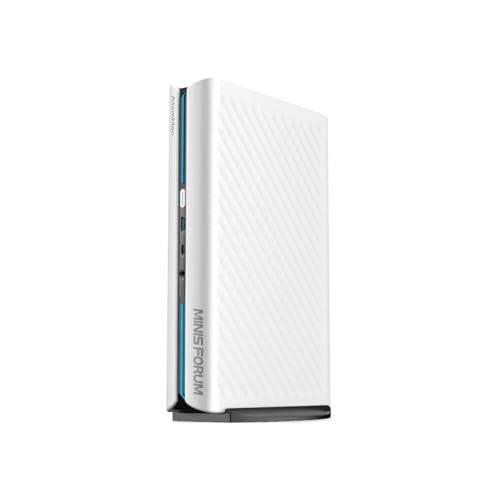
- Best overall: MINISFORUM AtomMan G1 Pro (Barebone) — Ryzen 9 8945HX, Desktop RTX 5060 — Check on Amazon
- MINISFORUM AtomMan G7 Pro (Barebone) — Core i9-14900HX, RTX 5070 Laptop GPU — Check on Amazon
- MINISFORUM AtomMan G7 PT — Ryzen 9 7945HX, Radeon RX 7600M XT — Check on Amazon
- MINISFORUM MS-A2 (Barebone) — Ryzen 9 9955HX, Dual 10G SFP+ — Check on Amazon
See 2 more Amazon options
- MINISFORUM MS-01 (Barebone) — Core i9-13900H, PCIe x16 Slot, Dual 10G SFP+ — Check on Amazon
- GMKtec NucBox K8 Plus (Barebone) — Ryzen 7 8845HS, Radeon 780M, OCuLink — Check on Amazon
Read the full guide ↓
Disclosure: As an Amazon Associate, reviewstook.com earns from qualifying purchases. Links to Amazon on this page are affiliate links; they cost you nothing extra. Listing details such as price and availability change often, so check the current Amazon listing before you buy.
Start with the honest headline, because it changes how this whole guide should be read: there is no verified barebones mini PC kit on Amazon priced anywhere near $2,500. We checked the listings, the price trackers and the makers’ own stores, and the most expensive genuine barebone kit we could verify — a chassis with a soldered high-end CPU and a discrete GPU, waiting for your RAM, SSD and operating system — is the MINISFORUM AtomMan G7 Pro, positioned at the very top of the verified barebone range — check price on Amazon for its current listing. Above that, the cupboard is bare. The one machine that would fill the band, Zotac’s desktop-RTX-5060-Ti Magnus barebone, has an Amazon listing that sits unavailable with no orderable configuration we could pin down, and its bigger sibling launched in China at a level above this budget, not under it. Anyone who shows you a tidy list of $2,000–$2,500 barebone kits is padding it with configured machines, dead listings or invented models.
So read $2,500 the way experienced small-form-factor builders actually use it: as a ceiling for the finished machine, not the kit. A barebone price is a down payment. On top of the kit you still owe memory, storage and an operating system — and in late 2026 you owe them at the worst memory prices in years, with 64GB DDR5 SO-DIMM kits commanding a steep premium at US retail. Costed honestly, kit plus parts, the six verified kits below complete well under the ceiling at the entry end and approach it only at the top end, and exactly one of them — the G7 Pro, loaded with 64GB of RAM and a 2TB drive — can genuinely spend the whole $2,500. Every review in this guide therefore leads with total cost to complete, not the sticker on the box. If your $2,500 is a kit-only budget with parts money on top, the truthful advice is to buy the G7 Pro or G1 Pro below and put the change into memory, storage and a monitor — there is nothing legitimate above them to buy.
In this guide
Quick Picks
Short on time, or comparing several options at once? Each row below names a builder type and the kit that suits it, with a link to the listing. For linked picks, check price on Amazon — the completed-build guidance in each review is what to budget against.
| Buyer type | Pick | Why it stands out | Link |
|---|---|---|---|
| Best overall | MINISFORUM AtomMan G1 Pro (Barebone) | A real desktop RTX 5060 at full 145W in a 3.8L kit — check price on Amazon | Check on Amazon |
| Best high-end kit | MINISFORUM AtomMan G7 Pro (Barebone) | Core i9-14900HX plus RTX 5070 Laptop GPU — the strongest verified kit, and the only one that can spend $2,500 completed | Check on Amazon |
| Best AMD gaming kit | MINISFORUM AtomMan G7 PT | 16-core Ryzen 9 7945HX and a discrete RX 7600M XT — the most accessible discrete-GPU kit here; check price on Amazon | Check on Amazon |
| Best workstation / home lab | MINISFORUM MS-A2 (Barebone) | Zen 5 16-core CPU, dual 10G SFP+, three M.2 slots and a PCIe slot — check price on Amazon | Check on Amazon |
| Best Intel expansion kit | MINISFORUM MS-01 (Barebone) | Dual 10G SFP+, USB4 and a low-profile PCIe slot — check price on Amazon | Check on Amazon |
| Best starter kit | GMKtec NucBox K8 Plus (Barebone) | Ryzen 7 8845HS with OCuLink for a later GPU dock — the lowest-positioned kit here; check price on Amazon | Check on Amazon |
How These Picks Were Chosen
The first filter was definitional, and it removed most of the internet’s lists. A pick here had to be a genuine barebone: a real Amazon listing whose configuration ships without RAM, without storage and without an operating system, or a listing with a clearly selectable barebone variant. Fully configured machines wearing a “barebones” keyword were excluded, however good they are. The second filter was verification. Every ASIN below was confirmed against the live listing title, the maker’s manual for that exact ASIN, or a price tracker that records the listing — no ASIN in this guide was typed from memory or borrowed from a roundup. Where a famous model could not be pinned to an orderable Amazon listing — the Zotac Magnus EN275060TC is the headline case — it is discussed openly in the ceiling section further down instead of being linked on a guess.
The third filter was arithmetic. Each kit was costed to completion with the same parts basket, judged against late-2026 US market conditions: a 32GB (2×16GB) DDR5 SO-DIMM kit, the volatile and premium-priced line in a tight memory market; a 1TB PCIe 4.0 NVMe drive, comparatively stable by contrast; and a Windows 11 Home licence, an added cost unless you run Linux, which is free. That basket, not the kit alone, shapes the completed-build guidance in every review. Memory costs have moved week to week all year, so the reviews describe where each build lands relative to the budget rather than pinning a figure that would go stale. We did not use these machines ourselves; we read the listings, the makers’ manuals and specification pages, and independent review coverage, and where a maker figure stretches credibility — a “65Gbps” networking total that adds every port together, say — the review treats it as marketing and judges the hardware instead.
One more thing the choosing process surfaced: this market is effectively one maker’s catalogue plus guests. Five of the six verified kits come from MINISFORUM and its AtomMan sub-brand, with GMKtec the lone outsider, because they are the brands actually shipping high-end barebone configurations through Amazon US. ASUS sells its ROG NUC mostly configured and positioned starting where this budget ends; ASRock’s excellent socketed DeskMini kits are cheap, cheerful and — in the US — sold through other retailers rather than a pinnable Amazon listing. That concentration is itself buying information: at the high end of barebones, you are choosing between generations and GPUs inside one catalogue, and the differences that matter are the ones the reviews below spend their words on.
The 6 Best Barebones Mini PCs Under $2,500
MINISFORUM AtomMan G1 Pro (Barebone) — Ryzen 9 8945HX, Desktop RTX 5060
Who it suits: Gamers and creators who want the strongest graphics you can put in a barebone kit without paying for a flagship CPU you may not need — and who like that the GPU is a real desktop card.
The G1 Pro’s party trick is unique in this guide: its graphics card is not a laptop GPU soldered to the board but a low-profile desktop GeForce RTX 5060 — a Gigabyte card running at its full 145W — mounted inside a roughly 3.8-litre vertical case. Paired with a 16-core, 32-thread Ryzen 9 8945HX boosting to 5.4GHz, it is a combination no other verified kit matches at this level — check the current price on Amazon for the barebone and for the configured 32GB/1TB version of this same listing, and confirm which variant you are selecting. You bring two DDR5 SO-DIMMs (up to 96GB) and up to two M.2 PCIe 4.0 drives (up to 8TB total). Around the back and front you get 5-gigabit Ethernet, Wi-Fi 7, and five display outputs — three DisplayPorts and two HDMI — driving four 4K screens, all fed by a built-in 350W power supply, so there is no laptop brick cluttering the desk.
Costed to completion — the kit, plus 32GB of DDR5, a 1TB drive and Windows where needed — a finished G1 Pro lands comfortably under this budget, with room for a 2TB drive or a 64GB memory kit instead. Check price on Amazon before costing your own build, since the kit is the largest single line. Two quirks deserve printing in the review rather than the footnotes. The desktop GPU is a custom fit: MINISFORUM’s own manual warns that only the specified Gigabyte low-profile card is supported, so treat the GPU as fixed for the life of the machine — this is a barebone for memory and storage, not a future graphics upgrade path. And reviewers found the machine ships in an 80W gaming mode, with a substantial slice of its performance behind a “Beast Mode” toggle in the maker’s utility — a utility whose bundled driver has been flagged by Windows Defender in independent testing. None of that is disqualifying; all of it is worth knowing before the box arrives. Buy the memory as a matched two-stick kit, incidentally: the factory 32GB configuration ships on a single stick in single-channel mode, and a barebone buyer can simply do better.
- The only verified kit with a full-power desktop RTX 5060 — 145W, 8GB GDDR7.
- Upper-tier barebone positioning — completes comfortably under the budget; check price on Amazon.
- Built-in 350W PSU, 5GbE, Wi-Fi 7 and five display outputs for quad-4K desks.
Honest limitation: The GPU cannot be upgraded — the case, cooling and power are built around one specific low-profile card — and the performance mode toggle plus a Defender-flagged utility driver are first-week homework, not out-of-box polish.
Choose it if gaming or GPU-accelerated creation is the point and you want the strongest graphics of any verified kit at this level. Skip it if you need 10-gigabit networking or a PCIe slot for your own card — that is the MS-A2 and MS-01 below.

MINISFORUM AtomMan G7 Pro (Barebone) — Core i9-14900HX, RTX 5070 Laptop GPU
Who it suits: Buyers who genuinely have the full $2,500 to spend and want the most powerful barebone kit that verifiably exists — the ceiling of this entire category.
This is the flagship, and the only pick that makes the keyword’s budget look sensible. Inside a slim aluminium chassis just 33mm thick sits a 24-core, 32-thread Core i9-14900HX boosting to 5.8GHz and an NVIDIA GeForce RTX 5070 Laptop GPU with 8GB of GDDR7, cooled by six heat pipes and dual fans with a three-sided exhaust and a 200W sustained power budget. The Amazon listing for this ASIN is explicit about what you are buying — its title literally reads “Barebone Version Without Storage/OS” — and what you add is up to 96GB of DDR5-5200 across two SO-DIMM slots and up to 8TB across two M.2 2280 slots, one of them PCIe 5.0-capable. Connectivity is current-generation: HDMI 2.1 and USB4 video output, Wi-Fi 7, Bluetooth 5.4 and a full-size SD slot for creators. It sits at the top of the verified barebone range — check price on Amazon — and MINISFORUM’s own store has shown the barebone sold out, which tells you both the demand and the supply story of this machine.
Now the framing that justifies this guide. Completed with 32GB of DDR5, a 1TB drive and Windows, it lands in the upper part of this budget. Specify it the way the budget invites — 64GB of memory at late-2026 premium levels and a 2TB drive — and the same machine can honestly consume a $2,500 budget and occasionally blow through it, depending on where memory sits the week you buy. What the step up buys over the G1 Pro is a stronger CPU, a faster and more efficient GPU with DLSS 4 support, and the slimmest chassis in the guide. What it does not buy is VRAM headroom: 8GB is 8GB, and at 1440p with ray tracing it is the first wall this machine will hit in a few years’ time. Also budget your patience: between the maker’s store showing sold out and Amazon stock rotating, this is a kit you may have to catch rather than simply order, and third-party marketplace listings priced at a markup over the maker’s own positioning for the barebone should be walked away from — at that point the configured version is the saner buy.
- The strongest verified barebone kit anywhere: 24-core i9-14900HX plus RTX 5070 Laptop GPU.
- The only pick whose completed build genuinely reaches the $2,500 budget (64GB + 2TB specification).
- Slimmest chassis here at 33mm, with USB4, Wi-Fi 7 and an SD slot.
Honest limitation: Stock is intermittent — the maker’s own store showed the barebone sold out — and the RTX 5070 Laptop GPU’s 8GB of VRAM is a fixed ceiling for a machine at this level.
Choose it if you want the category’s ceiling and will spec 64GB and 2TB to match. Skip it if it is only available from resellers at a markup over the maker’s own positioning, or if value matters more than the last increment of performance — the G1 Pro above completes for noticeably less.

MINISFORUM AtomMan G7 PT — Ryzen 9 7945HX, Radeon RX 7600M XT
Who it suits: All-AMD loyalists and Linux gamers who want a discrete GPU and a 16-core CPU in a 2.6-litre box, at the lowest kit price of any discrete-graphics pick here.
The G7 PT — launched as the HX200G and rebranded under the AtomMan line — pairs a Ryzen 9 7945HX (16 cores, 32 threads, up to 5.4GHz, run at a serious 85W in its performance mode) with a discrete Radeon RX 7600M XT carrying 8GB of GDDR6 at up to 120W. It was the first mini PC to earn AMD Advantage certification, and independent reviews put it exactly where the spec sheet suggests: high-refresh 1080p gaming heaven, capable 1440p with sensible settings. Storage is a step ahead of most rivals — one PCIe 5.0 M.2 slot and one PCIe 4.0 slot — and memory is DDR5 up to 96GB. Positioning needs care: the barebone launched in the upper tier, with promotional positioning notably lower — PC Gamer’s review headlined that promotional level — and the listing’s configured 32GB/1TB version sits in a similar band; check the current price on Amazon for both. The Amazon listing carries the configurations under one ASIN, so confirm the style selector says “barebone” before checkout if that is the variant you want.
At its promotional positioning, completion with 32GB of DDR5, a 1TB Gen5 or Gen4 drive and Windows lands in the middle of this guide’s completed range — discrete-GPU gaming for roughly what the MS-A2 workstation below costs to finish, and well under the G1 Pro. The honest debits are generational. The 7945HX is a Zen 4 part and the 7600M XT an RDNA 3 GPU, so you are buying last generation’s silicon at an advantage that is real but not enormous next to the RTX 5060 kit above; AMD’s upscaling story at this tier also leans on FSR rather than anything as mature as DLSS. The GPU is soldered, so the upgrade path is memory and storage only. And this model’s stock has always rotated — it has spent stretches sold out on the maker’s store — so check the current price on Amazon the day you buy rather than relying on a saved-for-later assumption. At its promotional positioning it is a strong buy; at its full list positioning, the G1 Pro’s desktop RTX 5060 makes the argument instead.
- Discrete RX 7600M XT graphics and a 16-core CPU — the most accessible discrete-GPU kit here; check price on Amazon.
- PCIe 5.0 storage slot, up to 96GB DDR5, in a compact ~2.6L chassis.
- Completes in the guide’s middle band — real gaming for workstation-kit money.
Honest limitation: Last-generation Zen 4 / RDNA 3 silicon with a soldered GPU, and positioning that swings between promotional and full list — it is only the right buy at its promotional positioning.
Choose it if you prefer AMD graphics, run Linux, or catch it at its promotional positioning — check price on Amazon to confirm which level it sits at. Skip it if the listing is sitting at full list price the day you buy — the G1 Pro’s newer desktop RTX 5060 is the better spend there.

MINISFORUM MS-A2 (Barebone) — Ryzen 9 9955HX, Dual 10G SFP+
Who it suits: Home-lab builders, virtualisation hosts and workstation users who want the newest CPU architecture and serious networking in a barebone — and who understand the graphics are an afterthought they can fix with the PCIe slot.
The MS-A2 is what happens when a mini PC is designed by people who run servers. Its Ryzen 9 9955HX is a Zen 5 flagship — 16 cores, 32 threads, up to 5.4GHz — wrapped in a roughly 1.78-litre chassis with the connectivity of a small rack unit: two 10-gigabit SFP+ ports on an Intel X710 controller, two 2.5-gigabit RJ45 ports, Wi-Fi 6E, and triple display output over HDMI and two USB-C ports. Storage is the deepest here: three M.2 slots (2280 and 22110 lengths, RAID supported), one of which converts to enterprise U.2 with the adapter in the box. Memory is two DDR5 SO-DIMM slots up to 96GB. And there is a full-length PCIe x16 slot — electrically x8, limited to cards of 75W or under — which is where this machine’s gaming story lives if you want one: a low-profile RTX 3050-class card turns the workstation into a credible 1080p gaming box. Check price on Amazon for the barebone; the same chassis with the lesser 8945HX chip sits lower in the range, and is the version to grab if your workloads are core-count-light.
Completed as a workstation — the kit, 32GB of DDR5, a 1TB drive, Windows or free Linux — the MS-A2 lands in the lower-middle of this budget; add a low-profile graphics card if gaming is on the menu (its cost varies — check current listings), and budget for SFP+ transceivers or DAC cables, because 10-gigabit ports do not include the optics. The debits are specific and documented. The integrated Radeon 610M is a desktop GPU in name only — it drives monitors beautifully and plays almost nothing modern — so nobody should buy this as an out-of-box gaming PC. There is no USB4 port, an odd omission next to the older MS-01 below. Reviewers measured fans around 50 dBA under full load and idle power draw in the mid-20s of watts, both rack-hardware manners rather than silent-desk manners, and one in-depth review reported a PCIe passthrough bug in an early BIOS — exactly the feature home-lab buyers care most about — so update the BIOS before you build your VM stack, and treat ECC support as absent because it is.
- Newest CPU here: Zen 5 Ryzen 9 9955HX, 16 cores, in a mid-band barebone — check price on Amazon.
- Dual 10G SFP+ plus dual 2.5G, three M.2 slots with U.2 support — unmatched networking and storage at this level.
- PCIe x16 slot (x8, 75W) accepts a low-profile GPU or a fast NIC/storage card.
Honest limitation: The Radeon 610M integrated graphics are not for gaming, there is no USB4, and it runs loud and warm-idle for a desk machine — it is a workstation first, always.
Choose it if your “gaming PC” budget is really a home-lab or workstation budget with gaming as a side quest via the PCIe slot. Skip it if you want to game on day one with no extra card — every pick above it in this guide has real graphics built in.
MINISFORUM MS-01 (Barebone) — Core i9-13900H, PCIe x16 Slot, Dual 10G SFP+
Who it suits: Intel-platform home-lab and workstation builders who want USB4 alongside dual 10-gigabit networking, and the deepest discount of any workstation kit here.
The MS-01 is the machine that defined this little category, and the barebone listing for this ASIN says so in plain language — its own manual describes “a barebone unit” that “requires the installation of RAM, SSD, and an operating system to function.” Inside is a Core i9-13900H (14 cores, 20 threads, up to 5.4GHz) with Iris Xe integrated graphics, two DDR5-5200 SO-DIMM slots up to 96GB, and the same storage generosity as its successor: three M.2 slots with U.2 conversion and RAID support. Networking matches the MS-A2 port for port — two 10G SFP+, two 2.5G RJ45 — and then adds the thing the newer machine dropped: two USB4 ports with DisplayPort output, which makes this the better pick for desk setups that dock displays and drives over one cable. The PCIe x16 slot (PCIe 4.0, x8 electrical) takes low-profile cards; the maker has tested RTX 3050 and RTX A2000 class cards, which is your gaming or CUDA path. Check the current price on Amazon for the barebone; the i5-12600H version of the same kit sits lower in the range if the i9’s cores are more than your workloads need.
Completed — the kit, 32GB of memory, a 1TB drive, Windows — the MS-01 finishes as the most affordable completed workstation in this guide, and stays in that lower band even with a low-profile GPU dropped in. Its manners are also the best of the workstations: the maker quotes roughly 23dB at idle and 41–43dB under full load, figures that belong on a desk rather than in a rack. The debits are age and ceilings. This is a 2023 platform; the 13900H trails the 9955HX above by a clear generational margin in heavy multi-core work, and the PCIe slot is a generation older and still limited to low-profile, slot-powered cards. Iris Xe graphics handle esports titles at modest settings and nothing beyond. None of that dents its actual job: as a Proxmox host, a NAS brain, a router-plus-services box or a quiet workstation, the MS-01 barebone at its current positioning is the value pick of the workstation pair — buy it for the ports and its value positioning, not the benchmark charts.
- Dual 10G SFP+, dual 2.5G and dual USB4 — the most complete connectivity of any kit here.
- Lower-band barebone positioning — the most affordable workstation finish in the guide; check price on Amazon.
- Quiet for its class, with a low-profile PCIe slot for a GPU or accelerator card.
Honest limitation: A 2023 platform with integrated graphics only — heavy multi-core work trails the Zen 5 MS-A2, and gaming requires buying a low-profile card for the slot.
Choose it if you want the home-lab/workstation formula with USB4 and the lowest completed cost. Skip it if raw CPU throughput is the priority — that is the MS-A2’s entire argument.
GMKtec NucBox K8 Plus (Barebone) — Ryzen 7 8845HS, Radeon 780M, OCuLink
Who it suits: Builders starting small on purpose — a first barebone, a media-and-emulation box, a light-gaming desk PC — who want a genuine upgrade path instead of a dead end.
The K8 Plus is the outlier in this guide in the best way: it is the one kit positioned like the category used to be. The Amazon listing’s title states the deal outright — this configuration ships “Without RAM/SSD/OS” — and what its entry-level positioning buys is a Ryzen 7 8845HS (8 cores, 16 threads, up to 5.1GHz) with Radeon 780M integrated graphics, two DDR5 SO-DIMM slots, dual M.2 2280 storage slots, dual Intel 2.5-gigabit LAN ports, USB4, HDMI 2.1 and DisplayPort output — and the port that defines the machine, OCuLink. Through OCuLink you can attach an external desktop GPU dock later, at full PCIe 4.0 x4 bandwidth, which no USB4-only rival here can match; the 780M alone is a competent 1080p esports and older-AAA graphics solution with upscaling, and the dock turns the same box into a serious gaming rig when budget allows. Cross-check the value against its own family: check price on Amazon for both the configured 32GB/1TB version of this machine and the barebone — the barebone plus the same class of parts typically completes at a lower overall level depending on where memory costs sit, so the barebone route is competitive even before you count the fun of choosing your own parts.
The debits are the honest ones for an entry-level kit. The 780M is integrated graphics: modern AAA titles mean 1080p, reduced settings and FSR, and no amount of wishful thinking makes it a 1440p card — the OCuLink dock is the answer, but a dock plus a desktop GPU is a substantial second purchase, which belongs in the budget conversation now, not later. CPU-heavy work is a step down from everything else in this guide: eight Zen 4 cores are plenty for gaming, streaming and office work, and visibly fewer than the 16-core kits when renders or VM fleets get heavy. GMKtec’s BIOS update cadence and support are also a tier below the polish of a big OEM — plan on sourcing drivers from the maker’s site and keeping the shipped BIOS unless a fix matters to you. None of this stops the K8 Plus being the right first barebone: it is the only pick whose completed build lands at the lowest level in this guide, leaving most of a $2,500 budget for the monitor, the GPU dock or the next machine entirely.
- Most affordable verified kit here — completes at the lowest level in the guide; check price on Amazon.
- OCuLink port gives a true external-GPU upgrade path no rival in this guide matches.
- Dual 2.5G LAN, USB4 and dual M.2 slots — connectivity well above its tier.
Honest limitation: Integrated 780M graphics cap you at 1080p with compromises until you buy an OCuLink GPU dock, and eight cores are the fewest in this guide.
Choose it if you are starting a build journey and want the upgrade path open. Skip it if you want discrete graphics in the box on day one — that is the G7 PT and G1 Pro above.

Comparison Table
| Product | Type | Best use | Link |
|---|---|---|---|
| MINISFORUM AtomMan G1 Pro (Barebone) | Kit + desktop RTX 5060 | Gaming and creation with a real desktop GPU | Check on Amazon |
| MINISFORUM AtomMan G7 Pro (Barebone) | Kit + RTX 5070 Laptop GPU | The category ceiling — max spec in a slim chassis | Check on Amazon |
| MINISFORUM AtomMan G7 PT | Kit + RX 7600M XT | All-AMD gaming at the most accessible discrete-GPU kit positioning | Check on Amazon |
| MINISFORUM MS-A2 (Barebone) | Workstation kit, PCIe slot | Home lab, virtualisation, 10G workstation | Check on Amazon |
| MINISFORUM MS-01 (Barebone) | Workstation kit, PCIe slot | Home lab with USB4 at the lowest completed cost | Check on Amazon |
| GMKtec NucBox K8 Plus (Barebone) | iGPU kit + OCuLink | Starter builds and a later external-GPU upgrade | Check on Amazon |
How to Choose a Barebones Mini PC Under $2,500
- Budget the finished machine, never the kit. Add memory, storage and an OS licence to every kit before comparing — check price on Amazon for the kit, then cost the parts. In late 2026 that basket adds a substantial amount to any kit with 32GB and 1TB — and far more if you spec 64GB at current premium memory levels.
- Decide where your graphics live. Three of these kits carry a soldered or fixed discrete GPU (G1 Pro, G7 Pro, G7 PT), two carry a PCIe slot and weak integrated graphics (MS-A2, MS-01), and one bets on integrated graphics plus an OCuLink dock (K8 Plus). That single decision determines your gaming ceiling more than any CPU choice.
- Buy memory as a matched two-stick kit. Dual-channel matters for integrated graphics especially, and at least one configured sibling in this guide ships single-stick. Two 16GB sticks beat one 32GB stick at the same capacity in almost every workload here.
- Match the memory speed to the platform. These kits span DDR5-5200 and DDR5-5600 SO-DIMM; faster-rated sticks downclock fine, slower ones cost performance. Check the kit’s manual page before ordering — it takes two minutes and prevents the most common barebone return.
- Count storage slots, then check their lengths and generations. The MS-A2 and MS-01 take three drives including 22110 and U.2; the gaming kits take two 2280s, with a PCIe 5.0 slot on the G7 PT and G7 Pro. A Gen5 drive in a Gen4 slot runs at Gen4 speeds — do not pay the Gen5 premium by accident.
- Respect the PCIe slot’s fine print. On the MS-A2 and MS-01 the x16 slot is electrically x8 and limited to low-profile, slot-powered cards (75W class). That means RTX 3050 6GB or RTX A2000 territory — not a desktop RTX 4070, however optimistic the listing photos look.
- Price the networking you will actually plug in. Dual 10G SFP+ is superb and useless without transceivers or DAC cables and a 10G switch port. Budget extra for accessories in any SFP+ plan, or be honest that 2.5G copper is your real network.
- Do not forget the operating system. Windows 11 Home adds a retail licence cost to every build in this guide. Linux and Proxmox are free and superbly supported on the workstation kits — for a home lab, the OS line of the budget can legitimately be nothing.
- Check which ASIN variant you are actually buying. Several of these listings carry barebone and configured versions under one page. Confirm the style selector, the title and the “without RAM/SSD/OS” wording at checkout — a configured unit at a barebone expectation is the category’s most common disappointment.
- Weigh the brick. The G1 Pro’s built-in power supply keeps a desk clean; the workstation kits use external bricks up to 240W. Neither is better — but the brick needs a home in your setup, and third-party replacements for these voltages are not casual purchases.
The $2,000–$2,500 Gap: What Actually Sits Above These Kits
Because this guide refuses to pad, it owes you an account of what the missing price band actually contains. The closest resident is Zotac’s ZBOX Magnus EN275060TC: a 2.65-litre barebone with a desktop RTX 5060 Ti 16GB and a 20-core Core Ultra 7 255HX — on paper, the best gaming barebone in the world. It is positioned through CDW and Zotac’s own store in the upper part of the barebone range. Its Amazon listing, however, sits unavailable with no orderable configuration we could verify, so it appears in this paragraph instead of the picks, with no link. If it becomes orderable on Amazon at a similar positioning, it would slot between the G1 Pro and G7 Pro above and complete below the ceiling — still not a kit at the top band itself. Its larger sibling, the Magnus One with a desktop RTX 5070 Ti, launched in China above this budget, before a single stick of RAM.
Beyond Zotac, the band fills with machines that fail the keyword in one direction or the other. ASUS’s ROG NUC line is sold overwhelmingly as configured systems whose positioning starts around where this budget ends; Framework’s desktop is a different form factor sold through its own store; and the second-hand market — used Intel NUC 12/13 Enthusiast kits and the like — is real but not something a buying guide can link you to with a straight face. The conclusion is structural, not temporary: mini PC makers position barebone kits to move volume, and volume lives well below this ceiling. A $2,500 kit would be a halo product with halo margins, and so far only Zotac has even approached the territory. Spend the difference on memory, storage, a GPU dock or a display, where it measurably changes the machine you end up with.
What It Really Costs to Finish a Barebones Mini PC in 2026
The completion basket deserves its own section this year, because 2026 is not a normal year to buy memory. A supply crunch has pushed DDR5 prices up across every form factor: the 32GB SO-DIMM kits these machines take now carry a clear premium, and 64GB kits — the natural spec for a $2,500 build — sit at the top of the parts market at US retail. That single line item can now rival the entire K8 Plus kit. Storage, mercifully, has stayed comparatively sane: a good 1TB PCIe 4.0 drive (the Crucial P310 1TB class) remains one of the more stable lines, 2TB costs proportionally more, and Gen5 drives carry a premium that only the G7 PT and G7 Pro can even use. Windows 11 Home adds a further licence cost if you need it.
Worked through the picks, that basket explains this guide’s whole shape. The K8 Plus completes for less than its configured sibling costs. The workstation twins complete in the lower-to-middle part of the budget and leave room for the low-profile GPU or the 10G accessories that make them sing. The gaming kits complete from the middle of the budget up toward the ceiling. And only the G7 Pro, specified at 64GB and 2TB the way a flagship deserves, actually arrives at the $2,500 figure on the keyword — with the caveat that on a bad memory week it arrives above it. If your total budget is firm, hold back the memory upgrade, buy 32GB in a matched pair now, and watch the memory market: every kit here takes a 64GB upgrade later without changing anything else in the build.
Common Buying Mistakes
- Comparing kit prices against configured PCs. A barebone and its configured sibling can end up at the same overall level once you add parts — compare completed builds or compare nothing.
- Assuming a $2,500 kit exists because the search does. It does not, verifiably; lists that claim otherwise are padding with configured machines, dead listings or models nobody can actually sell you.
- Buying a single 32GB stick to “leave room to upgrade” and running single-channel from day one — integrated graphics pay for that decision in every game.
- Ordering DDR5-5600 for a DDR5-5200 platform, or desktop DIMMs for a SO-DIMM machine. Check the manual; the kits in this guide all take laptop-format SO-DIMM memory.
- Expecting the MS-A2’s or MS-01’s PCIe slot to take a full-size gaming card. Low-profile and 75W are hard physical limits, not suggestions.
- Budgeting for SFP+ ports and forgetting the transceivers, DAC cables and a 10G switch to plug them into.
- Paying reseller markups on the G7 Pro barebone above the maker’s own positioning because stock rotated. Wait, or buy the configured version — do not fund the scalper tier.
- Skipping the BIOS and driver updates on a new barebone. Early BIOS revisions on these platforms have shipped with real bugs, including a reported PCIe passthrough fault on the MS-A2 — update before you build your stack on top.
- Forgetting the OS licence in the budget, then “solving” it with a grey-market key of unknown provenance on a high-end machine.
Final Recommendation
- Most gamers: MINISFORUM AtomMan G1 Pro (Barebone).
- The full-budget flagship: MINISFORUM AtomMan G7 Pro (Barebone).
- AMD builds and Linux gaming: MINISFORUM AtomMan G7 PT.
- Home lab and virtualisation: MINISFORUM MS-A2 (Barebone).
- Home lab value with USB4: MINISFORUM MS-01 (Barebone).
- First barebone, tight budget: GMKtec NucBox K8 Plus (Barebone).
Our top two are the G1 Pro, because a full-power desktop RTX 5060 in a kit that completes comfortably under the ceiling is the strongest performance proposition in this entire category right now, and the G7 Pro, because it is the only machine that honestly answers a $2,500 budget — provided you catch it at the maker’s own positioning rather than a reseller markup (check the current price on Amazon) and spend the rest on the 64GB and 2TB it deserves. The G7 PT is the value gamer’s pick at its promotional positioning; the MS-A2 and MS-01 are workstations that happen to fit this keyword, and superb ones; the K8 Plus is where to start if the journey matters more than the destination. Builders working to a smaller completed budget should also see Best Barebones Mini PC Under $1500 and Best Barebones Mini PC Under $1200, and anyone whose desk is the constraint should start with Best Barebones Mini PC For Small Spaces Under $2500. Check the variant selector and check price on Amazon before you order — at these levels, that homework is the whole difference between a build and a bill.
Frequently Asked Questions
Is there really no barebones mini PC that costs $2,000–$2,500?
Not one we could verify as an orderable Amazon listing. The most expensive genuine barebone kit we found is the AtomMan G7 Pro, at the top of the verified range — check price on Amazon. Zotac’s Magnus barebone with a desktop RTX 5060 Ti would be next, positioned in the upper band through other retailers, but its Amazon listing is unavailable. Treat $2,500 as a completed-build budget — which is how the picks in this guide are costed.
What exactly does “barebone” leave out?
RAM, storage and the operating system, in every pick here. The CPU and — where fitted — the GPU are soldered or pre-installed, the chassis, cooling, power supply and Wi-Fi are included, and the G1 Pro’s desktop graphics card comes fitted. You add SO-DIMM memory, an M.2 SSD and Windows or Linux, and on the MS-A2 and MS-01 you may optionally add a low-profile PCIe card.
How much should I budget on top of the kit price?
Budget a substantial amount on top of the kit for a sensible completion in late 2026: a 32GB DDR5 SO-DIMM kit is the premium, volatile line, a 1TB NVMe drive is comparatively stable, and Windows 11 Home adds a licence cost (Linux is free). A 64GB memory upgrade is the wild card — it commands a steep premium during the current memory crunch — so check current prices the week you buy, and check price on Amazon for the kit itself.
Can a barebones mini PC actually game?
Three of these kits game immediately once completed: the G1 Pro’s desktop RTX 5060 and the G7 Pro’s RTX 5070 Laptop GPU are 1440p-capable, and the G7 PT’s RX 7600M XT is a strong 1080p and capable 1440p card. The MS-A2 and MS-01 game only after you add a low-profile card to their PCIe slots, and the K8 Plus’s integrated 780M is a 1080p-with-upscaling solution until an OCuLink GPU dock joins it. For the gaming-first view of this budget, see Best Barebones Mini PC For 1440p Gaming Under $2500.
Is it cheaper to just buy the configured version?
Sometimes closer than you’d expect. For the K8 Plus, check price on Amazon for both the configured 32GB/1TB version and the barebone — the barebone completion typically lands at a lower overall level, so the barebone wins on a good memory week and loses on a bad one. The barebone route reliably wins when you already own parts, want specific drives or memory, run Linux, or catch the kit on promotion; it reliably loses when memory prices spike between your research and your order.
Which of these is best for streaming?
Any of the discrete-GPU kits: NVIDIA’s NVENC encoder in the G1 Pro and G7 Pro is the streamer default, and the G7 PT’s AV1-capable AMD encoder is a fine alternative. CPU encoding headroom is everywhere here — even the K8 Plus has threads to spare at 1080p. Streamers building from scratch may also want Best Barebones Mini PC For Streaming Under $2500.
What if I am new to building?
Barebone mini PCs are the gentlest builds that exist: two memory sticks, one or two SSDs, a handful of screws, an OS install. Thirty minutes is a realistic first-build time, and every pick here opens with a simple panel or latch. The K8 Plus and MS-01 are the friendliest starting points in this guide; our beginner-focused sibling covers the lower budgets at Best Barebones Mini PC For Beginners Under $2500.


