Where to buy
Check the latest price, availability and delivery on Amazon. Orders are placed on Amazon. We may earn a commission from qualifying purchases.
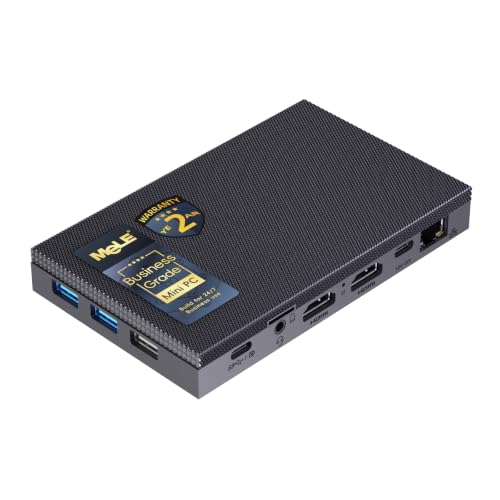
- Best overall fanless mini PC for a 1440p screen: MeLE Quieter4C Fanless Mini PC, Intel N100, 8GB RAM, 128GB Storage, Windows 11 Pro — Check on Amazon
- MeLE Quieter4C Fanless Mini PC, Intel N150, 16GB RAM, 512GB SSD, Windows 11 Pro — Check on Amazon
- Protectli Vault Pro VP2430, Intel N150, 4-Port 2.5GbE Firewall Mini PC — Check on Amazon
- Protectli Vault Pro VP2420, Intel Celeron J6412, 8GB RAM, 120GB SSD, 4-Port 2.5GbE — Check on Amazon
- CWWK Fanless Firewall Mini PC, Intel N100, 8GB DDR5, 128GB NVMe, 4-Port 2.5GbE — Check on Amazon
See 1 more Amazon option
- Protectli Vault Pro VP4630, Intel Core i3, 8GB RAM, 120GB SSD, 6-Port 2.5GbE — Check on Amazon
Read the full guide ↓
Disclosure: As an Amazon Associate, reviewstook.com earns from qualifying purchases. Links to Amazon on this page are affiliate links; they cost you nothing extra. Listing details such as price and availability change often, so check the current Amazon listing before you buy.
This keyword rests on two misunderstandings, and both need correcting before any product gets recommended. Start with the resolution. No fanless mini PC contains a discrete graphics card — not at the low end, not at $3,000 — so every machine below renders its games on Intel integrated graphics, inside a passively cooled chip with a sustained power budget of roughly 6 to 15 watts. Hardware like that does not render modern games natively at 2560 × 1440. What it does deliver, genuinely, is a native 1440p desktop: sharp text, sharp video, a proper high-resolution workspace, with games rendered at 1080p or 720p and scaled up to fill the panel. Rendered resolution and displayed resolution are two different numbers, and this guide keeps them separate from the first paragraph to the last FAQ. A guide that blurs them is selling you a monitor specification as though it were gaming performance.
The budget is the second misunderstanding. Nothing in the fanless category costs anywhere near $3,000. The priciest genuinely fanless configuration we could verify on Amazon — a business-grade MeLE Quieter4C specified with 32GB of memory and a 1TB SSD — sits in the premium tier for this category, while the most expensive mainstream fanless appliance line also sits in that premium tier. The six verified picks in this guide span the budget to premium tiers for this category — check price on Amazon for each current listing. Physics explains the gap: a fanless case moves heat by radiation and natural convection off its finned surfaces, which caps the processor at low-power silicon no matter how much money is offered, and low-power silicon is cheap. Much of the budget in this keyword’s title is therefore unspendable on silence — silence is a cooling decision, not a performance tier.
Read in that light, these machines are not a consolation prize. A silent mini PC behind a 1440p monitor is an excellent setup for the work and play it truly suits: a noiseless high-resolution desk for writing, browsing and media; video decoded in hardware at the panel’s full resolution; retro emulation, indie and older games, and light esports titles rendered below native and scaled; and cloud gaming or streaming from a real gaming PC elsewhere in the house, where the local box merely decodes a picture — a job its silicon handles in dedicated hardware. If that describes your evenings, the picks below are graded exactly for it. If you came here wanting native 1440p rendering of modern games, the honest purchase is a fanned machine with a graphics card, and no sum redirected inside this category alters that verdict. We will point you towards the right exit more than once.
In this guide
Quick Picks
Short on time, or comparing several options at once? Each row below names a buyer type and the product that suits it, with a link to the listing.
| Buyer type | Pick | Why it stands out | Link |
|---|---|---|---|
| Best overall for a 1440p desk | MeLE Quieter4C, Intel N100, 8GB/128GB | Documented triple 4K outputs run a 1440p panel natively; the benchmark silent desktop | Check on Amazon |
| Best finished 1440p desktop | MeLE Quieter4C, Intel N150, 16GB/512GB | Twice the memory for the shared graphics pool, proper SSD storage, nothing left to upgrade | Check on Amazon |
| Best for firewall and home lab | Protectli Vault Pro VP2430, Intel N150 | Four 2.5GbE ports and open firmware — the network and server half of a silent setup | Check on Amazon |
| Best for reusing DDR4 parts | Protectli Vault Pro VP2420, Celeron J6412, 8GB/120GB | A socketed DDR4 slot and four 2.5GbE ports at Protectli’s lowest rung | Check on Amazon |
| Best white-label value appliance | CWWK Fanless Firewall Mini PC, Intel N100, 8GB/128GB | The top pick’s N100 silicon in a four-port appliance, minus the brand premium | Check on Amazon |
| The category ceiling | Protectli Vault Pro VP4630, Intel Core i3, 8GB/120GB | Six 2.5GbE ports — close to the most mainstream fanless money can buy, and still no 1440p renderer | Check on Amazon |
How These Picks Were Chosen
Marketplace sellers use the word “fanless” loosely, so verification came before price. To earn a place here, a machine needed its own manufacturer — in official specifications, product pages or manuals — to describe it as fanless or passively cooled, or a reputable independent review to confirm no fan exists in the design. Listings that said only “quiet”, “silent mode” or “low noise” were read as what they almost always are: a small fan with good marketing. That single test swept most famous mini PC names out of the guide. The well-known N100 and Ryzen boxes from Beelink, GMKtec, Minisforum, ACEMAGIC and KAMRUI are good machines, but fans cool them, so they are absent below. A fan that stays inaudible at idle is still a fan, and it will not stay inaudible — or dust-free — for the life of the machine.
Next, each pick had to be a real Amazon listing with an identity we could pin down. Every product below is tied to a specific Amazon product code confirmed through the listing itself, manufacturer documentation keyed to that code, or established price-tracking records for that exact listing — never guessed, never borrowed from a sibling model. Where third-party sellers carry a listing, or one model name covers several configurations, the review flags it and tells you what to check before ordering. Fanless hardware sells in small batches and prices move between restocks, so check price on Amazon for the current listing before you buy.
The third filter belongs to this angle: each pick is graded on its 1440p story, using only what the research behind this guide documents. Where display outputs are documented — the MeLE pair’s twin HDMI ports and full-function USB-C, rated for triple 4K — we say so, and a 1440p panel sits comfortably inside that envelope. Where outputs are not documented in our research, we claim no resolutions at all and grade the machine by processor class and intended job instead. Memory is also graded harder here than in a general fanless guide, for a reason specific to this keyword: integrated graphics own no memory and borrow from the system pool, so the gap between 8GB soldered and 16GB fitted is partly a graphics gap. Finally, the budget was applied honestly rather than mechanically. Padding a “$3,000 guide” with fanned gaming PCs in fanless-adjacent descriptions would lie to you twice, so this guide does the opposite: it takes the complete set of verified fanless machines worth recommending, shows you the documented configurations that mark the category’s true ceiling, and spends a full section on what to do with the money the category refuses to take.
Rendered vs Displayed: The 1440p Distinction
One distinction carries this whole guide, so it gets a section of its own. When a game runs, two resolutions are in play at once. The render resolution is the size of the picture the graphics hardware actually computes, pixel by pixel, every frame. The display resolution is the size of the picture the monitor shows. Match them and the image is native. Render smaller, and something — the game, the driver, the monitor — must stretch that smaller picture across the bigger panel. That stretching is upscaling. It is not cheating and it is not failure; a large share of modern gaming works this way at every level of the market. But it is not native rendering, and a guide content to let you believe a silent box renders modern games at 2560 × 1440 is lying by omission.
So here is the honest inventory for a 1440p screen on this hardware. The desktop is native: the MeLE pair’s documented outputs are rated for triple 4K, so a 1440p panel runs at its full native resolution for Windows, text, browsing and applications — visibly sharper than 1080p, with more room to work. Video is native: these Intel chips carry Quick Sync hardware decoding, so streamed and local video plays at the panel’s full resolution with dedicated silicon doing the work instead of the processor cores. Games render below native: 1080p for lighter and older titles, 720p for anything more demanding, then scaled up to fill the panel. From 720p that scaling is integer-friendly — every rendered pixel maps to a clean 2 × 2 block on a 1440p screen — which is one reason the lighter end of a library looks respectable on these machines. What no pick offers, in any configuration, is native 1440p rendering of modern games. Integrated graphics share a 6-to-15-watt budget with the processor inside a case with no fan; that is the category’s entire physics, and no listing premium repeals it.
Two upscaling terms need plain handling, because they are where this keyword’s marketing usually goes wrong. DLSS belongs to NVIDIA. No pick here contains NVIDIA hardware, so no pick has DLSS — treat any fanless listing implying otherwise as a reason to close the tab. The practical route on these chips is plain render scaling: tell the game to render at a lower internal resolution and scale the result up, a feature built into most modern games and drivers. Beyond that we claim no upscaler brand names and no internal-resolution figures for this hardware, because the research behind this guide documents none, and inventing precision is exactly the habit this guide exists to refuse. The working summary: buy the 1440p monitor for your eyes at the desktop and in video, set games to render at 1080p or 720p, and judge each pick below by how well it supports that honest arrangement — documented outputs, enough memory for the shared graphics pool, and thermals that hold up across a long session.
The 6 Best Fanless Mini PCs for 1440p Gaming Under $3,000
MeLE Quieter4C Fanless Mini PC — Intel N100, 8GB RAM, 128GB Storage
Who it suits: Anyone after a genuinely silent Windows desktop behind a 1440p monitor — native desktop and video, light games rendered below native and scaled — at the price this category actually charges.
The Quieter4C is the fanless formula done properly, and its 1440p story is the best documented in this guide. Everything sits in a flat slab of a case, about 5.2 by 3.2 by 0.7 inches, whose lid doubles as the heatsink: an Intel N100 (four cores, up to 3.4 GHz on the box, a 6-watt-class chip) pushes its heat into the aluminium shell, and the shell radiates it away. No fan spins, no dust gets pulled through the chassis, and no moving part exists to wear out. Display output headlines this angle: two HDMI ports plus a full-function USB-C port drive up to three 4K displays per the maker’s specification, which makes a single 1440p panel an easy native desktop — and the same USB-C port can power the PC, so one cable to a compatible monitor carries picture and power together. Quick Sync hardware decoding handles video, so streamed and local media play at the panel’s full resolution without taxing the processor cores. MeLE fits 8GB of LPDDR5 memory and 128GB of eMMC storage, then adds the touches that keep the machine practical: an internal M.2 2280 slot that takes a real NVMe or SATA SSD, and a microSD slot for cheap bulk storage. Windows 11 Pro comes preinstalled.
Two limitations matter more at 1440p than they would on a smaller screen. Memory comes first: the 8GB is soldered — final, forever — and integrated graphics borrow from that same pool, so a game rendering at 1080p shares 8GB with Windows and everything else you have open. Workable for the light end of a library; not headroom. Thermals come second, and they can be measured rather than theorised about. Reviewers who stress-tested this exact machine at its factory power limits watched the processor settle at roughly a third of its headline boost clock under a sustained load — around 1,200 MHz on average — while the case top climbed into the mid-60s Celsius after twenty minutes. A long gaming session is a sustained load, so the rendering budget in hour two is the case’s thermal cruising speed, not the burst figure on the box. None of this is a defect; it is the fanless bargain written in numbers, and bursty desktop work lives in the short turbo windows and feels brisk. On price, hold the framing this guide insists on: check price on Amazon for the current listing — it sits in the budget tier for this category, well below this guide’s headline budget either way.
- Genuinely fanless: a passively cooled aluminium case with zero moving parts and no dust path.
- Documented triple 4K display support — a 1440p panel runs as a native desktop with room to spare.
- Quick Sync hardware video decoding, so video plays at full panel resolution in dedicated silicon.
- An M.2 2280 slot and a microSD slot turn modest base storage into whatever you need.
Honest limitation: The 8GB of memory is soldered and shared with the graphics, sustained loads settle far below the headline clock, and native 1440p game rendering is beyond this chip — games render at 1080p or 720p and scale.
Choose it if your 1440p life is desktop, media, emulation and light titles, and silence is the point. Skip it if you want memory headroom for a growing library — the N150 model below doubles it — or native modern gaming at any resolution, which no fanless machine offers.

MeLE Quieter4C Fanless Mini PC — Intel N150, 16GB RAM, 512GB SSD
Who it suits: Buyers who want the Quieter formula finished rather than expandable — double the memory for the shared graphics pool, real SSD storage, nothing to open or upgrade on day one.
Same case, same philosophy, specification sheet filled in. The processor steps up to Intel’s N150, a refresh of the N100 with a slightly higher boost clock of up to 3.6 GHz; memory doubles to 16GB; storage becomes a proper 512GB SSD instead of the base model’s eMMC. The display story carries over whole — dual HDMI plus USB-C, triple 4K per the maker’s specification — so the 1440p desktop and hardware-decoded video match the pick above. What changes for this angle is the shared-memory arithmetic. Sixteen gigabytes gives the integrated graphics a larger pool to borrow from while Windows and a browser sit open beside the game, and the SSD removes the eMMC’s speed and endurance questions for a library that gets installed, patched and reinstalled. For the jobs fanless desktops actually do in front of a 1440p screen — a quiet office machine running all day, a studio PC that must not be heard on a recording, a media PC behind a television — this configuration is the one that never asks you to think about it again. It sits in the mid-range tier for this category — check price on Amazon for the current listing.
Two honest notes keep the recommendation clean. First, the N150 is a refresh, not a leap: independent coverage of the chip puts it roughly ten to twenty percent ahead of the N100, so the extra money buys memory and storage rather than a faster class of computer — and it does not buy native 1440p rendering either. The rendering verdict here is identical to the pick above: desktop and video native, games at 1080p or 720p scaled up. If 8GB plus an aftermarket SSD suits you, the N100 model is the same silence for less. Second, this configuration sits one rung below the top of MeLE’s own ladder. The business-grade Quieter4C configuration with 32GB of memory and a 1TB SSD is the premium-tier landmark for a genuinely fanless mini PC on Amazon, and a useful one: even the most loaded fanless desktop in the category sits well below this guide’s headline budget. Memory across the whole Quieter4C line is soldered, so the capacity decision happens at checkout; there is no later.
- 16GB of memory — the finished fanless 1440p desktop, with a real pool for the integrated graphics to share.
- A 512GB SSD instead of eMMC, with the same documented triple 4K output and USB-C power input.
- Windows 11 Pro preinstalled, and a build marketed for business and 24/7-style duties.
Honest limitation: The processor step over the N100 model is small, the memory is still soldered shut, and the 1440p rendering verdict is unchanged — the premium buys specification and silence, not a higher resolution class.
Choose it if you want the best fanless desktop MeLE makes in front of a 1440p monitor and never want to open it. Skip it if the N100 model plus your own SSD reaches the same desk for less — for many buyers, it does.

Protectli Vault Pro VP2430 — Intel N150, 4-Port 2.5GbE Firewall Mini PC
Who it suits: Home-lab and network buyers building the silent infrastructure around a gaming setup — the box that routes, firewalls, serves the game library and hosts the media the 1440p screen displays.
Protectli makes fanless network appliances and nothing else, and the VP2430 is its current four-port design. Inside a finned aluminium case that Protectli states contains absolutely no fans sits an Intel N150, a DDR5 memory slot, an M.2 NVMe storage slot and 32GB of onboard eMMC, fronted by four Intel 2.5-gigabit Ethernet ports. The ports are the product: they let one silent box replace a consumer router, segment a home network, and run OPNsense, pfSense, OpenWrt or a Proxmox host with the firewall in a virtual machine. Protectli supports open-source coreboot firmware, includes a VESA mount kit and console cable in the box, and backs the unit with US-based support. It is listed on Amazon — check price on Amazon for the current listing — with configured units priced higher as memory and storage get added in — and read the configuration point carefully, because the lower Amazon configurations of this appliance are barebone: memory, storage and your own operating system form part of the real price, and the sticker is never the finished cost.
For this angle, framing outweighs specification. A Vault is an appliance rather than a desktop, and we grade it as one: its display outputs exist for setup and console work, our research documents no display-resolution claims for it, and we make none — nobody should buy this box to drive a 1440p gaming desk. Its honest role in a 1440p life is everything around the rendering: the silent always-on machine that routes the network the games arrive over, serves the media library the big screen plays, and stores the downloads. The N150 inside it belongs to the same chip class as the MeLE desktop above, which is precisely the point about this category’s ceiling — a current, well-regarded, manufacturer-supported product, priced in the mid-range tier for this category. Judged as a desktop it looks spartan; judged as the silent heart of a home network, it is the most professional fanless purchase in this guide.
- Four Intel 2.5GbE ports — the layout home firewalls and segmented networks actually need.
- DDR5 and NVMe slots plus onboard eMMC, inside a completely fanless chassis.
- Open-source coreboot firmware support, from a maker that sells nothing else.
Honest limitation: An appliance through and through: lower configurations are barebone, no desktop OS is preinstalled, and driving a 1440p gaming desk is not its job — that belongs to the MeLE pair.
Choose it if the fanless PC you truly need is a firewall, router or quiet virtualization host that will run for years untouched. Skip it if you want a Windows desktop for your 1440p monitor — the MeLE pair above covers that at similar money.

Protectli Vault Pro VP2420 — Intel Celeron J6412, 8GB RAM, 120GB SSD
Who it suits: The parts-bin buyer: someone with DDR4 memory and SATA drives already on the shelf who wants a supported, silent four-port appliance without paying for the newest platform.
The VP2420 is the previous rung of Protectli’s ladder, and compatibility plus price are its virtues. A Celeron J6412 — four cores, up to 2.6 GHz — sits behind four 2.5-gigabit Ethernet ports on Intel I225-V controllers, with AES-NI encryption acceleration for VPN and firewall work, coreboot firmware support, and the fanless extruded-aluminium construction shared by every Vault. The configuration documented here carries 8GB of DDR4 in a socketed slot — the platform supports up to 32GB — and a 120GB SSD. Check price on Amazon for the current listing: Protectli’s Amazon presence is largely third-party and stock rotates, so prices move often.
The 1440p grading for this pick is the plainest in the guide. The J6412 trails the VP2430’s N150 by a generation and is slower core for core, and its integrated graphics are the oldest in this set — a display-and-decode platform for console and setup duties, not a renderer of anything at any resolution. Our research documents no display-output claims for it, so we claim none. That describes its job rather than criticising the box: routing and firewalling a home or small-office network at 2.5-gigabit port speeds sits well within this hardware, and the model’s deep forum history exists precisely because it has been sold for years. The remaining compromises are documented and worth stating. The storage slot is M.2 SATA rather than NVMe, so a fast SSD from your parts bin runs at SATA speed or does not fit the plan at all; and Protectli has been succeeding the model with an eMMC-free variant alongside the newer VP2430, so you would be buying the mature end of a product line rather than its future. Buy it when the price and the parts drawer line up — not because it moves any 1440p needle. It does not, and at this money it does not need to.
- A socketed DDR4 slot — the fanless appliance that can reuse memory you already own.
- Four Intel 2.5GbE ports with AES-NI, wrapped in Protectli’s fanless aluminium chassis.
- A model with years of deployments and community documentation behind it.
Honest limitation: The oldest graphics platform in this guide — an appliance for routing and console duties, with an M.2 slot limited to SATA storage and a maker already succeeding the model.
Choose it if its configured price undercuts the VP2430, or your DDR4 parts make it the cheapest route to a supported silent firewall. Skip it if prices are close — the newer VP2430 wins at parity — or if any part of your plan involves this box rendering games.

CWWK Fanless Firewall Mini PC — Intel N100, 8GB DDR5, 128GB NVMe
Who it suits: Experienced home-lab buyers who know exactly what a four-port N100 appliance is for and would rather spend the brand premium on something else.
CWWK stands behind a large share of the white-label fanless appliances sold on Amazon — the same hardware often surfaces under several storefront brands — and this listing is the formula at its purest: an Intel N100, 8GB of DDR5 memory, a 128GB NVMe SSD, four 2.5-gigabit Ethernet ports on Intel i226-V controllers, AES-NI support, and a finned aluminium case whose own listing data describes the cooling, honestly, as passive with no fan. Check price on Amazon for the current listing — it sits in the mid-range tier of this guide. The chip matches the guide’s top pick, which makes this the cleanest illustration of the desktop-versus-appliance split: identical silicon, aimed at a completely different job. As a firewall or router running OPNsense or pfSense it matches the branded appliances port for port and chip for chip, and for a buyer fluent in spec sheets that is the entire argument — a good one.
The 1440p grading follows the job, not the silicon. The N100’s graphics are in principle the same as the MeLE desktop’s; in practice this box is sold, configured and documented as a network appliance, our research records no display-output claims for the listing, and we grade it as what it is — silent infrastructure in a setup whose screen something else drives. The discount, as always with white-label hardware, is paid in everything around the hardware. No US support organisation stands behind the listing; firmware and BIOS updates are a community-archaeology exercise rather than a vendor download page; and white-label listings are notorious for quiet configuration drift, so the unit that arrives deserves a bench session verifying its network controllers, memory and SSD against the listing before it goes into service. None of that is concealed — it is simply the trade the price represents, and the home-lab community buys these boxes in volume with its eyes open. We would not recommend it as a first appliance to a buyer who needs a support desk when the firewall stops routing at 11 p.m. Protectli’s premium exists for that buyer, and across a category with a narrow price spread, the premium is smaller than it looks.
- Four 2.5GbE ports riding on Intel i226-V controllers — the current-generation NICs firewall builds prefer.
- DDR5 memory and NVMe storage at a white-label price, inside a genuinely passive case.
- The branded appliances’ N100 platform, without the brand markup.
Honest limitation: Support, documentation and firmware maintenance sit at community grade, and the exact configuration under a white-label listing can drift — verify what arrives before deploying it.
Choose it if you are fluent in firewall software and value hardware-per-dollar above the support wrapper. Skip it if this is your first appliance, or other people depend on the network it will run.

Protectli Vault Pro VP4630 — Intel Core i3, 8GB RAM, 120GB SSD, 6-Port 2.5GbE
Who it suits: Buyers who need more network ports than the four-port boxes offer — and who want to see, concretely, what the top of the mainstream fanless market looks like, and what it still cannot do.
The picks end with the ceiling made physical. The VP4630 is Protectli’s six-port Vault Pro: an Intel Core i3 processor — the listing names no exact SKU, and neither do we — six 2.5-gigabit Ethernet ports, 8GB of DDR4 memory and a 120GB SSD in the configuration tracked on Amazon, with AES-NI and the fanless aluminium construction shared across the line. Six ports is a real capability: one silent appliance can serve a firewall with multiple physically separate networks, a lab with isolated segments, or a small office with room to grow. Check price on Amazon for the current listing. That delivers the verdict on both halves of this keyword: the most expensive mainstream fanless mini PC line in the category, in a mid-range configuration, sits in the premium tier for this category, well below the budget in this guide’s title.
Now the part that matters in a 1440p guide. The i3 is a genuine step above the Celeron and N-series chips elsewhere here — on the processor side. The graphics verdict does not move at all. This is a low-power mobile chip chosen because a finned case can shed its heat; its integrated graphics remain integrated graphics; and no configuration of the machine — no memory ceiling you can pay to raise, no storage tier, no support contract — turns it into a native 1440p gaming computer, because the constraint was never the parts list. Every pick in this guide shares that constraint: a fanless case radiates a small, fixed amount of heat, and every manufacturer in the category designs to that number. Buy the VP4630 if six ports and Protectli’s support are worth the premium tier to you — they may well be. Just buy it knowing you have reached the top of the fanless ladder, with much of the original budget still in your pocket, nothing above you left to climb to, and a 1440p rendering question that was never going to be answered inside this category in the first place.
- Six 2.5GbE ports — the count that multi-segment networks and labs actually run out of.
- An Intel Core i3 that steps above the N-series and Celeron chips in the rest of this guide.
- Protectli’s fanless construction, firmware support and US support desk, at the top of its range.
Honest limitation: The premium over the VP2430 buys ports and support, not a faster class of computing — and not one step toward native 1440p rendering, which no fanless machine offers.
Choose it if you need six ports and want them from the maker with the strongest support behind them. Skip it if four ports will do — they usually will — in which case the VP2430 plus a switch covers the job for less.

Comparison Table
| Product | Processor | Best use | Link |
|---|---|---|---|
| MeLE Quieter4C, 8GB/128GB | Intel N100 | Silent 1440p desktop — native desktop and video, light games scaled | Check on Amazon |
| MeLE Quieter4C, 16GB/512GB | Intel N150 | The finished fanless 1440p desktop, nothing to upgrade | Check on Amazon |
| Protectli Vault Pro VP2430 | Intel N150 | Modern firewall, router and home-lab host | Check on Amazon |
| Protectli Vault Pro VP2420 | Intel Celeron J6412 | Supported appliance that reuses DDR4 parts | Check on Amazon |
| CWWK Fanless Firewall Mini PC | Intel N100 | White-label four-port value for experienced hands | Check on Amazon |
| Protectli Vault Pro VP4630 | Intel Core i3 | Six-port networks — the mainstream ceiling | Check on Amazon |
How to Choose a Fanless Mini PC for a 1440p Screen
- Decide which 1440p you actually want. A sharp native desktop, native video and light games scaled up — this category serves that well and cheaply. Native 1440p rendering of modern games — no fanless machine at any price does it, so stop shopping here and put the budget into a fanned PC with a discrete graphics card. Naming which one you mean is the most valuable step in this guide.
- Grade display outputs from documentation, not hope. The MeLE pair’s twin HDMI ports and full-function USB-C carry a manufacturer rating for triple 4K, which makes a 1440p panel a documented certainty. The appliances here treat display output as a setup-and-console feature, and our research documents no resolution claims for them — treat them accordingly. Never buy a machine for a resolution its maker has not put in writing.
- Count memory as a graphics specification. Integrated graphics borrow system memory, so on these machines RAM is partly VRAM. The base Quieter4C’s soldered 8GB is shared between Windows, your applications and the graphics; the 16GB configuration doubles the whole pool. For a desktop that will game lightly at 1080p-rendered resolutions, that difference outweighs the small processor step between the two models.
- Judge the sustained clock, not the boost clock. The gigahertz on the box is a burst the chip holds for seconds. A fanless case sustains only a fraction of it — roughly a third, on the best-documented machine here. A two-hour gaming session is a sustained load, so judge the chip class and the case, and place the machine in open air where its fins can work.
- Start from the job — the category splits in two. Fanless desktops follow the MeLE pattern — one network port, several display outputs, Windows preinstalled. Fanless appliances follow the Protectli/CWWK pattern — four to six network ports, no desktop OS, displays for setup only. The cooling method is all they share, and buying across the split is the category’s most common disappointment.
- Price appliances as finished builds. A barebone or lightly configured appliance needs memory, storage and an operating system before it does anything. Compare completed totals rather than stickers — and note that even completed, every machine here remains in the tiers typical for this category, which is the category stating its real price level.
- Verify the silence, not the adjective. “Fanless” should be a claim the manufacturer’s own specification or manual makes, or one an independent review confirmed by opening the case. “Quiet”, “silent” and “0dB mode” on a marketplace listing usually describe a fan running slowly. Every pick here passed the manufacturer-or-review test; hold anything else you consider to the same standard.
- Spend the leftover deliberately. The fanless machine is the cheap part of a 1440p project. The remainder buys what actually changes the experience — the 1440p monitor itself, a larger SSD, a second unit for redundancy, or the fanned gaming PC this box will stream from. Leaving it unspent is also legitimate: silence is one of computing’s few bargains.
Pairing a 1440p Monitor with a Fanless Mini PC
A 1440p monitor is a good purchase alongside these machines — provided you buy it for what it actually does. What it does is transform the desktop. Text turns visibly sharper than on a 1080p panel, two documents sit side by side without cramping, photo and timeline work gains real room, and video plays at the panel’s full native resolution through the Quick Sync hardware decoding these chips carry. On the MeLE pair the pairing is physically tidy as well: the documented USB-C port can carry the picture while powering the PC, so the whole silent setup hangs off a single cable to a compatible monitor, and the box itself can disappear behind the panel it drives. For media corners, studios and offices, that combination — a crisp, silent, high-resolution desk that makes no noise at all — is the genuine product this keyword is groping towards, and it sits well below this guide’s headline budget.
What the monitor cannot do is add rendering power. A 1440p panel on an N100 is a sharper window onto the same integrated graphics; it grants the chip no extra shaders, no extra memory bandwidth and no extra watts. In games, the correct setup leaves the desktop at native 1440p, sets the render resolution to 1080p or 720p, and lets the game or driver scale the picture up — accepting a slightly softer image in motion as the price of silence. Buyers sometimes reason in reverse, purchasing the expensive panel first and expecting the PC to grow into it. It will not. If native 1440p gaming is the goal, the monitor is the last upgrade rather than the first: the money belongs in a graphics card inside a machine with a fan, and the fanless box in that household becomes the silent second PC — the media, office and emulation machine — rather than the renderer. Sized honestly, the two machines together still fit inside this guide’s headline budget, which is the most useful thing the $3,000 figure can do for you.
Common Buying Mistakes
- Assuming a 1440p monitor turns a fanless PC into a 1440p gaming PC. The panel sets the display resolution; the integrated graphics set the render resolution, and on this hardware those numbers differ for every modern game.
- Expecting a bigger budget to buy fanless performance. It buys ports, memory, storage and support. The performance ceiling is thermal, and it sits in the same place at the low end and at the category’s top.
- Trusting upscaler brand names in fanless listings. DLSS is NVIDIA technology and no fanless mini PC carries NVIDIA hardware; plain render scaling is the real route on these chips.
- Believing a “silent” or “quiet” listing means fanless. Most describe a small fan running slowly — verify against the manufacturer’s own specifications before buying, or expect a faint whir and a dust path.
- Ignoring soldered memory. On fanless desktops the RAM in the listing is permanent, and the graphics share it. Buy for the capacity the machine needs across its whole life, not just its first year.
- Buying across the desktop/appliance split. A single Ethernet port cannot route a segmented network, and a port-rich appliance makes a spartan desk PC. Match the pattern to the job.
- Sealing the case in a cabinet. A fanless PC is a radiator and needs open air around its fins. Suffocated placement produces the throttling and heat complaints that fill one-star reviews — and long gaming sessions are exactly the loads that suffer first.
- Overlooking configuration drift on white-label listings. Verify the network controllers, memory and storage in the unit that arrives against the listing, during the return window rather than after deployment.
- Paying a premium “fanless” markup. The category’s real ceiling is in the premium tier for exotic configurations and the mid-range tier for mainstream machines — check price on Amazon for the current listing; past that, the money buys markup rather than engineering.
Final Recommendation
- Most buyers: MeLE Quieter4C, Intel N100, 8GB/128GB.
- The finished silent 1440p desktop: MeLE Quieter4C, Intel N150, 16GB/512GB.
- Firewall and home lab: Protectli Vault Pro VP2430.
- DDR4 parts on the shelf: Protectli Vault Pro VP2420.
- Experienced and value-first: CWWK Fanless Firewall Mini PC.
- Six ports, top of the range: Protectli Vault Pro VP4630.
Our top two are the MeLE Quieter4C in its N100 form — the silent desktop this category is judged by, with documented outputs that make a 1440p panel a native, hardware-decoded pleasure — and the Protectli VP2430, the modern fanless appliance for the firewall and home-lab jobs these machines do best. The two of them cover the category’s honest halves. Everything else is refinement: the N150 Quieter4C if you want the desktop finished with double the shared memory, the VP2420 if your parts drawer tilts the arithmetic, the CWWK if you are fluent and value-led, and the VP4630 if six ports are a genuine requirement rather than a nice idea. Readers working to a smaller fanless budget lose nothing by starting with Best Fanless Mini PC Under $1500 or the tighter angle at Best Fanless Mini PC For 1440p Gaming Under $1500 — the machines are the same machines, because the tiers in this category are separated by configurations rather than by classes of computer. The base guide at Best Fanless Mini PC Under $3000 covers the same six picks without the resolution grading. And readers who arrived hoping $3,000 would buy silent native 1440p gaming should take the central fact as good news rather than bad: the silence is the budget part of the setup, the 1440p monitor adds a further mid-range purchase, and the gaming PC can have the rest — start with Best Mini Gaming PC Under $3000 and spend the difference where heat is allowed.
Frequently Asked Questions
Can a fanless mini PC game at 1440p?
It can display at 1440p; it cannot render modern games at 1440p. The desktop, applications and video run at the panel’s full native resolution — the MeLE picks’ outputs carry a manufacturer rating for triple 4K — and video is decoded in hardware. Games render at 1080p or 720p and scale up to fill the screen. That arrangement plays retro, indie, older and light esports titles comfortably and looks respectable; native 1440p rendering of modern games requires a discrete graphics card, which no fanless mini PC has at any price.
Is there really no fanless mini PC near $3,000?
Really. The highest-tier genuinely fanless mini PC on Amazon — a maxed-out business configuration — sits in the premium tier for this category, and the mainstream category tops out in the mid-range tier — check price on Amazon for the current listings. Passive cooling caps processors at roughly 6–15 watts, chips in that class cost little, and no expensive fanless machine exists to sell you. Listings implying otherwise turn out to be large-memory configurations, reseller markups, or fanned machines described loosely.
Does a 1440p monitor improve gaming on these machines?
It improves everything except the rendering. The desktop gets sharper, video gets native, and scaled-up games get a clean canvas — 720p scales to 1440p in exact 2 × 2 pixel blocks, which flatters lighter titles. But the monitor adds no graphics power, and setting a game to render at the panel’s native 1440p on integrated graphics is the fastest route to an unplayable frame rate. Buy the panel for your eyes; set the render resolution for the chip.
Why can’t a fanless PC just use a faster processor?
Because the heat has nowhere to go. Heat leaves a fanless case by radiation and natural convection off its finned surfaces, and that route handles only a small, fixed thermal load. Under load, a fast desktop processor produces ten to fifty times as much heat; sealed into a fanless case it would throttle within minutes to a fraction of its speed — slower, in sustained work, than the low-power chips these machines use by design.
Do fanless mini PCs overheat during long gaming sessions?
Warm is their design point — the case is the heatsink — and measured case temperatures in the 60s Celsius under sustained load are normal for this guide’s best-documented model. Sustained loads settle to the case’s thermal cruising speed rather than failing, which is why this guide grades rendering expectations by chip class, not boost clocks. What they need is open air around the fins; sealed inside a cabinet, any fanless PC will throttle harder and earlier.
Fanless desktop or fanless appliance — which do I need?
Look at the ports. One network connection, several displays and Windows ready to use means the desktop pattern (the MeLE models). Several Ethernet ports for a firewall, router or segmented network means the appliance pattern (Protectli or CWWK), with an operating system you install yourself. The cooling matches; everything else about the two patterns differs.
What should I do with the rest of a $3,000 budget?
Spend it where it changes something: the 1440p monitor itself, storage for the media or lab the silent PC will run, a second fanless unit, or a separate fanned PC for native gaming and heavy work while the fanless box handles the silent jobs — a combination that still fits inside the headline budget. The one option with no return at all is paying a premium for a “high-end fanless” machine: the category’s engineering tops out in its premium tier, and this guide has shown you its actual ceiling.
- Best Fanless Mini PC Under $3000
- Best Fanless Mini PC For 1440p Gaming Under $400
- Best Fanless Mini PC For 1440p Gaming Under $2500
- Best Fanless Mini PC For Streaming Under $3000
- Best Fanless Mini PC For Small Spaces Under $3000
- Best Fanless Mini PC For Beginners Under $3000
- Best Mini PC Under $3000


