Where to buy
Check the latest price, availability and delivery on Amazon. Orders are placed on Amazon. We may earn a commission from qualifying purchases.
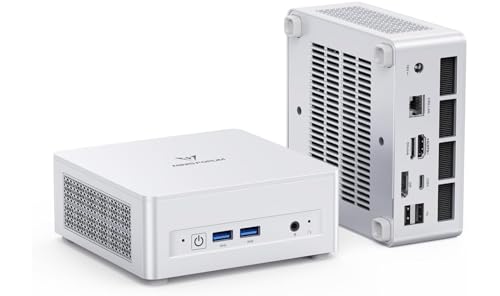
- Best for upscaled 1440p now, native 1440p later: MINISFORUM UM880 Plus Barebone, Ryzen 7 8845HS, No RAM / SSD / OS — Check on Amazon
- GMKtec NucBox K8 Plus, Ryzen 7 8845HS, Without RAM / SSD / OS — Check on Amazon
- MINISFORUM UM870 Slim Barebone, Ryzen 7 8745H, Without RAM / SSD / OS — Check on Amazon
- MINISFORUM UM790 Pro Barebones Version, Ryzen 9 7940HS, Without RAM and SSD — Check on Amazon
- MINISFORUM UM773 Lite Barebones, Ryzen 7 7735HS, No RAM No SSD — Check on Amazon
- ASUS NUC 14 Pro+ Barebone Kit, Intel Core Ultra 5 125H — Check on Amazon
Read the full guide ↓
Disclosure: As an Amazon Associate, reviewstook.com earns from qualifying purchases. Links to Amazon on this page are affiliate links; they cost you nothing extra. Listing details such as price and availability change often, so check the current Amazon listing before you buy.
Start with the sentence this entire guide is built on, because the keyword deserves honesty before it deserves recommendations: no barebones mini PC under $500 plays modern games natively at 1440p. Not one of the six machines below, and not any other barebone at this price. Rendering 2560×1440 pixels, every frame, at playable speed is work for a discrete graphics card, and every pick here runs integrated graphics — the GPU built into the processor, sharing the machine’s memory. If a listing title or a rival roundup suggests a sub-$500 barebone is a native-1440p gaming machine, it is describing a resolution the hardware cannot draw.
So what can this tier honestly do with a 1440p monitor? Two real things. First, it can feed that monitor an upscaled picture: the game renders internally at 1080p or lower, and an upscaler — FSR or RSR on the five AMD machines, XeSS on the one Intel machine — reconstructs a 1440p output frame from it. Done well, on the esports titles and older AAA games these chips are good at, that picture sits close enough to native that most players stop thinking about it — and everything outside games is rendered at true 1440p, visibly sharper than a 1080p screen. Second, two picks carry an OCuLink port, the one honest door from this tier to native 1440p later: dock a desktop graphics card externally and the rendering problem changes completely. That dock and card are a separate purchase on top of everything else here, costed openly as an extra, never folded into a pick’s price.
One technology needs addressing by name, because buyers search for it: DLSS is not available on any machine in this guide. DLSS is NVIDIA’s upscaler and runs only on NVIDIA GPUs; there is no NVIDIA silicon in this set, integrated or otherwise. The AMD and Intel upscalers below do the same job by different means. DLSS enters this story only through the eGPU door — dock an NVIDIA desktop card into an OCuLink pick later and DLSS comes with it, its Quality mode at 1440p output rendering roughly 1707×960 internally and its Performance mode roughly 1280×720. Until that purchase, plan around FSR, RSR and XeSS, because they are what these processors actually ship.
The second honesty layer is the one this category always needs. Barebones means the box arrives with a processor, motherboard, case, cooler and power supply — and no RAM, no SSD and no operating system. The listing price buys a starting point, not a computer, and at late-2026 parts prices the completion is no footnote: independent tracking of Amazon US listings has shown how sharply the completion bill can outrun the barebone itself: fitting a 32GB kit and a 1TB NVMe drive to the MINISFORUM UM880 Plus below can cost more in total than buying the complete version with those parts already fitted — check the current price on Amazon for both versions before you decide. So the order of spending here is fixed: the parts that complete the machine eat the budget first, upscaled 1440p is what the finished machine plays, and an eGPU for native 1440p is a later, separate decision. A barebone under $500 is the right buy if you already own DDR5 SO-DIMMs and an NVMe drive, are salvaging them from a dead laptop, or want a configuration — 64GB of RAM, a 4TB drive — complete machines do not sell. If none of that is you, the complete mini PCs in our other guides are the better purchase.
Those six picks are five Ryzen machines built around Radeon 780M or 680M graphics and one Intel kit built around Arc graphics. Every review below is graded on the four things this angle turns on: the class of the integrated GPU doing the rendering, which upscaler that silicon supports, whether the memory gives the GPU the bandwidth upscaling still depends on, and whether the machine has an eGPU door — and how fast that door is — for the day upscaling stops being enough.
In this guide
Quick Picks
Short on time? Each row names the 1440p job and the machine that does it best. Every price is for the bare box — RAM, SSD and OS are extra on all six, and every upscaling verdict assumes the memory is fitted as a matched pair.
| Buyer type | Pick | Why it stands out | Link |
|---|---|---|---|
| Best for 1440p upscaling, with a native-1440p door | MINISFORUM UM880 Plus Barebone, Ryzen 7 8845HS | Radeon 780M plus an OCuLink port — the strongest upscaler today, an eGPU tomorrow — check price on Amazon | Check on Amazon |
| Best eGPU door and connectivity | GMKtec NucBox K8 Plus, Ryzen 7 8845HS (No RAM / SSD / OS) | Front OCuLink, dual USB4, dual 2.5G LAN on the same 780M platform — check price on Amazon | Check on Amazon |
| Best value upscaled 1440p | MINISFORUM UM870 Slim Barebone, Ryzen 7 8745H | The same 780M upscaling at the lower end of this tier; the eGPU door is USB4 only — check price on Amazon | Check on Amazon |
| Best CPU for low-render-resolution play | MINISFORUM UM790 Pro Barebones, Ryzen 9 7940HS | Fastest CPU here feeding the same 780M, via marketplace sellers — check price on Amazon | Check on Amazon |
| Cheapest way onto a 1440p screen | MINISFORUM UM773 Lite Barebones, Ryzen 7 7735HS | Radeon 680M upscaling for light titles — honest limits, positioned at the bottom of this tier | Check on Amazon |
| Best warranty, with XeSS upscaling | ASUS NUC 14 Pro+ Barebone Kit, Core Ultra 5 125H | Intel Arc with XeSS and a three-year warranty — buy only when it sits inside this budget | Check on Amazon |
How These Picks Were Chosen
The first filter had nothing to do with resolution: a machine belongs here only if its Amazon listing is a genuine barebones configuration — no RAM, no SSD, no OS — sold as its own listing or a clearly labelled barebone variant. That filter quietly removes most famous mini PC names. Beelink’s SER8 is excellent, but its Amazon listings are complete machines, so there is no honest barebone listing to link and it is not here. Where a model is sold both ways, we linked the barebone listing specifically, with its own ASIN, because the two versions are different listings at different prices, and mixing them up is how a buyer ends up holding an empty box they thought was a computer.
The second filter was the platform. Every pick takes socketed DDR5 SO-DIMM memory in two slots and at least one M.2 2280 NVMe slot. For most buyers that is about upgradeability; for this guide it is about graphics. An integrated GPU has no memory of its own — it renders through the system RAM you fit — so a machine with soldered memory fixes the most important graphics variable at the factory. Machines built that way were excluded even when their processors were newer, which is why this guide is full of Ryzen 7000/8000 platforms rather than the latest Ryzen AI boxes.
The third filter was price honesty. Each machine needed to sit at or under $500 on Amazon, and where a machine only reaches the budget when discounted — the ASUS kit at the bottom of this guide — the review frames it as a conditional buy, never an everyday expectation. This market moves quickly, and marketplace listings such as the UM790 Pro’s move fastest of all. Check the current price on Amazon on every listing before ordering.
On top of those filters, this angle applied its own grading. The integrated GPU’s class comes first, because it sets the internal resolution the upscaler works from — a stronger GPU rendering at 1080p and upscaling beats a weaker one rendering at 720p and upscaling harder. The upscaler comes second: FSR and RSR on AMD silicon, XeSS on Intel, graded on what the documented chip supports. Memory bandwidth comes third, because upscaling reduces the rendering load but not the traffic — textures and the final 1440p frame still cross the shared system memory, which is why a dual-channel pair is treated here as part of the graphics specification. The eGPU door comes last, graded by type: an OCuLink port is a materially faster connection to a desktop card than a USB4 or Thunderbolt dock. A note on method: we did not use these machines ourselves; we read maker listings, specification pages, manuals and independent reviews, and where a listing’s copy is vague, the review says what is confirmed and what to verify live.
How 1440p Actually Works on These Machines
The whole angle turns on one distinction, so it gets its own section: output resolution is not render resolution. Your monitor will be sent a 2560×1440 signal by every machine here — that part is easy, and it is why the desktop, text and video all look properly sharp. The question is how many pixels the GPU actually drew to build each frame of a game. Natively, the answer would be all 3.7 million of them, and no integrated GPU in this price class sustains that in modern titles. With upscaling, the game renders at a lower internal resolution and the upscaler reconstructs the 1440p frame from previous frames and motion data. The picture on screen is 1440p; the workload is not.
The numbers behind the menu settings are worth knowing once. FSR’s Quality mode at a 1440p output renders at about 1707×960 internally — roughly 44% of the pixels — and its Performance mode at about 1280×720, a quarter of them. Rendering the game at 1080p and upscaling from there sits between the two and is where most machines here will spend their gaming lives: demanding enough to look convincing, light enough for a 780M to sustain. AMD also offers RSR, a driver-level version of the same trick for games with no built-in upscaler — cruder than in-game FSR, because the game’s interface is upscaled along with the world, but it leaves almost nothing in your library stuck at native rendering cost. Intel’s XeSS, on the ASUS pick, works the same way from the other camp: an AI-trained upscaler running on Arc graphics, with its own quality-to-performance ladder. What none of these machines offers is DLSS — there is no NVIDIA GPU here — and a buyer set on DLSS specifically is really shopping for the eGPU section below, not for a barebone.
Upscaling is not free detail, and two honest limits apply to every pick. The first is the source material: an upscaler reconstructs from what the render gives it, so a weak GPU forced down to a 720p internal render produces a softer, less stable image than a stronger GPU upscaling from 1080p — which is why this guide grades the GPU first and the upscaler second, and why the 680M machine has a visibly lower 1440p ceiling than the 780M machines despite running the same FSR software. The second limit is memory. An integrated GPU borrows system RAM for everything a discrete card keeps in its own VRAM, and upscaling shrinks only one part of that traffic: the final frame is still written at full 1440p and textures still stream through the same bus. Fit a single memory stick and you halve the bandwidth feeding all of it. Every verdict below therefore assumes the completion is done properly — two matched SO-DIMMs in dual channel.
Then there is the door out of upscaling entirely. An external GPU dock connects a desktop graphics card to the mini PC, and at that point native 1440p stops being a slogan: a mid-range desktop card renders 2560×1440 outright. The connection matters. OCuLink, fitted to the UM880 Plus and the K8 Plus, is a direct PCIe link and the fastest route a mini PC offers a dock. USB4 and Thunderbolt docks — the fallback on the other four picks — work, but through a slower, more contended connection that costs the card some of its performance. Either way, keep the accounting straight, because it is the most common way this category deceives: a dock plus a desktop card is a second, substantial purchase, made on top of a completed machine. It is never inside any pick’s price below, and a buyer whose real goal is native 1440p should add completion and dock costs together before deciding this route beats a small gaming tower.
The Completion Maths: What a Barebones PC Really Costs
Every review below discusses the completion cost, and this section explains what drives it so you can judge it against live prices. A finished barebones PC needs RAM, an SSD and an operating system on top of the box. In this guide it also needs the right RAM: for an integrated-graphics machine aimed at a 1440p screen, the matched dual-channel pair is not a luxury — it is the bandwidth the GPU renders through — so the standard basket used throughout is 32GB as two 16GB DDR5 SO-DIMMs plus a 1TB PCIe 4.0 NVMe drive.
That basket is expensive right now, and the guide will not pretend otherwise. Memory and SSD prices have surged since late 2025, and tracking of Amazon US mini PC listings has repeatedly shown the UM880 Plus costing more once completed with a 32GB kit and a 1TB drive than the complete version with those parts factory-fitted. The conclusion is uncomfortable and inescapable: at today’s parts prices, completing a barebone with new parts can cost more than buying the finished machine. For the other five picks, the reviews use the same standard basket on top of the box, so all six are compared on equal terms — check the current price on Amazon for the parts as well as the box before you commit.
The operating system is the third line item. No pick includes Windows. The options are a retail licence bought separately, an eligible licence transferred under Microsoft’s terms, or Linux — free, first-class on every platform here, and with Steam’s compatibility layer a genuine gaming option rather than a compromise. What you cannot do is assume the box arrives with Windows on it; it boots to a BIOS screen and waits. Budget the licence before comparing any barebone against a complete machine, whose price already contains it.
The 6 Best Barebones Mini PCs for 1440p Gaming Under $500
MINISFORUM UM880 Plus Barebone, Ryzen 7 8845HS (No RAM / SSD / OS)
Who it suits: Buyers with DDR5 parts already on the shelf who want the strongest upscaled-1440p platform here today and the fastest door to native 1440p tomorrow.
The UM880 Plus earns the top spot on this angle for the same reason it anchors the base guide, plus one more. The platform is the fullest here: a Ryzen 7 8845HS — eight Zen 4 cores, sixteen threads, boost to 5.1GHz — carrying the Radeon 780M, twelve RDNA 3 graphics cores that remain the benchmark for integrated gaming. Fed by dual-channel DDR5, that GPU is the strongest internal-render engine in this set: it holds a 1080p internal render in games where weaker integrated graphics drop to 720p and ask the upscaler to perform miracles. FSR Quality mode, or a straight 1080p render upscaled to the panel, is its natural habitat — esports titles comfortably, older AAA convincingly, current AAA at reduced settings with the upscaler doing honest work. Around the chip sit two DDR5 SO-DIMM slots rated to 96GB, two M.2 2280 PCIe 4.0 slots, USB4, HDMI and DisplayPort outputs, 2.5G Ethernet and Wi-Fi 6E. The listing to buy is the one titled “Barebone Version Without RAM / SSD / OS” — check the current price on Amazon — and it means the title literally.
The extra reason is on the side of the case: an OCuLink port. Only this machine and the K8 Plus below offer a direct PCIe connection to an external GPU dock, and for a 1440p buyer that port is the difference between an upscaling machine and a machine with a native future — live with the 780M now, and if a game arrives that upscaling cannot save, the dock route is open at full link speed rather than through the slower USB4 fallback. The completion maths must be stated as plainly here as anywhere: this is the machine where completing a barebone with new parts has been shown to cost more in total than the complete version fitted with the same parts — buying every part new, the complete machine is the correct purchase. The barebone wins when the parts are already yours — SO-DIMMs from a laptop upgrade, a drive in a drawer — or when the configuration you want, 64GB of memory or a 4TB drive, is one the complete range does not sell. The external 120W power brick is the one physical annoyance, as with most of this class.
- Radeon 780M — the strongest integrated renderer here, so its upscaler works from the highest internal resolutions.
- OCuLink plus USB4: the fastest eGPU door in the guide, and a second, slower one in reserve.
- Two DDR5 SO-DIMM slots to 96GB and two M.2 PCIe 4.0 slots — the bandwidth and storage headroom are yours to spec.
Honest limitation: Completed with new parts at current parts prices it can cost more than the complete version of the same machine — and even completed perfectly, its 1440p gaming is upscaled, not native, until an eGPU dock joins the budget.
Choose it if your parts are already on the shelf and you want upscaling headroom now with a native-1440p upgrade path that does not compromise on link speed. Skip it if every part would be bought new at retail — the complete version of this same machine costs less finished.

GMKtec NucBox K8 Plus, Ryzen 7 8845HS (Without RAM / SSD / OS)
Who it suits: Tinkerers who want the top pick’s 780M upscaling wrapped in the best connectivity in the class — front OCuLink, dual USB4, dual 2.5G Ethernet — and accept a value brand’s trade-offs.
Chip for chip, the K8 Plus is the UM880 Plus’s equal: the same Ryzen 7 8845HS, the same Radeon 780M, the same two DDR5-5600 SO-DIMM slots good for 96GB, the same pair of M.2 2280 PCIe 4.0 slots. Completed identically and fed the same dual-channel memory, the two machines upscale identically, because the silicon doing the rendering is identical. Where GMKtec spends its extra money is on connections. The OCuLink port sits on the front panel, where a dock cable actually wants to live; the back carries two USB4 ports, HDMI 2.1 and DisplayPort 2.1 for up to four displays, and two 2.5-gigabit Ethernet ports — a selection that explains why this model keeps appearing in home-server builds as well as gaming roundups. The barebone listing, titled “Without RAM / SSD / OS” and meaning it, sits in the upper part of this tier — check the current price on Amazon — and where it costs more than the UM880 Plus barebone, the honest account of what the extra buys is ports, not frames.
The completion maths follows the same shape, a step worse for the higher starting position in the tier: the box plus the standard basket makes for a notably higher finished total, and complete K8 Plus configurations have swung widely in price through 2026 — on this listing, timing is a genuine feature, so check the current price on Amazon before ordering. Two brand-level caveats belong here. GMKtec covers the machine for a single year; the ASUS kit closing this guide covers its machine for three. And reviewers consistently note the fans become audible in Performance mode for modest gains — which matters slightly more on this angle, because sustained upscaled gaming is exactly the workload that tempts a machine into its loud mode. Run it balanced, where it is a civilised desk machine. The removable top panel makes fitting that dual-channel pair a two-minute job.
- Front-panel OCuLink and dual USB4 — the best set of eGPU doors and display outputs in the guide.
- Dual 2.5G Ethernet, for buyers splitting gaming and home-server duties across one box.
- Removable top panel: the easiest memory and SSD access of any pick here.
Honest limitation: A one-year warranty and fans that turn audible in Performance mode, from a brand with thinner support than the big names — and a listing price that swings hard over time.
Choose it if the front OCuLink, dual LAN or four-display outputs solve a real problem for you. Skip it if you need one Ethernet port and a rear dock cable — the pick above upscales identically for less.

MINISFORUM UM870 Slim Barebone, Ryzen 7 8745H (Without RAM / SSD / OS)
Who it suits: Value hunters who want the full 780M upscaling experience for the lowest box price in this guide — and who are genuinely sure an external GPU is not in their future.
The UM870 Slim is the most affordable verified route to a Radeon 780M barebone on Amazon right now, positioned at the lower end of this tier — check price on Amazon — with comparatively stable pricing by the standards of any pick here. Its processor, the Ryzen 7 8745H, deserves one demystifying sentence: it is the same eight-core Zen 4 design with the same 780M graphics as the 8845HS above, clocked a touch lower at 4.9GHz boost and without the Ryzen AI NPU — a component with no role in rendering or upscaling, so its absence costs this angle nothing. In games the practical difference is negligible: the same twelve RDNA 3 graphics cores, fed by the same dual-channel DDR5, working from the same internal resolutions through the same FSR modes. Around the chip: two DDR5 SO-DIMM slots rated to 48GB each, two M.2 2280 PCIe 4.0 slots per MINISFORUM’s store specification, HDMI 2.1, DisplayPort and USB4 outputs, 2.5G Ethernet, Wi-Fi 6E and auto power-on.
The trade is the door. There is no OCuLink port here, so if upscaled 1440p eventually stops satisfying you, the eGPU route runs through a USB4 dock — workable, but slower and usually pricier per unit of performance than the OCuLink connection the two picks above offer. That omission cuts cleanly: buyers who will never dock a graphics card — the large majority — should not pay extra for a port they will never use, and for them the UM870 Slim is the completion-cost winner of the 780M machines when finished with the standard basket, and better still if the parts are salvaged. One verification note, stated the way we would want it stated to us: MINISFORUM sells this model through several near-identical listings whose copy varies on whether it describes one SSD slot or two. The maker’s store page specifies dual M.2 slots, but confirm the slot count on the live listing before ordering if a second drive is part of your plan.
- The most affordable verified way into a Radeon 780M barebone in this tier.
- Identical upscaling silicon to the pricier picks; the missing NPU is irrelevant to games.
- The most stable pricing in the guide, by mini PC standards.
Honest limitation: No OCuLink port — its only eGPU route is a slower USB4 dock, so its 1440p ceiling is the 780M’s upscaling, permanently.
Choose it if upscaled 1440p is the whole plan and the budget saved goes into the memory pair instead. Skip it if a desktop GPU dock is a realistic future purchase — that future belongs to the UM880 Plus or the K8 Plus.

MINISFORUM UM790 Pro Barebones Version, Ryzen 9 7940HS (Without RAM and SSD)
Who it suits: Buyers who play CPU-heavy titles — strategy, simulation, big esports lobbies — where the processor feeds the upscaler as much as the GPU does, and who are comfortable with a marketplace listing.
The UM790 Pro is the machine that defined this class a generation ago, and its specification still reads like a flagship’s: a Ryzen 9 7940HS with eight Zen 4 cores boosting to 5.2GHz — the highest clocks in this guide — behind the same Radeon 780M graphics as the three picks above it, with two DDR5 SO-DIMM slots, two M.2 PCIe 4.0 slots, and a port selection built for screens: two HDMI and two USB4 ports driving four displays, 2.5G Ethernet, Wi-Fi 6E and Bluetooth 5.3. For this angle, the CPU headroom is no decoration. Upscaling lowers the GPU’s rendering load, which pushes more titles into being CPU-limited — the processor preparing frames and running game logic becomes the bottleneck — and the 7940HS is the strongest frame-feeder here. Its barebones listing, sold without RAM and SSD — check price on Amazon — completed with the standard basket lands at a mid-pack finished total: the strongest CPU in the guide without a top-of-tier total.
The caveats are about the listing rather than the machine, and they are why this pick sits fourth instead of first. Its attractive positioning comes via third-party marketplace sellers, not the factory store: the listing’s price history swings widely, which makes a low listing a price to catch, not a price to expect, with a seller who will vary behind it. The design is also the oldest in the guide’s top half, a generation behind the UM870 and UM880 machines, with barebone stock that comes and goes. Like the UM870 Slim, it has no OCuLink port — its eGPU fallback is USB4, through two ports rather than one, but the same slower connection class. None of this makes it a bad buy when the marketplace price is low; all of it makes it a buy to verify — check the seller, check that the listing still says “Barebones Version Without RAM and SSD,” and check the current price on Amazon against the UM870 Slim, because if this machine’s price drifts well above the Slim’s, its argument evaporates and the newer Slim’s begins.
- Ryzen 9 7940HS — the fastest CPU here, which matters more, not less, once upscaling lightens the GPU’s load.
- Same 780M graphics and FSR support as the newer picks, with dual USB4 and dual HDMI.
- A marketplace listing can put flagship silicon at a mid-range position in this tier — when that price holds.
Honest limitation: The low price depends on a marketplace listing whose price swings widely, from an older design with no OCuLink port — availability, seller quality and its eGPU ceiling all need a buyer’s eyes open.
Choose it if the live listing sits at an attractive price from a seller you are comfortable with, and your games are the CPU-hungry kind. Skip it if the price has drifted upward — the UM870 Slim delivers the same graphics with less risk.

MINISFORUM UM773 Lite Barebones, Ryzen 7 7735HS (No RAM No SSD)
Who it suits: Budget builders whose 1440p ambitions are honestly scaled — esports, indie and older titles on a 1440p screen — and who would rather spend the guide’s lowest box price and complete the machine modestly.
Every guide needs a floor, and the UM773 Lite is this one’s: a previous-generation barebone positioned at the very bottom of this tier — the cheapest box here by a clear margin, with the honesty note that it is an ageing listing, so check price on Amazon and confirm it is still live before building a plan around it. Under the lid sits a Ryzen 7 7735HS — eight Zen 3+ cores running to 4.75GHz, with Radeon 680M graphics alongside. For this angle the 680M needs a straight description. It runs the same FSR and RSR upscalers as the 780M machines — the software is identical — but the GPU underneath is a clear tier down: an older RDNA 2 architecture at lower clocks, which means the internal render feeding the upscaler starts lower. Where a 780M machine upscales from 1080p, this one is often upscaling from 900p or 720p in anything demanding, and the picture is correspondingly softer. Esports, indie games, older AAA and emulation upscale to a 1440p screen happily; current AAA at this output resolution is beyond it, and the review will not pretend otherwise. The barebones essentials are still done right: two DDR5 SO-DIMM slots on a DDR5-4800 platform — the cheaper memory speed is the correct one here, and faster kits simply run at the platform’s speed — an M.2 SSD slot, two HDMI outputs, a USB4 port and 2.5G Ethernet.
What earns this pick its place is the finishing bill. Because the platform is content with 16GB of DDR5-4800 and a 512GB drive, it is the one machine here that can be completed without the full standard basket — though “cheaply” in the current memory market is a relative term, and the dual-channel rule still applies: a pair of 8GB sticks will upscale better than a single 16GB stick at the same capacity, because the 680M is bandwidth-hungry like every integrated GPU. Two honest warnings close the review. First, this is an older, third-party-sold listing with finite stock; when listings like this sell through they tend not to return at the same price, so verify it is live before building a plan around it. Second, its eGPU story is the weakest here — one USB4 port is the only door — so treat its graphics as finished the day you complete it.
- Cheapest verified barebone in the guide, at the bottom of this tier.
- Same FSR/RSR upscaling toolkit as the 780M picks, on a platform content with modest parts.
- DDR5-4800 platform: the correct memory is the cheaper memory.
Honest limitation: Previous-generation graphics a full tier below the 780M picks — its 1440p is upscaled from lower internal resolutions and suits light titles — sold through an ageing third-party listing with finite stock.
Choose it if your library is esports, indie and older games and the finished total matters more than the upscaling ceiling. Skip it if you want the convincing version of upscaled 1440p — the UM870 Slim sits a step up in this tier and a generation ahead.

ASUS NUC 14 Pro+ Barebone Kit, Intel Core Ultra 5 125H
Who it suits: Buyers who want a barebone from a global brand with a real warranty behind it — and whose 1440p screen works as hard at documents, media and desktop tasks as it does at games.
The ASUS NUC line continues Intel’s NUC programme under ASUS manufacture, and the 14 Pro+ kit is a different species from the five gaming-leaning machines above it: an anodised aluminium 5×4-inch chassis with toolless access, built around the Intel Core Ultra 5 125H — fourteen cores, Intel Arc integrated graphics and an NPU — with two DDR5-5600 SO-DIMM slots, an M.2 2280 slot plus a smaller M.2 2242 slot, dual Thunderbolt 4, Wi-Fi 6E, and a three-year warranty no other pick here matches. Its upscaler is the Intel side of this guide’s story: XeSS, an AI-trained upscaler that runs on Arc graphics and is genuinely good technology — in titles that support it, its quality modes reconstruct a 1440p frame with a steadiness that stands comparison with FSR. The honest counterweight is the hardware under it: the 125H’s Arc graphics are capable for desktop work, media and light gaming, but they are not the 780M’s equal as a rendering engine, so the internal resolutions feeding XeSS start lower and the result lands softer in demanding games. As a kit it is genuinely bare — ASUS specifies no memory, no storage and no OS at shipment.
It sits in this guide conditionally, and the condition is price. The kit usually sits comfortably over this guide’s ceiling, and only drops inside this budget when discounted. Caught on sale inside the budget, it is a defensible premium pick; bought at its usual above-budget positioning it does not belong in a $500 guide at all, and we would point you at the UM880 Plus instead — check the current price on Amazon before deciding. Nor is it a dock candidate: with no OCuLink port, an eGPU rides over Thunderbolt, the slowest door in this guide. Add the standard DDR5 basket and it also finishes as the priciest machine in this guide. What the premium buys is the warranty, the chassis, the support network and Intel’s firmware maintenance — worth a premium to the buyers this kit is for, and very little to buyers whose priority is gaming performance above all.
- XeSS upscaling on Intel Arc — the one non-AMD upscaler in the guide, and a good one.
- A three-year warranty with ASUS’s support network behind it — cover none of the value brands match.
- An aluminium chassis you open without tools, two Thunderbolt 4 ports, and business-grade firmware maintenance.
Honest limitation: Usually priced over this guide’s budget — only a discounted listing inside the budget belongs here — with integrated graphics that trail the 780M for games and the slowest eGPU path in the guide.
Choose it if it is on sale at or under $500 and warranty, support and desktop polish outrank gaming in your priorities. Skip it if it is at its usual above-budget positioning, or if upscaled gaming performance is the point — every AMD pick above it renders faster and sits lower in this tier.

Comparison Table
| Product | Processor / Graphics | Upscaler | eGPU door | Best use | Link |
|---|---|---|---|---|---|
| MINISFORUM UM880 Plus Barebone | Ryzen 7 8845HS / Radeon 780M | FSR / RSR | OCuLink + USB4 | Strongest upscaled 1440p, native later via dock | Check on Amazon |
| GMKtec NucBox K8 Plus (No RAM / SSD / OS) | Ryzen 7 8845HS / Radeon 780M | FSR / RSR | OCuLink (front) + dual USB4 | Same upscaling, maximum ports and displays | Check on Amazon |
| MINISFORUM UM870 Slim Barebone | Ryzen 7 8745H / Radeon 780M | FSR / RSR | USB4 only | Full 780M upscaling at the lowest box price | Check on Amazon |
| MINISFORUM UM790 Pro Barebones | Ryzen 9 7940HS / Radeon 780M | FSR / RSR | Dual USB4 | CPU-heavy titles at low internal resolutions | Check on Amazon |
| MINISFORUM UM773 Lite Barebones | Ryzen 7 7735HS / Radeon 680M | FSR / RSR | USB4 only | Light titles upscaled to a 1440p screen, cheapest total | Check on Amazon |
| ASUS NUC 14 Pro+ Barebone Kit | Core Ultra 5 125H / Intel Arc | XeSS | Thunderbolt 4 | Warranty, support and a sharp 1440p desktop | Check on Amazon |
How to Choose a Barebones Mini PC for 1440p Gaming Under $500
- Decide what “1440p” means in your house before you shop. If it means a sharp desktop, 1440p video and games upscaled convincingly from 1080p, this guide is your category. If it means native 2560×1440 rendering in current games, no barebone at this price does it — you are shopping for an eGPU budget on top of a completed machine, or for a small tower.
- Buy the memory pair as part of the graphics budget. Two matched SO-DIMMs in dual channel is the bandwidth an integrated GPU renders and upscales through. A single stick is the cheapest way to make every verdict in this guide false, and 32GB as a pair is the right default for a 1440p target.
- If native 1440p is the real destination, buy the door now. The UM880 Plus and K8 Plus carry OCuLink, the fastest dock connection here. Retrofitting is impossible — a machine without the port lives with slower USB4 or Thunderbolt docks forever, which is the UM870 Slim’s one true compromise.
- Run the full budget in the right order. Box, then completion parts, then an OS — and only then, if ever, a dock and a desktop card. Written down with live prices, that order is the difference between a plan and a surprise; the UM880 Plus example — a barebone that can end up costing more completed than its complete version — is the standing warning.
- Match the memory speed to the platform. The UM773 Lite is a DDR5-4800 platform, where the correct kits are also the cheaper ones; the others run DDR5-5600-class memory, and faster kits downclock safely. DDR4 fits nothing here, whatever its discount.
- Read listing titles character by character. “Without RAM / SSD / OS” and “Barebones Version” are the same message in two forms, and complete and barebone versions of these models are separate listings with near-identical names. A miracle price is usually the empty version of the machine — or, on the UM790 Pro, a marketplace listing to verify rather than assume.
- Weigh the warranty, and prepare the OS before the box arrives. One year from the value brands against three years from ASUS is a real difference on a machine you cannot easily repair. And a barebone’s first screen is a BIOS: have a bootable USB installer ready — Linux free, Windows under a licence you supply — and the build, memory check included, is a twenty-minute job.
Common Buying Mistakes
- Believing a “1440p gaming” claim in a listing title means native rendering. At this price it means the machine can output a 1440p signal; what it renders is a different, lower number.
- Setting games to native 1440p, watching them crawl, and concluding the machine is faulty. The machine is fine; the setting is the mistake. Upscaling is the intended way to use this hardware at this resolution.
- Judging any of these machines on a single memory stick. Single-channel memory halves the bandwidth the integrated GPU depends on, and upscaling cannot reconstruct detail the render never had the bandwidth to draw.
- Shopping for DLSS on AMD or Intel integrated graphics. DLSS is NVIDIA-only, and there is no NVIDIA GPU in this guide; it arrives only with an NVIDIA card in an external dock.
- Spending the whole budget on the box and leaving nothing for completion. The box is roughly a third to a half of a finished build at current parts prices — a barebone without its RAM, SSD and OS is furniture.
- Paying the ASUS kit’s usual above-budget price inside a $500 budget. It is a fine kit in the wrong guide at that positioning; only a discounted listing inside the budget belongs here.
- Treating a low UM790 Pro marketplace listing as a standing price. Its price swings widely — catch a good listing, verify the seller, or buy the UM870 Slim instead.
Final Recommendation
- Best upscaled 1440p now, native path later: MINISFORUM UM880 Plus Barebone.
- Same upscaling, maximum connectivity: GMKtec NucBox K8 Plus.
- Cheapest full-strength 780M upscaling: MINISFORUM UM870 Slim Barebone.
- CPU-heavy games, if the marketplace price behaves: MINISFORUM UM790 Pro Barebones.
- Tightest total budget, honestly light titles: MINISFORUM UM773 Lite Barebones.
- Warranty and XeSS, on sale only: ASUS NUC 14 Pro+ Barebone Kit.
Our top two are the UM880 Plus, for buyers whose parts shelf turns it into the strongest upscaling platform here with an OCuLink door in reserve, and the UM870 Slim, which delivers identical 780M upscaling from a lower position in this tier and is the completion-cost winner for everyone not planning a dock. Whichever you choose, read the completion maths against live parts prices first — and if they make the complete version cheaper, buy the complete version with our blessing; Best Mini PC Under $500 and Best Mini Gaming PC Under $500 cover them. For this guide without the resolution angle, see Best Barebones Mini PC Under $500; for native 1440p as the real target, compare Best 1440p Gaming PC Under $500 and Best Barebones Mini PC For 1440p Gaming Under $700 before spending anything on a dock.
Frequently Asked Questions
Can any barebones mini PC under $500 play games natively at 1440p?
No. Every machine here renders through integrated graphics, and none sustains native 2560×1440 rendering in modern games. What they do is output a true 1440p signal built from a lower internal render — 1080p, or an upscaler’s quality mode — which is a genuinely good experience in esports and older titles and an honest compromise in current ones. Native 1440p from this tier exists only through an external GPU dock, a further purchase on top of a completed machine.
What settings should I actually use on a 1440p monitor?
Leave the display at 1440p and let the game’s upscaling, not its resolution, do the work: FSR Quality — rendering around 1707×960 internally at this output — is the first stop on the AMD machines, with a 1080p render upscaled as the next step and FSR Performance, around 1280×720 internally, for the most demanding titles. Games with no built-in upscaler can be covered by AMD’s driver-level RSR; on the ASUS pick, XeSS fills the same role. The one setting to avoid is native 1440p rendering, which asks integrated graphics for work they cannot do.
Is DLSS available on any of these machines?
No. DLSS runs only on NVIDIA hardware, and there is no NVIDIA GPU — integrated or discrete — in any pick here. The AMD machines use FSR and RSR, the Intel machine XeSS, doing the same job by different means. DLSS becomes available only if you later dock an NVIDIA desktop card through an external enclosure, at which point its Quality mode at 1440p output renders roughly 1707×960 internally and its Performance mode roughly 1280×720 — the same internal resolutions the other upscalers use.
How much RAM should I install, and why does the pair matter so much?
32GB as a matched pair of 16GB DDR5 SO-DIMMs is the right default, and the pairing matters more here than in almost any other build: an integrated GPU has no memory of its own, so every texture, frame buffer and upscaled frame crosses the system memory bus, and two sticks in dual channel double the bandwidth of one. A single 16GB stick is a false economy that will make any machine here look worse than its review. 16GB as a pair of 8GB sticks is the acceptable minimum, and the natural start for the UM773 Lite.
What does the eGPU route to native 1440p actually cost?
More than the listings imply, in two steps. First the machine must be completed — box plus the standard memory and storage basket at current parts prices, plus an OS. Only then does the dock decision arrive: an enclosure plus a desktop card capable of native 1440p is a further substantial purchase, never included in any pick’s price here. Add the steps honestly before choosing this route, and compare the total against a complete small gaming PC, which sometimes wins.
Can I use the DDR4 RAM from my old laptop?
Not in any machine here. All six are DDR5 platforms, and DDR4 and DDR5 SO-DIMMs are keyed differently — the stick will not physically seat, let alone run. DDR4 spares point you towards previous-generation DDR4-3200 kits instead. The budget pick, the UM773 Lite, is a DDR5-4800 platform: cheaper DDR5 kits are correct for it, but they must still be DDR5.
- Best Barebones Mini PC Under $400
- Best Barebones Mini PC Under $500
- Best Barebones Mini PC Under $700
- Best Barebones Mini PC For 1440p Gaming Under $400
- Best Barebones Mini PC For 1440p Gaming Under $700
- Best Barebones Mini PC For Beginners Under $500
- Best Barebones Mini PC For Small Spaces Under $500
- Best Barebones Mini PC For Streaming Under $500
- Best Mini PC Under $500
- Best Mini Gaming PC Under $500
- Best 1440p Gaming PC Under $500
- Best Compact Gaming PC Under $500


