Where to buy
Check the latest price, availability and delivery on Amazon. Orders are placed on Amazon. We may earn a commission from qualifying purchases.
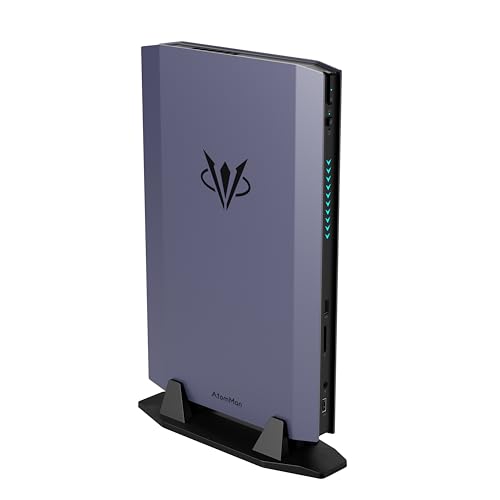
- Best native 1440p barebones kit: AtomMan G7 Ti Mini PC, Core i9-14900HX, RTX 4070 — Check on Amazon
- AtomMan G7 Pt Mini PC, Ryzen 9 7945HX, RX 7600M XT — Check on Amazon
- MINISFORUM MS-A2 Mini Workstation, Ryzen 9 9955HX, Barebone — Check on Amazon
- MINISFORUM MS-01 Mini Workstation Barebone, Core i9-13900H — Check on Amazon
- MINISFORUM UM890 Pro Mini PC, Ryzen 9 8945HS, Barebone Version — Check on Amazon
See 1 more Amazon option
- GMKtec Nucbox K8 Plus Mini PC, Ryzen 7 8845HS (Without RAM/SSD/OS) — Check on Amazon
Read the full guide ↓
Disclosure: As an Amazon Associate, reviewstook.com earns from qualifying purchases. Links to Amazon on this page are affiliate links; they cost you nothing extra. Listing details such as price and availability change often, so check the current Amazon listing before you buy.
Adding “for 1440p gaming” to a barebones mini PC search changes the question completely. The standard $1,500 barebones guide asks which kit is the best machine once you finish building it; this one asks a narrower, harder question — which of those same six kits can honestly put a good picture on a 2560×1440 monitor in games, and what “honestly” means for the ones that cannot. The answer splits the set cleanly in two. Two kits carry discrete graphics processors strong enough to render games at or near 1440p: the AtomMan G7 Ti with a laptop RTX 4070, and the AtomMan G7 Pt with a Radeon RX 7600M XT. The other four do not render at 1440p natively, and no setting, driver toggle or marketing phrase changes that. What they offer instead falls into two honest categories: integrated graphics that render at 1080p and upscale the result to fill your 1440p panel (the two Radeon 780M kits), and workstation platforms whose integrated graphics are display adapters, where a real GPU arrives later through a PCIe slot (the two MINISFORUM workstations). Every pick below is graded on which of those stories it tells before anything else about it is praised.
Three ground rules govern the grading. First, upscaling vocabulary is used precisely. When a game renders internally at a lower resolution and an upscaler stretches it to 1440p output, this guide says so and names the internal resolution where the technology defines one: DLSS Quality at 1440p output renders at roughly 1707×960 internally, DLSS Performance at roughly 1280×720, and AMD’s FSR Quality works the same way from a similar internal render. Upscaled 1440p can look genuinely good, but it is not native 1440p, and a guide that blurs the two is selling you something. Second, DLSS is mentioned only where a discrete NVIDIA GPU is physically present — in this set, the G7 Ti alone; the Radeon kits upscale with FSR. Third, the barebones rule from the parent guide stands untouched: a kit price is not a PC price. Every pick is still judged on its total cost to complete — kit, RAM, SSD and operating system — against the manufacturer’s configured version of the same box, because a 1440p verdict built on an unpayable price would be worthless.
One exclusion needs stating before the picks. The newest discrete-GPU barebone in this category, the AtomMan G7 Pro with a laptop RTX 5070, is listed by its maker in barebone form at a premium tier above this whole budget, before a single stick of RAM. It is therefore not here; its absence marks the current ceiling — at $1,500 completed, the strongest graphics silicon a barebones mini PC can offer is the RTX 4070 and RX 7600M XT class. Below you will find the quick picks graded for 1440p, detailed reviews of all six kits, a section defining exactly what native and upscaled 1440p mean on this hardware, a comparison table, the completion maths in the open, and the mistakes that leave buyers staring at a blurry 1440p desktop. Readers who want the broader verdict without the resolution grading should start with Best Barebones Mini PC Under $1500; this page is the specialist cut of the same six machines.
In this guide
Quick Picks
Short on time, or comparing several options at once? Each row below names a buyer type and the kit that suits it, graded for 1440p gaming first, with a link to the listing.
| Buyer type | Pick | Why it stands out at 1440p | Link |
|---|---|---|---|
| Best native 1440p gaming | AtomMan G7 Ti (Core i9-14900HX, RTX 4070) | A 140W laptop RTX 4070 with DLSS — the only kit here that renders near-native 1440p as its home setting | Check on Amazon |
| Best value 1440p route | AtomMan G7 Pt (Ryzen 9 7945HX, RX 7600M XT) | Discrete Radeon power, reaching into 1440p with FSR and sensible settings — check price on Amazon | Check on Amazon |
| Best staged build: upscale now, native later | MINISFORUM UM890 Pro (Ryzen 9 8945HS) | Radeon 780M renders 1080p and upscales today; the dedicated OCuLink port is the door to a native-1440p eGPU | Check on Amazon |
| Best second staged route | GMKtec Nucbox K8 Plus (Ryzen 7 8845HS) | The same 780M upscaling story with OCuLink, in an explicitly barebones listing — check the configured price first | Check on Amazon |
| Most CPU, GPU by slot later | MINISFORUM MS-A2 (Ryzen 9 9955HX) | 16 Zen 5 cores and a PCIe slot for a low-profile card; its 610M is a display adapter, not a gaming GPU | Check on Amazon |
| Intel workstation, GPU by slot later | MINISFORUM MS-01 (Core i9-13900H) | Quick Sync and 10G networking now; 1440p gaming only once a low-profile card occupies the PCIe slot | Check on Amazon |
How These Picks Were Chosen
The six kits are the verified set from the parent $1,500 barebones guide — same ASINs, same completion approach — re-graded against a single additional test: what happens when the finished machine is asked to drive a 1440p monitor in games? That test has three tiers, and every review states its pick’s tier in plain language. Tier one is native or near-native rendering: a discrete GPU with the power to draw frames at or close to 2560×1440, using upscaling as a quality-preserving boost rather than a lifeline. Tier two is the render-low, upscale-honest route: integrated graphics that genuinely play games at 1080p and hand the result to FSR for display on a 1440p panel — a legitimate way to use a 1440p monitor, provided nobody calls it native. Tier three is display-only: integrated graphics meant to light up monitors and transcode video, where gaming at any resolution waits for a graphics card the buyer adds separately. A kit was not punished for its tier — two of the finest machines here sit in tier three — but honesty about it was non-negotiable.
The completion filter from the parent guide applies unchanged, because a 1440p recommendation you cannot afford to finish is not a recommendation. A kit belongs here only if a realistic completion — kit, a sensible RAM capacity, a 1TB-class NVMe drive and an operating system — lands at or under $1,500, anchored wherever possible to the manufacturer’s configured version of the same hardware — check price on Amazon for the kit and compare it with the configured version the same day. Where completion only wins if you already own parts, the review says so. Where a GPU upgrade is part of a pick’s story — an eGPU dock on the OCuLink kits, a low-profile card in the workstation slots — that hardware is costed as what it is: a later, extra purchase, never folded into the completed totals.
Two technical judgements run through the grading and are worth naming. The first is memory bandwidth. Integrated graphics have no VRAM of their own; they borrow system memory, so the speed and configuration of the RAM you fit is, in effect, the iGPU’s memory specification. A matched pair of SO-DIMMs running dual-channel is therefore not a nicety on the 780M kits — it is the difference between the upscaling route working well and working badly, and one stick is a build error, not a saving. The second is VRAM on the discrete kits: both the RTX 4070 laptop GPU and the RX 7600M XT carry 8GB, and at 1440p that capacity — not raw compute — is the first ceiling newer games press against. Upscaling helps here too, since rendering internally at 1707×960 or below spends less VRAM than native rendering.
The 6 Best Barebones Mini PCs for 1440p Gaming Under $1,500
AtomMan G7 Ti Mini PC — Core i9-14900HX, RTX 4070
Who it suits: The 1440p gamer proper — the buyer whose monitor is a 1440p panel, whose games are modern, and who wants the strongest honest claim to that resolution that exists in a barebones mini PC.
Start with the verdict, because this kit earns the clearest one in the guide: the G7 Ti is the only pick that treats 1440p as its natural habitat rather than an aspiration. The reason is a single specification — an NVIDIA RTX 4070 laptop GPU with 8GB of GDDR6, running at up to 140W. That wattage figure matters more than the badge. Laptop 4070s ship in configurations as low as 35W in thin machines, and they are effectively different products; this is the full-power variant, the same silicon reviewers tested in the configured G7 Ti when they placed the machine at 1440p. Behind it sits Intel’s Core i9-14900HX, a 24-core chip (8 performance, 16 efficiency) boosting to 5.8GHz, which is desktop-replacement CPU power and will never be the bottleneck at this resolution. Because the GPU is NVIDIA and discrete, this is also the one kit in the guide where DLSS enters the conversation: DLSS Quality at 1440p output renders internally at roughly 1707×960 and reconstructs the rest, which is how this class of hardware holds high settings at 1440p: rendering every pixel natively is the exception in modern games, not the rule, and the honest version of “1440p gaming” on an 8GB laptop GPU is exactly this mix of near-native renders and Quality-mode upscaling.
The barebones shape of the purchase is unchanged from the parent guide. The kit arrives with no RAM, no SSD and no operating system; you fit DDR5-5600 SO-DIMMs (two slots, up to 96GB), an M.2 PCIe 4.0 drive (two slots), and your OS, into a slim vertical chassis with dual fans, Wi-Fi 7, HDMI 2.1 and USB4. PC Gamer’s review compared the barebone against the factory 32GB/1TB configuration, and the gap between them was small. That small gap is the whole financial story — your memory, storage and Windows licence must together cost less than that gap for the kit to beat the configured machine on price, which in practice means parts from a drawer, or a Linux install that deletes the licence line. Completed carefully, the machine lands at the top of this budget. One buying discipline follows from how Amazon lists this family: the indexed listing shows a configured style, so confirm the barebone style is the one selected on the live listing and check price on Amazon before ordering.
- The only kit here with DLSS: a full-power 140W RTX 4070 laptop GPU renders near-native 1440p and upscales the rest convincingly.
- 24-core i9-14900HX means the CPU never limits the GPU at this resolution.
- Two SO-DIMM and two M.2 slots make the completion genuinely yours — 64GB and a fast drive fit the budget if your parts prices behave.
Honest limitation: The 8GB of VRAM is the ceiling that defines this machine’s 1440p life — texture-heavy newer titles will push you toward DLSS and adjusted settings sooner than a desktop card owner would accept — and the barebone saves only a little against the configured version, so it makes financial sense mainly for parts owners. In performance mode the dual fans are audible; that is the standing tax on 140W in a slim slab.
Choose it if 1440p gaming is the actual purpose of the purchase and you have RAM or storage on the shelf. Skip it if you would be buying every component new at full price — the configured version is the rational buy, and the G7 Pt below is the better-value gaming kit.

AtomMan G7 Pt Mini PC — Ryzen 9 7945HX, RX 7600M XT
Who it suits: The value-minded 1440p gamer — happy to let FSR and sensible settings do their work in exchange for the friendliest completion maths of any discrete-GPU kit here.
The G7 Pt’s 1440p claim needs one honest qualifier, and then it is a strong claim. The qualifier: this is a superb 1080p machine that reaches into 1440p, rather than a native-1440p machine outright. The hardware is a Ryzen 9 7945HX — sixteen full Zen 4 cores to 5.4GHz, desktop-replacement silicon — paired with a discrete Radeon RX 7600M XT running at up to 120W with 8GB of GDDR6. Independent reviews of the configured machine found exactly that profile: strong at 1080p, capable at 1440p with settings chosen sensibly. The upscaling tool here is AMD’s FSR, because there is no NVIDIA silicon in this box and therefore no DLSS — FSR Quality at 1440p output likewise reconstructs the panel image from an internal render around 1707×960, which this GPU handles well across a wide range of titles. A physical mode switch steps the CPU between 65W balanced and 85W performance profiles, doubling as the machine’s noise control: balanced on the desk, performance in the game. Billed as the first mini PC with AMD Advantage certification, it pairs DDR5-5200 SO-DIMM slots to 96GB with PCIe 5.0 NVMe support, fed by a substantial 300W external power supply.
Financially, this is the discrete-GPU kit whose numbers work for ordinary buyers, not just parts collectors. Check price on Amazon for both the barebone and the configured 32GB/1TB version, and compare them the same day. Reviewers estimated a modest cost to complete the barebone with 32GB of DDR5, a 1TB M.2 drive and a Windows key — putting a finished G7 Pt comfortably inside the budget with headroom for 64GB of memory or a 2TB drive if your parts prices cooperate. Because several configurations share this Amazon listing, check the style selector carefully and confirm you are looking at the barebone before comparing prices. That headroom is the argument for the 1440p buyer: money left for the monitor arm, the second drive, or simply unspent — with a discrete GPU, not an apology, behind the panel.
- A real discrete GPU at 120W: FSR-assisted 1440p is a genuine capability here, not a stretch goal.
- Sixteen Zen 4 cores outgun everything else in this guide for CPU-heavy games and creation work alike.
- Check price on Amazon — the only discrete kit whose completion maths works with all-new parts.
Honest limitation: The RX 7600M XT’s 8GB of VRAM is the first ceiling you will meet at 1440p in newer games, ray tracing is a step behind the NVIDIA kit, and there is no upgrade path past either fact — the GPU is soldered. Expect FSR and setting choices to be permanent companions at this resolution.
Choose it if you want the best ratio of 1440p capability to total completed cost in this guide. Skip it if DLSS or the strongest ray tracing matters to you — that is the G7 Ti’s department, at the G7 Ti’s completion terms.

MINISFORUM UM890 Pro Mini PC, Barebone Version — Ryzen 9 8945HS
Who it suits: The staged builder: a superb compact PC today that plays at 1080p and upscales to a 1440p panel, with a wired door — OCuLink — to true native 1440p later.
Grade this kit in tier two and grade it fairly: the UM890 Pro does not render games at 1440p, and this review will not pretend otherwise. What it does is arguably the most sensible thing a 1440p monitor owner can buy at this kit price. Its Radeon 780M integrated graphics — driven by a Ryzen 9 8945HS, eight Zen 4 cores to 5.2GHz, allowed up to 70W — are the strongest iGPU generation in widespread mini-PC use, a credible engine for modern games rendered at 1080p with low-to-medium settings. From there, FSR upscales the rendered frame to your panel’s 1440p output, and driver-level Radeon Super Resolution can do the same for titles without built-in upscaling. The result on a 1440p screen is visibly softer than native rendering — that is the honest cost — and visibly better than running a 1080p panel, with the desktop itself pin-sharp at native 1440p the rest of the day. The variable you control is memory: the 780M has no VRAM and borrows system RAM, so a matched dual-channel pair of DDR5-5600 SO-DIMMs (two slots, up to 96GB) is load-bearing for this entire story. Fit one stick and you have halved the bandwidth the upscaling route depends on.
Stage two is what elevates this kit above every other integrated option: a dedicated OCuLink port — alongside dual USB4, dual 2.5G Ethernet, HDMI 2.1 and DP 1.4, with two M.2 PCIe 4.0 slots inside — that attaches an external GPU dock without consuming an SSD slot. An eGPU is the only route by which this machine ever renders natively at 1440p, and it is priced as what it is: a second purchase, dock plus desktop card, entirely outside the completion figures in this guide. The completion itself is the bargain of the category. This is a budget-tier barebone on Amazon, while the configured 32GB/1TB version sits in a much higher tier, a climb trackers attribute to the memory and NAND shortage — check price on Amazon for both. If you own DDR5 and a drive, the kit can complete a machine that costs far more in configured form; if you are buying memory new at shortage prices, price both routes the same day. The barebone is sold as its own listing, separate from the configured family — confirm the live page is the barebone version before ordering. Reviewers praised this chassis’s quiet cooling, which matters more than usual here: an upscaling machine runs its iGPU hard, and this one does it without shouting.
- The strongest integrated route to a 1440p screen: honest 1080p rendering with FSR upscaling, on the best iGPU in the guide.
- Dedicated OCuLink port keeps both M.2 slots free — the cleanest eGPU runway of any kit here.
- A budget-tier barebone against a much pricier configured version: the staged build starts cheap — check price on Amazon.
Honest limitation: Integrated graphics are integrated graphics — the 780M upscaling to 1440p is a good picture, not a native one, and the eGPU that closes the gap is a second purchase with a desktop card’s price attached. Buyers who need native 1440p on day one should be reading the two AtomMan reviews above.
Choose it if your plan is staged — excellent compact PC and upscaled 1440p now, native 1440p via OCuLink when the dock budget arrives. Skip it if the plan is actually “1440p gaming PC, finished, today”: the G7 Pt completes that brief for less total money.

GMKtec Nucbox K8 Plus Mini PC (Without RAM/SSD/OS) — Ryzen 7 8845HS
Who it suits: The tinkerer who wants the same 780M upscaling story as the UM890 Pro — plus OCuLink and dual Intel networking — from an explicitly barebones listing, and who is disciplined enough to check the configured price first.
The K8 Plus is the UM890 Pro’s closest rival in silicon and intent, and its 1440p grading is the same tier-two verdict, stated just as plainly: no native 1440p rendering happens here. The Ryzen 7 8845HS — eight Zen 4 cores to 5.1GHz — carries the same Radeon 780M integrated graphics, and in a dual-fan chassis with a 65W performance mode it sustains that iGPU properly. Games render at 1080p and FSR carries them to your 1440p panel; Radeon Super Resolution covers titles without native upscaling support. Everything said in the UM890 Pro review about memory applies with equal force: the 780M borrows system RAM, the kit’s two DDR5 SO-DIMM slots want a matched dual-channel pair, and single-stick builds kneecap the very bandwidth this upscaling route runs on. Where the K8 Plus makes its own case is connectivity and candour. The OCuLink port is here for the same staged eGPU plan, flanked by dual USB4, HDMI 2.1 and DisplayPort 2.1 outputs, and dual 2.5GbE LAN on Intel i226V controllers — a detail networking-minded buyers specifically hunt for. And GMKtec sells the kit the way barebones should be sold, as a dedicated listing whose title states “Without RAM/SSD/OS” outright; even so, read the selected style’s specification block before ordering and make sure it agrees with the title, because a barebone purchase should never rest on a headline alone.
The price discipline for this pick is different from every other kit in the guide, because this guide makes no hard claim for the barebone listing’s own price — and neither should you, until you have checked it live. The reason is the configured sibling’s behaviour: the finished 32GB/1TB K8 Plus has swung widely on Amazon between deep discounts and much higher pricing. When the configured version is heavily discounted, almost no kit-plus-new-parts combination wins; when it sits at the higher end, the barebone with parts from your shelf wins easily. So the review’s core advice is procedural: open the configured listing first, check price on Amazon, then judge the barebone against it that same day. If the maths favours the kit — or if your reason is choosing your own memory capacity, storage and operating system rather than saving money, a motive this guide respects — the K8 Plus is a thoroughly likeable platform for the upscaled-1440p present and the OCuLink future. If the configured machine is mid-discount, buy the finished box and spend your tinkering energy elsewhere.
- An unambiguous barebone listing: the title itself says no RAM, no SSD, no OS.
- Same 780M upscaling route as the UM890 Pro, with OCuLink for the native-1440p stage two.
- Dual Intel i226V 2.5G LAN, dual USB4 and DP 2.1: connectivity a class above the kit’s price.
Honest limitation: When the configured version is on a deep discount, the barebone route only makes sense with parts already owned — and like its rival, this is an upscaling machine at 1440p, not a native renderer. Check the finished machine’s live price before you commit to the kit.
Choose it if you prefer GMKtec’s take on the OCuLink APU platform and enjoy speccing your own memory and storage. Skip it if a configured K8 Plus is sitting on one of its deep discounts the day you shop, or if you want the quieter-reviewed chassis — that is the UM890 Pro.

MINISFORUM MS-A2 Mini Workstation — Ryzen 9 9955HX, Barebone
Who it suits: The compute-first buyer — homelab, virtualisation, CPU-bound work — who wants the strongest platform in the guide and understands that 1440p gaming arrives only when a graphics card does.
Tier three, without varnish: the MS-A2 is not a gaming PC, and its integrated Radeon 610M graphics exist to put a picture on a monitor — desktop work at 1440p is crisp and effortless, games at 1440p are not a thing this silicon does, and games at 1080p are a light-and-older-titles affair. What the MS-A2 is, instead, is the most serious platform in this guide. A Ryzen 9 9955HX brings sixteen Zen 5 cores and 32 threads to 5.4GHz inside a 1.78-litre aluminium chassis, with dual 10-gigabit SFP+ ports, dual 2.5-gigabit Ethernet, three M.2 storage positions including U.2 support, Wi-Fi 6E, and two DDR5-5600 SO-DIMM slots for up to 96GB of memory. The feature that defines it is a physical PCIe x16 slot, running PCIe 4.0 x8 with lane-splitting support. That slot is the entire gaming story: a low-profile discrete GPU fitted there is a legitimate route to real 1440p rendering, and it is also, honestly, extra money beyond every completion figure in this review, in a slot whose airflow reviewers found limited, suiting low-power cards rather than flagships. Price that card as a separate project, or do not price this kit as a gaming machine at all.
As a platform purchase, the arithmetic is the strongest in the guide. The 9955HX barebone is a mid-range purchase on Amazon, against Minisforum’s configured 32GB/1TB version of the same box in a premium tier — a substantial gap for your parts to beat, which builders with a RAM kit on the shelf will beat easily; check price on Amazon for both. Two buying cautions travel with this pick: the Amazon listing family mixes styles, and its indexed data shows a configured style of a sibling variant, so confirm on the live page that you are ordering the 9955HX barebone before paying. And reviewers found the machine’s load noise audible and its idle power draw relatively high for the class — the expected cost of a 100W-class HX processor in under two litres, and worth knowing if the box will share your desk. Buy the MS-A2 for cores, ports and the slot, and it has no rival in this guide. Buy it hoping the 610M is secretly a gaming GPU with an upscaling trick, and no review — including this one — can save the purchase.
- Sixteen Zen 5 cores and dual 10G networking: the strongest CPU platform a barebones mini PC offers at this budget.
- A real PCIe slot means a genuine, if low-profile, path to native 1440p rendering later.
- A mid-range barebone against a premium configured version — the deepest completion headroom here; check price on Amazon.
Honest limitation: Radeon 610M graphics are a display adapter. Any 1440p gaming from this machine waits for a low-profile card in the PCIe slot, bought separately and limited by the slot’s modest airflow — and under load the fans announce themselves.
Choose it if your workload is CPU, virtual machines, storage or networking, with gaming as a later slot-card project. Skip it if gaming is the point of the purchase — both AtomMan kits out-gun it completely, today, out of the box.

MINISFORUM MS-01 Mini Workstation Barebone — Core i9-13900H
Who it suits: The Intel-shaped homelab builder — Quick Sync transcoding, vPro, dual 10-gigabit networking — who wants a workstation first and a slot-based route to gaming graphics second.
The MS-01 shares the MS-A2’s tier-three honesty, with an Intel accent. Its Iris Xe integrated graphics are a display and transcoding engine: they light up your 1440p desktop beautifully, their Quick Sync hardware is the reason media-server builders choose Intel silicon, and Intel’s XeSS upscaling exists for this graphics family — but none of that makes Iris Xe a gaming GPU, and this machine does not game meaningfully at any resolution until a graphics card arrives. The card’s home is ready: a PCIe 4.0 x16 slot (electrically x8) that accepts a low-profile card, bought separately and never counted in this guide’s completion figures. Around that slot sits the machine that defined the workstation-mini category: a Core i9-13900H — 14 cores, 20 threads, to 5.4GHz, with vPro — fed by two DDR5-5200 SO-DIMM slots to 96GB, three M.2 2280/22110 positions with U.2 support, two 10GbE SFP+ ports, two 2.5G Ethernet ports and dual USB4, all in a box of about a litre and a half. The barebone listing ships with no RAM and no SSD; the CPU is the one decision locked at purchase, with Core i5-12600H and Core i9-12900H variants sitting below the 13900H in the same listing family — so confirm the style you select is the chip you actually intend to live with.
Check price on Amazon for the i9-13900H barebone and for the configured i9 machine at 32GB/1TB — the barebone sits in a mid-range tier well below the premium configured version, leaving substantial headroom for your parts to beat the factory build, the second-deepest completion gap in this guide. One review caveat belongs in the open, exactly as in the parent guide: Notebookcheck’s early MS-01 test unit suffered unpredictable crashes under sustained load, and the maker planned a replacement unit. That was a launch review sample, not a verdict on current production — but a machine bought for always-on duty should still be stress-tested inside its return window. Thermals follow the workstation pattern: an HX-class chip working hard in a small chassis makes fan noise, and the PCIe slot area is not a wind tunnel, which is another reason the slot’s gaming card should be a low-power one. Buy the MS-01 for its ports, its transcoding and its slot. Its 1440p gaming chapter begins the day a low-profile GPU moves in — and not a day before.
- Dual 10GbE SFP+, dual 2.5G, three storage positions and a PCIe slot: server features in a litre and a half.
- Core i9-13900H with Quick Sync is the transcoding and virtualisation pick of the guide.
- With the i9 barebone in a mid-range tier, you hold substantial headroom before your build reaches the configured machine’s price.
Honest limitation: Iris Xe integrated graphics only — 1440p gaming requires a low-profile card in the PCIe slot at extra cost — and early review testing reported instability under sustained load, so verify your own unit under stress before trusting it with always-on duties.
Choose it if your homelab is Intel-shaped and a slot-card graphics upgrade fits your plans. Skip it if you want more CPU cores per dollar — the MS-A2’s 9955HX is the stronger compute buy — or gaming now, which is the AtomMan kits’ whole purpose.
Comparison Table
| Product | CPU / GPU | Price | Honest 1440p verdict | Link |
|---|---|---|---|---|
| AtomMan G7 Ti | i9-14900HX / RTX 4070 Laptop 140W | Check price on Amazon | Native-class 1440p with DLSS Quality — the real thing | Check on Amazon |
| AtomMan G7 Pt | Ryzen 9 7945HX / RX 7600M XT 120W | Check price on Amazon | Strong 1080p; 1440p with FSR and sensible settings | Check on Amazon |
| MINISFORUM UM890 Pro | Ryzen 9 8945HS / Radeon 780M, OCuLink | Check price on Amazon | Renders 1080p, FSR-upscales to 1440p; native via eGPU later | Check on Amazon |
| GMKtec Nucbox K8 Plus | Ryzen 7 8845HS / Radeon 780M, OCuLink | Check price on Amazon | Renders 1080p, FSR-upscales to 1440p; native via eGPU later | Check on Amazon |
| MINISFORUM MS-A2 | Ryzen 9 9955HX / Radeon 610M + PCIe slot | Check price on Amazon | Display graphics only; 1440p gaming waits for a slot card | Check on Amazon |
| MINISFORUM MS-01 | i9-13900H / Iris Xe + PCIe slot | Check price on Amazon | Display/transcode graphics; 1440p gaming waits for a slot card | Check on Amazon |
Native 1440p vs Upscaled 1440p: What the Words Actually Mean
Every argument about 1440p gaming is secretly an argument about internal render resolution, so here are the numbers this guide has been using, gathered in one place. A 1440p panel shows 2560×1440 pixels. A game rendering natively draws all of them, every frame. Upscaling draws fewer and reconstructs the rest: DLSS Quality, the preset this guide treats as the near-native standard, renders at two-thirds scale per axis — roughly 1707×960 internally at 1440p output — while DLSS Performance halves each axis to roughly 1280×720 and buys speed with softness. AMD’s FSR Quality works from a similar internal render at this output, and its lower presets step down from there. The same maths explains the resolution ladder above this guide: DLSS Quality at 4K output renders at roughly 2560×1440 internally — which is to say, a 4K gamer on Quality upscaling is rendering the frame a native 1440p gamer draws, and a 1440p gamer on Quality is rendering around 960p. None of this makes upscaling a cheat: reconstruction from 1707×960 looks remarkably close to native and spends far less VRAM, a decisive benefit on the 8GB cards here. It makes vocabulary a duty — when a listing says a machine “does 1440p,” the only useful follow-up is “rendering at what, upscaling with what?”
Applied to the six kits, the tiers are these. The G7 Ti renders at or near 1440p and uses DLSS Quality as a boost — tier one, the genuine article. The G7 Pt renders natively in lighter titles and leans on FSR as games get heavier — tier one on a good day, tier two on a demanding one, and honest either way because the discrete GPU is doing real work at real resolutions. The two 780M kits render at 1080p as their working resolution and upscale for display — tier two, a good picture honestly labelled. The two workstations render a desktop — tier three, where the 1440p conversation is not about upscaling settings but about which low-profile card eventually occupies the slot. Note the asymmetry: the workstations’ expansion door is internal and low-profile, while the APU kits’ door — the eGPU dock — is external and full-size. Choosing between those doors is better done with this paragraph in front of you than after the boxes arrive.
The Total-Cost-to-Complete Maths, Done in the Open
The parent guide’s rule survives the change of angle untouched: never compare a kit’s price against finished PCs — compare kit-plus-parts against the configured version of the same box, priced the same day. The 1440p lens does not change the arithmetic, only what it buys — so here is the tier’s money map. The G7 Ti’s barebone sits only a little below its configured self; that small gap is your entire parts budget if the kit is to win on price, which is why this guide keeps calling it a parts-owner’s purchase. The G7 Pt is the friendlier story: a premium barebone with a modest reviewer-estimated completion cost and a configured sibling in a similar tier — a kit that can win even with new parts; check price on Amazon for both. The UM890 Pro is the market’s mood in one product: a budget-tier barebone while its configured version climbed into a much higher tier under memory-shortage pressure, so the same kit is a bargain or a trap depending on the week and on whether your DDR5 is already paid for. The K8 Plus refuses a fixed verdict entirely — its configured sibling has swung widely between deep discounts and higher pricing — which is why its review is a procedure rather than a price. The workstations invert the pattern: mid-range barebones for the MS-A2 and MS-01 against premium configured versions, with substantial gaps that reward parts owners handsomely.
And one line item deserves its own sentence in a 1440p guide: the GPU you add later is not part of any of these numbers. An OCuLink dock plus a desktop card for the UM890 Pro or K8 Plus, or a low-profile card for the MS-A2 or MS-01, is a second project with a second budget, and any guide that quietly folds it into a “$1,500 build” is lying to you with arithmetic. Build your own table before ordering — kit, the exact RAM kit and SSD you intend to fit, the OS cost (zero for Linux or a transferable licence, real money for a fresh Windows key) — then write the configured price beside it. If your total is not clearly lower, or the difference does not buy a better specification, buy the finished machine and game on it. Barebones is a strategy, not a religion.
How to Choose a Barebones Mini PC for 1440p Gaming Under $1,500
- Decide what “1440p” means for you first. Native-class rendering with upscaling as a boost (G7 Ti), FSR-assisted 1440p (G7 Pt), 1080p rendered and upscaled for display (UM890 Pro, K8 Plus), or a workstation now and a slot card later (MS-A2, MS-01). All four are legitimate; buying one while expecting another is the only failure mode.
- Do the completion maths before the resolution maths. Add the kit to the real RAM, SSD and OS you intend to fit, then set that total beside the configured version of the same machine priced the same day. A 1440p verdict on a machine you cannot afford to finish is worth nothing.
- Treat DLSS as a hardware fact, not a feature to hope for. It exists only where a discrete NVIDIA GPU is fitted — in this guide, the G7 Ti alone. Radeon kits upscale with FSR; integrated Intel graphics have XeSS for lighter duties. No driver update changes which silicon you bought.
- Respect the 8GB VRAM ceiling on the discrete kits. It is workable at 1440p precisely because upscaling renders internally at 1707×960 or below — and it is permanent, because the GPU is soldered. If your games are the texture-heaviest new releases, weigh this before either AtomMan kit.
- On integrated kits, buy memory like it is VRAM — because it is. A matched dual-channel pair of DDR5 SO-DIMMs is the 780M’s memory bandwidth. One stick halves it and visibly weakens the upscaling route. This is the cheapest performance in the entire guide.
- Confirm the style on shared listings. Several of these Amazon listings mix barebone and configured styles — and, on the MS-01, different CPUs — under one page. The price you saw first may not be the kit you meant. Check the selected style’s name and specification block before paying.
Common Buying Mistakes
- Reading “1440p gaming PC” on any mini PC listing as native rendering, without asking what resolution the game actually renders at and what upscales it.
- Expecting DLSS from a Radeon kit. The G7 Pt and the 780M machines upscale with FSR; DLSS requires the NVIDIA silicon that only the G7 Ti carries here.
- Buying the MS-A2 or MS-01 as gaming machines. Their integrated graphics are display adapters; the gaming GPU is a separate, later purchase for the PCIe slot.
- Fitting a single RAM stick in a 780M kit and halving the memory bandwidth the integrated GPU and its upscaling depend on.
- Comparing a barebone kit’s price against finished PCs and calling the difference a saving, without adding RAM, storage and an OS licence.
- Buying the G7 Ti barebone with all-new parts when its configured version costs only a little more — that kit is for parts owners.
- Counting a future eGPU dock or slot card inside the $1,500 completion budget. It is a second project; the completed totals in this guide deliberately exclude it.
- Sealing a 120–140W machine in a cabinet and blaming the fans; small chassis need open air the way desktops need a power supply.
Final Recommendation
- True 1440p gaming: AtomMan G7 Ti — the only native-class renderer here, for buyers whose parts drawer makes its thin completion gap irrelevant.
- 1440p value: AtomMan G7 Pt — FSR-assisted 1440p and sixteen cores, completed comfortably inside the budget.
- Staged 1440p: MINISFORUM UM890 Pro — upscale today, OCuLink eGPU tomorrow; the K8 Plus is the same plan in GMKtec form, priced against its configured sibling on the day.
- Workstation first, gaming by slot: MINISFORUM MS-A2 for cores, MS-01 for Intel, Quick Sync and vPro.
Our top two for this angle are the AtomMan G7 Ti, because it is the only kit in the set whose 1440p claim needs no asterisk — a full-power RTX 4070 with DLSS, rendering at or near the panel’s resolution — and the AtomMan G7 Pt, because it delivers most of that experience for a completion comfortably inside the budget, the one discrete-GPU kit whose maths works even when every part is bought new. The UM890 Pro is the connoisseur’s staged build and the best machine in this guide for buyers whose 1440p ambition is real but patient. The workstations are excellent at what they are and are recommended here only to buyers who have read their tier-three verdict and nodded. Whichever kit you choose, run the configured-versus-barebone comparison on the day you order, fit memory as a matched pair, confirm the style on the listing, and check the live price before you buy. Buyers speccing the same question a tier down should see Best Barebones Mini PC For 1440p Gaming Under $1200, and those with a larger ceiling can compare Best Barebones Mini PC For 1440p Gaming Under $2500.
Frequently Asked Questions
Can a barebones mini PC really play games at 1440p?
Yes — two of the six kits in this guide can, with the right expectations. The AtomMan G7 Ti’s 140W RTX 4070 laptop GPU is a genuine 1440p part with DLSS, and reviewers rated the configured machine at that resolution. The G7 Pt’s RX 7600M XT is a strong 1080p GPU that reaches into 1440p with FSR and sensible settings. The two 780M kits render at 1080p and upscale to a 1440p display, which is a good picture honestly labelled — not native rendering. The two workstation kits do not game meaningfully at any resolution until a graphics card is added to their PCIe slots.
What is the difference between native 1440p and upscaled 1440p?
Native rendering draws every one of the panel’s 2560×1440 pixels each frame. Upscaling renders internally at a lower resolution and reconstructs the 1440p image: DLSS Quality renders at roughly 1707×960 internally at 1440p output, DLSS Performance at roughly 1280×720, and FSR Quality works from a similar internal render. Upscaled output looks close to native in motion and uses far less VRAM, which is why it is the sensible default on 8GB hardware — but a guide or listing that calls it native is misstating the product.
Which of these kits have DLSS?
Only the AtomMan G7 Ti. DLSS requires a discrete NVIDIA GPU with Tensor cores, and the G7 Ti’s RTX 4070 laptop GPU is the sole NVIDIA silicon in this set. The G7 Pt’s Radeon RX 7600M XT and the Radeon 780M integrated graphics in the UM890 Pro and K8 Plus upscale with AMD’s FSR instead. The Intel workstations’ Iris Xe supports Intel’s XeSS upscaling for lighter duties, but those machines are display-and-transcode platforms until a slot card arrives.
Is 8GB of VRAM enough for 1440p gaming?
It is the workable budget, not the comfortable one — and it is the fixed ceiling of both discrete kits here, because their GPUs are soldered. Upscaling is what makes it workable: rendering internally at 1707×960 or below spends substantially less VRAM than native 1440p rendering, so DLSS and FSR are not just performance tools on these machines, they are memory management. Texture-heavy new releases will still ask you to lower texture settings sooner than a larger-VRAM desktop card would. No RAM upgrade changes this; system memory and VRAM are different pools on the discrete kits.
Can the UM890 Pro or K8 Plus ever render natively at 1440p?
Yes — through their OCuLink ports, with an external GPU dock and a desktop graphics card attached. That is the staged plan both kits are sold on, and it works because OCuLink is a direct PCIe connection rather than a tunnelled one. But the dock and card are a second purchase at extra cost, and they are deliberately excluded from every completion total in this guide. On their own integrated graphics, both machines render at 1080p and upscale — plan on that being the experience until the dock arrives.
Why is there no RTX 5070 barebones kit in this guide?
Price, not performance. The AtomMan G7 Pro, the RTX 5070 sibling of the G7 Ti, is listed by its maker at a premium tier for the barebone alone — above this guide’s entire budget before memory, storage or an operating system. Its absence marks the category’s current ceiling: at $1,500 completed, the strongest 1440p silicon a barebones mini PC offers is the RTX 4070 and RX 7600M XT class. When a 5070-class barebone falls under this budget, it will belong at the top of this page.
How much does it really cost to complete one of these kits?
Each kit answers differently, so this guide anchors every verdict to the manufacturer’s configured version of the same box. Reviewers put the G7 Pt’s completion at a modest amount over its kit price — check price on Amazon; the G7 Ti’s factory-built twin runs only a little above its kit, which caps what finishing one should sensibly cost; and the two workstations sit substantially below their configured equivalents, leaving genuine room for parts. Beyond those anchors, the honest figure is whatever your chosen RAM kit, SSD and OS licence total in your own cart on ordering day — memory pricing moves too fast for any guide to quote it for you.
- Best Barebones Mini PC Under $1500
- Best Barebones Mini PC For 1440p Gaming Under $1200
- Best Barebones Mini PC For 1440p Gaming Under $2500
- Best Barebones Mini PC For Beginners Under $1500
- Best Barebones Mini PC For Small Spaces Under $1500
- Best Barebones Mini PC For Streaming Under $1500
- Best Mini PC Under $1500
- Best Mini Gaming PC Under $1500
- Best 1440p Gaming PC Under $1500
- Best Small Form Factor Gaming PC Under $1500


