Where to buy
Check the latest price, availability and delivery on Amazon. Orders are placed on Amazon. We may earn a commission from qualifying purchases.
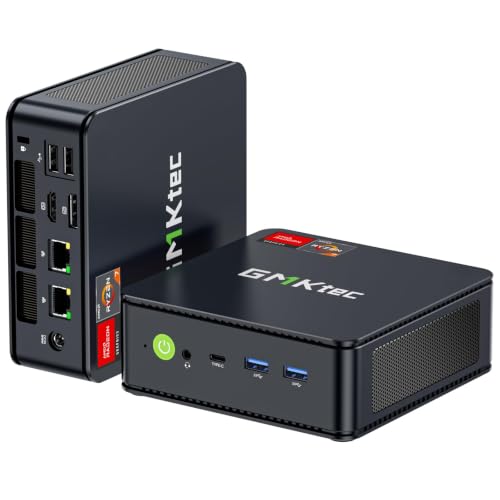
- Best overall workstation under $400: GMKtec M5 Plus Mini PC, Ryzen 7 5825U, 32GB RAM, 1TB SSD — Check on Amazon
- Beelink SER5 MAX Mini PC, Ryzen 7 5800H, 16GB RAM, 500GB SSD — Check on Amazon
- KAMRUI E3B Mini PC, Ryzen 5 7430U, 32GB RAM, 512GB SSD — Check on Amazon
- Dell OptiPlex 7060 SFF Desktop, Core i5-8500, 16GB RAM, 512GB SSD (Renewed) — Check on Amazon
See 2 more Amazon options
- BOSGAME P4 Mini PC, Ryzen 7 5700U, 32GB RAM, 1TB SSD — Check on Amazon
- MeLE Quieter4C Mini PC, Intel N150, 8GB RAM, 256GB SSD, Fanless — Check on Amazon
Read the full guide ↓
Disclosure: As an Amazon Associate, reviewstook.com earns from qualifying purchases. Links to Amazon on this page are affiliate links; they cost you nothing extra. Listing details such as price and availability change often, so check the current Amazon listing before you buy.
This keyword hides two different questions, and they have opposite answers. The first is whether a workstation under $400 can run a 1440p monitor. Yes — every machine in this guide can, and most can run two or three of them, because pushing a desktop image to a 2560×1440 panel is light work that these computers were practically built for. The second question is whether the same machine can render games at 1440p. That is a completely different job, and the honest answer shapes everything below: for demanding modern games, none of the six can. Not one pick in this guide carries a discrete graphics card. All six render games with integrated graphics — the graphics built into the processor — and integrated graphics at this price is a 1080p technology, full stop.
So this guide grades each pick with a printed verdict, and the verdicts use three labels. Native would mean the machine renders games at the full 1440p resolution — no pick earns it for demanding titles, and we will not pretend otherwise. Upscaled means the realistic route: the game renders at 1080p or below, and an upscaler stretches that render to fill your 1440p panel — genuinely playable, visibly softer than native, and the honest ceiling for the four Ryzen mini PCs here. Display only means the machine lights up a 1440p screen beautifully for work and stops there; its gaming belongs at low settings and lower resolutions, in older and lighter titles. If your real goal is native 1440p gaming, the truthful advice is that it starts above this budget, in machines with a real graphics card — the picks here are for the reader whose 1440p monitor is a work tool first, and who wants to know exactly what gaming that desk can and cannot do after hours.
The workstation side of the keyword keeps its own honesty rules, carried over from our base research. At $400, “workstation” means a strong mini PC or a renewed business desktop doing office, development, light-CAD and 1080p-edit work. There is no ECC memory anywhere in this guide — none of the six platforms documents support for it — no ISV-certified professional GPU, and no Xeon or Threadripper processor. What there is: eight-core Ryzen processors, memory that mostly grows to 64GB, documented multi-monitor outputs — check the live price on Amazon before you buy. Below are the quick picks with their 1440p verdicts attached, an explanation of the render-versus-display distinction that decides this whole category, detailed reviews of all six machines, a comparison table, buying guidance, the mistakes that waste money here, and the questions readers ask most.
In this guide
Quick Picks
Short on time, or comparing several options at once? Each row names a type of buyer, the machine that suits them, and its honest 1440p gaming verdict.
| Buyer type | Pick | 1440p verdict — why | Link |
|---|---|---|---|
| Best overall workstation | GMKtec M5 Plus, Ryzen 7 5825U, 32GB, 1TB | Upscaled — the strongest all-round spec here; its Vega graphics render at 1080p and upscale to the panel | Check on Amazon |
| Best sustained CPU power | Beelink SER5 MAX, Ryzen 7 5800H, 16GB, 500GB | Upscaled — a 54W power budget holds its 1080p renders steadier through long sessions than the efficiency chips | Check on Amazon |
| Best value | KAMRUI E3B, Ryzen 5 7430U, 32GB, 512GB | Upscaled — 1080p at low settings plus upscaling; the weakest Ryzen graphics in the guide, in a budget-friendly package | Check on Amazon |
| Best expansion path | Dell OptiPlex 7060 SFF (Renewed), i5-8500, 16GB, 512GB | Display only today — but the only pick whose PCIe slot leaves a route to a real graphics card later | Check on Amazon |
| Best storage and networking | BOSGAME P4, Ryzen 7 5700U, 32GB, 1TB | Upscaled — same Vega graphics class as the leader, with 1TB fitted and dual 2.5GbE for the work side | Check on Amazon |
| Best silent workstation | MeLE Quieter4C, Intel N150, 8GB, 256GB | Display only — drives three 4K desktops in silence; gaming is the lightest older titles only | Check on Amazon |
How These Picks Were Chosen
The six machines are the verified set from our base workstation research at this price: real Amazon listings and documented specifications, reused here unchanged. No pick was added, swapped or re-priced for this angle. What this variant adds is a rendering audit on top of that set — every pick re-graded on one question: what does its documented graphics hardware honestly do with a game and a 1440p panel?
The audit starts from a fact that decides most of it. Every pick renders with integrated graphics: Radeon Vega-class graphics inside the four Ryzen processors, Intel UHD graphics inside the Dell’s Core i5 and the MeLE’s N150. There is no discrete graphics card in the set, and therefore no NVIDIA Tensor cores in the set — which is why you will find no DLSS in this guide. DLSS is NVIDIA technology that runs on Tensor cores; hardware without them cannot use it, and claiming it for these machines would be inventing a feature. The upscaler that does apply is AMD’s FSR, which runs on graphics hardware broadly, including integrated Radeon graphics. We credit FSR generically — as a route that exists on the Ryzen picks — and print no internal-resolution figures for it, because our base research documents none and figures borrowed from a different upscaler would be a fabrication. Verdicts were then assigned by graphics class: the Vega graphics in the Ryzen picks is a 1080p-render technology, so those four machines are Upscaled; the Intel UHD graphics in the Dell and the MeLE is a desktop-and-video technology first, so those two are Display only.
The workstation filters from the base research still apply in full. The budget is a ceiling for a complete, working computer — barebone kits with no memory, storage or operating system were excluded. Memory was judged on what is fitted and whether it sits in sockets that accept 64GB later, or is soldered down forever. Display claims were counted from physical ports, not headlines: a pick earns a three-monitor claim only where its listing documents three outputs. And the professional-feature check was run rather than assumed — no platform in this set documents ECC memory support, and no pick carries an ISV-certified GPU, so the guide states that openly instead of letting the word “workstation” imply it.
Rendering at 1440p Is Not Displaying 1440p
This distinction is the spine of the guide, because confusing the two is how buyers at this budget get disappointed. A 1440p panel holds 2560 × 1440 pixels — about 3.69 million of them. A 1080p frame holds 1920 × 1080 — about 2.07 million. Rendering a game at 1440p therefore asks the graphics hardware to shade roughly 78 percent more pixels, every frame, dozens of times a second. Displaying a desktop at 1440p asks almost nothing by comparison: the image is mostly static, the operating system draws it once, and even modest integrated graphics push it without effort. That is why every listing in this guide can truthfully advertise triple 4K display output — 4K is about 8.3 million pixels of display — while none of them can render a demanding game at even 1440p. The port and the render are different jobs, done by different parts of the machine, at wildly different costs.
Practically, this is how a 1440p desk works with any pick below. The monitor connects and runs at its full 2560×1440 for everything on the desktop: documents, code, spreadsheets, photo editing, browsing — all of it crisp, all of it exactly what you bought the panel for. When a game launches, you set the game’s own render resolution to 1920×1080 (or lower, in the heaviest titles), and the image is upscaled to fill the panel. On the Ryzen picks, FSR does that upscaling inside the game where the game supports it, which looks cleaner than a plain stretch. The result is a softer picture than a true 1440p render — fine detail and distant textures give it away — but it is a perfectly serviceable way to game on a work desk, provided you buy knowing that is the deal. What you should never do is read “supports 4K displays” on a mini PC listing as a gaming claim. It is a statement about the cable, not the card.
The 6 Best Workstation PCs for 1440p Gaming Under $400
GMKtec M5 Plus Mini PC — Ryzen 7 5825U, 32GB RAM, 1TB SSD
Who it suits: The professional who wants the most complete work machine in this guide and a 1440p desk that also games honestly after hours — developers, analysts, photo editors and heavy multitaskers.
Honest 1440p verdict: Upscaled. The M5 Plus renders games with the Radeon graphics built into its Ryzen 7 5825U — eight graphics cores of the Vega generation. That hardware plays modern games at 1080p at low-to-moderate settings and older or lighter titles more comfortably, and on a 1440p panel the working setup is a 1080p render lifted to the screen by FSR where the game offers it. The lightest older titles can be attempted at the panel’s native resolution on low settings; demanding modern games cannot, and no setting changes that. What the integrated graphics never limits is the desktop: the listing documents three 4K display outputs across HDMI, DisplayPort and USB-C, so a 1440p working desk — even a three-panel one — is this machine’s home territory.
The work specification is the most balanced in the guide. Eight cores and sixteen threads arrive with 32GB of DDR4 fitted as two 16GB sticks, and the memory is socketed with a documented ceiling of 64GB, so the machine grows instead of being replaced. Storage is a 1TB NVMe SSD with a second M.2 slot documented and total headroom the listing puts at 4TB. Dual 2.5GbE ports move project files to a NAS or a second machine at two and a half times gigabit speed, and Windows 11 Pro brings BitLocker, Remote Desktop hosting and the other professional features the Home edition omits. Check the live price on Amazon before you buy — the strongest specification here sits in this budget tier.
- Eight cores, 32GB socketed to 64GB, and 1TB fitted — the guide’s most complete starting specification.
- Three documented 4K outputs: a 1440p desktop, or three of them, is effortless for this machine.
- Dual 2.5GbE networking and Windows 11 Pro — a proper professional desk setup.
Honest limitation: Integrated graphics only, with no slot for a card — the 1440p gaming ceiling is a 1080p render upscaled, permanently.
Choose it if your 1440p panel is a work tool and your gaming is mainstream titles at 1080p-class settings. Skip it if native 1440p rendering is the actual goal — that needs a discrete graphics card and a bigger budget.

Beelink SER5 MAX Mini PC — Ryzen 7 5800H, 16GB RAM, 500GB SSD
Who it suits: Workers whose bottleneck is sustained processor throughput — long compiles, data jobs and batch processing — who also want the steadiest integrated-graphics gaming in this guide.
Honest 1440p verdict: Upscaled. The SER5 MAX’s Radeon graphics are the same Vega generation as the leader’s, in a Ryzen 7 5800H allowed a 54W power budget — a higher sustained allowance than the efficiency-tuned U-series chips in the other minis. For gaming that changes the shape of a session rather than its class: the verdict stays a 1080p render upscaled to the 1440p panel, with FSR where a game supports it, but a processor and graphics unit that hold their effort through a long session deliver that render more steadily than chips tuned to ease off. Native 1440p remains out of reach for demanding titles; light and older games are the native-resolution territory here, at low settings.
The rest of the specification is a deliberate trade. It arrives with 16GB of memory and a 500GB SSD — half the M5 Plus’s fitted capacity on both counts — but the chassis is built to be opened: the listing documents memory expansion to 64GB and storage swaps up to 2TB, so this is a strong base rather than a finished article. A three-monitor desk is covered by HDMI, DisplayPort and USB-C outputs, Windows 11 Pro is the fitted operating system, and the box itself — under five inches square — vanishes behind a monitor. Check the live price on Amazon before you buy — as a mid-range option in this tier, it can leave room in the budget for the second memory stick or the larger SSD that completes the specification. One confirmation habit applies at purchase: the SER5 MAX name also covers a different configuration under a different listing, so confirm this ASIN still resolves to the 5800H build described here.
- Eight cores at a sustained 54W — the best multi-core endurance in this guide, for work and for steady 1080p renders.
- Memory climbs to 64GB and storage to 2TB later: today’s specification is a floor, not a cap.
- Three display outputs and Windows 11 Pro, in a chassis small enough to mount out of sight.
Honest limitation: It arrives with 16GB of RAM and 500GB of storage — plan the upgrade sooner than with the 32GB picks, and budget for it.
Choose it if sustained CPU work is your day and opening a case to finish the specification yourself holds no fear. Skip it if 32GB of memory and a terabyte of storage need to be fitted the day it arrives — the M5 Plus above is that machine.

KAMRUI E3B Mini PC — Ryzen 5 7430U, 32GB RAM, 512GB SSD
Who it suits: The value-conscious professional — developer, writer, analyst or student-engineer — who needs real memory headroom and a three-monitor 1440p desk, and would rather not spend the whole $400 getting them.
Honest 1440p verdict: Upscaled. The E3B’s Ryzen 5 7430U carries Radeon Vega 7 graphics — one graphics core fewer than the Vega 8 in the eight-core picks, behind a six-core processor — making this the lightest gaming hardware among the Ryzen machines here. The working pattern on a 1440p panel is a 1080p render at low settings, upscaled with FSR where the game supports it; esports and older titles are the comfortable territory, and demanding modern games will push the render resolution below 1080p. Two specification details genuinely help the render: the 32GB of memory is fitted as a dual-channel pair, the configuration that feeds integrated graphics properly, and there is plenty of it. The desktop side is unqualified: the listing’s own specification table documents HDMI 2.0, DisplayPort 1.4 and USB-C outputs, three 4K displays at 60Hz, so the 1440p work desk runs at full native crispness all day.
The platform details reward a closer look. Two M.2 2280 slots are documented — one NVMe, one SATA-only — so a second drive for projects or backups is a real option, and memory tops out at 64GB. Windows 11 Pro is confirmed in the listing’s product information, and a VESA mount and HDMI cable are in the box, so the machine can bolt behind a monitor and vanish. Check the live price on Amazon before you buy — it is positioned as a budget-friendly option in this guide for 32GB fitted. Two cautions belong here. A 16GB version of this machine exists under a separate listing (a different ASIN), so confirm the 32GB configuration is what lands in your cart. And reviewers of this model have noted the fan becomes audible under sustained heavy load; it is not the pick for a silent studio.
- 32GB of dual-channel memory in a budget-friendly package — capacity where it matters most, feeding the integrated graphics properly.
- Two M.2 slots plus a 64GB memory ceiling leave growing room on both axes.
- Three documented 4K outputs and Windows 11 Pro, with a VESA mount included in the box.
Honest limitation: The weakest Ryzen graphics in the guide and six cores rather than eight — heavy all-core work and demanding games both ask more than this machine has.
Choose it if memory headroom per dollar is your priority and your gaming is lighter titles at 1080p-class settings. Skip it if your day is long compiles and your evenings are demanding games — the eight-core picks earn their premium on both counts.
Dell OptiPlex 7060 SFF Desktop (Renewed) — Core i5-8500, 16GB RAM, 512GB SSD
Who it suits: The professional who values serviceability and a future graphics upgrade over fitted specification — and anyone whose workplace already runs on Dell’s business hardware.
Honest 1440p verdict: Display only. As it arrives, the Dell renders games with Intel UHD Graphics 630, the integrated graphics of its Core i5-8500. That is a desktop-and-video part: it drives a 1440p working display without complaint, and its gaming is older and very light titles at low resolutions and low settings. What makes this pick interesting for the 1440p question is not what it does today but what it uniquely can become. Dell’s own specification for the OptiPlex 7060 SFF documents a PCIe x16 slot and a second open-ended slot inside — the only expansion slots in this guide. The honesty matters: the power supply is 200W and the chassis is under four inches wide, so the cards that fit are low-profile, bus-powered models only. Even so, a modest low-profile card added later is the one route any machine here has toward genuinely better game rendering — the minis are integrated graphics forever.
As a work machine in its delivered state, the specification is a sound office one. The Core i5-8500 brings six cores from Intel’s 8th generation — significant because that generation is exactly where Microsoft’s Windows 11 supported-processor list begins, so this renewed unit runs Windows 11 Pro legitimately while cheaper 6th- and 7th-generation renewed stock cannot. Its 16GB of DDR4 memory and 512GB SSD live in a chassis designed for IT departments to open, so both are serviceable, standard parts. Display output needs one careful sentence: two DisplayPort outputs are standard on the platform, and a third video port existed only as a factory option, so two monitors are what this guide guarantees — check the exact unit if you need three. A keyboard and mouse are included in the listing. Then the renewed ledger, in full: the unit sits in the budget tier of this guide, and behind it stands the Amazon Renewed guarantee — a 90-day program floor — rather than a manufacturer’s warranty. Stated plainly, the trade is this: a budget-tier entry point and its only upgrade slot, bought with used hardware and a shorter safety net.
- The only pick with PCIe expansion — a low-profile graphics card later is a genuine option, and the only route past integrated graphics here.
- A business chassis designed to be opened and serviced, built from standard parts throughout.
- Budget-tier entry point — check price on Amazon — with keyboard and mouse included and Windows 11 Pro running on a supported processor.
Honest limitation: Today’s gaming is display-only class; only two monitors are guaranteed, and the 200W supply caps any future GPU at low-profile bus-powered cards.
Choose it if expandability matters more than fitted specification, or a future low-profile GPU is plausibly on your roadmap. Skip it if you want a new machine with a full warranty and the best integrated gaming today — the Ryzen minis above are yours.
BOSGAME P4 Mini PC — Ryzen 7 5700U, 32GB RAM, 1TB SSD
Who it suits: The professional whose work lives on storage and networks — large project libraries, local archives, a home lab — with a 1440p desk that games in the evenings.
Honest 1440p verdict: Upscaled. The P4’s Ryzen 7 5700U integrates the same Vega-generation Radeon graphics as the guide’s leader, so the gaming story matches it: modern games render at 1080p at low-to-moderate settings and reach the 1440p panel through FSR upscaling where a game supports it, with lighter and older titles the comfortable end. The 5700U is an efficiency-tuned chip, so through a long all-core session it yields a little to the SER5 MAX’s higher-power processor; in exchange it works quietly and coolly, which suits a machine that may never switch off. The desktop side is the full arrangement — three 4K displays documented across HDMI, DisplayPort and USB-C — so the working day at 1440p is native and crisp, and only the game render drops to 1080p.
The specification that earns this pick its place is on the work side. It matches the leaders on the headline numbers — eight cores, sixteen threads, 32GB of memory and a full 1TB SSD — and then adds dual 2.5GbE network ports. For a workstation that spends its life moving big files, that second fast port is a direct high-speed link to a NAS, a dedicated connection for a workgroup, or the foundation of a small home lab where this box hosts virtual machines, containers and file services alongside its day job. Windows 11 Pro is in the listing title, with Wi-Fi 6E and Bluetooth 5.2 on the wireless side. Check the live price on Amazon before you buy — on paper, a budget-friendly route here to eight cores, 32GB and a terabyte together. One verification habit is required: this listing family has also appeared in a 5825U variant under a near-identical title, so check the configuration on the live listing before ordering, and check it again on the box when it arrives.
- Eight cores, 32GB and a terabyte together in one box.
- Dual 2.5GbE ports make it the pick for NAS work, home labs and always-on server duties.
- Three 4K outputs and Windows 11 Pro, in an efficiency-tuned machine that runs cool and quietly.
Honest limitation: Under a sustained all-core load the U-series processor trails the 54W SER5 MAX, and the listing family has carried a different processor variant — verify what you are actually buying.
Choose it if storage capacity and dual fast networking define your working day, or the machine will double as a home server. Skip it if sustained CPU throughput outranks everything else — the SER5 MAX owns that brief.

MeLE Quieter4C Mini PC — Intel N150, 8GB RAM, 256GB SSD, Fanless
Who it suits: The worker whose requirement is silence itself — a recording-adjacent desk, a clinic or consultation room, a reception workstation, a bedroom office — doing genuinely light work at a 1440p desk.
Honest 1440p verdict: Display only. This pick needs its framing stated before its virtues, because it is the weakest computer in this guide by a wide margin. Its Intel N150 is a four-core efficiency processor with basic integrated graphics: it documents three 4K display outputs at 60Hz across dual HDMI and USB-C, so a 1440p desk — even a three-panel one — of documents, terminals, web applications and dashboards runs perfectly well. Gaming is a different matter entirely: the lightest older and 2D titles at low resolutions are the whole of it, and upscaling cannot rescue hardware this modest. Buy this machine for the desktop it drives, not for games.
Nothing else in this guide can match what the Quieter4C does. The design is fanless — passive cooling, per the manufacturer and confirmed across independent reviews — so it produces no noise at all, ever, while drawing power in the low teens of watts under load. Where a fan is a genuine problem, that is not a compromise feature; it is the entire reason to buy it.
The fitted 8GB of memory is soldered LPDDR5 that can never be upgraded, and storage is 256GB — permanent ceilings, stated plainly. Windows 11 Pro is fitted, connectivity runs over Wi-Fi 6 and gigabit Ethernet, and the chassis — barely five inches by three — mounts behind a monitor and disappears. Check the live price on Amazon before you buy. Buy it as what it is: a silent appliance for light professional duties, built to run for years without making a sound. The moment your workload — or your gaming — grows teeth, the honest answer is one of the Ryzen machines above.
- Fanless and completely silent while drawing low-teens watts — the only pick for noise-sensitive rooms.
- Three 4K outputs and Windows 11 Pro for a multi-monitor desk of light applications at native 1440p.
- Tiny and VESA-mountable, built to run always-on for years.
Honest limitation: Four efficiency cores, 8GB of soldered memory that can never grow, and 256GB of storage — a light-duty appliance whose gaming stops at the lightest older titles.
Choose it if silence is a hard requirement and your days are documents, terminals, web apps and dashboards. Skip it if you compile, edit, render or game beyond the lightest titles — every other pick in this guide outmuscles it several times over.

Comparison Table
| Product | Processor | Memory | 1440p gaming verdict | Link |
|---|---|---|---|---|
| GMKtec M5 Plus | Ryzen 7 5825U, 8 cores | 32GB, socketed to 64GB | Upscaled — 1080p render + FSR to the panel | Check on Amazon |
| Beelink SER5 MAX | Ryzen 7 5800H, 8 cores, 54W | 16GB, upgradable to 64GB | Upscaled — the steadiest 1080p render here | Check on Amazon |
| KAMRUI E3B | Ryzen 5 7430U, 6 cores | 32GB, upgradable to 64GB | Upscaled — 1080p at low settings + FSR | Check on Amazon |
| Dell OptiPlex 7060 SFF (Renewed) | Core i5-8500, 6 cores | 16GB, serviceable chassis | Display only — a low-profile card later is the only upgrade route | Check on Amazon |
| BOSGAME P4 | Ryzen 7 5700U, 8 cores | 32GB, 1TB fitted | Upscaled — 1080p render + FSR to the panel | Check on Amazon |
| MeLE Quieter4C | Intel N150, 4 cores | 8GB, soldered — fixed forever | Display only — lightest older titles only | Check on Amazon |
How to Choose a Workstation PC for a 1440p Desk
- Separate the two questions before anything else. Driving a 1440p monitor for work is a display-output question, and every pick here passes it. Rendering games at 1440p is a graphics-hardware question, and no integrated graphics at this price passes it for demanding titles. Decide which question you are actually asking.
- Set the render resolution in the game, not on the desktop. Leave the panel at its native 2560×1440 for work. In games on the Ryzen picks, choose 1920×1080 rendering with FSR upscaling where the game offers it — that pairing is the honest sweet spot of this entire category.
- Do not pay for DLSS that does not exist here. DLSS needs NVIDIA Tensor cores. None of these machines has them, so any listing or roundup implying DLSS-class upscaling on integrated graphics is describing a feature the hardware cannot run.
- Feed integrated graphics properly. Integrated Radeon graphics share system memory, so capacity and configuration reach the game render directly: 32GB fitted as a dual-channel pair — as in the M5 Plus, E3B and P4 — is worth more to your evening gaming than a slightly faster processor behind a single stick.
- Count cores for your actual bottleneck. Compiles, exports, data jobs and virtual machines all scale with cores and threads, which puts the eight-core Ryzen picks at the serious end of this guide. Work built from documents and browser tabs scales differently — there, memory outweighs two extra cores.
- Check the power class, not just the processor name. An H-series chip at 54W holds its speed through long jobs and long gaming sessions; U-series chips are tuned for efficiency and ease off. For bursty office work the difference is invisible; through a ten-minute compile, it is decisive.
- Count physical display outputs. A professional desk runs two or three monitors. Five picks here document three outputs; the renewed Dell guarantees two, the third existing only where the factory fitted the optional port. No adapter can conjure an output the machine never had.
- Decide whether a graphics card is in your future. If it might be, the Dell’s PCIe slot is the only thing keeping that future alive — and only for low-profile, bus-powered cards under its 200W supply. Every mini in this guide is integrated graphics forever, which caps its gaming at the upscaled verdict permanently.
- Do the renewed arithmetic honestly. The Dell is cheaper and expands further, and its cover is a 90-day program guarantee instead of a manufacturer’s warranty. When the machine touches your income, settle in advance whether that trade is acceptable — and keep backups either way.
What “Workstation” Honestly Means at $400
Three professional features define a true workstation, and a buyer at this budget deserves each one addressed head-on. The first is ECC memory — RAM that detects and corrects the single-bit errors occurring, rarely but inevitably, in any large memory pool. Not one of the six platforms here documents ECC support, so this guide claims it for none. If your work needs ECC — long scientific computations, financial models where a silent bit error is a real risk — the honest advice is to save toward a platform that lists it in its specification; it will cost more than $400.
The second is certified graphics. The makers of professional CAD and engineering software test and support their products against specific professional GPUs and drivers — the ISV certification system — and that guarantee accounts for a large part of a real workstation’s price. Every machine here uses integrated graphics, which run Fusion 360 for hobbyist and light professional work, SketchUp, 2D CAD, photo editing and 1080p video timelines perfectly respectably. They are not certified for professional SolidWorks or AutoCAD pipelines, and heavy 3D assemblies will test their limits. The Dell’s expansion slot is the guide’s only partial answer, and it leads to modest low-profile cards rather than professional ones.
The third is processor class. No Xeon, no Threadripper and nothing with sixteen cores exists under $400 — eight mainstream cores is the ceiling here, and for the work most people actually do, that ceiling is higher than it sounds. An eight-core chip of this generation compiles real codebases, runs several virtual machines, edits real photos and cuts real video. What it will not do is match a workstation-class chip through a day of heavy rendering or simulation — or render modern games at 1440p. Know which side of those lines your workload sits on, and this budget either serves you genuinely well or tells you, honestly and early, to spend more.
Common Buying Mistakes
- Reading “supports triple 4K displays” as a gaming claim. It is a statement about display outputs — the cable, not the card. The same machine renders games at 1080p.
- Expecting native 1440p gaming from integrated graphics. At this price the honest ceiling is a 1080p render upscaled to the panel; a listing implying more is marketing.
- Assuming DLSS is available because a game supports it. DLSS runs on NVIDIA Tensor cores, which none of these processors has — the upscaler in this set is FSR.
- Running the game at the panel’s native resolution and blaming the machine. Set the render to 1080p, let the upscaler fill the screen, and the same hardware feels a class faster.
- Buying soldered memory in a main work machine. 8GB that can never grow turns a three-year computer into an eighteen-month one — the fanless pick is a deliberate, light-duty exception, not a template.
- Judging by processor name alone and missing the power class — a U-series chip and an H-series chip with similar names behave very differently through a long compile or a long session.
- Counting monitors from a headline instead of the port list. Behind every “supports triple display” claim there should be three physical outputs you can point to — and on the renewed Dell, only two are guaranteed.
- Skipping the configuration check on delivery. At this price, listing families ship variants — half the memory or a different processor hiding under a near-identical title. Two minutes in the system settings is cheap insurance for the whole purchase.
Final Recommendation
- Most professionals with a 1440p desk: GMKtec M5 Plus.
- Sustained CPU work — compiles, builds, batch jobs: Beelink SER5 MAX.
- Tightest budget, real headroom: KAMRUI E3B.
- A graphics card someday: Dell OptiPlex 7060 SFF (Renewed).
- Storage, fast networking, home lab: BOSGAME P4.
- Silence above all, light duties: MeLE Quieter4C.
Our top two for this search are the GMKtec M5 Plus — eight cores, 32GB that grows to 64GB, a terabyte of storage, three 4K outputs for a native 1440p working desk, and the guide’s most comfortable upscaled gaming — and the Beelink SER5 MAX, whose 54W eight-core processor is the strongest sustained engine here for anyone whose day is measured in compile times and whose evenings want the steadiest 1080p renders. Between them they answer the two shapes this search usually takes: the finished machine, and the strong base you complete yourself. If the budget is the binding constraint, the KAMRUI E3B’s 32GB is the value pick of the guide; if a graphics card is on your roadmap, the renewed Dell is the only door that opens that way; and if the machine must never make a sound, the little MeLE is honest about exactly what it is. Readers who decide native 1440p gaming is the real goal should start from Best 1440p Gaming PC Under $400 instead, and workers with more room should also see Best Workstation PC Under $500. Count the ports, check the memory ceiling, set the render resolution honestly, and check the live price before you order.
Frequently Asked Questions
Can a workstation PC under $400 really game at 1440p?
It can game on a 1440p monitor, which is a different claim. Every pick here drives a 1440p desktop at its native resolution for work. For games, the four Ryzen picks render at 1080p and upscale to the panel — playable and honest, but not a native 1440p render — while the Dell and the MeLE are display-only machines whose gaming belongs to older, lighter titles at lower resolutions. Native 1440p rendering of demanding modern games requires a discrete graphics card, and no verified machine with one exists at this price.
Does any PC in this guide support DLSS?
No. DLSS is NVIDIA technology that runs on the Tensor cores of RTX graphics cards. All six machines here use integrated graphics — Radeon Vega-class graphics in the Ryzen picks, Intel UHD graphics in the Dell and the MeLE — and none has Tensor cores. The upscaler available to the Ryzen picks is AMD’s FSR, which is the route their reviews describe. Any source crediting these machines with DLSS is mistaken.
Can these PCs run CAD software?
Yes, at the light end: hobbyist and light professional Fusion 360 work, SketchUp, and 2D drafting all run respectably on the Ryzen picks’ integrated graphics. Professional pipelines are a different matter — no machine here carries an ISV-certified GPU or driver, so software makers will not support them as certified workstations, and large complex assemblies will strain integrated graphics. The renewed Dell stands alone in being able to take a graphics card later, and even there the 200W supply restricts the choice to low-profile, bus-powered models.
Does any PC in this guide have ECC memory?
No. Not one of the six platforms documents ECC support, so this guide claims it for none of them. Where long computations or data make a silent memory error a genuine risk, you need a platform whose specification lists ECC explicitly — that search starts above this budget.
How much RAM does a workstation under $400 need?
32GB is the comfortable professional standard at this price, and it does double duty here: integrated graphics share system memory, so capacity and a dual-channel configuration feed the game render as well as your applications. Four of the six picks either ship with 32GB or — in the SER5 MAX’s case — trade fitted capacity for the strongest processor while documenting the path to 64GB. Treat the ceiling as seriously as the fitted amount. The fanless pick’s soldered 8GB is suitable only for the light duties it is recommended for.
Is a renewed business desktop a sensible workstation?
It is a sensible trade made openly. The Dell costs less than the new minis, sits in a serviceable chassis, and is alone in this guide in being able to accept a graphics card later — the one route here toward better game rendering. The other side of the trade is used hardware and the Amazon Renewed guarantee — a 90-day program floor — in place of a manufacturer’s warranty. As a second machine, a home lab or a budget-first setup it is excellent value; as the one computer your income depends on, weigh the shorter safety net and keep backups regardless.
Can I connect three monitors to every pick?
Five of the six can — the minis each document three display outputs, and the reviews name the ports. The renewed Dell is the exception: two DisplayPort outputs are standard on its platform, with a third present only where the factory fitted an optional port, making it a guaranteed two-monitor machine. If three screens are essential, check the exact unit.
- Best Workstation PC Under $400
- Best Workstation PC Under $500
- Best Workstation PC Under $700
- Best Workstation PC For Beginners Under $400
- Best Workstation PC For Small Spaces Under $400
- Best Workstation PC For Streaming Under $400
- Best 1440p Gaming PC Under $400
- Best Mini PC Under $400
- Best Home Office PC Under $400


