Where to buy
Check the latest price, availability and delivery on Amazon. Orders are placed on Amazon. We may earn a commission from qualifying purchases.
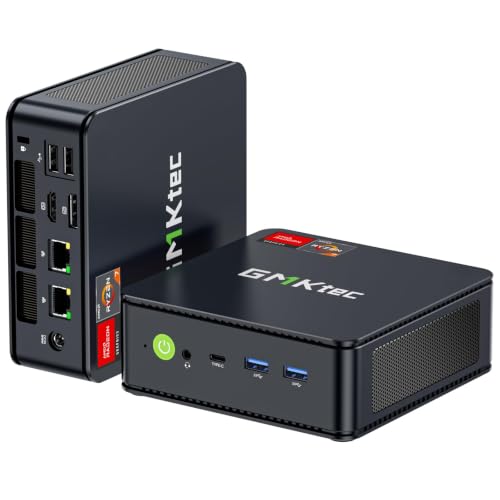
- Best overall: GMKtec M5 Plus Mini PC, Ryzen 7 5825U, 32GB RAM, 1TB SSD — Check on Amazon
- Beelink SER5 MAX Mini PC, Ryzen 7 5800H, 16GB RAM, 500GB SSD — Check on Amazon
- KAMRUI E3B Mini PC, Ryzen 5 7430U, 32GB RAM, 512GB SSD — Check on Amazon
- MeLE Quieter4C Fanless Mini PC, Intel N150, 8GB RAM, 256GB SSD — Check on Amazon
- BOSGAME P4 Mini PC, Ryzen 7 5700U, 32GB RAM, 1TB SSD — Check on Amazon
See 1 more Amazon option
- Dell OptiPlex 7060 SFF Desktop, Core i5-8500, 16GB RAM, 512GB SSD (Renewed) — Check on Amazon
Read the full guide ↓
Disclosure: As an Amazon Associate, reviewstook.com earns from qualifying purchases. Links to Amazon on this page are affiliate links; they cost you nothing extra. Listing details such as price and availability change often, so check the current Amazon listing before you buy.
If this is your first computer purchase in a while — or your first ever — a mini PC is a friendly place to start, and $400 is a sensible place to start it. A mini PC is simply a whole desktop computer shrunk into a box small enough to hold in one hand. It needs the same partners any computer needs: a screen, a keyboard, a mouse and an internet connection. What it does not need is a tower the size of a suitcase, and at this budget it can honestly do the everyday jobs most people actually use a computer for: web browsing, email, documents, video calls, streaming films and music, and schoolwork. Four of the six machines in this guide do that with room to spare.
Here is the honest part, said once at the top so nothing later surprises you. No mini PC under $400 is a serious gaming machine. The graphics built into these processors play older games, esports titles and gentle indie games at modest settings, and that is the genuine ceiling — if modern games are the main reason for the purchase, our mini gaming guides are the right shelf instead. A $400 mini PC is also not a workstation for heavy video editing or 3D design. And one more piece of honesty about money: prices on these listings move week to week with coupons and Prime deals, so this guide prints no fixed product price at all — check price on Amazon for the live figure on the day you order, because that live figure is the only one that counts.
Beginners meet one fork in this category that matters more than everything else put together, and it is not the brand names. Under $400 there are two kinds of processor. The first is built for efficiency: Intel’s small N150 chip sips electricity, runs cool, and in one pick below needs no fan at all; it is perfectly good at one job at a time. The second is built for pace: AMD’s Ryzen 5000-series laptop processors, with several times the working strength, happy to run a browser full of tabs, a spreadsheet and a video call all at once. Neither kind is a trick — they are different tools — and each review below tells you plainly which kind you are looking at. The second beginner decision is about memory: on some machines it can be increased later, and on one pick below it is fixed forever at the factory — a difference that decides how long the machine stays useful, so this guide flags it on every pick. Start with the glossary if the vocabulary is new; start with the GMKtec M5 Plus if it is not.
Plain-English Glossary: The Words on Every Listing
Mini PC listings are written in shorthand. These thirteen terms cover nearly every word you will meet on the pages linked from this guide, in the order you are likely to meet them.
- Mini PC. A complete desktop computer in a very small box. It is not a laptop — there is no screen, keyboard or battery — and it is not a bare shell: the picks in this guide arrive with memory, storage and Windows fitted, ready to connect to your screen and start work.
- Processor (CPU). The chip that does the computer’s thinking. Listings name it like a car trim level — Ryzen 7 5825U, Intel N150 — and the name tells you both its family and its strength. In a mini PC the processor can never be changed later, so it is the one part of the purchase that has to be right on day one.
- Core. One worker inside the processor. More cores means more jobs handled at the same time without slowing down. The picks here have four, six or eight cores; for everyday work, the difference shows up when you run many things at once.
- RAM (memory). The computer’s desk space — where everything you are actively using sits while you use it. More RAM means more tabs, documents and apps open together before the machine starts to struggle. 16GB is workable, 32GB is comfortable, and several picks here include 32GB.
- Soldered vs socketed memory. The single most important distinction in this guide. Socketed memory sits in little slots and can be swapped for more later, cheaply, in minutes. Soldered memory is fused to the board at the factory and can never be increased — the number on the listing is the number for life. Of the six picks here, exactly one has soldered memory: the MeLE Quieter4C, and its review treats that as a permanent ceiling, because it is one.
- SSD (storage). The computer’s filing cabinet — where Windows, your apps and your files live permanently, measured in gigabytes (GB) and terabytes (TB, roughly 1,000GB). Every pick here uses a fast SSD rather than a spinning drive or the sluggish eMMC storage of the cheapest boxes; 512GB is workable and 1TB is comfortable.
- Integrated graphics. Picture-making built into the processor itself, sharing the machine’s RAM, instead of a separate graphics card. All six picks here use it — none has a separate graphics card. That is fine for documents and video, adequate for light games, and the reason these machines are small, quiet and cheap.
- Refresh rate (Hz). How many times per second your screen redraws the picture. A basic monitor runs at 60Hz; gaming screens run faster. The setting lives in Windows, not on the monitor, and the walkthrough below shows you where to check it — a faster screen left at the wrong setting quietly runs at the slow one.
- Video ports (HDMI, DisplayPort, USB-C). The sockets your screen plugs into. HDMI is the familiar TV-style plug; DisplayPort is its computer-focused cousin; some USB-C sockets also carry a picture. Count them and you have counted the machine’s monitors — five picks here run three screens, and one guarantees two.
- Ethernet and Wi-Fi. Two ways to reach the internet: a cable (Ethernet) or wirelessly (Wi-Fi). A cable is faster and steadier whenever the machine sits near your router. Port speeds are written as gigabit or 2.5GbE — the second is faster, and matters mainly if the machine later becomes a home server.
- Barebone. A computer sold as a shell — no memory, no storage, no Windows — for hobbyists who enjoy fitting the rest themselves. None of the six picks here is a barebone; every one arrives complete. If a similar-looking model is suspiciously cheap, check it is not the barebone version before you celebrate.
- Renewed. A used business machine that has been tested, cleaned and resold with a short guarantee — here, Amazon Renewed’s 90-day guarantee. Exactly one pick here is renewed: the Dell desktop. Renewed is not the same as new, and its review spells out both sides of the bargain.
- Driver. A small piece of software that teaches Windows how to talk to a piece of hardware — the graphics, the Wi-Fi, the sound. Drivers arrive through Windows Update, which is why the walkthrough below treats updating as a step, not an afterthought.
In this guide
Quick Picks
Short on time, or comparing several options at once? Each row below names a buyer type and the product that suits it, with a link to the listing.
| Buyer type | Pick | Why it stands out | Link |
|---|---|---|---|
| Best overall | GMKtec M5 Plus, Ryzen 7 5825U | 32GB of memory you can raise later, 1TB of storage with a spare slot, three screens | Check on Amazon |
| Strongest processor | Beelink SER5 MAX, Ryzen 7 5800H | The hardest-working chip in this guide, in a box built to be opened and grown | Check on Amazon |
| Best value | KAMRUI E3B, Ryzen 5 7430U | 32GB of memory and three screens — check price on Amazon for the current figure | Check on Amazon |
| Best for silence | MeLE Quieter4C, Intel N150 | No fan at all, almost no electricity, mounts behind a monitor | Check on Amazon |
| Best for storage | BOSGAME P4, Ryzen 7 5700U | 32GB of memory, 1TB of storage and fast networking for later server duty | Check on Amazon |
| Best renewed alternative | Dell OptiPlex 7060 SFF (Renewed) | A repairable business desktop with keyboard and mouse in the box | Check on Amazon |
How These Picks Were Chosen
Every pick is a real Amazon listing that sells at or regularly within $400, in the exact configuration its review describes. That last clause does real work: this category sells families rather than single products, and the same model name can hide a weaker processor or half the memory under a near-identical page. Where a family spans configurations, the review names the one it is judging and tells you what to check in the cart. Check price on Amazon for the current figure on any pick, because these listings move weekly.
We did not use these products ourselves. We read the maker listings and specification pages for the Amazon listings, and independent reviews and teardowns, then compared what a first-time buyer actually lives with: processor class, memory fitted and whether it can grow, storage, screen outputs counted from physical ports rather than marketing lines, networking, and what arrives in the box. Three judgements shaped the final six: memory honesty (socketed memory favoured, the one soldered pick judged openly as a finished appliance), screen honesty (monitor counts from ports you can point at), and class honesty (efficiency chips described as efficiency chips; nothing dressed up as a gaming machine).
One deliberate oddity needs explaining. Five of the six are new mini PCs, exactly as the search promises. The sixth is a renewed business desktop — bigger, older, and included because a real share of beginners are better served by it: the easiest machine here to repair, the only one with a keyboard and mouse in the box, and a complete, budget-tier route to a working desk. Its review lays out who should take that exit and who should walk past it.
The 6 Best Mini PCs Under $400 for Beginners
GMKtec M5 Plus Mini PC — Ryzen 7 5825U, 32GB RAM, 1TB SSD
Who it suits: The first-time buyer who wants one machine that simply covers the brief — everyday work, plenty of tabs, up to three screens — and keeps covering it for years because its memory and storage can grow.
Start with the two numbers that decide how a computer ages. The M5 Plus arrives with 32GB of memory, fitted as two sticks in sockets, so it can be raised to 64GB years from now if your work ever demands it. Alongside sits a 1TB SSD in a chassis with a second storage slot, so more room can be added without throwing away the drive you own. Around those sits AMD’s Ryzen 7 5825U, an eight-core processor from the strong end of the Ryzen 5000 family — the kind of chip that treats dozens of tabs, a spreadsheet and a video call as one ordinary afternoon. The screen story is equally complete: HDMI, DisplayPort and USB-C outputs run three 4K displays. Two fast 2.5-gigabit Ethernet ports — where most rivals fit one slower port — matter little on day one and a great deal if the machine one day becomes a home server; Wi-Fi 6E and Bluetooth 5.2 complete the set. Windows 11 Pro is installed and waiting.
For a beginner, the deeper virtue is how little this machine asks of you: nothing needs upgrading on arrival, and the two upgrades you might want in year three are the two it makes easy. The honest debits are modest. The 5825U is a refined version of an older processor design rather than the newest generation — quick, but not the strongest chip in this guide. The machine has a fan, and while it is quiet in everyday work, you will hear it under a sustained heavy load; quiet is not silent. Check price on Amazon for the current figure before you order: this listing moves with coupons and Prime deals, so the live price is the one to judge it by. Judged on specification alone, it is the most complete answer this budget produces.
- 32GB of socketed memory, expandable to 64GB — the ceiling is yours to raise, not the factory’s.
- 1TB of storage plus a second slot, so space grows without replacing anything.
- Three 4K screen outputs and two fast Ethernet ports — the best connection set in this guide.
Honest limitation: The processor is a polished older design rather than a current-generation chip, and the fan is audible under sustained load — a quiet machine, not a silent one.
Choose it if you want the default recommendation: the most complete machine here, finished on day one, with room to grow. Skip it if total silence is the point of the purchase — that is the fanless pick below — or if the current figure sits outside your budget when you check price on Amazon.

Beelink SER5 MAX Mini PC — Ryzen 7 5800H, 16GB RAM, 500GB SSD
Who it suits: Beginners whose work is heavier than average — big spreadsheets, lots of programs at once, a first step into programming or photo work — and who would rather own the strongest processor now and grow the rest later.
The SER5 MAX is built around the Ryzen 7 5800H, and the letter at the end is the whole story. Most mini PC processors are the modest-power kind designed for thin laptops; the 5800H is a 54-watt part, allowed to draw real power and hold its speed through long, heavy jobs instead of fading after short bursts. In a box roughly five inches square — 4.96 by 4.44 by 1.65 inches — that makes it the strongest processor in this guide, and since a mini PC’s processor can never be changed, it can never become the thing that holds you back. The trade is visible in the rest of the sheet: this listing pairs 16GB of memory with a 500GB drive — check price on Amazon for the current figure. Both figures are starting points rather than verdicts, because Beelink builds this machine to be opened — memory can be raised to 64GB and the drive swapped for up to 2TB, on your schedule. Screens are triple, over HDMI, DisplayPort and USB-C, with Wi-Fi 6, Bluetooth 5.2 and Windows 11 Pro installed.
Read the buying logic plainly: this pick asks you to value the engine over the upholstery. If your days are documents and a browser, the M5 Plus above will feel better sooner, because its 32GB of memory is what everyday work notices first. If your days involve sustained, heavy, many-things-at-once work, the 5800H earns its place daily. Two cautions, both easy. A 54-watt processor needs its fan, and the fan works for a living — expect to hear it when the machine is busy. And check the cart before you pay: the SER5 name covers several processors and memory sizes across Beelink’s listings, and the configuration described here belongs to the 5800H machine with 16GB and 500GB.
- The 54W Ryzen 7 5800H is the strongest processor in this guide, built to hold its speed under load.
- Memory grows to 64GB and storage to 2TB, so the lean opening specification is a choice, not a fate.
- Three screen outputs in a box under two inches tall, with Windows 11 Pro installed.
Honest limitation: The opening 16GB of memory and 500GB of storage are the leanest of the Ryzen picks, and the fan is a working fan — audible when the processor is busy.
Choose it if your workload is genuinely processor-heavy and the idea of a simple upgrade later holds no fear. Skip it if you want everything fitted on day one and never plan to open the case — buy the M5 Plus instead.

KAMRUI E3B Mini PC — Ryzen 5 7430U, 32GB RAM, 512GB SSD
Who it suits: Value hunters — beginners who want the two specifications that matter most, lots of memory and three screens for this tier — check price on Amazon for the current figure.
The E3B’s appeal is arithmetic a beginner can check. Its Ryzen 5 7430U is a six-core processor from the same Ryzen 5000 family as the picks above: a step down in strength, and still firmly in the class that handles office work, browsing, schoolwork and media without strain. What KAMRUI fits around it is the specification buyers usually pay the next tier up for — 32GB of memory in dual channel, raisable to 64GB later, and a 512GB drive in a chassis with two storage slots, one fast NVMe and one SATA, so a second drive can join it down the line. The screen set is verified from the listing’s own specification table rather than its headline: HDMI 2.0, DisplayPort 1.4 and a USB-C output, three 4K displays at 60Hz between them. Windows 11 Pro is the operating system, Wi-Fi 6 and Bluetooth 5.2 are fitted, networking is gigabit Ethernet, and the box includes a VESA plate for mounting behind a monitor, plus an HDMI cable. Value is the headline here: this configuration pairs that generous memory and screen set with a budget-tier position — check price on Amazon for the current figure before you order.
The compromises live where a value machine’s compromises usually live. The processor is the least powerful of the three Ryzen picks, and sustained heavy work will feel the difference against the SER5 MAX. The Ethernet port is the slower gigabit kind — irrelevant on most home networks today, relevant only if a server career is planned. Reviewers have noted the fan becomes audible under sustained heavy load, normal in this class but worth knowing if the box will sit on the desk in a quiet room. One piece of cart discipline is essential: the E3B is also sold in a 16GB version under a separate listing, so confirm the machine in your cart is the 32GB, 512GB, 7430U build this review covers. The entire value case rests on that configuration, so confirm it carefully and check price on Amazon before you pay.
- 32GB of memory, expandable to 64GB — check price on Amazon for the current figure.
- Three verified 4K outputs — HDMI 2.0, DisplayPort 1.4 and USB-C — with a mounting plate and cable in the box.
- Two storage slots, so space can grow without replacing the fitted drive.
Honest limitation: The six-core processor is the least powerful of the Ryzen picks, the Ethernet is the slower kind, and the fan is audible under sustained load.
Choose it if you want the most memory and screens for this tier and your work is office-shaped rather than heavy. Skip it if you need the strongest processor, or the fastest networking for a future server role.
MeLE Quieter4C Fanless Mini PC — Intel N150, 8GB RAM, 256GB SSD
Who it suits: Beginners buying for a quiet room — a bedroom desk, a study, a media corner — or for an always-on job where the machine must never be heard and barely sip electricity.
The Quieter4C makes its case by absence. There is no fan anywhere in it: the metal case, just 5.2 by 3.2 by 0.7 inches, is itself the cooling, so the machine runs in complete silence while drawing power in the low teens of watts under load on reviewer measurements of this platform. Inside is Intel’s N150, a four-core efficiency processor, and this guide will be plain about its class: entirely adequate for documents, browsing, email, media playback and light always-on services, and not a substitute for the Ryzen machines above when real multitasking arrives. This Business Grade build pairs it with 8GB of memory and a 256GB NVMe drive, runs Windows 11 Pro, and still manages three 4K displays from two HDMI ports and a USB-C output. Wi-Fi 6, Bluetooth 5.2 and gigabit Ethernet are fitted, and a VESA mount is included so the computer can live behind a monitor and be forgotten. Check price on Amazon for the current figure before you order — pricing on this listing moves over time, so the live figure is the one to judge it by.
Two limits define this pick, and a beginner should meet them before ordering rather than after. The first is memory: the 8GB is soldered, fitted at the factory and fixed forever. For one workload at a time — writing, media, light office work, a quiet network service — that is workable. For a browser with forty tabs and a video call on top, it is a ceiling you will bump into, and no upgrade exists. Buy this machine as a finished appliance and it is excellent; buy it hoping to grow it and you have bought the wrong machine. The second limit is heat: a fanless box sheds warmth through its case, the case gets warm to the touch under sustained work, and long heavy jobs are not its brief. What it offers in exchange is something none of the faster picks can match — a computer you will never hear, that sips power while it runs. For the right buyer that is not a compromise. It is the entire point.
- Truly fanless — no noise, no moving parts, and a power draw in the low teens of watts.
- Three 4K outputs in a case under an inch thick, with a monitor mount included.
- Windows 11 Pro and a proper fast SSD rather than the sluggish storage cheaper quiet boxes use.
Honest limitation: The memory is soldered at 8GB and stays there for the machine’s whole life, and the N150 is an efficiency processor — sustained heavy multitasking is simply not its job.
Choose it if silence, tiny power draw and set-and-forget reliability are what you are actually buying. Skip it if you need memory headroom or real processing pace — every Ryzen pick above is faster; check price on Amazon to compare them on current value.

BOSGAME P4 Mini PC — Ryzen 7 5700U, 32GB RAM, 1TB SSD
Who it suits: Beginners who want capacity from day one — memory and storage that will not run out — in a machine that can quietly become the household’s file keeper later.
The P4 leads with the two numbers that age best. It arrives with 32GB of memory and a full 1TB of storage, wrapped around AMD’s Ryzen 7 5700U, an eight-core processor from the same Ryzen 5000 generation as the other Ryzen picks here. The 5700U is the elder of the three eight-core chips in this guide — a touch behind the 5825U in refinement, level with it in the shape of work it does well — and paired with this much memory and storage it makes a machine that asks very little of its owner for years. The connections support the household brief: three 4K displays over HDMI, DisplayPort and USB-C, Wi-Fi 6E and Bluetooth 5.2, and two 2.5-gigabit Ethernet ports — the feature that lets it retire into service as the home’s file server later. Windows 11 Pro is installed. Check price on Amazon for the current figure — the specification makes the case on its own, without needing a headline number to help it.
Choosing between the P4 and the M5 Plus is the nicest problem at this tier. The M5 Plus counters with the slightly newer processor and a spare storage slot; the P4 counters with the same generous memory, storage and networking, in the same budget tier. Either is a defensible first choice; the M5 Plus takes the headline here on its documented upgrade path. One caution belongs specifically to this listing family: BOSGAME has also sold this machine in a 5825U variant under a near-identical title, so confirm the processor and configuration on the live listing before you order — and glance at the label on the box when it arrives, while the return window is still open. Variant drift is common across this whole category, and the two-minute check is the whole defence.
- 32GB of memory and 1TB of storage — check price on Amazon for the current figure.
- Two fast Ethernet ports and three 4K outputs — ready for a home-server second career.
- An eight-core Ryzen 7 processor with Windows 11 Pro, in the same class as the guide’s other Ryzen picks.
Honest limitation: The 5700U is the oldest of the eight-core chips here, and this listing family has been sold in more than one processor variant — verify the configuration on the live page.
Choose it if capacity and networking matter more than having the newest chip revision. Skip it if you want the documented spare storage slot and the more refined processor — that is the M5 Plus.

Dell OptiPlex 7060 SFF Desktop (Renewed) — Core i5-8500, 16GB RAM, 512GB SSD
Who it suits: Beginners who do not actually need a mini PC — who want a dependable, repairable desktop with everything in the box, and are comfortable trading newness for standard parts in this guide’s budget tier.
Every beginner guide should contain one honest exit ramp, and this is it. The OptiPlex 7060 is a small-form-factor business desktop from Dell’s corporate line, sold renewed: an Intel Core i5-8500 — a six-core desktop processor, not a laptop chip — with 16GB of memory, a 512GB SSD and Windows 11 Pro, and a keyboard and mouse included in the box. That processor is there for a reason worth understanding: the i5-8500 is an eighth-generation part, exactly the generation floor of Microsoft’s Windows 11 supported-processor list, so this machine runs the current Windows legitimately and in support. The sixth- and seventh-generation renewed stock in this tier cannot say that, and should be avoided for precisely that reason. The desktop virtues follow from its size: memory and storage sit in standard slots and bays that you or any local repair shop can service, there are ten external USB ports, and spare parts for a corporate Dell are a solved problem everywhere.
The trade-offs are just as real, and they are why this is the sixth pick and not the first. It is not mini: at roughly 11.4 by 3.7 by 11.5 inches it is a desktop that lives beside or under a desk, not behind a monitor. Its screen guarantee is two monitors, from the platform’s standard pair of DisplayPort outputs — a third video port was a factory option on this model and varies from unit to unit, so a three-screen buyer must check the exact machine on the live listing rather than assume. The integrated graphics are the weakest here, fine for office work and video. And renewed means renewed: the Amazon Renewed guarantee runs 90 days against the year a new machine typically carries, each unit’s cosmetic condition and history vary, and a calm first-week check — drive health, fans, the configuration as delivered — is part of the bargain. Check price on Amazon for the current figure before you order, because renewed pricing follows refurbisher stock and moves from unit to unit. For a beginner who values repairability and a complete, ready-to-work package over size and warranty length, it remains a grown-up, practical choice in this guide.
- A genuine desktop processor, with memory and storage in standard slots — the simplest machine in this guide to repair or grow.
- Keyboard and mouse in the box, Windows 11 Pro installed, and a processor Microsoft officially supports for it.
- Check price on Amazon — a budget-tier route in this guide to a complete, working desktop.
Honest limitation: It is a desktop-sized box with a 90-day renewed guarantee, only two guaranteed screen outputs, and unit-to-unit variation that calls for a first-week check.
Choose it if you want serviceability and a complete package, and you do not need the machine to disappear behind a monitor. Skip it if size, silence, three guaranteed screens or a full manufacturer’s warranty matter to you — the new mini PCs above are your list.
Comparison Table
| Product | Processor class | Memory | Best use | Link |
|---|---|---|---|---|
| GMKtec M5 Plus | Ryzen 7 5825U, 8-core | 32GB, socketed to 64GB | The all-rounder with an upgrade path | Check on Amazon |
| Beelink SER5 MAX | Ryzen 7 5800H, 8-core, 54W | 16GB, socketed to 64GB | Sustained processor-heavy work | Check on Amazon |
| KAMRUI E3B | Ryzen 5 7430U, 6-core | 32GB, socketed to 64GB | Maximum memory and monitors for this tier | Check on Amazon |
| MeLE Quieter4C | Intel N150, 4-core, fanless | 8GB, soldered — fixed forever | Silence and near-zero power draw | Check on Amazon |
| BOSGAME P4 | Ryzen 7 5700U, 8-core | 32GB, 1TB fitted | Capacity now, home server later | Check on Amazon |
| Dell OptiPlex 7060 SFF (Renewed) | Core i5-8500, 6-core desktop | 16GB, standard slots | Serviceable desktop, complete package | Check on Amazon |
Your First Evening: Setup, Step by Step
Whichever pick you chose, the first evening follows the same calm sequence — allow an unhurried hour, most of which is the machine updating itself.
- Choose the spot first. Put the machine where air can reach it: on the desk, on a shelf, or behind the monitor using the mounting plate the KAMRUI and MeLE picks include. Every pick here except the fanless MeLE breathes through vents and a small fan, so never seal a running mini PC inside a closed cabinet or drawer. The Dell simply needs a home beside or under the desk with its vents unobstructed.
- Connect the power. Plug the supplied power adapter into the machine and then into the wall, and leave it connected — a mini PC has no battery; it runs from the wall like a lamp. Use the adapter in the box, not a random one from a drawer.
- Connect the screen — and relax about which socket. Plug your monitor into one of the machine’s video outputs: HDMI, DisplayPort or USB-C, whichever matches your screen’s cable. On a big gaming tower there is a famous trap here — plug into the wrong socket and the graphics card sits idle — but that trap does not exist in this guide. None of these six machines has a separate graphics card; every video socket is driven by the processor’s integrated graphics, and every socket is live. Whichever one you choose is the right one. (On the Dell, the two DisplayPort sockets are the guaranteed pair; a third video socket, if your unit has one, was a factory option.)
- Add keyboard, mouse and internet. Plug in your keyboard and mouse — the Dell includes both; the mini PCs assume you have your own or are adding them. Then make the internet decision: if the machine lives near your router, plug in an Ethernet cable now — it is faster, steadier and makes the next step quicker. Wi-Fi works perfectly well too; the cable is a preference, not a requirement.
- Switch on, then let Windows Update finish. The first start walks you through language, account and privacy choices — take them at reading pace; nothing there is irreversible. Once you reach the desktop, open Settings, then Windows Update, and let it install everything it offers, restarting when it asks. This also delivers the current drivers, so a machine that seems slightly rough in its first ten minutes usually smooths out on its own. Judge nothing until the updates are done.
- Set your screen’s real refresh rate. Windows sometimes plays safe and runs a screen below the speed it was bought for. Go to Settings, System, Display, Advanced display, and set the refresh rate to the highest your monitor offers — 60Hz is the everyday standard; faster screens should be set to their real number. It takes twenty seconds and makes scrolling subtly smoother.
- Verify the machine you actually received. This is the step beginners skip and the step that matters most here, because model families span configurations. Open Settings, System, About, and read the processor name and memory figure; open File Explorer, This PC, and check the storage. Compare all three against your order. KAMRUI buyers: confirm the 32GB build, not the 16GB sibling sold under a separate listing. Beelink buyers: confirm the processor reads 5800H. BOSGAME buyers: confirm the processor matches the variant you ordered, since this family has shipped under near-identical titles. Dell buyers: confirm the configuration and look at which video sockets your unit actually has. If anything disagrees, you are inside the return window and the fix is a message, not an argument.
- Install a game store, if games are part of the plan. Steam is the usual first stop, and it is free to install. Go in with the honest expectation set out at the top: these machines play older titles, esports games and gentle indie catalogs at modest settings. Modern blockbuster games are beyond integrated graphics at any setting, and no download changes that — if gaming grows into the main job, the mini gaming guides linked below become your reading.
What Else You Will Spend
The machine is not the whole purchase, and a beginner budget should meet the rest of the list now rather than at the checkout. No prices for accessories are quoted here, because none were verified for this guide — treat this as a shopping list, not a bill.
- A monitor, first and above all. A mini PC has no screen of its own. Any modern monitor with an HDMI or DisplayPort input works with every pick here, and one screen is all you need to start — the extra outputs will wait until a bigger desk or busier job calls for them. If you already own a screen, even an older one, it will almost certainly serve.
- A keyboard and mouse. Only the Dell includes them. Everyone else should budget for a basic set; comfort matters more than features here, and this is a purchase your hands make daily.
- The catches, stated plainly as a machine plus a planned later step. Three picks carry a known, planned second step, and it is fairer to meet it now. The Beelink SER5 MAX starts at 16GB of memory and 500GB of storage by design: plan for a memory kit and a larger drive later, bought whenever you feel the need. The Dell is renewed, so plan for a first-week health check while the 90-day guarantee is live, and allow for whatever it turns up. And any pick headed for a desk without a screen needs the monitor above planned alongside it. None of these are surprises; they are written here so you can plan for them from the start.
- Nothing else is required. Windows 11 Pro is installed on every pick. There is no subscription to start the machine, no assembly, and no software you must buy before it is useful. Optional extras — a webcam for calls, a small speaker — are comforts, not necessities.
Upgrades, in Plain Terms
Beginners often ask whether they can add a graphics card later to make the machine play bigger games. The honest answer for this entire guide is no, and it is better heard now: none of the six picks can take one. The mini PCs have no slot for a card and no power supply documented for one, and the renewed Dell’s review makes no such promise either — so this guide promises a graphics-card swap for no pick, deliberately. If gaming power is the future you are planning for, the plan is a different machine, and the mini gaming guides are where that plan starts.
What can grow is memory and storage, and only where the design allows it. The M5 Plus can rise from 32GB of memory to 64GB and add a second drive in its spare slot. The SER5 MAX can rise from 16GB to 64GB and swap its drive for up to 2TB — that growth is its whole buying logic. The E3B can rise to 64GB and add a second drive alongside the first. The renewed Dell takes standard desktop memory and drives, the easiest upgrade story here. The MeLE Quieter4C is the exception that proves the rule: its memory is soldered and its specification is finished forever, which is why its review frames it as an appliance for a defined job. The processor, on every machine here, never changes — which is why the reviews weigh it so heavily.
How to Choose a Mini PC Under $400
- Decide your processor class before anything else. Light, one-job-at-a-time work and total silence point to the Intel efficiency class — here, the MeLE. A general computer you will multitask on for years points to the Ryzen class — the other four new picks. Once the class is settled, every later decision gets easier.
- Treat memory as the machine’s future. 32GB fitted is the comfortable specification at this budget, and three picks include it within this under-$400 tier — check price on Amazon to compare them. If you buy 16GB, buy it in a machine whose memory sits in sockets with a stated path to more. Treat soldered 8GB as an appliance specification — right for a defined light job, wrong for a main computer.
- Count screens from sockets, not headlines. A three-monitor claim should resolve into three named video outputs. Five picks here were verified that way; the sixth guarantees two and says so.
- Decide about fan noise before you order. The Ryzen machines are quiet rather than silent, and their fans make themselves heard under load. If the machine will share a bedroom or a recording space, the fanless pick is not the compromise option — it is the correct one.
- Confirm the exact configuration in the cart. Families, not single products, are what this category sells. The processor, memory and storage in your cart are the machine you are buying — and step 7 of the walkthrough shows you how to check again on arrival.
Common Buying Mistakes
- Buying an efficiency-class machine for heavy multitasking because the listing called it powerful. The N150 class is excellent at its job and visibly strained outside it; the Ryzen class exists for the heavier brief.
- Buying soldered 8GB of memory as a main computer. That specification is finished the day it arrives; when you outgrow it in year three, the fix is a new machine, not an upgrade.
- Ordering the 16GB configuration when you meant to buy the 32GB build. Families span both sizes, sometimes across separate listings, so treat the cart — never the headline — as the contract.
- Assuming three monitors from a marketing line. Count physical video outputs, and on renewed business desktops remember that extra sockets were often factory options that vary by unit.
- Ignoring the fan until the machine is on the desk. Quiet and silent are different products at this tier, and no setting changes one into the other afterwards.
- Buying renewed stock with a processor below Microsoft’s Windows 11 supported list to save a little money. Older-generation renewed desktops are cheap for a reason; the eighth generation is the floor where the renewed route starts making sense.
- Ordering without checking the live figure in a coupon-driven category. These listings move with coupons and Prime deals, so check price on Amazon on the day you order rather than assuming an earlier figure still holds.
Final Recommendation
- Most beginners: GMKtec M5 Plus — the most complete machine in the guide, finished on day one, with room to grow.
- Heavier work: Beelink SER5 MAX — the strongest processor here, with memory and storage you grow yourself.
- Tightest budget: KAMRUI E3B — 32GB of memory and three screens; check price on Amazon for the current figure.
- Silence and always-on duty: MeLE Quieter4C — fanless and frugal, a finished appliance for the jobs that suit it.
- Capacity and a server future: BOSGAME P4 — 32GB, 1TB and fast networking; check price on Amazon for the current figure.
- Repairability over size: Dell OptiPlex 7060 (Renewed) — a complete desktop you can service yourself; check price on Amazon.
Our top two for most first-time buyers are the GMKtec M5 Plus and the Beelink SER5 MAX, and the choice between them is a genuine fork rather than a ranking. The M5 Plus is the finished article: 32GB fitted, a terabyte of storage with a spare slot, three screens and fast networking — buy it if you want the machine complete the evening it arrives. The SER5 MAX is the engine-first pick: the strongest processor in the guide in a box built to be opened, bought lean at 16GB and 500GB and grown on your schedule — buy it if sustained pace is your workload and a simple upgrade holds no fear. Everyone else is covered by the specialists: the E3B for value, the Quieter4C for silence, the P4 for capacity, and the renewed Dell for buyers whose real search was a dependable desktop on a tight budget. Readers whose main brief is gaming should continue to Best Mini Gaming PC Under $400, those who need more room should see Best Mini PC Under $500, and anyone working from home will find Best Home Office PC Under $400 written for them. Check the configuration in the cart, check price on Amazon for the live figure, and give the machine its first-week inspection — within this under-$400 tier, that small homework is the difference between a computer and a compromise.
Frequently Asked Questions
Is a mini PC under $400 enough as my only computer?
Yes, for ordinary desk work — browsing, documents, email, video calls, media — as long as you buy the right class. A Ryzen pick with 32GB of memory, like the M5 Plus, BOSGAME P4 or KAMRUI E3B, is a complete daily computer with years in it. The Intel efficiency pick is only-computer material for lighter, one-thing-at-a-time use. What none of them replaces is a gaming rig or a heavy creative workstation.
How many monitors can these machines run?
Three is the honest norm at this budget, and five of the six picks do it — from verified sets of HDMI, DisplayPort and USB-C outputs, typically at up to 4K each. The exception is the renewed Dell, which guarantees two DisplayPort outputs; its third socket was a factory option that varies by unit. Count sockets on the listing rather than trusting a headline.
Should I buy the renewed Dell instead of a new mini PC?
If you value repairability, a complete keyboard-and-mouse package and budget-tier value — and you do not need the machine tiny, silent or covered by a long warranty — the renewed route is genuinely competitive, and the OptiPlex 7060 is its strongest form here: a supported Windows 11 processor, standard parts, and a 90-day renewed guarantee. Check price on Amazon for the current figure. If size, warranty or three guaranteed screens matter, buy new.
Why does this guide not print one fixed price?
Because these listings reprice constantly — coupons, Prime deals and refurbisher stock all move them — and one hard number would mislead more often than it helped. Check price on Amazon for the live figure on the day you order, and use the specification comparisons in the reviews to judge whether that figure is good value for the configuration you are getting.
- Best Mini PC Under $400
- Best Mini PC Under $500
- Best Mini PC Under $700
- Best Mini PC For Small Spaces Under $400
- Best Mini PC For Streaming Under $400
- Best Mini PC For 1440p Gaming Under $400
- Best Mini Gaming PC Under $400
- Best Fanless Mini PC Under $400
- Best Home Office PC Under $400
- Best Barebones Mini PC Under $400


