Where to buy
Check the latest price, availability and delivery on Amazon. Orders are placed on Amazon. We may earn a commission from qualifying purchases.
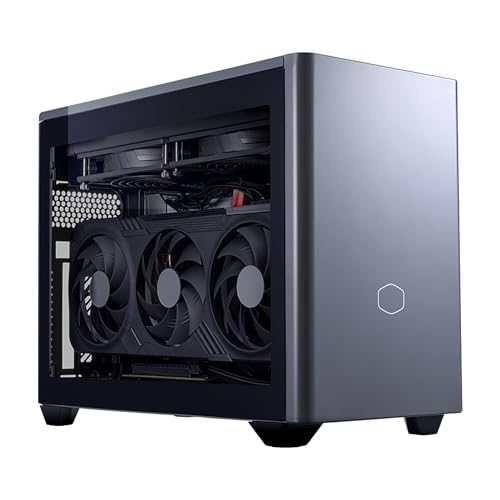
- Best native 1440p in a small box: Cooler Master NR2 Pro, Ryzen 7 9800X3D, desktop RTX 5070 Ti 16GB, 32GB, 2TB, 18.25L — Check on Amazon
- ASUS ROG G22CH, Core i7-13700KF, desktop RTX 4070 12GB, 32GB, 1TB, ~10.7L — Check on Amazon
- ASUS ROG NUC (2025), Core Ultra 9 275HX, RTX 5070 Laptop GPU, 32GB, 1TB, ~3L — Check on Amazon
- MINISFORUM AtomMan G7 Pro, Core i9-14900HX, RTX 5070 Laptop GPU, slim vertical mini chassis — Check on Amazon
- MINISFORUM AtomMan G7 Ti, Core i9-14900HX, RTX 4070 Laptop GPU, 32GB, 1TB, ~2.55L — Check on Amazon
- MINISFORUM AtomMan G7 Pt, Ryzen 9 7945HX, Radeon RX 7600M XT, 32GB, 1TB, ~2.7L — Check on Amazon
Read the full guide ↓
Disclosure: As an Amazon Associate, reviewstook.com earns from qualifying purchases. Links to Amazon on this page are affiliate links; they cost you nothing extra. Listing details such as price and availability change often, so check the current Amazon listing before you buy.
Pairing a small form factor PC with a 1440p monitor is easy. Getting the machine to actually render your games at 2560×1440 is the part the listings blur. Every machine in this guide can light up a 1440p screen — display output is cheap — but only two of the six render modern games natively at that resolution as their normal mode: the two that carry genuine desktop graphics cards. The other four are laptop-GPU minis whose 1440p picture is reconstructed by upscaling from a lower internal render, which can look very good and is a legitimate way to play, but is not the same thing, and the difference decides what your money should buy. This guide grades all six on that distinction first and on everything else second.
The ceiling of the category matters here too, so it goes up front. There is no small form factor PC with a desktop RTX 5080 anywhere near $3,000 — the one verified true-SFF desktop-5080 machine, Zotac’s Magnus One Ultra at about 11.5 liters, sits in a premium tier well above this budget — and even the RTX 5080 Laptop GPU configuration of the ROG NUC below sits above this budget at list, with third-party asks higher still, over budget before you start. A full-size tower with a desktop RTX 5080, by contrast, can fall inside this budget range when it is on deal. So native 1440p at high settings is what this budget honestly buys in a small box, delivered by exactly two picks; upscaled 1440p is what it buys in the smaller boxes; and native 4K belongs to a class of card this guide cannot sell you. Every graphics chip below is named in full — laptop GPUs are called laptop GPUs, with their memory stated — because an RTX 5070 Laptop GPU with 8GB is not a desktop RTX 5070 with 12GB, and at 1440p that gap is measured in texture settings.
In this guide
Quick Picks
Short on time? Each row names a buyer type and the machine that suits it, with a link to the listing.
| Buyer type | Pick | Why it stands out | Link |
|---|---|---|---|
| Best native 1440p | Cooler Master NR2 Pro, desktop RTX 5070 Ti | The only pick that renders 1440p natively at high settings with headroom to spare — inside its deal band | Check on Amazon |
| Best native-1440p value | ASUS ROG G22CH, desktop RTX 4070 | A desktop 4070 12GB rendering 1440p natively in ~10.7 liters, at deal pricing — check price on Amazon | Check on Amazon |
| Strongest laptop GPU, ~3L box | ASUS ROG NUC (2025), RTX 5070 Laptop GPU | The most powerful mobile graphics in a book-sized chassis — its 1440p is DLSS-presented, at list price only — check the current price on Amazon | Check on Amazon |
| Newest laptop GPU, smallest desk footprint | MINISFORUM AtomMan G7 Pro, RTX 5070 Laptop GPU | Current-generation laptop graphics in a slim upright mini — mind the barebone listing trap | Check on Amazon |
| Best value — the one most people should buy | MINISFORUM AtomMan G7 Ti, RTX 4070 Laptop GPU | Full 140W laptop 4070 presenting 1440p via upscaling in ~2.55 liters — check price on Amazon | Check on Amazon |
| Best CPU muscle per dollar | MINISFORUM AtomMan G7 Pt, RX 7600M XT | A 16-core desktop-class CPU beside a mobile GPU, in the lowest entry tier of the guide, configured — check price on Amazon | Check on Amazon |
How These Picks Were Chosen
This guide’s first test is a rendering test. For each machine we asked what its graphics silicon actually does at 2560×1440: render natively at playable settings, render natively only in lighter titles, or render lower and upscale. The answers come from the class of each chip — desktop card versus laptop part, and how much memory sits beside it — and they are stated as verdicts in every review and in the comparison table, so a pick that upscales is never allowed to borrow the language of one that renders. Where an upscaler’s internal resolutions are quoted, they are NVIDIA’s published DLSS scaling figures and they are attached to DLSS only; the one AMD pick uses FSR, which this guide credits generically, with no internal-resolution numbers attached, because none were documented for it in the underlying research.
Size was enforced the same way as in our base guide: a published volume in liters wherever the maker states dimensions — roughly 3 liters for the ROG NUC, about 2.55 for the G7 Ti, about 2.7 for the G7 Pt, about 10.7 for the ROG G22CH, 18.25 for the NR2 Pro’s NR200P Max chassis. The G7 Pro’s slim vertical chassis is described without a liter figure because none was pinned in the verified research, and none is invented here. Prices change often, so this guide prints no static product prices: check the current price on Amazon for every pick. Every pick whose price swings carries its buy line in its review: buy only when the live price sits inside the budget for the NR2 Pro, a list-price-only rule for the ROG NUC, a deal-price rule for the G22CH, and style-confirmation rules for the three Minisforum machines, whose listing families mix configured and barebone versions. We do not print per-game frame rates, because no benchmark source was verified for these exact machines; what we print is the resolution class each machine honestly belongs to, which is the part of the claim a listing is most likely to fudge.
Rendering at 1440p Is Not the Same as Displaying It
A 1440p frame holds 2560 × 1440 pixels — about 3.7 million, roughly 78% more than the 2.1 million in a 1080p frame. Rendering a game means computing every one of those pixels, every frame. Displaying 1440p means only that the machine can send a 1440p signal to the panel, which every pick here can do, including the weakest. Between those two facts sits upscaling: the game renders at a lower resolution, and software reconstructs a 1440p output from it. With DLSS, NVIDIA’s published scaling says Quality mode renders at about 1707×960 internally for a 1440p output, Balanced at about 1485×836, and Performance at about 1280×720 — which is a 720p-class render wearing a 1440p frame. DLSS output can look sharp, sometimes remarkably so, but fine detail, distant textures and fast motion are reconstructed, not rendered, and the honest name for a machine that plays this way is a 1080p-class renderer presenting at 1440p.
That framing produces this guide’s ladder. At the top, the desktop RTX 5070 Ti 16GB and desktop RTX 4070 12GB render 1440p natively at high settings — for them DLSS is headroom, a reserve to spend in the heaviest titles, not a way of life. In the middle, the three laptop RTX picks render lighter and esports titles natively at reduced settings and upscale the rest; their DLSS is good, and it is still upscaling. At the bottom, the Radeon RX 7600M XT pick has no DLSS at all — AMD silicon has no Tensor cores — so its 1440p presentation runs through FSR, credited here without internal-resolution figures, and its native-rendering territory is 1080p. Frame generation, where these RTX chips offer it, changes none of this: it interpolates additional displayed frames for smoothness and renders no additional game frames, so it is a display-side feature, never a rendering claim. And 4K? A 3840×2160 frame is 2.25 times the pixels again. Only the NR2 Pro’s desktop 5070 Ti honestly visits that territory, in lighter titles natively and in heavier ones through DLSS — Quality at 4K reconstructs from about 2560×1440 internally, Performance from about 1920×1080. Native 4K at high settings is desktop-5080 work, and in a small box that card sits in a premium tier well above this budget. The pairing this keyword calls for — a 1440p high-refresh monitor — is the right screen for every pick below.
The 6 Best Small Form Factor Gaming PCs for 1440p Gaming Under $3,000
Cooler Master NR2 Pro — Ryzen 7 9800X3D, Desktop RTX 5070 Ti 16GB, 32GB, 2TB, 18.25L
Who it suits: The buyer who wants genuine native-1440p rendering and refuses to get it from a laptop chip, and who can shop a deal band patiently.
This is the only machine here whose 1440p claim needs no footnote. Inside the NR200P Max chassis — 18.25 liters, the largest box in the guide and still a fraction of a tower — sits a Gigabyte RTX 5070 Ti that is the real desktop card: 16GB of GDDR7, in a real PCIe slot, replaceable years from now. Beside it, a Ryzen 7 9800X3D, 32GB of DDR5-6000, a 2TB Gen4 SSD, a Gigabyte B850I AORUS PRO mini-ITX board, an 850W SFX Gold power supply and a custom 280mm radiator. At 1440p this hardware renders modern games natively at high settings as its everyday mode, and its 16GB of graphics memory is the texture budget that lets it stay there as titles get heavier. DLSS on this pick is a reserve, not a crutch: when a demanding title asks for it, Quality reconstructs 1440p from about 1707×960 and the reserve is deep. It is also the set’s only honest visitor to 4K — lighter titles natively, heavier ones carried by DLSS — though the monitor this guide recommends for it remains a 1440p high-refresh panel, where it is strongest.
The condition is price behavior. This system’s live price swings widely — at its best it sits comfortably inside this budget, and at its peak it moves well above this budget entirely. The rule is non-negotiable: it is the best small form factor 1440p PC under $3,000 only when the live price sits inside the budget — check the current price on Amazon before you buy. Roundup coverage of this exact system adds two delivery-day checks: fan noise is reasonable rather than silent, and early units included a dead front USB-C port and a GPU riser cable that needed reseating after shipping — test both while returns are painless. The base research documents no display-output list for this configuration, so confirm the card’s ports on the live listing before pairing a monitor.
- A real desktop RTX 5070 Ti 16GB and a 9800X3D — native 1440p at high settings, no asterisks.
- 16GB of VRAM: the largest texture budget in the guide, and the thing upscaling cannot substitute for.
- Standard mini-ITX parts throughout — the only graphics card here that can ever be upgraded.
Honest limitation: The price swings widely, from comfortably inside this budget to well above it, and at the top of that range it is not in this guide at all. At 18.25 liters it is also the least small machine here.
Choose it if native 1440p rendering is the requirement and the live price sits inside the budget. Skip it if the live price is near its peak, or if a sub-11-liter box is the actual point of your search.
ASUS ROG G22CH — Core i7-13700KF, Desktop RTX 4070 12GB, 32GB, 1TB, ~10.7L
Who it suits: The living-room gamer who wants native 1440p rendering from a console-shaped box under the TV, at a mid-tier price.
The G22CH is the second genuine renderer in the guide, and the cheaper one. Its graphics are a desktop RTX 4070 with the full 12GB of memory — not the 8GB laptop part that shares the badge in the picks below — inside a roughly 10.7-liter case shaped to sit horizontally or vertically in media furniture. The supporting specification is complete and published: a Core i7-13700KF, 32GB of memory, a 1TB SSD, and a 600W Gold power supply whose wattage ASUS actually states. As documented in our base research, this machine plays at 1440p natively today; its DLSS is headroom that the heaviest titles will call on sooner than the 5070 Ti’s, which is the honest difference between the two desktop picks. Twelve gigabytes of VRAM also ages better at 1440p than the 8GB in every laptop pick here — textures are the first thing upscaling cannot rebuild.
One setup fact is specific to this pick: the 13700KF is an F-suffix chip with no integrated graphics, so the monitor cable belongs in the graphics card’s ports, full stop — the motherboard’s display sockets will give you a black screen, because there is nothing behind them. The base research documents no port list for this machine, so check the card’s outputs on the live listing. On price, check the current price on Amazon: this machine sits in the mid tier of the guide at list, and lower when it is on deal. At deal pricing the size premium over a larger RTX 4070 SUPER tower is modest for a slightly slower card in under a third of the volume — a fair trade. At full list the premium grows sharply on identical hardware, so the buy line is the deal. The limitations are generational: previous-generation CPU and GPU, a compact interior that restricts future graphics swaps to cards that physically fit, and 1TB of storage that modern installs fill quickly.
- A desktop RTX 4070 12GB rendering 1440p natively — the real card, with the real memory.
- A published 600W Gold power supply and a complete spec sheet from a major brand — no guessing anywhere.
- At deal pricing — check price on Amazon — the cheapest native-1440p route in the guide.
Honest limitation: Previous-generation silicon whose DLSS reserve gets spent sooner than the 5070 Ti’s, a list price at which the premium stops looking reasonable, and an F-suffix CPU that makes the motherboard’s display ports dead sockets.
Choose it if the PC lives in the living room and native 1440p at a deal price is the brief. Skip it if you are paying full list, or your upgrade plans assume any graphics card will fit its interior.

ASUS ROG NUC (2025) — Core Ultra 9 275HX, RTX 5070 Laptop GPU, 32GB, 1TB, ~3L
Who it suits: The buyer who wants the strongest laptop graphics that fit in a book-sized box from a major brand, and understands exactly what “1440p” means on a mobile chip.
Grade this pick by its full name: an RTX 5070 Laptop GPU, a mobile part with 8GB of GDDR7, soldered in place, where the desktop RTX 5070 carries 12GB. Our base research describes it as a strong 1080p solution and a capable 1440p-with-upscaling one, and that is the correct verdict at this keyword too. Lighter and esports titles render natively at 1440p at reduced settings; demanding games are presented at 1440p through DLSS from a lower internal render — Quality from about 1707×960 — which looks good and is still reconstruction. The 8GB memory is the harder ceiling: at 1440p, texture budgets are where this pick will feel its years first, and no upscaler rebuilds textures it cannot store. Around the chip the package is premium — a Core Ultra 9 275HX, 32GB of DDR5, dual Thunderbolt 4, six USB-A ports, dual HDMI plus DisplayPort, Ethernet, triple-fan cooling — in roughly three liters, about 11.1 × 7.4 × 2.2 inches. For monitor pairing, those documented outputs are the set’s richest: a 1440p high-refresh panel connects over DisplayPort, HDMI or Thunderbolt with no adapter guessing.
The buying rule is the strictest in the guide. This 32GB/1TB configuration is orderable at list from ASUS’s own storefront; third-party sellers on the same listing have asked well above list. Buy at or near list from ASUS — check the current price on Amazon and check who is selling — or do not buy. Owner sentiment on this model is divided — praise from buyers with good units alongside reports of dead-on-arrival and failing machines — so buy where the return window is trustworthy and stress-test hard in the first two weeks. The 330W external power adapter is also part of the real footprint: the box is 3 liters, the brick that feeds it is not nothing.
- The most powerful laptop graphics you can buy in a roughly three-liter chassis, beside a flagship mobile processor.
- The guide’s best documented connectivity: dual Thunderbolt 4, six USB-A, dual HDMI plus DisplayPort, Ethernet.
- DLSS upscaling of current-generation quality for the titles it cannot render natively.
Honest limitation: Its 1440p is presented, not rendered, in demanding games, its 8GB of memory is a fixed texture ceiling, the GPU can never be upgraded, and the pick is only sane at its list price from ASUS’s storefront — check price on Amazon before you buy.
Choose it if the desk space is genuinely worth flagship money and you can buy at list. Skip it if the listing in front of you is a marked-up third-party offer, or if native rendering matters more than the footprint — the two picks above render, and cost less.

MINISFORUM AtomMan G7 Pro — Core i9-14900HX, RTX 5070 Laptop GPU, Slim Vertical Mini Chassis
Who it suits: The buyer who wants current-generation laptop graphics and a 24-core mobile flagship CPU in a slim upright mini, and who reads listing styles before paying.
The G7 Pro pairs Intel’s Core i9-14900HX — 24 cores, boost clocks to 5.8GHz — with an RTX 5070 Laptop GPU, again named in full: 8GB of graphics memory, the same rendering class as the ROG NUC above. Its 1440p story is the same story: lighter titles natively at reduced settings, demanding titles presented through DLSS from a lower internal resolution, and an 8GB texture ceiling that no setting negotiates with. What differs is the chassis and the price. The slim vertical G7 format stands on a desk rather than sprawling across it, cooled by six heat pipes and dual fans, with two DDR5 SO-DIMM slots supporting up to 96GB and two M.2 2280 slots — socketed memory and storage the soldered NUC does not offer. Its documented display outputs are HDMI 2.1 and USB4, which is what the monitor-pairing advice for this pick is built on, alongside WiFi 7. No exact chassis volume was pinned in the verified research, so none is printed here. At launch, Minisforum positioned the configured 32GB/1TB machine in the upper-mid tier of this guide, with the barebone below it — check the current price on Amazon for both styles.
That style split contains the trap, and it is the most important paragraph in this review: the Amazon listing for this ASIN is titled as the barebone version — “Barebone Version Without Storage/OS” — while some marketplace mirrors of the same ASIN describe a configured unit. A barebone arrives with no RAM, no SSD and no operating system, and completing one at late-2026 component prices is not the saving it appears: 32GB DDR5 SO-DIMM kits alone have been expensive on Amazon during the memory price spike, before an SSD and a Windows license join the bill. The rule is procedural: confirm on the live listing that the style you are buying is the configured 32GB/1TB machine, and if only the barebone is live, work out the completion cost in full — while memory stays expensive, the configured machine can be the better buy even when it looks dearer on the page.
- A current-generation RTX 5070 Laptop GPU paired with Intel’s 24-core mobile flagship.
- Socketed memory to 96GB and dual M.2 slots — longevity the soldered NUC lacks.
- Slim vertical chassis with HDMI 2.1, USB4 and WiFi 7 documented.
Honest limitation: The Amazon ASIN is titled as the barebone version while mirrors describe configured units — the style-selector trap is live on this exact listing, and its 1440p, like the NUC’s, is DLSS-presented in demanding games behind an 8GB ceiling.
Choose it if the live listing confirms the configured style before you pay, or if RAM and an SSD are already sitting in your drawer for a barebone. Skip it if the listing leaves you unsure which version is in the box; at this tier, uncertainty is itself the answer.

MINISFORUM AtomMan G7 Ti — Core i9-14900HX, RTX 4070 Laptop GPU (140W), 32GB, 1TB, ~2.55L
Who it suits: Almost everyone reading this guide — the buyer who wants a tiny, complete machine whose upscaled 1440p looks the part, well below the top of the budget.
The G7 Ti runs the previous generation’s laptop flagship properly: an RTX 4070 Laptop GPU at its full 140W power limit, the fastest version of that mobile part, with 8GB of GDDR6 — named as a laptop GPU whose desktop namesake carries 12GB. Our base research verdict carries over unchanged: this machine handles 1440p gaming with upscaling comfortably, and 1080p at high refresh without negotiation. Translated into this guide’s grading, that means demanding titles are presented at 1440p through DLSS from a lower internal render, lighter titles render natively at reduced settings, and the honest home resolution for maximum settings is 1080p. Beside the GPU sit the same Core i9-14900HX 24-core CPU as the G7 Pro, 32GB of DDR5 in two SO-DIMM slots expandable to 96GB, a 1TB SSD with a second PCIe 4.0 M.2 slot waiting, and WiFi 7, in about 2.55 liters — the smallest box in the guide. The configured 32GB/1TB version sits well below the top of this guide’s budget — check the current price on Amazon.
Why a machine that upscales tops the value argument: the two native renderers above cost notably more, and what the premium buys is rendering purity, not a different experience class. On a 1440p high-refresh panel, the G7 Ti’s DLSS presentation is the great majority of what this search is for, and the unspent difference buys the monitor itself. The cautions are the family’s usual ones. The 8GB laptop GPU is a hard ceiling for the machine’s whole life — textures at 1440p will be its first compromise, every year, forever. And this ASIN is a shared listing family with barebone styles sitting beside the configured one on the same listing, so confirm the “32+1T” style before you pay. The base research documents no display-output list for this pick, so verify the ports on the live listing when you pair your panel.
- The RTX 4070 Laptop GPU running at its full 140W — the undetuned version of the mobile part.
- Roughly 2.55 liters holding socketed memory expandable to 96GB, a second M.2 slot and 24 CPU cores.
- Configured, it sits well below the top of the budget — check price on Amazon — with the monitor money left over.
Honest limitation: Its 1440p is upscaled in demanding games, its 8GB of memory is a lifetime texture ceiling, its graphics can never be upgraded, and the barebone style sits one careless click from the configured one on the same listing.
Choose it if you want the small-box 1440p experience without the flagship tax — which is most people. Skip it if native rendering is the point (the NR2 Pro and G22CH are your picks) or you know your games will choke on 8GB at 1440p.

MINISFORUM AtomMan G7 Pt — Ryzen 9 7945HX, Radeon RX 7600M XT, 32GB, 1TB, ~2.7L
Who it suits: The buyer whose PC works as hard as it plays — renders, compiles, encodes — and wants the lowest entry price in the guide attached to serious CPU muscle.
On a 1440p brief this pick needs its grading stated first, because it is the weakest renderer here. Its graphics are a Radeon RX 7600M XT: AMD’s mobile part with 8GB of GDDR6 running at up to 120W, where the desktop RX 7600 XT carries 16GB. There is no DLSS on this machine — none; AMD silicon has no Tensor cores, and any guide that implies otherwise is inventing a feature. Its upscaling route is FSR, which this guide credits as a real and usable path to a 1440p picture without attaching internal-resolution figures to it. Our base research calls the result competent for 1080p gaming and honest 1440p-with-upscaling play, and that remains the verdict: 1080p is its native home, 1440p is a presentation. What the G7 Pt is actually for sits on the other side of the spec sheet: a Ryzen 9 7945HX, a genuine 16-core, 32-thread desktop-class processor, with 32GB of DDR5 in two SO-DIMM slots up to 96GB, one PCIe 5.0 and one PCIe 4.0 M.2 slot, in a chassis of about 2.7 liters (roughly 269 × 155 × 64mm) — the first AMD Advantage-certified mini PC, per its maker. The configured 32GB/1TB version sits in the lowest entry tier of this guide — check the current price on Amazon.
At that entry-tier position, judge the machine by your workload split. A larger tower with a desktop RTX 4060 — faster gaming graphics than the 7600M XT — sits in a lower tier still, so on gaming alone the G7 Pt charges a clear premium for its size and its CPU; for the buyer who renders video, runs virtual machines or compiles code between sessions, it is not a compromised gaming mini but a workstation that also games. The family’s style discipline applies unchanged: this listing family also carries a barebone style on the maker’s own store, so confirm the configured style on the live listing; the maker’s direct-store positioning for the same configuration has typically sat above the Amazon listing, which makes the Amazon listing the one to check rather than a price to assume — check the current price on Amazon. The base research documents no display-output list for this pick, so check the live listing before pairing a panel.
- Sixteen genuine desktop-class cores — rendering and compiling muscle nothing else here matches at the size or the price.
- Memory on sockets, expandable to 96GB, plus two M.2 slots, one of them PCIe 5.0.
- Configured, it sits in the lowest entry tier in the guide by a wide margin — check price on Amazon.
Honest limitation: The weakest gaming graphics in the guide: a mobile 8GB part with no DLSS, whose 1440p is FSR-presented and whose native home is 1080p — and a listing family that mixes barebone and configured styles.
Choose it if your day job for the machine is CPU work and gaming comes second. Skip it if gaming is the first job — every other pick here renders or upscales 1440p better, and the G7 Ti is the same idea with the emphasis where you want it.

Comparison Table
| Product | Volume | Graphics (named in full) | Honest 1440p verdict | Price | Link |
|---|---|---|---|---|---|
| Cooler Master NR2 Pro | 18.25L | Desktop RTX 5070 Ti, 16GB, replaceable | Renders natively at high settings; DLSS is headroom; entry 4K | Check the current price on Amazon — buy only when the live price sits inside the budget | Check on Amazon |
| ASUS ROG G22CH | ~10.7L | Desktop RTX 4070, 12GB | Renders natively; DLSS reserve spent sooner in the heaviest titles | Check the current price on Amazon — mid tier at list, lower on deal | Check on Amazon |
| ASUS ROG NUC (2025) | ~3L | RTX 5070 Laptop GPU, 8GB, soldered | Presents via DLSS in demanding games; native only in lighter titles | Check the current price on Amazon — buy at or near list from ASUS only; avoid marked-up third-party asks | Check on Amazon |
| MINISFORUM AtomMan G7 Pro | Slim vertical, a few liters | RTX 5070 Laptop GPU, 8GB | Presents via DLSS in demanding games; native only in lighter titles | Check the current price on Amazon — configured in the upper-mid tier, barebone below it; confirm style | Check on Amazon |
| MINISFORUM AtomMan G7 Ti | ~2.55L | RTX 4070 Laptop GPU, 8GB, full 140W | Presents via DLSS comfortably; native home resolution is 1080p | Check the current price on Amazon — configured well below the top of the budget | Check on Amazon |
| MINISFORUM AtomMan G7 Pt | ~2.7L | Radeon RX 7600M XT (mobile), 8GB | Presents via FSR; no DLSS exists on this machine; 1080p machine | Check the current price on Amazon — configured in the lowest entry tier of the guide | Check on Amazon |
Pairing a 1440p Monitor With These Machines
The screen this keyword calls for is a 1440p high-refresh panel, and it suits every pick — for the two desktop renderers because they feed it natively at high frame rates, and for the laptop picks because a high-refresh panel is exactly where DLSS presentation looks its best. Buy the panel once and buy it well; it will outlive any of these machines. What we will not do is invent connection specs. The base research documents full output sets for only two picks: the ROG NUC (dual HDMI, DisplayPort and dual Thunderbolt 4 — connect the panel by DisplayPort or Thunderbolt and you are done) and the G7 Pro (HDMI 2.1 and USB4). For the NR2 Pro, G22CH, G7 Ti and G7 Pt, no port list was documented, so none is claimed — check the live listing’s specification section before you assume a cable you own will fit. Two rules hold regardless of pick. First, set the panel’s real refresh rate in Windows after setup; monitors routinely default to 60Hz and stay there, silently wasting the high-refresh half of your purchase. Second, on the G22CH the cable goes into the graphics card, never the motherboard: its 13700KF has no integrated graphics, so the board’s sockets are dead. On the laptop-GPU minis every port is driven by the one graphics chip, so there is no wrong socket to find.
How to Choose a Small Form Factor Gaming PC for 1440p Gaming Under $3,000
- Decide native versus upscaled before you decide anything else. If your games must be rendered at 2560×1440, your shortlist is two machines long: the NR2 Pro and the G22CH. If a DLSS-presented 1440p picture satisfies you — and for many players it genuinely does — the three laptop RTX minis enter, at much lower prices and volumes.
- Read every GPU name to the end. “RTX 5070” in a small box almost always means the Laptop GPU with 8GB; the desktop card has 12GB, and the desktop 5070 Ti has 16GB. That one word — Laptop — changes the value of the machine and means years of lowered settings.
- Treat VRAM as the texture budget upscaling cannot rebuild. At 1440p the ladder in this guide is 16GB, 12GB, then 8GB four times over. The 8GB picks will lower texture settings first as games age; the desktop picks hold them longest.
- Pick your liters from the furniture. Under roughly 3 liters buys laptop graphics only; about 10.7 liters admits a desktop 4070; 18.25 liters admits a desktop 5070 Ti and upgradeability. Each step up in volume is a step up in rendering class.
- Confirm configured versus barebone before anything else. On the shared Minisforum listing families the barebone style sits beside the configured one, and at late-2026 memory prices, completing a barebone can cost more than the configured machine.
- Buy inside the budget or do not buy. The NR2 Pro’s price travels widely depending on the week, from inside this budget to well above it, and third-party sellers have asked well above list on the ROG NUC’s own page. Give each machine a walk-away threshold tied to this budget before you shop — the reviews above set the rules — and treat a missed deal as a saved mistake, not a lost one.
- Pair the panel deliberately. A 1440p high-refresh monitor, connected over the documented outputs where they exist, with its refresh rate actually set in Windows. A 4K panel spends this budget’s rendering power on pixels none of these machines should be asked to produce.
- Stress-test inside the return window. Dense machines fail early or not at all, and owner reports on the flagship NUC include dead-on-arrival units. Spend the first week stress-testing it, test every port you own a cable for, and keep the box until the third week.
- Ask what the unspent money is for. The gap between the G7 Ti, sitting well below the top of this budget, and the budget ceiling is substantial — the 1440p high-refresh monitor this keyword assumes, a second machine, or savings. If nothing in particular comes to mind, that is what the flagship premium purchases: nothing in particular.
Common Buying Mistakes
- Assuming a 1440p monitor means 1440p rendering. Every machine here can display 1440p; only two render modern games there natively. The panel is not the proof — the GPU’s full name is.
- Reading “RTX 5070” on a mini PC listing and pricing it as the desktop card. The mobile part carries 8GB where the card carries 12GB, and it ceilings lower in every title — a shared badge over different silicon.
- Believing DLSS Quality is 1440p rendering. It reconstructs a 1440p output from about 1707×960. The result can look excellent; the claim should still be made honestly.
- Expecting DLSS on the Radeon pick. The G7 Pt has no Tensor cores and no DLSS — its upscaler is FSR, and its native resolution is 1080p.
- Paying a reseller’s markup on a listing the brand sells itself — the NUC’s page has carried asks well above list. Check who is selling before what it costs — check the current price on Amazon.
- Clicking the barebone style on a shared listing family by mistake, then learning that memory, storage and Windows at today’s prices outrun the configured machine’s price.
- Buying the NR2 Pro at its peak. One name, two purchases: when its live price sits inside the budget it is this guide’s top pick, and when that price moves well above the budget it is not in the guide at all.
- Plugging the G22CH’s monitor into the motherboard. Its 13700KF has no integrated graphics — those sockets are dead, and the black screen that follows has ended more first evenings than any defect in this guide.
- Spending the whole $3,000 because it is there. Most readers’ right answer here sits well below the top of the budget; leaving the rest unspent is the recommendation working, not ambition failing.
Final Recommendation
- Native 1440p, no compromises: Cooler Master NR2 Pro, bought inside its deal band and never at peak.
- Native 1440p, living-room money: ASUS ROG G22CH at deal pricing — check price on Amazon.
- Most readers: MINISFORUM AtomMan G7 Ti — upscaled 1440p that looks the part, well below the top of the budget — check price on Amazon — with the monitor money unspent.
- Tiniest desk, biggest badge: ASUS ROG NUC (2025) — only ever at list, only from ASUS’s own storefront — check price on Amazon.
- Newest laptop silicon: MINISFORUM AtomMan G7 Pro — configured style confirmed on the listing before you pay.
- CPU-first workloads: MINISFORUM AtomMan G7 Pt — workstation cores that also game, at 1080p natively and 1440p presented.
Our top two are the Cooler Master NR2 Pro, because it is the one machine here that renders 1440p the way the keyword imagines — natively, at high settings, with 16GB of texture headroom and a graphics card you can replace — provided it is bought when its live price sits inside the budget, and the ASUS ROG G22CH, because it delivers the same native rendering honesty in a console-sized box at a notably lower deal price. Between them they frame the real choice at this keyword: pay for volume and get rendering, or pay for smallness and get presentation. The laptop minis are good machines honestly graded — the G7 Ti in particular — and the ROG NUC is a fine machine bought at list and a poor one bought at a markup. If your needs sit below this tier, start with Best Small Form Factor Gaming PC Under $1500 instead; if you conclude — reasonably — that a tower was the answer all along, Best Gaming PC Under $3000 is where to go. Read every GPU name to the end, decide whether your 1440p must be rendered or may be reconstructed, set your walk-away threshold, and check the live listing and the current price on Amazon before you order.
Frequently Asked Questions
Is DLSS Quality actually rendering at 1440p?
No. DLSS Quality reconstructs a 2560×1440 output from an internal render of about 1707×960 — roughly 44% of the output’s pixels are computed and the rest are inferred. Balanced works from about 1485×836 and Performance from about 1280×720, which is a 720p-class render. The reconstruction is good enough that many players cannot tell in motion, but a guide that calls it native rendering is grading the marketing, not the machine.
Which of these PCs actually render games natively at 1440p?
Two. The Cooler Master NR2 Pro, with a desktop RTX 5070 Ti 16GB, renders modern games natively at 1440p at high settings as its normal mode. The ASUS ROG G22CH, with a desktop RTX 4070 12GB, renders natively today, with DLSS as a reserve the heaviest titles will spend sooner. The three laptop RTX picks present 1440p through DLSS in demanding games, and the Radeon G7 Pt presents it through FSR.
Can any of these small PCs play at 4K?
One, partially. The NR2 Pro’s desktop 5070 Ti is an entry-4K card: lighter titles natively, heavier ones carried by DLSS — Quality at 4K reconstructs from about 2560×1440 internally, Performance from about 1920×1080. Native 4K at high settings belongs to the desktop RTX 5080 class, which in a small box sits in a premium tier well above this budget and in a tower can fall inside this budget range on deal. Every pick in this guide is better paired with the 1440p panel this keyword assumes.
Does the RTX 5070 Laptop GPU perform like the desktop RTX 5070?
No. The badge and the generation are shared; the specification is not. The mobile part runs inside a laptop power envelope with 8GB of memory where the desktop card carries 12GB, and it is soldered into machines like the ROG NUC and G7 Pro with no upgrade path. At 1440p the memory gap is the one that bites first, because texture budgets scale with resolution. That gap is why every review above prints the GPU’s full name.
Does buying a barebone mini PC actually save money?
At the moment, usually not. A barebone ships without memory, storage or an operating system, and in the late-2026 price spike one 32GB DDR5 SO-DIMM kit alone has been expensive on Amazon — and you still owe an SSD and a Windows license after that. Already own the parts? A barebone makes sense. Buying them? Add the full completion invoice up first and hold it against the configured machine’s price.
Should I just buy a tower instead?
For most people, honestly, yes — the introduction and the recommendations both land there. At this money a tower brings a desktop RTX 5080 on deal, parts you can upgrade forever, and cooling that never has to shout. Small form factor is the right purchase when the space is genuinely unavailable or the machine must live in furniture — a real constraint, honestly priced in the reviews above — not as a default.
- Best Small Form Factor Gaming PC Under $3000
- Best Small Form Factor Gaming PC Under $2500
- Best Small Form Factor Gaming PC For 1440p Gaming Under $2500
- Best Small Form Factor Gaming PC For Beginners Under $3000
- Best Small Form Factor Gaming PC For Small Spaces Under $3000
- Best Small Form Factor Gaming PC For Streaming Under $3000
- Best Compact Gaming PC Under $3000
- Best Mini Gaming PC Under $3000


