Where to buy
Prices and stock are checked on Amazon, and orders are placed there. We may earn a commission from qualifying purchases.
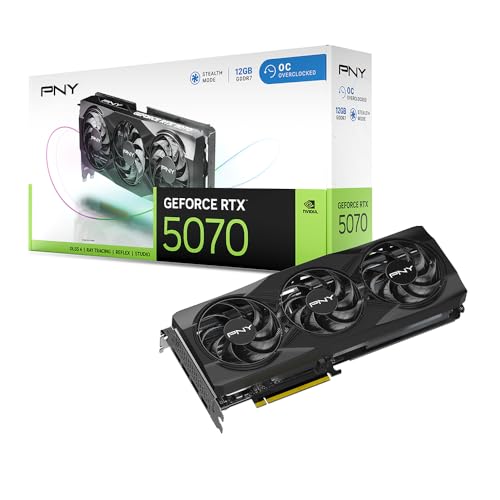
- Best overall for 1440p: Ryzen 7 7700X + RTX 5070 build, anchored on the PNY RTX 5070 OC Triple-Fan — Check on Amazon
- Best value for 1440p: Ryzen 7 7700X + RTX 4070 Super build, anchored on the Gigabyte RTX 4070 Super Eagle OC — Check on Amazon
- Best for high-refresh 1440p: Ryzen 7 7800X3D + RTX 5070 build, anchored on the Ryzen 7 7800X3D — Check on Amazon
- Best texture headroom at 1440p: Ryzen 7 7700X + RX 9070 build, anchored on the Sapphire PURE RX 9070 — Check on Amazon
See 2 more Amazon options
- The prebuilt that undercuts building: Skytech Omega, Ryzen 7 7700X, RTX 4070 Super, 32GB DDR5 — Check on Amazon
- The current-generation prebuilt: MSI Codex Z2, Ryzen 7 8700F, RTX 5070, 32GB DDR5, 2TB SSD — Check on Amazon
Read the full guide ↓
Disclosure: As an Amazon Associate, reviewstook.com earns from qualifying purchases. Links to Amazon on this page are affiliate links; they cost you nothing extra. Listing details such as price and availability change often, so check the current Amazon listing before you buy.
Two different numbers hide inside the phrase “1440p gaming,” and this guide grades every path on the harder one. The first number is what your monitor displays: 2560 × 1440, about 3.7 million pixels. The second is what your graphics card actually renders — and the two part company the moment an upscaler gets involved, because a card can feed a 1440p panel a frame it rendered at two-thirds that size. At cheaper tiers in this series, the honest summary was a crisp 1440p desktop with games rendered at 1080p beneath it. Fifteen hundred dollars changes the verdict. Each of the three graphics cards used across the six paths below — RTX 5070, RTX 4070 Super, RX 9070 — renders the full 2560 × 1440 frame natively, at high settings, in current games. Upscaling on these machines is a reserve for ray-traced titles and future releases, not the mechanism that makes the resolution possible. What this budget cannot do is protect you from late-2026 parts pricing, where the same 32GB DDR5 kit and the same RTX 5070 can sit at very different points in their price cycles from one week to the next — check the current price on Amazon for each part before you order. Every build here therefore works as a buying rule rather than a fixed quote: catch the volatile lines when they cycle low and the machine lands under $1,500; buy them at the top of a spike and nothing in this class fits, which is why two factory-built PCs hold places in a build guide this year.
The tier’s ceiling deserves one blunt sentence before the picks: there is no RTX 4070 Ti Super build at this money, and no RTX 5070 Ti build either — a 5070 Ti card on its own sits beyond the whole budget before a single other part is added. What $1,500 honestly buys for a 1440p desk is the 4070 Super / 5070 class carrying 12GB of VRAM, or AMD’s RX 9070 carrying 16GB, on AMD’s AM5 platform. The six paths — four you assemble, two you buy assembled because they currently undercut building — are graded throughout on four questions: does it render natively, how much texture memory stands behind the frame, what its upscaling stack adds once native is secured, and which monitor it deserves.
Rendered Pixels vs Displayed Pixels: The 1440p Arithmetic
The arithmetic first, because everything else in this guide hangs off it. A 1080p frame holds 1920 × 1080 pixels — roughly 2.1 million. A 1440p frame holds 2560 × 1440 — roughly 3.7 million, about 78% more work for the graphics card on every single frame. That gap is why 1080p impressions transfer so poorly to this tier. The cards below were admitted because they clear the native bar outright: in current games at high settings, an RTX 5070, an RTX 4070 Super or an RX 9070 shades the complete 2560 × 1440 frame itself.
Upscaling still earns its place — as headroom, quoted with its real numbers. Pick DLSS Quality on the NVIDIA paths while outputting 1440p and the card renders roughly 1707 × 960 internally, about two-thirds scale per axis, then reconstructs the 2560 × 1440 image from that render and from data carried across frames. DLSS Performance halves each axis instead: an internal render near 1280 × 720 behind the same 1440p output. Neither mode is a cheat; the reconstruction is genuinely impressive, and Quality is how heavy ray tracing stays fluid on this class of card. But the mode names describe the output, not the render, and this guide keeps the two separate wherever a claim depends on it. A second distinction matters just as much: upscaling rebuilds pixels, not textures. Texture data loads at the resolution the game intends to show, whatever the internal render scale — so the memory on the card, 12GB on every NVIDIA path here and 16GB on the RX 9070 build, functions as a texture budget for the machine’s entire life, and it is graded that way below.
Frame generation gets the same plain treatment. RTX 5070 paths carry DLSS 4 with multi-frame generation, inserting AI-generated frames between rendered ones; RTX 4070 Super paths carry DLSS 3 frame generation, inserting one. Generated frames raise the count on your monitor and smooth the look of motion, but nothing simulated or shaded them, and they do not deliver the input response of a genuinely higher render rate. Use generation to polish a frame rate that is already playable, never to rescue one that is not. On the AMD path, the RX 9070’s FSR upscaling and frame generation fill the identical supporting role: they extend a native-1440p machine rather than substituting for one.
In this guide
Quick Picks
| Buyer type | Pick | Why it stands out at 1440p | Link |
|---|---|---|---|
| Best overall for 1440p | Ryzen 7 7700X + RTX 5070 (PNY OC Triple-Fan) | Native 1440p at high settings, DLSS 4 held in reserve — check price on Amazon | Check on Amazon |
| Best value for 1440p | Ryzen 7 7700X + RTX 4070 Super (Gigabyte Eagle OC) | The same native-1440p class for less, when the card is caught at its dip pricing | Check on Amazon |
| Best for high-refresh 1440p | Ryzen 7 7800X3D + RTX 5070 | The CPU for 240Hz-class 1440p play — but its premium consumes the Windows budget | Check on Amazon |
| Best texture headroom | Ryzen 7 7700X + RX 9070 (Sapphire PURE) | 16GB of VRAM behind the 1440p frame, and the lowest-cost route on this page — check price on Amazon | Check on Amazon |
| Best prebuilt instead | Skytech Omega (7700X, RTX 4070 Super) | Complete with Windows, and competitive with building its DIY twin — check price on Amazon | Check on Amazon |
| Best current-gen prebuilt | MSI Codex Z2 (8700F, RTX 5070, 2TB) | Twice the storage of the DIY paths — check price on Amazon | Check on Amazon |
How These Picks Were Chosen
The opening filter was the resolution itself, applied strictly: a path belongs here only if its graphics card renders games natively at 2560 × 1440 at high settings. Not “outputs 1440p,” not “supports a 1440p monitor” — renders it. That requirement sets the floor of the tier, admitting the RTX 5070, the RTX 4070 Super and the RX 9070, and it frames the ceiling too, since the class above them cannot be bought for this money at all. Directly behind it sat a memory filter. Because textures load at display intent even while an upscaler handles the shading, a 1440p card’s VRAM is a lifetime texture allowance: the 12GB fitted to every NVIDIA path is a serviceable allowance for today’s games at high settings, while the RX 9070’s 16GB grades as true headroom above it — and memory, alone among these specifications, can never be added later.
Next, the budget was charged against the complete machine rather than a headline component. Each self-build is itemized over nine lines — card, processor, motherboard, memory, storage, power supply, case, cooler, Windows 11 Home license — because a guide that quietly omits the license or the cooler from its arithmetic is advertising dressed as advice. Conditions are printed where they bite: one path below sits right at the top of the budget in parts and crosses the line once its license is added, and the review says so instead of trimming the list to hide it. Prices are not printed here because they move constantly — check the current price on Amazon for each part before ordering, and treat the volatile lines, above all the graphics card and the memory kit, as buy-on-a-dip lines.
Two last filters shaped the self-builds. A named-parts filter: every component is a specific model you can inspect before ordering — no anonymous power supplies, no unspecified memory, no graphics card whose brand “may vary.” And a platform filter: all four builds sit on AMD’s AM5 socket with DDR5, because a $1,500 machine bought in 2026 should not be a dead end, and AM5 carries a documented upgrade future. The prebuilts faced a harder test than the builds, not an easier one: a factory machine earns a place here only when it competes directly with the honest DIY cost for its performance class, Windows included, at the lower end of its price cycle. Both machines below pass that test when they cycle low. Their reviews also concede what building still wins — specified parts, a supply you selected, per-part warranties — because during the weeks when cards and memory cycle low at retail, the self-builds retake the lead.
The 6 Best Gaming PC Builds for 1440p Gaming Under $1,500
Build 1 — Best Overall for 1440p: Ryzen 7 7700X + RTX 5070
Who it suits: The builder putting a 27-inch 1440p monitor on the desk who wants the current-generation answer to it — native rendering today, the newest upscaling stack banked for the ray-traced releases that will demand more tomorrow.
The parts list — check the current price on Amazon for each part before ordering:
- Graphics card: PNY RTX 5070 OC Triple-Fan, 12GB GDDR7 — check price on Amazon
- Processor: AMD Ryzen 7 7700X, 8 cores, up to 5.4 GHz
- Motherboard: MSI B650 Gaming Plus WiFi, AM5, DDR5
- Memory: 32GB (2×16GB) DDR5-6000 kit — buy this line only on a dip (see the spike section below)
- Storage: 1TB PCIe Gen4 NVMe SSD — WD Black SN850X class
- Power supply: Corsair RM750e 750W, 80+ Gold, fully modular, ATX 3.1
- Case: Montech AIR 903 MAX, four 140mm fans included
- Cooler: Thermalright Peerless Assassin 120 SE
- Operating system: Windows 11 Home (USB retail)
Budget fit: inside the $1,500 budget with the license counted, as long as card and memory are caught low in their price cycles — check the current price on Amazon before ordering. The spending follows the workload: at 1440p the card shades about 78% more pixels than at 1080p, so the card is where the money concentrates — the RTX 5070, current-generation card of the class, with 12GB of GDDR7, raster pace in the RTX 4070 Super’s neighborhood, and DLSS 4 with multi-frame generation layered on top. Its ordinary mode at this resolution is a native render at high settings; DLSS Quality — rendering internally near 1707 × 960 and rebuilding the 1440p output — and multi-frame generation are the reserve drawn on for heavy ray tracing, with generated frames understood as generated: your hands register the difference even when your eyes approve. Underneath, the 7700X is AM5’s value point, positioned well below the X3D siblings in the range; at 1440p the card sets the frame rate in nearly every game, so the saving against a pricier processor is correctly left in your pocket. The supporting cast is named throughout: a B650 board with WiFi 6E and 2.5Gb LAN, the memory speed this platform is tuned around, and a 750W Gold supply carrying the native 12V-2×6 connector this GPU generation expects.
- Native 1440p at high settings is the default here, not the stretch goal.
- DLSS 4 and multi-frame generation wait in reserve for ray-traced titles — headroom, labelled as such.
- Every component is a named model you can inspect — including a 750W Gold PSU with a stated identity.
- The AM5 board and DDR5 kit roll forward into future Ryzen generations.
Honest limitation: The budget fit describes a discipline, not a shelf price. This PNY card and the memory kit both swing sharply across their price cycles; pay spike money for either and the build no longer fits this budget. The 12GB of VRAM is likewise a budget to manage rather than a surplus — adequate at 1440p today, with the RX 9070 path below standing by as the headroom option.
Choose it if you want the newest GPU feature set aimed at a 1440p panel and can time the card and memory purchases to their rotations. Skip it if everything must be ordered this week at shelf prices — the two prebuilts below serve that buyer, and this guide declines to pretend otherwise.

Build 2 — Best Value for 1440p: Ryzen 7 7700X + RTX 4070 Super
Who it suits: The builder who prices frames per dollar ahead of generation badges, and is happy letting last generation’s high point do this generation’s 1440p work.
The parts list — check the current price on Amazon for each part before ordering:
- Graphics card: Gigabyte RTX 4070 Super Eagle OC, 12GB GDDR6X — check price on Amazon; this is a buy-on-a-dip pick
- Processor: AMD Ryzen 7 7700X
- Motherboard: MSI B650 Gaming Plus WiFi
- Memory: 32GB (2×16GB) DDR5-6000 kit — dip-only line
- Storage: 1TB PCIe Gen4 NVMe SSD
- Power supply: Corsair RM750e 750W Gold, fully modular
- Case: Montech AIR 903 MAX
- Cooler: Thermalright Peerless Assassin 120 SE
- Operating system: Windows 11 Home (USB retail)
Budget fit: the cheapest licensed route into NVIDIA’s side of this tier, inside the $1,500 budget when the card is caught on a dip — check the current price on Amazon. Graded strictly as a 1440p renderer, the RTX 4070 Super surrenders surprisingly little to its replacement: identical 12GB capacity, raster speed in the same class, DLSS upscaling running the same arithmetic (Quality at a 1440p output renders about 1707 × 960 and reconstructs from there), and DLSS 3 frame generation in its single-inserted-frame form. The RTX 5070’s genuine additions are multi-frame generation and GDDR7 — neither of which produces a visibly better native 1440p frame. Gigabyte’s Eagle OC is the card in work clothes: triple-fan Windforce cooler, a factory overclock, no lighting surcharge. Its price cycle is the build’s entire argument — at the top of its cycle it makes a poor purchase in an ordinary week, while at the bottom of its cycle it becomes the page’s best value. Everything under the card mirrors Build 1 on purpose — buy the platform once and buy it properly, and let the contest between these builds happen at the graphics card, where 1440p spending actually shows on screen.
- Native-1440p output in the replacement card’s class, for less money when the dip is caught.
- DLSS upscaling and frame generation one generation back — honestly graded, still fully effective at this resolution.
- Identical named platform to Build 1, so the saving is pure graphics-card arithmetic.
Honest limitation: No path here is more hostage to timing. Bought at the top of its cycle, the card pushes the build over budget; the fit belongs to a buyer willing to wait for the dip. The card is also discontinued, its stock thinning steadily — once the dips dry up, Build 1 costs the same and this build’s reason to exist goes with them.
Choose it if you can watch a tracker for a few weeks and move the moment the card rotates low. Skip it if you are buying against a deadline, or multi-frame generation is specifically the feature you came for — that lives in the 50-series build above.

Build 3 — Best for High-Refresh 1440p: Ryzen 7 7800X3D + RTX 5070
Who it suits: The high-refresh player — owner of a 240Hz-class 1440p panel — whose competitive and simulation titles run into the processor before the card, and who already owns a Windows license or budgets the monitor separately.
The parts list — check the current price on Amazon for each part before ordering:
- Processor: AMD Ryzen 7 7800X3D, 8 cores with 3D V-Cache — check price on Amazon
- Graphics card: PNY RTX 5070 OC Triple-Fan, 12GB GDDR7 — check price on Amazon; buy on a deal rotation
- Motherboard: MSI B650 Gaming Plus WiFi
- Memory: 32GB (2×16GB) DDR5-6000 kit — dip-only line
- Storage: 1TB PCIe Gen4 NVMe SSD
- Power supply: Corsair RM750e 750W Gold, fully modular
- Case: Montech AIR 903 MAX
- Cooler: Thermalright Peerless Assassin 120 SE
- Operating system: Windows 11 Home (USB retail) — and it does not fit; see the note below
Budget fit: the parts sit right at the top of the budget — and adding a fresh Windows license pushes the build over $1,500. The 7800X3D’s 3D V-Cache defined gaming CPUs for its generation, and as a mature part in this tier it has stopped being the extravagance it was at launch. Its premium pays in one specific place: CPU-limited games — esports and simulation titles where frame rates climb into the hundreds and the processor fixes the ceiling — which is exactly the profile of high-refresh 1440p. Hold the other half of the truth equally firmly: in GPU-limited 1440p play the card is the constraint, both processors feed it identically, and the premium over the 7700X purchases almost nothing visible. This is therefore a specialist build carrying a stated condition — it fits the budget only for a builder bringing a license from a previous machine. For anyone else it is an over-budget build wearing a $1,500 badge it has not earned, and the honest alternative is Build 1 plus the better monitor this processor deserves.
- The defining gaming CPU of its generation, aimed at the one 1440p workload that is processor-limited: high-refresh competitive play.
- The premium is spent entirely on the CPU — the named platform matches the other builds line for line.
- As a mature part, the X3D’s premium over the 7700X is narrower than it was at launch.
Honest limitation: Add a new Windows license and the build goes over budget, without qualification. Separately, in GPU-limited 1440p gaming the extra processor money is close to invisible; the premium earns out only where the CPU is the ceiling and the refresh rate is high enough to expose it.
Choose it if your library is CPU-limited, your panel is a high-refresh 1440p model, and a license is already in hand. Skip it if the license must fit inside this budget, or your games lean on the GPU — Build 1 is the same machine for your use, for noticeably less.

Build 4 — Best Texture Headroom at 1440p: Ryzen 7 7700X + RX 9070
Who it suits: The builder who mods games, favors texture-heavy titles, or simply declines to watch a VRAM meter — willing to trade NVIDIA’s feature stack for the specification that decides how a 1440p card ages.
The parts list — check the current price on Amazon for each part before ordering:
- Graphics card: Sapphire PURE RX 9070, 16GB GDDR6 — check price on Amazon
- Processor: AMD Ryzen 7 7700X
- Motherboard: MSI B650 Gaming Plus WiFi
- Memory: 32GB (2×16GB) DDR5-6000 kit — dip-only line
- Storage: 1TB PCIe Gen4 NVMe SSD
- Power supply: Corsair RM750e 750W Gold, fully modular
- Case: Montech AIR 903 MAX
- Cooler: Thermalright Peerless Assassin 120 SE
- Operating system: Windows 11 Home (USB retail)
Budget fit: the lowest-cost build in this guide, inside the $1,500 budget with the license counted and real slack left behind — check the current price on Amazon. The 1440p argument for this build starts from the arithmetic section’s second distinction: an upscaler can rebuild pixels, but textures still load at the resolution the game means to display, so card memory is the allowance that texture-heavy games and modded installs spend first. Every NVIDIA path here carries 12GB; the RX 9070 carries 16GB, a third more of the one resource that can never be retrofitted. Its raster pace sits in the same neighborhood as the 4070 Super and 5070, making native 1440p at high settings its ordinary mode as well, and FSR upscaling and frame generation play the same supporting role DLSS fills on the NVIDIA builds. Sapphire’s PURE is the white-finished sibling of its Pulse design, the same GPU in a shell made for white cases, from the board partner with the strongest standing on AMD’s side of the market. Raster-first players come out ahead on the trade, and the saving against Builds 1 and 2 can help fund the 2TB SSD upgrade every path on this page wishes it had room for.
- 16GB of VRAM — a third more texture allowance than any NVIDIA path here, in the spec that ages slowest at 1440p.
- Native 1440p raster in the 4070 Super / 5070 class, with FSR as the headroom tool.
- The guide’s lowest-cost route, license included, leaving genuine upgrade slack.
- Sapphire’s standing among AMD board partners is the strongest of the group; the PURE finish suits white builds.
Honest limitation: No DLSS, and ray tracing trails the NVIDIA class — on a ray-tracing-heavy 1440p library, that is the gap you will actually feel. Mind the family’s boundary, too: the faster RX 9070 XT sits a tier above this budget, so the card here is the non-XT, picked because it is the one that fits.
Choose it if raster pace, texture headroom and a longer card life outrank ray tracing and DLSS in the games you play. Skip it if ray-traced titles dominate your library — Builds 1 and 2 were specified with you in mind.

Pick 5 — The Prebuilt That Beats Building: Skytech Omega (Ryzen 7 7700X, RTX 4070 Super)
Who it suits: The comparison shopper — including the would-be builder who priced this page’s parts at the top of the current cycle and watched every total sail past the budget.
What arrives is a complete Skytech Omega desktop: Ryzen 7 7700X, RTX 4070 Super 12GB, 32GB of DDR5, a 1TB NVMe Gen4 SSD, a published 750W Gold power supply, Wi-Fi, and Windows 11 Home already installed — Build 2’s specification, assembled and warranted as a single machine — check the current price on Amazon. Its 1440p credentials need no translation, since the 4070 Super renders natively at 2560 × 1440 with DLSS in reserve exactly as it does in the DIY twin. Set it beside Build 2’s licensed DIY route — itself reachable only by catching card and memory on dips — and at the low end of its price cycle the factory machine can undercut building, arrives in one box, and demands no deal-timing discipline whatsoever. Integrators purchase memory and graphics cards at contract rates the retail market is not extending to you this year, and the Omega’s pricing at its best passes a share of that advantage through.
What building still wins is everything the invoice leaves out. Skytech chooses the motherboard model, the memory timings and the supply’s brand on your behalf — wattage and Gold rating are published, which already puts this machine ahead of most of its kind, but the individual units are the maker’s picks, and the graphics card’s board brand may vary from unit to unit. The warranty is a single company’s, covering the whole box, in place of per-part coverage on components you selected. And the Omega’s typical pricing sits far above the low end of its cycle, so at ordinary pricing it costs more than the DIY build it mirrors. The recommendation cuts both ways: near the low end of its cycle, buy this and skip building altogether; up near its typical pricing, build Build 2 and wait out the card’s dip instead.
- At the low end of its price cycle, with Windows included — below the cost of building its own specification. Check the current price on Amazon.
- Build 2’s full 1440p specification, assembled: 4070 Super and 32GB of DDR5, no quiet 16GB downgrade.
- A published 750W Gold power supply — rare candor among prebuilts, on the spec that matters most.
- One box and one warranty; no assembly risk, no parts-timing discipline.
Honest limitation: That low-end pricing is a cycle low, not a standing price; the machine’s typical pricing runs far higher. The component brands inside are the maker’s choice, GPU brand included.
Choose it if you catch it near the low, or a finished and warranted 1440p machine matters more to you than parts control. Skip it if the current price has climbed into its typical range — patiently bought, the DIY paths win that comparison.

Pick 6 — The Current-Generation Prebuilt: MSI Codex Z2 (Ryzen 7 8700F, RTX 5070, 2TB)
Who it suits: The buyer who wants Build 1’s current-generation card with double the storage and nothing to assemble — and who can wait for this listing’s deep rotations to come around.
The machine is MSI’s Codex Z2 in its A8NVP-436US configuration: a Ryzen 7 8700F, an RTX 5070, 32GB of DDR5, a 2TB SSD and Windows 11 Home — check the current price on Amazon before ordering. Against Build 1’s licensed DIY route with a 1TB drive, the Codex at the low end of its cycle costs less and carries twice the storage — the very upgrade every build on this page wants and none could fund inside the budget. On 1440p credentials it matches Build 1 where it counts, the same RTX 5070 rendering natively at 2560 × 1440 with the same DLSS 4 reserve behind it. The single specification to understand before ordering is the 8700F: an 8-core Zen 4 chip boosting to 5.0 GHz, close to the 7700X in games, but a former APU design carrying half the L3 cache and PCIe 4.0 graphics lanes in place of 5.0 — a real yet small step down that most players at 1440p, where the card is the constraint, will never measure, traded here for the larger SSD. MSI also manufactures the boards and cards inside its machines — though the listing nowhere states the power supply’s wattage, and that silence is exactly what the DIY paths on this page exist to avoid.
The listing is volatile, sitting far above this budget across long stretches, so treat the pick as a price first and a product second: near the low end of its cycle it beats building, while anywhere near its highs it ranks among the worst buys on the page. Set a tracker alert, confirm the model code A8NVP-436US at checkout — sibling Codex Z2 configurations share the name with different hardware inside — and let the deal arrive on its own schedule.
- An RTX 5070 and 2TB of storage, with Windows, at the low end of its cycle — below Build 1’s licensed DIY route. Check the current price on Amazon.
- The flagship DIY path’s native-1440p rendering and DLSS 4 reserve, with zero assembly.
- A full 32GB of DDR5 fitted, where several rivals in this class quietly ship 16GB.
- Assembled by a maker that also produces the boards and cards inside it.
Honest limitation: The most volatile pricing in this guide — far above budget in stretches, so the recommendation holds only near the low end of its cycle. The supply’s wattage goes unpublished, and the 8700F’s cache and PCIe 4.0 lanes step down slightly from the 7700X.
Choose it if you want the 5070 class with 2TB and no assembly, and your timeline tolerates waiting for the rotation. Skip it if you are buying this week at whatever it costs — at shelf money, Build 1’s parts or the Skytech at its low are the rational purchases.

Comparison Table
| Path | GPU | CPU | 1440p verdict | Budget fit | With Windows | Link |
|---|---|---|---|---|---|---|
| Build 1 — Best overall (DIY) | RTX 5070 12GB | Ryzen 7 7700X | Native 1440p, high settings; DLSS 4 + multi-frame generation in reserve | Inside budget in parts | Inside budget | Check on Amazon |
| Build 2 — Best value (DIY) | RTX 4070 Super 12GB | Ryzen 7 7700X | Native 1440p in the same class; DLSS 3 frame generation as headroom | Inside budget in parts, on a dip | Inside budget | Check on Amazon |
| Build 3 — High-refresh (DIY) | RTX 5070 12GB | Ryzen 7 7800X3D | Native 1440p plus the CPU headroom for 240Hz-class panels in CPU-limited titles | At the top of the budget | Over budget | Check on Amazon |
| Build 4 — Texture headroom (DIY) | RX 9070 16GB | Ryzen 7 7700X | Native 1440p with the guide’s only real texture surplus; FSR as headroom | Lowest-cost build here | Inside budget | Check on Amazon |
| Pick 5 — Skytech Omega (prebuilt) | RTX 4070 Super 12GB | Ryzen 7 7700X | Build 2’s native-1440p specification, assembled | Complete machine — check price on Amazon | Included | Check on Amazon |
| Pick 6 — MSI Codex Z2 (prebuilt) | RTX 5070 12GB | Ryzen 7 8700F | Build 1’s native-1440p specification with 2TB, assembled | Complete machine, 2TB — check price on Amazon | Included | Check on Amazon |
Pairing the Monitor: 27 Inches, Honest Refresh Rates, No 4K
Machine and panel are a single purchase decision, so the second half of it belongs in this guide. The natural partner for every path here is a 27-inch 2560 × 1440 monitor: at desk distance that size delivers crisp text and clean edges, and its pixel count is precisely the load these cards were graded against. Larger at the same resolution spreads the same pixels thinner; smaller wastes density your eyes cannot spend. Two first-evening settings matter more than any panel specification: feed the monitor its native 2560 × 1440 rather than a scaled output, and raise the refresh rate in Windows to the panel’s true maximum — displays commonly sit at 60Hz out of the box until told otherwise, and a high-refresh panel left there silently wastes the performance this whole budget bought.
Match refresh rate to path without flattery. For Builds 1, 2 and 4 and both prebuilts, a 144Hz-to-165Hz-class 1440p panel is the honest pairing: these cards render natively at rates that justify it across most titles, with DLSS headroom extending into heavier ones. A 240Hz-class 1440p panel is a specialist’s purchase that earns its premium alongside Build 3 alone, whose 7800X3D exists to feed very high frame rates in the CPU-limited competitive games where such panels make sense; attached to any other path here, its top end goes unused in most of a library. Then the refusal, without hedging: do not game on this GPU class at 4K. A 4K frame runs to about 8.3 million pixels, more than double the 1440p load, and at that output these cards stop being native renderers and become upscaling machines, living on DLSS Performance — an internal render near 1920 × 1080 behind a 4K display. That is a workable way to light a 4K panel, but it is a categorically lesser thing than what this same money does at 1440p, where every pixel is rendered for real.
How to Choose a Gaming PC Build for 1440p Under $1,500
- Grade cards on rendered pixels, never displayed ones. “Outputs 1440p” describes a cable. Ask what shades the frame: each path here renders the full 2560 × 1440 itself, and that rendering — not the connector, not the panel’s badge — is what the $1,500 is buying.
- Use upscaling as a reserve, and learn its real figures. DLSS Quality behind a 1440p output renders about 1707 × 960 internally; Performance renders about 1280 × 720. Both serve ray-traced titles well. Neither is native rendering, and any pitch that blurs the two is charging the bigger number’s price for the smaller number’s work.
- Treat VRAM as the texture line, because it cannot be upgraded. Textures load at display intent regardless of render scale, so 12GB is a serviceable 1440p allowance for today while the RX 9070’s 16GB suits modded installs, texture-heavy games and a longer card life.
- Let the two volatile lines be bought on dips, in whichever order they arrive. Card and DDR5 kit each swing by hundreds between rotations. Track both, buy whichever falls first, shelve it, and purchase the stable lines whenever convenient.
- Insist on a named power supply. The clearest DIY advantage is a unit like the Corsair RM750e: known 750W Gold hardware, a native 12V-2×6 cable, a seven-year warranty. A machine of either origin whose supply is described by wattage alone — or, like the Codex, not described at all — conceals the component most likely to cap its next graphics card.
- Price the factory machines before ordering a single part. Integrators buy at contract rates this year, and both prebuilts here can undercut honest DIY totals at the low end of their price cycles. When a specified prebuilt clearly beats your cart, what remains for building is control and craft — respectable reasons, provided they are named as such rather than dressed up as savings.
The Late-2026 Parts Spike, Priced Out
Amazon’s component pricing in November 2026 behaves like two stores sharing a storefront: a deal rotation, where parts cycle through the low points this guide’s buying rules are built on, and a spike shelf, where identical parts sit at figures that would have read as errors a year earlier. Memory is the extreme: a Corsair Vengeance 32GB DDR5-6000 CL30 kit that sits at the affordable end of this tier in a good week can list at the very top of the DDR5 market in a bad one, and name-brand CL30 sets generally have swung just as sharply. Storage has followed the same curve, with the WD Black SN850X 1TB listing far above its usual position in this tier. Graphics cards swing widest of all — the PNY RTX 5070 anchoring Build 1 moves between deal-rotation pricing and a top-of-cycle listing far removed from it. Check the current price on Amazon for every one of these lines on the day you order; the cycle, not the catalogue, decides what a part costs this year.
The practical consequence: bought line by line at spike-shelf prices, none of these builds fits this budget. Bought at the low points of each part’s cycle — the buying discipline the reviews above are built around — the identical builds fit, several of them with room to spare. The gap between those two outcomes is not a discount being offered to you; it is a method being asked of you. Arm tracker alerts on the card and the memory kit, buy the stable parts whenever, and accept that assembling this budget takes weeks on paper before it takes an afternoon on the desk.
Common Buying Mistakes
- Mistaking DLSS Quality at 1440p for native 1440p. It renders near 1707 × 960 internally and reconstructs the remainder — fine output, honestly labelled, but a buyer who believes every mode renders natively has misunderstood the purchase.
- Bolting a 4K monitor onto this GPU class for gaming. At 4K output these cards become upscaling machines subsisting on a roughly 1080p internal render, while the same money at 1440p shades every pixel natively — the better gaming picture by the only definition that counts.
- Planning an RTX 4070 Ti Super or RTX 5070 Ti build inside $1,500. The graphics card alone outspends the budget before the remaining eight parts are added.
- Paying the X3D premium into GPU-limited games. With the card as the constraint at 1440p, the 7800X3D’s premium buys nearly nothing measurable — and at this tier it buys it in place of a Windows license.
- Paying spike money for DDR5. A kit at the top of its cycle is the same silicon that cycles far lower; buying high pushes a $1,500 build over budget in exchange for a few weeks of impatience.
- Defending the graphics card by starving the platform. A bargain board with weak power delivery, a 16GB kit and an anonymous supply will cap every future upgrade — the card is the easiest component to replace, so it should be the last place the budget is protected.
- Dismissing the prebuilt as the lazy overpay. At the low end of their cycles both factory machines here can undercut the DIY routes; check the current price on Amazon before ordering parts, since assuming either answer without pricing both is the actual mistake.
- Ordering a Codex Z2 on its name alone. Several configurations share it; this page’s pick is model A8NVP-436US with the RTX 5070 and 2TB drive. Verify the model code at checkout.
- Leaving the panel at its out-of-box settings. A 1440p monitor idling at 60Hz, or fed a scaled signal instead of its native 2560 × 1440, quietly discards the performance the entire budget purchased. Set native resolution and the true refresh rate on day one.
Final Recommendation
- Most 1440p builders: Build 1 — Ryzen 7 7700X + RTX 5070, licensed and inside budget when its volatile parts cycle low; native rendering with the newest upscaling stack in reserve.
- Value hunters with patience: Build 2 — the RTX 4070 Super build, licensed and inside budget when the card dips; the same native class for less.
- High-refresh competitors already holding a license: Build 3 — the 7800X3D build at the top of the budget in parts, aimed squarely at 240Hz-class 1440p panels.
- VRAM-first and modded-game players: Build 4 — the RX 9070 build, licensed and inside budget, with 16GB standing behind every frame.
- Anyone facing this week’s shelf prices: Pick 5, the Skytech Omega near its low — or Pick 6, the MSI Codex Z2, when the 2TB drive matters more.
If two paths summarize this budget, they are Build 1 and the Skytech Omega. The first serves the builder who can time a card and a memory kit to their rotations and wants the current-generation machine with each component named; the second serves the buyer who prices the same specification honestly and finds the factory version cheaper — at the low end of its cycle this year, it simply is. Together they describe the two honest shapes a $1,500 1440p search takes in late 2026: assemble it properly and patiently, or buy it complete and cheaply while the spike remains the integrator’s problem. Working to a tighter total? Start from Best Gaming PC Build Under $1200. Prefer to skip parts selection altogether? Begin with Best Budget Gaming PC Under $1500 and Best Gaming PC Under $1500. Then set tracker alerts before ordering, verify the Codex’s model code if that is your route, set the panel’s native resolution and true refresh rate when everything arrives, and check the current price on Amazon for each pick on the day.
Frequently Asked Questions
Is DLSS Quality at 1440p actually rendering at 1440p?
No — plainly, it is not. DLSS Quality scales each axis to roughly two-thirds, so behind a 2560 × 1440 output the card renders about 1707 × 960 and rebuilds the displayed frame from that render plus data carried across frames. The result looks genuinely good and is the correct tool for demanding ray-traced titles; it is nonetheless reconstructed 1440p rather than rendered 1440p, which is why this guide grades every path on native rendering first and files DLSS under reserve. The same candor applies at 4K output, where DLSS Quality renders near 2560 × 1440 internally and Performance near 1920 × 1080 — respectable figures, and still not native 4K.
Can these builds handle a 4K monitor instead?
They will drive one happily, and for desktop work and video the panel will look sharp. Gaming is where the mode changes: a 4K frame carries more than twice the pixels of a 1440p frame, so this card class at 4K output subsists on upscaling — DLSS Performance renders internally around 1920 × 1080 — instead of rendering natively. Native 4K gaming belongs to a higher card class on a higher budget; this tier’s honest excellence sits at 1440p.
Can you really build a gaming PC with an RTX 5070 for under $1,500?
Yes, provided the parts are bought at the low points of their price cycles — the only honest basis for an answer in this market. Build 1 fits inside the budget with a license counted, built from an RTX 5070 bought on a deal rotation and a 32GB DDR5 kit bought on a dip. Price the identical machine at spike-shelf figures and it goes over budget without changing a single component. The build fits for a patient buyer rather than a one-cart buyer, and this guide says both things instead of concealing the second. Check the current price on Amazon for each part before ordering.
Why is there no RTX 4070 Ti Super or RTX 5070 Ti build?
Because the card by itself breaks the budget. An RTX 5070 Ti card on its own sits beyond the entire $1,500 budget, and no new 4070 Ti Super listing leaves room underneath it for a processor, board, memory, storage, supply, case, cooler and license. The tier’s realistic ceiling is the 4070 Super / 5070 class alongside AMD’s RX 9070, and the six paths here are built on exactly that.
Is 12GB of VRAM enough for 1440p, or should I get the RX 9070’s 16GB?
For today’s games at high settings, 12GB is a workable allowance — it is what every NVIDIA card in this class carries, and upscaling does not shrink the requirement, since textures load at display intent whatever the internal render scale. The 16GB on the RX 9070 is the safer long-horizon specification for texture-heavy titles, modded installs and keeping the card through more release cycles — and Build 4 happens to be the cheapest path on the page besides. The trade is DLSS and stronger ray tracing on NVIDIA’s side against capacity and price on AMD’s; neither answer is wrong, but memory is the one decision here that cannot be revised afterwards.
7700X or 7800X3D for a 1440p build?
Your bottleneck and your panel decide it, and the budget sharpens the choice. The 7700X sits a clear step below the 7800X3D in this tier’s pricing. In GPU-limited 1440p play they perform alike, and the gap between them is better kept in hand or spent on the monitor. In CPU-limited competitive titles — the games a 240Hz 1440p panel exists to serve — the X3D is meaningfully faster and earns its premium, except that in Build 3 the premium is precisely what lifts the licensed build over budget. Buy the X3D with open eyes, or with a license already owned.
Is it cheaper to build or buy a gaming PC at $1,500 right now?
At the low end of the prebuilts’ price cycles, buying is. The Skytech Omega, complete with Windows, can undercut the cost of assembling its own specification — and the MSI Codex Z2 pairs the same kind of cycle-low pricing with double the DIY builds’ storage. Check the current price on Amazon for both before deciding. Integrators purchase memory and cards at contract rates and stand clear of the retail DDR5 spike. Building continues to win on specified parts, a supply you chose yourself, and per-part warranties; in late 2026 it does not win on the invoice, and this page will not claim otherwise.
How much does Windows add to a build, and can I skip it?
Budget for a full retail license line: the Windows 11 Home retail USB is the version to buy — check the current price on Amazon, and note that Microsoft’s own store is the other obvious source — and a retail license transfers to your next build, which is worth having at this tier. Installing unactivated and activating later is the legitimate way to stage the cost — the machine runs, with personalization limits and an activation watermark — but the license is never free inside a build total, and a suspiciously cheap key from an opaque seller is not a saving, it is a risk wearing one as a costume.


