Where to buy
Check the latest price, availability and delivery on Amazon. Orders are placed on Amazon. We may earn a commission from qualifying purchases.
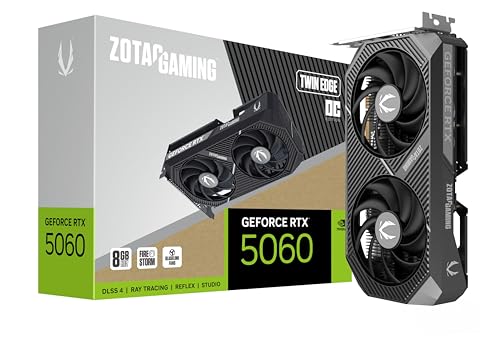
- Best build you can order today: ZOTAC Gaming GeForce RTX 5060 Twin Edge OC, 8GB GDDR7 — the graphics card at the heart of the Intel DDR4 build below — check price on Amazon
- Best value overall, and it is not a build: Skytech Blaze4 Mini, Ryzen 7 5700 / RTX 4060 Ti — check price on Amazon
- Most graphics memory in this guide: CyberPowerPC Gamer Xtreme VR, i7-13700F / RTX 4060 Ti 16GB — check price on Amazon
- Best current-generation prebuilt: Thermaltake LCGS Quartz i1460, i5-14400F / RTX 5060 — check price on Amazon
See 2 more Amazon options
- The 32GB route: Skytech Archangel, i5-14400F / RTX 4060 / 32GB DDR5 / 2TB — check price on Amazon
- Best staged build: AMD Ryzen 7 8700G with Radeon 780M graphics — the processor the AM5 starter build below is built around — Check on Amazon
Read the full guide ↓
Disclosure: As an Amazon Associate, reviewstook.com earns from qualifying purchases. Links to Amazon on this page are affiliate links; they cost you nothing extra. Listing details such as price and availability change often, so check the current Amazon listing before you buy.
This budget used to be the point where a self-built gaming PC beat every prebuilt on the shelf. In November 2026 that sentence needs an asterisk the size of a memory module. A 32GB DDR5-6000 kit — the default recommendation for any new AM5 build — has become far more expensive than it was across much of its history, and mainstream kits now sit in a premium tier that makes a careful budget hard to hold. Graphics cards have climbed the same way: the RTX 5060 is a current-generation card whose live listing should be checked closely before you plan around it, because its position in the market has shifted well above where a launch headline would suggest. Add those pressures to an otherwise sensibly chosen AM5 parts list and a build that should feel comfortable at this tier starts to feel stretched well beyond it. This guide works through that problem in the open, without printing fixed product prices, and it reaches a conclusion most build guides are avoiding this year: at this exact moment, two of the six best routes at this budget are builds, and the other four are prebuilt PCs whose makers secured their memory before the sharpest rises. The builds still win on the things builds have always won on — you choose every part, you can repair and upgrade each one, and nothing is proprietary. They just do not automatically win on value this season, and pretending otherwise would waste your money. For every linked pick below, check price on Amazon before you decide; for parts named without a link, treat them as mid-range or budget-tier choices in qualitative terms and confirm the live listing for the exact part you choose.
First, the term that decides whether this tier makes sense for you: native 1440p. The graphics cards in this guide — RTX 5060, RTX 4060 Ti in 8GB and 16GB forms, RTX 4060 — are the entry point to rendering games at 2560×1440 without upscaling doing the heavy lifting. At native 1440p this class runs modern games at high settings, and DLSS or FSR upscaling plus frame generation buys headroom on top of that; frame generation smooths motion but does not reduce input latency, so treat it as polish, not as the foundation. What this class is not is a native 4K class: at 3840×2160 these cards lean on aggressive upscaling to stay playable, and the 8GB cards additionally run into their memory ceiling in the heaviest current titles at 1440p, which is why the 16GB pick below matters. If your monitor is 1080p, everything here is more than enough and the cheaper routes in this guide are the sensible stop. If you own a 1440p high-refresh monitor, read on — this is your tier, judged honestly on platform, memory and graphics headroom rather than on a fixed total.
In this guide
Quick Picks
Short on time, or comparing several routes at once? Each row names a buyer type and the route that suits it, with a link to the anchor listing. Check price on Amazon for the current position of each pick before you order.
| Buyer type | Pick | Why it stands out | Link |
|---|---|---|---|
| Best build to order today | Intel DDR4 build: Core i5-12400F + RTX 5060 | Every part is a widely available, sensibly tiered choice; a complete build with a Windows license included in the plan | Check on Amazon |
| Best value overall | Skytech Blaze4 Mini (prebuilt) | RTX 4060 Ti performance in a finished machine that is often better value than an equivalent parts list right now — check price on Amazon | Check on Amazon |
| Best for 1440p longevity | CyberPowerPC Gamer Xtreme VR (prebuilt) | The only 16GB graphics card in this guide, for buyers who prioritise texture headroom | Check on Amazon |
| Best current-gen prebuilt | Thermaltake LCGS Quartz i1460 | RTX 5060 and a 600W Gold power supply in a finished, current-generation machine — check price on Amazon | Check on Amazon |
| Best 32GB route | Skytech Archangel (prebuilt) | 32GB DDR5 and 2TB of storage — the memory configuration builders find hardest to assemble at this tier today | Check on Amazon |
| Best staged build | AM5 starter build: Ryzen 7 8700G | A real AM5 platform today, graphics card added later when the market cools | Check on Amazon |
How These Picks Were Chosen
The budget was applied to the whole machine, not to a headline part. For the two self-builds, the review considers every line of the parts list — processor, motherboard, memory, storage, power supply, case, and a Windows 11 Home OEM license, with the Microsoft System Builder version positioned as a mid-range software choice and Microsoft retail as the premium alternative — because a build that only fits the budget by forgetting the operating system does not fit the budget. Where a route depends on timing or on a particularly favourable live listing, the review says so in qualitative terms and names the part to watch, rather than printing a walk-away figure that will go stale. For the prebuilts, the live listing is the whole machine including Windows, which is precisely their advantage this year — check price on Amazon and compare the complete machine, not just the graphics card, against a complete parts list.
We did not build these systems ourselves. Every processor, graphics card, motherboard, memory kit, drive and power supply named here is a real product whose identity and specification were checked through manufacturer and retailer sources in November 2026 or the weeks just before, and this rewritten guide deliberately avoids fixed prices so that no stale figure can mislead you. Platform discussion uses the same qualitative market picture throughout, so the AM5 comparison in the next section and the build discussions further down are arguing from one consistent view. Two filters shaped the final six. First, memory honesty: any route whose appeal depended on a 32GB DDR5 kit at a price nobody can currently rely on was rejected or reframed, which is why the AM5 discrete-graphics build appears as an analysis with conditions to watch instead of a pick. Second, upgrade honesty: a pick earns its place only if its next upgrade is a standard part — a graphics card, a memory kit, a drive — and the reviews say plainly where a platform is a dead end, because at this budget a dead end you know about is a fair purchase and a dead end you discover later is not.
The AM5 Math: The Right Platform at the Wrong Moment
Our standing platform advice for a new gaming build is AM5, and nothing about the processors or boards has changed that. The Ryzen 5 7600X and the MSI PRO B650-P WiFi remain fairly positioned parts for a socket AMD continues to supply with new processors, and in isolation neither is the problem. The problem is one line further down the list. A 32GB DDR5-6000 kit — the capacity and speed this platform wants — now sits in a much higher tier than it did historically, with mainstream kits such as a Patriot Viper Venom set positioned well above their long-run norm. Storage has climbed too: a 1TB Gen4 NVMe drive that was once a budget-tier staple is now a noticeably more premium purchase. Assemble the default build at current market conditions and the honest picture is a total well beyond this guide’s budget once a Windows license is included: a Ryzen 5 7600 — the version with a cooler in the box — a B650 board, 32GB of DDR5, an RTX 5060, a 1TB SSD, a 750W Gold power supply, a mid-range case and Windows. Even allowing for more favourable live listings on the graphics card and memory, the same list still tends to land above the budget rather than comfortably inside it.
So the AM5 discrete build is not a pick in this guide; it is a rain check with conditions to watch. It could close under budget only if several favourable conditions happened at once: a particularly strong deal on the 7600X, a B650 board such as the MSI PRO B650M-A WiFi at the favourable end of its range, a 16GB DDR5-6000 kit at the low end for the category, and an RTX 5060 at the low end of its range, together with sensibly tiered storage, power supply and case choices and a Windows license transferred from a retired PC rather than bought. That is a real parts list in principle — and it requires patience, deal alerts, and an old license. Buyers who want AM5 today without the treasure hunt should take the staged build further down (pick six), which puts the same socket under a working PC now and leaves the graphics card slot empty for the day memory and GPU markets come back to earth. Everyone else should build on DDR4 or buy prebuilt, and the rest of this guide is those routes, judged the same transparent way: on specification, platform and live value at the moment you check, not on a printed figure.
The 6 Best Gaming PC Builds Under $1200
1. The Intel DDR4 Build — Core i5-12400F + RTX 5060
Who it suits: Builders who want to order every part this week from widely available choices, and who accept a mature platform in exchange for the strongest graphics card a from-scratch build can carry at this budget right now.
The parts list, described in qualitative tiers: Intel Core i5-12400F, a budget-to-mid-range processor choice that is also available from marketplace sellers — check price on Amazon; MSI PRO B760-P WiFi DDR4 motherboard, a mid-range board choice; 16GB (2×8GB) DDR4-3200 kit, with the Crucial kit positioned as a mainstream budget-to-mid-range option; ZOTAC RTX 5060 Twin Edge OC, a current-generation mid-range card — check price on Amazon and time this purchase carefully, because the card is the one line where live pricing most affects whether the build makes sense; 1TB Gen3 NVMe drive, a budget-tier storage choice; MSI MAG A750GL 750W Gold power supply, a mid-range unit; Montech AIR 100 ARGB case, a budget-to-mid-range airflow case; Windows 11 Home OEM license, a mid-range software choice. Judged as a whole, the machine can close under budget with Windows included when the graphics card is bought favourably, and it becomes harder to justify when that card sits at the high end of its range — the review does not hide that gap, because the card is the one line to time: this build makes most sense when the RTX 5060 listing looks favourable, and it is a wait when it does not.
What the finished machine is: a six-core Intel processor with a boxed cooler, a current-generation NVIDIA card with DLSS 4 and frame generation, and a 750W ATX 3.1 power supply with the native connector a future card will want — deliberately overspecced, because the power supply and case are the two parts here that survive into your next build. It is a native-1440p machine in the sense defined at the top of this guide, with the 8GB frame buffer as its ceiling in the heaviest titles. The DDR4 decision deserves its own sentence: 16GB is the compromise that makes the plan work, the board has four slots, and a 32GB DDR4 kit is a widely available step up — but adding it today makes the overall plan harder to keep in tier, so the honest sequence is to build with 16GB, watch the graphics card listing for the build itself, and treat the memory upgrade as a later step rather than a launch-day necessity. That sequence also keeps the initial build simpler: install the pair of sticks in the correct slots, enable the memory profile, and leave the remaining slots free for a matched addition later rather than mixing kits on day one.
- Every part is a verified, widely available choice — no part of the plan depends on a memory kit nobody can buy.
- The 750W Gold, ATX 3.1 power supply and airflow case carry forward to the next build untouched.
- Four memory slots: the 32GB upgrade is a drop-in, not a replacement.
Honest limitation: LGA1700 with DDR4 is a finished platform — the next processor upgrade means a new board and new memory — and the total only closes under budget with Windows included when the RTX 5060 is bought favourably rather than at the high end of its current range.
Choose it if you want to build now, with parts you picked, and you can time one graphics card purchase — check price on Amazon for that card before committing to the rest of the list. Skip it if you want 32GB and a current platform on day one — that combination is a prebuilt this year, below.

2. Skytech Blaze4 Mini — The Prebuilt That Beats Every Parts List
Who it suits: Anyone whose real goal is playing games this month rather than assembling a project — and any builder honest enough to admit when the parts math loses.
This is the concession this guide owes you up front. The Blaze4 Mini pairs a Ryzen 7 5700 with an RTX 4060 Ti 8GB, 16GB of DDR4, a 1TB SSD, a 650W Gold power supply and Windows 11 Home, and it has repeatedly been positioned as a strong-value prebuilt — check price on Amazon for its current position. When it sits at the favourable end of its range it can undercut an equivalent self-build while including the Windows license that build has to add, and its graphics card is a step above the RTX 5060 the build carries: the 4060 Ti is the stronger raster card, and in a normal year this machine is what this build budget was trying to assemble for less. Skytech builds with standard parts, so the ownership story is closer to a self-build than to a sealed appliance: the memory, storage and graphics card can all be replaced with ordinary components later. That standard-parts construction matters for cleaning and maintenance too — the case opens normally, the drive and card are accessible, and a future owner is not locked into a proprietary power supply or motherboard layout for routine upgrades.
The discipline this pick requires is price discipline, in qualitative terms. Between deal events this model drifts back toward a less compelling position, and at that point the argument narrows to convenience rather than value — check price on Amazon and walk away if the listing no longer looks favourable. The 16GB of DDR4 and the AM4 platform are the same finished-platform compromise as the Intel build, arrived at from the other direction: you are buying a known-good configuration at a favourable moment, not a foundation for a decade of upgrades. Treat a favourable live listing as the buy signal and a drift back to its usual position as the walk-away line, and this is one of the strongest purchases in the guide by simple comparison of specification to tier.
- RTX 4060 Ti performance in a finished machine that can sit below the parts cost of any equivalent build right now — check price on Amazon.
- Windows 11 Home included, assembled and warranted as one machine.
- Standard-parts construction: memory, storage and GPU all replaceable later.
Honest limitation: The value case lives at its favourable pricing; near its usual position it is merely competitive, and the AM4/DDR4 platform has no processor upgrade path that matters.
Choose it if you catch it in a favourable position and want the most gaming for your tier in this guide. Skip it if the price is sitting at its usual level and you enjoy building — the Intel build above is the better use of the same tier that week.

3. CyberPowerPC Gamer Xtreme VR (GXiVR8040A14) — The 16GB Card
Who it suits: 1440p players who keep games for years and mod them — the buyers for whom graphics memory, not raw frame rate, is what ages a PC out.
Every other graphics card in this guide carries 8GB of memory. This one carries an RTX 4060 Ti with 16GB, alongside a Core i7-13700F, 16GB of DDR5 and a 1TB NVMe drive — check price on Amazon, because this model is most compelling when its live listing sits at the favourable end of its range and much less compelling away from that position. The 16GB frame buffer is the entire argument, and it is a good one: at native 1440p the 8GB cards in this guide already have to manage texture settings in the heaviest current releases, and that pressure only grows over a machine’s life. The chip itself is the same 4060 Ti as the 8GB version — this pick does not buy more frames today; it buys the settings headroom that keeps the frames it has looking right in three years. Note what it proves about the market, too: this prebuilt contains DDR5 system memory and a 16GB graphics card in a complete machine, in the same season when a high-capacity DDR5 kit alone has become a premium purchase for builders.
The conditions are strict, and the review states them as conditions: away from its favourable position this machine belongs in a higher tier and outside this guide’s budget entirely, so it is a pick only when the live listing looks favourable — check price on Amazon before you treat it as an in-budget option. The system memory is 16GB where the Archangel below offers 32GB, and CyberPowerPC’s component brands for parts like the power supply can vary by production run, so the listing’s current specification is the one to read before ordering. Buy it when the listing is favourable, verify the spec, and this is the longest-lived graphics configuration in this tier.
- The only 16GB graphics card in this guide — the 1440p longevity pick.
- A Core i7-13700F is the strongest processor here for combined gaming and streaming or editing work.
- DDR5 platform, unlike the DDR4 machines around it.
Honest limitation: Deal-conditional in the hardest sense: away from a favourable live listing it moves into a higher tier, and 16GB of system memory is the minimum this guide accepts, not a luxury.
Choose it if a favourable live price is available and texture headroom at 1440p is your priority. Skip it if it is sitting at a non-deal position — wait, or take the Blaze4 Mini instead.

4. Thermaltake LCGS Quartz i1460 — The Current-Generation Prebuilt
Who it suits: Buyers who want the newest graphics architecture — DLSS 4 with multi frame generation — in a finished machine, without timing a parts list.
The Quartz pairs a Core i5-14400F with an RTX 5060 8GB, 16GB of DDR4-3600, a 1TB NVMe drive and a 600W 80 Plus Gold power supply, and it has generally been positioned inside this budget tier in deal coverage against higher list pricing — check price on Amazon for its current position. Read it as the prebuilt mirror of this guide’s Intel build: near enough the same processor class and the identical graphics card, assembled, with Windows installed and a single warranty to call. The comparison cuts both ways and the review makes it honestly — the self-build above can be the better value when the graphics card is timed well, and it carries a stronger 750W power supply; the Quartz asks for no timing at all and its positioning has stayed inside this budget more consistently, which the build cannot always claim. Thermaltake’s LCGS line uses standard components, so the DDR4 platform’s ceiling is the same considered compromise as elsewhere: fine for this machine’s life, not a foundation for the next one.
Two checks before ordering. The RTX 5060’s frame generation features are genuinely useful for smoothing high-refresh play, but they do not reduce input latency and they only work in supported titles, so value the card first on its native rendering — which is honest 1440p-class performance with an 8GB ceiling, as defined at the top of this guide. And because this model cycles through deal pricing, patience matters in qualitative terms: at a favourable listing it can undercut the self-build’s realistic all-in position; at list, the build wins back its crown — check price on Amazon and judge which side of that line the current listing sits on.
- Current-generation RTX 5060 with DLSS 4, in a machine that needs no assembly or part-timing.
- A named 600W Gold power supply — a specification many prebuilts at this price leave vague.
- Deal positioning has stayed inside the budget across the listings we verified in qualitative terms.
Honest limitation: The DDR4 platform is finished, the 8GB frame buffer is this tier’s ceiling, and at list price the self-build above is the better buy.
Choose it if you want current-gen features in a finished PC and the live listing looks favourable. Skip it if it is at list price and you are willing to build — or if 16GB of graphics memory matters more, in which case the CyberPowerPC above is your pick.

5. Skytech Archangel — The 32GB Route
Who it suits: Buyers who stream, keep a browser and a game and a capture program open at once, or simply refuse to buy a 16GB machine in 2026 — and who have noticed what 32GB costs a builder this year.
The Archangel is positioned at the top end of this budget tier — check price on Amazon — for a Core i5-14400F, an RTX 4060 8GB, 32GB of DDR5-5600, a 2TB SSD and a 650W Gold power supply, and it has also appeared at considerably more favourable positions in its deal cycle. The specification to stare at is the memory: 32GB of DDR5 is the configuration the AM5 section of this guide could not assemble under budget at any honest assessment, because the kit alone has become a premium purchase on today’s Amazon. Skytech’s integrators are plainly working from memory bought under older pricing, and the result is a machine that sells the exact thing builders cannot currently buy easily — capacity headroom — at this guide’s ceiling, with double the storage of everything else here as a bonus. The RTX 4060 is a step behind the 4060 Ti and 5060 cards above it in raw pace, though at 1440p it remains a capable card with DLSS support, and for the multitasking buyer this trade — a slightly slower card for double the system memory and storage — is the right shape of compromise.
The ceiling discipline applies: this pick sits at the very top of the tier, so it is only a pick when its live listing stays at or below that ceiling — check price on Amazon — and its usual positioning says it lives near the line rather than far under it. The platform is LGA1700, finished like the other Intel machines here. Judge it as a capacity purchase — the buyer who needs 32GB and 2TB today, in a working machine, at a position no parts list can currently match — and it has no rival in this guide. Judge it as a pure frames-per-tier purchase and the Blaze4 Mini beats it clearly.
- 32GB DDR5 and 2TB of storage — the two capacities builders cannot currently afford to assemble easily.
- A considerably more favourable position in its deal cycle makes it a genuine bargain when that cycle turns — check price on Amazon.
- 650W Gold power supply leaves real room for a future graphics card.
Honest limitation: It sits at the budget ceiling, its RTX 4060 is the slowest discrete card among the prebuilts here, and the Intel platform is a finished one.
Choose it if memory and storage capacity are your actual bottleneck. Skip it if frames per tier is the whole question — that answer is the Blaze4 Mini.

6. The AM5 Starter Build — Ryzen 7 8700G, Graphics Card Later
Who it suits: Patient builders who want the current AMD platform under a working, game-playing PC today, and who are willing to let the graphics card wait for a saner market.
The parts list, in qualitative tiers: Ryzen 7 8700G, a mid-range APU choice — check price on Amazon; MSI PRO B650-P WiFi, a mid-range B650 board — check price on Amazon; 16GB (2×8GB) DDR5-6000, a mainstream kit choice; Crucial P310 1TB Gen4 NVMe, a mid-range storage choice named in copy; the same MSI MAG A750GL 750W Gold power supply, a mid-range unit; the Montech AIR 100 ARGB case, a budget-to-mid-range case; and a Windows 11 Home OEM license, a mid-range software choice. As a whole the plan can close under budget with Windows included at prices you can pay today in qualitative terms, and it manages it precisely because the graphics card line is left for later. What you get instead is the Radeon 780M integrated in the 8700G, the strongest integrated graphics AMD sells: genuinely playable 1080p in esports and older titles and lighter current games at reduced settings, and not a 1440p solution by any honest definition. The eight Zen 4 cores, meanwhile, are a full-strength desktop processor that will not bottleneck the mid-range card you add later.
The fine print is real. The boxed cooler situation has shifted: the listing advertises a Wraith Spire, while a 2026 buyer report documents current boxes shipping with the smaller Wraith Stealth — adequate for this 65W chip, but check which box you receive rather than assuming. Integrated graphics drink system memory bandwidth, so the dual-channel kit in the list is a requirement, not a preference, and 16GB shared between system and graphics is tight — this build wants its second memory upgrade the day DDR5 prices allow. And the staged path costs more in the end in lifetime terms: adding a discrete card later pushes the lifetime total well beyond the prebuilts above. What the extra commitment buys is the platform — an AM5 socket with years of processors ahead of it, chosen part by part. For the right buyer that is the entire point of building, and this is the only honest way to start it in this tier this year.
- A real AM5 platform — B650 board, DDR5, current socket — in a working PC that can close under budget including Windows.
- The 8700G’s eight Zen 4 cores stay relevant long after the graphics card arrives.
- The empty PCIe slot and 750W power supply make the future GPU a ten-minute drop-in.
Honest limitation: Until the graphics card arrives this is a 1080p integrated-graphics machine, and the staged route’s lifetime cost exceeds every prebuilt in this guide.
Choose it if the platform is the purchase and the GPU can wait a season. Skip it if you want 1440p this month — buy the Blaze4 Mini or the CyberPowerPC instead and enjoy it now.

Comparison Table
| Route | Type | Graphics | Memory / Storage | Positioning | Link |
|---|---|---|---|---|---|
| Intel DDR4 build (i5-12400F) | Self-build | RTX 5060 8GB | 16GB DDR4 / 1TB | Can close under budget at a favourable card listing, Windows included — check price on Amazon | See review 1 |
| Skytech Blaze4 Mini | Prebuilt | RTX 4060 Ti 8GB | 16GB DDR4 / 1TB | Strong-value prebuilt at the favourable end of its range | Check on Amazon |
| CyberPowerPC GXiVR8040A14 | Prebuilt | RTX 4060 Ti 16GB | 16GB DDR5 / 1TB | Deal-conditional pick — check price on Amazon | Check on Amazon |
| Thermaltake LCGS Quartz i1460 | Prebuilt | RTX 5060 8GB | 16GB DDR4 / 1TB | Current-gen prebuilt, generally inside this tier | Check on Amazon |
| Skytech Archangel | Prebuilt | RTX 4060 8GB | 32GB DDR5 / 2TB | Top-of-tier capacity route — check price on Amazon | Check on Amazon |
| AM5 starter build (Ryzen 7 8700G) | Self-build | Radeon 780M integrated | 16GB DDR5 / 1TB | Can close under budget, Windows included, with GPU added later | See review 6 |
How to Choose a Gaming PC Build Under $1200
- Total the whole machine before you fall for any part. Processor, board, memory, storage, power supply, case and a Windows license. In November 2026 the memory line is where builds go to die: a 32GB DDR5 kit has become a premium purchase, and any parts list that quotes you last year’s RAM position is quoting you a machine that does not exist.
- Decide what native 1440p means for your monitor. This tier’s cards render 1440p natively at high settings in most games and use upscaling for headroom. If your display is 1080p, the cheaper routes here are already surplus; if it is 4K, no honest route in this tier renders it natively, whatever a listing implies.
- Weigh graphics memory as a lifespan feature. The single 16GB card in this guide does not win today’s frame-rate charts; it wins the texture settings of 2028. On 8GB cards, budget a settings compromise in the heaviest titles from the start.
- Choose the platform with your eyes open. AM5 is the only socket here with a future, and this year it costs a staged build or a deal hunt to reach. DDR4 platforms — Intel’s B760 and AMD’s AM4 — are finished, but finished is not broken: they are how the working machines in this guide got under budget.
- Overspec the power supply, never the reverse. The 750W Gold unit in both builds is a mid-range choice that survives into the next build with the right connectors for current cards. A cheap low-wattage unit is the classic false economy of this budget.
- Price the prebuilt before you mock it. Integrators are selling memory bought before the spike. When a prebuilt with your target card is positioned below your parts total — as the Blaze4 Mini can be, before Windows is even counted for the build — the builder’s premium is currently negative, and the correct response is to buy the machine and keep your pride for a cheaper year. Check price on Amazon for both routes on the same day.
- Use walk-away discipline, not hope. Every deal-conditional pick in this guide needs a line in qualitative terms: buy the RTX 5060 only when its listing looks favourable for the build, buy the Blaze4 Mini only at the favourable end of its range, buy the 16GB CyberPowerPC only when its listing is favourable, and buy the Archangel only at or below the top of this tier. Above the line, wait; below it, buy without second-guessing.
- Keep the packaging until the second week. A build’s failures — a dead memory slot, a coil-whining power supply, the wrong cooler in the box — announce themselves in the first days, and returns are a different errand without the boxes.
Common Buying Mistakes
- Budgeting a 32GB DDR5 kit at its historical position. Trackers show mainstream kits have moved from a much lower historical tier to a premium tier today; a build planned at the old position will be short before it starts.
- Forgetting the Windows license in the build total, then comparing the result against prebuilts that include one. That asymmetry decides comparisons at this budget.
- Paying the RTX 5060’s high-end position in a build whose entire case rests on a favourable listing. The card has been available at much more favourable positions and also at much less favourable ones; at the high end the self-build’s math collapses and the prebuilts win outright — check price on Amazon first.
- Confusing frame generation with rendering. Multi frame generation smooths motion in supported titles; it does not lower input latency and it does not turn an 8GB 1440p card into a 4K card.
- Buying an 8GB card for a five-year 1440p plan without reading the memory ceiling honestly — or, the mirror mistake, paying the 16GB card’s non-deal premium for headroom that only matters when its listing is favourable.
- Speccing a single DDR5 stick for the APU build to save a small amount. Integrated graphics run on system memory bandwidth; single-channel memory measurably slows the very graphics you bought the chip for.
- Assuming the boxed cooler in the listing is the cooler in the box. The 8700G’s advertised Wraith Spire has been documented shipping as a Wraith Stealth in current boxes — check on delivery, while returns are easy.
- Treating a finished platform as a broken one — or a current one as a free one. DDR4 builds are a deliberate, priced trade in qualitative terms; AM5 is the right socket at a temporarily wrong moment. Confusing either fact costs money.
Final Recommendation
- Most buyers, best value: Skytech Blaze4 Mini when its live listing is favourable — check price on Amazon.
- Builders who want to order today: The Intel DDR4 build — with the graphics card timed to a favourable listing.
- 1440p players planning to keep the machine: CyberPowerPC GXiVR8040A14, at a favourable deal position only.
- Current-gen features, zero assembly: Thermaltake LCGS Quartz i1460 when its listing is favourable.
- Capacity-first buyers: Skytech Archangel at or below the top of this tier.
- Platform-first builders: The AM5 starter build around the Ryzen 7 8700G.
Our top two at this budget are the Blaze4 Mini, because its RTX 4060 Ti performance at a favourable position is arithmetic no parts list currently answers, and the Intel DDR4 build, because it is the one from-scratch machine whose every line can be verified as a real, sensibly tiered choice this week — together they state this year’s truth from both sides: prebuilts win on value when their listings are favourable, builds win on control, and the winner for you depends on which of those you are actually shopping for. Platform purists should read the AM5 section once more before ordering anything, and buyers working to a smaller number should see Best Gaming PC Build Under $800, while those with room to stretch will find the ceiling lifts considerably at Best Gaming PC Build Under $1500. Total every line in qualitative terms, hold every deal pick to its walk-away discipline, and check the live listing before you order — in this market, the homework is not a formality; it is the difference between a good purchase and an expensive lesson.
Frequently Asked Questions
Can you really build a gaming PC under $1,200 in 2026?
Yes — but not the build you would have specced two years ago. DDR4-platform builds close under budget at verified, sensibly tiered choices, and an AM5 build closes if it starts life as an APU machine. The conventional AM5 build with 32GB of DDR5 and a discrete card tends to land well above budget at current market conditions, because memory and graphics cards have climbed while processors and boards stayed fair. This guide shows that reasoning line by line rather than asking you to take the conclusion on faith, and it avoids fixed totals so you can judge the live listings on the day you buy.
Why is RAM so expensive right now, and when will it normalize?
Memory makers have shifted production toward AI data-center demand, and tracker data shows the result plainly in qualitative terms: 32GB DDR5-6000 kits that once sat in a much lower tier now sit in a premium tier, with industry forecasts through late 2026 pointing at further pressure rather than relief. Nobody honest can date the normalization. The practical responses are the ones in this guide: build on DDR4, start AM5 with 16GB and an APU, or buy a prebuilt whose maker stocked memory earlier.
Is 16GB of graphics memory worth it at this budget?
When the CyberPowerPC’s live listing is favourable, yes for a 1440p player keeping the machine for years: the 16GB RTX 4060 Ti renders at the same speed as the 8GB card today but holds texture quality as games grow — check price on Amazon. When its listing sits at the high end of its range, no — the premium buys headroom with money that would fund a faster card class in a normal market. The pick is the live position, not just the product.
What does “native 1440p” actually mean for these cards?
It means the game is rendered at 2560×1440 by the graphics card rather than rendered lower and upscaled. The RTX 5060 and 4060 Ti class does that at high settings in most current games, using DLSS or FSR as headroom rather than as a crutch. It does not extend to native 4K, where this class relies on aggressive upscaling, and frame generation — which interpolates extra frames — improves smoothness without reducing input latency, so it should never be counted as native performance.
Should I wait for prices to fall instead of buying anything here?
Waiting is a legitimate strategy for the AM5 discrete build specifically, and this guide gives you its conditions in qualitative terms: a 32GB DDR5-6000 kit back in a mainstream tier and an RTX 5060 at the favourable end of its range would reopen the conventional build. But forecasts through the end of 2026 point up, not down, and the prebuilt deals in this guide exist because integrators hold older stock — when that stock turns over, their positions will follow the same market. If you need the machine this season, buy the favourable deal in front of you rather than the forecast.
Is the APU build a real gaming PC or a placeholder?
Both, stated plainly. The Ryzen 7 8700G’s Radeon 780M is the strongest integrated graphics available and plays esports, older and lighter titles at 1080p without apology; it is not a 1440p or heavyweight-AAA solution. The build around it — B650 board, DDR5, 750W power supply, real case — is a complete desktop that does everything except high-end gaming today, and becomes one the day a graphics card drops into its empty slot. Buy it as a platform with a gaming present, not as a gaming machine with a platform excuse.
- Best Gaming PC Build Under $1200
- Best Gaming PC Build Under $800
- Best Gaming PC Build Under $1500
- Best Gaming PC Build For Beginners Under $1200
- Best Gaming PC Build For Streaming Under $1200
- Best Gaming PC Build For Small Spaces Under $1200
- Best Gaming PC Build For 1440p Gaming Under $1200
- Best Gaming PC Under $1200
- Best Prebuilt Gaming PC Under $1200
- Best Budget Gaming PC Under $1200


