Where to buy
Check the latest price, availability and delivery on Amazon. Orders are placed on Amazon. We may earn a commission from qualifying purchases.
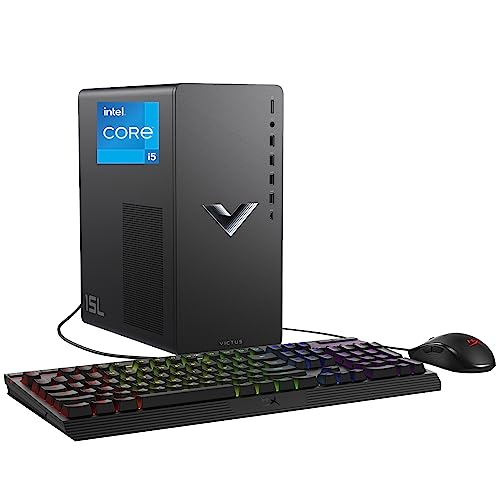
- Best for 1440p gaming under $800: HP Victus 15L Gaming Desktop (TG02-1020h), Core i5-13400F, RTX 3050, 8GB, 512GB — Check on Amazon
- GMKtec NucBox K8 Plus, Ryzen 7 8845HS, 32GB, 1TB — Check on Amazon
- GMKtec NucBox K11, Ryzen 9 8945HS, 32GB, 1TB — Check on Amazon
- Beelink SER8 Mini PC, Ryzen 7 8745HS, 32GB, 1TB — Check on Amazon
See 2 more Amazon options
- Minisforum UM890 Pro Barebone, Ryzen 9 8945HS, No RAM/SSD/OS — Check on Amazon
- Minisforum UM880 Plus Barebone, Ryzen 7 8845HS, Without RAM/SSD/OS — Check on Amazon
Read the full guide ↓
Disclosure: As an Amazon Associate, reviewstook.com earns from qualifying purchases. Links to Amazon on this page are affiliate links; they cost you nothing extra. Listing details such as price and availability change often, so check the current Amazon listing before you buy.
Start with the sentence most 1440p guides bury: at this budget, in a compact case, native 1440p gaming — every pixel of a 2560×1440 frame actually rendered by the graphics hardware — is honest in light and esports titles on exactly one machine below, and even that machine leans on upscaling everywhere else. Everything else here renders its games at 1080p or below and upscales them to fill a 1440p screen. That is not a trick and it is not a failure: done properly, a game rendered at 1080p and intelligently upscaled to a 1440p panel looks close to native, runs far faster than native rendering would, and leaves the desktop, text and video at full 1440p sharpness the rest of the time. What this guide refuses to do is call that native 1440p. Each pick below is graded on what it actually renders, what it upscales with, and how far up the resolution ladder its documented hardware honestly reaches.
The shape of the category explains the ceiling. A compact PC in this budget tier is either a mini PC of about a liter built on AMD’s Radeon 780M — the strongest integrated graphics in the class, and still an integrated part that shares memory with the CPU — or a slim big-brand tower with an entry-level discrete card. There is no compact RTX 4060 tower in this budget tier; the genuinely small discrete-GPU machines from the major brands sit far above this budget, and the 4060 prebuilts that dip into this tier are full-size towers on sale. So the six machines divide into three honest 1440p stories. The HP Victus 15L’s RTX 3050 is a real graphics card with DLSS upscaling, and it reaches furthest: native 1440p in lighter titles, upscaled 1440p in heavier ones. The four 780M mini PCs are 1080p-render machines whose FSR upscaling feeds a 1440p panel well, and two of them carry an OCuLink port — the one route by which a mini PC can later host a desktop card and render 1440p natively. And the two barebone kits render nothing at all until you complete them, which is why what it takes to complete them is stated openly rather than hidden behind the kit listing.
One more piece of honesty before the picks: a 1440p monitor is still a good purchase alongside any machine here. Your desktop, browser, documents and video all display at the panel’s full native resolution regardless of what a game renders at, text is visibly sharper than on a 1080p screen, and the monitor will outlive this PC — when a future machine, or a docked desktop card, can render 1440p natively, the panel is already waiting. Buy the monitor for the sharpness and the future — just do not let anyone sell you these PCs as native-1440p machines today.
In this guide
Quick Picks
Short on time, or comparing several options at once? Each row below names a buyer type and the machine that suits it, with a link to the listing.
| Buyer type | Pick | Why it stands out | Link |
|---|---|---|---|
| Best for 1440p gaming under $800 | HP Victus 15L (TG02-1020h) | The only discrete GPU here — DLSS upscaling and native 1440p in light titles | Check on Amazon |
| Best compact all-rounder for a 1440p desk | GMKtec NucBox K8 Plus (32GB/1TB) | 780M renders at 1080p, FSR upscales; native OCuLink is the future native-1440p route | Check on Amazon |
| Fastest integrated graphics, on sale | GMKtec NucBox K11 (32GB/1TB) | The quickest 780M here pushes the upscale-from-1080p path furthest; buy only on sale — check price on Amazon | Check on Amazon |
| Best for a quiet 1440p setup | Beelink SER8 (8745HS, 32GB/1TB) | Measured around 32 dBA — 1440p desktop and upscaled gaming without the whine | Check on Amazon |
| Best project hub toward real 1440p | Minisforum UM890 Pro Barebone | Strongest kit platform with native OCuLink — for buyers who own parts | Check on Amazon |
| Cheapest start on the same path | Minisforum UM880 Plus Barebone | Barebone kit — check price on Amazon; the documented example of what completing a kit really costs | Check on Amazon |
How These Picks Were Chosen
The list starts from the same six verified machines as our Best Compact Gaming PC Under $800 guide — same listings, same deal rules — re-graded here on a single question: what does each one honestly do with a 1440p screen? Every ASIN and specification below comes from that research: the maker listings, specification pages and independent reviews. No product or specification has been added for this angle. Prices change often, so check price on Amazon for the current figure on each pick, and where a pick only makes sense at a sale price — several here do — the review says so in its first lines and tells you to walk away when the listing sits above this budget.
Three grading rules shaped the order. The first is the rendering rule: a pick is credited only with the resolution its documented graphics hardware actually renders, and upscaling is named as upscaling. The RTX 3050 is an Ampere card with DLSS upscaling support; the Radeon 780M machines upscale with FSR in the games that include it. Neither technology is credited to a machine whose hardware does not have it, and no pick is credited with frame generation — the RTX 3050 predates it. The second rule is the published-scaling rule: when this guide quotes what an upscaler renders internally, it uses the scaling factors the technology owners publish. Quality-mode upscaling to a 1440p output renders at roughly 1707×960 internally; Performance mode renders at roughly 1280×720. Those two numbers recur below because they are the honest core of the category — they tell you exactly how much real rendering your money buys. The third rule is the whole-cost rule, carried over from the base guide: a barebone kit’s price is not a computer’s price, so both kits are discussed as complete machines rather than as bare stickers, because current memory and SSD costs can flip the usual build-it-cheaper logic.
We did not use these PCs ourselves, and no hands-on testing is claimed. Performance characterizations are class-level expectations drawn from the documented hardware, phrased qualitatively, with no per-game frame-rate figures for any specific product. Compactness was applied with a tape measure, as in the base guide: every pick is a mini PC of roughly 0.8 to 1.1 liters by maker-stated dimensions, except the HP Victus 15L at about 15.5 liters — under half a typical mid-tower, and the price of admission for the only real graphics card here.
What “for 1440p” Honestly Means at $800
A 1440p frame contains about 78 percent more pixels than a 1080p frame — 3.7 million against 2.1 million — and rendering hardware pays for pixels roughly in proportion. The graphics hardware in this price class was built to render 1080p; asking it to render 78 percent more pixels natively in a modern demanding game is asking for a slideshow. So every honest 1440p setup at this budget separates two resolutions that marketing merges into one: the output resolution — the panel’s 2560×1440, governing how sharp your desktop, text and interface look — and the render resolution, what the GPU actually computes for each game frame before an upscaler stretches it to fill the output.
Upscaling is the bridge, and it is a good one. DLSS on the Victus’s RTX 3050 and FSR on the 780M machines both work the same way in outline: the game renders at a lower internal resolution, and the upscaler reconstructs a 1440p image from that smaller frame plus data from previous frames. At the Quality setting aimed at a 1440p output, the internal render is about 1707×960 — a little over half the pixels of native 1440p, which is why the performance gain is so large. At Performance, the internal render drops to about 1280×720, a quarter of native’s pixels, traded for still more speed at a visible cost in fine detail. In motion, Quality-mode upscaling to 1440p is genuinely hard to distinguish from native for most players; it is the default path this guide recommends on every pick. What it is not is native rendering, and the difference shows where upscalers always struggle — thin geometry, fences and foliage, fast camera pans — which is why the guide names the internal resolution instead of hiding it.
Native 1440p does exist in this guide, in a defined territory: light and esports titles, older games, and undemanding indie releases, where the rendering load is low enough that even this hardware class computes the full 3.7 million pixels comfortably. The Victus’s discrete card holds that territory widest; the 780M machines hold a smaller slice of it, mostly esports at modest settings. The moment a game gets heavy, every pick here drops to the upscale path, and the honest question becomes which upscaler it has and how much headroom sits behind it. There is also one genuine route to native 1440p in demanding games from this list, and it arrives later and costs more: an OCuLink dock with a desktop graphics card, hosted by one of the mini PCs that carry the port. The dock still needs a power supply and the card on top of its own cost — check price on Amazon for the dock options — and it is a substantial separate project by the time it renders anything. The port is worth buying now; the native 1440p it eventually delivers should be budgeted as the separate purchase it is.
The 6 Best Compact Gaming PCs for 1440p Gaming Under $800
HP Victus 15L Gaming Desktop (TG02-1020h) — Core i5-13400F, RTX 3050, 8GB, 512GB
Who it suits: Buyers whose priority is the game image itself — the widest native-1440p territory and the best upscaler in this guide — and who accept a bigger box and a fixed graphics ceiling to get it.
The Victus leads this guide for one reason: it is the only machine here with a discrete graphics card, and at 1440p that difference is not incremental, it is categorical. The RTX 3050 is an Ampere-generation card with its own dedicated memory, and it renders games the 780M machines cannot attempt at this output. In light and esports titles and older games, it renders the full 2560×1440 frame natively — the genuine article, no reconstruction. In heavier games it steps down to DLSS, NVIDIA’s upscaler, which this card supports in its Super Resolution form: DLSS Quality renders internally at roughly 1707×960 and reconstructs the 1440p output, and DLSS Performance drops the internal render to roughly 1280×720 when a game needs the help. Two limits of the card’s generation deserve stating because listings blur them: Ampere DLSS does not include frame generation, which arrived with the following generation, so no setting on this machine invents extra frames; and the card’s video encoder is its generation’s NVENC without AV1 encoding, which matters only if streaming enters the picture later.
The supporting hardware and the caveats are unchanged from the base guide, and they matter here. The Core i5-13400F is a capable 10-core desktop processor with headroom to spare for the fitted card. The chassis measures 6.1 × 11.71 × 13.27 inches — about 15.5 liters and 13.9 pounds — a slim tower rather than a mini PC, which is the physical price of the discrete card. Check price on Amazon for the current listing; this is a 2023 model, Amazon’s own stock comes and goes, and much of what you will find is third-party sellers, so buy from a seller you trust and only when the listing sits within this budget. Then there is the memory: the machine ships with 8GB of RAM in a single stick, running single-channel. At 1440p that catch bites harder than at 1080p, because the upscaling path and the game both want memory bandwidth — budget for a second stick from day one and treat it as part of the purchase price. Finally, the ceiling: the power supply is an HP unit in a proprietary form factor with modest wattage, and the cramped interior limits any swap to short, low-power cards. This machine’s 1440p ability is the ability it ships with — and within that frame, it is the strongest 1440p gamer in the guide by a clear margin.
- The only discrete GPU here — native 1440p in light titles, DLSS upscaling in heavy ones.
- DLSS Quality renders ~1707×960 internally; Performance ~1280×720 — both stated, neither hidden.
- Core i5-13400F desktop CPU and a slim ~15.5-liter big-brand chassis.
Honest limitation: It ships with 8GB of single-channel RAM that you should budget to upgrade immediately, its Ampere DLSS has no frame generation, and the proprietary low-wattage PSU makes the fitted card effectively final.
Choose it if the rendered image is the point and you want the most real 1440p this budget buys. Skip it if you need a one-liter box, or if you plan to upgrade the graphics card later — in this chassis, you effectively cannot.

GMKtec NucBox K8 Plus — Ryzen 7 8845HS, 32GB DDR5, 1TB SSD (Complete)
Who it suits: Buyers who want a one-liter PC on a 1440p desk today — sharp desktop, upscaled gaming — with the one port that can turn it into a native-1440p machine later.
Grade the K8 Plus’s 1440p story in the guide’s terms and it is a good one, honestly bounded. Its Radeon 780M is the strongest integrated graphics in the class, and its working method on a 1440p panel is: render the game at 1080p, upscale to the 1440p output with FSR in the games that include it. FSR’s Quality mode aimed at 1440p renders internally at roughly 1707×960, the same published scaling the Victus’s DLSS uses, so its typical heavy-game frame is computed at about the same internal resolution as the leader’s — the difference is that the 780M has no native-1440p territory beyond esports and light titles, and its upscaler is generally a step behind DLSS in fine-detail reconstruction. In esports titles it can push toward native resolution at modest settings; everywhere else, 1080p rendering upscaled is the plan, and it looks good on a 1440p screen. The specification supports the role: a Ryzen 7 8845HS, 32GB of DDR5 in two SO-DIMM slots, a 1TB PCIe 4.0 SSD with a second M.2 slot, HDMI 2.1 and DisplayPort 2.1 outputs that drive the panel without adapters, and dual 2.5-gigabit Ethernet — all in a chassis of about 5.2 × 5.0 × 2.3 inches, just under one liter.
What elevates the K8 Plus in a 1440p guide specifically is the native OCuLink port — a direct PCIe 4.0 x4 link, not an adapter. Today it changes nothing about the image. Later, with a dock and a desktop graphics card, it changes everything: the docked card renders through the same 1440p panel, natively, at whatever level the card you buy supports. Price that future honestly, as the base guide does — a DEG1-class dock, plus a power supply and the card itself, all cost extra on top of the mini PC — and judge the machine itself with the same discipline: check price on Amazon for the 32GB/1TB configuration, because its listing is volatile and has moved sharply during the current memory shortage. Within this budget, this is the best compact 1440p all-rounder here. Above this budget, wait, or take the sale-priced K11 below.
- Radeon 780M: renders at 1080p, FSR-upscales to the 1440p panel; esports reach toward native.
- Native OCuLink port — the direct route to a docked card and true native 1440p later.
- HDMI 2.1 and DisplayPort 2.1 outputs and 32GB DDR5 — check price on Amazon.
Honest limitation: Its 1440p gaming is upscaled, not native, outside light titles — and the listing price is volatile during the memory shortage; buy only when it sits within this budget — check price on Amazon.
Choose it if you want the complete one-liter 1440p desk PC with a real graphics future. Skip it if native 1440p in modern games is a day-one requirement — that is the Victus’s territory, at tower size — or if the listing is sitting above this budget when you shop — check price on Amazon before you decide.

GMKtec NucBox K11 — Ryzen 9 8945HS, 32GB DDR5, 1TB SSD
Who it suits: Performance-first buyers who will shop patiently — the fastest integrated graphics here, bought strictly at its sale price.
The K11 plays the same 1440p method as the K8 Plus — render at 1080p, FSR-upscale to the panel — and plays it slightly better. Its Ryzen 9 8945HS gets a generous power budget in this chassis, and reviewers measuring the machine found its Radeon 780M running up to 15 percent faster than the same GPU in rival boxes. At 1440p that margin is spent in specific ways: a wider slice of esports and light titles holding native or near-native rendering, and heavier games holding the Quality upscale (internal render roughly 1707×960) where a lesser 780M box might drop to Performance (roughly 1280×720). It will not convert an upscaled machine into a native one — no setting changes what the 780M is — but within the integrated class, this is the ceiling pushed to its limit. The hardware around the chip matches the K8 Plus: 32GB of dual-channel DDR5, a 1TB PCIe 4.0 SSD, a second M.2 slot, dual USB4, dual 2.5GbE and a front-mounted OCuLink port in the same roughly one-liter chassis (5.2 × 5.0 × 2.3 inches) — so the docked-card route to native 1440p is here too, on the strongest host CPU in the guide.
The warning leads the base review and it leads here: check price on Amazon before anything else, because this listing moves widely between its regular price and its sale price and has also sat far above this budget. This is a sale-watch pick, full stop — on sale, within this budget, it is arguably the best 1440p value in the guide, and well above this budget nothing in this review should talk you into it. The costs of its power budget are noise and heat: reviewers measured fan noise around 36 to 39 dB(A) under load, plainly audible where the SER8 below is near-silent; owner reports describe high temperatures on the factory thermal paste in the 65W performance mode; the top RGB light cannot be switched off; and there is no VESA mount. None of that disqualifies it for a desk in a room of its own. Set this budget as your ceiling, wait for a sale — check price on Amazon rather than buying at the first figure you see — and the K11 is the most upscaled-1440p performance per liter here.
- The fastest 780M here — reviewers found it up to 15% quicker than the same GPU in rivals.
- Front OCuLink port on the guide’s strongest CPU: the best long-term dock host.
- A sale-watch pick — buy only on sale and within this budget; check price on Amazon.
Honest limitation: This listing has sat far above this budget — never buy it at an over-budget figure; check price on Amazon and wait for a sale. Its 1440p is upscaled outside light titles, fans are plainly audible under load (36–39 dB(A) measured), and there is no VESA mount.
Choose it if you want the integrated path pushed as far as it goes and will wait for the sale. Skip it if you need the PC this week at whatever price it shows, or if it will share a quiet room.
Beelink SER8 Mini PC — Ryzen 7 8745HS, 32GB DDR5, 1TB SSD
Who it suits: Buyers building a 1440p setup in a bedroom, study or living room, where the panel’s sharpness is wanted daily and fan noise is a first-order concern.
The SER8’s 1440p proposition is the desktop as much as the game. On a 1440p monitor this is a silent, sharp hybrid: text and interface at full native 2560×1440 all day, and games in the evening rendered at 1080p by its Radeon 780M and upscaled to the panel with FSR in the games that include it — Quality mode reconstructing from an internal render of roughly 1707×960. Esports and light titles reach toward native at modest settings, exactly as on the other 780M machines; the SER8’s graphics are the class standard. What distinguishes the machine is how it sounds while doing it. A vapor-chamber cooler in an aluminum chassis of 5.31 × 5.31 × 1.76 inches (about 0.8 liters) lets the Ryzen 7 8745HS sustain its performance without the rising whine that gives most mini PCs away, and independent reviewers have measured around 32 dBA from close range under load — near-silent by this class’s standards, and repeatedly singled out as the quietest fan noise testers had heard from a mini PC. The specification is the class done properly: 32GB of DDR5 (expandable to 64GB), a 1TB PCIe 4.0 SSD with a second M.2 slot free, USB4, HDMI 2.1 and DisplayPort 1.4 for up to three displays, and Windows 11 Pro.
Two limitations define the pick, and both bear on a 1440p future. The first is expansion: there is no OCuLink port, so the eGPU route to native 1440p runs over USB4 — a narrower, higher-overhead tunnel than OCuLink’s direct PCIe link. It works, but it is the weaker version of the trick; if a dock is firmly in your plan, the K8 Plus or K11 is the better host. There is also no VESA mount in the box, and reviewers found the Wi-Fi — an Intel card inside a metal case — prone to dropouts, with Beelink offering updated antennas for affected units. The second limitation is price: the 32GB/1TB configuration often sits above this budget — check price on Amazon for the current listing. When a configuration shows within this budget, it is the quiet 1440p pick. Above that line, the premium buys silence at shortage prices.
- Reviewers measured roughly 32 dBA under load — no compact PC in this guide runs quieter.
- Full native 1440p desktop all day; games rendered at 1080p and FSR-upscaled to the panel.
- 32GB of DDR5, a 1TB SSD with a second M.2 slot standing empty, USB4 and outputs for three displays.
Honest limitation: No OCuLink port, so the road to native 1440p is the weaker USB4 eGPU route; no VESA mount included; and it belongs here only when a configuration shows within this budget — check price on Amazon.
Choose it if quiet and desktop sharpness outrank the cleanest upgrade path. Skip it if an OCuLink dock is already in your plan, or if the only listings you can find sit above this budget.

Minisforum UM890 Pro Barebone — Ryzen 9 8945HS, No RAM/SSD/OS
Who it suits: Tinkerers and upgraders who already own DDR5 memory and an SSD — or who are deliberately staging a build that ends with a docked desktop card rendering 1440p natively.
Begin with what this pick renders on the day it arrives: nothing. Barebone means the kit — check price on Amazon for the current kit listing — buys a chassis, a motherboard and a Ryzen 9 8945HS, with no RAM, no SSD and no Windows, and a 1440p guide that priced it as a gaming PC on that sticker would be lying to you. Completed with parts, its 1440p story matches the other 780M machines: games rendered at 1080p and upscaled to the panel with FSR where games include it, native resolution only in esports and light titles. The platform underneath is the strongest kit in the class — 8945HS, two DDR5 SO-DIMM slots to 96GB, two M.2 slots, dual 2.5GbE, dual USB4 and a native OCuLink port, in a metal chassis of about 5.12 × 5.0 × 2.62 inches (roughly 1.1 liters) and about 1.6 kg, with the cooling headroom to sustain the chip’s 70W mode. That native OCuLink port is why this kit ranks in a 1440p guide at all: it is the most direct host for the docked desktop card that eventually renders 1440p natively, and the staged build — kit now, your existing parts inside it tonight, dock and card when funds allow — is a plan no complete mini PC here matches for ceiling.
The cost picture, though, is unchanged from the base guide because the memory market has not relented. At current parts prices, completing this kit with new memory and storage can cost more than buying the finished machine: the complete 32GB/1TB version of this same PC is the comparison to beat — check price on Amazon for both — and a kit plus a new 32GB kit and 1TB SSD can land in the same territory or beyond, with the assembly done by you. And the eGPU endgame must be priced whole — a DEG1-class dock, a power supply if you do not own one, and the card itself; kit, parts, dock and card together are a substantial project spread over time. The kit wins in exactly two situations: you already own the DDR5 and SSD, or you want a configuration the factory does not sell, such as 64GB and 4TB. Bought with open eyes it is the best compact platform here and the most credible road to real 1440p. Bought just because the kit sticker looked cheap, it becomes the priciest error in this guide.
- The strongest kit platform here: 8945HS, a native OCuLink port, dual 2.5GbE, dual USB4 and memory to 96GB.
- A metal case with genuine thermal headroom, sustaining loads the slim boxes throttle on.
- A barebone kit platform — check price on Amazon for the current kit listing.
Honest limitation: The kit renders nothing until completed, and with new parts at current prices completion can meet or beat the cost of the finished version — check price on Amazon for both; the full docked-1440p project is a substantial further spend.
Choose it if the memory and storage are already yours, or if you are staging a build whose final step is a docked desktop card. Skip it if you are buying every part new — the complete K8 Plus is the cheaper finished machine, today and at 1440p.
Minisforum UM880 Plus Barebone — Ryzen 7 8845HS, Without RAM/SSD/OS
Who it suits: The same parts-owning buyer as the UM890 Pro, spending less to start — and anyone who wants this category’s pricing trap demonstrated on one machine before buying anything.
The UM880 Plus is the cheapest entry to the dock path in this guide: the barebone kit — check price on Amazon for the current listing — brings a Ryzen 7 8845HS with Radeon 780M, two DDR5 slots, two M.2 slots and 2.5GbE in the slim 130 × 126.5 × 50.4 mm chassis — about 0.83 liters and 0.67 kg, the joint-smallest footprint here. Completed from parts you own, its 1440p behavior is the class behavior: games rendered at 1080p, FSR upscaling to the 1440p panel in games that include it, native resolution reserved for esports and light titles. One specification needs translating rather than repeating: this one’s OCuLink is delivered by an internal adapter board, where the K8 Plus and UM890 Pro carry the port natively. The practical consequence is a trade inside the box — the adapter occupies internal expansion room — and it is the kind of detail listing headlines blur. For a buyer whose endgame is the dock and native 1440p, the distinction matters less than the saving against the pricier UM890 Pro kit; for a buyer who wants every internal slot free for storage, it matters more.
This machine doubles as the documented demonstration of why the guide insists on whole-cost thinking. Completing a UM880 Plus barebone with a new 32GB DDR5 kit and a 1TB SSD at current Amazon prices can total more than the complete version of the same machine — check price on Amazon for both the kit and the finished machine before you assume the barebone is cheaper. Assembling it from new parts can therefore cost more than buying the finished machine. That is the memory shortage talking — DDR5 pricing is a large part of the gap — and it will not always be true. It holds today, though, and it is why the recommendation runs only to buyers completing the kit from parts already on the shelf — for them the kit is a genuine saving, not the first line of a longer bill. In that situation the UM880 Plus is the smartest spend in the guide: the same 780M upscaling to your 1440p panel today, the same dock future tomorrow, the least cash down.
- The guide’s cheapest way into OCuLink: a barebone kit — check price on Amazon.
- The class’s full performance — 8845HS and 780M — in a 0.83-liter kit chassis.
- The documented warning: the kit plus new parts can total more than the complete machine.
Honest limitation: OCuLink comes via an adapter board rather than a native port, the kit renders nothing until completed, and with new parts the finished build costs more than the complete version — this kit only makes sense with parts you already own.
Choose it if DDR5 and an SSD are already waiting on your shelf and you want the dock path for the least cash down. Skip it if every part would be bought new, or if you need both M.2 slots free alongside a native OCuLink port — the UM890 Pro’s brief.

Comparison Table
| Product | Size | Graphics | What it does at 1440p | Link |
|---|---|---|---|---|
| HP Victus 15L (TG02-1020h) | 6.1 × 11.7 × 13.3 in — ~15.5 L | RTX 3050 discrete | Native in light titles; DLSS Quality (~1707×960 internal) in heavy ones | Check on Amazon |
| GMKtec NucBox K8 Plus (32GB/1TB) | 5.2 × 5.0 × 2.3 in — ~1.0 L | Radeon 780M + native OCuLink | Renders 1080p, FSR-upscales; dock path to native later | Check on Amazon |
| GMKtec NucBox K11 (32GB/1TB) | 5.2 × 5.0 × 2.3 in — ~1.0 L | Radeon 780M + front OCuLink | The fastest 1080p-render/FSR path here; widest near-native slice | Check on Amazon |
| Beelink SER8 (32GB/1TB) | 5.3 × 5.3 × 1.8 in — ~0.8 L | Radeon 780M, USB4 only | Native-sharp desktop; games rendered 1080p, FSR-upscaled, quietly | Check on Amazon |
| Minisforum UM890 Pro Barebone | 5.1 × 5.0 × 2.6 in — ~1.1 L | Radeon 780M + native OCuLink | Renders nothing until completed; then the class path, best dock host | Check on Amazon |
| Minisforum UM880 Plus Barebone | 5.1 × 5.0 × 2.0 in — ~0.8 L | Radeon 780M + OCuLink (adapter) | Renders nothing until completed; cheapest start on the same path | Check on Amazon |
How to Choose a Compact Gaming PC for 1440p Under $800
- Separate output resolution from render resolution. Every pick here outputs a full 1440p desktop. What differs is what games render at: native 1440p in light titles on the Victus, 1080p upscaled everywhere else. Shop on the render resolution and the upscaler, not the output number on the box.
- Know the two internal resolutions. Quality-mode upscaling to a 1440p panel renders about 1707×960 internally; Performance renders about 1280×720. A pick that holds Quality in your games does visibly more real work than one living on Performance.
- Match the upscaler to the hardware. The Victus’s RTX 3050 uses DLSS, generally the stronger reconstruction, but its Ampere generation has no frame generation. The 780M machines use FSR, and only in games that include it. Never assume a technology a listing does not name.
- Buy the 1440p monitor anyway — for the right reasons. Desktop text, browsing and video are native-sharp on all six picks, and the panel outlives the PC: a future machine, or a docked card, renders into it natively later. What it does not do is make today’s games render natively. If gaming is all you do and budget is tight, a good high-refresh 1080p panel is the honest alternative — every pick here renders 1080p natively far more often.
- If native 1440p is the endgame, buy the port now. OCuLink is the only route by which a mini PC’s graphics can ever be upgraded, and three picks carry it — natively on the K8 Plus, K11 and UM890 Pro, via an adapter board on the UM880 Plus. Budget the dock, a power supply and the card as the separate, substantial project they are — check price on Amazon for dock options.
- Price the whole machine, never the sticker. For barebones, add memory, storage and an OS at today’s prices before comparing against complete machines — at current prices the kit route with new parts can cost more than the finished PC. For the Victus, add the second RAM stick it needs; at 1440p, 8GB single-channel is a bottleneck you will feel.
- Apply the budget rule with a walk-away limit. Several listings here oscillate across the budget line with the memory market — the K8 Plus, the K11 and the SER8 have all sat above this budget at times. Check price on Amazon, decide your ceiling before you shop and let an over-line price be a reason to wait, not to stretch.
- Prefer socketed memory and storage. Every pick here keeps RAM and SSDs on replaceable modules — the only internal upgrades a mini PC genuinely offers, and the headroom a 1440p workload appreciates. A compact machine whose memory is soldered is a sealed appliance — buy its configuration as final, or walk away.
Common Buying Mistakes
- Believing “1440p gaming PC” means games render at 1440p. At this budget it means the output is 1440p and the rendering is usually 1080p upscaled — a good result, honestly labeled, and a swindle when it is not.
- Assuming DLSS means frame generation. The RTX 3050’s Ampere DLSS upscales frames; it does not generate them. Any listing implying otherwise for this card is describing a different generation.
- Assuming FSR is in every game. The 780M machines upscale with FSR only where the game includes it; elsewhere you set a lower render resolution and let the display or the game’s own scaler do simpler work.
- Buying a 4K monitor for this class of PC. Nothing here renders 4K in games, and upscaling from 1080p to 4K asks far more of the reconstruction than the step to 1440p. The 1440p panel is the sweet spot these machines were graded against.
- Comparing a barebone kit’s price against complete PCs. A kit still needs memory, an SSD and an OS; at current prices the finished build can pass the complete machine’s price — the UM880 Plus in this guide is the documented example of a build that can cost more than the finished machine bought complete.
- Counting an eGPU dock as a minor accessory. Dock, power supply and card together cost more than the mini PC they attach to. The port is a plan, not a perk — and it is the only plan that ends at native 1440p.
- Ignoring the RAM configuration in the tower. The Victus ships with 8GB in a single stick; upscaled 1440p gaming on it unupgraded leaves performance on the table from day one.
- Paying the shortage price. Prices here swing widely with the memory market — the K11 alone has swung from sale pricing to well above this budget — so patience buys the identical PC for less. Check price on Amazon rather than paying the first figure you see.
Final Recommendation
- Most 1440p buyers: HP Victus 15L (TG02-1020h) — plus a second RAM stick. The only native-1440p territory in the guide, and the best upscaler.
- One-liter box, 1440p desk, graphics future: GMKtec NucBox K8 Plus (32GB/1TB), bought when its listing is within this budget — check price on Amazon.
- Maximum integrated performance, patient shoppers: GMKtec NucBox K11, on sale only.
- Quiet rooms and living rooms: Beelink SER8, when a configuration shows within this budget — check price on Amazon.
- Building in stages toward native 1440p: Minisforum UM890 Pro Barebone.
- Parts already owned, least cash down: Minisforum UM880 Plus Barebone.
Our top two for 1440p buyers at this budget are the Victus 15L — the one machine here that renders lighter games at the panel’s native resolution and upscales the rest with DLSS — and the K8 Plus, the complete one-liter machine whose 1080p-render-plus-FSR path looks right on a 1440p screen today and whose OCuLink port is the honest road to native rendering tomorrow. Between them they frame the category’s real choice: a fixed discrete card in a slim tower now, or integrated graphics with a future in a box a fifteenth of the size. If silence outranks both, the SER8 is the pick; if integrated performance does, the K11 on sale is the most speed per liter here; and if your parts drawer is already full, the two Minisforum kits are the cheapest starts on the dock path. For the wider category picture see Best Compact Gaming PC Under $800; stepping up a tier, compare Best Compact Gaming PC For 1440p Gaming Under $1200 and Best Compact Gaming PC For 1440p Gaming Under $1500; and if you are not committed to the compact shape, weigh Best 1440p Gaming PC Under $800 before deciding. Buy the monitor for its sharpness, grade the PC by what it renders, set your walk-away number — and check the live price before you order.
Frequently Asked Questions
Can any PC under $800 really game at 1440p?
Yes — with the terms stated. The Victus 15L’s RTX 3050 renders light and esports titles at native 1440p and upscales heavier games with DLSS. The 780M mini PCs render games at 1080p and upscale them to the 1440p output with FSR. Native 1440p in demanding modern games is beyond every pick here; any guide claiming otherwise at this price is describing the output resolution, not the rendering.
What does upscaling actually render at?
At the settings this guide recommends, Quality-mode upscaling to a 1440p output renders internally at roughly 1707×960 — a little over half the pixels of native 1440p — and Performance mode renders at roughly 1280×720, about a quarter. Those published scaling figures apply to both DLSS on the Victus and FSR on the 780M machines, and they are why upscaled 1440p runs so much faster than native.
Is a 1440p monitor worth buying for an upscaling PC?
Yes, for three reasons: your desktop, browser, documents and video all display at the panel’s full native resolution and look visibly sharper than on a 1080p screen; upscaled games look better on the panel they were reconstructed for than the same render stretched by a 1080p display’s simpler scaling; and the monitor outlives the PC, ready for a future machine or a docked card that renders 1440p natively. Buy it for sharpness and the future, not because it makes today’s games native.
Does the RTX 3050 support DLSS frame generation?
No. The Victus’s RTX 3050 is an Ampere card: it supports DLSS upscaling (Super Resolution), which reconstructs a higher-resolution frame from a lower internal render, but frame generation arrived with the following card generation and is not available here. Its encoder is likewise its generation’s NVENC without AV1 encoding — a streaming footnote, not a gaming one.
How do the mini PCs reach native 1440p eventually?
Through the OCuLink port, on the picks that carry it: an external dock holds a desktop graphics card and its power supply, connected by a direct PCIe 4.0 x4 link, and the docked card renders through the same monitor — natively, at whatever level the card supports. It is a substantial separate project by completion, which is why the port is a plan to buy now and the dock a purchase to budget later. The SER8 lacks OCuLink; its eGPU route runs over USB4, with more overhead.
Why is there no RTX 4060 machine in this guide?
Because no compact one exists in this budget that can be recommended honestly. RTX 4060 prebuilts surface in this tier only as sale prices on full-size towers, and the genuinely small 4060 machines from the major brands cost well over this budget. The discrete-GPU pick here is an RTX 3050 tower, labeled as the entry-level card it is.
Are barebone mini PCs a good deal for a 1440p setup?
Only if you already own the parts. A barebone price leaves out memory, storage and an operating system, and at current parts prices the documented UM880 Plus exercise — kit plus new parts — can total more than the finished machine. Check price on Amazon for both before you buy. With DDR5 and an SSD already on your shelf, the same kits are the cheapest strong compact PCs here — and their OCuLink ports make them the most credible staged route to native 1440p.
- Best Compact Gaming PC Under $800
- Best Compact Gaming PC Under $500
- Best Compact Gaming PC Under $1200
- Best Compact Gaming PC For 1440p Gaming Under $1200
- Best Compact Gaming PC For 1440p Gaming Under $1500
- Best 1440p Gaming PC Under $800
- Best Mini Gaming PC For 1440p Gaming Under $800
- Best Gaming PC Under $800
- Best Compact Gaming PC For Streaming Under $800
- Best Compact Gaming PC For Beginners Under $800
- Best Compact Gaming PC For Small Spaces Under $800
- Best Small Form Factor Gaming PC Under $800


