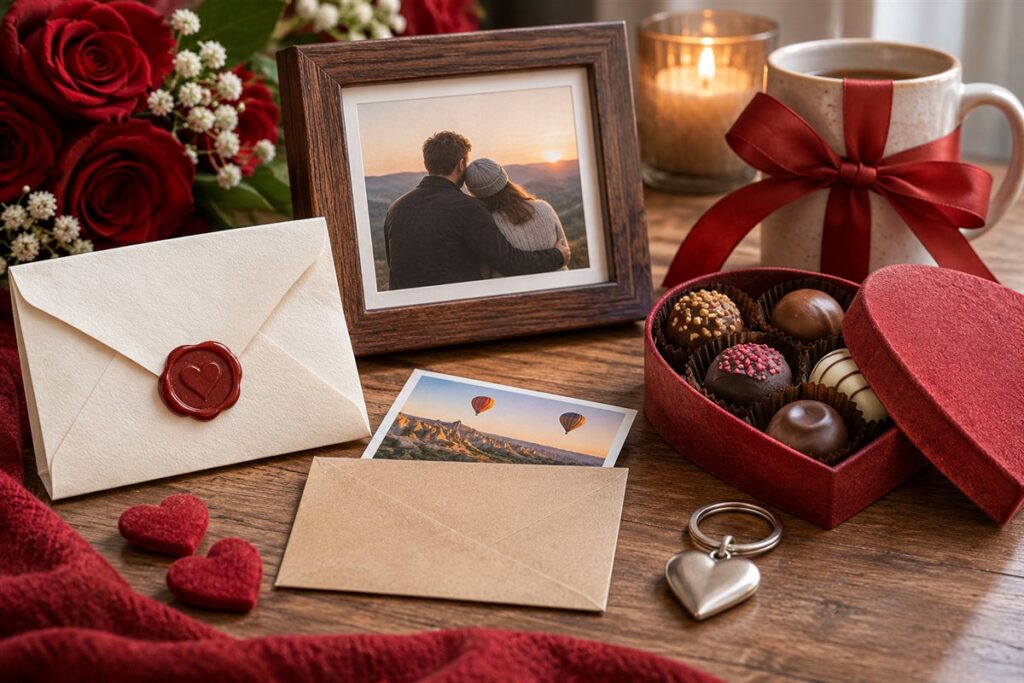
Great Valentine’s Day gifts fall into six broad categories: words, memories, experiences, edible treats, useful items and symbolic objects. Each says something different, so the right choice depends on the message you want to send. This overview helps you see the options side by side.
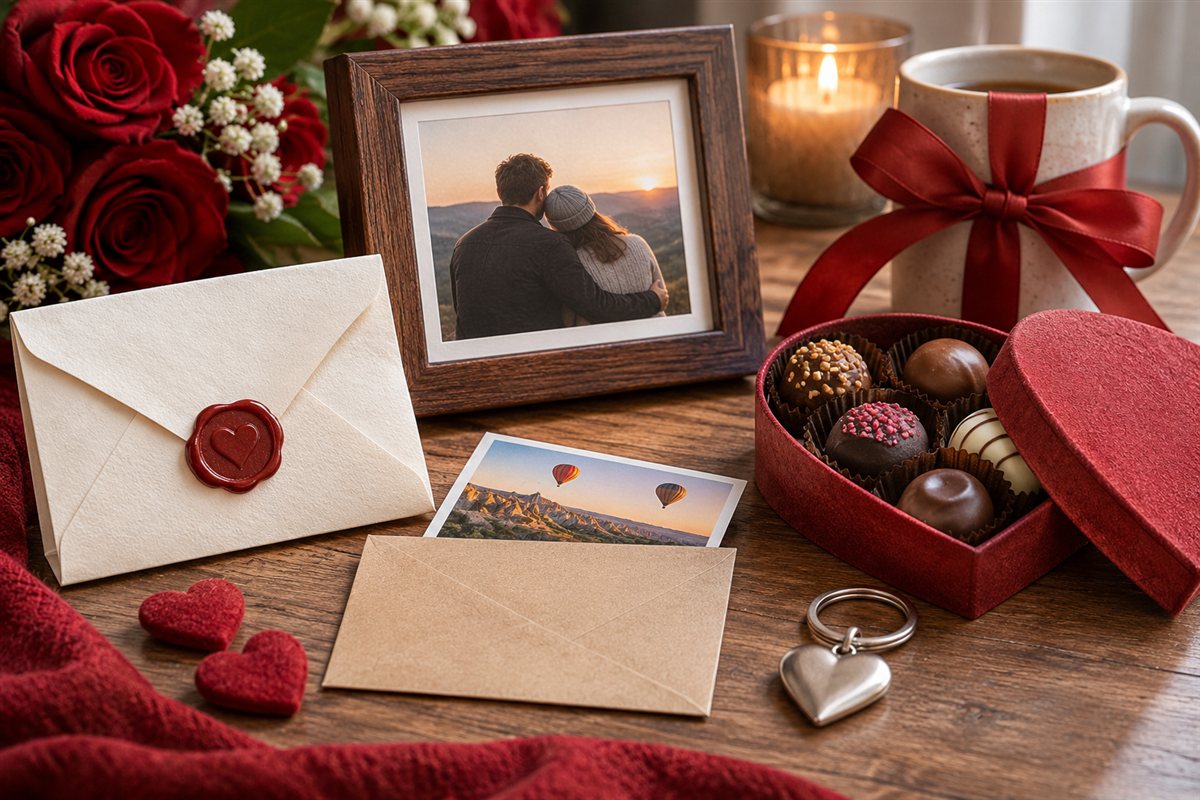
The Six Categories
| Category | What it says | Best for |
|---|---|---|
| Words | I know and value you | Almost everyone |
| Memories | We share a history | Sentimental partners |
| Experiences | Let us make new moments | Active or curious partners |
| Edible treats | I want to delight you | Food lovers |
| Useful items | I notice your daily life | Practical partners |
| Symbolic objects | This stands for us | Partners who like keepsakes |
Words
Letters, cards and short messages are the most flexible category. They suit any amount of time and any relationship. A handwritten note that mentions a specific memory is often remembered longer than an object.
Memories
This category covers photo prints, albums, framed pictures and collages. Choose images with good focus and light, and give them captions. Allow time for printing and delivery if you order them.
Experiences
- Cooking or craft classes for two.
- A day trip to somewhere new.
- Tickets to a show, a match or a screening.
- A picnic or an evening walk with a thermos of something warm.
Choosing Between Categories
- Ask what your partner talks about most: past events, future plans or daily life.
- Match the talk to a category: memories, experiences or useful items.
- Combine two categories for a fuller gift, such as words plus memories.
- Add one personal detail, whichever you choose.
Combinations That Work
- A letter with a framed photo.
- A cooked meal with a recipe card.
- A class for two with a printed invitation.
Edible Treats, Useful Items and Symbols
Edible treats work best when they are tied to a memory, such as the dessert you shared on a first outing. Useful items work when they solve a real daily need, and they feel warmer with a short note attached. Symbolic objects, such as a small keepsake from a trip, work when the meaning is clear to both of you. Whichever you choose, avoid buying something only because it looks romantic in a shop window. Ask whether it connects to your relationship, because that connection is what turns an item into a gift.
It also helps to think about storage and timing. Edible gifts need to be given soon, while framed items and albums can wait on a shelf for years.
Learning What Your Partner Values
The best gifts come from paying attention, so spend a little time observing before you shop. Think back over recent months. What did your partner mention wanting but never bought? What do they light up about when talking: food, music, a hobby, a place they have been, a person they miss? Notice what they complain about too, because a small daily annoyance can point to a thoughtful, useful gift. If your partner often mentions cold hands in the morning or a worn-out bag, a practical present shows that you listened.
It also helps to think about how they like to receive affection. Some people value spoken or written words most, others prefer time together, small gestures or physical keepsakes. If your partner always remembers dates, they may enjoy something that marks a shared memory. If they hate fuss, a quiet evening may mean more than a grand gesture.
- Check recent conversations, saved posts or lists they have shared for ideas.
- Ask a friend or family member who knows them well, without revealing your plan.
- Pay attention to what they do with gifts they have received before, such as whether they display items or use them.
- Consider their daily routine, so the gift fits into it instead of becoming clutter.
When you are unsure, choose something flexible, such as an experience with options or a gift that can be exchanged. A little knowledge combined with a personal touch beats an expensive item chosen at random.
Balancing Budget, Effort and Meaning
A gift does not need to be costly to carry weight. Think of three factors: money, time and thought, and notice that you can trade one for another. A modest budget works well when you invest effort, such as cooking a meal, writing a long letter or assembling a photo book from shared memories. If time is short, you may spend more on a ready-made item, and add meaning with a handwritten card that explains why you chose it.
Decide on a budget before you browse, and keep within it. Overspending can create stress, and some partners feel uncomfortable if a gift is far more expensive than they expected. In a new relationship, a smaller and lighter gesture usually suits better than a large one, since it avoids pressure. In a long relationship, a thoughtful gift tied to your shared history can feel more significant than something extravagant.
- Low budget, high effort: a home-cooked dinner, a playlist with a note about each song, or a day planned around their favorite things.
- Moderate budget: a framed print, a small class for two or a carefully chosen book with an inscription.
- Higher budget: a weekend away or a long-wanted item, ideally paired with something personal.
Whatever you choose, include something specific to the two of you. A detail that only your partner would recognize transforms a simple present into something memorable.
Timing, Ordering and Logistics
Many Valentine’s Day problems are logistical. Popular restaurants book up, flowers and personalized items may take time to arrive, and delivery services can be busy near the date. Start planning a few weeks in advance, and for anything custom, check the seller’s stated production and shipping times before you order. If an item might arrive late, choose express options where available or pick up in person.
Make a simple timeline. Decide on the idea early, order or reserve well ahead, and set a reminder to confirm bookings a few days before. If you plan an experience such as a class or a trip, check cancellation terms and weather contingencies. For handmade gifts, give yourself extra time in case something goes wrong, and test any recipe or craft before the day.
- Check opening hours, dress codes and parking for any venue.
- Keep receipts and gift receipts for items that might need exchanging, and ask about return policies for the item.
- Hide gifts well and plan how you will transport them without spoiling the surprise.
- Prepare a backup plan, such as a simple home dinner, if plans fall through.
Valentine’s Day is not always on a convenient day. If it falls on a workday, consider celebrating on another evening or the weekend, and tell your partner in advance, so no one is disappointed. Remember to consider allergies, dietary needs and personal comfort with crowded places when booking.
Gifts Beyond Romantic Partners
Valentine’s Day is also a chance to appreciate friends, family members and others who matter to you. The six categories still apply, but the tone changes. For a close friend, a short heartfelt message, a shared meal or a small keepsake tied to a joke between you can be ideal. For a parent or grandparent, a framed photograph, a handwritten letter or time spent together often means more than anything bought. For children, a simple card, a baked treat or a small activity feels special without being extravagant.
Long-distance relationships need creativity. Consider a package with items that represent shared memories, a letter with a few small treats, or a scheduled video call with a planned activity such as cooking the same recipe together. Choose delivery methods that suit time zones and customs rules, and check shipping times so that the gift arrives on or just before the day. A digital gift, such as a collection of photos or a recorded message, can be sent instantly if postal delivery is uncertain.
If you are single, the day can still be an opportunity to be kind to yourself and others. Treat yourself to an experience you enjoy, write to people you appreciate, or gather friends for an informal meal. Be sensitive in workplace settings, where a small, inclusive gesture such as a shared treat or kind note suits better than anything that might create awkwardness. Always consider the recipient’s feelings and boundaries, and keep the focus on kindness.
Presentation and Mistakes to Avoid
How you give a gift affects how it feels. Take a moment to wrap it neatly, or present it in a way that reflects your partner’s taste. A handwritten card, even a short one, adds warmth. Choose a calm moment, without distractions, so that your partner can enjoy the gift fully. Say a sentence about why you picked it, and let the personal meaning come through.
A few common mistakes are easy to avoid. Do not buy a gift that is really for yourself, such as an item related to your own hobby, unless your partner shares the interest. Avoid anything that implies criticism, such as self-improvement items that were not requested. Be careful with gifts that need a major commitment from your partner, such as a pet or a membership, unless you have discussed them. Do not leave gift buying until the last minute and then grab whatever is left, since rushed choices often show.
- Check sizes and preferences for clothing and accessories, or include a gift receipt.
- Avoid comparing your gift to others or to social media displays.
- Do not use a gift to make up for a larger problem in the relationship; talk about it instead.
- Keep surprises considerate of your partner’s tastes, allergies and comfort.
If something goes wrong, such as a delayed delivery, be honest and have a small backup ready, like a card or a planned walk. A relaxed, caring attitude matters far more than a perfect plan.
FAQ
Which category is the safest?
Words, followed by memories. They require little guessing about taste.
Can I mix categories?
Absolutely. Pairing two often creates a more complete gift.
What if I have no idea what my partner would like?
Think about their interests, recent comments and daily habits, or ask a close friend. If you remain unsure, choose a flexible gift such as an experience with options, plus a personal note.
Is it acceptable to ask my partner what they want?
Yes, many people appreciate honesty. You can still add a surprise element, such as how you present it or an extra personal detail.
How much should I spend?
There is no rule. Set a budget that you are comfortable with, and remember that effort and thought often matter more than cost. Agree on expectations together if it helps.
What if we do not celebrate Valentine's Day?
That is fine. A small gesture on another day, or a simple message, can still show appreciation. Talk about what feels right for both of you.
Are handmade gifts better than bought ones?
Neither is better by default. Handmade gifts show effort, while bought ones may suit practical needs. Choose what matches your skills, time and your partner's taste.
How can I make a gift feel more personal?
Add a detail only the two of you would recognize, such as a shared joke, a place you visited or an item from a favorite memory. A handwritten note also helps.
What if my gift arrives late?
Have a small backup ready, such as a card or a planned activity, and explain honestly. Give the delayed gift as soon as it arrives.
The Short Version
Choose from words, memories, experiences, treats, useful items or symbolic objects, depending on what you want to say. Combine two where possible and add a personal detail to make it yours.
Related Guides
- Romantic Valentine's Day Gift Ideas for Your Girlfriend, Her Way
- Unexpected Valentine's Day Gift Ideas for Your Girlfriend
- Valentine's Day Gift Ideas Your Partner Is Sure to Adore
- Elegant Valentine Gift Ideas for Her That Feel One of a Kind
- Layered Valentine Gift Ideas to Unwrap Slowly, Step by Step