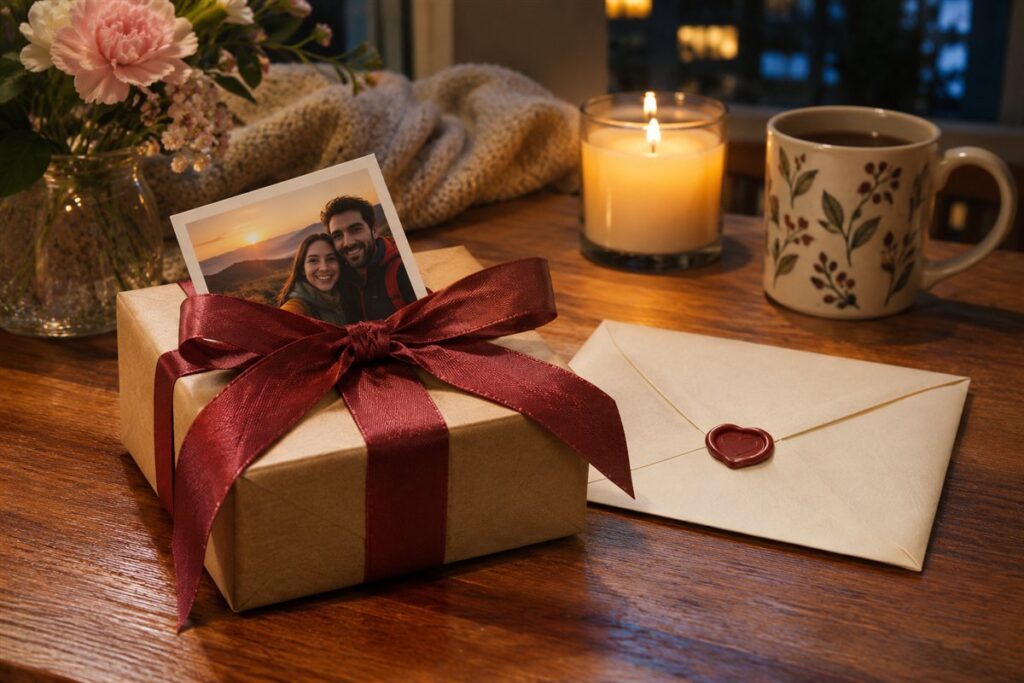
A partner adores a gift when it fits their taste, carries a clear feeling and arrives with follow-through. Trends come and go, but those three checks work every time. Use them like a filter to test any idea before you commit.
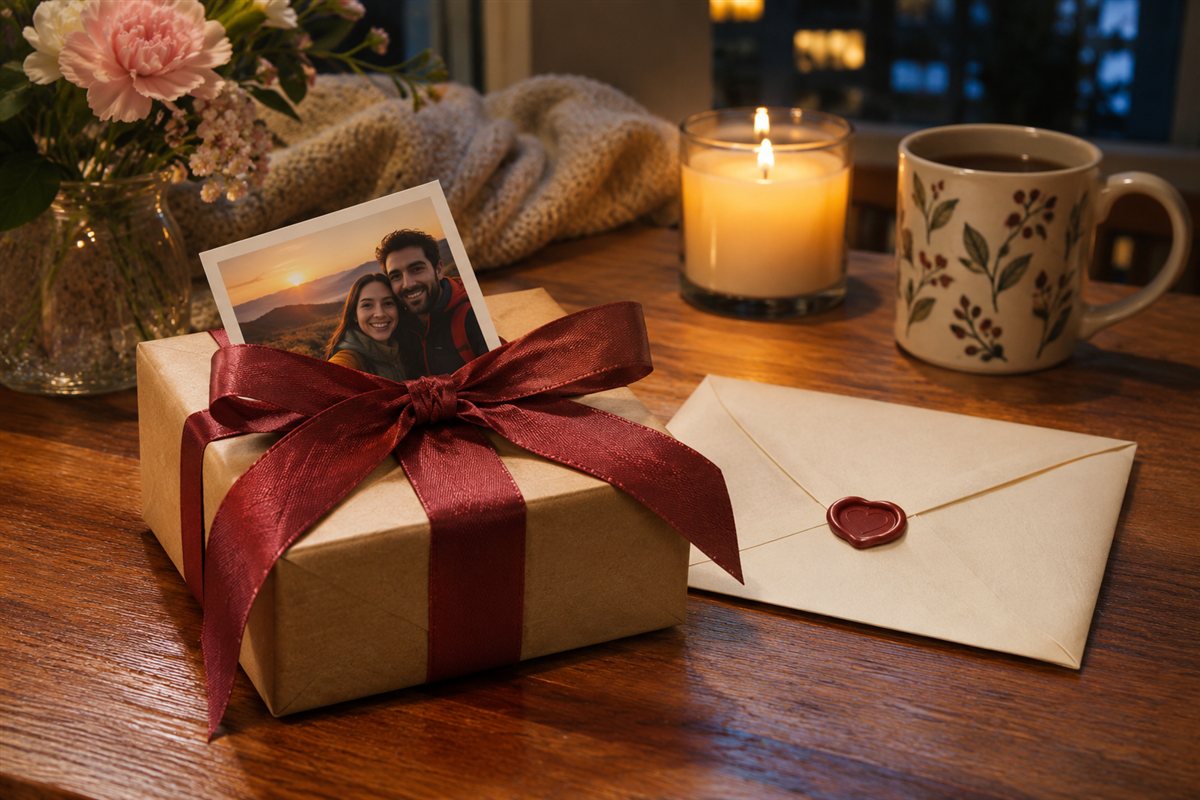
Check 1: Fit
Ask whether your partner would choose this for themselves if they saw it. If the answer is yes or probably, the fit is good. If it relies on what you like, reconsider.
- Does it match their style, colors and daily habits?
- Will they use it, display it or enjoy it soon?
- Does it respect their preferences about attention and privacy?
In this guide
Check 2: Feeling
Every gift sends an emotional message. Decide in advance which one you want.
- Appreciation: Choose something useful with a thank-you note.
- Nostalgia: Choose a photo, album or a recreated first date.
- Adventure: Choose a planned trip, class or outing.
- Comfort: Choose a cozy evening with favorite food and film.
- Playfulness: Choose a game, a scavenger hunt or a silly keepsake.
Check 3: Follow-Through
A great idea can fail if the execution slips. Think about what could go wrong and plan around it.
- Order or book early, especially anything personalized.
- Write the card in advance so you are not rushed.
- Prepare a small backup, such as a note and a favorite snack.
- Pick a calm moment to give the gift.
Ideas That Pass All Three
| Idea | Fit | Feeling | Follow-through |
|---|---|---|---|
| Framed photo of a shared trip | Suits sentimental partners | Nostalgia | Allow time for printing |
| Cooking a favorite meal | Suits home-loving partners | Comfort | Shop for ingredients early |
| Booked class for two | Suits curious partners | Adventure | Reserve ahead |
| Handwritten letter | Suits nearly everyone | Appreciation | Write a draft first |
A Worked Example
Imagine your partner loves quiet weekends, collects small souvenirs and rarely asks for anything. Fit points toward a calm, sentimental gift. Feeling points toward nostalgia. Follow-through suggests ordering a print early. The result could be a framed photograph from a weekend away, presented over a home-cooked meal with a short handwritten card. Each of the three checks is satisfied, and nothing in the plan is complicated. Run your own idea through the same questions, and adjust any part that fails before you commit.
If an idea fails one check, you can often repair it. A gift with poor fit may need a different category, while one with weak feeling may just need a better card.
Learning Their Taste Without Spoiling the Surprise
The fit check only works if you know what your partner truly likes, and that knowledge is easier to gather than most people think. You do not need to ask directly. Instead, treat the weeks before Valentine’s Day as a quiet listening period.
Notice what they mention more than once: a restaurant they wanted to try, a hobby they have been curious about, a book they started and never finished. Pay attention to what they stop to look at in shops, what they save on their phone, and what they photograph on walks. These small signals often point to a gift better than any wish list.
You can also ask indirect questions that sound like conversation. “If we had a free Saturday, what would you do?” reveals whether they lean toward adventure or comfort. “What was your best day this year?” brings up memories you can build on. Ask friends or family only if you trust them to keep the secret.
- Keep a short note on your phone with things they mention.
- Look at what they use daily and what they have said is worn out or missing.
- Notice how they respond to attention: some love public gestures, others prefer privacy.
When you have a few clues, test them against the three checks. A gift that links two or three clues, such as a favorite place and a shared memory, is far more likely to land well than one based on a guess.
Common Gift Mistakes and How to Sidestep Them
Most gift disappointments come from a handful of patterns, and knowing them helps you avoid them.
The first is choosing for yourself. A gift that you would love, but that does not match their taste, says more about you than about them. Check each idea by asking whether they would choose it if they saw it in a shop.
The second is relying on size or scale instead of meaning. A large or costly item can feel hollow if it has no link to your shared story. A small gift that refers to a specific moment usually carries more feeling.
The third is last-minute buying. Rushed gifts tend to be generic, and rushed delivery can fail. Even a simple plan made a week early improves the result.
The fourth is ignoring their comfort with attention. Some partners enjoy a surprise at a restaurant, while others find it embarrassing. Think about how they would feel in front of other people and choose the setting accordingly.
The fifth is forgetting the card. A gift without words can seem like a transaction. Even two sentences in your own handwriting add warmth.
Finally, avoid comparing your gift with what other couples post online. Public displays are only a small part of what makes a relationship feel loved, and your partner is judging the gift against your shared life, not against anyone else’s.
Adjusting the Idea to Your Relationship Stage
The same three checks apply to every couple, but the answers change with the stage of the relationship. Adjusting the scale and tone keeps the gift comfortable for both of you.
In a new relationship, keep the gesture light. A small treat, a short note and a shared activity let you show interest without placing pressure on the future. Heavy declarations or very personal items can feel too much too soon, so aim for warmth and curiosity.
For couples who have been together a few years, shared rituals work well. Think about traditions you already have, such as a favorite weekend breakfast, and give them a fresh touch. A photograph from a trip, a short memory book or a booked outing builds on what you have already shared.
For long-term partners, gifts that show you still notice small things often matter most. This might be fixing something they mentioned, planning a day around their favorite pastimes, or writing about what has changed and stayed the same since you met.
For long-distance couples, timing and delivery are the main concerns. Plan the arrival date carefully, and add something that can be shared live, such as a video call dinner with the same meal at both ends. Whatever the stage, keep the focus on being known, not on proving effort through size.
Shared Experiences Versus Objects
A common decision is whether to give something physical or an experience. Neither is better in general, and the right answer depends on your partner and your circumstances.
Objects have staying power. A framed photo, a book with a handwritten inscription or a small keepsake can sit in view and recall the moment for years. They suit partners who like to display meaningful things, and they are straightforward to plan, since you can order and wrap them in advance.
Experiences create a story. A class, a trip, a cooking evening or a long walk to a place you love gives you something to talk about afterward. They suit partners who value time together over possessions. The main risks are booking and weather, so reserve early and have an alternative.
You can also combine the two. Give a small object that points to the experience, such as a printed ticket in an envelope, or capture the experience in a photograph to frame later. This approach covers both the moment and the memory.
- Choose objects when your partner values keepsakes and a tangible reminder.
- Choose experiences when your partner prefers time together and new memories.
- Choose a combination when you are unsure, and keep each part simple.
Giving the Gift Well: Timing, Setting and Words
How you hand over the gift shapes how it is received. A thoughtful gift delivered in a rushed moment can lose some of its effect, so plan the delivery as carefully as the choice.
Pick a time when neither of you is tired or distracted. A quiet evening at home, a slow breakfast or a walk can all work. Avoid giving the gift in the middle of other tasks or while you are checking your phone. If you are going out, tell them in advance if there is a dress code or a reservation, so they feel ready.
Say something specific when you give it. Instead of “I hope you like it,” tell them why you chose it: a moment it reminds you of, or a comment they made earlier. A short spoken sentence can matter as much as the gift itself.
Let them respond at their own pace. Some people react openly, while others take time to take it in. Avoid asking whether they like it and instead share how you came up with the idea.
Afterward, keep the mood easy. A relaxed meal or a quiet evening allows the gift to be enjoyed. If something does not go to plan, such as a late delivery or a missing part, stay calm and present the idea with a smile. Your partner will remember the care more than the glitch.
Setting a Budget That Feels Right
A gift does not have to be big to be loved. Before you browse, decide how much you are comfortable spending, and stick to it. Money worries can spoil the mood, and your partner will care more about thoughtfulness than the amount. If funds are limited, plan something personal, such as a handwritten letter, a playlist of songs that matter to you both, or a home-cooked dinner. If you have more room, consider a keepsake, a short trip or a shared class.
Talk to yourself honestly about what your partner would value. Someone who loves practical things may be delighted by a tool for their hobby, while someone who treasures memories may prefer a framed photo from a favorite day. Match the gift to the person, not to what advertisements suggest.
A Gift Planning Timeline
Last-minute shopping leads to stress and generic choices. Give yourself a few weeks and break the process into steps.
- Three weeks ahead: note hints your partner has dropped, and brainstorm three ideas.
- Two weeks ahead: pick one idea, check availability and delivery times, and order or book.
- One week ahead: prepare the wrapping, card and any surprise details.
- The day before: confirm reservations and plan the schedule for the day.
- The day itself: stay relaxed and focus on enjoying time together.
Gifts That Create a Shared Memory
Experiences often last longer in memory than objects. Think about activities you both enjoy or have wanted to try: a cooking class, a picnic in a park, a hike at sunrise, a museum visit or a night at a small theater. The value lies in doing something together without distractions. Take a few photos, and later put them in a small album, so the memory stays tangible.
- A themed dinner at home with a favorite cuisine.
- A day trip to a place you have never visited.
- A evening of games, music or a movie with snacks.
Gifts That Show You Listened
The most appreciated gifts often come from small details noticed over time. Maybe your partner mentioned a book, a scarf, a coffee blend or a piece of gear. Write these down when you hear them, and use the list when the occasion arrives. A gift that matches a remark made months ago tells your partner that you pay attention. Even a modest item feels special when it clearly shows this attention.
Comparing Gift Types
| Type | Strength | Watch out for |
|---|---|---|
| Handmade | Personal and low cost | Needs time and effort |
| Experience | Creates memories | Needs planning and booking |
| Practical item | Used often | Can feel impersonal if generic |
| Keepsake | Lasting meaning | Requires knowing their taste |
| Food or treat | Easy and enjoyable | Check dietary preferences |
Presentation and Delivery
How you give the gift shapes how it feels. Take a moment to wrap it neatly, add a short note in your own words, and choose a calm moment to hand it over. Avoid giving it in a rush or while your partner is busy. Put your phone away, and be present. If the gift arrives by mail, track delivery so it does not appear before the day, or tell your partner to expect a parcel.
What to Do if Things Go Wrong
Sometimes plans fail: a reservation falls through, a parcel is late, or the gift does not fit. Stay calm and keep a sense of humor. Offer an alternative, such as a simple dinner or a walk, and promise to make up the missing piece soon. Your partner will remember how you handled the setback more than the setback itself. Check return policies when you buy, so you can exchange an item if needed.
Ideas for Long-Distance Couples
When you live far apart, effort and imagination replace physical presence. Schedule a video date with the same dinner menu on both sides, send a package with small items that fit a theme, or write letters to be opened on specific days. A shared playlist or a book you read together and discuss over calls creates a feeling of closeness. Check delivery times and customs rules well in advance, because international shipping can be slow and uncertain.
Plan a time when both of you are free from work and other tasks. A short, focused call is often more meaningful than a long, distracted one.
Gifts for Different Personalities
People respond to affection in different ways. Some value words, so a heartfelt letter works well. Some value acts of service, so taking over a chore or planning the whole evening shows care. Others value time together, quality attention or a physical keepsake. Think about how your partner usually expresses love, since they probably appreciate receiving it in the same form. Pay attention to what makes them smile most often, and build the gift around that feeling.
A Quick Matching Exercise
- If they love words, write something specific about moments you cherish.
- If they love helping, take a task off their plate for a week.
- If they love time, plan an unhurried day without screens.
- If they love objects, choose something connected to a shared memory.
Thoughtful Touches That Cost Little
Small details lift any plan. Leave a note in a coat pocket, set the table with candles, prepare their favorite drink, or play the song from your first date. These touches take little money but plenty of care. Combine two or three of them with the main gift, and the day will feel special without being over the top. Safety matters if you use candles or any heat source, so follow the maker’s instructions and never leave them unattended.
Planning a Home Date Night Step by Step
An evening at home can feel as special as a restaurant meal if you plan it with care. Choose a menu you can prepare without stress, perhaps a dish you have never cooked together. Set the table, dim the lights and put on music you both enjoy. Silence phones and keep the television off, unless you plan to watch a favorite movie afterward. Prepare as much as possible earlier in the day, so you can sit down and enjoy the time.
- Pick the menu and shop for ingredients a few days ahead.
- Clean the space and set the table in the afternoon.
- Cook together or surprise your partner with a finished meal.
- Share a dessert and a conversation about memories or plans.
- Finish with a short walk, a game or a film.
Writing a Note That Means Something
Many people find it hard to write a heartfelt message, yet a few honest sentences can matter more than an expensive present. Open with a specific memory, mention what you admire about your partner, and say what you look forward to. Avoid generic phrases from cards. Write by hand if you can, and keep it brief. Read it aloud once, to make sure it sounds like you.
Gifts to Think Twice About
Some presents carry risk. Surprise pets or large purchases require agreement between partners. Clothing in a size you are unsure about can cause awkwardness. Items that hint at a need for self-improvement can hurt feelings. Gifts that need long-term commitment, like a subscription, should match the interests of the person receiving them. When in doubt, choose something simple and sincere, and keep the receipt in case an exchange is needed.
Looking Beyond One Day
A single day is a moment in a long relationship. Small, regular gestures such as a kind message, a shared chore or a surprise treat build closeness all year. Use the occasion as a reminder to show appreciation more often. Keep a note of what delighted your partner this time, and you will have a ready guide for next year.
Learning to Give to the Partner You Actually Have
Every gift guide, including this one, generalises — and every partner is a specific person whose tastes have been quietly on display for as long as you have known them. The most reliable gift research ever conducted is the history of your own celebrations: the presents that were used until they wore out, the ones that were photographed and shared, the ones that were received with a warmth that turned out to be acting. Before browsing a single idea, spend ten minutes with that history. Write down the three best-received gifts you have given this partner and what they had in common, and the two that missed and why. The pattern you find is a more accurate guide to this year’s choice than any list, because it is drawn from the only test subject who matters.
Pay particular attention to the near-misses, which are more instructive than the triumphs. A near-miss usually means the category was right and one variable was wrong — the size, the timing, the scale, the audience. Partners rarely reject a whole territory of gifts; they reject a calibration. If last year’s experience gift failed because the date clashed with her busiest month, the lesson is scheduling, not experiences. Correcting one variable in a proven category is the highest-percentage play in all of gift-giving, and it is available only to people who review their own record honestly.
The Partner Whose Taste Keeps Changing
Some partners reinvent their interests with genuine enthusiasm every year or two, which makes last year’s research feel obsolete. For them, the stable facts are not interests but dispositions: whether they prefer objects or experiences, surprises or consultations, one significant gift or a constellation of small ones, public celebration or private. Those dispositions change slowly even when hobbies change quickly, and a gift matched to the disposition but aimed at the current interest will land even in a year of reinvention. When in doubt, ask about the interest and surprise with the disposition — the reverse of the usual error, which is to surprise with the interest and blunder into the wrong format entirely.
Budget Conversations That Protect the Gift
Money is the least romantic part of Valentine’s Day and the part most capable of ruining it, so it deserves the dignity of being handled plainly. A gift that creates financial anxiety — for the giver who overspent in secret, or for the receiver who suspects it — carries that anxiety into the memory of the day. Couples who talk, even briefly, about the scale of the occasion give each other a gift before the gifts: freedom from guessing wrong in either direction. The conversation need not fix a figure; it needs only to agree the territory, so that a modest gift is received as chosen rather than as evidence, and a generous one as sustainable rather than alarming.
Within any budget, the allocation matters more than the amount. Spend on the element she will actually keep or remember: the object itself rather than its elaborate packaging, the experience rather than the merchandise around it, the card’s words rather than the card’s price. The one exception is quality in things meant to be used daily, where a small step up in grade is felt hundreds of times and is almost never regretted. A Valentine’s budget spent by those two rules — memory over wrapping, grade over garnish — performs above its size in every price territory.
When One Partner Earns Much More Than the Other
Income differences tempt couples into matching games that serve nobody. The higher earner’s lavish gift can make a thoughtful modest gift feel inadequate by comparison, which punishes exactly the attentiveness the day exists to honour. The mature arrangement, reached by many couples and worth reaching early, is to let each gift be judged on its own evidence of thought — the noticing it proves, the fit it achieves — and to keep the celebration itself shared and equal: the meal, the time, the attention belong to both. If you are the higher earner, generosity with the shared celebration and restraint in competitive display is the combination most likely to make your partner’s gift shine rather than shrink.
The Day Itself: Choreography for Two People
A gift is an event as well as an object, and its choreography deserves the same thought as its selection. Consider the order of the day: a small thing in the morning to open the occasion, the main gift when there is time to receive it properly, and the evening kept for each other rather than for further production. Consider also what to remove: the phone face-down, the work conversation postponed, the television unwatched. The scarcest gift in modern relationships is undivided attention, and an ordinary gift given inside two hours of it will be remembered longer than an extraordinary one given inside a distracted day.
If you exchange gifts, agree — explicitly, cheerfully — whether you will do so together or in sequence, because the unplanned version reliably produces one partner watching the other’s triumph with a sinking feeling about their own offering. Sequence has its own pleasure when it is chosen: one person’s moment in the morning, the other’s in the evening, each given the stage in turn. What matters is that nobody’s gift becomes the other’s warm-up act by accident.
Photographing the Moment Without Stealing It
A word about recording the day. One photograph of the table, the flowers, the two of you — taken and then put away — preserves the occasion without colonising it. The partner who experiences the whole celebration through a screen, composing posts while the moment happens beside them, has given a gift and withheld the presence that was its point. If sharing matters to you both, share later, together, from the calm of the following day. The memory will be better for having been lived first and curated second, and the photographs will show two people who were actually there.
After Valentine’s Day: The Part Nobody Plans
The fortnight after the day quietly decides what the day meant. A gift that is used, worn, booked, planted or displayed becomes part of the relationship’s furniture; one that vanishes into storage becomes a small, kind lie both partners agree not to examine. As the giver, you can help yours land: ask about it once, warmly, and then let it live its life without surveillance. As the receiver in your turn, understand that your visible enjoyment of a gift is itself a gift — the one that teaches your partner what to dare next year.
And keep the record. A line in a notebook or a note on a phone — what was given, what delighted, what to remember — takes two minutes in February and saves the annual reinvention that exhausts so many couples into buying the same safe gift forever. The partners who seem to have a genius for this are usually just the ones who wrote it down. Let this year’s celebration, whatever form it takes, be the first entry in that record, and next year’s ideas will begin, as the best ones always do, from evidence rather than from panic.
Three Couples, Three Right Answers
Abstract advice becomes trustworthy when it survives contact with particular cases, so consider three couples at the same occasion with the same sincerity and entirely different right answers. The first couple, new parents running on broken sleep, exchange no objects at all: the gift is a lie-in each, a meal cooked by someone else, and an hour in the evening that belongs to them — and both describe it afterwards as the best Valentine’s Day they have had, because it answered the year’s actual question, which was rest. The second couple, together a decade and financially comfortable, have everything they need; their right answer is novelty — a class neither would have booked alone, taken together, badly and with much laughter — because their year’s question was routine. The third couple, separated by work for the season, exchange letters and a shared book read in parallel across the distance, with the final chapter saved to be read on the same night; their question was closeness, and paper answered it better than parcels could.
The lesson is not that gifts do not matter. It is that the same three questions produce different gifts in different lives: what does this person need more of, what form can they best receive it in, and what will prove the thought was paid in advance? Run those questions honestly and the ideas in this guide sort themselves into a shortlist almost without effort — and the shortlist will be yours, fitted to your year, rather than borrowed from someone else’s celebration.
The Courage to Give the Unfashionable Gift
One last encouragement. The gift your research points to may be unfashionable — practical where the season demands romance, small where it demands display, quiet where it demands theatre. Give it anyway, if the evidence is yours. The opinions of the season are formed by people who do not know your partner; your knowledge was gathered across years of breakfasts and hard weeks and ordinary Tuesdays, and it outranks the consensus of every catalogue ever printed. The partners who are sure to adore their gifts, in the phrase this guide began with, are not the ones whose givers spent the most or followed the fashion most faithfully. They are the ones whose givers trusted what they knew — and knowing, in the end, is the entire subject of which gift-giving is only the annual examination.
The Ideas Behind the Ideas: A Short Theory of the Day
It may help, finally, to say plainly what a Valentine’s gift is for, because givers who know the purpose choose better than givers who only know the custom. The gift is a message with three sentences in it. The first says: I know who you are, in particulars that could belong to no one else. The second says: your pleasures matter to me enough to command my time before they commanded my money. The third says: I intend to go on knowing you, and this is a specimen of the attention you can expect. Every successful idea in this guide is those three sentences wearing different clothes — the experience, the object, the letter, the rescued photograph — and every disappointing gift is one of the sentences gone missing: generic, or careless, or perfunctory. When you are choosing and the options blur, ask which of them speaks all three sentences most clearly, and the blur resolves.
Notice, too, what the theory implies about cost. None of the three sentences is denominated in currency. The first is paid in observation, the second in time, the third in consistency — which is why the day’s triumphs are so often inexpensive and its expensive failures so common. Money can amplify a gift that already speaks; it cannot substitute for the speaking. Spend it last, on the amplifier, after the message is written.
When You Are the Partner Reading This in Secret
A word for the partner who found this guide while researching the other — the one who will be receiving as well as giving, and who may be quietly auditing their own hopes. Lower the audit’s stakes in advance. Decide, before the day, to receive whatever arrives as evidence of intention rather than as a verdict on the relationship, because the day is a noisy instrument and good love has had bad Valentine’s Days in every long relationship on record. And if you are hoping for something specific, consider the radical kindness of a clue, dropped where it can be found: partners are not mind-readers, and a wish communicated is not a wish cheapened. The couples who adore their gifts, year after year, are usually the ones where both people quietly help the giving succeed — which is, when you look at it, the most romantic arrangement of all.
Beginning Again, Deliberately
The day after Valentine’s Day is the least romantic date in the calendar and the most useful one in this guide. It is when the record should be written, the first clue of next year noticed, and the small resolution made that next February will be met from evidence rather than from emergency. None of that requires ceremony; it requires the same thing the whole guide has asked for, which is attention, practised as a habit rather than summoned as an event. Begin it tomorrow, with one line in a notebook. Your partner, next year, opening a gift that could only have been chosen by someone who knows them, will be holding the result — and will have no idea it started the morning after, with a pencil, which is exactly how the best gifts always start.
The Gift Audit You Can Do in One Evening
Here is a practical exercise that gathers the whole guide into one sitting. Take the last five gifts you gave this partner — occasions of any kind — and lay them out in memory in a row. For each, answer three questions honestly. Did it prove particular knowledge, or could it have been given to anyone? Did it answer a need or a pleasure that was actually present that year, or one you assumed? And is it still present in their life — used, kept, remembered — or has it quietly vanished? Score nothing; simply look at the row. Most givers find a pattern within two minutes: a strength to build on and one recurring leak, usually the same leak this guide has circled repeatedly — the generic choice made under time pressure. Name the leak and you have next year’s whole strategy, which is not to become a different giver but to remove the one circumstance in which your giving fails.
Then do the same exercise in the other direction, on the gifts you have received, and let it teach you mercy. Your partner’s row will have its own pattern, its own leak, its own years when life was loud and the gift was thin. Seeing both rows together converts gift-giving from a scoreboard into what it should be: two people, of good will and imperfect information, doing a kind thing for each other with varying success across the years. That view makes the giving braver and the receiving kinder, and a couple that holds it will still be exchanging gifts they adore long after the catalogues have changed beyond recognition.
A Note Kept for the Hard Years
Every long relationship contains years in which Valentine’s Day arrives during grief, illness, exhaustion or trouble, and the ordinary grammar of the day — the dinner, the flowers, the performance of romance — does not fit. In those years the adored gift is the one that acknowledges the year’s truth at the right scale: small, useful, undemanding, accompanied by words that do not insist on cheerfulness. Couples sometimes fear that scaling down admits defeat. It admits nothing but reality, and a gift pitched exactly to a hard year’s capacity can be remembered with more gratitude than any peacetime triumph, because it proved the attention worked under load. Keep this paragraph for such a year. The method does not change; only the volume does, and knowing that in advance is a form of care for a future self you cannot yet see.
The Simplest Possible Summary
If everything in this guide had to fit on the card it so often recommends, it would say this. Know the person in their particulars. Notice what their year actually needs. Give the thing — object, experience, time, words — that answers it, at a scale your life can honestly afford. Attach the evidence: the sentence that proves the noticing. And begin again the next morning, because adoration is not an annual performance but a habit of attention with an annual celebration. A partner whose gifts are built that way does not merely feel adored on one day in February. They feel known across the whole year, which is what the day was invented to say.
Ideas Sorted by the Life You Are Living This Year
Gift advice floats above circumstances; good giving lands in them. In a year of new parenthood, the gift that adores is the one that gives rest, food, time and evidence that the two of you still exist inside the beautiful emergency — small, close, undemanding. In a year of moving house or changing work, give stability and pleasure that requires no assembly: the ritual kept, the favourite thing found again among the boxes, the evening that feels like the life you are moving toward. In a year of illness or difficulty, scale everything to capacity and let the gift be care made visible, without performance or pressure to be cheered. In a year of plenty and ease, by contrast, you have the rare luxury of ambition: the bigger plan, the longer trip, the gesture that needs the calendar’s cooperation. Matching the gift to the year’s weather is not a limitation on romance. It is romance, paying attention.
The same principle sorts the ideas in this guide by energy rather than by price. A partner running on empty needs receiving, not activities. A partner restless and under-used needs invitation and adventure. Ask, before choosing, the simplest diagnostic question in this entire guide: what does this person most need more of right now — rest, delight, novelty, reassurance, usefulness, time? Every strong gift is an answer to one of those, and every disappointing one is usually an answer to a question nobody was asking.
Gifts for Partners Who Are Hard to Read
Some partners give few signals, through temperament rather than secrecy, and they deserve a method rather than a mystery. With a quiet partner, widen the observation window: their pleasures are real but less announced, visible in what they return to, lend, repair and keep rather than in what they request. Ask their closest friend one careful question. Offer choices inside the gift itself — the voucher for the experience with three dates held open, the first volume with the promise of the series — so the gift contains its own correction mechanism. And accept that with such partners, the written words carry even more weight, because a person who says little tends to keep what is said to them. Write the card as if it will be reread for years. It will be.
A Last Word on Adoration as a Practice
The title of this guide promises gifts a partner is sure to adore, and it is worth ending by saying what adoration actually consists of, because it is not a price point. A partner feels adored when the gift proves three things: that they are known in their particulars, that their pleasures are taken seriously, and that someone thought about them when there was no deadline forcing the thought. The third is the rarest and the most powerful, which is why the gifts bought in October from a passing remark outrank the gifts bought in February at any cost. Let this year’s celebration, however modest or grand, be evidence of attention paid across the year — and then, the day after, begin next year’s evidence with the first small note. That is the whole secret, and it was never really about the gifts.
FAQ
How do I know what my partner would adore?
Listen for repeated comments, watch what they save or photograph, and ask indirect questions about favorite memories.
Does a gift need to be new or trendy?
No. A well-chosen classic often beats something merely fashionable.
What if my partner says they do not want anything?
Take it seriously but not literally. A small, low-pressure gesture such as a note, a favorite meal or a short outing respects their wish while still showing you thought of them.
How do I plan a gift when we live apart?
Pick something that can arrive on time and can be shared remotely, such as a package plus a video call dinner. Check delivery estimates early and add a few days of margin.
Is it okay to give a practical gift?
Yes, if it fits their taste and you attach a personal note. A practical item that solves a real annoyance can feel very thoughtful.
Should we exchange gifts at the same time?
It depends on your habits. Agree beforehand if one of you prefers a quiet exchange, and avoid putting either person on the spot.
What if I forget or run late?
Be honest and offer a simple plan, such as a handwritten note now and a gift later. A calm explanation usually works better than an elaborate excuse.
How do I include a photo without it feeling forced?
Choose a picture connected to a real memory and add a short caption in your own words. Avoid heavy editing or cropping so the image looks natural.
Can a gift be too personal?
It can if it moves faster than the relationship. Match the depth of the gesture to where you both are, and keep it warm rather than dramatic.
The Short Version
Filter ideas by fit, feeling and follow-through. If a gift matches your partner, sends the emotion you intend and is planned with care, they are very likely to adore it.
Related Guides
- Romantic Valentine's Day Gift Ideas for Your Girlfriend, Her Way
- Unexpected Valentine's Day Gift Ideas for Your Girlfriend
- Great Valentine's Day Gift Ideas by Category: A Simple Overview
- Elegant Valentine Gift Ideas for Her That Feel One of a Kind
- Layered Valentine Gift Ideas to Unwrap Slowly, Step by Step
