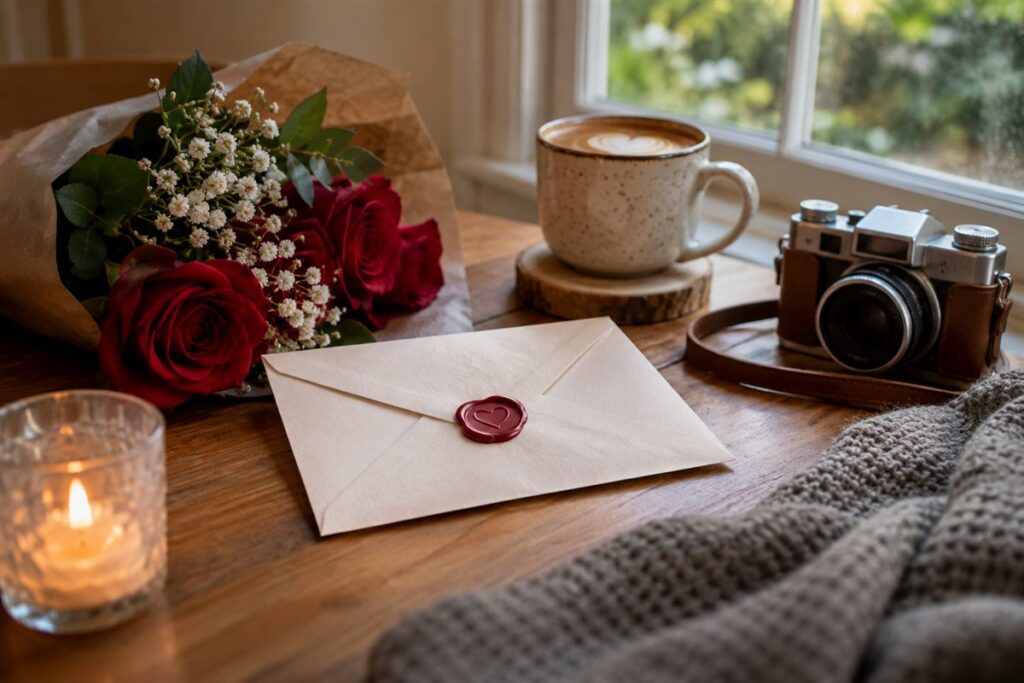
The most romantic gift for any girlfriend is one that reflects her as an individual, not a stereotype. Where she comes from and how she was raised may shape her tastes, but only she can tell you how. Ask, listen and build the gift from what you learn.
Learn Her Tastes Before You Choose
Begin with simple, friendly questions during ordinary conversation. Avoid assumptions and treat her answers as the guide.
- Ask about favorite places, foods, songs and films.
- Notice what she photographs or saves online.
- Learn which traditions and celebrations matter most to her and her family, and why.
- Pay attention to how she treats gifts. Does she keep notes, display photos or prefer experiences?
In this guide
Categories That Rarely Miss
- A handwritten letter: Personal in any culture or language. If she speaks another language at home, a few words in it, spelled with care, may mean a lot.
- A photo keepsake: A framed picture from a day you both loved or a small album of favorite moments.
- A shared meal: Cook or book something connected to a favorite dish, and ask her to tell you its story.
- A day out: A garden, a market, a museum or a scenic drive, planned around what she enjoys.
Respecting Family and Context
Some people share their relationship openly with relatives, and others keep it private. Take your cue from her. If she prefers discretion, choose a gift that is easy to enjoy on her own terms, such as a letter or a small keepsake, rather than something that draws attention. If she is comfortable, including family-friendly touches, such as a thank-you note to someone who has welcomed you, can be a warm addition.
Presentation Ideas
- Choose colors she loves for wrapping.
- Add a pressed flower or a small ribbon.
- Write the date and place on the back of any photo.
- Deliver the gift in a calm, private moment.
Finally, remember that cultural background is only one piece of who a person is. Her profession, friends, humor and quiet habits shape her tastes just as much. Treat every conversation as a chance to learn something new, and let that learning guide the gift rather than any general idea about a group of people.
Experience Gifts That Create a Memory
For many couples, a shared experience lasts longer than an object. The goal is not to impress with cost but to show that you understand what she enjoys. Start with her interests and build the plan around them. If she loves food, plan a cooking evening at home or a visit to a restaurant she has mentioned. If she likes nature, plan a sunrise walk, a picnic or a visit to a botanical garden. If she enjoys art or music, look for a small exhibition, a performance or a class you can attend together.
Planning tips that make an experience feel thoughtful:
- Choose a time that suits her schedule, avoiding days when she has exams, deadlines or family commitments.
- Check opening hours, booking requirements and travel time in advance.
- Have a backup plan in case of rain or crowds, since popular places are busy around Valentine’s Day.
- Include small details she will notice, such as her favorite snack or a playlist of songs you both like.
- Keep the pace relaxed and leave time to talk.
Be mindful of practical factors such as safety, transport and what is comfortable for her. If she prefers a quieter day, a simple evening of her favorite film and food can be just as romantic as an outing. Ask her, or ask a close friend, what kind of day she would enjoy, and be flexible if her answer differs from what you imagined.
Handmade and Personal Gifts
Handmade gifts show effort and attention, and they do not need to be elaborate. A small project done with care often means more than something bought in a hurry. Think about what you can do well, and keep the result simple and neat.
- A scrapbook or memory jar: collect tickets, notes, photos and short written memories from your time together.
- A playlist or recorded message: assemble songs that mark moments in your relationship, and add a short spoken note.
- A hand-illustrated card or poem: even a few honest lines in your own words can be touching.
- A “reasons I appreciate you” collection: write small notes and tie them in a bundle or place them in a box.
- A framed print: choose a photo she loves and print it on good paper in a suitable frame.
Presentation adds to the effect. Use paper, ribbon or a box in colors she likes, and write a short message by hand. Check spelling, dates and names, particularly if you write in a language that is not your first. If you are not confident in a craft, ask a friend to help or keep the design simple. The point is sincerity, and a modest, clean result is better than an ambitious one that looks rushed.
Practical Gifts She Will Use
Some people prefer gifts that fit into daily life. If she has mentioned something she needs or wants, such as a good notebook, a travel mug, headphones, a book by an author she likes or a piece of gear for a hobby, giving it shows you listen. Practical does not mean unromantic when you choose with care and add a personal note.
Questions to ask before buying:
- Has she mentioned wanting this, or am I guessing?
- Does it fit her style, size and preferences, such as colors, materials and scents?
- Is it something she would be happy to receive from me at this stage of our relationship?
- Can she return or exchange it if it is not quite right?
- Does it suit her routine, including work, study and travel?
Be cautious with items that depend on exact size or personal taste, such as clothing, jewelry and perfumes. If you choose them, include a gift receipt. Avoid gifts that suggest she should change her appearance or habits. Choose quality over quantity, and ignore advertisements that insist on a particular type of gift. A thoughtfully chosen small item with a short message usually beats a large expensive one chosen without attention.
Setting a Budget and Respecting Boundaries
You do not need to spend a large amount to show affection, and overspending can create pressure or discomfort for both of you. Decide on a comfortable amount that fits your finances and the stage of your relationship. A gift much bigger than she expects can make her feel awkward, especially if she cannot reciprocate in the same way. Talk openly if you both prefer to keep things simple or skip gifts altogether.
Respect her boundaries in other ways too:
- Keep the gesture private if she prefers not to share the relationship widely.
- Avoid public surprises that might embarrass her, unless you know she would enjoy them.
- Check that your plans do not conflict with family, religious or cultural events she cares about.
- Do not pressure her to respond in a particular way or to give something in return.
- Listen if she says a gift is too much, and accept it gracefully.
If you are in a long-distance relationship, consider options that can be delivered or shared online, such as a letter sent in advance, a video call dinner where you both eat the same dish, or a package timed to arrive on the day. Check delivery times and any customs or shipping rules so that the gift arrives when planned.
A Calm Last-Minute Plan
If Valentine’s Day is close and you have not prepared, do not panic. A short, sincere plan can still work. Spend a few minutes thinking about what she has mentioned lately, then choose one idea you can complete well in a day or two.
- Write a handwritten letter that names specific moments and qualities you value in her.
- Print a favorite photo at a local shop and put it in a simple frame or card.
- Cook or order her favorite meal and set up a quiet table at home.
- Buy a small item connected to an inside joke or a shared memory.
- Plan a short walk or visit to a place that matters to the two of you.
Avoid the temptation to grab whatever is displayed at the shop entrance. Generic items can feel impersonal, while even a small, specific gesture can feel meaningful. Be on time, be present and put your phone away. Whatever you give, say in your own words why you chose it. Honest attention, patience and a warm tone matter more than any object, and they are things you can offer on any day of the year.
Gifts by Personality Type
The same present can delight one person and leave another cold, so thinking in terms of personality makes your choice much more reliable. Rather than beginning with a product, begin with her. Watch how she spends free time, what she lingers over in shops, what she mentions with a smile, and what she quietly complains about. Those small clues point toward a gift that feels personal.
The creative one
If she paints, writes, crafts, bakes or plays music, support that side of her. A good sketchbook, a set of quality pens, a beautiful notebook, a class she has wanted to join or a simple tool that makes her hobby easier will say that you notice what she loves. Pair it with a handwritten note about why you admire her talent.
The homebody
For someone who loves a comfortable evening, think of soft blankets, scented candles, a cosy reading corner, a favourite snack box or a film night arranged with care. A gift that improves her time at home shows thoughtfulness.
The traveller
A small travel organiser, a luggage tag with her name, a framed map of a place she wants to visit, or a plan for a short trip together all suit someone who loves exploring.
The practical one
Some people prefer useful things. A well made bag, a good umbrella, a quality water bottle or a gadget that solves a daily annoyance can be romantic when it clearly came from attention to her life.
The sentimental one
Photo albums, a framed picture from a meaningful day, a playlist of songs that remind you of her, or a box of small notes for her to open over time will speak to a sentimental heart.
Writing a Message That Carries the Gift
A gift may be forgotten, but words stay. Write a few honest sentences in a card or letter. Mention a specific memory, such as a day when she made you laugh, or a quality you admire. Avoid generic phrases that could apply to anyone. Keep the tone natural and warm, in your own voice. If writing feels difficult, begin with simple statements: what you appreciate, what you look forward to, and what you hope for the coming year. A short message that is sincere beats a long one that sounds copied.
- Use her name and a detail only you would know.
- Be kind and positive, without pressure.
- Write by hand if you can, since it feels personal.
- Keep it to a size that fits the card neatly.
Planning the Day Itself
A gift is part of an experience, so plan the day with care. Think about her schedule, her energy and her preferences. Some people enjoy a quiet dinner, others prefer a daytime outing, and some would like to spend the day at home. If her family expects to see her, respect that and fit your plans around it. Booking ahead for popular places avoids disappointment, and having a backup option removes stress if plans change.
| Style of day | Ideas |
|---|---|
| Quiet and cosy | Home cooked meal, music, a film she loves, small gifts through the evening |
| Outdoor and active | Walk in a park, picnic, visit to a viewpoint, photographs together |
| Cultural | Museum, craft market, local performance, a food tour |
| Simple and sweet | Lunch at a favourite cafe and a short stroll |
Common Mistakes to Avoid
Choosing something that suits you more than her
A gift should reflect her tastes. If you notice that you are drawn to it for yourself, think again.
Leaving everything to the last minute
Rushing leads to generic choices. Begin thinking a few weeks before, and note ideas as they come to you.
Overspending to impress
Meaningful gifts do not need to be costly. A modest present with real thought can mean more than an extravagant one that feels forced.
Ignoring her comfort
If she dislikes public attention, avoid grand gestures in front of others. Choose private, gentle ways to show affection.
Forgetting practicalities
Think about delivery times, sizes and allergies, especially for flowers, food and cosmetics. Confirm details with the seller and read the listing carefully.
Gifts That Grow Over Time
Some presents become more valuable as the months pass. A subscription to something she enjoys, a plant she can nurture, a journal you both write in, or a jar for saving memories can keep the day alive long after February. Choose a gift that invites an ongoing story, and you will remain in her thoughts throughout the year.
Wrapping and Delivery Details
Presentation shapes the first moment. Use wrapping that suits her taste, whether that is bright, simple or traditional. Add a dried flower, a ribbon or a handwritten tag. If sending a gift to her home, consider the timing so that it arrives when she is available, and check with her family if you are unsure. Surprise is lovely, but not at the cost of confusion or discomfort.
Glossary of Gift Types
- Experience gift: an activity or outing, not a physical object.
- Keepsake: an item meant to be treasured as a memory.
- Personalised gift: an item customised with a name, date or message.
- Handmade gift: something you create yourself.
- Token gift: a small present that carries a larger sentiment.
Final Checklist
- Think about her interests and personality.
- Set a comfortable budget.
- Choose a gift and a sincere message.
- Plan the day with her comfort in mind.
- Check delivery, sizes and timing.
- Be present and relaxed on the day.
Care and attention are what she will remember most.
Gifts That Fit Different Stages of a Relationship
How long you have been together should guide the scale and tone of your gift. In the early months, a small, thoughtful present feels warm without creating pressure. A favourite sweet, a book you think she will love, a handwritten note, or a small plant says that you are paying attention. Larger gestures might feel heavy if the relationship is still new, and she may feel unsure how to respond.
For a relationship of a year or two, you have shared stories to draw on. Frame a picture from a trip, make a small album, or plan a day that revisits the place where you met. After many years together, the best gifts often acknowledge your shared history while looking forward, such as a plan for a trip, a joint project or a ritual you can repeat each year.
- New relationship: small, warm and low pressure.
- Growing relationship: personal touches drawn from shared experiences.
- Long relationship: gifts that honour history and promise future memories.
Honouring Culture and Family Context Gracefully
In many families, relationships are seen within a wider circle of relatives and community, and attitudes toward public displays of affection differ. Listen to what she tells you about her family and about her own comfort. Choose gestures that she can enjoy without worry, such as a gift she can keep privately, a meal at a quiet place, or a message sent at the right time. If you are unsure about customs, ask her gently and with respect, rather than guessing. Showing that you care about her context is itself a loving act.
Thoughtful Touches That Cost Almost Nothing
Some of the most memorable gestures are small. Write three reasons you are grateful on separate slips of paper and tuck them into a jar. Record a short voice message. Cook her favourite dish. Leave a note in a book she is reading. Prepare a playlist and share it. Plan a walk at sunset and bring a thermos of her favourite drink. These ideas take effort and attention, not money, and they show that you know her.
Keeping the Spirit After the Day
Valentine’s Day is a single day, but affection lives in daily life. Treat the occasion as a reminder to express care throughout the year. Notice small things she does, thank her often, and keep making time for conversations without screens. If she loved the gift, ask what she enjoyed about it, and use that knowledge for future occasions. The point is to build a habit of attention, which is the real romance.
Learning Her World: Conversations That Guide the Gift
The best research for this gift is not observation from a distance but conversation with intent. Ask open questions in ordinary moments — about the food she grew up with, the festivals her family marks, the songs that mean home to her, the way gifts are given where she comes from — and then listen past the first answer. People’s real preferences live in the second and third sentences: the dish she names and then describes, the tradition she mentions and then laughs about, the celebration she downplays and then details. A partner who collects those details across months never faces a gift occasion empty-handed.
Ask about receiving, not just about things. Some people feel loved through objects kept and displayed; others through time, food, words or help. Her answers — and her behaviour with past gifts — tell you which register to give in. Notice what she has kept, what she photographs, what she tells friends about. That evidence outranks any generalisation about culture, gender or romance, because it is hers. The gift that results may look simple from outside; its accuracy is what will make it land.
- Ask open questions about her foods, festivals, songs and family customs.
- Listen for the second and third sentences, where real preferences live.
- Learn her register — objects, time, food, words or help — from evidence.
- Let what she keeps and photographs correct every assumption.
Share your own world in return. Explaining how your family marks occasions, what a gift means in your house, and what you hope for the two of you turns research into exchange. Couples from different backgrounds build their own small culture over time, and gift occasions are where that shared culture gets designed — deliberately, kindly, and with both inheritances welcome at the table.
Food as a Gift: Cooking, Booking and Meaning
A meal is the safest cross-cultural gift because it is an experience before it is an object, and it can be tuned precisely to her. Cooking a dish connected to her home — attempted humbly, seasoned by her advice — says more about respect than any purchased luxury, provided the attempt is offered as tribute rather than performance. Ask her to teach you, or cook alongside her, and the gift becomes an afternoon together with a meal at the end of it, which is two gifts wearing one apron.
Booking works when cooking is beyond the day’s reach: choose the restaurant she has mentioned, the cuisine she misses, the place she pointed out in passing. The research is the romance — a table chosen from her sentences, not from a rankings page. If her family marks the occasion with particular foods or customs, ask whether she would like any of them honoured in your plan; some will matter deeply, others she may happily leave behind, and only she knows which are which.
- Cook a dish from her world humbly, ideally with her guidance.
- Book from her mentions, not from rankings or habit.
- Ask which family customs she wants honoured, and which to leave.
- Treat the shared meal as time together, not as catering.
Presentation at the table carries meaning too: the effort to learn a greeting or a toast in her language, spelled and pronounced with care, the table set as her family might set it or as yours does — small signals that her world is welcome in yours. Get the details right by asking, not guessing, and laugh at your own mistakes in pronunciation before she has to. Humility, offered warmly, is itself a romantic gift in any culture.
Navigating Family, Faith and Festivals With Respect
Valentine’s Day sits inside a larger calendar, and her family’s calendar may hold festivals, fasts or observances that change what a good gift looks like this year. A celebration that clashes with a solemn observance, food that conflicts with a fast, or a public gesture in a season her family keeps quietly — each can turn a kind gift tone-deaf. The remedy is never research on the internet about her background in general; it is one question to her, asked in good time: is there anything about this time of year I should know? Her answer calibrates everything.
Meeting family, where that is part of her life, is a gift context of its own. Small courtesies — learning how elders are greeted, bringing something appropriate for the house, dressing with the occasion in mind — communicate the respect that romantic gifts alone cannot. If she prefers the relationship to stay private for now, respect that completely and design the gift for the world as it is, not as you might wish it. Discretion, chosen for her comfort, is among the most romantic positions a partner can take.
- Ask her directly about observances and seasons that affect the day.
- Learn greetings and courtesies before any family occasion.
- Respect privacy preferences fully; discretion is a form of care.
- Never substitute general research about her background for her own answers.
Where faith shapes her life, its place in the gift is hers to define. Some partners cherish a gift that acknowledges their practice; others keep that part of life separate from romance. The question is not what her tradition says in books but what she says in conversation, and the asking itself — done early, without pressure — demonstrates the attentiveness the whole occasion exists to express.
Long-Distance and Across-Time-Zone Romance
Distance changes the mechanics, not the method. The gift still begins from her specifics; it simply travels differently. A letter that arrives as photographs of your handwriting, a meal delivered to her door at her evening hour, a video call protected like a reservation, a small parcel posted early enough to survive the postal system’s moods — each is the local gift, translated. Time zones demand one act of care above others: schedule around her day, not yours, and say the time in her zone when you propose it, so the planning itself shows whose convenience you privileged.
Coordinate one surprise that requires local knowledge: flowers from a shop near her, a delivery from the bakery she loves, help recruited from a friend of hers if you have been introduced. Local execution with your intent behind it collapses distance better than expensive shipping of objects from your own city. And name the next in-person plan with a date if one exists; a distant partner measures gifts partly by whether the future is being built, and a dated plan is a gift that keeps arriving.
- Translate the local gift: handwritten letters photographed, meals delivered at her hour.
- Schedule in her time zone and say so.
- Use local shops and her local favourites for execution.
- Include a dated next plan whenever one honestly exists.
If the day will be spent apart, mark it twice — once on the day, at distance, and once when you are together, as its own small occasion. Couples who do this stop experiencing distance Valentine’s Days as failed versions of the real thing. They become a genre of their own, with their own rituals, and rituals are what long relationships are built from.
Building Your Own Shared Traditions
The destination of all this learning is a tradition that belongs to neither of your backgrounds alone. Couples who last design their celebrations deliberately: her festival food beside your family’s ritual, a greeting in two languages, a place that has become yours. Valentine’s Day is an ideal design occasion precisely because its customs are light — the day asks for romance, not for a fixed liturgy — so the two of you can shape it freely, borrowing honoured elements from both inheritances and inventing the rest.
Start the design in conversation after this year’s day has gone well: what did we love, what shall we keep, what shall we add when we have more time or money or proximity? Write the answers down like the small constitution they are. Next year, the gift will plan itself from that page — and the page, added to annually, becomes one of the most romantic documents a couple owns: the record of two people building a way to celebrate that could only be theirs.
- Design celebrations from both inheritances, deliberately and together.
- Debrief after the day: what to keep, what to add, what to drop.
- Write the shared customs down and revisit them yearly.
- Let the day stay light enough to reshape as you both change.
That is the deepest answer to the question this guide began with. The most romantic gift for your girlfriend is not a category of object at all. It is evidence — gathered by listening, honoured in the details, renewed every year — that her world is not foreign to you, because you have made learning it one of the pleasures of your life together.
Gifts That Honour Her Ambitions
Romance is not only about the past you share; it is also about the future she is building. A gift that serves her ambitions — the course she mentioned, the tool her craft needs, the book by the person she admires, time protected for the project she keeps postponing — tells her that her becoming matters to you as much as her being. Such gifts require the same listening as every other section of this guide, aimed forward: what is she working toward, what does she need, what would she never buy herself because it feels indulgent?
Deliver ambition gifts with belief attached. The card should say, plainly, that you see where she is going and you are proud to stand near it. Partners consistently rank being believed in among the most romantic experiences available, ahead of luxury in almost every honest accounting. A modest object carrying genuine belief outperforms an expensive one carrying none, because belief cannot be bought off a shelf — it can only be earned by paying attention to who she is becoming.
- Listen forward: her goals, her projects, her postponed ambitions.
- Give tools, time or learning that serve the future she describes.
- Write the belief down; the card is half of this gift.
- Protect time for her project as fiercely as any reservation.
The Gift of Being Known in Small Things
Grand occasions are rare; small knowledge is daily. The partner who knows how she takes her tea, which side of the bed, the song to skip, the story not to tell in company, the exact snack after a hard day — that partner is giving the gift continuously, and Valentine’s Day merely underlines it. If you want this year’s gift to land deeply, let it be built from the small register: her favourite flower rather than the standard bouquet, the edition of the book she actually wants, the plan arranged around her energy rather than your idea of romance. Small accuracy is the dialect love speaks most fluently.
Build the small register deliberately if it does not come naturally. The private note recommended throughout this guide should hold the tiny facts with the same respect as the large ones, because tiny facts are the ones daily life verifies. A year of collected smallness makes any occasion easy — and, more importantly, makes the ordinary weeks between occasions feel like being known, which is what the occasions were invented to celebrate.
- Collect the small facts: tastes, habits, comforts, sensitivities.
- Let the gift be built from small accuracy rather than grand scale.
- Record tiny details in the same note as large ones.
- Remember the aim: a year of feeling known, not a day of feeling impressed.
A Final Word on Intention
Every route in this guide returns to the same place: a gift is a message before it is an object, and its content is “you are known”. Culture, distance, budget and taste all change the envelope; none changes the letter inside. If you hold that sentence steady while you choose — asking of every candidate whether it says she is known, specifically, by you — the details tend to arrange themselves, because most wrong gifts fail that single test and most right ones pass it at any price. Choose the gift that passes, present it plainly, and let the day do the rest.
FAQ
Should I follow traditions I am not familiar with?
Only if she invites you to. Curiosity and respect are better than guessing, so ask what a tradition means to her.
What if she says she does not want a gift?
Respect that and offer a small gesture such as a note and time together.
What if I do not know her tastes well yet?
Choose something low pressure, such as a handwritten note, a shared meal or a short outing, and use the day to learn more about what she enjoys.
How much should I spend?
Spend an amount that is comfortable for you and fits the stage of your relationship. A modest, thoughtful gift is usually better received than an expensive one that feels too much.
Is a public gesture a good idea?
Only if you know she would enjoy it. Many people prefer privacy, so a quiet, personal gesture is usually safer.
Should I involve her family or friends?
Only if she is comfortable with that. A friend can help you learn her tastes without revealing a surprise, but respect her wishes about privacy.
What if we live in different cities?
Send a letter or package in advance, arrange a video dinner, or plan a shared activity online. Check delivery times so that the gift arrives on the day.
What if she does not celebrate Valentine's Day?
Respect her preference and choose another day or a small gesture that is not tied to the occasion. The goal is to show care, not to follow a calendar.
Should I include a card?
Yes, a short handwritten note adds a personal touch and costs little. Write something specific rather than generic.
How do I choose a gift if her family does not celebrate Valentine’s Day?
Follow her lead entirely. If the day matters to her privately, a discreet, personal gift — a letter, a small keepsake, a meal for two — honours it without asking her family to adopt a custom that is not theirs. If she would rather skip it, believe her, and let your romance find its occasions in the celebrations her calendar does hold. The romantic skill is calibration to her world as she lives it, not insistence on a date imported from yours.
Is it appropriate to give traditional gifts from her culture?
It can be deeply appreciated when it is done with knowledge and humility — and presumptuous when it is done as costume. The difference is guidance: ask her, or someone she trusts, what is appropriate, what occasions such gifts belong to, and how they are given. A traditional item chosen with her quiet blessing and given correctly says respect. The same item guessed at from the internet can misfire badly. When in doubt, give from your own culture with care, and learn hers for next time.
What if I get a custom or greeting wrong?
Apologise briefly, laugh at yourself if she does, and let her correct you — being teachable is attractive, and a graceful recovery often becomes a fond story. What matters is the direction of travel: a partner who keeps learning, however clumsily, is giving the long-term gift of effort. Do not let embarrassment stop you trying again with better information. The only real failure available here is deciding her world is too complicated to bother with, and that decision, unlike a mispronounced toast, cannot be laughed off.
How can I learn about her preferences without spoiling the surprise?
Ask early and generally, then use the answers late and specifically. Conversations months ahead about foods, places, celebrations and gifts she has loved feel like ordinary getting-to-know-you, because they are. Keep a private note of the answers. When the occasion comes, choose from the note — the surprise survives intact, because she will not connect a February gift to a September conversation, and the accuracy will feel like intuition. It is intuition, of the manufactured kind: attention, stored.
What is a respectful gift for a first Valentine’s Day together?
Something light, personal and easy to receive: a letter that names what you have enjoyed about knowing her, a small thing connected to a shared moment, a meal or outing planned around her tastes. Keep scale modest and future-talk gentle. If her context calls for discretion, choose gifts that are private by nature. The first celebration sets the pattern for the relationship’s rituals, and a pattern of listening is the one most worth setting — it scales to every later year.
Should I involve her friends or family in planning?
Only where your relationship with them genuinely supports it. A sister or friend who knows you both can be a wonderful guide to sizes, tastes and customs — and a leak risk for surprises, and occasionally a complication if she would rather the relationship stay private. Take your cue from how openly she includes you in that circle. Where you have been welcomed in, asking is a compliment to the family; where you have not yet, patience is the compliment.
How do I handle different expectations about spending?
Talk about scale before occasions, in a calm season, as part of designing your shared customs — many couples find a rough shared understanding removes the anxiety entirely. If that conversation has not happened yet, err toward thoughtfulness over expense: the letter, the meal, the planned day. A gift whose value is clearly in its attention never embarrasses a partner who spent less, and never looks like an attempt to purchase a feeling. Money is the crudest signal available to a gift; accuracy is the finest.
What if her tastes are simply very different from mine?
Then you have been given the easiest brief in romance: give what she loves, not what you would love to receive. Different tastes only become a problem when a giver treats their own preferences as the standard and the partner’s as a puzzle. Keep the note, trust her evidence over your instincts, and enjoy the education — most people find that learning to delight someone unlike themselves widens their own pleasures too. The gift is for her. That sentence, kept, solves nearly everything in this guide.
What if she is difficult to surprise?
Some partners detect everything; for them, shift the surprise from the object to the moment. Give the expected gift in an unexpected place, hour or sequence — the letter found where she will be alone to read it, the meal appearing on an ordinary evening near the day, the plan revealed in stages. People who cannot be surprised by things can still be surprised by timing and by being known. And if she prefers no surprises at all, honour that: a gift chosen together, anticipated together, loses nothing that matters.
How do I give romantically on a very small budget?
Spend attention at full strength and money in one place. The letter written from specifics, the meal cooked from her favourites among inexpensive ingredients, the day planned around her pleasures with every detail considered — this combination has a long and honourable history of outperforming expensive carelessness. If one purchase is possible, make it the single thing she would choose herself. Poverty of budget is no obstacle to accuracy, and accuracy is the expensive-looking quality in every gift that has ever landed.
What should I avoid completely?
Avoid gifts that are really for you — the hobby you want her to adopt, the style you wish she wore, the experience you want accompanied. Avoid gifts with a corrective message, however loving the intent; a celebration is not the venue for improvement plans. Avoid public gestures where she values privacy, and avoid borrowing customs from her culture as decoration without her guidance. Each avoidance protects the same principle: the gift is a portrait of her, drawn by you — anything that turns it into a portrait of you has missed its subject.
How can I tell if the gift succeeded?
By what she does with it in the following weeks, not by the first minute’s performance. The kept letter, the worn or used or displayed object, the experience she retells to friends, the plan she refers back to — these are the true receipts. First reactions are weather; keeping is climate. Watch quietly, record what you learn in the note, and let next year’s gift be designed by this year’s evidence. That loop, faithfully run, is how ordinary givers become the partners whose gifts are famous within their own small, important world.
What if we have been together a long time and gifts have gone stale?
Staleness is usually a research problem wearing a romance costume: the gifts repeat because the knowledge stopped updating. Reopen the research as if the relationship were new — ask the open questions, notice the current ambitions, learn this year’s version of her — and let one gift be built entirely from fresh evidence. Couples are often startled by how much has changed under the surface of a settled life. The stale pattern breaks the first time a gift proves you are still paying attention, which is the most romantic proof there is.
The Short Version
Romance begins with attention. Learn her tastes by asking, choose from personal categories like letters, photos, meals and outings, and respect her comfort level. Her preferences, not assumptions, should shape every choice.
Related Guides
- Unexpected Valentine's Day Gift Ideas for Your Girlfriend
- Elegant Valentine Gift Ideas for Her That Feel One of a Kind
- What Is the Most Romantic Gift for Valentine's Day? Four Tests
- Valentine's Day Gift Ideas Your Partner Is Sure to Adore
- Great Valentine's Day Gift Ideas by Category: A Simple Overview
