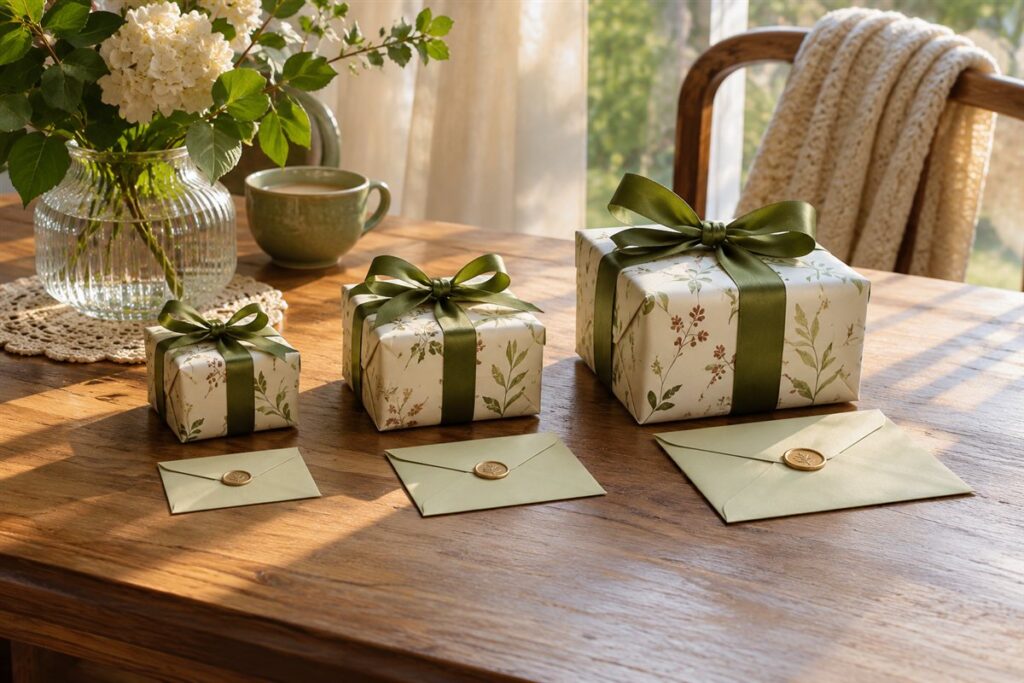
Instead of one gift, give a sequence that unfolds through the day, each piece leading to the next. Layered gifts feel generous because the anticipation becomes part of the present. This guide shows how to design one with a theme, a rhythm and a closing moment.
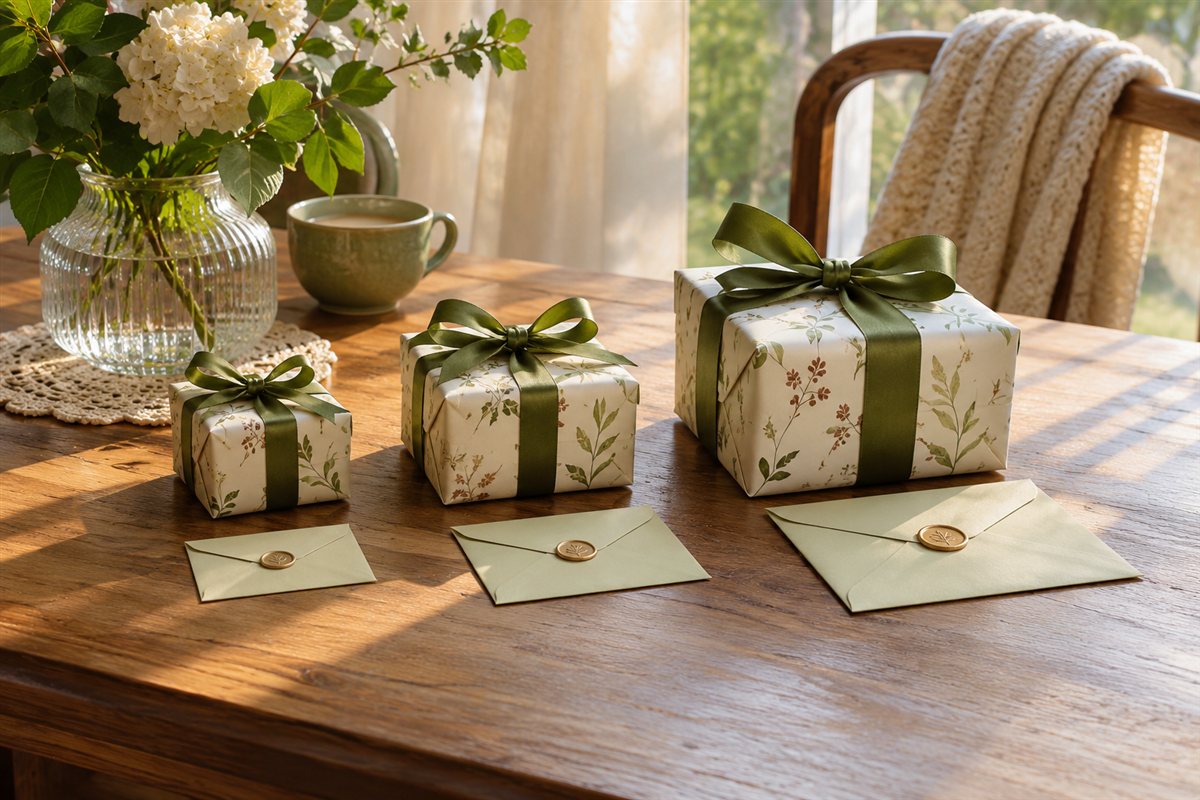
Why Layers Work
People remember stories better than objects. A layered gift gives structure: a beginning, a middle and an ending. Each layer can be tiny, as long as it adds to the story. The approach also suits those who find one large gift awkward.
Design Your Sequence
- Choose a theme. Examples include “our first year”, “places we have been” or “things I love about you”.
- Decide on three to five layers. More than that can feel exhausting.
- Make each layer different. Mix a note, a small object, a photo and an activity.
- Link the layers. Each should hint at the next, with a clue or a line of text.
- Plan the finale. End with the most meaningful piece, such as a framed picture or a shared dinner.
Sample Layer Sets
| Theme | Layers |
|---|---|
| Our first year | Morning note, a printed photo from month one, a snack from your first date, a short walk to your first meeting place, a small album |
| Places we have been | Postcard-style note, a map with pins, a photo of a favorite view, tickets to a future trip |
| Things I love | Seven small cards in a jar, one flower, a letter, a dinner |
Logistics
- Number the layers on the back so the order is clear.
- Use envelopes, small boxes or bags that are easy to open.
- Hide or hand over each piece at times that suit her schedule.
- Keep a short written plan so you do not forget a step.
Keep It Meaningful
Resist filling layers with random items. Each piece should connect to your story. If you use photos, choose sharp images and print them at a size that suits the frame or album. A few well-chosen layers beat many empty ones.
Pace matters as much as content. Space the layers so she has time to enjoy each one before the next arrives. If the day is busy, cluster the first two in the morning and save the rest for the evening. Leave a short pause before the final piece so it feels like an arrival, not just another item in the list.
Choosing a Story Arc That Fits Your Relationship
A theme gives the layers a spine, but the arc decides whether the sequence feels natural or forced. Think about the shape of what you want to say. A chronological arc walks through shared history, starting with how you met and ending with where you are now. A place-based arc moves through locations, real or imagined, and suits couples who travel or who share a home neighborhood. An emotional arc starts light and playful and ends sincere, which works well for people who are shy about big declarations.
Pick the arc by asking what she would enjoy hearing. Some people love humor and in-jokes, others prefer quiet sincerity. If you are newly together, a forward-looking arc about plans and small adventures can feel more honest than one about years of history. If you have been together a long time, a look back at small, specific moments often lands better than grand statements.
- Chronological: good when you have photos, tickets or messages from different stages.
- Place-based: good when memories are tied to specific spots you can visit or point to on a map.
- Emotional: good when you want the last layer to carry the real message.
- Forward-looking: good for newer relationships or a shared goal such as a trip you are planning.
Whichever you choose, write the first and last layers before the middle ones. When the opening and the closing are clear, the middle layers fall into place much more easily.
Writing Clues and Teasers That Link the Layers
The link between layers is what turns separate presents into one experience. A clue does not need to be a puzzle. It can be a single line printed on the back of a card, a sentence at the end of a note, or a small drawing that points toward the next item. Keep the tone consistent with your theme so the sequence reads like one voice.
Make the clues easy enough that she is never stuck. If the day is busy, a hard riddle becomes a source of stress rather than fun. A good test is to ask whether someone who has never heard your private jokes could still follow the hint. If not, add one more detail.
- Use a short phrase such as “Your next surprise is waiting where we had our first coffee” for location-based hints.
- Use a half sentence that continues on the next card for emotional arcs.
- Number the layers discreetly so the order never gets confused.
- Avoid clues that depend on something being open or available at a specific time you cannot control.
If you hide anything outside the home, check that it is safe, dry and unlikely to be found by someone else. Keep a backup plan, such as a text message, in case a hiding spot fails.
Matching Layers to Her Personality
The same structure can feel very different depending on who receives it. Someone who loves reading may appreciate written layers: a letter, a short story about your day together, a book with a marked page. Someone who enjoys being outdoors may respond better to activity layers, such as a walk, a picnic or a sunrise. A person who dislikes attention may prefer private, quiet layers that never put her on the spot.
Think about how she handles surprise. Some people love being led through a day, while others feel anxious without knowing the plan. If she likes to be prepared, tell her only that there will be a few small surprises and when to be free. If she loves being surprised, keep the whole thing secret.
- Sentimental: keep photos, notes and keepsakes at the center.
- Practical: include one layer she will use, such as a favorite tea or a tool for a hobby, with a note attached.
- Adventurous: make at least one layer an activity rather than an object.
- Private: keep every layer at home and avoid anything that needs an audience.
When in doubt, lean on details you already know, such as her favorite snack, song or color. Small accurate details feel more personal than expensive generic ones.
Budget and Effort Tiers for a Layered Gift
A layered gift is flexible because the effort can sit in time and thought rather than spending. At the lightest level, use paper: handwritten notes, a printed photo or two and a simple envelope system. This takes an evening and can still carry the whole story. At a middle level, add a few small objects, such as a favorite treat, a candle or a small plant, and make one layer an activity you plan ahead. At a fuller level, include a framed print, a custom album or a booked outing as the finale.
Spending more does not make the sequence better. What matters is that each layer is specific to her. A cheap item with a clear memory attached usually beats an expensive one with no link to your story.
- Reuse what you already have, such as old tickets, saved messages or photos from your phone.
- Buy one meaningful finale rather than several mediocre extras.
- Order any printed or personalized item early, and check the delivery estimate on the listing.
- Decide on a total limit before you start so extra layers do not creep in.
If time is short, reduce the number of layers, not the quality of each one. Three well-made pieces will always work better than five rushed ones.
Common Mistakes to Avoid
The most common problem is overbuilding. A long sequence with weak middle layers loses energy, and the finale arrives when she is tired. Keep the plan short enough that you can carry it out without stress, because your own mood affects how the day feels to her.
Another mistake is ignoring the schedule. A layer that needs her to be somewhere at a certain hour fails if work runs late. Build in slack and let the plan bend. It also helps to avoid layers that depend on other people unless you have confirmed their help.
- Do not mix unrelated gifts into the sequence just to fill it out.
- Do not hide something so well that you forget where it is.
- Do not rely on a single copy of a photo or letter that cannot be replaced.
- Do not make every layer sentimental; a little humor keeps the tone light.
- Do not skip the last step, which is simply being present and unhurried when she reaches the end.
Afterward, keep the leftover cards and notes together. Many people enjoy keeping the full set in a box and rereading it later, which gives the gift a second life.
FAQ
Is this too much work?
It can be scaled. Three layers using notes and a single printed photo already create the effect.
Can I do this long distance?
Yes. Send small parcels or messages timed through the day and finish with a video call.
How do I keep the layers a surprise if we live together?
Hide each layer where she is unlikely to look, such as a bag you carry or a friend's home. You can also prepare the later layers in advance and ask a trusted person to hold them until needed.
What if she does not enjoy being the center of attention?
Keep every layer private and low key, with notes, a quiet activity and a shared meal at home. The sequence works just as well without any audience.
How long should the whole sequence last?
Anywhere from a morning to a full day works. Match the length to her schedule, and avoid stretching it so far that the finale feels like an afterthought.
Can I reuse items I already own?
Yes. Old tickets, saved photos and handwritten notes often carry more meaning than new purchases, as long as each one connects to your theme.
Should every layer be an object?
No. A mix of notes, small objects and one activity feels more varied. Too many objects can make the sequence feel like a pile instead of a story.
What should I do if a layer goes wrong?
Stay relaxed and adapt. Hand over the piece directly, explain the plan with a smile and move on to the next one. The effort behind it still shows.
How do I choose a finale?
Pick the piece that says what you most want to tell her. A framed photo, a heartfelt letter or a planned shared evening all work well when they match your theme.
The Short Version
Create a sequence of three to five linked layers around one theme and end with your most meaningful piece. Keep every layer tied to your story, and the slow unwrapping becomes the gift itself.