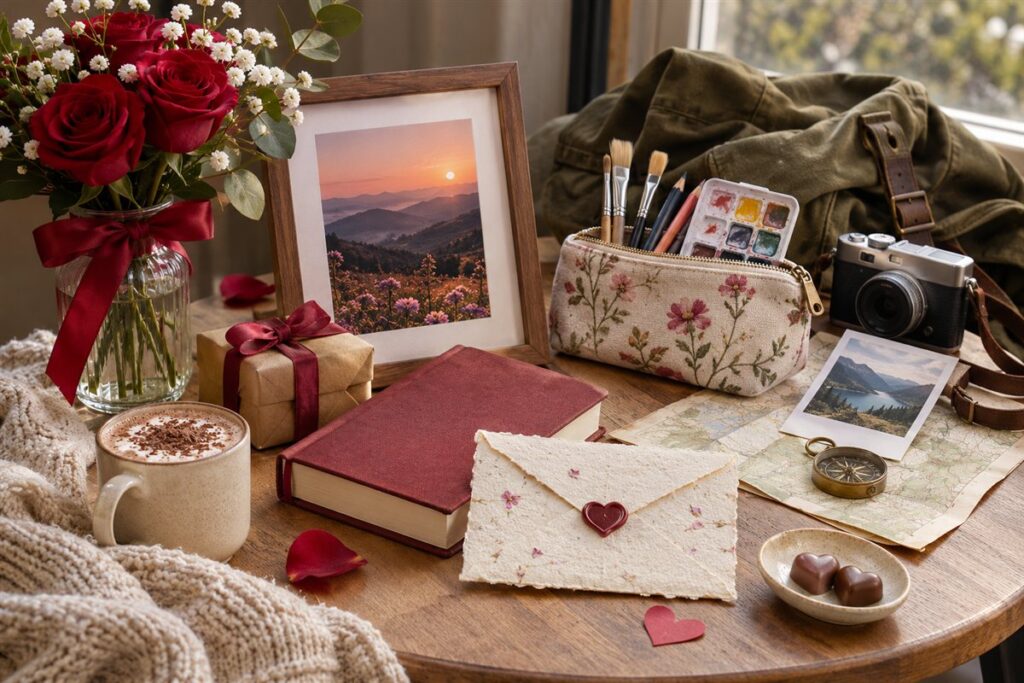
The best gift for a girl on Valentine’s Day is the one that suits her personality, and there is no single answer for everyone. Think about how she spends free time, what she talks about and how she reacts to attention. The profiles below turn that thinking into clear gift directions.
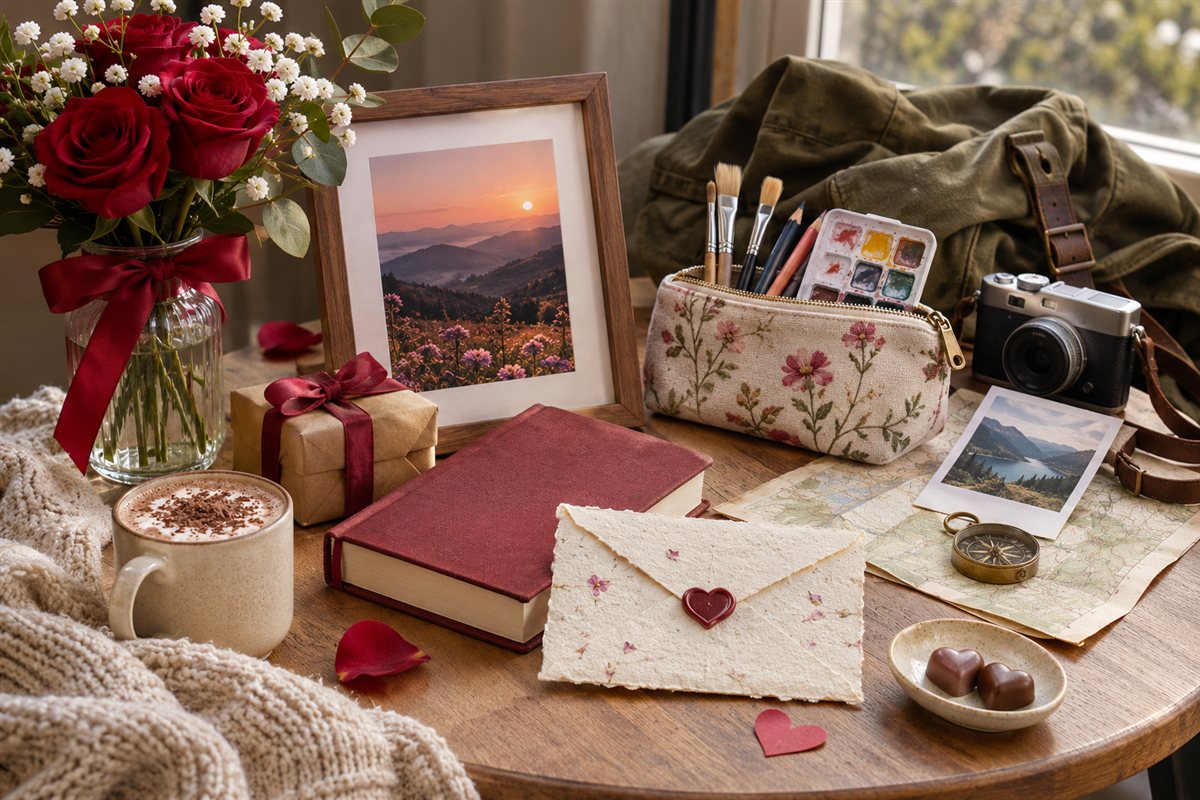
Five Personality Profiles
The Creative
She notices color, texture and detail, and she may keep sketchbooks, playlists or photos.
- A framed print of a photo she would appreciate for its composition.
- A visit to a gallery or a craft workshop.
- A note written on interesting paper with careful handwriting.
The Adventurer
She prefers motion to objects.
- Plan a day outdoors at a place new to both of you.
- Pack simple food and a small camera or phone for pictures.
- Print one favorite shot afterward as a keepsake.
The Homebody
Comfort matters most to her. A relaxed evening with her favorite meal, a film she loves and a handwritten card might be perfect. Add a small framed photo of a cozy memory to leave a lasting reminder.
The Social One
- A small gathering with her closest friends.
- A group activity such as a quiz night or dinner.
- A photo wall of friends and shared events, assembled for her.
The Thoughtful Planner
She values effort and reliability. Give her something that reflects planning: a booked experience, a well-organized day or a photo album with dated captions. Details such as a printed itinerary make her feel considered.
In this guide
At a Glance
| Profile | Core gift | Personal touch |
|---|---|---|
| Creative | Framed print or workshop | Handwritten note |
| Adventurer | Outdoor day | Printed photo from the day |
| Homebody | Cozy evening | Framed memory |
| Social | Group outing | Photo wall or collage |
| Planner | Booked experience | Dated album |
Reading Her Personality Without Asking
You can learn a great deal by watching. Does she plan her weekends or decide at the last minute? Does she keep her space tidy and minimal or filled with objects that carry stories? Does she prefer quiet corners at gatherings, or does she move around the room? These small habits point toward a profile. Add what you know about her favorite places and what she photographs, and the right direction usually becomes clear. If you are still unsure, choose the option that is easy to enjoy in many ways, such as a letter with a framed photo.
Matching the Gift to How Well You Know Her
Personality is only one input. The depth of your relationship also shapes what feels right, and a gift that suits one stage can feel awkward at another.
If you have just started dating or are still becoming friends, keep the gesture modest and warm. A small treat she has mentioned, a short note or an invitation to a low-key outing shows interest without implying more than the relationship holds. Very personal or elaborate gifts can make people uncomfortable, so keep expectations light.
If you have been together a while, you can use shared history. A framed photograph from a real outing, a repeat of a favorite place or something that answers a comment she made months ago shows that you listen. The more you know, the more specific the gift can be.
If you are in a long-term relationship, avoid falling back on habit. Think about what has changed since last year: her work, her interests, her schedule. A gift that responds to the present moment feels more attentive than a repeat of an old formula.
If she is a friend or relative, such as a sister, a daughter or a close friend, keep the focus on appreciation. A thoughtful note, a shared meal or a small keepsake works well.
- Match the scale of the gift to the stage of the relationship.
- Choose something that feels natural to give, not something that creates pressure.
- When unsure, a handwritten note adds warmth at any stage.
Avoiding Stereotypes When Choosing
It is easy to default to what gift guides call typical choices for women, but individuals vary widely. A better approach is to observe her actual habits and choose from those.
Start by setting aside assumptions. She may not enjoy flowers, chocolate or jewelry, and may find them generic. Others may love them. The question is not what is common but what she herself enjoys. Look at what she buys, wears, reads, watches, cooks or collects.
Pay attention to how she likes to be treated. Some people enjoy surprise and public celebration. Others prefer quiet gestures and time alone. Some value practical help more than objects, such as taking on a task she dislikes. These preferences matter more than any category label.
Be careful with items that comment on appearance, size or lifestyle, since they can be taken the wrong way even when meant kindly. Skip anything that suggests she should change. Choose gifts that celebrate who she already is.
- Base choices on repeated comments and observed habits.
- Avoid gifts tied to her body, weight or age.
- Avoid gifts that are really for your own enjoyment.
- If you are unsure, offer a choice, such as two options for an evening out.
The aim is for her to feel seen as an individual, not matched to a stereotype.
Gifts That Combine Two Profiles
Few people fit neatly into one profile. A creative may also love adventure, and a homebody can still enjoy a social evening. Combining directions often gives the most personal result.
Start by naming the two profiles that fit best, then look for the overlap. A creative adventurer might enjoy a day exploring a new place with a sketchbook or camera, followed by framing one of the pictures. A homebody planner might appreciate a quiet evening with a printed schedule and a favorite meal, with a small album of dated photos.
A social creative could enjoy a small gathering where guests contribute to a shared piece, such as a messages page or a photo collage. An adventurous planner might like a short trip she can organize herself, with a few details prepared for her.
When blending, keep one main element and one supporting element. The main element is the activity or object, and the supporting element is the personal touch, such as a note or a photograph. This keeps the gift focused and avoids overloading the day.
- Choose one core plan, then add a small detail from the second profile.
- Keep the schedule flexible to leave room for her preferences.
- Prepare a simple alternative in case weather or booking changes.
The right combination should feel natural rather than forced, so if it feels complicated, simplify it.
Presenting the Gift in a Way She Will Enjoy
How you give a gift is part of the gift. Matching the presentation to her personality helps it land the way you intend.
For a creative, presentation can be part of the pleasure. Interesting paper, careful handwriting or a small arrangement of the elements shows attention to detail. For an adventurer, hand over the plan as a surprise, with clues or a packed bag, to build anticipation.
For a homebody, keep it relaxed. A quiet moment at home, with the meal and film ready, lets her enjoy the gift without a performance. For a social person, think about whether she would like friends present or whether a private moment first would feel more special. For a planner, a clear note on timing or a printed outline helps her relax.
Think about privacy. If she prefers not to be the center of attention, avoid public surprises such as announcements in a restaurant. If she enjoys them, plan ahead with staff or friends.
Words matter. Say what made you choose the gift, referring to something she said or a memory you share. A short sentence can make a simple gift feel meaningful.
- Time the moment when neither of you is rushed.
- Put away phones for a while.
- Follow her lead on how much attention she wants.
Afterward, let the day unfold. Avoid asking if she likes it repeatedly. Her reactions will show soon enough.
Keeping the Gift Meaningful After the Day
Good gifts carry on after February 14. A little follow-up turns a single event into something that lasts.
One approach is to keep a record. Take photographs of the day, write a few lines about what happened and save the card. A small album or folder gathers these items over the years, creating a story of your shared Valentine’s Days.
Another is to extend the idea. If you gave an experience, plan a small follow-up in a few weeks, such as returning to the place or trying something similar. If you gave an object, find occasions for it to be used or displayed. A framed photograph might sit in a place she sees daily, and a book might lead to a conversation.
It also helps to notice her reaction. Not just on the day, but over the following days. Does she mention it again? Does she use the item? Her responses tell you more about her preferences and can guide next year’s choice.
Finally, remember that the gesture is part of an ongoing relationship. Small acts through the year, such as a note on an ordinary day, support the effect of the gift and show that Valentine’s Day is not the only time you think of her.
- Save the card and a photograph from the day.
- Write down what she enjoyed for future reference.
- Plan one small gesture for a quiet day later in the year.
Gift Ideas Sorted by How Long You Have Been Together
The length of a relationship changes what feels right. A gift that delights a new partner might feel too small after ten years, and a grand gesture can feel heavy in the first weeks. Use the stages below as gentle guidance, then bend them to fit the two of you.
Early days or a new friendship
Keep things light and low pressure. A small, thoughtful item tied to something she mentioned works better than anything dramatic. Think of a favorite snack, a paperback by an author she loves, a plant for her desk or a handwritten note. The aim is to show you listen, not to overwhelm her.
A year or two in
Now you can lean on shared memories. A framed photograph from a trip, a playlist built from songs you both know, or tickets to an event she has wanted to attend all carry meaning. Pair a small physical gift with a planned activity so the day feels complete.
Many years together
Familiarity lets you be personal and playful. Recreate your first date, put together a box of small things that mark the years, or take over a chore she dislikes for a month with a note promising it. Gifts that say I see how much you do often land better than anything flashy.
Experiences Versus Objects
Some people treasure things they can keep; others prefer memories. Watch how she reacts to gifts from others. Does she display them, use them daily, or mention the evening out afterward? That clue tells you which direction to take.
- Objects suit people who collect, decorate or enjoy using well-made items every day.
- Experiences suit people who talk about trips, shows, classes and meals long after they happen.
- Mixed gifts such as a book plus a coffee date satisfy both tastes.
A Quick Planning Table
| Her style | Gift direction | Add-on that personalizes it |
|---|---|---|
| Loves reading | A book or a cozy reading corner item | A note inside the cover |
| Loves cooking | Good ingredients or a class | A recipe card in your handwriting |
| Loves the outdoors | A day trip or hiking accessory | A picnic you prepare |
| Loves art | Supplies or a gallery visit | A small framed print you picked |
| Loves music | Concert tickets or a shared playlist | A hand-labeled mix |
| Loves quiet evenings | Home spa or movie night kit | Her favorite snacks laid out |
Planning Ahead So the Day Runs Smoothly
Last-minute shopping adds stress, and stress shows. Begin thinking a few weeks ahead, jot down hints she drops, and decide on a plan early. Check delivery times if you order online, and book restaurants or activities in advance because popular places fill quickly around the day.
- Make a short list of things she has mentioned wanting.
- Choose one main gift and one small extra.
- Confirm any bookings and delivery dates.
- Write a card with a few honest sentences.
- Prepare the setting, whether that is a table, a drive or a quiet evening at home.
Writing a Card That Means Something
A card often becomes the part she keeps. You do not need poetry. Mention one specific thing she did this year that you admired, one moment you enjoyed together and one hope for the coming months. Short, true sentences beat long, borrowed ones. Write by hand if you can, and keep the language natural, the way you would say it in person.
Mistakes That Spoil a Good Gift
- Choosing something that reflects your taste instead of hers.
- Giving a household item that feels like a chore.
- Ignoring her comfort with public attention, such as surprise gestures in a crowded place.
- Leaving the gift unwrapped or forgetting a card.
- Comparing your plans to what others post online.
The most memorable gifts show attention and effort. If you stay curious about her, you will find something that fits.
Gifts for Different Settings
Where you give the gift shapes how it feels. Think about whether she would enjoy a private moment at home, a public meal or a surprise at work. Some people love an audience; others find it embarrassing.
At home
Set up a small scene, such as a candlelit table, her favorite music and a meal you cook yourself. Put the gift somewhere she will find it naturally. Home settings let you relax and allow time for conversation without a waiter hovering.
Out for the evening
Choose a place that suits her tastes, not yours. Book ahead and ask for a quiet table if she prefers calm. Carry a small gift in your bag and offer it at a good moment, not in the middle of ordering.
By distance
If you cannot be together, plan a gift that arrives on time and a call or video chat to share the moment. Send a package a few days early, ask her to open it while you are on the call and keep the evening unhurried. A voice message recorded in advance can also be a warm addition.
Gift Ideas That Do Not Depend on Spending
Meaningful gestures do not need a large budget. Time and attention are valuable on their own, and the right small gift can outshine an expensive one that misses the mark.
- A picnic at a place with meaning to both of you.
- A collection of photographs printed and placed in a simple album.
- A letter to read when she needs encouragement.
- A morning of breakfast in bed and her favorite show.
- A homemade coupon book for favors she can redeem.
When She Says She Wants Nothing
Some people truly mean it, and others hope for a gesture anyway. Pay attention to her tone and history. If she prefers low-key days, a thoughtful dinner at home and a card may be right. If she often says nothing is needed and then looks wistful, a small surprise may be welcome. Respect her wishes, and when in doubt, choose something modest and sincere.
After the Day Is Over
A gift that fades from memory after one day wastes the effort. Think about a follow-up, such as printing photographs from the evening, planning a second outing or writing a short note a week later. These small touches show that the day was not a one-time performance. Ask her what she liked best, and keep the answer in mind for the next occasion. That habit quietly builds the understanding that makes every future gift easier.
Gift Wrapping and Presentation Ideas
How you present a gift sets the mood before she even opens it. Presentation does not need to be elaborate. Choose wrapping in colors she likes, add a handwritten tag and think about the moment of handing it over. A little effort here shows care and makes a small gift feel considered.
- Use plain paper with a sprig of greenery or a ribbon in her favorite color.
- Hide the gift in a spot connected to a shared memory, then guide her there with clues.
- Pack several small items in a box with tissue paper for a layered reveal.
- Put the card on top, so she reads your words before the surprise.
Budget Planning Without Stress
Decide on a figure before you browse, so you are not swayed by clever displays. A set amount keeps you comfortable and prevents the awkward feeling of overspending or skimping. Divide it between the main gift, a small extra and the evening itself. If money is tight, put more of the effort into time and thought, which cost nothing but are often valued most.
Quick Checklist for the Week Before
- Confirm the plan for the day and any bookings.
- Receive or buy the gift and hide it somewhere safe.
- Write and seal the card.
- Prepare small details such as flowers, snacks or music.
- Clear your schedule so you can be fully present.
Being present may be the best gift of all. Put your phone away, listen well and let her feel that the evening belongs to her.
Matching the Gift to Her Love Language, Not Just Her Personality
Personality tells you what she enjoys; her love language tells you how she receives affection. Some people feel most loved through words, and for them the card is the gift and everything else is wrapping. Some feel it through time, and an unhurried afternoon together outweighs any object. Some treasure acts of service, so a gift that removes a burden, fixes a problem or organises something she has been postponing speaks directly to her heart. Others light up at a physical keepsake they can hold and revisit. Watch which past gifts she still mentions, keeps or photographs; people preserve what actually reached them, and that evidence beats any quiz.
When personality and love language point in different directions, let the language choose the form and the personality choose the content. A creative partner who receives love through time wants a workshop taken together, not art supplies given alone. A homebody who treasures words wants the letter read aloud in her favourite corner, not only a cosier blanket. This two-step matching is the single most reliable upgrade to gift-giving in this whole guide, because it stops the classic error of giving a well-chosen item in a way that does not register as love.
Planning the Reveal: Small Theatre, Honestly Done
How a gift is given shapes how it is remembered. A reveal does not need elaborate staging; it needs a moment of separation from ordinary time. Hand the gift after dinner rather than during the washing up. Ask her to close her eyes for three seconds. Place the wrapped parcel where she will find it during a routine she enjoys, such as beside the morning coffee. These tiny ceremonies tell her the moment was designed, and design is flattering because it proves forethought.
Match the theatre to her temperament. A private, quiet reveal suits reflective partners; a playful treasure hunt suits someone who loves games; a gift presented in front of friends suits only those who genuinely enjoy an audience. If you are unsure, choose privacy. A moment that feels slightly underplayed can be savoured later in retelling, while a moment that felt exposing cannot be taken back.
Gifts for Specific Moments in Her Life
Context sharpens choice. If she has just started a demanding job, gifts that restore her, such as an evening with no decisions to make or a small luxury for her commute, will land better than projects that ask more of her. If she has finished something difficult, a gift that marks the achievement and names it in the card honours the effort. If she is in a flat, tired season, warmth and ease beat novelty: familiar pleasures, delivered thoughtfully, remind her she is known.
New mothers, students in examination season, and anyone caring for a parent all share one feature: their time and attention are rationed. For them, the best gifts reduce load or create one protected pocket of pleasure. Avoid gifts that require assembly, organisation or reciprocation. The partner who understands the season she is in, and gives accordingly, will rarely be outgiven by a bigger spender who does not.
When You Cannot Decide Between Two Profiles
Most people blend profiles, and a blended gift often works best: one element from each of her two strongest sides, joined by the card that explains the thinking. The adventurer-homebody receives a plan for one bold outing and one perfect evening in. The creative planner receives beautiful materials plus a scheduled, protected afternoon to use them. Blending also protects you when your reading of her is imperfect, because at least one element is likely to strike home.
What matters more than the blend is the sentence that accompanies it. Telling her, in the card or aloud, why you chose these things turns a parcel into evidence of attention. People remember being understood long after they forget being surprised, and a partner who feels understood will forgive the occasional imperfect item without a thought.
More Questions Worth Asking
How do I give well if she is much better at gifts than I am?
Stop competing and start noticing. Keep a note through the year of things she praises, envies lightly or returns to. One gift chosen from that note will outperform an expensive improvisation. You can also say, honestly, that you are learning to give better because she deserves it; most partners find that admission more touching than a flawless performance.
What is a safe gift for a partner whose taste is very particular?
Choose participation over prediction: an outing to choose together, a voucher for the exact shop she loves, or the missing piece of a collection she already owns. Particular people enjoy being consulted by the back door, and a gift that extends a known collection shows you studied the evidence rather than gambling against her standards.
Should I ask her best friend for ideas?
Yes, with care. A close friend can confirm sizes, rule out things she already owns, and warn you off ideas she has criticised. Keep the final choice yours, though, and never let the friend’s taste replace your knowledge of your partner. Use friends as fact-checkers, not as substitute givers.
How do I handle it if she dislikes surprises?
Give the pleasure of anticipation instead. Tell her the shape of the plan, an evening out, a gift she will open at home, while keeping the specific content unknown, or agree together that gifts are chosen from a small list she writes. For surprise-averse partners, feeling in control is part of feeling loved, and honouring that is the gift beneath the gift.
Avoiding the Most Common Reading Errors
Gift-givers misread partners in predictable ways. The first error is projecting your own wishes: giving the experience you want and calling it hers. The second is freezing her in an old chapter, choosing for the woman she was three years ago rather than the one whose life has since changed. The third is mistaking her politeness for delight; a gracious reaction to a past gift does not prove it was loved, so look for the harder evidence of use, display and mention over time. Correcting these three errors, projection, freezing and politeness-reading, improves results more than any list of product ideas.
A useful habit is the quiet annual review. After each celebration, note what you gave, what she did with it in the following month, and what she said about other people’s gifts she admired. Two lines in a notebook, written while memory is fresh, become next year’s unfair advantage, and they cost nothing but honesty.
Gifts That Respect a Busy, Tired Season
When she is exhausted, the romantic gift is often rest, delivered without her having to organise it. Take a task entirely off her list for a week, arrange one morning with no alarm and no obligations, or give an evening where every decision, from food to film, has already been kindly made. These gifts rarely photograph well, which is why they are undervalued in shops, but they are remembered with a gratitude that objects seldom earn. Pair one with a short note naming what you have noticed about her load, and the day gains exactly the emotional weight Valentine’s Day is supposed to carry.
The Week of the Day: A Calm Countdown
A well-given gift usually rests on a calm week, and the countdown is simple. Seven days out, settle the choice using the profiles and tests in this guide, and order or reserve anything that needs it. Five days out, buy the card and write a first draft of the words while there is no pressure; drafts improve by resting. Three days out, confirm the logistics of the day itself, bookings, timings, who else needs to know, and check the gift physically if it has arrived, because discovering a problem now is an errand while discovering it on the day is a crisis. The day before, wrap, write the final card, and set out anything the morning needs. On the day, your only tasks are delivery and presence.
This rhythm suits every profile of partner. The planner will appreciate that you visibly planned. The adventurer’s surprise stays intact because the preparation was quiet. The homebody receives a day without frantic energy leaking into it. Most gift failures are countdown failures, the right idea executed in a rush, and a week of small calm steps is the cheapest insurance in this entire guide.
What Her Friends’ Gifts Can Teach You, and What They Cannot
Watching what a partner receives gladly from friends offers real evidence: the kinds of things she chooses to keep in sight, the experiences she talks about for weeks, the treats that vanish by evening. Friends often know a person’s tastes in objects better than a newer partner does, and their successful gifts are data. Borrow their categories freely. What you should not borrow is their relationship: a gift that works from a friend may presume an intimacy, a shared joke or a history that is theirs, and transplanted into your hands it can land strangely. Take the what from friends; supply the why from your own knowledge of her.
The reverse also holds. If her friends’ gifts consistently miss, that is data too, usually that she is polite in receipt and private in preference, which means your own observation matters more than the visible record. In that case, weight what she buys for herself and what she lingers over when no one is giving her anything; self-purchases are the most honest preference list anyone publishes.
Gifts for the Partner Who Is Impossible to Surprise
Some partners guess every gift, check every parcel and plan their own celebrations. Fighting this is a losing game; enlist it instead. Give the anticipation as the gift: a sealed itinerary, a wrapped box containing a clue rather than the object, a choice presented on the day between two experiences you have arranged so that either can happen. A partner who loves control and deduction experiences these forms as respect rather than defeat, and the shared game of guessing becomes part of the celebration instead of its spoiler.
If she truly prefers no surprises at all, believe her and shift your creativity to quality and presentation. Choosing together from a shortlist you prepared still contains thought, taste and effort, and a known gift given beautifully, at the right moment, with the right words, loses surprisingly little against a surprise. What partners remember is rarely the gasp; it is the feeling of having been understood, and that is available in every format.
Reading the Five Profiles in Combination Over Time
Profiles are snapshots, not destinies. The adventurer of twenty-five may become the homebody of forty without ceasing to be herself, and the thoughtful planner may, in a lighter season of life, surprise everyone by wanting only spontaneity. The partner who gives well across decades is the one who re-reads the person in front of them each year instead of filing them under the profile that once fitted. Use this guide’s profiles as questions, not labels: which of these is she most like this year, in this season, under this much pressure? The answers will drift, and your gifts should drift with them, because the drifting is itself the message that you are still paying attention.
Anniversaries of your own observations help. If you keep the small notebook this guide keeps recommending, read last year’s entry before this year’s shopping and notice what has changed in her pleasures, her load and her dreams. Gifts chosen from a living record land differently from gifts chosen from a static idea of a person, and partners can feel the difference even when they cannot name it.
When the Budget and the Profile Disagree
Sometimes her profile points at experiences or objects beyond this year’s means. The answer is translation, not abandonment. The adventurer’s expedition becomes one bold local day, planned with the same spirit. The creative’s dream materials become one excellent basic tool plus protected time to use it. The social partner’s big gathering becomes a small one with the people who matter most. In each case the profile’s core desire, novelty, making, company, is honoured at a scale the year allows, and the card can name the larger dream as something you are aiming at together, which turns restraint into shared anticipation rather than apology.
Never let a budget gap push you into debt for a profile’s sake. A partner who loves you will not enjoy a gift whose cost she can sense as stress, and the profiles in this guide describe pleasures, all of which exist at every price level for anyone willing to translate rather than merely purchase.
Gifts for Milestones That Fall Near Valentine’s Day
When her birthday, a work achievement or another milestone lands near Valentine’s Day, resist merging them into one gesture unless she has said she prefers it. Each occasion deserves its own recognition, because merging silently tells her that one of the events was not worth its own thought. If budgets or time force economy, let the occasions share logistics but not identity: two cards, two moments, two distinct reasons, even if one gift is large and the other is a letter and an hour of her favourite thing. The distinction costs little and is remembered accurately for years.
The reverse situation also occurs: a milestone so large it deserves to absorb the season entirely, a birth, a recovery, a long project completed. Then let Valentine’s Day become the frame for celebrating the milestone itself, with the gift aimed squarely at what she has done or come through, and say in the card that this year the day belongs to that. A partner who feels her real life outranks the calendar’s generic demands has received the most personal Valentine’s message available.
Learning From Her Reactions Across the Years
Keep the gentlest possible record: after each occasion, one line about what you gave and one about what she did with it in the following fortnight. Kept, used, displayed and mentioned are the four honest verdicts, and they accumulate into knowledge no profile in any guide can supply. After three years of such lines you will know, for example, that experiences land and objects drift, or that words outlast everything, and your future choices will be made from evidence about this one irreplaceable person. That record, unglamorous as it sounds, is the true professional secret behind every partner described by friends as wonderful at gifts.
A Short Self-Test Before You Shop
Before spending anything, answer five questions in writing. What has she kept, used or mentioned from past gifts? Which profile is strongest in her this year, and which is second? Does she receive love mainly through words, time, help, touch or objects? What is her current season, rested or depleted, settled or in transition? And what do you want the gift to say, in one sentence, if she remembers nothing else? A giver who can answer those five questions will choose well from almost any shelf, and a giver who cannot will struggle in the finest shop in the world, because the difficulty was never stock; it was knowledge.
Keep the answers. They are the beginning of the notebook this guide recommends, and next year they will read like the first page of a manual written about exactly the right person.
When She Is the One Who Usually Plans Everything
Some partners carry the entire organisational load of a household’s celebrations, including, absurdly, their own. For such a partner, the most affecting gift is often the experience of being planned for: a day whose every decision has been made kindly by someone else, where her only task is to arrive and enjoy. This requires the giver to do the invisible work she usually does, bookings, timings, contingencies, other people’s needs, and to do it early enough that none of it leaks into the day as stress she must manage. Partners who receive one such day frequently describe it as the first celebration they can remember relaxing through, which tells you how heavy the usual load was, and how precisely this gift was aimed.
The Gift Conversation To Have Once, Honestly
Many couples improve their giving permanently with one unembarrassed conversation, held nowhere near a celebration, about how each of them actually likes to be given to. Ask what her best-received gift ever was and what made it work. Ask whether she prefers choosing, hinting or being surprised. Ask which matters more to her, the object, the words or the day around it. Share your own answers in return, because the conversation is an exchange, not an interrogation, and because your partner is solving the same puzzle in the opposite direction with the same incomplete information.
Write down what you learn, with her knowledge, in the notebook this guide keeps recommending. Couples sometimes resist this as unromantic, as if love should not need notes. In practice the notes are the romance, maintained in written form: proof, renewed at every occasion, that being known by you is something she can rely on rather than something she must hope for.
How do I give well when we have agreed not to exchange gifts?
Honour the agreement in its letter and enrich it in ways that are not gifts in the banned sense: the day itself made pleasant, the favourite meal, the words spoken rather than wrapped. An agreement not to exchange is usually about money or clutter, not about affection, and a partner who keeps the agreement while still marking the day thoughtfully has understood it better than one who breaks it with a flourish and calls the breaking romantic. If you are the partner who secretly wishes the agreement did not exist, say so at a neutral time rather than ambushing it on the day.
What if Valentine’s Day falls in a week when everything has gone wrong?
Shrink the celebration to its honest core and say so in the card: this week has been a lot, and I still wanted you to have this. A small gift given with that sentence often lands harder than a production staged over a calm week, because it demonstrates that she was thought of precisely when thinking was hardest. Postpone any larger plan to a named date rather than cancelling it into vagueness, and let the small version carry the day with its dignity intact.
Should the card and the gift be given together?
Usually yes: the card explains the gift while the moment is warm, and the gift gives the card’s words something to attach to. If the card is long and private, consider giving it a few minutes after the gift, or leaving it where she will read it alone that evening, because some words are received best without an audience, even an audience of one beloved person watching for a reaction.
FAQ
What if she fits more than one profile?
Blend the two. For example, an outdoor day for an adventurous creative could end with a photo session.
What if I do not know her well yet?
Ask open questions about weekends and favorite places, then choose a modest gift based on the answers.
Is it okay to give a gift card?
It can be, if you add a personal note and choose a place she actually enjoys. A gift card alone may feel impersonal, so pair it with a plan or message.
What if she says she does not like Valentine's Day?
Respect that and keep the gesture small and low pressure. A note or a favorite meal can show care without making a big occasion.
How do I find out her interests without asking?
Notice what she talks about, photographs, saves and spends free time on. Ask open questions about weekends and favorite places during normal conversation.
Should I involve her friends or family?
Only if she would enjoy it. Some people love a group effort, while others prefer privacy, so judge by her usual preferences.
What if I cannot be there in person?
Plan timing for delivery, add a handwritten note and arrange a call or video session. Allow extra days for shipping.
Can a handmade gift be better than a bought one?
Often, yes, if it reflects her taste and you make it with care. A simple handmade item with a clear link to a memory can mean a lot.
How much should I spend?
Choose an amount you are comfortable with and that suits your relationship. The thought and fit matter more than the price.
The Short Version
Identify her personality profile, pick the matching gift direction and add a personal detail such as a note or a photo. The best gift is the one that reflects who she is.
Related Guides
- Romantic Valentine's Day Gift Ideas for Your Girlfriend, Her Way
- Unexpected Valentine's Day Gift Ideas for Your Girlfriend
- Valentine's Day Gift for Your Husband: Useful Yet Sentimental
- Valentine's Day Gift Ideas Your Partner Is Sure to Adore
- Great Valentine's Day Gift Ideas by Category: A Simple Overview
