Where to buy
Check the latest price, availability and delivery on Amazon. Orders are placed on Amazon. We may earn a commission from qualifying purchases.
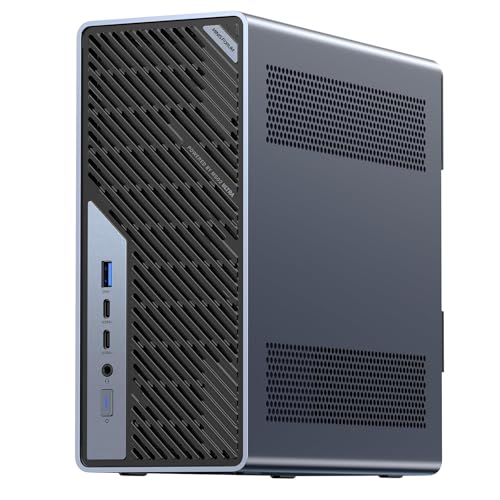
- Best overall workstation: Minisforum MS-02 Ultra Mini Workstation, Core Ultra 9 285HX, 32GB, 1TB — Check on Amazon
- GMKtec EVO-X2, Ryzen AI Max+ 395, 64GB Unified Memory, 1TB — Check on Amazon
- Skytech King 95, Ryzen 7 9800X3D, RTX 5070 Ti, 32GB, 1TB — Check on Amazon
- iBUYPOWER Y40 PRO, Ryzen 9 7900X, RTX 5070 Ti, 32GB, 2TB — Check on Amazon
See 2 more Amazon options
- Lenovo Legion T7, Core Ultra 7 265KF, RTX 5080, 32GB, 1TB — Check on Amazon
- Apple Mac mini M4 Pro, 24GB Unified Memory, 512GB — Check on Amazon
Read the full guide ↓
Disclosure: As an Amazon Associate, reviewstook.com earns from qualifying purchases. Links to Amazon on this page are affiliate links; they cost you nothing extra. Listing details such as price and availability change often, so check the current Amazon listing before you buy.
Two thousand five hundred dollars is the first budget in this entire category where the word “workstation” stops being pure marketing — for some of the machines below. At $400, $700, even $1,500, a “workstation PC” is a business desktop or a strong mini PC doing honest prosumer work, and our cheaper guides say so in their first paragraphs. At $2,500 the picture genuinely changes. One machine in this guide takes ECC memory across four slots up to 256GB, carries dual 25-gigabit networking and a PCIe 5.0 x16 slot, and runs a 24-core workstation-class processor. Another packs 64GB of unified memory that its graphics engine can address almost in full — the configuration local AI work actually asks for. Those are workstation traits, not gaming traits, and no cheaper tier in this series offers them.
The honesty note cuts the other way too, and it matters more at this tier than at any other. Three of the six picks are gaming towers. They are in this guide because a modern RTX 5070 Ti or 5080 tower is a superb render node — GPU compute is GPU compute, and Blender, DaVinci Resolve and local inference do not care what the case lighting is doing. But they are graded here as render nodes, not as certified workstations: no ISV-certified drivers, no ECC, no workstation support contract. If your employer or your CAD vendor requires certification, that still lives in the HP Z and Lenovo ThinkStation lines, and those lines sit well above this budget — we checked, and the in-budget configurations could not be pinned to verified listings, so they are not picks below. What $2,500 buys, honestly stated, is workstation capability without the certification paperwork. For most independent professionals, that is the right trade. Below are the quick picks, detailed reviews of all six machines, a comparison table, a buying checklist, the mistakes that waste money at this tier, and the questions professionals ask before committing a work machine.
In this guide
Quick Picks
Short on time, or comparing several options at once? Each row below names a workload type and the machine that suits it, with a link to the listing.
| Buyer type | Pick | Why it stands out | Link |
|---|---|---|---|
| Best overall workstation | Minisforum MS-02 Ultra, Core Ultra 9 285HX, 32GB, 1TB | ECC memory support to 256GB, dual 25GbE, PCIe 5.0 x16 slot | Check on Amazon |
| Best for local AI and large models | GMKtec EVO-X2, Ryzen AI Max+ 395, 64GB, 1TB | 64GB unified memory the GPU can address almost in full | Check on Amazon |
| Best GPU render node | Skytech King 95, Ryzen 7 9800X3D, RTX 5070 Ti | 5070 Ti 16GB compute with a published 850W Gold PSU | Check on Amazon |
| Best multi-core value | iBUYPOWER Y40 PRO, Ryzen 9 7900X, RTX 5070 Ti | 12 cores plus 5070 Ti, positioned toward the lower end of this tier — check price on Amazon | Check on Amazon |
| Best GPU compute, deal only | Lenovo Legion T7, Core Ultra 7 265KF, RTX 5080 | RTX 5080 that fits this budget only when its live price is in range — check the current price on Amazon | Check on Amazon |
| Best for video and media work | Apple Mac mini M4 Pro, 24GB, 512GB | Hardware ProRes engines, up to three displays, silent desk footprint | Check on Amazon |
How These Picks Were Chosen
The budget was applied as a ceiling for the whole machine: every product below is a real Amazon listing positioned at or within $2,500 in the United States — check price on Amazon for the current figure on each one, because listing prices change often. Two picks need that check most, and both say so wherever they appear: the Lenovo Legion T7 normally sits in a higher tier and belongs to the under-$3,000 guide when its live price is above this budget, and the Skytech King 95 sits close to the ceiling, so confirm its current price on Amazon still fits before you buy.
We did not use these machines ourselves. We read the maker listings, specification pages and reviewer coverage, and judged them on the four things that separate a workstation from a fast PC. First, sustained multi-core performance: cores and threads that hold up across a compile, a render queue or a VM stack, not a burst benchmark. Second, memory — capacity, ceiling and error protection. ECC memory appears in this guide exactly once, on the platform whose maker documentation supports it, and we claim it nowhere else. Third, expansion: PCIe slots, high-speed networking and storage positions, because a work machine is bought for the jobs it will grow into. Fourth, GPU compute: CUDA-class graphics for rendering, encoding and local AI, graded honestly — a gaming card doing render work is a render node, and the reviews use that term.
Two exclusions deserve stating openly, because both were researched rather than ignored. The 128GB versions of the Strix Halo mini PCs — the memory configuration AI buyers ask about most — sit far above this budget: the 128GB GMKtec EVO-X2 is positioned in a much higher tier on Amazon, and its Beelink rival higher still. The 64GB configuration is the pick below; the 128GB machines belong to a bigger budget. And the certified workstation lines — HP Z towers, Lenovo ThinkStation P3 — were checked and found positioned well above this budget. Rather than guess at lower configurations we could not pin to a verified listing, we left them out and said why. A guide that admits its edges is worth more than one that hides them.
What “Workstation” Honestly Means at $2,500
The word covers three different purchases at this budget, and confusing them is how money gets wasted. The first is the platform workstation: the MS-02 Ultra below. Its value is not raw speed — a gaming tower out-renders it out of the box — but the traits professional infrastructure is built from: ECC memory that catches errors during a three-day simulation, memory and storage ceilings measured in hundreds of gigabytes, 25-gigabit networking for shared storage, and a PCIe slot that accepts the card the next job requires. The second is the unified-memory machine: the EVO-X2, whose 64GB pool serves both CPU and GPU, which is precisely what large local AI models and big scene files need and what no discrete card in this tier can match — the strongest gaming GPU here carries 16GB. The third is the render node: a gaming tower bought for its graphics card and cores, excellent at throughput work, with none of the platform guarantees. None of the three is the “real” workstation. Each is the right answer to a different workload, and the reviews below grade each machine against its own kind.
What none of the six provides is certification. ISV certification — the tested-driver programs behind professional CAD and DCC support contracts — is a property of specific hardware and driver pairings sold through workstation product lines, and it is not conferred by a powerful graphics card in a gaming chassis. If a client contract, an employer’s IT policy or a software vendor’s support terms require it, that requirement outranks this entire guide: buy the certified line and budget accordingly. Everyone else — freelancers, small studios, developers, researchers, creators — is buying capability, and capability is what the rest of this page measures.
The 6 Best Workstation PCs Under $2,500
Minisforum MS-02 Ultra Mini Workstation — Core Ultra 9 285HX, 32GB, 1TB
Who it suits: Professionals whose work is infrastructure-shaped — virtualization, shared storage, long-running compute, multi-machine workflows — and anyone who has been waiting for ECC memory and serious networking to appear at a sane price.
This is the only machine in the guide built like a workstation from the motherboard out. The processor is Intel’s Core Ultra 9 285HX, 24 cores and 24 threads up to 5.5GHz, a workstation-class mobile chip in a roughly 4.8-litre chassis. Memory is the headline: four DDR5 SO-DIMM slots take the machine to 256GB, and the platform supports ECC memory — the error-correcting kind that professional lines charge a premium for, and that matters when a simulation, a database or a render runs long enough for a silent bit error to become a wrong result. We claim ECC for this machine only, because its documentation supports the claim; no other pick in this guide gets the word. Storage starts at 1TB across a layout with four M.2 2280 positions — two on the board, two on the networking card — so capacity grows internally instead of dangling off a hub.
The expansion story is the rest of the argument. A PCIe 5.0 x16 slot accepts a low-profile, dual-slot graphics card when a job needs one. Networking is dual 25GbE SFP+ on an Intel E810 controller, plus 10GbE and 2.5GbE — the class of connectivity that lets a desk machine pull project files from shared storage at speeds internal drives used to monopolize. The maker’s listing copy specifies four video outputs across its USB4 v2 80Gbps ports, a further USB4 port and HDMI 2.1, and the machine runs Windows 11 Pro behind an internal 350W power supply. Check price on Amazon — it is positioned well under this budget, offering the most workstation traits in this guide by a wide margin, and that is a big part of why it leads.
The limitations are structural, and they are the price of the form. Out of the box there is no discrete GPU: graphics are integrated, so GPU rendering waits for the card you add later, and that card is capped by the low-profile format and the 350W supply — reviewer coverage also notes the CPU’s power limit steps down with a discrete card installed. Owners and reviewers note the power supply fan is audible under sustained load; this is a machine that sounds like it is working when it works. And owner reports collected by specialist coverage describe Linux and Proxmox driver and PCIe passthrough quirks — Windows and Hyper-V are the smoother path, and homelab buyers should read the current state of those reports before committing. None of that dents the core case: check the current price on Amazon, and nothing else at this budget offers ECC, 256GB of memory ceiling, 25-gigabit networking and a Gen 5 slot in one box.
- ECC memory support across four SO-DIMM slots, up to 256GB.
- Dual 25GbE SFP+ plus 10GbE and 2.5GbE — shared-storage class networking.
- PCIe 5.0 x16 slot and four M.2 positions for genuine growth.
Honest limitation: Integrated graphics out of the box; the GPU you add later is limited to low-profile cards under a 350W ceiling, and the power supply fan is audible under sustained load.
Choose it if your work rewards memory integrity, capacity and networking more than out-of-box GPU power. Skip it if your first job is GPU rendering on day one — start with a tower below and add this class of machine when the infrastructure itch arrives.

GMKtec EVO-X2 — Ryzen AI Max+ 395, 64GB Unified Memory, 1TB
Who it suits: AI developers, researchers and technical artists whose models are too big for a 16GB graphics card — and who would rather have one large memory pool than a faster card with a hard ceiling.
The EVO-X2 is built around AMD’s Ryzen AI Max+ 395: 16 cores and 32 threads up to 5.1GHz, paired with a Radeon 8060S integrated GPU of 40 compute units. The specification that defines the machine is its 64GB of LPDDR5X memory, soldered and shared — a single pool that the CPU and GPU both draw from. AMD’s own guidance for this platform lets the graphics engine address up to 48GB of that pool, which reframes what a machine in this tier can hold: large language models, big texture sets and scene files that simply refuse to load into a 16GB discrete card run here, at integrated-graphics speed rather than discrete speed. For local AI work — the fastest-growing reason to buy a machine like this — memory capacity is usually the binding constraint, and this is the most of it available under $2,500 in a complete, verified Amazon listing — check price on Amazon for the current figure.
Around that core, the specification is complete rather than exotic: a 1TB PCIe 4.0 SSD, Wi-Fi 7, USB4, and a listing that advertises quad-display output. The CPU half of the chip is a genuine 16-core workstation-class part, so compile jobs, data work and CPU rendering are handled by the same box that holds the big model — one machine on the desk instead of a workstation plus an inference box. It is also, not incidentally, a strong compact gaming and emulation machine, though that is not why it is in this guide.
The limitations follow from the architecture. Soldered memory means 64GB is the lifetime specification: there is no upgrade path, ever, and the 128GB configuration of this same machine sits far above this budget entirely, which is why it is discussed here rather than linked. There is no PCIe slot, so expansion is whatever USB4 can carry. The single 1TB drive is the guide’s joint-smallest, and fast external or network storage is a planned second purchase for media-heavy work. And integrated graphics, however well fed with memory, remain integrated graphics: for pure rendering throughput per hour, the discrete towers below finish jobs faster. Buy this machine for what only it can hold, not for what everything does quickly.
- 64GB unified memory pool; graphics can address up to 48GB of it.
- 16-core / 32-thread Ryzen AI Max+ 395 with a 40-CU Radeon 8060S.
- Complete and compact: 1TB SSD, Wi-Fi 7, USB4, quad-display listing spec.
Honest limitation: The memory is soldered — 64GB forever — there is no PCIe slot, and the 128GB version of this machine sits far above this budget.
Choose it if your models or scenes exceed discrete-card memory and you run them locally. Skip it if your work is classic GPU rendering on ordinary scene sizes — the towers below are faster per hour — or if you need internal expansion.

Skytech King 95 — Ryzen 7 9800X3D, RTX 5070 Ti, 32GB, 1TB
Who it suits: 3D artists, motion designers and video editors whose bottleneck is GPU throughput — and who want the strongest rendering card that lives under this ceiling at its usual positioning in this tier.
Graded as what it is — a render node, and the guide’s best one — the King 95 earns its place on its graphics card and its documentation. The RTX 5070 Ti carries 16GB of GDDR7 and the current generation of CUDA compute, which is what Blender Cycles, Octane, Redshift and DaVinci Resolve’s GPU effects actually consume; for viewport work and final renders alike, this card is the hardest-working component in the guide after the Legion’s deal-dependent 5080. Skytech publishes what most builders hide: an 850W Gold ATX 3 power supply, named in the listing, alongside 32GB of DDR5-5600 and a 360mm liquid cooler. A named PSU matters to a professional buyer because it defines the machine’s future — the next GPU upgrade is a card swap, not a rebuild. For this exact configuration, check the current price on Amazon before you buy — it sits close to this guide’s ceiling, and it belongs here only while its live price stays within the budget, which the review says plainly.
The processor deserves an honest paragraph, because it is the fashionable one. The Ryzen 7 9800X3D is an eight-core chip built around a large cache that games adore. Most workstation loads — rendering, encoding, compiling, simulation — are not games: they scale with cores and clocks, and the cache that makes this chip famous does little for them. Eight strong cores are entirely adequate for DCC work paired with a GPU this capable, and single-threaded viewport performance is excellent. But a buyer whose work is CPU rendering or heavy compilation should read the Y40 PRO review below before this one, because twelve cores beat eight for that kind of work. Workstation buyers are buying throughput, not frame rates, and the ranking here reflects that.
The remaining limitations are the render-node class limitations, stated once for all three towers in this guide: this is a consumer platform, so there is no ECC memory and no certified professional driver program; the operating system is Windows 11 Home rather than Pro; the graphics card brand may vary under Skytech’s listing note, so the contracted spec is the 5070 Ti model and its 16GB, not a specific board partner; and the King 95 name covers a family of configurations, so the model number — ST-KING95-1671-W-AM — is the thing to match at checkout. Storage is the joint-smallest in the guide at 1TB, which media professionals will fill; internal expansion in a standard tower makes that a cheap fix rather than a flaw. Judged as a render node with published internals and a position close to the ceiling, it is the tower we would buy first — check price on Amazon to confirm it still fits the budget.
- RTX 5070 Ti 16GB — the strongest resident GPU compute under the ceiling.
- Published 850W Gold ATX 3 PSU and 360mm liquid cooling.
- Standard tower platform: RAM, storage and GPU all upgrade in place.
Honest limitation: A gaming platform graded as a render node — no ECC, no ISV certification, Windows 11 Home, and an eight-core CPU whose famous cache does little for render or compile loads.
Choose it if GPU rendering and viewport work dominate your day and you want published internals. Skip it if your loads are CPU-bound — the twelve-core pick below is the better spend for that kind of work.

iBUYPOWER Y40 PRO — Ryzen 9 7900X, RTX 5070 Ti, 32GB, 2TB
Who it suits: Developers, video professionals and generalist freelancers who need CPU cores and GPU compute in the same box — and who buy on deal cycles.
If the King 95 is the GPU-first tower, the Y40 PRO is the balanced one, and for mixed professional work it may be the smarter purchase. Its Ryzen 9 7900X brings twelve cores and twenty-four threads — half again the King 95’s core count — which is the specification that compile jobs, CPU render buckets, virtual machines and a Resolve timeline with a dozen background tasks all feel. The same RTX 5070 Ti 16GB handles the GPU side, so nothing is conceded there. Storage doubles the other towers: a 2TB NVMe drive, which at media-project sizes is the difference between working off the internal drive and managing space weekly. Memory is 32GB of DDR5, and a keyboard and mouse are in the box. Its positioning in this tier is the other half of the story: it sits toward the lower end of the guide, which makes it the most complete tower here for its tier position — check price on Amazon for the current figure. The review’s advice is simply to buy it when its live price looks favourable, not against its cycle.
Balance has a cost, and here it is documentation. The verified listing material for this model does not publish a power supply wattage, and we do not invent one: for a machine bought to work for years and to accept a future GPU, the PSU is a specification a professional should confirm with the seller before ordering, and this review makes that a condition rather than a footnote. The same discipline applies to the platform’s class limits, shared with the other towers: no ECC, no certified drivers, Windows 11 Home. None of that is hidden in the listing’s fine print so much as simply absent from it — which is itself information about what kind of product this is: a high-value gaming tower that happens to be an excellent general-purpose work engine.
Within those terms, the case for the Y40 PRO is the case for the all-rounder. A developer who compiles all morning and renders all afternoon, an editor whose timeline work is half CPU effects and half GPU, a freelancer whose next contract is unknowable — all of them are better served by twelve cores, the strong card and double storage than by any single-axis maximum in this guide. It is also a pick with real pricing headroom in this tier: positioned below the ceiling, it can leave room in the overall budget for the second monitor, the backup drive and the software licenses that a workstation budget honestly includes — check the current price on Amazon to judge that headroom for yourself. Graded as a render node and a compute box rather than a certified workstation, it is the value pick of the six.
- 12-core / 24-thread Ryzen 9 7900X plus RTX 5070 Ti 16GB.
- 2TB NVMe storage — double the other towers in this guide.
- Positioned toward the lower end of this tier — check price on Amazon; a value benchmark here.
Honest limitation: The listing material does not publish a PSU wattage — confirm it with the seller before buying a machine you intend to upgrade — and the platform carries the usual render-node limits: no ECC, no certified drivers, Windows 11 Home.
Choose it if your work mixes CPU and GPU loads and you can time the purchase to a deal. Skip it if unpublished internals are a deal-breaker for a work purchase — the King 95 above documents its power supply in full.

Lenovo Legion T7 — Core Ultra 7 265KF, RTX 5080, 32GB, 1TB
Who it suits: GPU-bound professionals — render artists, AI tinkerers, simulation hobbyists-turned-pros — who can buy when a deal is live and want the strongest graphics card this budget can be stretched to cover.
Everything about this pick is conditional, and the condition is price. The Legion T7 normally sits in a higher tier, which places it in our under-$3,000 guide. Only when its live price falls within this budget does it belong here — check the current price on Amazon before anything else — and when it does, the machine offers something nothing else here can: an RTX 5080 with 16GB of GDDR7 — a full tier above the 5070 Ti towers — driven by Intel’s Core Ultra 7 265KF, a 20-core processor that answers the core-count objection the King 95 raises. For GPU rendering, viewport work and local inference, the 5080 is the fastest card in this guide, and 20 cores keep the CPU side honest for compile and encode work alongside it. The configuration rounds out with 32GB of DDR5-5600, a 1TB SSD and Windows 11 Pro — the only tower here shipping the professional operating system — with an 850W power supply in the model’s published specification. It is also the only gaming tower in the guide from a maker that also sells certified workstations, though that lineage confers no certification on this machine, and we do not pretend otherwise.
The discipline this pick demands is timing. A favourable live price is not permanent: between promotions, this listing returns to a position that breaks the budget, and a buyer who needs a machine this week while it sits above the ceiling is shopping in the wrong guide — the final recommendation below points to the right one. The review’s rule is the one printed in the buy box and the quick picks: at or under $2,500, this is arguably the strongest workstation-adjacent tower here; above it, it is an excellent machine that belongs to a different budget. There is no middle reading, and the copy does not offer one.
Its workstation grading is the render-node grading, with the class limitations intact: a consumer Intel platform without ECC memory, GeForce rather than certified professional drivers, and gaming-tower support rather than a workstation service contract. Storage is 1TB, the joint-smallest in the guide, in a chassis with room to add more. None of that diminishes what it offers when its live price fits the budget — the strongest GPU compute under the ceiling, twenty cores, the Pro operating system — but it does define the buyer: a professional who values throughput over platform guarantees and who treats the purchase price as a discipline, not a hope. If that is you and its current price on Amazon is within budget, this is the pick. If it is not, the King 95 is the same idea at a more settled position in this tier.
- RTX 5080 16GB — the strongest GPU in the guide, only when its live price fits this budget — check price on Amazon.
- 20-core Core Ultra 7 265KF and Windows 11 Pro.
- 850W PSU in the model’s published specification.
Honest limitation: It is under budget only when its live price falls in range — at its usual higher-tier positioning it belongs to the under-$3,000 guide — and it carries the render-node class limits: no ECC, no ISV certification.
Choose it if the live price is at or under $2,500 and GPU throughput is your bottleneck. Skip it if the deal has ended or your purchase cannot wait for the next one.

Apple Mac mini M4 Pro — 24GB Unified Memory, 512GB
Who it suits: Video editors, audio producers, photographers and Apple-ecosystem developers who want a quiet, small, media-specialized workstation — and who are comfortable spending well under the budget to get it.
Every other machine in this guide is a Windows PC, and for a large class of professional work that is simply the wrong shortlist. The Mac mini with M4 Pro is a 12-core CPU (eight performance, four efficiency) with a 16-core GPU, 273GB/s of memory bandwidth and dedicated hardware engines for ProRes and AV1 — silicon aimed squarely at media pipelines. For Final Cut, Logic, Lightroom and ProRes-heavy Premiere or Resolve workflows, those fixed-function engines do work that general-purpose cores do slowly, and they do it in a near-silent box that disappears behind a monitor. Apple publishes support for up to three displays for this model, across three Thunderbolt 5 ports and HDMI at the rear, with two USB-C ports and a headphone jack in front — the only display count in this guide we state for a mini, because it is the maker’s own specification. It is positioned well under this budget — check price on Amazon for the current figure — and it is among the lowest-positioned picks in the guide in its tier.
That headroom is the review’s real subject, because the mini is this guide’s control group: proof that a professional workload does not automatically need $2,500. An editor cutting ProRes, a producer mixing in Logic, a developer building for Apple’s platforms — each is fully served here, with substantial headroom left for the calibrated monitor, the audio interface and the storage their work actually touches daily. The workstation money at this tier buys platform traits and GPU compute; if your pipeline needs neither, keeping the difference is not settling, it is budgeting.
The limitations are Apple’s standing ones, and they are absolute. Memory and storage are fixed at purchase: 24GB and 512GB are the lifetime specification of this configuration, the 512GB drive is tight for media work, and fast external storage is a planned companion purchase rather than an upgrade path — buyers whose projects are memory-bound should check the price on Amazon for the 48GB configuration before ordering this one. It runs macOS only, which excludes Windows-only professional software outright. And its GPU, while strong for media engines and Metal-accelerated work, is not a CUDA device: Blender and AI workflows built on NVIDIA compute belong on the towers above. Choose this machine because your software lives in Apple’s world, and it will be the quietest, most compact workstation in the guide. Choose it for any other reason and the fit fails fast.
- Hardware ProRes and AV1 engines for media pipelines.
- Up to three displays per Apple’s published specification; Thunderbolt 5 throughout.
- Positioned well under this budget — check price on Amazon.
Honest limitation: Memory and storage are sealed at purchase — 24GB and 512GB forever — it runs macOS only, and there is no CUDA for NVIDIA-based render or AI pipelines.
Choose it if your professional software is Apple-native and media-focused. Skip it if you need Windows software, CUDA compute, or any prospect of upgrading memory later.

Comparison Table
| Product | Type | Best use | Link |
|---|---|---|---|
| Minisforum MS-02 Ultra, 285HX, 32GB, 1TB | Mini workstation platform | ECC memory, 25GbE networking, virtualization, expansion | Check on Amazon |
| GMKtec EVO-X2, AI Max+ 395, 64GB, 1TB | Unified-memory mini | Local AI models too large for a 16GB graphics card | Check on Amazon |
| Skytech King 95, 9800X3D, RTX 5070 Ti | Gaming tower, render node | GPU rendering with published internals | Check on Amazon |
| iBUYPOWER Y40 PRO, 7900X, RTX 5070 Ti | Gaming tower, render node | Mixed CPU + GPU professional work, on deal | Check on Amazon |
| Lenovo Legion T7, 265KF, RTX 5080 | Gaming tower, render node | Maximum GPU compute when the deal is live | Check on Amazon |
| Apple Mac mini M4 Pro, 24GB, 512GB | Media mini workstation | ProRes video, audio and Apple-ecosystem development | Check on Amazon |
How to Choose a Workstation PC Under $2,500
- Name the bottleneck before the budget. GPU rendering, CPU throughput, memory capacity and memory integrity are four different purchases wearing one keyword. The six picks split almost perfectly along those lines; choosing the axis first makes the shortlist obvious.
- Treat ECC as a platform decision, not a feature checkbox. Error-correcting memory exists in this guide on exactly one platform, and it comes with that platform’s whole shape — mini chassis, integrated graphics, expansion by slot and port. If your long-running work needs it, that shape is the price. If it does not, do not pay for the word.
- For local AI, count memory before compute. A model that does not fit does not run, however fast the card. The discrete GPUs here carry 16GB; the unified-memory pick lets graphics address up to 48GB of its 64GB pool. Size your largest model or scene first, then shop.
- Match cores to the load, not the headline. Rendering and viewport work lean on the GPU; compiling, CPU rendering, VMs and heavy multitasking lean on cores. Eight famous gaming cores are not twelve ordinary ones, and the reviews grade them accordingly.
- Demand published internals on a work purchase. A named power supply wattage defines whether the next GPU upgrade is a swap or a rebuild. Where a listing does not publish it — one pick here does not — confirm it with the seller before the machine becomes infrastructure.
- Price the whole workstation, not the box. Storage for media, a second or third display, backup, and the software seats all belong in the same budget conversation. Some picks here leave substantial headroom under the ceiling; that headroom is a feature, and the reviews count it as one.
- Check the operating system edition. Domain policies, remote desktop hosting and some professional tools want Windows 11 Pro. Only two picks ship it; on the others, an upgrade is a real line item, not a detail.
- Respect deal discipline at this tier. Some picks fit this budget only when their live price is in range. The walk-away point is part of the product: if the live price breaks the ceiling, the correct move is a different pick or the under-$3,000 guide, not a stretched budget.
- Plan the second purchase at the same time. The platform pick wants a low-profile GPU later; the unified-memory pick wants fast external storage; the Mac wants both storage and possibly the 48GB configuration instead. A workstation budget that ignores its own second act is understated.
What $2,500 Does Not Buy
Clarity about the ceiling is worth as much as the picks. This budget does not buy ISV certification: the tested drivers and support contracts of the HP Z and Lenovo ThinkStation lines sit well above it. It does not buy the 128GB memory class in a unified-memory mini — that configuration sits in a much higher tier, a fact this guide states rather than works around. It does not buy a 24GB-or-larger discrete GPU, a Threadripper-class core count, or a workstation service contract with next-day parts. And it does not buy freedom from homework: variant families share names across this category, deal prices expire, and a work machine bought on a wrong configuration is a more expensive mistake than a gaming PC bought the same way. What the budget does buy — platform traits that were workstation-line exclusives a few years ago, 64GB of unified memory, and previous-flagship GPU compute — is genuinely new at this tier. That is the story of the tier, and it is enough.
Common Buying Mistakes
- Buying a gaming tower and calling it a certified workstation. The render-node picks are excellent throughput machines, but certification is a property of workstation product lines and their drivers — no graphics card confers it.
- Paying for the famous gaming CPU when the work is rendering or compiling. Cache wins frames; cores win queues. Match the chip to the load.
- Assuming ECC because a listing says “workstation”. In this guide the claim is made for one platform, from its documentation. Everywhere else, its absence is the fact.
- Shopping local AI by GPU model instead of memory capacity. A 16GB card is a hard wall; a unified pool three times that size is a different category of tool.
- Treating a temporarily favourable live price as permanent. The Legion T7 is a higher-tier machine that only fits this budget when its live price is in range; buying it while it sits above the ceiling while citing this guide is the most expensive mistake on this page.
- Ignoring the unpublished specification. If a work machine’s power supply wattage is not in the listing, that is a question to resolve before purchase — not a surprise to meet at the first GPU upgrade.
- Filling 1TB in the first month. Four of six picks ship a single terabyte. Media and model work eat storage; budget the second drive with the machine.
- Buying the sealed box for a growing workload. The Mac mini and the EVO-X2 are lifetime specifications. They are superb purchases for a stable workload and poor ones for a workload that doubles yearly.
Final Recommendation
- Most professional buyers: Minisforum MS-02 Ultra.
- Local AI and oversized models: GMKtec EVO-X2 64GB.
- GPU rendering within this tier: Skytech King 95.
- Mixed CPU + GPU work, bought when its live price is favourable: iBUYPOWER Y40 PRO.
- Maximum GPU compute, only when its live price fits the budget: Lenovo Legion T7.
- Media work in Apple’s ecosystem: Mac mini M4 Pro.
Our top two at this budget are the MS-02 Ultra, for buyers whose work rewards the platform traits — ECC memory, a 256GB ceiling, 25-gigabit networking, a Gen 5 slot — that define a workstation everywhere except the certification paperwork, and the EVO-X2, for the fast-growing class of work that is bounded by memory rather than speed. Between them they cover the two shapes this search most often takes at $2,500: infrastructure and capacity. If your bottleneck is rendering throughput, the King 95 is the tower to buy — check its current price on Amazon first — the Y40 PRO is the balanced alternative when its live price is favourable, and the Legion T7 is the splurge that only makes sense while its live price fits this budget. Media professionals in Apple’s world should take the Mac mini and keep the headroom it leaves in the budget. Buyers who need certification, or whose workloads are lighter than this tier assumes, should also see Best Workstation PC Under $1500 and Best Home Office PC Under $2500; buyers willing to shop in the Legion’s usual higher tier will find it in Best Workstation PC Under $3000. Confirm the exact configuration and check the current price on Amazon before you order — at $2,500, that homework is the difference between a workstation and an expensive PC.
Frequently Asked Questions
Is a gaming PC a workstation?
It is a render node, and the distinction is worth keeping. A gaming tower with a 5070 Ti or 5080 does GPU rendering, encoding and inference at full speed — the compute is identical. What it lacks is the platform layer: ECC memory, certified professional drivers, and a workstation support contract. If your work needs throughput, the towers here qualify. If it needs the platform layer or the paperwork, only the MS-02 Ultra offers part of it, and full certification still lives in the dedicated workstation lines above this budget.
Does any PC under $2,500 have ECC memory?
One in this guide does: the Minisforum MS-02 Ultra, whose platform supports ECC across four DDR5 SO-DIMM slots up to 256GB, per its maker documentation. That is a genuine first at this tier — the trait used to be gated behind workstation product lines. The other five picks use standard non-ECC memory, and the reviews say so rather than letting the category keyword imply otherwise.
Why is a 64GB mini recommended over a faster graphics card for AI?
Because capacity gates the work before speed does. The discrete cards here carry 16GB; a model or dataset larger than that does not run slowly on them, it does not run. The EVO-X2’s unified pool lets its graphics address up to 48GB, so the large models load — at integrated-graphics pace. For throughput on models that fit, the towers are faster. Serious local AI shopping starts with the size of the largest thing you run.
What happened to the 128GB mini PCs?
They sit outside this budget. The 128GB configuration of the EVO-X2 is positioned in a much higher tier on Amazon, and its competitors sit higher still. The 64GB configuration — check price on Amazon — is the version this guide can honestly recommend under $2,500; buyers who need 128GB of unified memory are shopping a different tier, and no review here pretends otherwise.
Can I add a graphics card to the MS-02 Ultra later?
Yes — that is what its PCIe 5.0 x16 slot is for — within two limits the review states: the card must be a low-profile, dual-slot design, and the internal power supply is 350W, which caps the class of card the machine can feed. Reviewer coverage also notes the CPU power limit steps down with a discrete card installed. It is an expansion path for a workstation card or a modest gaming card, not a route to a flagship GPU.
Should I buy the Legion T7 if the deal has ended?
Not from this guide. At its usual higher-tier positioning it is an under-$3,000 machine, and it is covered there. The pick exists here only when its live price fits this budget — check the current price on Amazon — and that walk-away discipline is part of the recommendation. If its live price is above the ceiling and the need is current, the King 95 delivers the same class of service at a more settled position in this tier.
Is the Mac mini a real workstation?
For media work, yes — its hardware ProRes and AV1 engines, high memory bandwidth and quiet sustained performance are exactly what editing and audio pipelines consume, and Apple’s own positioning of the M4 Pro configuration is professional. It is not a general substitute for the Windows picks: no CUDA, no internal expansion, memory and storage sealed at purchase. Workstation is a workload-relative word, and this guide grades it that way throughout.
- Best Workstation PC Under $2500
- Best Workstation PC Under $1500
- Best Workstation PC Under $3000
- Best Workstation PC For Beginners Under $2500
- Best Workstation PC For Streaming Under $2500
- Best Workstation PC For Small Spaces Under $2500
- Best Workstation PC For 1440p Gaming Under $2500
- Best Mini PC Under $2500
- Best Gaming PC Under $2500
- Best Prebuilt Gaming PC Under $2500


