Where to buy
Check the latest price, availability and delivery on Amazon. Orders are placed on Amazon. We may earn a commission from qualifying purchases.
- Best installation in a genuinely small space: Beelink SER9 Pro Mini PC, Ryzen AI 9 HX 370, Radeon 890M, 32GB LPDDR5X, 1TB SSD, about 0.82 liters — Check on Amazon
- GMKtec EVO-X1 Mini PC, Ryzen AI 9 HX 370, Radeon 890M, OCuLink, 32GB LPDDR5X, 1TB SSD, about 0.75 liters — Check on Amazon
- AtomMan G7 Ti Mini PC, Core i9-14900HX, RTX 4070 Laptop GPU, 32GB DDR5, 1TB SSD, about 2.55 liters — Check on Amazon
- AtomMan G7 Pt Mini PC, Ryzen 9 7945HX, RX 7600M XT Mobile GPU, 32GB DDR5, 1TB SSD, about 2.7 liters plus its power brick — Check on Amazon
- MINISFORUM AtomMan G1 Pro, Ryzen 9 8945HX, Desktop RTX 5060, 32GB DDR5, 1TB SSD, about 3.8 liters, internal power supply — Check on Amazon
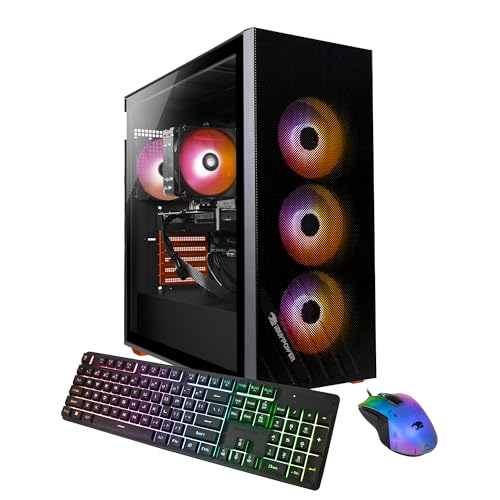
- HP OMEN 16L Gaming Desktop, Ryzen 7 8700F, Desktop RTX 5060, 64GB DDR5, 1TB SSD, 16 liters — Check on Amazon
Read the full guide ↓
Disclosure: As an Amazon Associate, reviewstook.com earns from qualifying purchases. Links to Amazon on this page are affiliate links; they cost you nothing extra. Listing details such as price and availability change often, so check the current Amazon listing before you buy.
Good news first: unlike most “small” PC roundups, five of the six machines here really are small. The largest mini is under four liters; the smallest is about three-quarters of a liter, a box that fits in one hand. If your problem is a PC that must live behind a monitor, inside a TV unit, on a rented room’s one shelf or in a dorm corner, this set was built for you — and this guide grades it the way a small space actually grades things: not by benchmark charts, but by what has to fit, plug in, breathe and stay put once the box is installed.
That grading changes the order. A mini PC’s published volume is only the first line of its footprint: behind it come the external power brick most minis in this class carry and no volume figure counts, the cable drop to your screen and network, and the clearance the fans need to move hot air out of a chassis with almost no air inside it. One pick below quotes about 2.7 liters while its 300-watt brick rides outside the number entirely; another quotes 3.8 liters with its whole power supply inside the case, so its installed footprint is exactly its published one. Judged on installation rather than arithmetic, those two machines swap places.
Two honest boundaries before the picks. First, the sixth machine here is a 16-liter compact tower — small for a desktop, enormous next to a 0.75-liter mini. It is included because many readers searching this phrase mean exactly that, and it is graded as what it is: the pick that fails genuinely small spots and rewards the ones that can take it. Second, no pick here is cleared for a sealed cabinet. Every one cools real gaming hardware with fans, and a closed, unventilated box starves all six. Ventilated media furniture with an open back is a different matter, and the reviews say which picks belong there. If your only space is a sealed cupboard, the correct purchase is ventilation, not a PC.
And the standing honesty of this batch, applied to this tier: smallness is what you are buying, not speed. A full-size tower with a desktop RTX 4070 SUPER sits in this same budget tier and out-games every machine below while asking for roughly three times the largest mini’s room. If a tower fits your life, buy the tower. This guide is for the rooms where it does not.
In this guide
Quick Picks
Short on time, or comparing several options at once? Each row below names a space situation and the machine that installs best in it, with a link to the listing.
| Your space | Pick | Why it installs best there | Link |
|---|---|---|---|
| Tightest spot — behind a monitor, inside a TV unit | Beelink SER9 Pro Mini PC | About 0.82 liters as a finished appliance: nothing else to place, nothing left to add later | Check on Amazon |
| Smallest chassis, with a desktop-graphics plan | GMKtec EVO-X1 Mini PC | About 0.75 liters today; budget desk room for the OCuLink dock the day the plan completes | Check on Amazon |
| A shelf or media unit, strongest graphics in a mini | AtomMan G7 Ti Mini PC | RTX 4070 Laptop GPU at up to 140W in about 2.55 liters, with silent and performance fan modes | Check on Amazon |
| Desk corner with room for a brick | AtomMan G7 Pt Mini PC | About 2.7 liters of PC plus a 300W external brick that needs its own ventilated spot | Check on Amazon |
| Small desk, no brick to hide | MINISFORUM AtomMan G1 Pro | About 3.8 liters with the 350W power supply inside the case — the published volume is the real one (check price on Amazon — within budget only) | Check on Amazon |
| Under a desk or on a deep shelf | HP OMEN 16L Gaming Desktop | 16 liters: not a mini, but the only pick whose graphics card you can swap later | Check on Amazon |
How These Picks Were Chosen
The six machines are the verified set from this batch’s small form factor research at this budget: real Amazon listings in this budget tier, with every graphics chip named exactly as its maker specifies it, laptop and mobile parts included. Two picks are conditional and stay conditional here: the G1 Pro belongs only when its live listing checks within this budget on Amazon, and the OMEN 16L pick belongs to one specific seller-upgraded configuration. Check price on Amazon before you buy, in a category the late-2026 memory shortage is still moving weekly.
What this angle adds is an installation audit, run under strict rules. A dimension, volume or mounting figure is printed only where the base research for this exact set documents it — computed from the maker’s published dimensions, never borrowed from a different machine’s listing, however similar the boxes look. Where the research documents no dimension for part of the installation — the size of a particular adapter, say — this guide says the adapter needs a home without inventing its measurements. Mounting gets the same treatment: no pick in this set has a documented VESA mount in the base research, so no pick is credited with one anywhere below; every VESA mention here is a non-claim, and the checklist tells you what to verify on the live listing instead.
Each pick is then graded on the five things that decide a small-space install: form-factor class (sub-liter mini, discrete-graphics mini, or compact tower); the brick address — internal supply, or an external adapter needing its own ventilated home outside the volume figure; the cable drop and its bend room; heat and airflow in a small room; and delivery-day certainty — whether the box that arrives is the complete machine the volume describes, or a barebone style from the same listing family. The ranking above follows those grades.
The Installed Footprint Is Bigger Than the Box
Three additions turn a published volume into the space a PC actually occupies, and a small room feels all three. The first is the power brick. Most minis in this class run from an external adapter, and adapter volume is never in the headline number: the G7 Pt’s roughly 2.7 liters excludes its 300W brick outright, and the base research notes that the SER9 Pro — an entire computer — is smaller than the two AtomMan machines’ external bricks. A brick needs a ventilated home of its own; wedging a warm object behind a sealed cabinet door defeats the point of counting it. The exception below is the G1 Pro, whose 350W supply is internal — its 3.8 liters is the whole installation.
The second addition is the cable drop. Every pick needs power in and a picture out, most want a wired network connection, and each cable leaves the chassis with a bend radius and a destination. In a deep media unit that is trivial; behind a wall-mounted screen or on a shallow shelf, the drop decides whether the box sits where you measured or gets pushed forward by its own wiring until it overhangs. Plan the drop as part of the footprint: the machine’s depth, plus room behind it for connectors to leave uncrushed.
The third addition is air. A mini PC’s fans move the same gaming heat a tower produces through a fraction of the volume, and they need somewhere to move it to. The G7 Ti’s silent and performance cooling modes and the G7 Pt’s 65W and 85W system modes are, in installation terms, tools for matching the machine to the room: a quieter, cooler mode for a bedroom shelf, full power for an open desk. What no mode fixes is a sealed enclosure — hot air that cannot leave is re-breathed until the machine throttles — which is why this guide refuses the sealed cabinet for all six picks.
The 6 Best Small Form Factor Gaming PCs for Small Spaces Under $1,500
Beelink SER9 Pro Mini PC — Ryzen AI 9 HX 370, Radeon 890M, 32GB LPDDR5X, 1TB SSD
Who it suits: The reader with the least room in this guide — a PC that must tuck behind a monitor, disappear into a TV unit or travel between rooms — whose gaming runs to esports titles, indies and older games rather than new AAA releases at high settings.
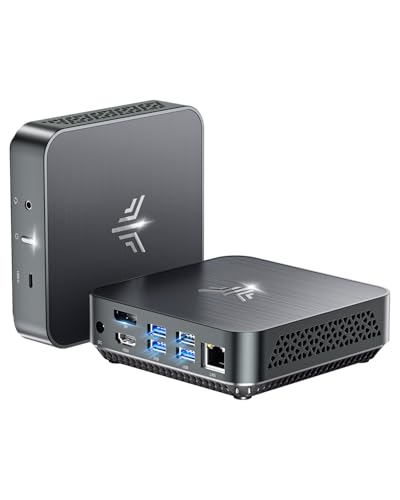
Installation is this machine’s whole argument, so start with its documented measurement: roughly 135 by 136 by 45 millimeters, which works out to about 0.82 liters. The entire computer is smaller than the external power bricks of the two AtomMan machines further down this page — less shelf than the router most desks already hold — and its class, the sub-liter mini, is the only one here that genuinely fits the spaces this search is about: a ledge behind a screen, a media unit’s ventilated shelf, the corner of a rented desk. Its cable drop is correspondingly modest — power in, a display connection out, and a 2.5-gigabit Ethernet port documented for wired networks — and there is very little box for cables to push around.
The install is also the most finished in the guide. What arrives is a complete appliance: Ryzen AI 9 HX 370 with twelve cores, the Radeon 890M — the strongest integrated graphics AMD ships in this class, 16 compute units of RDNA 3.5 fed by fast LPDDR5X memory — 32GB of memory and a 1TB SSD, with Windows 11 Pro per the listing. There is no second stage, no dock in its future, no barebone twin at a tempting price. The honest limits are the mirror of that finality: the memory is soldered and shared with the graphics, so the 32GB ceiling binds twice; there is a single M.2 storage slot; and there is no OCuLink port, so the graphics it ships with are the graphics it keeps. Integrated graphics also sets the gaming ceiling — fluent 1080p in esports, indie and back-catalog libraries per independent review consensus, and not new AAA at 1440p at any size. One mounting note, stated as a non-claim: no VESA mount is documented for this machine, so check the live listing before planning a behind-the-monitor mount — and if none is offered, the 45-millimeter profile still lets it sit behind a screen on its shelf.
Placement guidance, in this guide’s grading terms: give it open or ventilated air — a shelf, a unit with an open or vented back — and keep it out of sealed cabinetry like everything else here. Within that single rule it is the most placement-tolerant pick in the set, because its heat output is an integrated-graphics heat output, the gentlest class here. For pricing, check price on Amazon — this pick sits in the budget-friendly part of this tier.
- About 0.82 liters, documented from published dimensions — smaller than the bigger minis’ power bricks.
- A finished install: no dock, no second stage, nothing left to place or buy later.
- The gentlest heat class in the set, for ventilated shelves and media units.
Honest limitation: Soldered memory, one storage slot and no OCuLink port — the machine is final as delivered — and no VESA mount is documented for it in the base research, so mounting plans need the live listing.
Choose it if your spot is measured in centimeters and your library is esports, indie and older titles. Skip it if you want any graphics growth path — that is the next pick’s entire design — or if new AAA gaming is the point, which no sub-liter box honestly serves.
GMKtec EVO-X1 Mini PC — Ryzen AI 9 HX 370, Radeon 890M, OCuLink, 32GB LPDDR5X, 1TB SSD
Who it suits: The staged buyer in the smallest space: a tiny, capable PC now, and a credible route to desktop graphics later — with desk room honestly reserved for the day that route completes.
On chassis arithmetic alone this is the smallest machine in the guide. The base research documents its published dimensions at 110.19 by 107.3 by 63.2 millimeters — a metal box computing to roughly 0.75 liters. (One aggregator quotes a larger volume for the same model that contradicts its own printed dimensions; this guide follows the dimensions.) Inside are the same headline parts as the pick above — Ryzen AI 9 HX 370, Radeon 890M integrated graphics, 32GB of soldered LPDDR5X, a 1TB SSD — with two installation-relevant differences: two M.2 storage slots instead of one, and dual 2.5-gigabit Ethernet ports, which tidy the cable drop. Day one, it installs exactly like the SER9 Pro: one small box, one adapter, open or ventilated air, no sealed cabinet.
The difference is day ninety. The EVO-X1 carries a native OCuLink port — the connector that lets a mini PC drive an external desktop graphics card over a proper PCIe link — and that port is a footprint promise as much as a performance one. The second stage honestly adds three more purchases: an OCuLink dock of the DEG1 type, which does not include a power supply, so a desktop PSU joins the list, and a new desktop RTX 4060 — check price on Amazon for the mini itself, and price each stage-two part at its own live listing before you commit. In space terms, stage two puts a dock, a card and a power supply on the desk beside the 0.75-liter box whose smallness started the project. That is not an argument against the plan; it is the plan, measured in liters as well as in parts to place. Reserve the corner when you measure, or the dock arrives as clutter.
The remaining caveats match its sibling’s. Memory is soldered, so the capacity is a whole-life decision — a 64GB variant exists, and eGPU hosts are exactly the machines that live long enough to want it. Until the dock arrives, the gaming ceiling is the 890M’s: fluent 1080p in lighter game classes. For pricing, check price on Amazon — this pick sits at the budget-friendly end of this tier, including in the maker’s own Amazon store. The mounting non-claim applies here too: no VESA mount is documented for this machine either.
- About 0.75 liters from documented dimensions — the smallest chassis in the guide.
- Native OCuLink: the only integrated pick whose graphics can grow — into space you reserve for it.
- Two M.2 slots and dual 2.5GbE make for the tidiest wiring of the sub-liter pair.
Honest limitation: The eGPU second stage adds a dock, a card and a separate power supply to the desk — the installed footprint grows well beyond 0.75 liters — and the memory is soldered from day one.
Choose it if the two-stage plan is real and you can reserve its corner now. Skip it if the dock will never happen — the SER9 Pro is then the same daily experience with a simpler install — or if you want maximum graphics on day one, which is the next pick.

AtomMan G7 Ti Mini PC — Core i9-14900HX, RTX 4070 Laptop GPU, 32GB DDR5, 1TB SSD
Who it suits: The small-space gamer who wants the strongest graphics that fit in a true mini, and has a shelf, a desk corner or a ventilated media unit with about two and a half liters to give.
The chassis computes to roughly 2.55 liters from its published dimensions — three times the sub-liter pair, and still a box that disappears behind a monitor or into a media unit’s open shelf. What the extra liters buy is the strongest graphics in any true mini here: NVIDIA’s RTX 4070 Laptop GPU run at up to 140 watts, the full power limit for that part, beside Intel’s 24-core Core i9-14900HX. The naming honesty of this batch applies in full: NVIDIA’s published specifications give the laptop part 4,608 CUDA cores and 8GB of GDDR6, against the desktop RTX 4070’s 5,888 cores and 12GB — a class apart, with independent reviewers placing the full-power laptop chip around desktop RTX 4060 Ti territory and genuinely playable at 1440p with sensible settings. Around the silicon, the install-friendly details are real: memory is socketed DDR5 upgradable to 96GB, there are two M.2 slots, and the listing documents HDMI 2.1 and USB4 outputs with Wi-Fi 7, so the cable drop is short and current.
Heat is this pick’s installation tax. A 140W laptop GPU and a flagship mobile CPU in 2.55 liters produce the most concentrated heat of any mini here; the machine answers with dual-fan cooling and silent and performance modes — in a small room, run silent for evening play and save performance mode for an open desk. It belongs on an open shelf or in ventilated furniture; the sealed-cabinet refusal applies at full strength. The power brick is the other placement item: like its sibling below, this machine runs from an external adapter the 2.55-liter figure does not count — the SER9 Pro above is an entire computer smaller than this class of brick. Give the brick air, and a home outside any closed unit.
Delivery-day certainty needs one check: the listing family mixes configured and barebone styles, and the configured 32GB/1TB version is the one this guide describes — check price on Amazon for the exact style before you order. Order the configured style by name — a barebone cannot be installed at all until memory, storage and an operating system join it. No VESA mount is documented for this pick; plan shelf placement, not a mount.
- About 2.55 liters carrying the strongest graphics in a true mini — the full 140W version of its laptop GPU.
- Socketed memory to 96GB and two M.2 slots: the serviceable mini install.
- Silent and performance cooling modes let you tune the machine to the room.
Honest limitation: The most concentrated heat in the mini class — open or ventilated placement is mandatory, a sealed cabinet is refused — and its external brick lives outside the 2.55-liter figure.
Choose it if your spot takes two and a half liters with air around it and you want the most gaming a mini honestly does. Skip it if your only space is enclosed, or if 16 liters fits your room — the last pick trades volume for a swappable desktop card at similar money.

AtomMan G7 Pt Mini PC — Ryzen 9 7945HX, RX 7600M XT Mobile GPU, 32GB DDR5, 1TB SSD
Who it suits: The value hunter with a desk corner rather than a cubby: discrete graphics and the most CPU in this guide, in a mini whose power brick has somewhere honest to live.
The published dimensions — about 269 by 155 by 64 millimeters — compute to roughly 2.7 liters, a flat, wide slab of a chassis. Then comes the line this entire angle exists to print: that figure excludes the machine’s 300-watt external power brick, which the base research calls out by name. Installed honestly, this is a two-object system — a 2.7-liter slab plus a substantial brick — and the brick is the placement problem the headline number hides. It needs a ventilated spot of its own, on the floor beside the desk or an open shelf, with its cable run counted in the drop. Readers with no room for the second object should grade this pick as larger than the G1 Pro below, whatever the arithmetic says — this guide’s ranking does exactly that.
Inside the slab, the hardware trade is the reverse of the usual gaming one. The processor is the Ryzen 9 7945HX — sixteen cores, thirty-two threads, boosting to 5.4GHz, the most CPU in this guide — while the graphics are AMD’s Radeon RX 7600M XT, named with its load-bearing M: a mobile part with 8GB of GDDR6 at a 120W power limit, not the desktop RX 7600 XT’s 16GB card. Named correctly it is strong 1080p graphics reaching into 1440p in lighter titles. Memory is socketed DDR5 to 96GB, storage supports PCIe 5.0 NVMe drives, and the maker offers 65W and 85W system modes — the 65W mode is a genuine small-room feature, trading a little pace for a cooler, quieter box on a bedroom shelf. The configured 32GB/1TB version is the value discrete pick of the set — check price on Amazon for the exact style. Order the configured style by name, as with its sibling — the listing family mixes barebone and configured versions.
Placement verdict: an open desk corner or shelf, the brick given its own air, never a sealed cabinet — and be honest that a flat 269-millimeter-wide slab plus brick is a desk installation, not a hide-it one. No VESA mount is documented for this pick. Bought as a small workstation that games very well, installed where its two objects fit, it is the best value in the guide.
- The most CPU in the guide — sixteen full cores — in a flat 2.7-liter slab.
- 65W and 85W system modes: a real quiet-room installation tool.
- Positioned as the value discrete pick of the set — check price on Amazon for the configured style.
Honest limitation: The 2.7-liter figure excludes a 300W external brick that needs its own ventilated home — the true installed footprint is the largest of the minis — and the graphics are the 8GB mobile part, not its 16GB desktop namesake.
Choose it if your workload mixes gaming with serious CPU work and your corner fits a slab plus a brick. Skip it if the PC must vanish — the sub-liter pair does that — or if gaming is the whole job and the budget stretches to the G7 Ti.

MINISFORUM AtomMan G1 Pro — Ryzen 9 8945HX, Desktop RTX 5060, 32GB DDR5, 1TB SSD
Who it suits: The purist with a small desk: a genuine desktop graphics card in a machine still small enough to call a mini, and no power brick to hide — provided its live listing checks within budget on Amazon.
This is the footprint bargain of the guide. The chassis is about 3.8 liters — larger than the AtomMan pair above — but its 350-watt power supply is internal, so the installed footprint is the published footprint: one object, one power cord, nothing else to place, hide or ventilate separately. Graded on installation rather than arithmetic, that honesty moves it up this ranking past a nominally smaller machine whose brick lives outside its number. Inside sits the set’s other genuine desktop card: a low-profile Gigabyte RTX 5060 at its full 145W, in an actual PCIe x16 slot, beside a sixteen-core Ryzen 9 8945HX, 32GB of DDR5, a 1TB SSD, Wi-Fi 7 and 5-gigabit Ethernet — honest desktop-5060 performance, a strong 1080p card reaching into 1440p with upscaling, in a box a fifth of a mid-tower’s size.
Three conditions ride along, all from the base research and none negotiable. First, the price condition: this pick sits in a premium tier and belongs in this budget guide only when its live listing checks within budget — check price on Amazon, and if it checks above this budget, close the tab and take the G7 Ti or the OMEN instead. Second, the machine ships in an 80-watt gaming mode that withholds roughly a fifth of its performance behind a manual toggle — switch it on day one, before judging anything. Third, desktop card does not mean upgradeable: the low-profile card in a 3.8-liter chassis is, as hands-on reviewers put it, not realistically swappable, and the 350W supply sets its own ceiling. A 145W desktop card in 3.8 liters wants open air around the case; the sealed-cabinet refusal applies. No VESA mount is documented for this pick; it is a desk machine.
- About 3.8 liters, all-in: the internal 350W supply means no brick joins the footprint.
- A real desktop RTX 5060 at full 145W in a PCIe slot — correctly named silicon.
- One power cord and one object: the simplest cable drop of the discrete picks.
Honest limitation: It fits this budget only when its live listing checks within budget — check price on Amazon — and the low-profile card is not realistically upgradeable despite being a desktop part.
Choose it if its live listing checks within budget on Amazon and a one-object install matters to your desk. Skip it if the price has drifted up, or if a future graphics swap is part of the plan — that is the OMEN’s one trick, next.

HP OMEN 16L Gaming Desktop — Ryzen 7 8700F, Desktop RTX 5060, 64GB DDR5, 1TB SSD
Who it suits: The reader whose “small space” honestly means a compact tower’s worth: room under a desk, beside a monitor or on a deep shelf for 16 liters, in exchange for desktop parts and the only real upgrade path here.
At 16 liters it is roughly twenty times the EVO-X1’s volume and about six times the G7 Ti’s; it does not mount, hide or travel, and any spot measured for the minis above rejects it on sight. Its form-factor class is the compact tower, and its installation questions are a tower’s questions: floor or deep-shelf placement, room behind it for the cable drop, and open air for a case whose honest virtue is real airflow. That airflow is also why the sealed-cabinet refusal bites hardest here — a desktop RTX 5060 and full-size cooling in a closed cupboard is the worst installation in this guide, full stop.
What the 16 liters buy is the control-group lesson of the whole set. Everything inside is standard: a desktop RTX 5060 with 8GB of GDDR7 that comes out with a screwdriver and can be replaced the same afternoon, socketed memory, expandable storage, and cooling with the volume to stay quiet under loads that make the minis work audibly. The specific listing behind this pick is a seller-upgraded configuration — 64GB of memory and a 1TB SSD fitted by the seller, PCOnline US — check price on Amazon for that exact style; the upgraded parts carry the seller’s own one-year warranty while the rest of the machine keeps HP’s, so read that split before ordering. Factory OMEN 16L configurations exist under other listings — check price on Amazon for each factory style. One CPU honesty line: the Ryzen 7 8700F derives from AMD’s mobile silicon family and carries half the cache of mainstream desktop Ryzen 7 parts — a competent gaming CPU rather than a great one; the chassis and the card are the reasons to buy. No VESA anything applies to a 16-liter tower, and none is claimed.
Placement verdict: if your room takes 16 liters with air around them, this is the pick that ages best, because it is the only one whose graphics can change when the minis’ cannot. If your room does not, no review paragraph should talk you into it — the five machines above exist precisely for you. Readers whose space sits between the two worlds should also see Best Compact Gaming PC Under $1500, where this size class gets a guide of its own.
- The only true graphics upgrade path in the set — a standard, swappable desktop card.
- 16 liters of real airflow: the quietest cooling potential here, in open placement.
- The linked seller-upgraded style carries 64GB — check price on Amazon; factory configurations sit in a similar budget tier under other listings.
Honest limitation: It is five to twenty times the minis’ volume, the linked configuration’s memory and storage are seller-fitted under a split warranty, and it fails every genuinely small spot in this guide outright.
Choose it if 16 liters fits and the next five years matter more than the next five inches. Skip it if the PC must disappear — that is what the other five picks are for.

Comparison Table
| Product | Volume (documented) | Power supply placement | Graphics (named exactly) | Price | Link |
|---|---|---|---|---|---|
| Beelink SER9 Pro Mini PC | ~0.82L | External adapter, not counted in the volume | Radeon 890M integrated, shared memory | Check price on Amazon | Check on Amazon |
| GMKtec EVO-X1 Mini PC | ~0.75L | External adapter; eGPU stage adds a dock and a second supply | Radeon 890M integrated + OCuLink port | Check price on Amazon | Check on Amazon |
| AtomMan G7 Ti Mini PC | ~2.55L | External adapter, not counted in the volume | RTX 4070 Laptop GPU, 8GB, up to 140W | Check price on Amazon (configured style) | Check on Amazon |
| AtomMan G7 Pt Mini PC | ~2.7L | 300W external brick, excluded from the volume | RX 7600M XT mobile, 8GB, 120W | Check price on Amazon (configured style) | Check on Amazon |
| MINISFORUM AtomMan G1 Pro | ~3.8L | Internal 350W — no brick to place | Desktop RTX 5060, 8GB, 145W low-profile | Check price on Amazon — within budget only | Check on Amazon |
| HP OMEN 16L Gaming Desktop | 16L | Internal, standard desktop | Desktop RTX 5060, 8GB GDDR7, swappable | Check price on Amazon (seller-upgraded style) | Check on Amazon |
Measure Before You Buy: The Five-Step Small-Space Checklist
- Measure the spot. Tape-measure the actual shelf, cubby, desk corner or unit — width, depth, height — and write the three numbers down. Compare them against the published dimensions behind this guide’s volumes: about 135 × 136 × 45 millimeters for the SER9 Pro, 110.19 × 107.3 × 63.2 millimeters for the EVO-X1, about 269 × 155 × 64 millimeters for the G7 Pt, and computed volumes of roughly 2.55 liters (G7 Ti), 3.8 liters (G1 Pro) and 16 liters (OMEN). If your numbers are smaller than the machine’s, it does not fit, whatever the product photos suggest — photos in this category are shot to make a 16-liter tower and a 0.75-liter mini look the same size.
- Check the ventilation clearance. Ask where the machine’s exhaust goes: every pick here breathes through fans and needs open or vented air on its exhaust side — a shelf with space behind it, a media unit with an open or vented back, a desk corner open to the room. Then apply the standing refusal: if the spot is a sealed cabinet or a closed cupboard with no vent path, no pick in this guide goes in it — not the sub-liter minis, and certainly not the discrete-graphics machines or the tower. Vent the furniture or choose another spot.
- Give the brick an address. Decide where the power supply lives before ordering. The G1 Pro and the OMEN carry theirs internally — their address is the chassis, and this step is free. The minis run from external adapters outside every volume figure here, and the G7 Pt’s is a 300-watt brick: a warm object needing a ventilated home, not a sealed drawer or a kickable floor corner. EVO-X1 buyers with a real eGPU plan should address stage two now as well — a dock, a card and a second power supply will need a corner of their own. No address for the brick means the install is not planned yet.
- Walk the cable drop. Trace each cable’s path physically: power from the wall to the brick or box, the display cable to the screen, and a network cable if you wire one — several picks document fast Ethernet, from the SER9 Pro’s 2.5-gigabit port and the EVO-X1’s dual 2.5-gigabit ports to the G1 Pro’s 5-gigabit port, and a wired run is worth planning in a fixed install. Check for the two failure modes: cables so short the machine gets dragged forward out of its measured spot, and connectors crushed against a wall because the spot’s depth left no bend room. Add that bend room to the machine’s depth and re-check step one.
- Then order — the exact style, at a price that checks within budget. Confirm the style: the G7 Ti and G7 Pt listing families mix barebone and configured versions under one page, and the configured machine is the one every volume here describes. Confirm the price condition: check price on Amazon for the exact style — the G1 Pro is a pick only when it checks within budget, the OMEN pick belongs to the seller-upgraded 64GB style, and prices in this category are still moving weekly in the late-2026 memory shortage. The live listing — style, seller, price — is the last measurement in the checklist.
How to Choose a Small Form Factor Gaming PC for a Small Space
- Start from the furniture, not the frame rate. The volume ladder here runs from 0.75 to 16 liters, and your room picks the rung: behind-screen and TV-unit spaces cap out near a liter; a shelf or desk corner takes the 2.5–3.8-liter minis; only a floor, a desk’s end or a deep shelf takes 16 liters. Work the volumes out from the published dimensions — a product photo’s sense of scale is set by the seller, not by your shelf.
- Grade the installed footprint, not the headline volume. Add the power brick (outside the figure on most minis, and a 300W object on the G7 Pt), the cable drop’s bend room, and the clearance the exhaust needs. The G1 Pro’s 3.8 internal-supply liters can install smaller than the G7 Pt’s 2.7 liters plus brick.
- Decide whether the graphics ever change. In a small install, the answer shapes the box: never (the SER9 Pro’s finished appliance), externally (the EVO-X1’s OCuLink dock, with its own footprint), or by a screwdriver (only the OMEN, at 16 liters). The G1 Pro’s desktop card is real but not realistically swappable, and the AtomMan pair’s graphics are soldered for life.
- Apply the tower test last. A desktop RTX 4070 SUPER tower sits in this same budget tier and needs roughly three times the OMEN’s room. If that room exists, the tower is the better gaming PC and these picks are a tax you do not have to pay. Readers narrowing from the wider field should start with Best Gaming PC Under $1500 and come back here when the room says no.
Common Buying Mistakes
- Judging size from photos. Search results render a sub-liter mini and a compact tower at the same visual size, so the picture tells you nothing. The published dimensions, multiplied out, are what decide which shelf the machine can live on.
- Counting only the chassis. External power bricks — up to the G7 Pt’s 300W unit — take shelf space and shed heat outside the tidy volume figure, and an install planned to the chassis alone ends with a brick in a drawer, cooking.
- Sealing a gaming PC in a cabinet. Every pick here exhausts real heat through fans; a closed, unvented unit makes the machine re-breathe its own exhaust until it throttles. Vent the furniture or move the PC.
- Assuming a mount exists. No pick in this set has a VESA mount documented in the base research — planning a behind-the-monitor mount on a listing headline, without checking the live page for the mount itself, is how minis end up balanced on book stacks.
- Reserving no room for stage two. The EVO-X1’s OCuLink plan adds a dock, a card and a second power supply beside the 0.75-liter box. If that corner does not exist, the plan is fiction and the SER9 Pro was the right pick.
- Ordering the barebone style by mistake. The G7 Ti and G7 Pt listings mix barebone and configured versions under one page; the barebone cannot be installed at all until memory, storage and an operating system arrive on a second shopping trip.
- Stretching past this budget for the G1 Pro and still calling it a within-budget purchase. Above this budget it competes with faster and more upgradeable machines; its place here exists only when it checks within budget on Amazon.
Final Recommendation
- The tightest spaces: Beelink SER9 Pro — 0.82 liters of finished, gentle-heat PC that installs once and asks for nothing.
- Smallest box, staged plan: GMKtec EVO-X1 — 0.75 liters today, a desktop card tomorrow, in a corner you reserved today.
- Most gaming in a mini: AtomMan G7 Ti — the full-power laptop GPU, on an open shelf with air around it.
- Value with discrete graphics: AtomMan G7 Pt — the value discrete pick, with the best CPU in the guide and a brick to house — check price on Amazon.
- One-object install (price permitting): MINISFORUM AtomMan G1 Pro — desktop silicon, internal supply, only when it checks within budget on Amazon.
- Five-year keepers with 16 liters: HP OMEN 16L — the upgrade path wins if the room allows it.
Our top two are the Beelink SER9 Pro, because the best small-space install is the one that disappears — a complete, quiet-class machine in 0.82 documented liters, with no second object, no second stage and no style trap — and the GMKtec EVO-X1, because it is the smallest chassis here and the only integrated pick whose story can grow, if the dock’s corner is measured first. Between them sits the tier’s honest shape: the G7 Ti when the shelf takes 2.55 liters and gaming comes first, the G7 Pt when CPU work shares the desk, the G1 Pro when its price behaves, and the OMEN when the room turns out to have 16 liters after all. Streaming-desk readers should compare Best Small Form Factor Gaming PC For Streaming Under $1500; first-PC buyers in small rooms should see Best Small Form Factor Gaming PC For Beginners Under $1500; tighter spots still start with Best Mini PC For Small Spaces Under $1500. Measure the spot, clear the air, address the brick, walk the cables — then order.
Frequently Asked Questions
What is the smallest gaming PC in this guide, honestly?
The GMKtec EVO-X1, at roughly 0.75 liters computed from its documented dimensions of 110.19 × 107.3 × 63.2 millimeters — with the Beelink SER9 Pro effectively tied at about 0.82 liters and the simpler install of the two, since nothing in its future adds a dock to the desk. Both are integrated-graphics machines: fluent 1080p for esports, indie and older libraries, and neither pretends to more.
Can I put one of these PCs inside a TV cabinet?
In a ventilated one, yes — that is the natural home of the sub-liter minis and a fair one for the discrete minis, provided the unit has an open or vented back. In a sealed cabinet, no: this guide refuses closed, unventilated enclosures for all six picks, because each cools gaming hardware with fans and a sealed box feeds the exhaust straight back to the intakes. The 16-liter OMEN is the worst sealed-cabinet candidate of the set.
Do these mini PCs come with a way to mount them behind a monitor?
Not that this guide can promise. The base research documents no VESA mount for any of the six picks, so every mounting statement here is a non-claim: check the live listing for the specific machine, and if a mount matters to your install, treat its absence as a deciding fact. The sub-liter pair’s fallback is simple — at 45 and 63 millimeters thick, both sit behind a screen on the shelf or stand it already occupies.
Why does the power brick get its own checklist step?
Because it is the part of the footprint every headline hides. Most minis in this class run from external adapters that no published volume counts — the G7 Pt’s 300-watt brick rides entirely outside its 2.7-liter figure, and the base research notes the SER9 Pro is smaller than the AtomMan machines’ bricks. A brick needs a ventilated home like any other component; the G1 Pro and the OMEN escape the step by carrying their supplies inside the case.
Should I buy the EVO-X1 and an eGPU, or a discrete mini?
Measure the corner first, then price each stage at its live listing. The EVO-X1 path adds a dock, a power supply the dock omits and a desktop RTX 4060 to the mini itself — check price on Amazon for the mini, and price the dock, supply and card at their own listings — a staged, mid-range path spread over time, with a reusable desktop card as the prize and a dock’s footprint as the cost. If the corner and the patience both exist, the staged route is sound. If the install must be finished on delivery day, the G7 Ti or G7 Pt is the honest purchase. For the wider field beyond the small-space brief, see Best Small Form Factor Gaming PC Under $1500.
- Best Small Form Factor Gaming PC Under $1500
- Best Small Form Factor Gaming PC Under $1200
- Best Small Form Factor Gaming PC Under $2500
- Best Small Form Factor Gaming PC For 1440p Gaming Under $1500
- Best Small Form Factor Gaming PC For Streaming Under $1500
- Best Small Form Factor Gaming PC For Beginners Under $1500
- Best Compact Gaming PC Under $1500
- Best Mini Gaming PC Under $1500
- Best Mini PC Under $1500
- Best Barebones Mini PC Under $1500