Disclosure: As an Amazon Associate, reviewstook.com earns from qualifying purchases. Links on this page are affiliate links; they cost you nothing extra. Prices and availability change often, so check the current Amazon listing before you buy.
Learning how to choose a smart smoke detector means learning to ask your questions in a safety order: coverage first, hazards second, power third, alerting fourth and brand last. This guide on how to choose a smart smoke detector walks through that order step by step, so the detector you choose completes a system rather than decorating a hallway. A smart smoke detector is life-safety equipment with connectivity added, so local requirements and manufacturer instructions govern placement, quantity and replacement, every unit gets tested from its own button, and no shortlist here crowns an absolute best for fire safety, because the best system is the one fitted to your rooms and maintained by your household.
The short answer is that the deciding criteria are the number of positions your home needs, whether each position must sense carbon monoxide as well as smoke, how the alarms interconnect, which power source your wiring and habits support, and whether the alerts will actually reach and wake the people they protect. Features beyond those five are refinements. Buyers who settle the five first find that the model choice becomes almost obvious, and buyers who start with a favourite model usually end up retrofitting their reasoning to a box that may not suit their ceiling, their boiler or their sleepers.
Key Takeaways
- Count required positions on a floor plan before comparing any model.
- Match sensing to each room hazard profile, including carbon monoxide where fuel is burned.
- Interconnection across the whole home outranks any single-unit feature.
- Power is a maintenance promise: choose the type your household will genuinely keep up.
- Alerts must wake your sleepers and reach your absentees; test both assumptions.
In this guide
What You Need to Know Before Comparing
Smoke alarms detect particles from fire, with photoelectric sensing associated with smouldering fires and other sensing approaches associated with fast flaming fires, while dual and advanced designs aim to cover both profiles. Carbon monoxide detection is a separate sensor for a separate, invisible hazard from fuel-burning appliances, fireplaces and attached garages. Smart describes the reporting layer: app alerts, voice announcements, self-checks and interconnection management. Holding those three ideas apart prevents the classic comparison error of treating a well-connected alarm as a better sensor, or a good sensor as a complete system. The sections in the bank of this guide expand each idea, and the steps below turn them into decisions.
How to Choose a Smart Smoke Detector in 7 Steps
Step 1: Draw the Map of Required Positions
Sketch every level, mark bedrooms, sleeping-area hallways, living spaces, utility rooms and the basement, and mark the positions your local guidance and a typical manufacturer layout require. Count hardwired boxes if you have them. This map is now your shopping list, and any model that cannot fill it as part of one coherent system is disqualified early, however impressive its listing looks.
Step 2: Assign Hazards Room by Room
Walk the map and note fuel-burning appliances, fireplaces, a boiler, a gas hob and any attached garage. Positions serving those areas and the sleeping areas near them are candidates for combined smoke and carbon monoxide sensing. Positions in homes without combustion sources may be smoke-only, subject to local guidance. This step is where a household discovers it needs two kinds of coverage rather than one product repeated blindly.
Step 3: Choose Sensing for Each Position
Match sensing type to room behaviour: living and sleeping areas, kitchen-adjacent positions with their nuisance risks, and specialist positions such as garages where a heat alarm may be the guided answer in some jurisdictions. Read manufacturer placement distances and unsuitable-location lists as part of choosing, because a model is only suitable for a room if its manual endorses that room.
Step 4: Decide Interconnection
Choose how the alarms will sound together. Hardwired interconnection uses existing circuits; wireless interconnection suits battery systems and older homes. Confirm that every model on your list joins the same scheme, because a house half interconnected is a house where a basement alarm may still perform alone. This step, more than any other, separates a system purchase from a gadget purchase.
Step 5: Choose Power Honestly
Decide between hardwired with backup, sealed long-life battery and replaceable battery by imagining your household in year three rather than on installation day. Sealed units forgive forgetfulness and share one replacement date when installed together. Replaceable batteries reward routine. Hardwired rewards homes whose circuits already exist. There is no universally correct answer, only a correct answer for your maintenance character.
Step 6: Match Alerting to Sleepers and Absences
List who must be woken and who must be notified. Voice room alerts help children, guests and disoriented adults. App alerts serve commuters and second-home patterns. Specialist alerting serves sleepers a standard tone may not wake, and that need deserves professional or fire-service advice rather than a hopeful purchase. Confirm subscription expectations, hub needs and outage behaviour for any system you shortlist, and confirm the local alarm sounds regardless of network state.
Step 7: Shortlist Models and Verify the Paperwork
Only now compare named models, and compare them on documents: the manual placement guidance, the stated service life, the power and interconnect specifications, and the current listing. Reject any model whose paperwork you cannot obtain or understand. The gear section below introduces the usual shortlist names in prose, with their fits and limits stated beside them.
Gear for This Guide

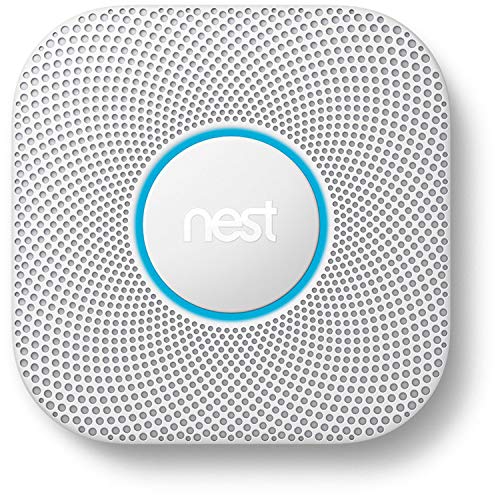
Google Nest Protect
a combined smoke and carbon monoxide alarm built around spoken voice alerts, a split-spectrum sensor approach, phone notifications and a path light that glows when you walk underneath at night. In prose terms it sits in the premium tier, and its appeal is clarity: instead of only sounding a tone, it can tell you in words whether the concern is smoke or carbon monoxide and in which named room it was detected. That clarity matters most in larger homes, in homes with sleeping children, and in homes where a guest or an older relative may not recognise a bare alarm tone for what it is.
Best for: households whose rooms, wiring and habits match the description above and who will set the unit up with its correct room name, test it from the button on the device, and keep its app notifications switched on. Not suited for: any household that would treat a connected feature as a reason to install fewer alarms than local guidance and the manufacturer require, to skip monthly testing, or to leave an expired unit in place because the app still opens. Check the current listing and the manual for the exact sensing type, power source and replacement life before you buy, and check price on Amazon at the time you order rather than relying on any figure quoted elsewhere.
First Alert Onelink Safe & Sound
a combined smoke and carbon monoxide alarm from a long-established alarm maker, positioned in the premium tier and designed to add smart alerts and voice-assistant style features to a familiar hardwired footprint. Its appeal is continuity: households that already trust a traditional alarm brand, that have hardwired boxes in the ceiling, or that want a detector that also behaves like a small smart speaker get a route into connected alerts without changing the basic idea of what sits on the ceiling.
Best for: households whose rooms, wiring and habits match the description above and who will set the unit up with its correct room name, test it from the button on the device, and keep its app notifications switched on. Not suited for: any household that would treat a connected feature as a reason to install fewer alarms than local guidance and the manufacturer require, to skip monthly testing, or to leave an expired unit in place because the app still opens. Check the current listing and the manual for the exact sensing type, power source and replacement life before you buy, and check price on Amazon at the time you order rather than relying on any figure quoted elsewhere.
X-Sense Smart Smoke Alarm
a Wi-Fi connected smoke alarm family positioned in the entry to mid tier, usually sold singly and in multi-packs for whole-home coverage. Its appeal is scale: because the per-unit positioning is lower, households can more realistically cover every bedroom, hallway and level rather than protecting one landing and hoping that is enough. App alerts, battery models and multi-pack buying make it a practical candidate for renters, landlords preparing a property carefully, and owners of larger homes who need many units.
Best for: households whose rooms, wiring and habits match the description above and who will set the unit up with its correct room name, test it from the button on the device, and keep its app notifications switched on. Not suited for: any household that would treat a connected feature as a reason to install fewer alarms than local guidance and the manufacturer require, to skip monthly testing, or to leave an expired unit in place because the app still opens. Check the current listing and the manual for the exact sensing type, power source and replacement life before you buy, and check price on Amazon at the time you order rather than relying on any figure quoted elsewhere.

Kidde Smart Smoke Detector
a smart smoke and carbon monoxide alarm from another long-established life-safety brand, positioned in the mid tier. Its appeal is the combination of a trusted alarm name, app notifications and compatibility conversations that suit households already using other connected safety products. For buyers who want a recognised manufacturer, clear replacement guidance and a detector that reports problems to a phone as well as sounding locally, it is a natural name to put on a shortlist and then verify against the current listing and manual.
Best for: households whose rooms, wiring and habits match the description above and who will set the unit up with its correct room name, test it from the button on the device, and keep its app notifications switched on. Not suited for: any household that would treat a connected feature as a reason to install fewer alarms than local guidance and the manufacturer require, to skip monthly testing, or to leave an expired unit in place because the app still opens. Check the current listing and the manual for the exact sensing type, power source and replacement life before you buy, and check price on Amazon at the time you order rather than relying on any figure quoted elsewhere.
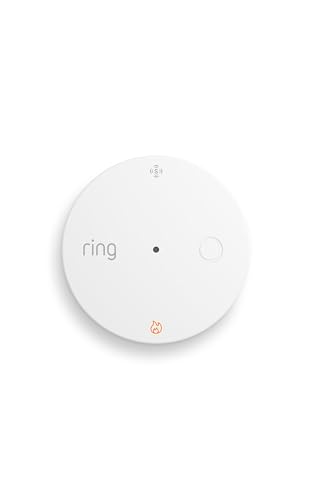
Ring Alarm Smoke and CO Listener
a different kind of product entirely: it does not detect smoke itself. It listens, from a short distance away, for the standard alarm sound of an existing smoke or carbon monoxide detector and forwards that event into the Ring Alarm system. Positioned in the entry tier, it suits households whose existing detectors are still within their service life, are correctly placed and are interconnected or audible, and who mainly want remote notification of an alarm event at home while they are away. It is an add-on, never a substitute for a working detector.
Best for: households whose rooms, wiring and habits match the description above and who will set the unit up with its correct room name, test it from the button on the device, and keep its app notifications switched on. Not suited for: any household that would treat a connected feature as a reason to install fewer alarms than local guidance and the manufacturer require, to skip monthly testing, or to leave an expired unit in place because the app still opens. Check the current listing and the manual for the exact sensing type, power source and replacement life before you buy, and check price on Amazon at the time you order rather than relying on any figure quoted elsewhere.

First Alert Smart Smoke and Carbon Monoxide Alarm
a connected combined alarm positioned in the mid tier, offering app alerts for smoke and carbon monoxide events alongside the local alarm sound. Its appeal is straightforward: two hazards, one ceiling position, remote notification when nobody is home, and a brand name many households already have somewhere in the house. As with every combined unit, the buying question is placement, because carbon monoxide and smoke guidance must both be satisfied by the rooms you actually cover.
Best for: households whose rooms, wiring and habits match the description above and who will set the unit up with its correct room name, test it from the button on the device, and keep its app notifications switched on. Not suited for: any household that would treat a connected feature as a reason to install fewer alarms than local guidance and the manufacturer require, to skip monthly testing, or to leave an expired unit in place because the app still opens. Check the current listing and the manual for the exact sensing type, power source and replacement life before you buy, and check price on Amazon at the time you order rather than relying on any figure quoted elsewhere.
Common Mistakes
The recurring mistakes are starting with a brand, buying one unit for a whole home, forgetting carbon monoxide in a fuel-burning home, mixing incompatible systems, choosing power nobody will maintain, and treating app silencing as a solution to a badly placed alarm. A subtler mistake is copying a neighbours system into a different layout with different hazards. Your map, your appliances and your sleepers are the specification; a neighbours hallway is not.
Pro Tips From the Placement-First Approach
Install a whole system on one day where you can, so testing, naming and replacement dates align. Photograph every label before the unit goes up. Name rooms in the app exactly as your family speaks about them, because in an alert at night, familiar words beat formal ones. Keep one printed page with the escape plan, meeting point, alarm dates and emergency numbers where a babysitter or house-sitter will find it. These small acts of administration are where smart systems repay their owners.
Worked Examples
A three-bedroom family home with a gas boiler chooses combined interconnected units in and outside the bedrooms, a premium voice-alert unit where the children sleep, and a written test routine on the family calendar. A one-bedroom flat with electric heating chooses a smaller count, battery power the tenant can maintain within the tenancy terms, and app alerts for long work days. A second home chooses remote fault reporting above all, a neighbour with a key and a plan, and sealed units whose single replacement date the owner can track from afar. Same category, three different correct answers, each produced by the steps rather than by a ranking.
Sensor Types, Explained in Plain Language
A smoke alarm earns its keep by sensing particles you may not see or smell while you sleep, and the sensing method shapes how it behaves. Photoelectric sensing is generally responsive to the larger particles produced by smouldering fires, the slow kind that can begin in upholstery, bedding or wiring insulation and produce smoke long before open flame. Ionisation sensing has historically responded quickly to the smaller particles of fast flaming fires, although it has also been associated with more nuisance alarms near kitchens and bathrooms in many households. Dual-sensor and split-spectrum designs try to cover both fire profiles in one unit. None of this makes one technology a magic answer for every room. It means the honest buying question is which fire profiles your home is most likely to face, what your local rules require or recommend, and what the manufacturer states for the specific model in its manual.
Carbon monoxide is a separate hazard with a separate sensor. It is a colourless, odourless gas produced by incomplete combustion from furnaces, boilers, gas appliances, fireplaces, generators and vehicles in attached garages. A combined smoke and carbon monoxide alarm puts both sensors in one housing, which saves ceiling positions and simplifies replacement dates, but it does not change the placement logic for either hazard. Follow the manufacturer instructions and local requirements for each hazard rather than assuming one box in one hallway covers every room equally. If your home has fuel-burning appliances, an attached garage or a fireplace, carbon monoxide detection deserves the same seriousness as smoke detection, on every level and near sleeping areas as guidance directs.
Smart features sit on top of the sensing, never instead of it. A connected alarm can send a phone alert, name the room, warn of smoke before the full alarm sounds, silence a nuisance alarm from an app within safe limits, report a low battery before the chirping starts at night, and log events you would otherwise never know about. Those are genuine benefits, especially for people who travel, keep a second property, support an elderly parent, or cannot hear a hallway alarm clearly from a bedroom. But the local alarm sound, correct placement, working power and a sensor that is still within its service life are the foundation. An app notification to a phone that is switched off, out of coverage or ignored protects nobody, which is why this guide treats connectivity as the second question and detection as the first.
Power, Batteries and the End-of-Life Question
Every alarm has a service life, and ignoring it is one of the most common household safety failures. Smoke sensors degrade over time, so manufacturers print a manufacture or replacement date and direct you to replace the whole unit at the end of its stated life, commonly around a decade for smoke alarms and often shorter for carbon monoxide sensors. A smart alarm that reports its own status is helpful here, but the date on the unit is the authority. When you install any detector, write the installation date where you will see it, set a calendar reminder for its replacement, and photograph the label for your records. When you move into a new home, assume nothing: check every unit, and replace any that are expired, undated, damaged or of unknown history.
Power choices involve honest trade-offs. Hardwired alarms with battery backup keep working through outages and suit homes that already have alarm wiring in the ceiling, but replacing them can involve mains electricity, which is work for a qualified electrician if you are not competent and permitted to do it yourself. Sealed long-life battery models remove the chore of annual battery swaps and remove the temptation for anyone to borrow an alarm battery for a toy or remote, at the cost of replacing the whole unit when the battery ends. Replaceable-battery models cost less up front and keep the same housing for longer, but only if someone in the household actually tests them and changes batteries on schedule. Choose the power type your household will genuinely maintain, not the one that sounds best in a listing.
Low-battery behaviour is where smart alarms quietly prove themselves. A conventional alarm announces a tired battery with a chirp, usually at night, and households respond by removing the battery and meaning to replace it tomorrow. A connected alarm can warn a phone days earlier, name the exact room and keep warning until the issue is resolved, which turns a forgotten chirp into a completed task. That benefit only counts if notifications are switched on, the app account is maintained and the alarm stays connected to the home network. After any router change, power cut or internet outage, open the app and confirm every alarm is reporting normally rather than assuming the system healed itself.
Households Are Different, So the Right System Is Different
Families with young children should weight voice alerts, interconnection and closed-door performance heavily, and should think about what a child actually does when an alarm sounds. Children can sleep through tones that wake adults, which is one reason guidance emphasises interconnected alarms in the parents room and planning who collects whom in the night. A smart system that announces the room can shorten the adults decision-making in the worst minute of their lives. Whatever you buy, rehearse the plan in an age-appropriate, calm way, keep bedroom doors closed at night if your local fire guidance recommends it, and make sure babysitters and grandparents staying over know the meeting point too.
Older adults and anyone with hearing loss need an honest conversation about audibility. A standard alarm tone may not wake every sleeper, and specialist alerting such as low-frequency sounders, bed shakers and strobe devices exists for this reason, sometimes as part of a system and sometimes as separate equipment recommended by local fire services or hearing professionals. Smart phone alerts help only if the phone is near, charged, audible and set to break through silent modes for critical alerts where the system supports it. Do not assume a connected alarm solves a hearing problem by itself. Test whether the alarm wakes the actual sleeper in the actual bedroom, and seek specialist advice where it does not.
Landlords, tenants and second-home owners face a documentation problem as much as a detection problem. Duties for providing, placing and maintaining alarms in rented property are set by local law and tenancy rules, and they are not optional or transferable by a verbal agreement at the door. Connected alarms can help an owner confirm a unit is online and can help a tenant report a fault quickly, but the legal duty is satisfied by compliant, working, in-date alarms in the right places, not by an app screenshot. If you manage a property, keep installation dates, test records and replacement dates in writing, check alarms at every tenancy change, and replace any unit whose history you cannot prove.
Pet owners and people who are out all day often buy smart alarms for the remote alert alone, and that is a rational purchase as long as its limits are understood. An alert lets you call a neighbour with a key, contact emergency services and get home or get help moving faster than you would have done. It does not open a door for a pet, and pets cannot be relied on to find their own way out. Window notices for rescue services, a neighbour who knows the plan and, above all, preventing fires through safe cooking, heating and charging habits remain the real protection for animals in an empty house. Buy the alert for the minutes it saves in summoning help, not for a rescue it cannot perform.
Costs Without Prices: Thinking in Tiers and Totals
Because listings change constantly, this guide talks about money in tiers rather than fixed figures. Entry tier connected alarms cover the core job of detection plus basic app alerts and are often sold in multi-packs. Mid tier models add combined carbon monoxide sensing from major brands, better interconnect ecosystems or richer notifications. Premium tier models add voice alerts, more advanced sensing, speaker or lighting extras and the polish of a mature app. The tier that matters is the one that lets you cover every required position in the home. One premium alarm in the hall and nothing in the bedrooms is a worse system than a full map of honest entry tier alarms, and it is not close.
Count the whole system before comparing any single unit. A real budget includes a unit for every required position, any hub the system needs, mounting hardware for high ceilings, possible electrician time for hardwired replacements, replacement units at end of life, and any optional monitoring subscription you actually intend to keep paying. Multi-packs change the maths for larger homes. So does mixing: some households put premium voice-alert units in sleeping areas and simpler connected units elsewhere in the same interconnected system, where the manufacturer supports that mix. What you should not do is mix in a way that breaks interconnection or leaves one area reporting to an app nobody checks.
Running costs are mostly attention costs. Batteries on the schedule the model requires, a monthly test, a glance at the app after network changes, and a replacement fund for the year the units expire. Sealed long-life models turn replacement into a single dated event for the whole set if you install them together, which many households find easier to plan than staggered battery swaps. Whichever route you choose, write the dates down at installation. The cheapest alarm is the one that works on the night it is needed, and the most expensive is any alarm, at any tier, that was expired, unpowered or in a drawer.
Placement Is Not a Detail, It Is the Product
Ask a fire professional what matters most and placement comes before brand every time. Alarms belong where your local code and the manufacturer instructions require them: typically inside every bedroom, outside every sleeping area, and on every level of the home including the basement, with additional guidance for kitchens, garages, utility rooms and long hallways. Exact requirements differ by jurisdiction and by whether the home is new, renovated or existing, so treat any general article, including this one, as a prompt to check the rules that apply to your address rather than as the rule itself. When a general guide and your local requirement disagree, the local requirement wins, every time.
Within a room, position changes performance. Smoke rises, so ceiling mounting or high wall mounting within the limits the manual allows is the normal pattern, keeping the unit away from corners where dead air can delay smoke reaching the sensor, away from doors and windows where drafts can push smoke away, and at the distances from cooking appliances and bathrooms that the manufacturer specifies to reduce nuisance alarms without leaving the room unprotected. Never solve nuisance alarms by removing a battery, disconnecting a unit or moving it somewhere useless. Solve them by correcting the position within the allowed guidance, choosing a sensing type better suited to that location, using a model with a hush feature, and improving ventilation habits around cooking and showers.
Interconnection is the quiet feature that saves the most sleep and possibly more. When one alarm sounds, interconnected alarms sound together throughout the home, so a fire starting in a basement, a garage-adjacent utility room or a closed spare bedroom alerts people sleeping behind closed doors on another floor. Older homes with standalone battery alarms can gain a form of this through wirelessly interconnected models, which is one of the strongest reasons to consider a coordinated smart system rather than a single showcase detector in the hall. When you plan a purchase, plan the whole map of the home first: count the required positions, mark which are hardwired and which are battery positions, and only then choose models that fill that map.
Testing, Maintenance and the Habits That Keep Alarms Honest
Press the test button on every alarm monthly, or on the schedule your manufacturer and local guidance direct if they say otherwise. The test confirms the sounder, the power and, on many models, the interconnect link to the other alarms in the home. It takes minutes, it can be combined with a household routine such as the first weekend of the month, and it is the single habit that separates an alarm system from a set of ceiling decorations. Smart alarms can log tests, remind you and run electronic self-checks, and those prompts are worth enabling, but an app self-check is not always the same as physically pressing the button and hearing the alarm in the room, so follow the manual on what its self-test actually verifies.
Keep alarms clean and unobstructed. Dust, cobwebs and insects can interfere with sensing chambers, and paint can ruin a detector, so never paint over an alarm, never cover it to silence it during decorating without restoring it the same day, and clean it gently with a soft brush or vacuum attachment as the manual directs. Keep the area around each unit clear when you rearrange tall furniture or storage. If an alarm is repeatedly dusty because it sits above a workshop area or near a renovation, deal with the dust source and protect the unit during work in the way the manufacturer allows, then restore and test it as soon as the work pauses.
Practise what happens after the alarm sounds. Every household needs an escape plan with two ways out of each room where that is possible, a meeting point outside, and a rule that nobody goes back inside for belongings, pets or phones. Practise it in daylight, then talk through the night version: doors closed while sleeping can slow fire and smoke spread and buy time, a torch near the bed helps, and children need to know that an alarm means get out and stay out, not hide and not wait. A smart alarm can start the warning a little earlier or describe it a little more clearly. The plan is what turns that warning into people standing safely outside.
Testing Your Shortlist Against Three Difficult Rooms
When two or three models survive the seven steps, settle the choice by walking them through the three rooms that embarrass most alarm systems. The first is the kitchen doorway, where cooking smoke, steam and daily life test nuisance behaviour and hush design. Ask of each candidate: does its manual endorse this position at this distance, does its sensing suit the room beyond it, and can a known minor event be hushed without disabling protection? A model that fails the kitchen doorway on paper will fail it at dinner time, and no application feature compensates for an alarm a household learns to dread.
The second room is the furthest bedroom, the one behind a closed door at the end of the landing, often a child room, a guest room or the room of the deepest sleeper. Ask whether an event anywhere in the home sounds here at full strength through interconnection, whether the alert explains itself to a half-awake occupant, and whether the person responsible for that sleeper receives the event too. This room is where voice alerts and interconnection stop being features and become the entire argument, and it is the room most often forgotten by buyers comparing models at a kitchen table downstairs.
The third room is the one nobody sleeps in: the utility room with the boiler, the basement with the freezer and the stored paint, the garage-adjacent space where a fire or a carbon monoxide problem can develop unwatched for hours. Ask whether your chosen system covers it, whether its event reaches a phone as well as a ceiling, and whether its sensor type suits dust, cold or exhaust as the manual directs. Fires and gas faults do not schedule themselves for occupied rooms, and a choosing process that only imagines bedrooms will under-protect exactly the spaces where problems start quietly.
Run one more test, this time on the household rather than the hardware. Imagine the low-battery warning arriving during the busiest week of your year. Who sees it, who acts, and what happens if that person is travelling? Imagine the router being replaced by a new internet provider on a Saturday. Who reconnects the alarms on Sunday? Imagine the replacement date arriving a decade from now, in a home that may have different occupants. Where is it written? A model choice that survives these questions is robust in the way that matters, because it has been chosen for a real household with a real future rather than for an idealised one.
Choosing, done this way, ends without drama. The map set the count, the hazards set the sensing, the wiring and habits set the power, the sleepers set the alerting, and the difficult rooms separated the finalists. What remains is to buy the complete set, install it in one programme, and move the household energy from choosing to the far more valuable work of testing, practising and maintaining. The best-chosen detector is the one whose choosing is finished, on the ceiling and in date.
Before you finalise the choice, do one unglamorous thing: read the replacement and support horizon for each finalist as carefully as the sensing claims. Note the stated service life, whether batteries are sealed or replaceable, how the maker announces end of life, and whether the application and hub the system depends on are current products with a visible future. A detector is a decade-long commitment sitting quietly on a ceiling, and the choosing process should honour that timescale. The model that will still be supported, understood and replaceable like-for-like in nine years is a stronger choice than a marginally cleverer model whose ecosystem may have moved on without it.
The Fit Check Behind the Choice: Auditing Your Space for a Smart smoke detector
Guides usually stop at the happy path, the day everything pairs, fits or works first time. This section covers the rest of the ownership curve with a smart smoke detector: the judgement calls, the awkward cases and the fixes that experienced owners reach for. Keep it bookmarked for the second month rather than the first day; that is when these details start to matter.
Judge a smart smoke detector first as a life-safety device: it must meet the safety standards for your region, sense the fire types its placement demands and sound a full alarm locally whether or not any network exists. Smart alerts, hush from the app and interconnect behaviour are valuable additions, never substitutes for that foundation. Plan placement room by room following fire-safety guidance: near sleeping areas, on each level, away from the steam and cooking fumes that cause nuisance alarms, and mounted where its test button stays reachable. Confirm how units interconnect in your home and whether your network reaches each position.
For a household that travels, an alert to your phone when an alarm sounds at home turns a neighbour’s phone call into the backup, not the first warning. In a home with a hearing-impaired family member, interconnected alarms with app and light-based alerting options deserve priority in your checks. For rental or multi-unit living, detectors that report low battery and end-of-life to your phone end the guesswork about units you cannot hear chirp. The common thread is that most problems with a smart smoke detector are placement, settings or expectation problems wearing a fault’s clothing. Work through the checks in order before concluding that anything is broken or badly made.
Apply all of this to the listings in front of you. When a listing such as the Google Nest Protect, First Alert Onelink Safe & Sound and X-Sense Smart Smoke Alarm catches your eye, resist judging it by its headline claim and instead run the checks above against it: does its stated role match the room you measured, does its control path suit your household, and does the maker’s own guidance support the job you have in mind. A model that answers those questions cleanly on paper usually answers them cleanly in the home, and one that dodges them in the listing will dodge them on your wall, shelf or desk as well.
Kitchens and bathrooms punish badly placed detectors with nuisance alarms, and a detector that cries wolf gets its battery pulled, the most dangerous outcome of all. Smart features depend on the network, but the alarm itself must not; verify the unit alarms fully and interconnects even with the router unplugged. If nuisance alarms cluster around cooking or showers, relocation by a modest distance usually cures what sensitivity settings cannot. If the app reports a detector offline, check the unit’s own status light and battery before blaming the network; the detector may be signalling a real fault.
- Start with placement and settings before assuming a fault.
- Change one thing at a time so you know what fixed it.
- Keep a short written note of the working configuration.
- Re-run the basic test after any furniture, network or season change.
- Check the maker’s manual for your exact model before forcing anything.
- Stop and reassess if a fix makes a safety-related behaviour worse.
If tests from the app pass but the sounder seems weak, test at the unit itself and replace any detector approaching its end-of-life date. Test every detector monthly at the unit, vacuum its vents gently to clear dust, replace batteries or the whole unit on the maker’s schedule, and never let a detector pass its printed end-of-life date in service.
Keep a short note of what worked, which setting, which position, which order of steps. The next time the smart smoke detector misbehaves, and most do eventually, that note turns an afternoon of guessing into ten minutes of fixing.
It also helps to think in seasons rather than in days. A smart smoke detector that seems ideal in the week it arrives may face different light, different temperatures, different routines and different demands a few months later, and the models that age well are the ones chosen with that longer view in mind.
Keep the household in the loop as you decide. The person who did not choose the smart smoke detector is usually the person who discovers its most annoying habit first, and a two-minute conversation before buying can surface the objection that saves a return.
Documentation is an underrated feature of ownership. Keep the manual, the receipt and a note of your settings together, because the day something needs adjusting is never the day you want to reconstruct how it was set up.
Frequently Asked Questions
How many smart smoke detectors does a home actually need?
As many as your local requirements and the manufacturer layout demand, which for most homes means inside every bedroom, outside every sleeping area and on every level including the basement, with extra attention to utility areas and long hallways. Count positions on a floor plan before you shop. One premium unit cannot cover a closed bedroom door on another floor, and a connected app alert is not a substitute for a detector in the room where a fire starts. When a general guide and your local rule differ, follow the local rule.
Does a smart smoke detector replace a regular smoke alarm?
A smart smoke detector is a smoke alarm, with connectivity added to detection, sounding and reporting. It replaces a conventional alarm position for position when it matches the required sensing, power and placement for that position. It does not replace the other positions in the home, it does not extend the service life of neighbouring old alarms, and its app features never replace the local alarm sound, monthly button testing or an escape plan. Replace expired conventional units rather than working around them.
What should I do when a smart alarm reports carbon monoxide?
Treat it as a real emergency. Get everyone, including pets where you can do so without delay, out of the building, and call your local emergency number or gas emergency service from outside. Do not silence the alarm and investigate, do not open the app and wait to see whether the reading falls, and do not re-enter until professionals say it is safe. Carbon monoxide cannot be seen or smelled, and the detector exists precisely because your senses cannot judge this hazard. Ventilation experiments are for professionals with instruments, not for occupants with a phone.
How often should I test a smart smoke detector?
Press the test button monthly, or on any schedule your manufacturer or local guidance sets if it differs, and listen for the alarm in the room and, on interconnected systems, throughout the home. Enable app reminders and self-checks, but read the manual on what an electronic self-check actually verifies, because it may not prove the sounder in the way a button test does. Test again after installation, after any unit is moved, after building work that produced heavy dust, and whenever a unit has been silenced repeatedly so you know it is fully back on guard.
When must a smart smoke detector be replaced?
Replace the whole unit at the end of the service life the manufacturer states, using the manufacture or replacement date printed on the device, and sooner if it is damaged, painted, repeatedly false-alarming without a fixable cause, or failing its test. Combined carbon monoxide models may have a shorter sensor life than the smoke side, and the earlier date governs. Smart features do not extend sensor life. Write the replacement date into a calendar when you install the unit, because a decade is exactly the kind of deadline households forget.
Can I silence a smart smoke detector from my phone?
Most connected models allow app silencing of a known, minor event such as cooking smoke, within limits the manufacturer sets and usually only when your phone is connected and the situation matches the feature design. Use it only when you can see the cause is harmless, never for an unexplained alarm and never for a carbon monoxide alert, and confirm the alarm returns to normal protection afterwards. If alarms repeat, fix the cause through position, sensor type or cleanliness rather than reaching for the silence button as a lifestyle.
Related Guides and Next Steps
Build the whole system rather than a single purchase. The guides below extend this one: the other articles in this smart smoke detector cluster cover the decision from different angles, and the live guides on adjacent smart home safety and security topics help you connect alarms with the rest of a safer, better-instrumented home. Read the placement and testing guidance before you order anything, count your required positions on a floor plan, and then buy to fill the map.
how to install a smart smoke detector
is a smart smoke detector worth it
smart smoke detector buying guide
smart smoke detector pros and cons