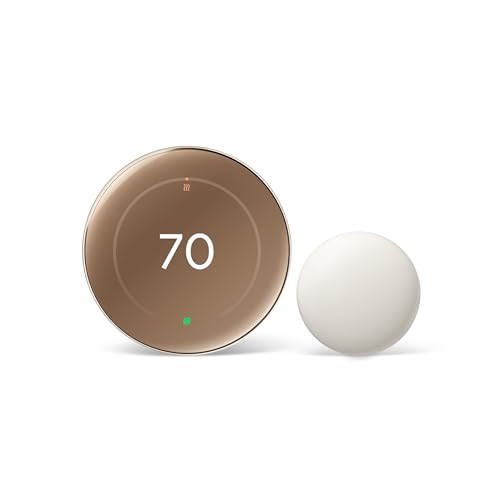
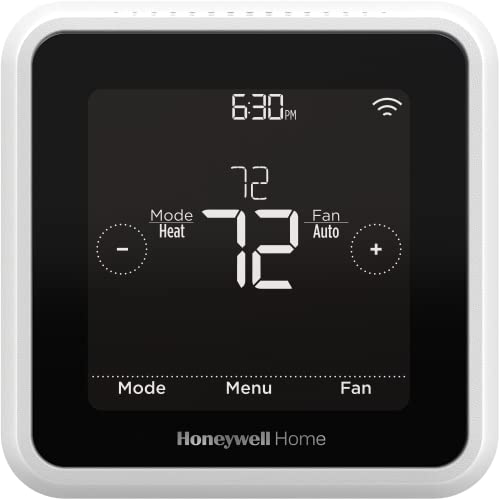
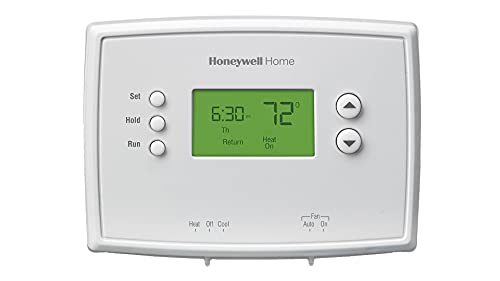
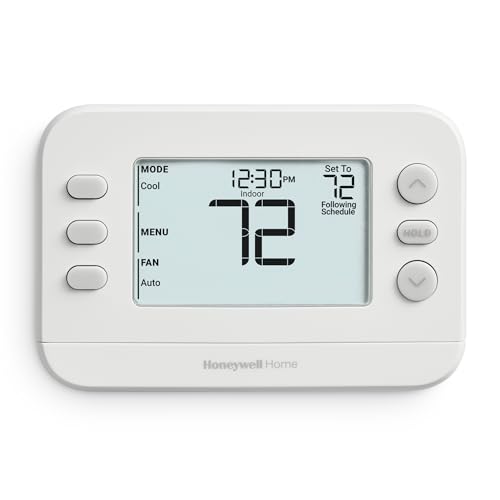
The best digital thermostat for home is not a smart thermostat. A smart thermostat connects to Wi-Fi, learns your schedule, and lets you change the temperature from your phone. A digital thermostat does something simpler and, for many homes, better: it shows the temperature on a clear digital display, it follows the schedule you program into it, and it does so without Wi-Fi, without an app, and without ever asking for a software update.
This guide compares six digital thermostats for home, all verified against the site’s own product lookup with brand and model checked against each listing. Two are simple non-programmable models from Honeywell: the X2P RTH20B and the RTH111B1024. One is a 5-2 day programmable Honeywell, the TH1100DV1000. Two are 7-day programmable touchscreen models: the Emerson 1F97-1277 and the White-Rodgers 1F95-1277. One is the Lux TX9600TS, a universal 7-day programmable touch screen thermostat that works with nearly every heating system.
None of these thermostats is smart, and that is the point. A digital thermostat is for a home that wants comfort, savings, and reliability without the complexity of a connected device. The guide below explains the difference between programmable and non-programmable thermostats, what a 5-2 and a 7-day schedule mean, and how to choose the model that fits the house and the household.
The savings are real and easy to understand. Heating and cooling are the largest part of most household energy bills, and a programmable thermostat that lowers the temperature while the house is empty can cut that bill by a tenth or more. The thermostat pays for itself in the first year, and then it keeps saving money for a decade. That is why a programmable digital thermostat is one of the best value purchases in a home, even though it is one of the cheapest.
In this guide
Quick picks: best digital thermostat for home
| # | Product | Where to buy |
|---|---|---|
| 1 | Honeywell Home X2P RTH20B | Check on Amazon |
| 2 | Honeywell Home RTH111B1024 | Check on Amazon |
| 3 | Honeywell TH1100DV1000 | Check on Amazon |
| 4 | Emerson 1F97-1277 | Check on Amazon |
| 5 | White-Rodgers 1F95-1277 | Check on Amazon |
| 6 | Lux TX9600TS | Check on Amazon |
How the picks were chosen
We started with the product lookup and kept only digital thermostats for home use: non-programmable and programmable models with a digital display, from makers with a track record in heating controls. Smart thermostats were left out on purpose, because this article is about digital non-smart thermostats, and the site already has a smart-thermostat article that covers them. Generic no-brand thermostats were also left out, because a product with no brand and no model cannot be verified, and a thermostat is too important to buy unbranded.
Each candidate was checked by fetching its full listing title, which is how the exact model is confirmed: the model number is the identity of a thermostat, and a one-letter difference is a different product. A listing that was merely compatible with a Honeywell model was rejected, because compatibility is not the genuine product. The six picks were then sorted by type: two simple non-programmable models, one 5-2 programmable, and three 7-day programmable models with touchscreens.
What a digital thermostat is, and what it is not
A digital thermostat is a thermostat with a digital display that shows the temperature in numbers, not on a dial. It reads the temperature with an electronic sensor, which is more accurate than the mechanical sensor in an old dial thermostat, and it switches the heating or cooling on and off with precision. A digital thermostat can be programmable or non-programmable, and it can have buttons or a touchscreen, but it does not need Wi-Fi.
A smart thermostat is a digital thermostat with Wi-Fi, an app, and a learning algorithm. It can be controlled from a phone, it can learn the household schedule, and it can adjust itself based on whether anyone is home. That is useful for some households, but it is not necessary for comfort, and it brings complexity: an account, a password, a software update, and a device that stops working when the Wi-Fi does.
The digital thermostats in this guide are the right choice for a home that wants the benefits of a modern thermostat, which are accuracy, a clear display, and a programmable schedule, without the cost and complexity of a smart thermostat. They are also the right choice for a rental property, a home with poor Wi-Fi, and anyone who does not want a thermostat that depends on the internet.
There is one more difference that matters: longevity. A digital thermostat has no software to update, no account to maintain, and no server that can be shut down. It will work for ten or fifteen years without ever asking for anything except new batteries. A smart thermostat, by contrast, depends on the maker continuing to support it, and makers do stop supporting older models. For a device that controls the heating of a house, that independence is worth a great deal.
What makes the best digital thermostat for home worth buying
First, it must fit the heating and cooling system. A thermostat is wired to the system, and the wrong thermostat can damage it. Check the system type, whether it is 1 heat and 1 cool, a heat pump, or a multi-stage system, and buy a thermostat that supports it. The Lux TX9600TS in this guide is the universal pick for homes where the system is unusual or unknown.
Second, the display must be easy to read. A thermostat is read from across the room, often in the dark, so large numbers and a backlit display matter. Third, the programming must be simple enough to actually use: a schedule that is never programmed saves no energy, so a touchscreen or a simple 5-2 pattern is better than a complex 7-day schedule that no one sets. Fourth, check the power: most digital thermostats run on batteries, which means they work during a power outage, but the batteries must be changed every year or two.
Fifth, check the build quality and the warranty. A thermostat is touched every day and it controls an expensive heating system, so it should feel solid and it should come from a maker that stands behind it. Honeywell, Emerson, White-Rodgers, and Lux have all made thermostats for decades, and their models are supported with manuals, parts, and help lines. A no-brand thermostat may be cheaper, but if it fails in the middle of winter, there is no one to call.
Quick picks at a glance
| Product | Type | Display | Power | Best for |
|---|---|---|---|---|
| Honeywell X2P RTH20B | Non-programmable | Digital backlit | Battery | Simplicity |
| Honeywell RTH111B1024 | Non-programmable | Digital | Battery | Proven design |
| Honeywell TH1100DV1000 | 5-2 programmable | Digital | Battery | Energy saving |
| Emerson 1F97-1277 | 7-day programmable | Touchscreen | Battery | Full control |
| White-Rodgers 1F95-1277 | 7-day programmable | Touchscreen | Battery | Premium display |
| Lux TX9600TS | 7-day programmable | Touch screen | Battery | Universal fit |
The picks in detail

Honeywell Home X2P Thermostat – Digital Display, 1 Heat/1 Cool, RTH20B1027/U
The Honeywell Home X2P RTH20B is the simplest thermostat in this guide, and that is its strength. It is a digital thermostat with a backlit display, a 1-heat and 1-cool configuration, and a simple interface that anyone can use without reading a manual. It does one job, which is to keep the house at the temperature you set, and it does it without Wi-Fi, without an app, and without a subscription.
The X2P is a newer Honeywell model, and it shows in the design: a clean digital display, large numbers that are easy to read from across the room, and buttons that are large enough to use without glasses. It runs on batteries, so it works during a power outage, and it fits the standard wiring of a 1-heat and 1-cool system.
For a home where the thermostat is a utility and not a hobby, the X2P is the right choice. It will not learn your schedule, it will not connect to your phone, and it will not surprise you with a software update. It will keep the house warm in winter and cool in summer, year after year, and that is exactly what a thermostat is for.
This is the pick for the buyer who wants the simplest possible thermostat and is willing to give up scheduling for simplicity. If the house needs a schedule, the programmable models below are the better choice, but for a home where someone is always there to turn the dial, the X2P is enough.
Key specs:
- Digital display, backlit
- 1 heat / 1 cool configuration
- Battery powered; model RTH20B1027/U
Strengths:
- Simplest thermostat in this guide
- Large, easy-to-read display
- No Wi-Fi, no app, no subscription
Trade-offs:
- No programmable schedule
- Only 1 heat and 1 cool
- No remote control
Homes where someone is always there to adjust the temperature. It suits older homeowners, rental properties, and anyone who wants a thermostat that just works.
Best for: the simplest possible thermostat Not suited for: homes that need a daily schedule
Check price on Amazon: Honeywell Home X2P RTH20B

Honeywell Home RTH111B1024 – Digital Non-Programmable Thermostat, 1 Heat/1 Cool
The Honeywell Home RTH111B1024 is the classic non-programmable digital thermostat: a simple, reliable control with a digital display, a 1-heat and 1-cool configuration, and a design that has been in homes for years. It is the thermostat that a landlord installs, a homeowner replaces, and a family uses without ever thinking about it.
The RTH111B is a step up from the X2P in one respect: it is the model that heating technicians know by heart, which means it is easy to install, easy to replace, and easy to find parts for. It uses the same standard wiring as the X2P, and it fits the same wall plate, so upgrading from an old mercury thermostat is a straightforward job.
The digital display shows the temperature clearly, and the controls are simple: set the temperature, choose heat or cool, and the thermostat does the rest. There is no schedule to program, no app to install, and no Wi-Fi password to enter. For a home that does not need a schedule, that simplicity is a feature, not a limitation.
This is the pick for the buyer who wants the most proven non-programmable thermostat Honeywell makes. It is not the newest model, and it is not the prettiest, but it is the one that has been keeping homes comfortable for longer than any other in this guide.
Key specs:
- Digital non-programmable display
- 1 heat / 1 cool configuration
- Model RTH111B1024
Strengths:
- Most proven non-programmable design
- Easy to install and replace
- Simple controls anyone can use
Trade-offs:
- No programmable schedule
- Basic display, no backlight mentioned
- Only 1 heat and 1 cool
Rental properties, older homes, and anyone replacing an old thermostat with a simple digital one. It suits buyers who want the most proven model, not the newest.
Best for: a proven non-programmable replacement Not suited for: homes that need a schedule
Check price on Amazon: Honeywell Home RTH111B1024

Honeywell TH1100DV1000 – 5-2 Day Programmable Thermostat, Digital Display
The Honeywell TH1100DV1000 is the first programmable thermostat in this guide, and it is the one that saves money. It is a 5-2 day programmable thermostat, which means it can follow one schedule on weekdays and a different schedule on the weekend. Set it once, and the house is warm when you wake up, cool while you are at work, and warm again when you come home, without anyone touching the thermostat.
The 5-2 schedule is the right amount of programming for most homes. A 7-day thermostat offers more flexibility, but most people have the same routine five days a week and a different one on the weekend, and the TH1100DV matches that pattern exactly. It is simpler to program than a 7-day model, and it is less likely to be set wrong.
The TH1100DV is a long-running Honeywell model, which means it is proven, widely available, and easy to find help for. It works with most heating and cooling systems, and its digital display is clear and easy to read. For a home that wants to save energy without thinking about the thermostat every day, this is the pick.
This is the thermostat for the buyer who wants a schedule but does not want complexity. Program it once, and it will save energy every day for years, paying for itself many times over in lower heating and cooling bills.
Key specs:
- 5-2 day programmable schedule
- Digital display
- Model TH1100DV1000
Strengths:
- Programmable schedule saves energy
- 5-2 pattern matches real life
- Long-running proven model
Trade-offs:
- Programming takes some patience
- No Wi-Fi or remote control
- Basic display
Homes with a regular routine that want to save energy. It suits families who are out during the day and home in the evening, and anyone who wants a schedule without a smartphone app.
Best for: saving energy with a simple schedule Not suited for: homes with an irregular routine
Check price on Amazon: Honeywell TH1100DV1000

Emerson 1F97-1277 – 7-Day Programmable Thermostat, Touchscreen
The Emerson 1F97-1277 is the flexible programmable thermostat in this guide: a 7-day programmable thermostat with a touchscreen, which means every day of the week can have its own schedule. If Monday is different from Tuesday, and Saturday is different from Sunday, the 1F97-1277 can handle it, and it can do so with a touchscreen that is easier to use than buttons.
The touchscreen is the feature that sets this model apart from the button-controlled thermostats above. Programming a schedule with buttons means pressing the same button dozens of times; programming it on a touchscreen means tapping the day and the time directly. For a buyer who has never programmed a thermostat before, the touchscreen makes the difference between a schedule that gets set and one that never does.
Emerson is a trusted name in heating and cooling controls, and the 1F97-1277 is a solid, well-built thermostat. It works with most systems, it has a clear display, and it holds its programming through a power outage. For a home with an irregular schedule, it is the most flexible thermostat in this guide.
This is the pick for the buyer who wants full control over the weekly schedule. It costs more than the 5-2 model, but the extra flexibility and the touchscreen are worth it for a home where every day is different.
Key specs:
- 7-day programmable schedule
- Touchscreen display
- Model 1F97-1277
Strengths:
- Every day can have its own schedule
- Touchscreen is easy to program
- Holds programming through outages
Trade-offs:
- More expensive than a 5-2 model
- Programming takes time to learn
- No Wi-Fi or remote control
Homes with an irregular schedule: shift workers, families with different routines on different days, and anyone who wants full control over the week. It suits buyers who will actually use the 7-day feature.
Best for: a full 7-day schedule Not suited for: homes with a simple routine
Check price on Amazon: Emerson 1F97-1277

White-Rodgers 1F95-1277 – Touchscreen Thermostat, 7-Day Programmable
The White-Rodgers 1F95-1277 is the premium programmable thermostat in this guide: a 7-day programmable touchscreen thermostat from the same family as the Emerson 1F97-1277, with a larger display, a more refined interface, and a design that looks at home on a modern wall. It is the thermostat for a buyer who wants the best programmable control without paying for a smart thermostat.
The 1F95-1277 and the Emerson 1F97-1277 are close relatives, and the choice between them comes down to the display and the feel. The White-Rodgers model has a larger, clearer touchscreen and a more polished interface, which makes it easier to read from across the room and easier to program. It is the thermostat to buy if the display matters as much as the schedule.
Like the Emerson, the 1F95-1277 holds its programming through a power outage, works with most heating and cooling systems, and needs no Wi-Fi, no app, and no account. It is a thermostat that will work for years without ever asking for a software update or a password.
This is the pick for the buyer who wants the best non-smart thermostat in this guide. It is the most expensive programmable model here, but it is also the most pleasant to use, and for a device that is touched every day, that matters.
Key specs:
- 7-day programmable schedule
- Touchscreen display
- Model 1F95-1277
Strengths:
- Largest, clearest touchscreen here
- Full 7-day programming
- No Wi-Fi, no app, no updates
Trade-offs:
- Most expensive programmable model here
- Close to the Emerson in features
- No remote control
Buyers who want the best non-smart thermostat and will use the touchscreen daily. It suits modern homes where the thermostat is visible and the display matters.
Best for: the best non-smart thermostat Not suited for: tight budgets or simple routines
Check price on Amazon: White-Rodgers 1F95-1277

Lux TX9600TS – Universal 7-Day Programmable Touch Screen Thermostat
The Lux TX9600TS is the universal programmable thermostat in this guide: a 7-day programmable touch screen thermostat that works with most heating and cooling systems, including heat pumps, gas, oil, and electric systems. It is the thermostat to buy when the system is unusual, or when the buyer is not sure what system the house has, because the TX9600TS is designed to work with nearly all of them.
The touch screen is large and clear, with a simple interface that shows the temperature, the schedule, and the system status at a glance. Programming is done on the screen, day by day, with a 7-day schedule that can be as simple or as detailed as the household needs. The TX9600TS also has a filter change reminder, which is a small feature that saves real money by reminding the owner to change the air filter on time.
Lux is a specialist in thermostats, and the TX9600TS is one of its flagship models. It is built to last, it is easy to install for anyone comfortable with basic wiring, and it comes with clear instructions. For a home with a system that other thermostats cannot handle, the TX9600TS is the answer.
This is the pick for the buyer who needs universal compatibility. If the heating system is a heat pump, a dual-fuel system, or an older system with unusual wiring, the TX9600TS is the safest choice in this guide, because it is designed to work with them all.
Key specs:
- 7-day programmable schedule
- Touch screen display
- Universal compatibility; filter change reminder; model TX9600TS
Strengths:
- Works with nearly all heating systems
- Large, clear touch screen
- Filter change reminder saves money
Trade-offs:
- No Wi-Fi or remote control
- Touch screen can be slow to respond
- Installation needs care with wiring
Homes with unusual or older heating systems, and buyers who are not sure what system they have. It suits heat pumps, dual-fuel systems, and any home where compatibility is the first question.
Best for: universal compatibility Not suited for: homes with a standard system and a simple routine
Check price on Amazon: Lux TX9600TS
Buying guide: choosing the right digital thermostat
Programmable or non-programmable
A non-programmable thermostat does one thing: it holds the temperature you set, all day, every day. It is the right choice for a home where someone is always there, or where the temperature never changes. It is simple, reliable, and cheap, and it has nothing to go wrong.
A programmable thermostat follows a schedule: it lowers the temperature at night and while the house is empty, and raises it before anyone wakes up or comes home. That schedule can save a significant amount on heating and cooling bills, because heating an empty house is wasted energy. If the household has a routine, a programmable thermostat pays for itself in the first year.
5-2 day or 7-day programming
A 5-2 day thermostat has two schedules: one for weekdays and one for the weekend. It matches the life of most households, where Monday to Friday follow the same pattern and Saturday and Sunday are different. It is simpler to program than a 7-day model, and it is less likely to be set wrong.
A 7-day thermostat has a separate schedule for every day of the week. It is the right choice for a household where every day is different: shift workers, families with different routines, and anyone whose schedule changes from day to day. It costs more and takes longer to program, but it offers full control.
Buttons or touchscreen
A button thermostat is simple and reliable, and it works with gloves on. A touchscreen thermostat is easier to program, because tapping a day and a time is faster than pressing a button dozens of times, and it is easier to read from across the room. The touchscreen costs more, but for a thermostat that will be programmed and reprogrammed over the years, it is worth it.
Check the touchscreen in the listing photos: is it large, is it clear, and does it show the temperature, the schedule, and the system status at a glance. A small, dim touchscreen is worse than buttons, so the quality of the display matters more than the fact that it is a touchscreen.
What to check before you buy
Check the heating and cooling system first: is it 1 heat and 1 cool, a heat pump, or a multi-stage system, and does the thermostat support it. Check the wiring: most digital thermostats need the same wires as the old thermostat, but some need a common wire, called a C-wire, for power. If the house has no C-wire, choose a battery-powered model like the ones in this guide.
Check the model number in the listing against the model in this guide, because a one-letter difference is a different thermostat. And check whether the thermostat is the genuine model or merely compatible with it: a listing that says compatible with Honeywell is not a Honeywell thermostat, and it should not be bought as one.
How much can a programmable thermostat save
A programmable thermostat saves money by heating and cooling less when no one is home and while everyone is asleep. The saving depends on the climate, the house, and the schedule, but a typical household can save around a tenth of its heating and cooling bill, which is a meaningful amount over a year. The saving comes from the schedule, not from the thermostat itself, so the schedule must actually be programmed and used.
The simplest way to save is to lower the temperature by a few degrees at night and while the house is empty, and to raise it again before anyone wakes up or comes home. A change of a few degrees is barely noticeable in comfort, but it adds up to a real saving over a heating season. Set the schedule once, and the saving happens every day without anyone thinking about it.
Using and caring for your digital thermostat
Setting the schedule
Program the thermostat once, and then leave it alone. Set the temperature lower at night and while the house is empty, and higher when the household is awake and at home. A change of a few degrees saves a noticeable amount on the energy bill, and it is more comfortable than a house that is always the same temperature.
Do not change the temperature by a large amount and expect the house to heat or cool faster: a thermostat is a switch, not a throttle, and setting it to 90 degrees does not heat the house faster than setting it to 72. Set the temperature you want, and let the system work.
Changing the batteries
Most digital thermostats run on AA or AAA batteries, and they need changing every year or two. The thermostat will warn you when the batteries are low, usually with a flashing display or a low battery icon. Change them promptly, because a thermostat with dead batteries cannot control the heating or cooling, and the house can get cold or hot while no one is looking.
Keep a spare set of batteries near the thermostat, and write the date on them when you install them. A thermostat that is hard to open, or one whose battery compartment is hidden, is a thermostat whose batteries will not be changed on time.
Keeping it accurate
A thermostat measures the temperature where it is mounted, so its location matters. It should be on an interior wall, away from direct sunlight, drafts, and heat sources like lamps and televisions. A thermostat in direct sunlight will read too warm and turn the cooling on too early; one in a draft will read too cold and heat the house too much.
Clean the thermostat with a dry cloth, and do not spray cleaner on it. If the display is dim or the buttons are unresponsive, change the batteries first before assuming the thermostat has failed. Most thermostat problems are battery problems.
Common mistakes to avoid
Buying a smart thermostat by mistake
The most common mistake is buying a smart thermostat when a digital one was wanted, or the reverse. Check the listing: if it mentions Wi-Fi, an app, or a smartphone, it is a smart thermostat. If it mentions a programmable schedule and a digital display but no Wi-Fi, it is a digital thermostat. Buy the type that matches the household, not the one with the most features.
Ignoring the wiring
A thermostat that does not fit the wiring will not work, and it can damage the heating system. Check the system type and the wires before buying, and if in doubt, take a photo of the old thermostat wiring and compare it with the new thermostat manual. When in doubt, hire a technician: a thermostat is a small purchase, but a damaged heating system is not.
Setting the temperature too high or too low
Setting the thermostat to an extreme temperature does not heat or cool the house faster, it only overshoots the target and wastes energy. Set the temperature you actually want, and let the system reach it at its own pace. A programmable schedule that changes the temperature gradually is more comfortable and more efficient than a single extreme setting.
Never programming the schedule
A programmable thermostat that is never programmed is a waste of money. It costs more than a non-programmable model, and it saves nothing if the schedule is never set. If the household will not program a schedule, buy a non-programmable thermostat and save the money. If the schedule will be set, program it on the first day, before the novelty wears off.
Final recommendation
For most homes, the best digital thermostat for home in this guide is the Honeywell TH1100DV1000: a 5-2 day programmable thermostat that saves energy with a simple schedule, from a maker with a long track record. It is the right balance of simplicity and savings, and it will pay for itself in the first year.
If the household has an irregular schedule, buy the Emerson 1F97-1277 for its 7-day programming and touchscreen, or the White-Rodgers 1F95-1277 for the best display. If the heating system is unusual, buy the Lux TX9600TS for its universal compatibility. And if the home needs no schedule at all, buy the Honeywell X2P RTH20B and enjoy the simplest thermostat in this guide. Whatever you choose, check the wiring, program the schedule on the first day, and change the batteries every year. A thermostat is a small device, but it controls the comfort of the whole house.
Related reading on Reviewstook: see our guides to thermostats for home, how to choose a smart thermostat, smart thermostat buying guide for more on this topic.
Frequently asked questions
What is the difference between a digital thermostat and a smart thermostat?
A digital thermostat has a digital display and may have a programmable schedule, but it has no Wi-Fi and no app. A smart thermostat has Wi-Fi, an app, and a learning algorithm that adjusts the temperature automatically. A digital thermostat is simpler, cheaper, and more reliable; a smart thermostat offers remote control and learning. This guide covers digital thermostats only.
Do I need a programmable thermostat?
If the household has a routine, yes. A programmable thermostat lowers the temperature at night and while the house is empty, which saves a significant amount on heating and cooling bills. If someone is always home and the temperature never changes, a non-programmable thermostat is enough and costs less.
What is a 5-2 day thermostat?
A 5-2 day thermostat has two schedules: one for weekdays and one for the weekend. It matches the life of most households, where Monday to Friday follow the same pattern. A 7-day thermostat has a separate schedule for every day, which is better for irregular routines but takes longer to program.
Do digital thermostats need Wi-Fi?
No. The digital thermostats in this guide have no Wi-Fi and need no internet connection. They run on batteries and work during a power outage and a Wi-Fi outage. That is one of their advantages over smart thermostats, which stop working when the Wi-Fi does.
Can I install a digital thermostat myself?
Most homeowners can, if they are comfortable with basic wiring. Turn off the power to the heating system, take a photo of the old thermostat wiring, and connect the wires to the same terminals on the new thermostat. If the house has no C-wire or the wiring is unusual, hire a technician. A thermostat is a small purchase, but a damaged heating system is expensive.
How often should I change the thermostat batteries?
Every year or two, or when the thermostat warns you with a low battery icon. Change them promptly, because a thermostat with dead batteries cannot control the heating or cooling. Keep a spare set of batteries near the thermostat, and write the date on them when you install them.