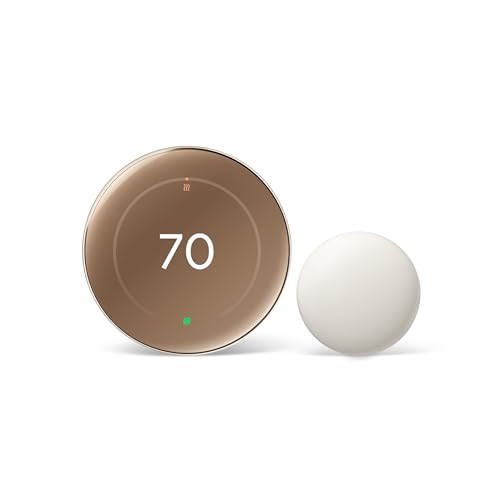
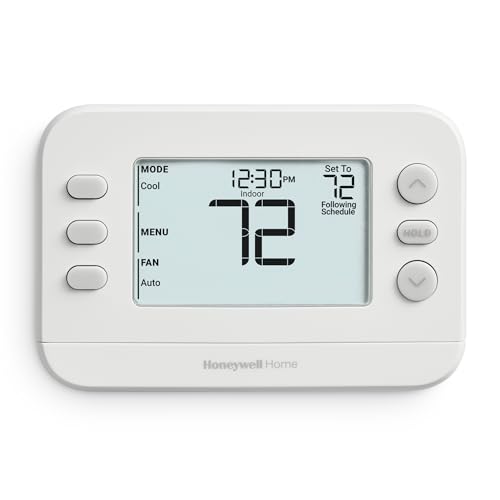
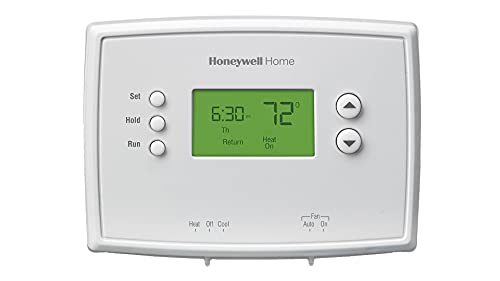
The best thermostat for hot water baseboard heat is a low-voltage thermostat that controls a boiler, a zone valve or a circulator, because hot water baseboard heat runs on low-voltage wiring, not the line voltage that electric baseboards use. A thermostat for a hydronic system should switch the heat on and off cleanly, hold the set temperature through the night, and work with the boiler already in the house, and the thermostats in this guide all state their voltage, their stages and their compatibility in the listing title. All six are low-voltage thermostats that work with hot water baseboard heat, and all six are sold as new listings.
A thermostat for hot water baseboard heat suits the homeowner whose radiators run on hot water from a boiler, and who wants steady heat without the swings of an old dial thermostat. The thermostats in this guide cover the main choices, from the smart Honeywell T5 to the simple Honeywell heat-only thermostat, and from the ecobee Essential to the Sensi smart thermostat. All six work with hydronic baseboard systems, and all six state their wiring and their stages in the listing title.
The thermostats in this guide cover the main buyers. The Honeywell T5 is the smart pick, the ecobee Essential is the value smart pick, the Sensi is the easy-install pick, the Honeywell heat-only thermostat is the simple pick, the Honeywell Lyric T6 Pro is the pro pick, and the ecobee Premium is the full-feature pick. All six are low-voltage thermostats for hot water baseboard heat, and all six state their compatibility in the listing title.
This guide covers six best thermostats for hot water baseboard heat: three Honeywell, two ecobee and one Sensi. All six are low-voltage thermostats, all six control heat-only or heat-and-cool hydronic systems, and all six state their voltage, their stages and their wiring in the listing title. The comparison table below gives the short version, and the sections after it give the detail.
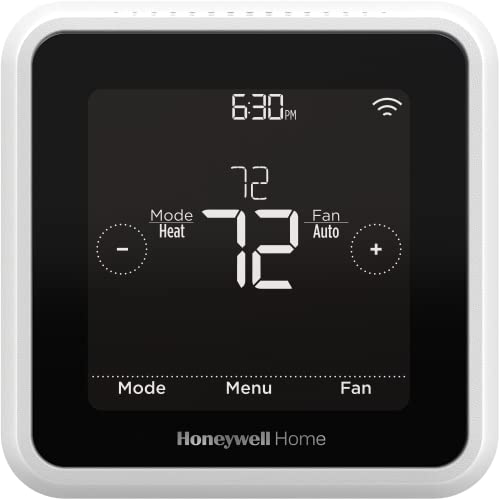
In this guide
Quick picks: best thermostat for hot water baseboard heat
| # | Product | Where to buy |
|---|---|---|
| 1 | Honeywell Home T5 Smart Wi-Fi Thermostat | Check on Amazon |
| 2 | ecobee Smart Thermostat Essential | Check on Amazon |
| 3 | Sensi Smart Thermostat ST55 | Check on Amazon |
| 4 | Honeywell TH1100DV1000 heat only thermostat | Check on Amazon |
| 5 | Honeywell Lyric T6 Pro TH6220WF2006 | Check on Amazon |
| 6 | ecobee Smart Thermostat Premium | Check on Amazon |
How the picks were chosen for the best thermostat for hot water baseboard heat
Every thermostat below started as a listing returned by the reviewstook.com product lookup, and every listing was checked the same way. First, the title had to name the exact brand and the exact model, because a Honeywell T5 RTH8800WF2022 is not a Honeywell T5 Plus, and an ecobee Essential is not an ecobee Premium, and a buyer who orders the wrong model gets the wrong thermostat. Second, the title had to state low-voltage operation, because a line-voltage thermostat built for electric baseboards cannot control a hot water system and can damage it.
The thermostats were also checked for the details that decide real hydronic use. The wiring decides whether the thermostat fits, and the thermostats here work with two-wire heat-only systems and with systems that have a C-wire, so a buyer can match the thermostat to the wires already in the wall. The stages decide what the thermostat can control, and the thermostats here control one or two stages of heat, so a boiler and a zone valve both work. The programming decides the comfort, and the thermostats here offer seven-day schedules or smart learning, so the house is warm when it should be.
One more check shaped the list: the thermostat must be a thermostat alone, not a sensor, not a trim plate, and not a line-voltage electric baseboard thermostat. Listings for sensors, for trim plates, for water heater parts and for line-voltage electric baseboard thermostats were left out, because a buyer searching for the best thermostat for hot water baseboard heat wants a low-voltage thermostat for a hydronic system. The six thermostats below are all low-voltage thermostats for hot water baseboard heat, with the brand, the model, the voltage and the stages stated in the title.
What a thermostat for hot water baseboard heat is, and who should buy one
A thermostat for hot water baseboard heat is a low-voltage thermostat that tells a boiler, a zone valve or a circulator when to send hot water through the baseboard radiators, and it is the thermostat most hydronic homes should buy, because it holds the house at a steady temperature without the swings of an old dial. Hot water baseboard heat runs on 24-volt wiring, so the thermostat switches a small signal, not the full heating current, and a low-voltage thermostat is the only safe choice. A thermostat that matches the system will heat the house evenly and save fuel.
A thermostat for hot water baseboard heat suits the homeowner whose radiators run on hot water from a boiler, and who wants steady heat, a schedule, and lower fuel bills. It is the right choice when the house has a boiler and baseboard radiators, when the old thermostat is a dial that overshoots, and when the homeowner wants the house warm in the morning and cooler at night. It is not the right choice for a home with electric baseboard heaters, because those need a line-voltage thermostat, and it is not the right choice for a home with a heat pump, because that needs a thermostat built for heat pumps.
The six thermostats in this guide cover the main buyers. The smart picks are for the homeowner who wants schedules, remote control and energy reports, the simple pick is for the homeowner who wants a dial replaced with a clear digital display, the pro pick is for the homeowner who wants a thermostat an installer would choose, and the full-feature pick is for the homeowner who wants air quality and a room sensor as well. All six are low-voltage thermostats, and all six are built for hydronic heat.
A thermostat for hot water baseboard heat also suits a homeowner who plans to keep the boiler for years, because a good thermostat will save fuel every winter, and a smart thermostat will pay for itself in lower bills. A buyer should check the voltage, the wiring and the stages in the title before buying, because they decide whether the thermostat works with the boiler. The right thermostat is the one that fits the wires, the boiler and the household.
What makes a good thermostat for hot water baseboard heat
Low-voltage compatibility is the first test, and it decides whether the thermostat works at all. A hot water system uses 24-volt wiring, so the thermostat must state low-voltage operation, and a line-voltage thermostat built for electric baseboards must never be wired to it. A buyer should check the voltage in the title before buying, and should look for two-wire heat-only support, because that is the wiring most hydronic homes have. The thermostats here are all low-voltage, so they work with hot water baseboard heat.
Wiring is the second test. The wires in the wall decide which thermostat fits, and a two-wire heat-only system needs a thermostat that works without a C-wire, while a smart thermostat often needs a C-wire for power. A buyer should check the wires before buying, and should look for a thermostat that works with the wires already there, because adding a wire is a job for an electrician. The thermostats here cover both cases, and the heat-only thermostat needs no C-wire at all.
Scheduling is the third test. A schedule decides the comfort and the fuel bill, and a seven-day programmable thermostat warms the house in the morning and cools it at night, while a smart thermostat learns the household and adjusts itself. A buyer should check the programming in the title before buying, and should match it to the household, because a regular schedule suits a regular routine. The thermostats here offer seven-day schedules or smart learning, so the house is warm when it should be.
Sensors and features are the fourth test. A room sensor fixes a cold room, an air quality monitor watches the air, and a touchscreen makes the thermostat easy to use, while a simple display suits a homeowner who wants no fuss. A buyer should check the features in the title before buying, and should choose only the features the household will use, because extra features cost more. The thermostats here range from simple to full-feature, so a buyer can choose.
Quick picks at a glance
| Thermostat | Voltage and stages | Schedule | Best for |
|---|---|---|---|
| Honeywell T5 | Low voltage, 7-day smart | 7-day schedule | Smart pick |
| ecobee Essential | Low voltage, Wi-Fi smart | Programmable | Value smart pick |
| Sensi ST55 | Low voltage, Wi-Fi smart | App schedule | Easy-install pick |
| Honeywell TH1100DV1000 | Low voltage, 2-wire heat only | Manual | Simple pick |
| Honeywell Lyric T6 Pro | Low voltage, 2 heat stages | Wi-Fi programmable | Pro pick |
| ecobee Premium | Low voltage, Wi-Fi smart | Smart schedule | Full-feature pick |
The best thermostats for hot water baseboard heat

Honeywell Home T5 Smart Wi-Fi Thermostat | RTH8800WF2022, 7 Day-Programmable Touchscreen, Alexa Ready, Geofencing Technology, Energy Star, C-Wire Required
The Honeywell Home T5 Smart Wi-Fi Thermostat is the smart pick, and it is the thermostat for a homeowner who wants schedules, remote control and energy savings on a hydronic system. It is a Honeywell Home T5 smart Wi-Fi thermostat, model RTH8800WF2022, with a 7-day programmable touchscreen, Alexa readiness, geofencing technology and Energy Star certification, with a C-wire required. The seven-day schedule warms the house before waking and cools it at night, and the geofencing turns the heat down when the household leaves.
The T5 suits a homeowner with a regular routine and a C-wire in the wall. The touchscreen is easy to use, the Alexa control works from the sofa, and the Energy Star rating saves fuel. It is the thermostat for a buyer who wants a smart hydronic thermostat that simply works.
Key specs:
- Honeywell Home T5, RTH8800WF2022
- Smart Wi-Fi, 7 day-programmable touchscreen
- Alexa ready, geofencing technology
- Energy Star certified
- C-wire required
Strengths:
- Seven-day schedule for a regular routine
- Geofencing saves fuel when away
- Touchscreen and Alexa control
Trade-offs:
- C-wire required, so two-wire homes need a wire
- Needs Wi-Fi for smart features
- A smart thermostat with a learning curve
The T5 fits a homeowner with a regular routine and a C-wire.
Best for: Smart schedules and remote control on a hydronic system. Not suited for: A two-wire home with no C-wire, or a homeowner who wants no apps.
Check price on Amazon: Honeywell Home T5 Smart Wi-Fi Thermostat

ecobee Smart Thermostat Essential – WiFi Thermostat, Energy Star Certified | Programmable Wi-Fi Thermostat – Works with Siri, Alexa, and Google Assistant. energy saving thermostat.
The ecobee Smart Thermostat Essential is the value smart pick, and it is the thermostat for a homeowner who wants smart features for less on a hydronic system. It is an ecobee Smart Thermostat Essential, a WiFi thermostat with Energy Star certification, a programmable Wi-Fi thermostat that works with Siri, Alexa and Google Assistant, and an energy saving thermostat. The programming warms the house on schedule, and the voice control works from any room.
The ecobee Essential suits a homeowner who wants smart control without the premium cost. The Wi-Fi control works from a phone, the voice assistants cover Siri, Alexa and Google, and the Energy Star rating saves fuel. It is the thermostat for a buyer who wants smart heat for less.
Key specs:
- ecobee Smart Thermostat Essential
- WiFi thermostat, Energy Star certified
- Programmable Wi-Fi thermostat
- Works with Siri, Alexa, Google Assistant
- Energy saving thermostat
Strengths:
- Smart control for less than the Premium
- Works with Siri, Alexa and Google
- Energy Star certified for fuel savings
Trade-offs:
- No room sensor included
- No air quality monitor
- Needs Wi-Fi for smart features
The ecobee Essential fits a homeowner who wants smart heat for less.
Best for: Value smart control on a hydronic system. Not suited for: A homeowner who wants a room sensor, or no Wi-Fi.
Check price on Amazon: ecobee Smart Thermostat Essential

Sensi Smart Thermostat, Wi-Fi, DIY, Alexa, Energy Star Certified, ST55
The Sensi Smart Thermostat is the easy-install pick, and it is the thermostat for a homeowner who wants to swap the old dial thermostat without calling a technician. It is a Sensi smart thermostat with Wi-Fi, DIY installation, Alexa support and Energy Star certification, model ST55. The DIY design fits the wires already in the wall, and the app guides the install step by step.
The Sensi suits a homeowner who wants a simple smart swap. The Wi-Fi control works from a phone, the Alexa support works from the sofa, and the Energy Star rating saves fuel. It is the thermostat for a buyer who wants smart heat without a pro install.
Key specs:
- Sensi Smart Thermostat, ST55
- Wi-Fi, DIY installation
- Alexa support
- Energy Star certified
Strengths:
- DIY installation for a simple swap
- Alexa support for voice control
- Energy Star certified for fuel savings
Trade-offs:
- No touchscreen stated in the title
- No room sensor included
- Needs Wi-Fi for smart features
The Sensi fits a homeowner who wants a simple DIY smart swap.
Best for: Easy DIY install on a hydronic system. Not suited for: A homeowner who wants a touchscreen, or a pro install.
Check price on Amazon: Sensi Smart Thermostat ST55

Honeywell TH1100DV1000 Pro-Digital 2-Wire Heat Only
The Honeywell TH1100DV1000 is the simple pick, and it is the thermostat for a homeowner who wants a clear digital display and no apps on a two-wire hydronic system. It is a Honeywell TH1100DV1000 Pro-Digital 2-wire heat-only thermostat. The two-wire design fits the wires already in the wall, and the digital display shows the temperature clearly.
The TH1100DV1000 suits a homeowner who wants no fuss. The heat-only design does one job well, the two-wire install needs no C-wire, and the digital display is easy to read. It is the thermostat for a buyer who wants a simple swap for an old dial.
Key specs:
- Honeywell TH1100DV1000
- Pro-Digital, 2-wire
- Heat only
Strengths:
- Two-wire design fits any hydronic home
- No C-wire needed
- Clear digital display
Trade-offs:
- No Wi-Fi or smart features
- No schedule stated in the title
- Heat only, no cooling control
The TH1100DV1000 fits a homeowner who wants a simple two-wire swap.
Best for: Simple heat-only control with no apps. Not suited for: A homeowner who wants Wi-Fi, or cooling control.
Check price on Amazon: Honeywell TH1100DV1000 heat only thermostat
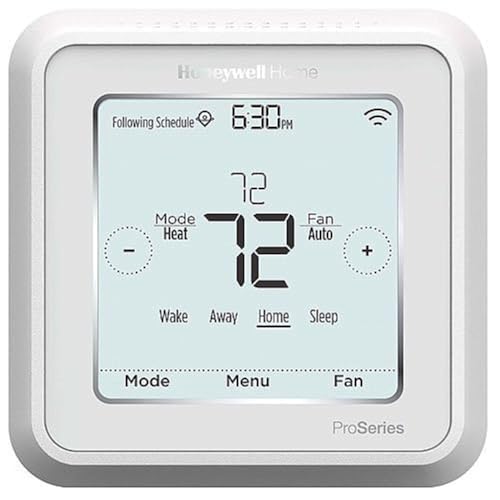
Honeywell TH6220WF2006/U Lyric T6 Pro Wi-Fi Programmable Thermostat with Stages Up to 2 Heat/1 Cool Heat Pump or 2 Heat/2 Cool Conventional
The Honeywell Lyric T6 Pro is the pro pick, and it is the thermostat for a homeowner who wants a thermostat an installer would choose for a hydronic system. It is a Honeywell TH6220WF2006/U Lyric T6 Pro Wi-Fi programmable thermostat with stages up to 2 heat and 1 cool for a heat pump, or 2 heat and 2 cool for a conventional system. The two stages of heat control a boiler and a zone valve, and the Wi-Fi programming warms the house on schedule.
The Lyric T6 Pro suits a homeowner with a multi-stage system. The two heat stages cover a boiler and a zone valve, the Wi-Fi control works from a phone, and the pro design is built to last. It is the thermostat for a buyer who wants a pro-grade hydronic thermostat.
Key specs:
- Honeywell Lyric T6 Pro, TH6220WF2006/U
- Wi-Fi programmable thermostat
- Up to 2 heat/1 cool heat pump
- Or 2 heat/2 cool conventional
Strengths:
- Two heat stages for boiler and zone valve
- Wi-Fi programming for schedules
- Pro-grade design built to last
Trade-offs:
- A pro thermostat with a pro cost
- Needs Wi-Fi for smart features
- Two stages may be more than a single-zone home needs
The Lyric T6 Pro fits a homeowner with a multi-stage hydronic system.
Best for: Pro-grade control of a boiler and zone valve. Not suited for: A single-zone home with a simple boiler, or a homeowner who wants no Wi-Fi.
Check price on Amazon: Honeywell Lyric T6 Pro TH6220WF2006

ecobee Smart Thermostat Premium – WiFi, Siri & Alexa Built-In, Smart Sensor | Air Quality Monitor. Works with Alexa, Siri and Google Home. Live view from your ecobee Doorbell. Energy Saving thermostat
The ecobee Smart Thermostat Premium is the full-feature pick, and it is the thermostat for a homeowner who wants air quality, a room sensor and voice control on a hydronic system. It is an ecobee Smart Thermostat Premium with WiFi, Siri and Alexa built in, a smart sensor and an air quality monitor, working with Alexa, Siri and Google Home, with live view from an ecobee doorbell, and an energy saving thermostat. The room sensor fixes a cold room, and the air quality monitor watches the air.
The ecobee Premium suits a homeowner who wants everything. The smart sensor balances the rooms, the air quality monitor watches the air, and the built-in voice control works without a separate speaker. It is the thermostat for a buyer who wants the full smart home.
Key specs:
- ecobee Smart Thermostat Premium
- WiFi, Siri & Alexa built-in
- Smart sensor included
- Air quality monitor
- Works with Alexa, Siri, Google Home
Strengths:
- Smart sensor balances cold rooms
- Air quality monitor watches the air
- Siri and Alexa built in
Trade-offs:
- A premium thermostat with a premium cost
- Needs Wi-Fi for smart features
- Features a simple home may not need
The ecobee Premium fits a homeowner who wants air quality and a room sensor.
Best for: Full-feature smart control with a room sensor. Not suited for: A homeowner who wants a simple thermostat, or no Wi-Fi.
Check price on Amazon: ecobee Smart Thermostat Premium
Buying guide for the best thermostat for hot water baseboard heat
Check the voltage first: low voltage, not line voltage
Start with the voltage, because it decides whether the thermostat works at all. A hot water baseboard system uses 24-volt low-voltage wiring, so the thermostat must be a low-voltage thermostat, and a line-voltage thermostat built for electric baseboards must never be wired to it, because it can damage the system and is unsafe. A buyer should check that the title states low-voltage operation, and should look for two-wire heat-only support, because that is the wiring most hydronic homes have.
A buyer who is unsure should look at the old thermostat, because a low-voltage thermostat has thin wires and a line-voltage thermostat has thick wires. When in doubt, ask a heating technician, because the voltage is the purchase, and everything else follows.
Count the wires and check for a C-wire
Count the wires in the wall before buying, because they decide which thermostat fits. A two-wire heat-only system has a red and a white wire, and it needs a thermostat that works without a C-wire, while a smart thermostat often needs a C-wire for power. A buyer with only two wires should choose a thermostat that works without one, or add a C-wire adapter, because a smart thermostat without power will not work.
A buyer should also check the listing for a C-wire adapter, because some thermostats include one and some do not. The ecobee Essential includes a power extender kit, and other thermostats need a C-wire in the wall. Check the wires first, because the wires decide the thermostat.
Heat-only or heat and cool
A heat-only thermostat controls only the boiler, and it suits a home with baseboard heat and no air conditioning, because it does one job well. A heat-and-cool thermostat controls both the boiler and an air conditioner, and it suits a home with both, because one thermostat runs the whole year. A buyer should check the stages in the title before buying, and should match them to the system, because a thermostat with the wrong stages will not control the equipment.
A buyer with a zone valve system should check that the thermostat supports it, because some thermostats are built for single-zone systems and some for multi-zone. The thermostats here control one or two stages of heat, so a boiler and a zone valve both work. Check the stages, because they decide the fit.
Smart or simple
A smart thermostat offers schedules, remote control, geofencing and energy reports, and it suits a homeowner who wants to control the heat from a phone and save fuel. A simple thermostat offers a clear display and a basic schedule, and it suits a homeowner who wants no apps and no fuss. A buyer should choose by the household, because a smart thermostat needs Wi-Fi and a phone, while a simple thermostat needs neither.
A buyer who chooses smart should check that the home has Wi-Fi at the thermostat, because a smart thermostat without Wi-Fi is a simple thermostat. Check the features in the title before buying, because the features decide the price and the fuss.
When to call a heating technician
A thermostat swap is a simple job when the wires match, because the new thermostat connects to the same wires as the old one, and a homeowner who can turn off the power can do it. A buyer should turn off the power at the breaker before touching the wires, because even low-voltage wires should be handled with the power off. Take a photo of the old wiring before removing it, because the photo shows where each wire goes.
A buyer should call a heating technician when the wires do not match, when there is no C-wire and the thermostat needs one, or when the boiler has a zone panel that is unfamiliar. A technician will wire it safely and test it, because a wrong wire can damage the boiler. When in doubt, call a pro, because the boiler is worth it.
Using and caring for a thermostat
Set a schedule and let it work
Set a schedule that warms the house before waking and cools it at night, because a steady schedule saves fuel and keeps the house comfortable. A smart thermostat will learn the household and adjust itself, while a programmable thermostat follows the schedule set. A buyer should give the schedule a week to settle, because the house takes time to learn.
Do not swing the temperature up and down by large amounts, because a boiler that chases a big change will use more fuel than one that holds steady. Set the temperature a few degrees lower at night, because the house will stay comfortable and the fuel bill will drop. A steady schedule is a cheap schedule.
Keep the thermostat clean and clear
Keep the thermostat clean and clear of drafts, sunlight and lamps, because a thermostat that sits in the sun or above a lamp will read the room wrong and heat the house too much or too little. Dust the thermostat gently, and keep furniture away from it, because the air around it must match the room. A buyer should check the placement on the first day, because the placement decides the readings.
A thermostat on an inside wall at chest height reads best, because it sits in the air the household lives in. A thermostat on an outside wall will read cold, and one near a door will read the draft. Check the placement, because it decides the comfort.
Look after the thermostat for the long term
Change the batteries when the thermostat asks, because a dead battery will stop the heat, and a smart thermostat with a low battery will warn first. A buyer should keep spare batteries in the house, because the heat should never stop for a battery. A thermostat with fresh batteries will work all winter.
Check the boiler once a year, because a clean boiler heats better than a dirty one, and a technician will check the zone valves and the circulator at the same time. A little care keeps the house warm and the bills low.
Common mistakes when buying thermostats for hot water baseboard heat
Buying a line-voltage thermostat
The most common mistake is buying a line-voltage thermostat built for electric baseboards, because it cannot control a hot water system and can damage it. A buyer should check that the title states low-voltage operation, because the voltage is the purchase. The thermostats here are all low-voltage, so they work with hot water baseboard heat.
A buyer who is unsure should look at the old thermostat, because a low-voltage thermostat has thin wires and a line-voltage thermostat has thick wires. When in doubt, ask a heating technician, because the voltage decides everything.
Ignoring the C-wire
The second mistake is ignoring the C-wire, because a smart thermostat without power will not work, and a buyer with only two wires will find the new thermostat dead. A buyer should count the wires before buying, and should choose a thermostat that works without a C-wire or one that includes a power adapter. Check the wires first, because the wires decide the thermostat.
A buyer who needs a C-wire should add a power extender kit or ask a technician to run a wire, because a smart thermostat needs steady power. The ecobee Essential includes a power extender kit, so it suits a two-wire home.
Buying a thermostat that cannot control the stages
The third mistake is buying a thermostat that cannot control the stages, because a thermostat built for one stage of heat will not run a two-stage boiler or a zone valve system. A buyer should check the stages in the title before buying, and should match them to the boiler, because the stages decide the fit. The thermostats here control one or two stages of heat, so a boiler and a zone valve both work.
A buyer who is unsure should check the boiler manual, because it states the stages. Match the thermostat to the boiler, because the boiler decides the stages.
Placing the thermostat in the sun or a draft
The fourth mistake is placing the thermostat in the sun or a draft, because a thermostat that sits in the sun will read hot and stop the heat too soon, and one in a draft will read cold and overheat the house. A buyer should place the thermostat on an inside wall at chest height, away from sun, lamps and doors, because the placement decides the readings.
A buyer who inherits a badly placed thermostat should move it, because a thermostat in the wrong place will never heat the house right. Check the placement, because it decides the comfort and the fuel bill.
Final recommendation
The best thermostat for hot water baseboard heat for most homeowners is the Honeywell T5 Smart Wi-Fi thermostat, because its seven-day schedule, geofencing and remote control cover a regular household, and it works with the C-wire most smart homes already have. A homeowner who wants a smart thermostat that simply works should buy this one, because it holds the house steady, saves fuel, and can be controlled from a phone.
A homeowner who wants smart features for less should buy the ecobee Smart Thermostat Essential, because it includes a power extender kit for two-wire homes, and a homeowner who wants the easiest install should buy the Sensi smart thermostat, because its DIY setup is the simplest. A homeowner who wants no apps and no fuss should buy the Honeywell heat-only thermostat, because its two-wire design fits any hydronic home, and a homeowner who wants a pro-grade thermostat should buy the Honeywell Lyric T6 Pro. A homeowner who wants air quality and a room sensor should buy the ecobee Premium.
Whichever thermostat is chosen, check that it is low-voltage, count the wires and check for a C-wire, match the stages to the boiler, turn off the power before wiring, and set a steady schedule, because a thermostat bought well will keep a hydronic home warm and save fuel every winter.
Related reading on Reviewstook: see our guides to best thermostat for home, how to choose a smart thermostat, smart thermostat buying guide for more on this topic.
Frequently asked questions about thermostats for hot water baseboard heat
Can I use a smart thermostat with hot water baseboard heat?
A smart thermostat can be used with hot water baseboard heat, because the thermostat only needs to switch a low-voltage signal to the boiler or zone valve. A buyer should choose a low-voltage smart thermostat and check for a C-wire, because most smart thermostats need one for power. The Honeywell T5, the ecobee Essential and the Sensi in this guide all work with hydronic systems, and the ecobee Essential includes a power extender kit for two-wire homes.
What is the difference between a line-voltage and a low-voltage thermostat?
A line-voltage thermostat switches the full heating current, and it is built for electric baseboard heaters that run on 120 or 240 volts. A low-voltage thermostat switches a small 24-volt signal, and it is built for boilers, furnaces and heat pumps. A hot water baseboard system uses low voltage, so it needs a low-voltage thermostat, and a line-voltage thermostat must never be wired to it. Check the voltage in the title before buying, because the voltage decides everything.
Do I need a C-wire for a smart thermostat?
Most smart thermostats need a C-wire for steady power, because the screen, the Wi-Fi and the sensors use power all the time. A home with only two wires has no C-wire, so the buyer should choose a thermostat that works without one, like the Honeywell heat-only thermostat, or one that includes a power extender kit, like the ecobee Essential. A buyer should count the wires before buying, because the wires decide the thermostat.
Can a thermostat control a zone valve system?
A thermostat can control a zone valve system, because the thermostat sends a low-voltage signal that opens the valve for its zone. A buyer should check the stages in the title, because a thermostat built for one stage of heat may not control a multi-zone system. The thermostats in this guide control one or two stages of heat, so a boiler and a zone valve both work. When in doubt, ask a heating technician.
Should I hire a technician to install a thermostat?
A thermostat swap is a simple job when the wires match, because the new thermostat connects to the same wires as the old one, and a homeowner who can turn off the power can do it. A buyer should call a heating technician when the wires do not match, when there is no C-wire and the thermostat needs one, or when the boiler has a zone panel that is unfamiliar. When in doubt, call a pro, because the boiler is worth it.