Disclosure: As an Amazon Associate, reviewstook.com earns from qualifying purchases. Links on this page are affiliate links; they cost you nothing extra. Prices and availability change often, so check the current Amazon listing before you buy.
Asking is a smart smoke detector worth it deserves a split answer rather than a slogan, because the value of connection depends entirely on the alarms you have now, the people who sleep in your home and the hours the house stands empty. This examination of is a smart smoke detector worth it weighs what connected alarms genuinely add, what they cost in money tiers and attention, and which households should upgrade now, later or not at all. Through every section the safety baseline stays fixed: a smart smoke detector must still be installed in the numbers and positions local requirements and manufacturer instructions demand, tested from its button and replaced at end of life, and no feature discussed here justifies fewer alarms, older alarms or a crowned absolute best for fire safety.
The short answer is this. Worth it if your current alarms are ageing, standalone, silent about their own health or guarding a home that is often empty, and if someone will maintain the app and act on its alerts. Not worth it if your existing system is in date, correctly placed, interconnected and tested, and the upgrade would be a single admired unit in place of completing coverage. The sections below turn that short answer into a decision you can defend, profile by profile and cost by cost, ending with a checklist that gives a plain verdict for your household.
Key Takeaways
- The upgrade buys earlier, clearer, wider-reaching warnings and honest reporting of faults and end of life.
- Its value rises with floors, closed doors, children, older relatives, pets and empty hours.
- Its value collapses if notifications are ignored, the network is neglected or coverage stays incomplete.
- Judge cost as a whole system in tiers, including every required position, not as one unit.
- A well-kept conventional system beats a neglected smart one; maintenance is the deciding variable.
In this guide
Is a Smart Smoke Detector Worth It? The Short Answer in Full
Yes, for the households described above, and the reasoning is the whole of this article in miniature: the upgrade is worth it when it renews or completes a real alarm system, in a home whose occupants will maintain the connection and act on its alerts, and it is not worth it as a single-unit gesture in a home whose basic coverage, dates and habits still need attention first.
What You Actually Get
You get four real things. First, reach: interconnected sounding plus phone alerts extend the alarm beyond the room and beyond the house. Second, clarity: voice announcements and app events that name the room and distinguish smoke from carbon monoxide shorten the confused first seconds of a night event. Third, honesty: battery, fault and end-of-life reporting converts silent decay into a task you can complete on a Saturday morning. Fourth, records: event and test logs that help landlords, second-home owners and families supporting a relative prove the system is alive. None of these is a better flame, a faster evacuation or a guarantee. They are improvements to warning and upkeep, which happen to be the places where real household alarm systems most often fail.
Set against that, be clear about what you do not get. You do not get permission to cover fewer rooms, to keep expired units, to ignore a carbon monoxide alert while checking an app, or to assume a notification summons help by itself. You do not get protection during the hours a phone is dead unless the local, interconnected alarm does its unaided job, which is why local performance remains the foundation of the value case. A smart alarm that is excellent locally and connected carefully is worth discussing. A smart alarm bought as a talisman is not worth any tier of money.
The Real Costs Beyond Money
In tier terms, connected models sit above basic alarms, combined models above smoke-only ones, and whole-home systems multiply whatever unit tier you choose by the number of positions your map demands, with possible hub, electrician and optional monitoring costs joining the total. The non-money costs are just as real: an evening of installation and naming, an app account to keep alive, notifications to configure so they are urgent but not ignored, a test routine to adopt, and a replacement date to honour for every unit at once if you install a sealed set together. Households that budget both kinds of cost in advance report the upgrade as easy. Households ambushed by the attention costs are the ones whose apps fill with unacted warnings.
Who It Pays Off For
It pays off for the multi-storey family home, where interconnection and room naming compress the worst minute of the night. It pays off for the household with fuel-burning appliances moving to combined sensing, because one disciplined replacement programme covers two hazards. It pays off for commuters, travelling workers and second-home owners, for whom a fault or event discovered today instead of next month is the entire point. And it pays off for families supporting an older relative, with that relative agreement, because shared fault alerts turn a distant worry into a short list of completed checks.
Who Should Skip It
Skip it, or defer it, if your conventional alarms are young, correctly placed, interconnected and on a testing routine you actually keep, and spend the money on any missing positions instead. Skip the single-unit version of the idea in every case: one connected alarm among expired standalone units is theatre, not safety. Skip it if nobody at home will own the app, the account and the alerts, because an unmaintained connected system decays invisibly. And skip any model whose subscription, hub or network demands you do not fully understand at the moment of purchase.
Strengths and Trade-Offs of Owning One
Strengths of ownership: warnings that reach further and say more; faults that announce themselves early; a system whose health you can check from anywhere. Trade-offs of ownership: a higher system cost in tier terms; a standing obligation to maintain accounts, networks and notifications; whole-unit replacement at end of life. The balance tips on maintenance character more than on income, which is why this guide keeps returning to the same question: will your household do the small tasks? Answer honestly and the verdict follows.
Alternatives to Consider

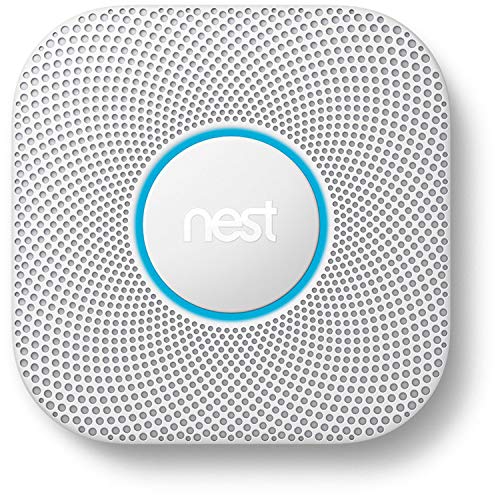
Google Nest Protect
a combined smoke and carbon monoxide alarm built around spoken voice alerts, a split-spectrum sensor approach, phone notifications and a path light that glows when you walk underneath at night. In prose terms it sits in the premium tier, and its appeal is clarity: instead of only sounding a tone, it can tell you in words whether the concern is smoke or carbon monoxide and in which named room it was detected. That clarity matters most in larger homes, in homes with sleeping children, and in homes where a guest or an older relative may not recognise a bare alarm tone for what it is.
Best for: households whose rooms, wiring and habits match the description above and who will set the unit up with its correct room name, test it from the button on the device, and keep its app notifications switched on. Not suited for: any household that would treat a connected feature as a reason to install fewer alarms than local guidance and the manufacturer require, to skip monthly testing, or to leave an expired unit in place because the app still opens. Check the current listing and the manual for the exact sensing type, power source and replacement life before you buy, and check price on Amazon at the time you order rather than relying on any figure quoted elsewhere.
First Alert Onelink Safe & Sound
a combined smoke and carbon monoxide alarm from a long-established alarm maker, positioned in the premium tier and designed to add smart alerts and voice-assistant style features to a familiar hardwired footprint. Its appeal is continuity: households that already trust a traditional alarm brand, that have hardwired boxes in the ceiling, or that want a detector that also behaves like a small smart speaker get a route into connected alerts without changing the basic idea of what sits on the ceiling.
Best for: households whose rooms, wiring and habits match the description above and who will set the unit up with its correct room name, test it from the button on the device, and keep its app notifications switched on. Not suited for: any household that would treat a connected feature as a reason to install fewer alarms than local guidance and the manufacturer require, to skip monthly testing, or to leave an expired unit in place because the app still opens. Check the current listing and the manual for the exact sensing type, power source and replacement life before you buy, and check price on Amazon at the time you order rather than relying on any figure quoted elsewhere.
X-Sense Smart Smoke Alarm
a Wi-Fi connected smoke alarm family positioned in the entry to mid tier, usually sold singly and in multi-packs for whole-home coverage. Its appeal is scale: because the per-unit positioning is lower, households can more realistically cover every bedroom, hallway and level rather than protecting one landing and hoping that is enough. App alerts, battery models and multi-pack buying make it a practical candidate for renters, landlords preparing a property carefully, and owners of larger homes who need many units.
Best for: households whose rooms, wiring and habits match the description above and who will set the unit up with its correct room name, test it from the button on the device, and keep its app notifications switched on. Not suited for: any household that would treat a connected feature as a reason to install fewer alarms than local guidance and the manufacturer require, to skip monthly testing, or to leave an expired unit in place because the app still opens. Check the current listing and the manual for the exact sensing type, power source and replacement life before you buy, and check price on Amazon at the time you order rather than relying on any figure quoted elsewhere.

Kidde Smart Smoke Detector
a smart smoke and carbon monoxide alarm from another long-established life-safety brand, positioned in the mid tier. Its appeal is the combination of a trusted alarm name, app notifications and compatibility conversations that suit households already using other connected safety products. For buyers who want a recognised manufacturer, clear replacement guidance and a detector that reports problems to a phone as well as sounding locally, it is a natural name to put on a shortlist and then verify against the current listing and manual.
Best for: households whose rooms, wiring and habits match the description above and who will set the unit up with its correct room name, test it from the button on the device, and keep its app notifications switched on. Not suited for: any household that would treat a connected feature as a reason to install fewer alarms than local guidance and the manufacturer require, to skip monthly testing, or to leave an expired unit in place because the app still opens. Check the current listing and the manual for the exact sensing type, power source and replacement life before you buy, and check price on Amazon at the time you order rather than relying on any figure quoted elsewhere.
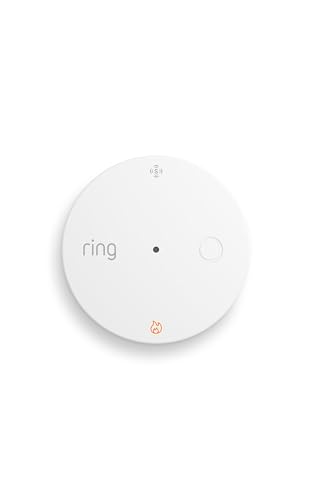
Ring Alarm Smoke and CO Listener
a different kind of product entirely: it does not detect smoke itself. It listens, from a short distance away, for the standard alarm sound of an existing smoke or carbon monoxide detector and forwards that event into the Ring Alarm system. Positioned in the entry tier, it suits households whose existing detectors are still within their service life, are correctly placed and are interconnected or audible, and who mainly want remote notification of an alarm event at home while they are away. It is an add-on, never a substitute for a working detector.
Best for: households whose rooms, wiring and habits match the description above and who will set the unit up with its correct room name, test it from the button on the device, and keep its app notifications switched on. Not suited for: any household that would treat a connected feature as a reason to install fewer alarms than local guidance and the manufacturer require, to skip monthly testing, or to leave an expired unit in place because the app still opens. Check the current listing and the manual for the exact sensing type, power source and replacement life before you buy, and check price on Amazon at the time you order rather than relying on any figure quoted elsewhere.

First Alert Smart Smoke and Carbon Monoxide Alarm
a connected combined alarm positioned in the mid tier, offering app alerts for smoke and carbon monoxide events alongside the local alarm sound. Its appeal is straightforward: two hazards, one ceiling position, remote notification when nobody is home, and a brand name many households already have somewhere in the house. As with every combined unit, the buying question is placement, because carbon monoxide and smoke guidance must both be satisfied by the rooms you actually cover.
Best for: households whose rooms, wiring and habits match the description above and who will set the unit up with its correct room name, test it from the button on the device, and keep its app notifications switched on. Not suited for: any household that would treat a connected feature as a reason to install fewer alarms than local guidance and the manufacturer require, to skip monthly testing, or to leave an expired unit in place because the app still opens. Check the current listing and the manual for the exact sensing type, power source and replacement life before you buy, and check price on Amazon at the time you order rather than relying on any figure quoted elsewhere.
Beyond those named routes, the strongest alternative is unglamorous: a complete, in-date, interconnected conventional system, tested monthly, in a home with an escape plan. If the choice is between that and a partial smart system, choose the conventional completeness every time and upgrade later from a position of safety.
How to Get the Most Value If You Buy
Buy the system, not the unit: complete the map in one programme where you can, install on one day, name rooms in family language, enable every fault and low-battery alert, and put test and replacement dates in a shared calendar before the packaging is recycled. Brief the household, agree who receives alerts and what each person does when one arrives at night or during a work trip, and review the arrangement after the first month. Value in this category is mostly created after purchase, by configuration and habit, which is good news: it is the part entirely within your control.
The Decision Checklist
Answer yes or no. Are any current alarms expired, undated or untested? Does the home have more than one level or closed bedroom doors at night? Does it burn fuel or have an attached garage? Does it stand empty for long or overnight stretches? Would voice room alerts help your sleepers? Will a named person maintain the app and act on alerts? Can the budget in tier terms cover every required position? Four or more yes answers make the upgrade worth it for most households. Mostly no answers, with a young and complete conventional system, make waiting the honest verdict. Any answer pattern still leaves the non-negotiables untouched: full coverage, in-date units, monthly tests and an escape plan.
Power, Batteries and the End-of-Life Question
Every alarm has a service life, and ignoring it is one of the most common household safety failures. Smoke sensors degrade over time, so manufacturers print a manufacture or replacement date and direct you to replace the whole unit at the end of its stated life, commonly around a decade for smoke alarms and often shorter for carbon monoxide sensors. A smart alarm that reports its own status is helpful here, but the date on the unit is the authority. When you install any detector, write the installation date where you will see it, set a calendar reminder for its replacement, and photograph the label for your records. When you move into a new home, assume nothing: check every unit, and replace any that are expired, undated, damaged or of unknown history.
Power choices involve honest trade-offs. Hardwired alarms with battery backup keep working through outages and suit homes that already have alarm wiring in the ceiling, but replacing them can involve mains electricity, which is work for a qualified electrician if you are not competent and permitted to do it yourself. Sealed long-life battery models remove the chore of annual battery swaps and remove the temptation for anyone to borrow an alarm battery for a toy or remote, at the cost of replacing the whole unit when the battery ends. Replaceable-battery models cost less up front and keep the same housing for longer, but only if someone in the household actually tests them and changes batteries on schedule. Choose the power type your household will genuinely maintain, not the one that sounds best in a listing.
Low-battery behaviour is where smart alarms quietly prove themselves. A conventional alarm announces a tired battery with a chirp, usually at night, and households respond by removing the battery and meaning to replace it tomorrow. A connected alarm can warn a phone days earlier, name the exact room and keep warning until the issue is resolved, which turns a forgotten chirp into a completed task. That benefit only counts if notifications are switched on, the app account is maintained and the alarm stays connected to the home network. After any router change, power cut or internet outage, open the app and confirm every alarm is reporting normally rather than assuming the system healed itself.
Alerts, Apps and What Remote Notification Can and Cannot Do
Remote alerts answer a specific fear: a fire starting while nobody is home, or while the only person home cannot respond. A phone notification can prompt you to call a neighbour, contact the emergency services from where you are, warn someone else in the house by phone, or check a camera in a safe area to understand what is happening. What it must never do is encourage you to re-enter a building, delay calling for help while you investigate an app, or treat a notification as proof of the scale of an event. If an alarm reports smoke, treat it as real, get people out if you are home, and call your local emergency number from a safe place. The app is an information channel, not a fire service and not a substitute for one.
Voice alerts and room naming sound like luxuries until you imagine the real moment. At night, disoriented, with an alarm sounding, a voice that says smoke in the kitchen or carbon monoxide in the basement gives occupants information they can act on while moving, and it can help children who have been taught what those words mean and what to do next. Room names only work if you set them accurately during installation and update them when a detector moves. Take the ten minutes to name every unit for its actual room, test that the names announce correctly, and teach everyone in the home, including regular overnight guests where practical, what the alerts mean and where the meeting point outside is.
Check the fine print of connectivity before you buy. Some alarms need a hub, some join Wi-Fi directly, some rely on Bluetooth for setup and a bridge for remote alerts, and some features sit behind an optional subscription for professional monitoring or extended services. None of those models is automatically wrong, but a detector that loses its remote features when a subscription lapses still has to function as a local alarm, and you should confirm that it does. Also confirm what happens during an internet outage: the local alarm must sound regardless, because fires do not wait for broadband. Connectivity is a reporting layer. Detection and sounding happen in the room, on the device, whether or not the network is alive.
Nuisance Alarms, Hush Features and Staying Protected
Nuisance alarms are not a minor annoyance; they are a safety risk, because the household that is woken twice a month by burnt toast eventually disables the alarm that would have woken it for a real fire. Treat repeated false alarms as diagnostic information. Is the unit too close to a cooker, an oven door, a bathroom shower or a humidifier? Is the sensing type wrong for that position? Is dust or an ageing sensor making it trigger-happy? Work through position, type, cleanliness and age in that order, using the distances and remedies the manufacturer allows, and use the hush feature for the short, known event such as a smoky grill pan rather than removing power. An alarm that has been silenced must return to full protection on its own or be restored by you the moment cooking ends.
Cooking spaces need thought rather than either bravado or absence. Kitchens are where many fires start, yet an alarm placed directly above a hob may cry wolf daily. Guidance commonly balances this with setback distances, heat alarms in some jurisdictions for the kitchen itself, and smoke detection in adjacent areas within the required layout. Heat alarms, which respond to temperature rather than smoke particles, are the specialist tool some homes use in kitchens and garages where smoke or fumes are routine. Whether your local rules call for one is a local question. The principle that travels everywhere is simple: do not leave the highest-risk room out of the plan, and do not solve its false alarms by unplugging its protection.
Humidity, steam and aerosols deserve the same respect. Showers, kettles, hairspray and cleaning sprays can all reach a sensor placed without thought, and garages add exhaust fumes and dust to the list. This is why manuals specify distances and unsuitable locations, and why a detector that behaves perfectly in a bedroom may be the wrong choice outside a bathroom door. When you read product claims, translate them into your rooms: where exactly will this unit live, what passes underneath it every day, and does the manufacturer endorse that position? A buying decision made room by room produces far fewer 3 a.m. surprises than one made from a product photograph.
Households Are Different, So the Right System Is Different
Families with young children should weight voice alerts, interconnection and closed-door performance heavily, and should think about what a child actually does when an alarm sounds. Children can sleep through tones that wake adults, which is one reason guidance emphasises interconnected alarms in the parents room and planning who collects whom in the night. A smart system that announces the room can shorten the adults decision-making in the worst minute of their lives. Whatever you buy, rehearse the plan in an age-appropriate, calm way, keep bedroom doors closed at night if your local fire guidance recommends it, and make sure babysitters and grandparents staying over know the meeting point too.
Older adults and anyone with hearing loss need an honest conversation about audibility. A standard alarm tone may not wake every sleeper, and specialist alerting such as low-frequency sounders, bed shakers and strobe devices exists for this reason, sometimes as part of a system and sometimes as separate equipment recommended by local fire services or hearing professionals. Smart phone alerts help only if the phone is near, charged, audible and set to break through silent modes for critical alerts where the system supports it. Do not assume a connected alarm solves a hearing problem by itself. Test whether the alarm wakes the actual sleeper in the actual bedroom, and seek specialist advice where it does not.
Landlords, tenants and second-home owners face a documentation problem as much as a detection problem. Duties for providing, placing and maintaining alarms in rented property are set by local law and tenancy rules, and they are not optional or transferable by a verbal agreement at the door. Connected alarms can help an owner confirm a unit is online and can help a tenant report a fault quickly, but the legal duty is satisfied by compliant, working, in-date alarms in the right places, not by an app screenshot. If you manage a property, keep installation dates, test records and replacement dates in writing, check alarms at every tenancy change, and replace any unit whose history you cannot prove.
Pet owners and people who are out all day often buy smart alarms for the remote alert alone, and that is a rational purchase as long as its limits are understood. An alert lets you call a neighbour with a key, contact emergency services and get home or get help moving faster than you would have done. It does not open a door for a pet, and pets cannot be relied on to find their own way out. Window notices for rescue services, a neighbour who knows the plan and, above all, preventing fires through safe cooking, heating and charging habits remain the real protection for animals in an empty house. Buy the alert for the minutes it saves in summoning help, not for a rescue it cannot perform.
Placement Is Not a Detail, It Is the Product
Ask a fire professional what matters most and placement comes before brand every time. Alarms belong where your local code and the manufacturer instructions require them: typically inside every bedroom, outside every sleeping area, and on every level of the home including the basement, with additional guidance for kitchens, garages, utility rooms and long hallways. Exact requirements differ by jurisdiction and by whether the home is new, renovated or existing, so treat any general article, including this one, as a prompt to check the rules that apply to your address rather than as the rule itself. When a general guide and your local requirement disagree, the local requirement wins, every time.
Within a room, position changes performance. Smoke rises, so ceiling mounting or high wall mounting within the limits the manual allows is the normal pattern, keeping the unit away from corners where dead air can delay smoke reaching the sensor, away from doors and windows where drafts can push smoke away, and at the distances from cooking appliances and bathrooms that the manufacturer specifies to reduce nuisance alarms without leaving the room unprotected. Never solve nuisance alarms by removing a battery, disconnecting a unit or moving it somewhere useless. Solve them by correcting the position within the allowed guidance, choosing a sensing type better suited to that location, using a model with a hush feature, and improving ventilation habits around cooking and showers.
Interconnection is the quiet feature that saves the most sleep and possibly more. When one alarm sounds, interconnected alarms sound together throughout the home, so a fire starting in a basement, a garage-adjacent utility room or a closed spare bedroom alerts people sleeping behind closed doors on another floor. Older homes with standalone battery alarms can gain a form of this through wirelessly interconnected models, which is one of the strongest reasons to consider a coordinated smart system rather than a single showcase detector in the hall. When you plan a purchase, plan the whole map of the home first: count the required positions, mark which are hardwired and which are battery positions, and only then choose models that fill that map.
Costs Without Prices: Thinking in Tiers and Totals
Because listings change constantly, this guide talks about money in tiers rather than fixed figures. Entry tier connected alarms cover the core job of detection plus basic app alerts and are often sold in multi-packs. Mid tier models add combined carbon monoxide sensing from major brands, better interconnect ecosystems or richer notifications. Premium tier models add voice alerts, more advanced sensing, speaker or lighting extras and the polish of a mature app. The tier that matters is the one that lets you cover every required position in the home. One premium alarm in the hall and nothing in the bedrooms is a worse system than a full map of honest entry tier alarms, and it is not close.
Count the whole system before comparing any single unit. A real budget includes a unit for every required position, any hub the system needs, mounting hardware for high ceilings, possible electrician time for hardwired replacements, replacement units at end of life, and any optional monitoring subscription you actually intend to keep paying. Multi-packs change the maths for larger homes. So does mixing: some households put premium voice-alert units in sleeping areas and simpler connected units elsewhere in the same interconnected system, where the manufacturer supports that mix. What you should not do is mix in a way that breaks interconnection or leaves one area reporting to an app nobody checks.
Running costs are mostly attention costs. Batteries on the schedule the model requires, a monthly test, a glance at the app after network changes, and a replacement fund for the year the units expire. Sealed long-life models turn replacement into a single dated event for the whole set if you install them together, which many households find easier to plan than staggered battery swaps. Whichever route you choose, write the dates down at installation. The cheapest alarm is the one that works on the night it is needed, and the most expensive is any alarm, at any tier, that was expired, unpowered or in a drawer.
The Counterfactual: What Happens in the Homes That Wait
To judge worth fairly, imagine the household that decides to wait, because waiting is also a decision with consequences. If the existing alarms are young, complete, interconnected and tested, waiting costs almost nothing, and the money can strengthen other parts of fire safety: completing an escape plan, improving kitchen habits, servicing heating appliances, or covering a position that was missing all along. In that home the honest verdict of this article is patience, and the smart upgrade can arrive naturally at the next replacement cycle, when whole units are due anyway and the tier cost of choosing connected models is only the difference between two complete systems.
The arithmetic changes completely in the home whose alarms are old. There, waiting does not preserve a good system; it extends the life of expired sensors, tired batteries and silent standalone units that cannot call across a landing. In that home, the question is not really whether smart alarms are worth it, because replacement is already owed. The real question is whether the replacement programme, which must happen regardless, should buy connected, interconnected models for a higher tier, and on that narrower question the value case is strong: the marginal effort of choosing connected units during a necessary replacement buys a decade of clearer alerts and honest fault reporting.
A third household sits between the two: alarms in date but standalone, coverage complete on paper, nobody quite sure when a button was last pressed. For this home, worth depends on a single experiment that costs nothing. Test every alarm this week, check every date, and listen from the furthest bedroom with its door closed. If the system wakes the house and every unit proves young and loud, the household can wait with a clear conscience and a new testing routine. If the experiment exposes silence, age or doubt, the household has learned that its paper safety was fiction, and the upgrade stops being a luxury debate.
There is also a timing argument that rarely appears in buying advice: replacement cycles are leverage. A home that upgrades piecemeal, one fashionable unit at a time, pays the administration cost repeatedly and lives for years with a mixed, half-interconnected system. A home that waits for its replacement moment and then converts the whole map in one programme pays once, aligns every date, and gets the full benefit from the first night. Worth, in this category, is therefore partly a question of when, and the disciplined answer is either now, because the audit demands it, or at the planned cycle, completely.
So the verdict of this examination is conditional by design. The technology is worth its tier when it completes or renews a real system in a home that will maintain it, and it is not worth any tier as a substitute for coverage, dates and habits. Households that answer the checklist honestly already know which side of that line they live on; the checklist merely gives their knowledge a structure and, with luck, a date in the calendar.
There is one more quiet return on the investment that rarely appears in the debate: the audit effect on the rest of the house. Households that install connected alarms almost always end up checking things they had postponed for years, from the age of a boiler to the state of a kitchen extinguisher, the charging habits around batteries and e-bikes, and whether the escape windows actually open. The alarms become the visible tip of a household that has started taking its own safety seriously. That cultural shift cannot be promised by any manufacturer, but it is reported often enough to count, on the worth-it side, as a real if unquantifiable benefit.
The Usage Audit: Does a Smart smoke detector Earn Its Place in Your Routine?
Worth-it questions are really usage questions. A smart smoke detector earns its place through the hours it is used, the annoyances it removes and the problems it quietly prevents, so the honest way to answer is an audit of your own routine rather than a verdict in the abstract. Run the audit below against your last month, not your best intentions, and the answer usually becomes obvious.
Judge a smart smoke detector first as a life-safety device: it must meet the safety standards for your region, sense the fire types its placement demands and sound a full alarm locally whether or not any network exists. Smart alerts, hush from the app and interconnect behaviour are valuable additions, never substitutes for that foundation. Plan placement room by room following fire-safety guidance: near sleeping areas, on each level, away from the steam and cooking fumes that cause nuisance alarms, and mounted where its test button stays reachable. Confirm how units interconnect in your home and whether your network reaches each position.
For a household that travels, an alert to your phone when an alarm sounds at home turns a neighbour’s phone call into the backup, not the first warning. In a home with a hearing-impaired family member, interconnected alarms with app and light-based alerting options deserve priority in your checks. For rental or multi-unit living, detectors that report low battery and end-of-life to your phone end the guesswork about units you cannot hear chirp. Be strict about the difference between use you can point to and use you merely intend. A smart smoke detector bought for a routine you do not have will not create the routine; it will join the cupboard of good intentions.
Apply all of this to the listings in front of you. When a listing such as the Google Nest Protect, First Alert Onelink Safe & Sound and X-Sense Smart Smoke Alarm catches your eye, resist judging it by its headline claim and instead run the checks above against it: does its stated role match the room you measured, does its control path suit your household, and does the maker’s own guidance support the job you have in mind. A model that answers those questions cleanly on paper usually answers them cleanly in the home, and one that dodges them in the listing will dodge them on your wall, shelf or desk as well.
Kitchens and bathrooms punish badly placed detectors with nuisance alarms, and a detector that cries wolf gets its battery pulled, the most dangerous outcome of all. Smart features depend on the network, but the alarm itself must not; verify the unit alarms fully and interconnects even with the router unplugged. If nuisance alarms cluster around cooking or showers, relocation by a modest distance usually cures what sensitivity settings cannot. If the app reports a detector offline, check the unit’s own status light and battery before blaming the network; the detector may be signalling a real fault.
- Count the days in the last month this product would genuinely have been used for your smart smoke detector.
- Name the annoyance it removes and how often that annoyance occurs for your smart smoke detector.
- Check whether something you own already covers the same job for your smart smoke detector.
- Decide the chore you accept in exchange and who will do it.
- Set a review date a month after purchase to judge it on evidence for your smart smoke detector.
- Be honest about the difference between your routine and your intentions for your smart smoke detector.
If tests from the app pass but the sounder seems weak, test at the unit itself and replace any detector approaching its end-of-life date. Test every detector monthly at the unit, vacuum its vents gently to clear dust, replace batteries or the whole unit on the maker’s schedule, and never let a detector pass its printed end-of-life date in service.
If the audit shows steady use and removed annoyances, the smart smoke detector has already answered the worth-it question in the only currency that counts. If it shows good intentions and an empty routine, the honest answer is to wait until the routine exists.
Frequently Asked Questions
How many smart smoke detectors does a home actually need?
As many as your local requirements and the manufacturer layout demand, which for most homes means inside every bedroom, outside every sleeping area and on every level including the basement, with extra attention to utility areas and long hallways. Count positions on a floor plan before you shop. One premium unit cannot cover a closed bedroom door on another floor, and a connected app alert is not a substitute for a detector in the room where a fire starts. When a general guide and your local rule differ, follow the local rule.
Does a smart smoke detector replace a regular smoke alarm?
A smart smoke detector is a smoke alarm, with connectivity added to detection, sounding and reporting. It replaces a conventional alarm position for position when it matches the required sensing, power and placement for that position. It does not replace the other positions in the home, it does not extend the service life of neighbouring old alarms, and its app features never replace the local alarm sound, monthly button testing or an escape plan. Replace expired conventional units rather than working around them.
What should I do when a smart alarm reports carbon monoxide?
Treat it as a real emergency. Get everyone, including pets where you can do so without delay, out of the building, and call your local emergency number or gas emergency service from outside. Do not silence the alarm and investigate, do not open the app and wait to see whether the reading falls, and do not re-enter until professionals say it is safe. Carbon monoxide cannot be seen or smelled, and the detector exists precisely because your senses cannot judge this hazard. Ventilation experiments are for professionals with instruments, not for occupants with a phone.
How often should I test a smart smoke detector?
Press the test button monthly, or on any schedule your manufacturer or local guidance sets if it differs, and listen for the alarm in the room and, on interconnected systems, throughout the home. Enable app reminders and self-checks, but read the manual on what an electronic self-check actually verifies, because it may not prove the sounder in the way a button test does. Test again after installation, after any unit is moved, after building work that produced heavy dust, and whenever a unit has been silenced repeatedly so you know it is fully back on guard.
When must a smart smoke detector be replaced?
Replace the whole unit at the end of the service life the manufacturer states, using the manufacture or replacement date printed on the device, and sooner if it is damaged, painted, repeatedly false-alarming without a fixable cause, or failing its test. Combined carbon monoxide models may have a shorter sensor life than the smoke side, and the earlier date governs. Smart features do not extend sensor life. Write the replacement date into a calendar when you install the unit, because a decade is exactly the kind of deadline households forget.
Can I silence a smart smoke detector from my phone?
Most connected models allow app silencing of a known, minor event such as cooking smoke, within limits the manufacturer sets and usually only when your phone is connected and the situation matches the feature design. Use it only when you can see the cause is harmless, never for an unexplained alarm and never for a carbon monoxide alert, and confirm the alarm returns to normal protection afterwards. If alarms repeat, fix the cause through position, sensor type or cleanliness rather than reaching for the silence button as a lifestyle.
Related Guides and Next Steps
Build the whole system rather than a single purchase. The guides below extend this one: the other articles in this smart smoke detector cluster cover the decision from different angles, and the live guides on adjacent smart home safety and security topics help you connect alarms with the rest of a safer, better-instrumented home. Read the placement and testing guidance before you order anything, count your required positions on a floor plan, and then buy to fill the map.
how to choose a smart smoke detector
how to install a smart smoke detector
smart smoke detector buying guide
smart smoke detector pros and cons