Disclosure: As an Amazon Associate, reviewstook.com earns from qualifying purchases. Links on this page are affiliate links; they cost you nothing extra. Prices and availability change often, so check the current Amazon listing before you buy.
Weighing smart smoke detector pros and cons honestly means refusing two easy stories: the advertisement, in which connection transforms safety by itself, and the dismissal, in which an alarm with an app is a gimmick. This balanced account of smart smoke detector pros and cons works through the genuine advantages and the real drawbacks, then translates them into households, rooms and habits. The safety frame never moves while the weighing happens: a smart smoke detector is life-safety equipment, installed in the numbers and positions your local requirements and the manufacturer instructions demand, tested from its button, replaced at the end of its stated life, and never crowned an absolute best for fire safety, because safety lives in the whole system and the household around it.
The quick verdict is that the pros cluster around warning and upkeep, while the cons cluster around cost, complexity and dependence. Connected alarms warn more people, in more places, with more information, and they confess their own faults before those faults become dangerous. In exchange they ask for more money in tier terms, more setup and administration, and a home network that someone maintains. Households that need the warning and will do the upkeep come out clearly ahead. Households that will do neither can be worse served than by a simple system they actually maintain, and the detailed sections below exist to tell you which household is yours.
Key Takeaways
- Pros: remote and voice alerts, interconnection, combined hazard sensing, self-reporting of battery, fault and age.
- Cons: higher system cost in tiers, app and network dependence, subscription and hub questions, whole-unit replacement.
- The same feature can be both: app silencing helps with known cooking smoke and harms if it becomes a reflex.
- Coverage and maintenance decide whether the pros are real in your home or only printed on a box.
- Judge the balance per household profile, not as a universal verdict.
In this guide
Smart Smoke Detector Pros and Cons: The Pros
Pro: Alerts That Reach Beyond the Room
A conventional alarm protects the people within earshot. A connected, interconnected system protects the sleeper behind the closed door on another floor and notifies the owner across town. That reach is the headline pro because it attacks the most common tragedy pattern, a fire that grows unwitnessed in an empty or sleeping house. It does not summon help by itself, and it must be paired with a plan for who acts on an alert, but minutes of earlier awareness are the currency every other safety measure spends.
Pro: Alerts That Explain Themselves
Voice announcements and app events that name the room and separate smoke from carbon monoxide convert a frightening noise into usable information. Occupants move sooner and more sensibly, children who have been taught the words respond to meaning rather than panic, and the carbon monoxide response, out of the building and a call for help from outside, is far more likely to be followed when the device states the hazard plainly. Clarity is a modest-sounding pro with outsized value in the worst minute a household may ever have.
Pro: Faults That Announce Themselves
Low batteries, sensor faults, lost connections and approaching end of life can all be reported to a phone while they are still errands rather than emergencies. This pro quietly prevents the commonest real-world failure of all, the alarm that was dead, removed or expired on the night it was needed. It depends on notifications being enabled and acted on, which is why it appears again on the cons side as an obligation; a reported fault that nobody fixes is only a better-documented failure.
Pro: One System for Two Hazards
Combined models fold carbon monoxide sensing into the smoke alarm positions a home already needs, simplifying installation, testing and replacement tracking for fuel-burning homes. One device to mount, one date to record, one test button to press for the position. The pro is administrative as much as technical, and administration is where safety programmes in real homes are won and lost.
Pro: Records and Shared Awareness
Event logs, test histories and shared alerts serve landlords documenting diligence, second-home owners verifying a distant property, and families supporting a relative with that relative consent. A conventional alarm can only be checked by standing under it. A connected system can be checked from a kitchen table in another city, and that verifiability has genuine value for anyone responsible for a home they do not sleep in.
Smart Smoke Detector Pros and Cons: The Cons
Con: The System Costs More Than the Unit Suggests
Connected and combined models sit in higher tiers than basic alarms, and a compliant home needs several of them, possibly plus a hub, electrician time for hardwired swaps and an optional monitoring subscription. The honest comparison is a complete smart system against a complete conventional one, and on that comparison the gap is real. It can be managed by prioritising sleeping areas first in a planned sequence, but it cannot be wished away, and a half-funded smart system is not a bargain at any tier.
Con: Dependence on Networks, Accounts and Phones
Remote features ride on broadband, Wi-Fi, an app account and a charged phone with notifications enabled. Outages, router replacements and forgotten passwords all interrupt the reporting layer. The local alarm must and does remain the foundation, but owners who bought mainly for remote alerts can feel the con sharply when the layer drops. Systems also age digitally: apps change, platforms evolve and support windows end, on timescales shorter than the decade a sensor may serve.
Con: Setup and Administration Are Real Work
Positions must still be measured, bases mounted, rooms named, interconnection proven, dates recorded and tests performed monthly. The app adds its own tasks on top rather than removing the physical ones. Households that enjoy systems absorb this easily. Households that do not can let a connected system decay more invisibly than a simple one, because everything looks calm on a phone that nobody opens.
Con: Nuisance Behaviour and the Silencing Temptation
Connectivity does not cure a badly placed alarm, and app silencing can tempt a household into muting first and investigating later, which is exactly backwards for unexplained alarms and dangerous for carbon monoxide. The con is behavioural: a convenient button lowers the friction of a bad habit. The defence is a household rule, agreed in advance, that silencing is only for a seen and harmless cause and that any unexplained alarm is treated as real.
Con: Replacement Is Whole-Unit and Date-Driven
Sealed battery models and ageing sensors mean the entire device is replaced at end of life, and combined models may carry the shorter carbon monoxide horizon. A house full of smart alarms installed together will ask for a full replacement programme together, in a higher tier than replacing basic units. This is predictable and plannable, and the pro side would call the clear dating a benefit, but as a cost event it belongs honestly on this side of the ledger.
What the Trade-Offs Mean for You
For a multi-storey family home, the pros dominate: reach and clarity protect sleeping children, and the administration fits a household already running calendars and routines. For a small flat with electric heating and an occupant who is home most of the time, the balance narrows, and a complete conventional system with excellent habits may deliver most of the safety for a lower tier of cost. For a landlord or second-home owner, the records and remote fault reporting often tip the scale on their own. For a household that knows it will ignore an app, the cons dominate until the maintenance question is solved, and solving it, with sealed units, shared alerts and calendar reminders, is a legitimate way to buy the pros safely.
Alternatives in Context

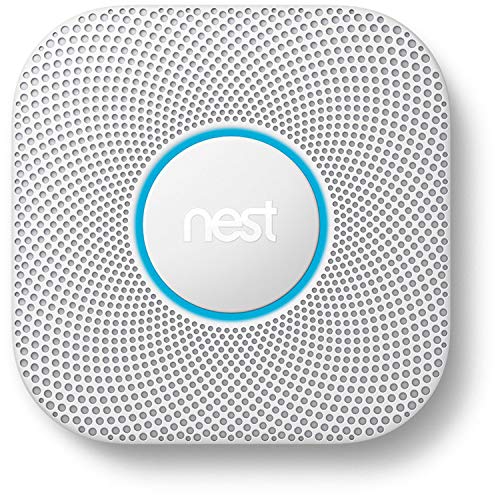
Google Nest Protect
a combined smoke and carbon monoxide alarm built around spoken voice alerts, a split-spectrum sensor approach, phone notifications and a path light that glows when you walk underneath at night. In prose terms it sits in the premium tier, and its appeal is clarity: instead of only sounding a tone, it can tell you in words whether the concern is smoke or carbon monoxide and in which named room it was detected. That clarity matters most in larger homes, in homes with sleeping children, and in homes where a guest or an older relative may not recognise a bare alarm tone for what it is.
Best for: households whose rooms, wiring and habits match the description above and who will set the unit up with its correct room name, test it from the button on the device, and keep its app notifications switched on. Not suited for: any household that would treat a connected feature as a reason to install fewer alarms than local guidance and the manufacturer require, to skip monthly testing, or to leave an expired unit in place because the app still opens. Check the current listing and the manual for the exact sensing type, power source and replacement life before you buy, and check price on Amazon at the time you order rather than relying on any figure quoted elsewhere.
First Alert Onelink Safe & Sound
a combined smoke and carbon monoxide alarm from a long-established alarm maker, positioned in the premium tier and designed to add smart alerts and voice-assistant style features to a familiar hardwired footprint. Its appeal is continuity: households that already trust a traditional alarm brand, that have hardwired boxes in the ceiling, or that want a detector that also behaves like a small smart speaker get a route into connected alerts without changing the basic idea of what sits on the ceiling.
Best for: households whose rooms, wiring and habits match the description above and who will set the unit up with its correct room name, test it from the button on the device, and keep its app notifications switched on. Not suited for: any household that would treat a connected feature as a reason to install fewer alarms than local guidance and the manufacturer require, to skip monthly testing, or to leave an expired unit in place because the app still opens. Check the current listing and the manual for the exact sensing type, power source and replacement life before you buy, and check price on Amazon at the time you order rather than relying on any figure quoted elsewhere.
X-Sense Smart Smoke Alarm
a Wi-Fi connected smoke alarm family positioned in the entry to mid tier, usually sold singly and in multi-packs for whole-home coverage. Its appeal is scale: because the per-unit positioning is lower, households can more realistically cover every bedroom, hallway and level rather than protecting one landing and hoping that is enough. App alerts, battery models and multi-pack buying make it a practical candidate for renters, landlords preparing a property carefully, and owners of larger homes who need many units.
Best for: households whose rooms, wiring and habits match the description above and who will set the unit up with its correct room name, test it from the button on the device, and keep its app notifications switched on. Not suited for: any household that would treat a connected feature as a reason to install fewer alarms than local guidance and the manufacturer require, to skip monthly testing, or to leave an expired unit in place because the app still opens. Check the current listing and the manual for the exact sensing type, power source and replacement life before you buy, and check price on Amazon at the time you order rather than relying on any figure quoted elsewhere.

Kidde Smart Smoke Detector
a smart smoke and carbon monoxide alarm from another long-established life-safety brand, positioned in the mid tier. Its appeal is the combination of a trusted alarm name, app notifications and compatibility conversations that suit households already using other connected safety products. For buyers who want a recognised manufacturer, clear replacement guidance and a detector that reports problems to a phone as well as sounding locally, it is a natural name to put on a shortlist and then verify against the current listing and manual.
Best for: households whose rooms, wiring and habits match the description above and who will set the unit up with its correct room name, test it from the button on the device, and keep its app notifications switched on. Not suited for: any household that would treat a connected feature as a reason to install fewer alarms than local guidance and the manufacturer require, to skip monthly testing, or to leave an expired unit in place because the app still opens. Check the current listing and the manual for the exact sensing type, power source and replacement life before you buy, and check price on Amazon at the time you order rather than relying on any figure quoted elsewhere.
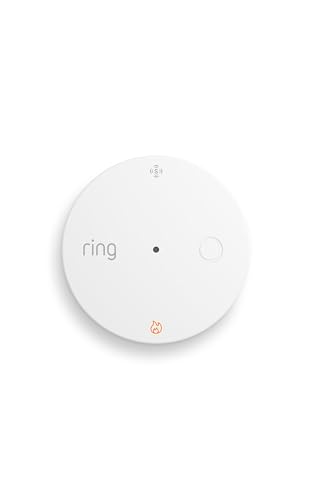
Ring Alarm Smoke and CO Listener
a different kind of product entirely: it does not detect smoke itself. It listens, from a short distance away, for the standard alarm sound of an existing smoke or carbon monoxide detector and forwards that event into the Ring Alarm system. Positioned in the entry tier, it suits households whose existing detectors are still within their service life, are correctly placed and are interconnected or audible, and who mainly want remote notification of an alarm event at home while they are away. It is an add-on, never a substitute for a working detector.
Best for: households whose rooms, wiring and habits match the description above and who will set the unit up with its correct room name, test it from the button on the device, and keep its app notifications switched on. Not suited for: any household that would treat a connected feature as a reason to install fewer alarms than local guidance and the manufacturer require, to skip monthly testing, or to leave an expired unit in place because the app still opens. Check the current listing and the manual for the exact sensing type, power source and replacement life before you buy, and check price on Amazon at the time you order rather than relying on any figure quoted elsewhere.

First Alert Smart Smoke and Carbon Monoxide Alarm
a connected combined alarm positioned in the mid tier, offering app alerts for smoke and carbon monoxide events alongside the local alarm sound. Its appeal is straightforward: two hazards, one ceiling position, remote notification when nobody is home, and a brand name many households already have somewhere in the house. As with every combined unit, the buying question is placement, because carbon monoxide and smoke guidance must both be satisfied by the rooms you actually cover.
Best for: households whose rooms, wiring and habits match the description above and who will set the unit up with its correct room name, test it from the button on the device, and keep its app notifications switched on. Not suited for: any household that would treat a connected feature as a reason to install fewer alarms than local guidance and the manufacturer require, to skip monthly testing, or to leave an expired unit in place because the app still opens. Check the current listing and the manual for the exact sensing type, power source and replacement life before you buy, and check price on Amazon at the time you order rather than relying on any figure quoted elsewhere.
How to Buy Smart
Buy against a floor plan, not a ranking. Confirm sensing and hazard coverage per position, interconnection across the whole set, power your household will maintain, subscription and hub terms in writing, outage behaviour, and the stated service life of every model. Read the manual before purchase where you can, check the current listing rather than any printed figure, and refuse superlative claims about absolute best performance for a life-safety device, from any source. A shortlist fitted to your rooms will always beat a winner crowned for someone else house.
Setup and Care That Reduce the Cons
Most cons shrink under competent ownership. Install the whole system in one programme so dates align. Name rooms in family language. Enable fault, battery and offline alerts and give a second household member access so one dead phone is not a single point of failure. Put tests and replacement in a shared calendar. Agree the silencing rule aloud. Check the app after every router change. These habits convert network dependence into managed dependence and turn the administration con into a few minutes a month, which is the true price of the pros.
Bottom Line
On balance, for most homes with ageing or standalone alarms, the pros of connected detection outweigh the cons, provided the purchase completes the coverage map and the household accepts the upkeep. For homes with young, complete, well-tested conventional systems, the cons argue for patience. Either way, the decision is a household decision about warning, habits and responsibility, and it deserves the hour of thought this guide has tried to structure.
Sensor Types, Explained in Plain Language
A smoke alarm earns its keep by sensing particles you may not see or smell while you sleep, and the sensing method shapes how it behaves. Photoelectric sensing is generally responsive to the larger particles produced by smouldering fires, the slow kind that can begin in upholstery, bedding or wiring insulation and produce smoke long before open flame. Ionisation sensing has historically responded quickly to the smaller particles of fast flaming fires, although it has also been associated with more nuisance alarms near kitchens and bathrooms in many households. Dual-sensor and split-spectrum designs try to cover both fire profiles in one unit. None of this makes one technology a magic answer for every room. It means the honest buying question is which fire profiles your home is most likely to face, what your local rules require or recommend, and what the manufacturer states for the specific model in its manual.
Carbon monoxide is a separate hazard with a separate sensor. It is a colourless, odourless gas produced by incomplete combustion from furnaces, boilers, gas appliances, fireplaces, generators and vehicles in attached garages. A combined smoke and carbon monoxide alarm puts both sensors in one housing, which saves ceiling positions and simplifies replacement dates, but it does not change the placement logic for either hazard. Follow the manufacturer instructions and local requirements for each hazard rather than assuming one box in one hallway covers every room equally. If your home has fuel-burning appliances, an attached garage or a fireplace, carbon monoxide detection deserves the same seriousness as smoke detection, on every level and near sleeping areas as guidance directs.
Smart features sit on top of the sensing, never instead of it. A connected alarm can send a phone alert, name the room, warn of smoke before the full alarm sounds, silence a nuisance alarm from an app within safe limits, report a low battery before the chirping starts at night, and log events you would otherwise never know about. Those are genuine benefits, especially for people who travel, keep a second property, support an elderly parent, or cannot hear a hallway alarm clearly from a bedroom. But the local alarm sound, correct placement, working power and a sensor that is still within its service life are the foundation. An app notification to a phone that is switched off, out of coverage or ignored protects nobody, which is why this guide treats connectivity as the second question and detection as the first.
Alerts, Apps and What Remote Notification Can and Cannot Do
Remote alerts answer a specific fear: a fire starting while nobody is home, or while the only person home cannot respond. A phone notification can prompt you to call a neighbour, contact the emergency services from where you are, warn someone else in the house by phone, or check a camera in a safe area to understand what is happening. What it must never do is encourage you to re-enter a building, delay calling for help while you investigate an app, or treat a notification as proof of the scale of an event. If an alarm reports smoke, treat it as real, get people out if you are home, and call your local emergency number from a safe place. The app is an information channel, not a fire service and not a substitute for one.
Voice alerts and room naming sound like luxuries until you imagine the real moment. At night, disoriented, with an alarm sounding, a voice that says smoke in the kitchen or carbon monoxide in the basement gives occupants information they can act on while moving, and it can help children who have been taught what those words mean and what to do next. Room names only work if you set them accurately during installation and update them when a detector moves. Take the ten minutes to name every unit for its actual room, test that the names announce correctly, and teach everyone in the home, including regular overnight guests where practical, what the alerts mean and where the meeting point outside is.
Check the fine print of connectivity before you buy. Some alarms need a hub, some join Wi-Fi directly, some rely on Bluetooth for setup and a bridge for remote alerts, and some features sit behind an optional subscription for professional monitoring or extended services. None of those models is automatically wrong, but a detector that loses its remote features when a subscription lapses still has to function as a local alarm, and you should confirm that it does. Also confirm what happens during an internet outage: the local alarm must sound regardless, because fires do not wait for broadband. Connectivity is a reporting layer. Detection and sounding happen in the room, on the device, whether or not the network is alive.
Testing, Maintenance and the Habits That Keep Alarms Honest
Press the test button on every alarm monthly, or on the schedule your manufacturer and local guidance direct if they say otherwise. The test confirms the sounder, the power and, on many models, the interconnect link to the other alarms in the home. It takes minutes, it can be combined with a household routine such as the first weekend of the month, and it is the single habit that separates an alarm system from a set of ceiling decorations. Smart alarms can log tests, remind you and run electronic self-checks, and those prompts are worth enabling, but an app self-check is not always the same as physically pressing the button and hearing the alarm in the room, so follow the manual on what its self-test actually verifies.
Keep alarms clean and unobstructed. Dust, cobwebs and insects can interfere with sensing chambers, and paint can ruin a detector, so never paint over an alarm, never cover it to silence it during decorating without restoring it the same day, and clean it gently with a soft brush or vacuum attachment as the manual directs. Keep the area around each unit clear when you rearrange tall furniture or storage. If an alarm is repeatedly dusty because it sits above a workshop area or near a renovation, deal with the dust source and protect the unit during work in the way the manufacturer allows, then restore and test it as soon as the work pauses.
Practise what happens after the alarm sounds. Every household needs an escape plan with two ways out of each room where that is possible, a meeting point outside, and a rule that nobody goes back inside for belongings, pets or phones. Practise it in daylight, then talk through the night version: doors closed while sleeping can slow fire and smoke spread and buy time, a torch near the bed helps, and children need to know that an alarm means get out and stay out, not hide and not wait. A smart alarm can start the warning a little earlier or describe it a little more clearly. The plan is what turns that warning into people standing safely outside.
Households Are Different, So the Right System Is Different
Families with young children should weight voice alerts, interconnection and closed-door performance heavily, and should think about what a child actually does when an alarm sounds. Children can sleep through tones that wake adults, which is one reason guidance emphasises interconnected alarms in the parents room and planning who collects whom in the night. A smart system that announces the room can shorten the adults decision-making in the worst minute of their lives. Whatever you buy, rehearse the plan in an age-appropriate, calm way, keep bedroom doors closed at night if your local fire guidance recommends it, and make sure babysitters and grandparents staying over know the meeting point too.
Older adults and anyone with hearing loss need an honest conversation about audibility. A standard alarm tone may not wake every sleeper, and specialist alerting such as low-frequency sounders, bed shakers and strobe devices exists for this reason, sometimes as part of a system and sometimes as separate equipment recommended by local fire services or hearing professionals. Smart phone alerts help only if the phone is near, charged, audible and set to break through silent modes for critical alerts where the system supports it. Do not assume a connected alarm solves a hearing problem by itself. Test whether the alarm wakes the actual sleeper in the actual bedroom, and seek specialist advice where it does not.
Landlords, tenants and second-home owners face a documentation problem as much as a detection problem. Duties for providing, placing and maintaining alarms in rented property are set by local law and tenancy rules, and they are not optional or transferable by a verbal agreement at the door. Connected alarms can help an owner confirm a unit is online and can help a tenant report a fault quickly, but the legal duty is satisfied by compliant, working, in-date alarms in the right places, not by an app screenshot. If you manage a property, keep installation dates, test records and replacement dates in writing, check alarms at every tenancy change, and replace any unit whose history you cannot prove.
Pet owners and people who are out all day often buy smart alarms for the remote alert alone, and that is a rational purchase as long as its limits are understood. An alert lets you call a neighbour with a key, contact emergency services and get home or get help moving faster than you would have done. It does not open a door for a pet, and pets cannot be relied on to find their own way out. Window notices for rescue services, a neighbour who knows the plan and, above all, preventing fires through safe cooking, heating and charging habits remain the real protection for animals in an empty house. Buy the alert for the minutes it saves in summoning help, not for a rescue it cannot perform.
The Balance Sheet, Household by Household
Abstract pros and cons only become useful when they are carried into a particular hallway, so consider the balance in four homes. In the first, a family with three children across two floors, the pros arrive with force: interconnection reaches every bedroom, the voice names the room before a parent is fully awake, and combined sensing covers the gas boiler that heats the house. The cons shrink to an installation weekend and a calendar reminder. For this home the weighing is not close, and the only way to get it wrong is to buy fewer units than the map requires or to let the application alerts lapse unconfigured.
In the second home, a single occupant in a small flat with electric heating, the ledger tightens. There are few positions to cover, the occupant hears any alarm from anywhere, and the house is rarely empty for long. Remote alerts add a little, fault reporting adds a little, and the higher tier buys less transformation than it did for the family. The pros still win if the existing alarms are due for replacement, because the connected models cost their premium once and serve for years, but a complete conventional system with excellent habits is a respectable answer here, and honesty requires saying so.
In the third home, a rented property, the balance is governed less by preference than by duty. The pros of documented testing, tamper-resistant sealed units and fault visibility serve the landlord obligations and the tenant safety at once, while the cons include permissions, tenancy rules and the need for written records. Neither side of the ledger cancels the legal floor: compliant, in-date alarms in the required positions, whoever chooses the brand. Smart features in a rental are justified when they make that floor easier to prove and maintain, not when they complicate a simple duty.
In the fourth home, an older relative living alone with family nearby, the weighing turns on audibility and response. If the standard alarm does not reliably wake the sleeper, no application feature fixes that alone, and specialist alerting advice matters more than any model comparison in this guide. If it does wake them, shared fault alerts and remote event visibility give the family a genuine pro, provided the arrangement is agreed with the relative and a named person is truly prepared to act. The con to guard against is false reassurance at a distance: a green icon in an application is information about a device, not a guarantee about a person.
Across all four homes the same meta-lesson appears, and it is the real conclusion of the pros and cons exercise. The advantages of connection are amplifiers: they amplify a complete, maintained system into an excellent one, and they amplify neglect into well-documented neglect. The disadvantages are frictions: cost, administration and dependence that a committed household absorbs easily and an uncommitted one trips over monthly. Weigh your household before you weigh the products, and the products will almost choose themselves.
Two smaller entries complete the balance sheet. On the pro side, connected alarms travel well through household change: a new partner, a lodger, a returning adult child can be added to alerts and briefed in minutes, and the system record explains itself to them without archaeology. On the con side, connected alarms create one more account, one more password and one more application competing for a phone home screen, and in a home already groaning under digital administration that friction is real, if minor. Neither entry decides the purchase alone, but both belong in an honest weighing, because ownership is lived at exactly this level of small conveniences and small irritations, repeated monthly for a decade.
And a final entry belongs on neither side, because it is a condition rather than a quality: the escape plan. Pros multiply when a household knows its routes and its meeting point, and cons turn dangerous when an application alert becomes a reason to hesitate, investigate or re-enter. Weigh the products all you like, but sign the household up to the plan first. With the plan in place, the balance in this article can do its work; without it, even the winning side of the ledger is written in pencil.
Consider also the second-order effect on insurance, letting and selling conversations, stated carefully. This guide makes no promise that any insurer, buyer or tenant will reward a connected system, because policies and markets differ and no article can speak for them. What can be said is that a documented, in-date, tested alarm system is simply a better story to tell in any of those conversations than a ceiling of unknown devices, and that the records a connected system keeps make the story provable. Treat that as a soft pro, worth a line in the ledger and never a reason to buy on its own.
And consider the effect on the household itself over a decade, because that is the timescale these devices actually serve. A system that reports honestly teaches its owners, almost without noticing, where every alarm is, how old it is and what it needs. That low-level familiarity is a pro that compounds quietly, test round by test round, until the day it matters. The corresponding con compounds too: a system left unconfigured teaches its owners to swipe away warnings, a habit that generalises badly. The pros and cons of this category are therefore not fixed properties of products. They are trajectories, set early by installation quality and household follow-through, which is why this guide keeps returning the verdict to the people under the ceiling.
After the First Month: Smart smoke detector Trade-Offs Owners Actually Notice
Every honest list of advantages and drawbacks hides a second list: the trade-offs that only appear after the first month, when the novelty has worn off and the smart smoke detector has become part of the furniture. Those are the ones worth examining before you decide. None of what follows is a reason to buy or avoid on its own; it is the texture of daily ownership that a summary table cannot hold.
Judge a smart smoke detector first as a life-safety device: it must meet the safety standards for your region, sense the fire types its placement demands and sound a full alarm locally whether or not any network exists. Smart alerts, hush from the app and interconnect behaviour are valuable additions, never substitutes for that foundation. Plan placement room by room following fire-safety guidance: near sleeping areas, on each level, away from the steam and cooking fumes that cause nuisance alarms, and mounted where its test button stays reachable. Confirm how units interconnect in your home and whether your network reaches each position.
For a household that travels, an alert to your phone when an alarm sounds at home turns a neighbour’s phone call into the backup, not the first warning. In a home with a hearing-impaired family member, interconnected alarms with app and light-based alerting options deserve priority in your checks. For rental or multi-unit living, detectors that report low battery and end-of-life to your phone end the guesswork about units you cannot hear chirp. Notice how few of these points are about the product in isolation. Most trade-offs are really about the match between the smart smoke detector and the household, which is why the same model collects glowing and furious feedback from different homes.
Apply all of this to the listings in front of you. When a listing such as the Google Nest Protect, First Alert Onelink Safe & Sound and X-Sense Smart Smoke Alarm catches your eye, resist judging it by its headline claim and instead run the checks above against it: does its stated role match the room you measured, does its control path suit your household, and does the maker’s own guidance support the job you have in mind. A model that answers those questions cleanly on paper usually answers them cleanly in the home, and one that dodges them in the listing will dodge them on your wall, shelf or desk as well.
Kitchens and bathrooms punish badly placed detectors with nuisance alarms, and a detector that cries wolf gets its battery pulled, the most dangerous outcome of all. Smart features depend on the network, but the alarm itself must not; verify the unit alarms fully and interconnects even with the router unplugged. If nuisance alarms cluster around cooking or showers, relocation by a modest distance usually cures what sensitivity settings cannot. If the app reports a detector offline, check the unit’s own status light and battery before blaming the network; the detector may be signalling a real fault.
- List the drawback most likely to touch your daily routine and test for it first for your smart smoke detector.
- Decide which advantage you will genuinely use every week for your smart smoke detector.
- Check the ongoing chore the product creates and who in the house will own it.
- Confirm the fallback when the smart features or network fail for your smart smoke detector.
- Compare the ownership cost in time, not just the purchase decision for your smart smoke detector.
- Ask whether the same benefit is available from something you already own for your smart smoke detector.
If tests from the app pass but the sounder seems weak, test at the unit itself and replace any detector approaching its end-of-life date. Test every detector monthly at the unit, vacuum its vents gently to clear dust, replace batteries or the whole unit on the maker’s schedule, and never let a detector pass its printed end-of-life date in service.
Weigh the drawbacks against your specific routine, not against an imaginary average owner. A drawback that never touches your day costs you nothing, and an advantage you will use daily is worth more than three you will use once.
It also helps to think in seasons rather than in days. A smart smoke detector that seems ideal in the week it arrives may face different light, different temperatures, different routines and different demands a few months later, and the models that age well are the ones chosen with that longer view in mind.
Keep the household in the loop as you decide. The person who did not choose the smart smoke detector is usually the person who discovers its most annoying habit first, and a two-minute conversation before buying can surface the objection that saves a return.
Frequently Asked Questions
How many smart smoke detectors does a home actually need?
As many as your local requirements and the manufacturer layout demand, which for most homes means inside every bedroom, outside every sleeping area and on every level including the basement, with extra attention to utility areas and long hallways. Count positions on a floor plan before you shop. One premium unit cannot cover a closed bedroom door on another floor, and a connected app alert is not a substitute for a detector in the room where a fire starts. When a general guide and your local rule differ, follow the local rule.
Does a smart smoke detector replace a regular smoke alarm?
A smart smoke detector is a smoke alarm, with connectivity added to detection, sounding and reporting. It replaces a conventional alarm position for position when it matches the required sensing, power and placement for that position. It does not replace the other positions in the home, it does not extend the service life of neighbouring old alarms, and its app features never replace the local alarm sound, monthly button testing or an escape plan. Replace expired conventional units rather than working around them.
What should I do when a smart alarm reports carbon monoxide?
Treat it as a real emergency. Get everyone, including pets where you can do so without delay, out of the building, and call your local emergency number or gas emergency service from outside. Do not silence the alarm and investigate, do not open the app and wait to see whether the reading falls, and do not re-enter until professionals say it is safe. Carbon monoxide cannot be seen or smelled, and the detector exists precisely because your senses cannot judge this hazard. Ventilation experiments are for professionals with instruments, not for occupants with a phone.
How often should I test a smart smoke detector?
Press the test button monthly, or on any schedule your manufacturer or local guidance sets if it differs, and listen for the alarm in the room and, on interconnected systems, throughout the home. Enable app reminders and self-checks, but read the manual on what an electronic self-check actually verifies, because it may not prove the sounder in the way a button test does. Test again after installation, after any unit is moved, after building work that produced heavy dust, and whenever a unit has been silenced repeatedly so you know it is fully back on guard.
When must a smart smoke detector be replaced?
Replace the whole unit at the end of the service life the manufacturer states, using the manufacture or replacement date printed on the device, and sooner if it is damaged, painted, repeatedly false-alarming without a fixable cause, or failing its test. Combined carbon monoxide models may have a shorter sensor life than the smoke side, and the earlier date governs. Smart features do not extend sensor life. Write the replacement date into a calendar when you install the unit, because a decade is exactly the kind of deadline households forget.
Can I silence a smart smoke detector from my phone?
Most connected models allow app silencing of a known, minor event such as cooking smoke, within limits the manufacturer sets and usually only when your phone is connected and the situation matches the feature design. Use it only when you can see the cause is harmless, never for an unexplained alarm and never for a carbon monoxide alert, and confirm the alarm returns to normal protection afterwards. If alarms repeat, fix the cause through position, sensor type or cleanliness rather than reaching for the silence button as a lifestyle.
Related Guides and Next Steps
Build the whole system rather than a single purchase. The guides below extend this one: the other articles in this smart smoke detector cluster cover the decision from different angles, and the live guides on adjacent smart home safety and security topics help you connect alarms with the rest of a safer, better-instrumented home. Read the placement and testing guidance before you order anything, count your required positions on a floor plan, and then buy to fill the map.
how to choose a smart smoke detector
how to install a smart smoke detector
is a smart smoke detector worth it
smart smoke detector buying guide