Disclosure: As an Amazon Associate, reviewstook.com earns from qualifying purchases. Links on this page are affiliate links; they cost you nothing extra. Prices and availability change often, so check the current Amazon listing before you buy.
Plural matters, and it changes the method: these smart thermostat reviews gather what owners across the whole category report once the boxes are recycled and the seasons have had their say, and they read that evidence differently from a single-product test. Individual reviews tell you how a thermostat behaves in one house; collected reviews tell you which behaviours repeat in thousands of houses, which complaints trace to the product, which trace to the installation, and which trace to a mismatch no product could have survived. This roundup organises that collective evidence model by model and pattern by pattern, so you can borrow other households’ years instead of spending your own learning the same lessons the expensive way, one avoidable mistake at a time.
Key Takeaways
- Across owners, satisfaction tracks the match — system fit, wiring readiness, and the right control philosophy — far more closely than it tracks price tier or brand.
- The most repeated praise is for problems disappearing: cold bedrooms, forgotten setbacks, and fossilised schedules, in that order.
- The most repeated complaints trace to installation and configuration — power arrangements, heat pump settings, sensor placement — more often than to the thermostats themselves.
- Owner evidence crowns the ecobee flagship for sensing, the Nest Learning model for regular households, and the mainstream Nest for balanced everyday ownership.
- Every model in this roundup keeps heating and cooling locally through internet outages; the smart features pause, the house does not.
- Read the harshest reviews as instructions: nearly all of them record a skipped step — compatibility, power, configuration — rather than a failed product.
- Professionals judge in days and owners in seasons; borrow each for the questions their clock can actually answer.
In this guide
Smart Thermostat Reviews: How to Read Owner Evidence
Owner evidence in this category needs a translator, because a thermostat review is secretly three reviews wearing one coat: a review of the product, a review of the house it was fitted to, and a review of the installation it received. The glowing verdict from a standard furnace swap and the furious verdict from an improvised heat pump wiring job may describe the same model more honestly than either writer knows. Reading collected reviews well means sorting every strong opinion by its hidden variables: What system? What wiring? Who installed it, and how was it configured? Praise and blame that survive that sorting are product truth; the rest is weather.
A fourth rule deserves promotion from the evidence itself: separate the review of the thermostat from the review of the thermostat’s teachers. Learning models in particular are graded, in owner text, on the quality of the household’s first fortnight — a household that adjusted honestly taught a good student and writes like it, while a household that spent the fortnight overriding in panic taught a confused one and writes that too. When a review condemns a learning thermostat’s intelligence, ask what it was taught before deciding what it is.
Three sorting rules do most of the work. First, discount any verdict, glowing or furious, that never mentions the heating system, because in this category the system is half the product. Second, weight long-ownership reviews over first-week ones in both directions: the category’s pleasures compound quietly and its annoyances either get configured away or get diagnosed, so the six-month voice is the category’s most honest. Third, treat installation complaints as a separate ledger from product complaints. When hundreds of owners independently describe the same C-wire confusion, that is evidence about documentation and about the housing stock, and it tells a careful buyer to resolve the power question before purchase — not to avoid the model. The roundup below applies these rules throughout, which is why its verdicts sometimes sound calmer than the raw chorus they summarise.
The Models, as Their Owners Describe Them

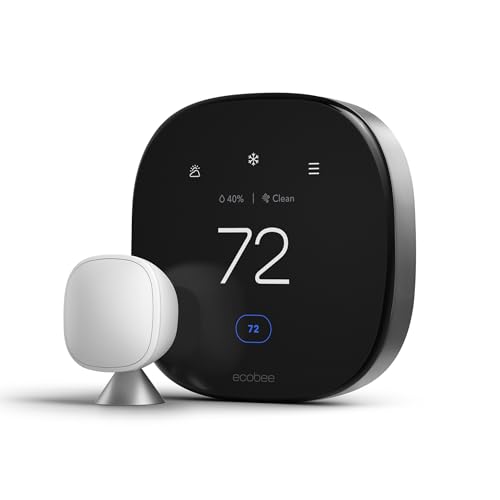
ecobee Smart Thermostat Premium — owners praise the rooms, forgive the setup
The ecobee flagship’s collected voice is the most distinctive in the field: owners talk about rooms, not features. The bedroom that finally matches the thermostat, the nursery held steady, the office that stopped roasting by afternoon — the sensor-led promise, kept, dominates its praise. Its second chorus is platform relief from mixed households who finally have one thermostat every assistant obeys. Complaints cluster where this roundup’s rules predict: the setup evening is the longest in the field, sensors demand thoughtful placement, and a minority of owners in small, even homes report the quiet disappointment of capability with nothing to do. Verdict from the evidence: the strongest owner satisfaction in the category, conditional on the house having rooms worth sensing. Check price on Amazon for the current listing.
Nest Learning Thermostat — owners split cleanly by routine
No model in this roundup divides its owners as neatly. Regular households write the category’s most affectionate reviews: the schedule that built itself, the display that still pleases, the sense of a house being managed. Irregular households write its most frustrated, describing corrections, overrides, and a slow war with an algorithm confident about a life they are not living. Both groups praise the hardware; neither blames the build. The sorting rule explains the split completely, and it hands buyers the simplest test in this article: describe your week honestly, and you have predicted your review. Verdict: the highest ceiling and the sharpest condition in the field. Check price on Amazon for the current listing.
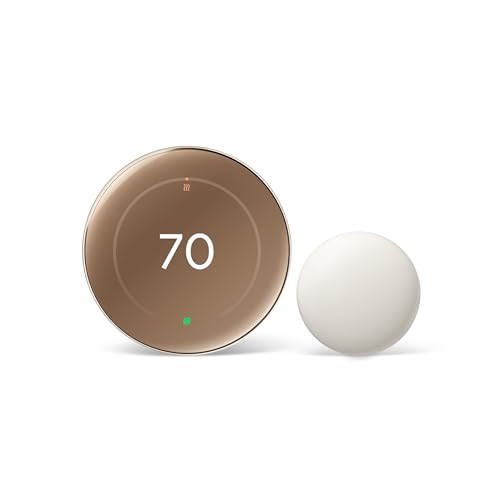
Google Nest Thermostat — owners praise the balance, notice the absences
The mainstream Nest model’s owner chorus is the field’s most even-tempered: steady praise for the mirrored design that guests mistake for decor, for scheduling that finally stuck, and for presence setbacks that quietly trim the empty hours. Its complaints are absences rather than failures — owners who discovered, a season in, that their house wanted room sensing this model does not offer, and households outside its happiest ecosystem fit who found the integration thinner than expected. Almost nobody reports drama, in either direction, and in a category of strong opinions that calm is itself a finding. Verdict: the balanced default its name in this roundup claims, best bought by households whose needs are as balanced as the product. Check price on Amazon for the current listing.
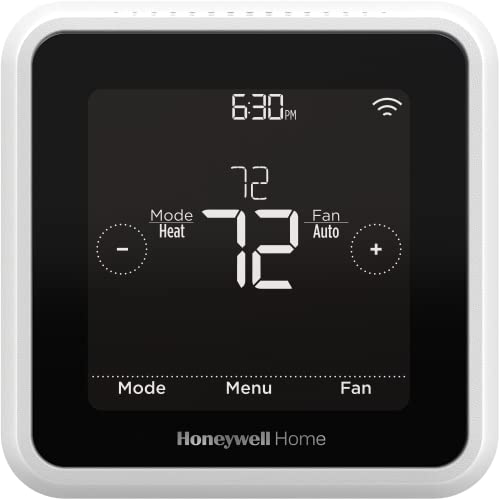
Honeywell Home T9 — owners praise the familiarity, add sensors, stay
The T9’s collected voice sounds like a trade recommendation passed between neighbours: owners who arrived from older Honeywell thermostats praise the continuity — familiar terminals, familiar logic, documentation that speaks their installer’s language — and owners who added its room sensors praise the prioritisation that lets the occupied room govern. Its criticisms are the mildest in the roundup and mostly comparative: a narrower platform story than the ecobee’s, an app that does its job without delighting anyone. Loyalty is its signature metric; its owners replace like with like at a rate the flashier models envy. Verdict: the sensor route for conventional homes that value the known over the novel. Check price on Amazon for the current listing.

Amazon Smart Thermostat — owners praise the focus, accept the borders
The Amazon model’s owners are the roundup’s most self-selected: Alexa households who wanted connected control without a flagship’s ambitions, and who report getting exactly that. Praise concentrates on voice control that simply works within their existing routines, scheduling handled inside an app they already had, and an installation that, where the stated requirements were met, behaved as documented. Complaints arrive predictably from the borders — households that outgrew the ecosystem, wanted sensing the model never promised, or met its power requirements unprepared. Verdict: the entry tier done honestly, for the households it names. Check price on Amazon for the current listing.
Wyze Thermostat — owners praise the sufficiency, respect the limits
The Wyze model’s chorus is the smallest and the most pragmatic: owners of simple, standard systems who wanted app control and a living schedule, and who report the essentials delivered without ceremony. Its praise is unglamorous and consistent — it does the job it was bought for. Its complaints rise where briefs were stretched: multi-stage systems, accessory ambitions, and wiring situations beyond the standard pattern it was designed for. Verdict: the minimalist’s pick, strongest exactly where the brief is tightest. Check price on Amazon for the current listing. The choosing method that sorts these six by household is laid out in how to choose a smart thermostat.
Patterns in the Praise: What Owners Thank, Season After Season
The disappearance of a specific problem
Read a thousand satisfied owner reviews and a grammatical pattern emerges: the verb is almost always a disappearance. The cold bedroom disappeared. The argument about the schedule disappeared. The portable heater disappeared into the loft. There is a further refinement worth extracting from this pattern, because it predicts satisfaction better than any feature list in the category. The disappearances owners celebrate are almost never the ones in the advertisements for the model they bought. They bought learning and thank the alerts; they bought the display and thank the sensor; they bought the brand their installer favoured and thank the schedule editor. The lesson is humbling for marketers and useful for buyers: the value of a connected thermostat is systemic, emerging from the whole installation over seasons, and the feature that will matter most to you is quite possibly one you currently regard as a footnote. Buy the system, not the headline.
Owners rarely praise abstractions like intelligence or efficiency; they praise the absence of a friction they had organised their lives around, which is why the category’s marketing, with its talk of learning and ecosystems, so often misses the note its own customers sing. For a buyer, the pattern is a diagnostic gift: name the friction you want disappeared, and the model whose owners thank it for exactly that disappearance is your shortlist.
Reports that caught something real
Notice, in these stories, how often the catch involves a second household member: the partner who saw the alert, the adult child watching a parent’s house from another city, the landlord reading a tenantless property’s silence correctly. The reporting features turn climate into a shared responsibility that can be carried across distance, and for carers and the children of elderly parents that may be the most humanly valuable pattern in this entire roundup — worth more, in their reviews’ unmistakable tone, than any season of trimmed setbacks.
The second praise pattern is the anecdote of the catch: the heat pump owner warned by a runtime pattern before the expensive month, the filter reminder that explained a struggling system, the alert that reached a phone while a holiday house still had time to be saved. These stories repeat across brands with a consistency that elevates them from marketing to evidence, and they share a hero — not the thermostat’s cleverness but the owner’s glance at the right week. Buyers should note the corollary the storytellers rarely state: the catch only happens in households that read the reports, which is why this cluster keeps prescribing a monthly minute as part of ownership.
The household that finally agrees
The third pattern is social. Owners praise, often with surprise, the end of thermostat politics: the setting visible to everyone, the schedule legible in every pocket, the hold that announces itself instead of hiding. Multi-generational households praise the wall control their parents can work; parents of teenagers praise the app that ends the secret nudging war. No manufacturer lists domestic peace among the specifications, and yet it recurs in the collected evidence too steadily to dismiss. A thermostat is a shared instrument in a shared house, and the models owners thank most are the ones the whole household can play.
Patterns in the Complaints: What Owners Blame, Sorted Honestly
Power and wiring, the category’s original sin
The largest complaint cluster in the entire category is not about any product’s behaviour in service; it is about the evening of installation, and within it the C-wire question towers. Owners who discovered the power requirement at the wall, mid-swap, write with a bitterness out of proportion to the fix — a spare wire, a manufacturer adapter fitted as directed, a technician’s visit — because the discovery felt like a trap. The collected evidence convicts the housing stock and the category’s communication more than any model, and it hands buyers the roundup’s most actionable sentence: resolve the power question before the box is opened, and this complaint cluster, the largest in the field, simply never happens to you. The safety discipline that governs the whole job — breaker off, wiring photographed and labelled, professionals for line-voltage, millivolt, and complex systems — is set out in our installation guide.
Configuration guessed, consequences billed
The second cluster is the heat pump confessional: owners who answered setup questions by optimism and spent a season with auxiliary heat doing the heat pump’s work, or a reversing valve setting that made January interesting. These reviews often blame the thermostat’s intelligence for what its configuration never gave it a chance to prove, and they are the strongest argument in the collected evidence for professional configuration of complex systems. The pattern’s lesson for buyers is precise: the more your system can be misconfigured, the more the installer’s knowledge is part of the product you are really buying.
Automation that misread the household
Buried in this cluster is a small, hopeful sub-pattern: the converts. A noticeable share of these stories end in a second review, weeks later, reporting that the radius was widened, the learning was demoted to a schedule, the sensor was moved off the sunny shelf — and the war ended. The category’s configurability, invisible in summary scores, is what makes those sequels possible, and a buyer should read the existence of the convert pattern as evidence about every model in this roundup: the first configuration is a draft, and the households that treat it as one rarely stay angry.
The third cluster gathers the mismatched-philosophy stories this cluster’s other guides predict: learning models arguing with shift workers, geofencing defeated by the phone that lives on the kitchen counter, occupancy logic concluding that a motionless reader has left the country. Owners blame the features; the evidence blames the match and the untested setup, because the same features in matched households generate the praise patterns above. The practical residue is a setup ethic — test the departure, tune the radius, demote learning to a schedule if the household is irregular — that converts most of this cluster’s stories into non-events for the next buyer.
Strengths and Trade-Offs the Chorus Agrees On
Strengths
- Problem disappearance: owners across all models thank the category for ending specific frictions — cold rooms, empty-hour waste, dead schedules.
- Evidence and alerts: the catch stories repeat too consistently, across too many brands, to be anything but a real capability of the class.
- Household legibility: one visible, shared, app-backed account of the home’s climate ends more domestic friction than any single feature promises.
Trade-offs
- The installation evening is the category’s toll gate, and the C-wire question is its toll — payable in advance by the prepared, at penalty by the surprised.
- Configuration is destiny on complex systems, and the cost of guessing is billed monthly until somebody reads the reports.
- Every connected strength is rented from networks and makers; owners accept the tenancy or choose the simplest local model that meets the need.
Who Each Model Suits, According to the Evidence
Two smaller territories on that map deserve their labels. Homes with a wood stove, a conservatory, or any strong local heat source belong to whichever model lets a remote sensor outvote the flattered wall unit — a niche the owner evidence returns to with feeling, because the failure mode, a cold house worshipping a warm hallway, is otherwise inexplicable to its victims. And homes expecting a baby, a lodger, or a shift to working from home belong to the models with headroom, because their owners’ reviews read like sequels: the thermostat bought for one household, asked within the year to serve another, and judged on how gracefully it grew.
The collected reviews draw the suitability map with unusual clarity, because owners describe their houses as faithfully as their thermostats. Uneven multi-room houses belong to the ecobee flagship, whose owners’ gratitude is the loudest in the field. Regular, complex-system households belong to the Nest Learning Thermostat, with the roundup’s starkest warning label attached. Balanced standard homes belong to the mainstream Nest, whose owners’ calm is its own recommendation. Conventional Honeywell houses gaining sensing belong to the T9. Alexa households with simple briefs belong to the Amazon model, and the tightest briefs on the most standard systems belong to the Wyze. Suitability, in the owner evidence, is never a mystery — it is a description of the house, read back to the buyer. The two-sided ledger behind these assignments is in smart thermostat pros and cons, and the value audit is in is a smart thermostat worth it.
Final Recommendation by Use Case
If your house has a member whose comfort is a care duty — an infant, an elder, anyone the cold can harm — follow the carers in the evidence, whose verdicts privilege stability and alerts over every economy in this article. If your house has problem rooms, follow the owners who solved them: the sensor-led flagship, sensors placed with care, bedroom priority overnight. If your house has a routine and a complex system, follow the owners who retired programming: the learning flagship, taught honestly for its first weeks. If your house has neither extreme, follow the calm majority: the balanced middle model, scheduled on the first evening. If your house has a familiar brand on the wall and a sensing itch, follow the loyalists: the T9. If your house speaks Alexa and keeps its briefs simple, follow the focused: the Amazon model. If your brief is the tightest in the roundup and your wiring the most standard, follow the pragmatists: the Wyze. And in every case, follow the prepared on the two points the whole chorus agrees on — compatibility checked before purchase, power resolved before installation — because those two habits separate the owners who write the praise patterns from the owners who write the complaints. The single-product deep dive companion to this roundup is our smart thermostat review.
The Harshest Reviews, Read Fairly
A roundup that only summarises praise is advertising, so this section sits with the angriest evidence in the category and reads it fairly. Sorted by this article’s rules, the harshest reviews divide into four piles. The largest pile is installation grief: power surprises, wiring that matched no diagram, swaps abandoned halfway with the heating off and the weekend ending. A sub-pile inside the first deserves naming, because buyers can act on it directly: the reviews written by owners whose old thermostat failed in winter and whose smart replacement was chosen from a cold house in an evening. Their installation grief is compounded by haste — compatibility checked from a shivering hallway, wiring photographed by torchlight — and their stories argue for a piece of homeowner foresight nobody sells: photograph your thermostat’s wiring today, while nothing is wrong, and file the picture with the house documents. The future emergency, if it comes, will thank the calm afternoon that prepared for it.
These reviews are furious and, in their facts, usually accurate — the experience they describe is genuinely miserable. Their verdict, though, belongs to preparation rather than to the product, and a buyer who resolves compatibility and power in advance will not re-enact them.
The second pile is configuration’s bill coming due: heat pumps heating on backup for a season, cooling that heated, fans that never slept. These owners suffered real costs, and their reviews perform a public service precisely proportional to their anger — they are why this cluster repeats, in every article, that complex systems deserve professional configuration. The third pile is philosophy mismatch, the learning wars and geofencing grievances already examined; painful, legitimate, and almost entirely predictable from the household’s own description of itself. The fourth pile is the smallest and the only one that convicts products outright: units that failed, apps that broke after updates, support that vanished. It is small for every model in this roundup, smallest for the longest-established lines, and it is the pile a buyer should weigh most heavily per review — while noting that even here, the category’s local fallback means a failed smart layer rarely means a cold house.
Read fairly, then, the harshest evidence does not indict the category. It indicts a sequence — buy first, diagnose later — that this entire cluster of guides exists to reverse. The angriest reviews in the field are, nearly all of them, instructions written by experience: check compatibility, resolve the C-wire, configure or hire configuration, match the philosophy. A buyer who follows those instructions is not guaranteed delight, but they have opted out of the piles that fill the bottom of the pile, which is most of what evidence-based buying can ever promise.
Professional Reviews Versus Owner Reviews: Where They Disagree
Professional reviewers and owners judge this category by different clocks, and their disagreements are instructive. There is one more clock in the evidence, easy to miss: the installer’s. Technicians review these products in the aggregate of hundreds of fittings, and their preferences — for honest compatibility tools, conventional terminals, documentation that respects the trade — predict owner satisfaction downstream with a fidelity neither professionals nor owners match, because the installer’s verdict is really a prediction about the installation evening and the configuration quality, the two variables the owner evidence convicts most often. When a technician with no brand loyalty expresses a preference, the collected reviews suggest a buyer should listen the way one listens to a weather forecast from someone who works outdoors.
Professionals, working in days, reward first impressions: the display’s beauty, the app’s polish, the learning model’s party trick of building a schedule before their eyes. Owners, working in seasons, reward tenth impressions: the report that caught the fault, the sensor that ended the argument, the schedule that still fits in year three. Hence the recurring pattern in which the learning flagship wins the professional comparisons while the sensor-led flagship wins the long-ownership satisfaction — both verdicts honest, each true on its own clock.
The disagreements run the other way on installation. Professionals, fitting thermostats to cooperative test walls, rate setup experiences generously; owners, meeting the real housing stock — the missing C-wire, the unlabelled bundle, the furnace board from another era — rate the same experiences as the category’s toll gate. A buyer should therefore borrow professionals for design and software judgement, owners for installation and longevity judgement, and neither for savings figures, which both camps handle badly for opposite reasons: professionals cannot wait a season, and owners cannot isolate the thermostat from the weather, the tariff, and the new baby. This roundup has tried to keep each kind of evidence in its own jurisdiction throughout.
Long-Term Voices: What Year Three Sounds Like
Year-three voices also settle the display argument with the finality of experience: not one long-term owner in the collected evidence praises a screen unprompted, and several describe turning its brightness down or its information off within the first month and never thinking of it again. The screen sold the thermostat; the sensing kept it. Buyers reading launch-era professional reviews, where displays loom large, should apply that discount mechanically and promote every mention of sensors, reports, and configuration by the same factor.
The rarest and most valuable reviews in the category are the ones written years in, and their tone is so consistent it deserves reporting as a finding. Year-three owners are brief. The thermostat has become infrastructure, mentioned the way central heating itself is mentioned — when it fails, or when a visitor’s house lacks it. Their praise, when offered, is for durability of fit: the schedule edited twice a year, the sensors unmoved since the first month, the reports glanced at and occasionally acted on. Their criticisms have also matured, away from features and toward stewardship: an app redesigned once too often, a maker’s attention visibly wandering to newer products, an accessory line quietly discontinued.
That stewardship theme is the long-term evidence’s real contribution to a buying decision. Across the roundup, the models whose makers kept faith — updates that refined, support that answered, ecosystems that honoured their older members — hold their owners; the models orphaned by corporate weather lose theirs, even when the hardware never falters. A buyer choosing between two well-matched models should let this evidence break the tie: the thermostat is a ten-year tenancy, and the landlord’s character, in the long reviews, is the feature that outlasts every other.
Reviews by House Type: The Chorus in Sections
Sorting the collected evidence by house rather than by model produces the roundup’s most useful map. Owners in older, larger, draughtier houses write the category’s most grateful reviews across every brand, because their homes supply the waste and the unevenness the products exist to correct; their most negative counterparts in identical houses almost always trace to installation corners cut against old wiring’s surprises. Owners in small modern flats write the flattest reviews in the field — contented, brief, and puzzled by the flagship discourse — because their homes supply so little for any thermostat to do. Their evidence argues, with one voice, for the entry and middle tiers and against the entire premium conversation.
Families with infants and with elderly relatives form a section of the chorus with its own priorities, and their reviews reweight the category in a way a general roundup must honour: stability and alerts first, savings barely mentioned, the nursery sensor treated not as an accessory but as the product. Their verdicts favour whichever model holds the narrowest, calmest band in the room that matters and reports trouble fastest, and they are the owners least interested in learning features, because a household with a newborn has no routine and intends to keep it that way.
Owners in heat pump houses write the most technical reviews and the widest spread, from evangelical to furious, sorted almost perfectly by whether configuration was professional. Owners in second homes write the shortest reviews with the highest stakes inside them — an alert received, a freeze avoided — and rate models by vigilance features professionals barely test. Owners in rentals write about permission and reversibility as if they were features, because for them they are. A buyer who finds their own house in this map has found their section of the chorus, and should weight its verdicts above the category’s average, which describes a house that nobody actually lives in.
What the Evidence Says About Saving Money, Without Saying a Number
This roundup inherits the cluster’s refusal of fixed savings figures, and the owner evidence vindicates the refusal: reported savings vary so widely between households with the same model that the variance itself is the finding. The owners reporting the largest effects share a recognisable prior condition — long empty hours, a schedule nobody had touched in years, a system fault nobody had noticed. The owners reporting negligible effects share the opposite condition. Between them sits the category’s honest centre: a real effect, sized by the household’s starting waste, delivered mostly by setbacks and sensing rather than by any single headline feature.
There is also the matter of what owners count as the denominator. Reviews that judge the purchase against the heating bill call it one product; reviews that judge it against the cost of the system it manages — the furnace, the heat pump, the ducts, the decade of service visits — call it a remarkably cheap manager for an expensive estate, and their satisfaction runs correspondingly higher. Neither denominator is wrong, but the second explains why owners of complex systems defend flagship prices that flat-dwellers find absurd: they are not buying the same ratio.
Two secondary money stories in the evidence deserve their place. The first is avoided cost: the service visit made in autumn at ordinary rates because a report flagged a pattern, instead of the emergency call in January; the portable heaters retired; the second zone’s system caught short-cycling before the compressor suffered. Owners mention these with the particular satisfaction of money not spent invisibly. The second is the cost story told in reverse — the misconfigured season, the flagship bought for a flat — which the complaints sections above have already honoured. Taken together, the money evidence says what every other section says in its own dialect: the thermostat is an amplifier. It amplifies a matched household’s discipline and a mismatched household’s mistakes with equal fidelity.
The Quiet Majority: Owners Who Never Write Reviews
The bias has a demographic edge as well. The household member who installs and configures the thermostat writes the review, which means the collected evidence is narrated almost entirely by each home’s most technical resident. The other residents — the partner who only ever touches the wall, the grandparent who meets it as a guest, the teenager who meets it as an adversary — are reviewed about, rarely reviewing. Their experience enters the evidence secondhand, in phrases like “even my father can use it,” which the careful reader learns to prize, because a thermostat’s household verdict is a majority decision and the narrator is only one vote.
Every roundup should confess the bias in its evidence. Owners write reviews at the extremes — delighted, furious, or paid in the small currency of civic duty — while the category’s typical experience, a thermostat that works unremarkably for years, generates almost no text at all. The quiet majority can be inferred only indirectly: from replacement patterns, from the trade’s callback experience, from the fact that these models’ successors keep their formulas. Read with that confession in mind, this roundup’s calm centre — matched households, configured systems, problems disappearing — is probably understated rather than overstated, because unremarkable success is the least reviewed outcome in consumer life.
The confession cuts the other way for the complaints. Installation grief is overrepresented in text precisely because it is an event, while the slow, mild disappointment of an overbought flagship in an even flat produces no event and few reviews — which is why this roundup has treated tier-matching as a first-order theme even though the raw chorus underplays it. Evidence-based buying means correcting for the silence as carefully as for the noise, and the corrections, applied throughout, are the difference between a roundup and a scrapbook.
A Buyer’s Shortlist Drawn Entirely From Owner Evidence
One more instruction hides in the evidence’s margins and deserves promotion before the compression: read the reviews of the model you are not buying. Rival owners describe your candidate’s weaknesses with a clarity its own owners, committed and configured, rarely match — the ecobee chorus will tell you what the Nest cannot sense, the Nest chorus what explicit scheduling costs in effort, the entry-tier chorus what the flagships’ ecosystems demand in patience. Cross-reading is the cheapest form of the test drive this category, fixed to a wall and wired to a furnace, can never offer in a shop.
Compress the collected reviews into instructions and they read as follows. If owners like you — same house shape, same system family, same routine — thank one model for disappearing the problem you have, buy that model and copy their setup choices as faithfully as their purchase. If owners like you split by a variable you can measure, measure it before buying: the routine test for learning, the room-temperature test for sensors, the wiring test for everything. If owners like you complain about a toll you can prepay — the C-wire resolution, the professional configuration — prepay it in the budget line, not in the review you write afterward. And if owners like you are simply quiet, buy the middle of the range, configure it on the first evening, and join them.
That is the whole method of this article, and it generalises beyond thermostats: in categories where the product mediates between a household and a complex system, owner evidence sorted by match beats expert evidence sorted by features. The experts reviewed the thermostats. The owners reviewed the marriages. Buyers are entering marriages, and should read accordingly.
Regional Choruses: Climate Writes in Different Accents
Tariffs write in accents too, though owners rarely name them. Households on time-of-use pricing, where energy costs more at peak hours, review pre-heating and pre-cooling behaviour — the thermostat warming the house before the expensive window, coasting through it on stored comfort — with an enthusiasm invisible in flat-tariff regions. Where such tariffs are spreading, that behaviour is migrating from footnote to headline in the owner evidence, and buyers on those tariffs should weight it now rather than discover it at the next price change.
The collected evidence speaks with regional accents a buyer should recognise as their own. Cold-climate owners write about recovery and auxiliary heat the way sailors write about weather — as the medium everything else happens in — and their reviews give this roundup its heat pump seriousness. Hot-climate owners write about humidity and the afternoon sun’s lies, and their praise for humidity-aware cooling is the mirror image of the northern praise for staging. Mild-climate owners write the shortest reviews in the field and buy the smallest tiers, correctly, because their systems spend much of the year as spectators.
Housing stock writes in accents too. Regions of older homes produce the installation literature — the wiring archaeology, the adapter sagas, the technician recommendations passed around like folklore — while new-build regions produce the ecosystem literature, where the argument is about platforms and routines because the wiring was never in doubt. Neither chorus is wrong; each is a field guide to its own housing. The buyer’s task, once again, is translation: find the reviews written from a house like yours, in a climate like yours, and let the rest of the chorus sing to somebody else.
The Long-Term Checks That Separate a Good Smart thermostat From a Tiring One
A review that stops at the first week tells you how a smart thermostat arrives, not how it lives. The checks below are the ones that separate a product that stays satisfying from one that slowly becomes a chore, and they are the checks worth repeating with any model you shortlist. Treat this as a verification routine: run it during the return window, while changing your mind is still free.
Judge a smart thermostat by your heating and cooling system first: compatibility with your equipment and wiring decides the shortlist before features get a vote. Then judge the scheduling and sensing model, whether it learns, follows room sensors or simply runs a programme you set, against how your household actually lives. Photograph your current thermostat’s wiring before buying, check for the common wire many models need, and note your system type from the existing unit’s labels. Decide where temperature should be sensed, because the hallway where thermostats live is rarely the room whose comfort matters most.
In a home with a predictable work pattern, a thermostat that pre-warms or pre-cools for arrival beats one that reacts after you walk in uncomfortable. For bedrooms that run hot or cold relative to the hall, remote room sensors that let the system average or prioritise the sleeping rooms fix the oldest complaint in heating. For a second home or rental, remote alerts for very low temperatures and the ability to check the system from afar justify the smart layer on their own. Score each check honestly rather than generously. A smart thermostat that passes nine and fails one has told you exactly what living with it will be like, and you can decide with open eyes whether that one failure touches your routine.
Apply all of this to the listings in front of you. When a listing such as the ecobee Smart Thermostat Premium, Nest Learning Thermostat and Google Nest Thermostat catches your eye, resist judging it by its headline claim and instead run the checks above against it: does its stated role match the room you measured, does its control path suit your household, and does the maker’s own guidance support the job you have in mind. A model that answers those questions cleanly on paper usually answers them cleanly in the home, and one that dodges them in the listing will dodge them on your wall, shelf or desk as well.
Systems with proprietary communicating controls and some older high-voltage setups sit outside most smart thermostats’ compatibility, whatever the box suggests. A thermostat is only as good as its sensor’s position; direct sun, a draught or a hot appliance nearby will run the whole house wrong. If the system short-cycles or the thermostat reboots when heating starts, the power supply to the thermostat is the first suspect, not the schedule. If one room never reaches the set point, check vents, doors and sensor placement before raising the temperature for the whole house.
- Run the placement check in the room where the product will actually live for your smart thermostat.
- Test the failure mode: network down, power cut, battery flat for your smart thermostat.
- Note the chore the product creates and time how long it really takes for your smart thermostat.
- Repeat the key test at the hour of day you will use it most for your smart thermostat.
- Write down the one behaviour you would change if you could for your smart thermostat.
- Decide before the return window closes, not after it.
If the app and the wall unit disagree, confirm both are on the same account and system after any router or password change. Keep the thermostat’s vents and sensors dust-free, replace room-sensor batteries on a rota, review the schedule at each season change, keep firmware updated, and have the heating system itself serviced on its own schedule regardless of the thermostat’s cleverness.
If a model passes these checks in your home, keep the notes you made. They become your baseline for judging its replacement years from now, and they are worth more than any fresh round of research done from memory.
It also helps to think in seasons rather than in days. A smart thermostat that seems ideal in the week it arrives may face different light, different temperatures, different routines and different demands a few months later, and the models that age well are the ones chosen with that longer view in mind.
Keep the household in the loop as you decide. The person who did not choose the smart thermostat is usually the person who discovers its most annoying habit first, and a two-minute conversation before buying can surface the objection that saves a return.
Frequently Asked Questions
Which smart thermostat do owners rate most highly?
In collected owner evidence, the ecobee Smart Thermostat Premium draws the strongest satisfaction from the widest range of households, driven by its room sensing. The Nest Learning Thermostat matches or exceeds it within regular-routine households and falls behind sharply outside them. Owner scores in this category measure the match as much as the model, so read any ranking — including this one — through your own house first.
What do owners complain about most?
Installation and configuration, by a wide margin: the C-wire question discovered too late, heat pump settings guessed rather than set, and sensors placed where they misread the house. Product failures in service are comparatively rare in the collected evidence. The practical conclusion is encouraging — the largest complaint cluster is the most preventable one, with compatibility checks and honest installer decisions made before purchase.
Do owners regret buying a smart thermostat?
Regret concentrates in predictable places: flagship tiers bought for even flats, learning models bought for irregular lives, and any model bought around an unresolved power or compatibility question. Owners who matched philosophy to routine and tier to system report regret rarely, and often report the opposite — that the purchase disappeared into the house’s background, which in this category is the highest praise available.
How long before owners know if it was a good buy?
Comfort verdicts arrive within the first fortnight; a full verdict needs a season, because the reports, the staging behaviour, and the setback patterns only prove themselves across real weather. Owners consistently advise judging at the end of the first heating or cooling season rather than the first week — and configuring deliberately at the start rather than drifting, because early setup quality predicts the season’s verdict with uncomfortable accuracy.
Are cheaper smart thermostats well reviewed by owners?
Yes, within their briefs. The Amazon and Wyze models collect steady, unglamorous satisfaction from owners of simple systems who bought the connected essentials on purpose. Their negative reviews cluster where the brief was stretched — complex staging, sensing ambitions, non-standard wiring. In owner evidence, an entry model matched to its brief outperforms a flagship mismatched to its house, every time.
What should I check before trusting any single review?
Whether it names the heating system, the wiring situation, and who installed and configured the thermostat. A review missing those three facts is describing a house you cannot identify, and its verdict — glowing or furious — cannot be mapped onto yours. Reviews that include them, especially after a full season of ownership, are the evidence worth borrowing.
Related Guides
Build the surrounding platform with the best smart speakers, the best smart door locks, the best smart light bulbs, and the best smart humidifiers. The category’s full decision set is gathered in the smart thermostat buying guide.