Disclosure: As an Amazon Associate, reviewstook.com earns from qualifying purchases. Links on this page are affiliate links; they cost you nothing extra. Prices and availability change often, so check the current Amazon listing before you buy.
This balanced account of smart thermostat pros and cons refuses the two lazy verdicts — that connected heating control is either an obvious revolution or an obvious gimmick — because the truth is household-shaped. The pros are real, and for the right home they are large: empty hours stop being heated, cold rooms stop being guessed about, and the heating system becomes visible enough to catch its own faults. The cons are equally real: a dependence on networks and manufacturers, an installation threshold with firm safety boundaries, and premium features that simple homes cannot use. Read both sides at full strength, weigh them against your floor plan and your routine, and the bottom line will draw itself.
Key Takeaways
- The strongest pro is automatic setback: occupancy and location awareness trim heating and cooling in empty hours without asking anyone to remember.
- The most felt pro is sensing where people live: room sensors correct the hallway’s version of the house.
- The strongest con is dependency: apps, voice, and reports ride on Wi-Fi and a manufacturer’s continued support, even though core heating runs locally.
- The most underestimated con is fit: an incompatible system, an unresolved C-wire, or a mismatched control philosophy can turn a good product into a bad purchase.
- Most cons shrink with correct buying and installation — compatibility checks, honest tiers, power off at the breaker, wiring photographed — and grow when those steps are skipped.
- The balance is front-loaded: cons concentrate in the first month of fitting and learning, while pros recur weekly for the life of the system.
- Climate and construction re-weight every entry; a list that ends in a universal verdict should never be trusted.
In this guide
The Pros
Pro 1: Empty hours stop being heated and cooled
This is the pro with a mechanism anyone can verify. A conventional thermostat heats the house it was told to heat, on the schedule it was given, whether or not anyone is in it. A smart thermostat layers awareness on top: presence sensing notices the quiet house, geofencing notices the last phone leaving, and the setback happens on the irregular Tuesday and the forgotten weekend trip, not just on the programmed weekday. The saving is not magic and it is not uniform — it is exactly the waste you were previously producing, recovered. Households with long, variable empty hours feel this pro at full strength; households occupied around the clock barely feel it at all, which is the honest shape of every pro in this article.
Pro 2: Comfort is judged where people actually are
The conventional thermostat’s deepest flaw is not its schedule; it is its location. Fitted for wiring convenience in a hallway, it pronounces the whole house comfortable from the one spot nobody lives in. Room sensors correct the evidence: the system can average the rooms in use or prioritise the bedroom overnight and the office by day. Consider what the correction involves mechanically, because the mechanism is the pro’s credibility. The thermostat stops treating its own reading as the house’s truth and starts treating it as one vote among several, weighted by which rooms are occupied and which hours matter. Overnight, the bedroom sensor’s vote can govern entirely, letting the hallway and stairs drift to whatever they please; in the evening the living room takes its turn. The heating system runs neither more nor less cleverly in its machinery — it simply receives honest evidence about the house it serves, and honest evidence, in heating as in everything else, is most of the battle.
The result is the pro owners describe most emotionally — the cold bedroom that simply stops being cold, the nursery held steady, the portable heater retired. No other feature in the category changes daily life as directly, and none is as dependent on the house: in an even-tempered flat, this pro shrinks to nearly nothing, because there was no sensing error to correct.
Pro 3: The heating system becomes visible
Before smart thermostats, a heating system’s behaviour between service visits was folklore: it seemed to run a lot, the bills seemed high, and that was the whole diagnosis. Runtime histories set against outdoor weather turn folklore into evidence, and the evidence catches real faults while they are still cheap. The emblematic case is the heat pump quietly leaning on auxiliary heat — comfortable house, alarming consumption, invisible without data. Filter neglect, short-cycling, and a system straining against a closed register all leave signatures in runtime patterns. This pro also changes the relationship with the people who service the system: an owner who can show a technician three months of runtime behaviour, rather than a feeling that the house seemed cold in February, gets a faster diagnosis and a shorter visit. This pro is worth the most to owners of complex or ageing systems, and it compounds over years, because a monitored system is maintained on evidence instead of on breakdowns.
Pro 4: Control follows the household, not the hallway
There is a quieter membership in this pro: the thermostat as witness. A system that reports its own state lets a household prove, rather than wonder, that the heating survived the storm, that the house held its temperature through the cold snap, that the pipes were never in danger. For owners of empty properties that witness function is the product; the temperature control is almost incidental, and it is why this pro, alone among the six, can justify the purchase in a house that is hardly ever occupied at all.
Remote control sounds like a luxury until the first time it is needed: the return from holiday rearranged by weather, the cold snap arriving while the house sits empty, the elderly parent whose heating you can check from your own sofa, the rental between tenants whose pipes you can watch. Voice control belongs in the same pro, valued less for novelty than for the moments hands are full, mobility is limited, or the thermostat is up a flight of stairs. This pro scales with distance and responsibility — second homes, carers, landlords, frequent travellers — and shrinks for the household that is always home and always near the hallway.
Pro 5: Schedules stay alive instead of fossilising
There is a compounding detail inside this pro that deserves its own sentences. A living schedule does not merely fit the present household better; it keeps fitting as the household changes, because the cost of updating it has fallen to the price of a minute on the sofa. A new baby’s night feeds, a teenager’s shifted school run, a parent working from home on Fridays — each is absorbed by an edit rather than endured as a mismatch. The programmable thermostat’s schedule was a photograph; the smart schedule is a document under continuous light revision, and the energy and comfort difference between a photograph and a document grows with every year the household refuses to sit still.
Ask a room of homeowners when they last updated their thermostat’s programme and watch the laughter. The programmable thermostat’s failure was never its concept; it was an interface so hostile that its schedule froze while life moved on. Smart thermostats fix the interface — a visual editor on a phone, a copy across days, a holiday hold set in seconds — and in the learning branch they remove the task altogether for regular households. A living schedule is worth real energy and real comfort every week of every year, and this quiet, unglamorous pro is the one most likely to still be paying in year ten.
Pro 6: The thermostat joins the wider home
A connected thermostat can take part in the household’s routines: the goodnight scene that locks doors, dims lights, and sets the sleeping temperature; the arrival that lifts the setback as the lock opens; the smoke or carbon monoxide alarm that tells the heating to stop fanning a problem around the house. That last integration deserves emphasis, because it is a safety behaviour no standalone thermostat can perform. Each individual routine is small; together they convert the thermostat from an appliance into infrastructure, and infrastructure is valued differently — nobody itemises the worth of a light switch either, until it is missing.
The Cons
Con 1: The smart layer depends on networks and companies
Every smart feature beyond the local schedule — app control, voice, learning updates, reports, integrations — depends on your Wi-Fi, your broadband, and a manufacturer’s cloud continuing to exist and be maintained. Outages pause the cleverness, and corporate history in this category includes products orphaned by shutdowns and pivots. The mitigation is real: the leading models keep heating and cooling locally through outages, and a dead cloud demotes a smart thermostat to a programmable one rather than to a brick. But the dependency is a genuine con, priced in attention as well as risk, and it argues for established makers with long support records — a theme the smart thermostat buying guide treats as a buying criterion in its own right.
Con 2: Installation has a threshold, and some doors are closed
A smart thermostat is not a plug-in gadget. The standard swap demands a compatible low-voltage system, labelled wiring, and usually a C-wire or the manufacturer’s specified adapter, fitted under non-negotiable safety discipline: power off at the breaker, the old wiring photographed, every wire labelled, nothing bypassed. Beyond the standard case, whole categories are closed to DIY entirely — line-voltage and millivolt systems belong to licensed professionals, and complex heat pump auxiliary arrangements deserve a technician’s configuration. For some households that threshold is a satisfying hour’s work; for others it is a professional’s fee on top of the purchase, and pretending otherwise in the pros column would be dishonest. The methodical route through all of it is laid out in our installation guide for smart thermostats.
Con 3: The wrong philosophy fights the household
Automation mismatched to life becomes an antagonist. A learning thermostat in an irregular household keeps preparing rooms for a pattern nobody is living, and its corrections feel like arguments. Aggressive geofencing in a household where one phone stays home, or location sharing is declined, produces a system that heats emptiness and chills occupancy by turns. Even good occupancy logic can misread a motionless reader as an empty room. It is worth adding that this con has a learning curve rather than a life sentence. Households that persist through the first weeks usually recalibrate the automation to their reality — widening a geofence radius, relaxing an occupancy timeout, demoting a learning model to an explicit schedule — and the fighting stops, because the features that caused it are nearly all adjustable. The con bites hardest in households that expect appliance behaviour from what is actually a small, trainable system, and lightest in households willing to spend one evening teaching it. Whether that evening sounds like a fair price or an outrageous demand is itself a useful buying signal.
These are not defects in particular models so much as a property of the category: the smarter the behaviour, the more it depends on the household resembling the assumptions underneath it. Choosing the philosophy honestly — the work of how to choose a smart thermostat — is the only real cure.
Con 4: Premium capability is easy to buy and impossible to use
The category’s tiers invite a specific waste: paying flagship prices for sensing ecosystems in a one-room flat, for learning in a house without routine, for accessory control on a system with no accessories, for staging depth on a single-stage furnace. The features are genuine; the house simply cannot spend them. This con is the mirror of Pro 2 and Pro 5 — every pro in this article is conditional, and the conditions are the floor plan, the system, and the routine. Buyers who skip the diagnosis do not get a worse thermostat; they get the same thermostat and a larger bill, which is why the honest tier conversation matters more than any single feature.
Con 5: Privacy is part of the price
Occupancy sensing and geofencing work by knowing the pattern of a household’s life: when it wakes, when it empties, when it returns. That data is the fuel of the best features, and households are entitled to weigh it as a cost. The leading platforms document their collection and offer controls and deletions, and the local-processing trend reduces what leaves the house, but the trade exists and should be made consciously. Households for whom it is unacceptable still have a path — schedule-driven models with location features disabled retain much of the value — yet they should know they are declining Pro 1 and Pro 4 in their fullest form when they choose it.
Con 6: Another screen, another account, another app
The smart home accumulates interfaces, and the thermostat adds its share: an account to create, an app to learn, permissions to grant household members, a device to reconnect when the router changes, firmware that updates on its own schedule. The fair counterweight is that the same app layer can distribute control more widely than any wall dial ever did: every adult with an account can see the schedule, understand a hold, and end the era of the single thermostat whisperer. Whether the app concentrates or distributes the household’s heating knowledge depends on whether the administrator sets it up for sharing on day one — another of this category’s outcomes decided at setup rather than at purchase.
Individually trivial, these frictions concentrate in one household member, who becomes the unpaid administrator of the heating. For technology-comfortable homes this con is a rounding error. For homes where one person’s patience subsidises everyone else’s comfort, it is the con most likely to be quoted in year two, and it argues for the simplest model that meets the need — a conclusion this article reaches from the con side as firmly as the worth-it analysis reaches it from the value side.
What the Trade-Offs Mean for You
Weigh the two columns by household, because the same product scores oppositely in different hallways. The commuting family in a two-storey house collects Pro 1, Pro 2, and Pro 5 at full strength and meets Con 1 and Con 6 at their mildest, because they already live fluently in apps; their verdict is the category’s easiest yes. The always-home couple in an even flat collects a diluted Pro 5 and little else, while Con 4 waits to sell them a flagship they cannot use; their honest purchase is the entry tier or none. The heat pump owner in a cold climate collects Pro 3 at its most valuable — a winter of auxiliary heat misbehaviour costs more than the thermostat — and meets Con 2 at its most serious, answering it with a professional installation budgeted as part of the buy.
The second-home owner collects Pro 4 almost alone and finds it sufficient, because vigilance over an empty property is a service with no conventional substitute. The renter collects a permission-shaped version of every pro and should weight reversibility above all features. The privacy-cautious household trades Pro 1 down deliberately and keeps Pro 2, Pro 3, and Pro 5, which is a coherent position rather than a compromise. The pattern across all six: the pros and cons are not properties of the product but of the match, and the match can be assessed before purchase with the questions in this cluster’s guides — which is precisely what makes this category fairer to buyers than its marketing suggests.
Context: Smart Thermostat Against the Alternatives
| Option | What it does well | What it cannot do | Best for |
|---|---|---|---|
| Smart thermostat | Occupancy-aware setbacks, room sensing, remote control, runtime evidence | Nothing without network for its smart layer; needs compatible system and power | Homes with empty hours, uneven rooms, or complex systems |
| Programmable thermostat | Scheduled setbacks with no network, no account, no dependency | Cannot sense, learn, report, or be reached remotely; schedules fossilise | Disciplined households in even homes |
| Manual thermostat plus habits | Simplicity itself; nothing to configure, update, or break | Every adjustment needs a person present and remembering | Tiny, always-occupied homes with steady routines |
One row the table cannot hold is the hybrid path many households actually take: a smart thermostat on the main system and deliberate simplicity elsewhere — a second zone, a rarely used floor, a workshop — left on basic controls because its hours are few and its comfort undemanding. Hybrid households are not indecisive; they are allocating the category’s pros where the hours and the people are, and declining its cons where neither justifies them. The table’s options are tools, not teams.
Read the table as a spectrum of attention. The manual option spends human attention daily; the programmable spends it seasonally, in theory; the smart option spends money and setup effort to retire most of the attention altogether, and adds sensing and evidence no amount of attention can replicate — a person cannot stand in the bedroom all night adjusting for its temperature, and cannot watch a heat pump’s staging from the office. The alternatives are respectable; the smart option’s premium buys the two things attention cannot: presence in several rooms at once, and a memory for the system’s behaviour.
How to Buy Smart, Given Both Columns
Buying smart in this category means purchasing the pros your house can collect while refusing the cons it cannot afford. Run the compatibility gates first — system type, stages, wiring, C-wire — because Con 2 is the only con that can become dangerous rather than merely disappointing, and it is entirely preventable by checking. Choose the philosophy by routine: learning for the regular, explicit scheduling for the irregular, sensors for the uneven house. Buy the tier the diagnosis justifies and not the tier the display justifies, which is Con 4 disarmed. Prefer makers with long support histories and honest local fallback, which is Con 1 managed. And decide the privacy settings as a household before the installer leaves, which is Con 5 converted from a discovery into a decision. The remaining question — whether the whole purchase clears the bar for your home — is worked as a standalone verdict in is a smart thermostat worth it.
Setup and Care That Reduce the Cons
Half the cons in this article are installation and setup outcomes wearing product costumes. Fit the thermostat under the full safety discipline — breaker off, wiring photographed and labelled, manufacturer adapter solutions used exactly as specified, professionals called at the stop signs — and Con 2 collapses into an hour of care. Configure deliberately in the first evening: real schedule, sensors placed at living height away from sun and vents, geofencing tested with every phone, alerts aimed at a person who will act. Most of Con 3’s household-fighting behaviour is a setup skipped or a radius untested, and it evaporates under an hour of attention.
Care continues the theme. Read the monthly runtime report and Con 3’s opposite number, Pro 3, does its fault-catching work; ignore the reports and that pro quietly resigns. Reconnect promptly after network changes, re-aim the schedule each shoulder season, and keep the installation archive so the next change — a new router, a new zone, a new thermostat in a decade — starts from evidence. There is a rhythm to this care worth naming: a minute a month for the report, ten minutes a season for the schedule, an hour once at the beginning for the setup. Totalled across a decade, the attention a smart thermostat asks for is a rounding error against the attention a manual thermostat demanded weekly — which reframes Con 6 honestly. The app burden is real, but it replaces a larger, older burden, and households that compare the two fairly usually find the exchange in their favour.
The households who report the fewest cons are not the ones who bought the most expensive model. They are the ones who treated setup as part of the product, because in this category it is.
Smart Thermostat Pros and Cons: The Bottom Line
The pros of a smart thermostat are conditional, compounding, and — for the matched household — decisive: waste trimmed automatically, comfort judged where life happens, faults surfaced while they are cheap, and a schedule that stays alive. The cons are equally real and mostly manageable: dependency on networks and makers, an installation threshold with firm safety lines, and tiers that punish the undiagnosed purchase. Neither column wins in the abstract. Your floor plan, your system, and your routine hold the deciding votes, and every guide in this cluster exists to help you count them before the money moves. Counted honestly — with the house, not the brochure, supplying the evidence — the bottom line is rarely a regret in either direction, because even the household that decides against the purchase has gained a clear-eyed audit of its own heating habits in the process.
Two More Entries Each Column Earns
Pro 7: It teaches the household its own habits
An underrated pro is pedagogical. The first month of reports confronts a household with its own behaviour in a form arguments cannot: the runtime cost of the degree everyone disputes, the shape of the week the windows stood open, the night the heating ran for a house that was away. Families negotiate differently with a graph than with folklore, and the adjustments that follow — a degree conceded, a schedule reshaped, a window closed — tend to stick because they were chosen from evidence. No manufacturer lists “ends the thermostat argument” among the features, but owners mention it with suspicious consistency.
Con 7: It can mask a system that needs real attention
The mirror con deserves equal honesty. A capable thermostat compensates: it runs the system longer to hold comfort against a clogging filter, stages around a weakening component, and smooths over decline so gracefully that the eventual failure arrives as a surprise on the coldest weekend rather than as a scheduled repair. The reports are the antidote — rising runtime at similar weather is the thermostat telling on the equipment — but only for owners who read them. A household that will never open the app beyond setup should count this con at full weight and lean harder on regular professional servicing, because their thermostat’s compensation will hide what its data would have revealed.
The Models, Judged by This Article’s Own Columns
Applied to real products, the pros and cons sort the field quickly. Check price on Amazon for the current listing of the one whose column balance fits your house.

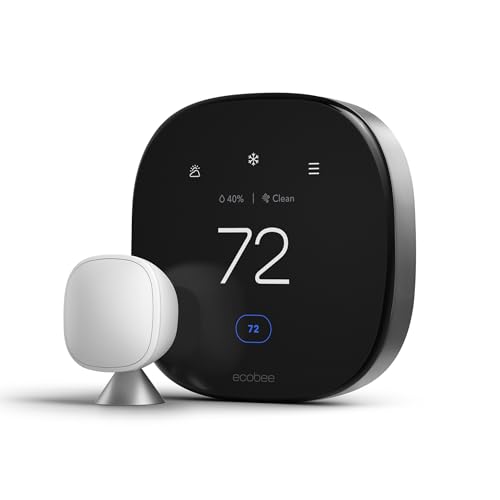
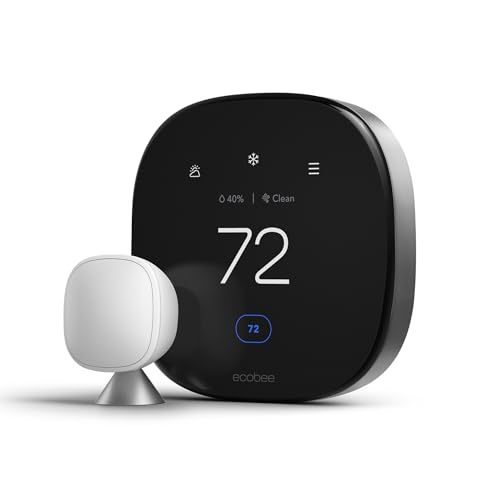
ecobee Smart Thermostat Premium — the pros at maximum, the cons managed
The sensor-led flagship collects Pro 2 more completely than any rival and carries Pro 3 with strong reporting, while its explicit scheduling sidesteps the learning mismatch of Con 3 entirely. Its cons are the premium tier of Con 4 — wasted in an even home — and the usual Con 1 dependency, mitigated by the maker’s support record. Best for: uneven multi-room homes. Not suited for: small even flats.
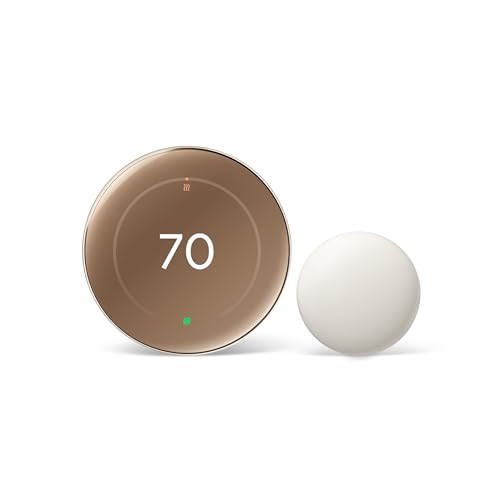
Nest Learning Thermostat — the highest ceiling, the sharpest condition
The learning flagship embodies both columns at full strength: Pro 5 in its purest form for the regular household, Con 3 in its purest form for the irregular one. Its display and staging depth add genuine pros for complex systems. Buy it when the routine condition is honestly met and it may be the best product in this article; buy it against the condition and it becomes the cautionary tale. Best for: regular routines, multi-stage systems. Not suited for: shift work and chaotic weeks.

Amazon Smart Thermostat — the fewest pros, the fewest cons
The entry-tier Alexa model collects Pro 4 and a working share of Pro 1 and Pro 5, while asking the least of the household in money, setup ambition, and ecosystem commitment. Its cons are omissions rather than faults: no sensor ecosystem for Pro 2, shallower reporting for Pro 3. For the even, Alexa-run home it is the balance point of this entire article. Best for: simple Alexa households. Not suited for: problem rooms or complex systems.
How the Balance Shifts Over the Years
The pros and cons do not sit still. In the first month, the cons are loudest: installation effort, accounts, the learning curve, the thermostat’s own learning period. From the first season onward the pros compound quietly — the schedule fits better, the reports accumulate into a maintenance memory, the sensors end arguments nobody remembers starting. Somewhere in the middle years the dependency con takes its one real test, usually a router change or an outage, and households discover whether their model’s local behaviour is as boring as promised. In the long years, the balance is decided by the maker: supported products refine, orphaned ones fossilise into programmable thermostats that still, to their credit, heat the house.
That arc produces the article’s most practical weighing advice. Judge the cons at their first-month weight only if you are the sort of household that abandons fiddly purchases by spring. Judge the pros at their fifth-year weight only if you are the sort that configures once and reads the reports. Most households sit between, and for them the balance in a matched purchase tips clearly positive — not because the cons are small, but because they are front-loaded and finite, while the pros recur every week the system runs. Mismatched purchases invert the arc, which is why this cluster keeps returning to the same unglamorous counsel: diagnose the house first, and let the columns weigh themselves.
The Environmental Column, Weighed Both Ways
The environmental ledger has two sides and this article keeps both. On the credit side, heating and cooling dominate household energy use in most climates, so runtime genuinely wasted — the empty hours, the overheated bedrooms, the fossilised schedules — is among the largest reducible loads an ordinary home carries, and a thermostat that trims it works on the biggest target available. The monitoring pro adds a second credit: systems maintained on evidence run closer to their designed efficiency for more of their lives, and a heat pump rescued from an auxiliary-heat habit is an environmental win as much as a financial one.
On the debit side stands the device itself: electronics manufactured, shipped, and eventually discarded, multiplied across millions of hallways. The honest arithmetic favours the credit side when the thermostat serves a long life in a house with waste to trim, and turns questionable when flagships are replaced on a novelty cycle or bought for homes with nothing to recover. The greenest smart thermostat, like the most economical one, is the correctly tiered model bought once, installed properly, and left to work for a decade. Buyers who care about this column should therefore resist both temptations the market offers: the upgrade treadmill, and the refusal to automate a genuinely wasteful house on principle.
What the Professionals See From the Other Side
HVAC technicians hold a useful vantage on this debate, because they meet smart thermostats at their worst: the callbacks. Their collective testimony, consistent across the trade, is that the product category is rarely the problem. The callbacks trace to the cons this article has already itemised — power arrangements improvised instead of specified, heat pump configuration guessed instead of set, sensors sited where they lie to the system, and households sold learning flagships for unlearnable lives. The same technicians report the opposite pattern in matched installations: fewer comfort complaints, better staging behaviour, and diagnostic data that shortens their own visits.
That professional view sharpens the article’s bottom line rather than changing it. The pros are delivered by the match and the setup; the cons are delivered by the mismatch and the shortcut. A buyer cannot control which product generation they shop in, but they control the diagnosis, the tier, the installer decision, and the first evening’s configuration — which happen to be the four variables the entire balance turns on. Few consumer categories hand the buyer that much of the outcome. It is, in the end, the most encouraging entry in either column.
Scoring the Columns for Your Own House: A Worksheet in Words
Turn the two columns into a personal score with five questions, each answered from your house’s evidence rather than its hopes. First, count the empty hours in a typical week, honestly, including the irregular ones: the higher the count, the heavier Pro 1 sits. Second, compare your bedroom and your main living room with the hallway at the hours you use them: every degree of disagreement loads Pro 2. Third, open your current thermostat’s programme — if you can bear to — and date it against your present routine: the staler it is, the more Pro 5 is worth. Fourth, describe your system in one sentence: the more stages, accessories, and heat pump complexity it contains, the more Pro 3 matters and the more seriously Con 2 must be budgeted. Fifth, picture your household’s relationship with apps and accounts: fluency shrinks Con 1 and Con 6, while reluctance inflates them.
Households that score high on the first three questions and manageable on the last two hold the category’s strongest hand, and should buy without lingering. Households that score low on the first three hold its weakest, and the entry tier or a pass is the disciplined answer. The interesting households are the mixed scores — the cold-bedroom house that hates apps, the empty-all-day house with the frightening heat pump — and for them the worksheet’s gift is precision: they can buy exactly the pro they scored for, from exactly the philosophy that delivers it, and decline the rest of the catalogue with a clear conscience. That is what weighing pros and cons is for. Not a verdict about a product, but a description of a match.
Regional and Housing Variations That Move the Needles
Climate loads the columns unevenly. In severe heating climates, Pro 3 and the heat pump dimension of Con 2 dominate: the stakes of configuration are measured in a winter’s bills, and the monitoring that catches auxiliary heat misbehaviour can outweigh every other entry combined. In hot, humid climates, the comfort pros shift toward humidity-aware cooling, and a thermostat that coordinates dehumidification earns a pro this article’s temperate framing understates. In mild climates, where systems idle for months, the columns compress toward the modest: modest waste to trim, modest comfort to correct, and a verdict that often lands on the entry tier bought for convenience and vigilance rather than transformation.
Housing type moves the needles as much as weather. Flats concentrate the household near the thermostat, shrinking Pro 2 and the empty-hours pro alike when neighbours’ warmth leaks through party walls. Detached multi-storey houses maximise both. Old, draughty construction raises the value of occupancy responsiveness, because the building sheds heat quickly when empty and rewards a system that notices; tight modern construction lowers the penalty for every scheduling sin and flatters simpler models. None of these variations changes the article’s method. They change the weights — which is exactly why a pros and cons list that ends in a universal verdict should never be trusted, including, the reader is invited to note, this one. Trust the columns, weigh them at home, and let your own hallway cast the deciding vote it has earned.
The Cons Nobody Lists, and the Pros Nobody Notices
Two minor entries escape most lists and deserve their paragraph. The unlisted con is aesthetic and social: a glowing, information-rich disc is a presence in a hallway designed around calm, and some households simply prefer a wall that says nothing. The disappearing finishes exist because this con is real, and buyers who feel it should honour it — a thermostat resented daily for its looks will be overridden, covered, or ignored in ways that quietly tax every pro. The unnoticed pro runs in the opposite direction: a legible, present thermostat makes temperature a shared, visible fact in the house. The era of one person secretly nudging the dial and another secretly nudging it back — a genuine, if small, domestic friction — ends when the setting, the schedule, and the reason are on the wall and in everyone’s app. Transparency is an odd feature to praise in a heating controller, and households that have lived both ways praise it anyway.
There is also the matter of resilience, which belongs in both columns at once. A smart thermostat with good local behaviour is, during a broadband outage, exactly as reliable as the programmable box it replaced — no con at all. During a power outage nothing on the wall matters, and on restoration the connected thermostat’s habit of reporting in, confirming the system restarted, and resuming its programme without a button-pressing expedition is a small, real pro for houses that sit empty. Weighed together, resilience nets out mildly positive for the category, provided — the recurring proviso — the model was chosen with its local behaviour checked rather than assumed.
Before the questions below, a final act of balance: the strongest single sentence for the pros is that a matched smart thermostat removes a daily friction — the forgotten setback, the cold room, the fossilised schedule — so completely that the household stops remembering it existed. The strongest single sentence for the cons is that every one of those benefits is rented from an ecosystem of networks, accounts, and corporate continuity that the household does not control. Both sentences are true at once, in the same hallway, on the same winter evening. The mature purchase holds them together, buys from a maker worth renting from, installs with a professional’s respect for the wiring, and then enjoys the first sentence for a decade while the second stays, as it usually does, theoretical. That is the balance this article set out to strike, and it is offered as a method rather than a verdict: your columns, your weights, your house.
After the First Month: Smart thermostat Trade-Offs Owners Actually Notice
Every honest list of advantages and drawbacks hides a second list: the trade-offs that only appear after the first month, when the novelty has worn off and the smart thermostat has become part of the furniture. Those are the ones worth examining before you decide. None of what follows is a reason to buy or avoid on its own; it is the texture of daily ownership that a summary table cannot hold.
Judge a smart thermostat by your heating and cooling system first: compatibility with your equipment and wiring decides the shortlist before features get a vote. Then judge the scheduling and sensing model, whether it learns, follows room sensors or simply runs a programme you set, against how your household actually lives. Photograph your current thermostat’s wiring before buying, check for the common wire many models need, and note your system type from the existing unit’s labels. Decide where temperature should be sensed, because the hallway where thermostats live is rarely the room whose comfort matters most.
In a home with a predictable work pattern, a thermostat that pre-warms or pre-cools for arrival beats one that reacts after you walk in uncomfortable. For bedrooms that run hot or cold relative to the hall, remote room sensors that let the system average or prioritise the sleeping rooms fix the oldest complaint in heating. For a second home or rental, remote alerts for very low temperatures and the ability to check the system from afar justify the smart layer on their own. Notice how few of these points are about the product in isolation. Most trade-offs are really about the match between the smart thermostat and the household, which is why the same model collects glowing and furious feedback from different homes.
Apply all of this to the listings in front of you. When a listing such as the ecobee Smart Thermostat Premium, Nest Learning Thermostat and Amazon Smart Thermostat catches your eye, resist judging it by its headline claim and instead run the checks above against it: does its stated role match the room you measured, does its control path suit your household, and does the maker’s own guidance support the job you have in mind. A model that answers those questions cleanly on paper usually answers them cleanly in the home, and one that dodges them in the listing will dodge them on your wall, shelf or desk as well.
Systems with proprietary communicating controls and some older high-voltage setups sit outside most smart thermostats’ compatibility, whatever the box suggests. A thermostat is only as good as its sensor’s position; direct sun, a draught or a hot appliance nearby will run the whole house wrong. If the system short-cycles or the thermostat reboots when heating starts, the power supply to the thermostat is the first suspect, not the schedule. If one room never reaches the set point, check vents, doors and sensor placement before raising the temperature for the whole house.
- List the drawback most likely to touch your daily routine and test for it first for your smart thermostat.
- Decide which advantage you will genuinely use every week for your smart thermostat.
- Check the ongoing chore the product creates and who in the house will own it.
- Confirm the fallback when the smart features or network fail for your smart thermostat.
- Compare the ownership cost in time, not just the purchase decision for your smart thermostat.
- Ask whether the same benefit is available from something you already own for your smart thermostat.
If the app and the wall unit disagree, confirm both are on the same account and system after any router or password change. Keep the thermostat’s vents and sensors dust-free, replace room-sensor batteries on a rota, review the schedule at each season change, keep firmware updated, and have the heating system itself serviced on its own schedule regardless of the thermostat’s cleverness.
Weigh the drawbacks against your specific routine, not against an imaginary average owner. A drawback that never touches your day costs you nothing, and an advantage you will use daily is worth more than three you will use once.
It also helps to think in seasons rather than in days. A smart thermostat that seems ideal in the week it arrives may face different light, different temperatures, different routines and different demands a few months later, and the models that age well are the ones chosen with that longer view in mind.
Keep the household in the loop as you decide. The person who did not choose the smart thermostat is usually the person who discovers its most annoying habit first, and a two-minute conversation before buying can surface the objection that saves a return.
Frequently Asked Questions
What is the biggest advantage of a smart thermostat?
For most households, automatic setback: the system trims heating and cooling when the house is empty, using occupancy and location awareness, without anyone remembering to act. For multi-room homes, room sensing rivals it, because it fixes comfort where people live rather than where the thermostat hangs. Both advantages are conditional on the house having the problem they solve — which is the theme of this entire article.
What is the biggest disadvantage?
Dependency. The smart features rely on your network and the manufacturer’s cloud and continued support, so an outage or a discontinued service pauses them. Core heating and cooling continue locally on the leading models, which caps the harm, but buyers should choose established makers, confirm local fallback behaviour, and count the dependency honestly against the convenience it buys.
Do smart thermostats really save money?
They recover waste; they do not manufacture savings. A home heated or cooled through long empty hours, or run on a fossilised schedule, has waste to recover and usually sees a real effect. A home already run on disciplined setbacks has little left, and should judge the purchase on comfort, sensing, and monitoring instead. Any source promising your household a fixed figure is describing someone else’s house.
Are smart thermostats hard to install?
A standard low-voltage swap with labelled wires and a C-wire is a careful homeowner’s job: power off at the breaker, photograph and label the wiring, follow the manufacturer’s steps, and test every mode. The hard cases are defined and non-negotiable — line-voltage and millivolt systems, damaged or unlabelled wiring, and complex heat pump arrangements belong to HVAC professionals. Difficulty is therefore a property of your system, not of the product.
Can a smart thermostat make comfort worse?
Yes, when it is mismatched or unconfigured: a learning model fighting an irregular routine, geofencing misreading the household, or a sensor placed in a sunbeam teaching the system a fictional climate. These are the cons this article refuses to hide. They are also almost entirely preventable at the choosing and setup stages, which is why the cluster’s guides spend so much of their length before the purchase rather than after it.
Is the privacy trade-off worth it?
That is a household decision, not a reviewer’s. Occupancy and location features need pattern data to work; the leading platforms publish what they collect and provide controls. Households can decline location features and keep scheduling, sensing, and reporting, accepting a smaller version of the empty-hours pro. Decide consciously, set the controls deliberately, and revisit the choice when household members change.
Related Guides
Round out the platform with the best smart speakers, the best smart door locks, the best smart light bulbs, and the best smart humidifiers. For the category assessed as a whole, read our smart thermostat review and the collected smart thermostat reviews.