Disclosure: As an Amazon Associate, reviewstook.com earns from qualifying purchases. Links on this page are affiliate links; they cost you nothing extra. Prices and availability change often, so check the current Amazon listing before you buy.
This smart thermostat review treats the category the way owners experience it: not as a spec sheet with a screen, but as the small, always-on manager of the most expensive system in the house. We assess how the leading models behave across a real day and a real season — how their sensing holds up against cold bedrooms and empty Tuesdays, how their staging treats furnaces and heat pumps, what their apps add and what they quietly take away — and we separate the models by the households they serve rather than by the order they launched. Every product below is a real, currently sold model so the verdicts here are about fit and behaviour; check price on Amazon for the current listing of whichever model fits your system.
Key Takeaways
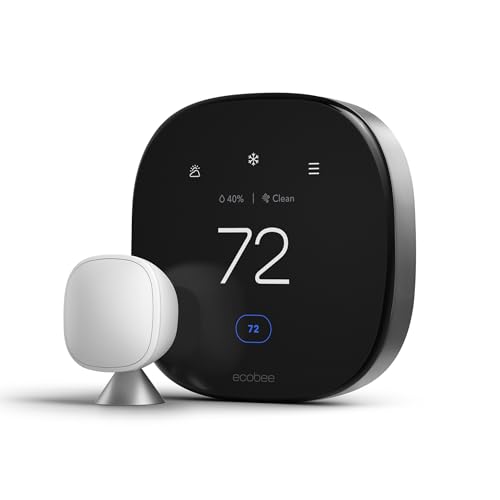
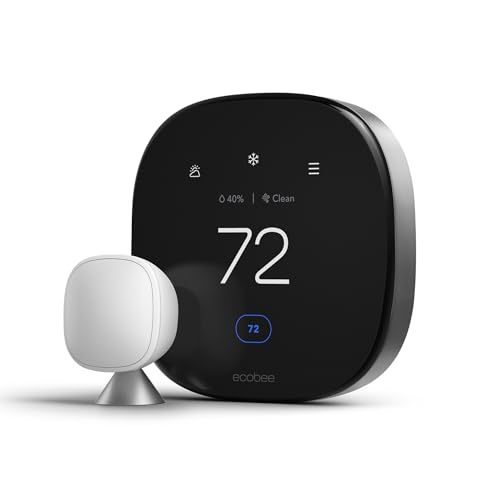
- The ecobee Smart Thermostat Premium is the review’s benchmark for sensing: no rival reads a multi-room house as honestly.
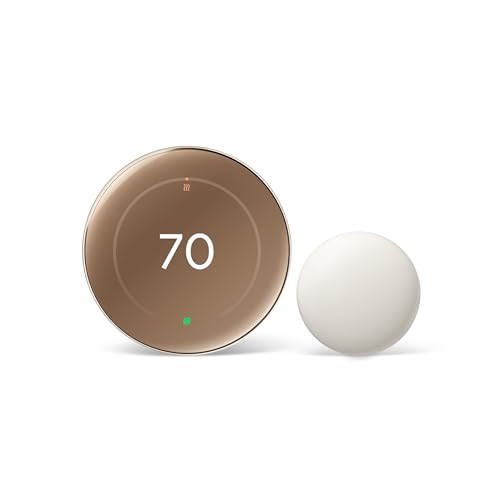
- The Nest Learning Thermostat remains the automation benchmark, and the most conditional recommendation in the field.
- The mainstream Google Nest Thermostat is the balanced default for standard systems and regular lives.
- The Honeywell Home T9 and the entry models from Amazon and Wyze each serve a narrower, legitimate brief.
- Across the class, compatibility and configuration decide satisfaction more than any display, finish, or feature list.
- Judge the reports as a feature in their own right: weather-aware, stage-aware information is what turns owners into early fault-spotters.
- Cooling behaviour mirrors heating behaviour — humidity awareness and honest sensing matter as much in July as in January.
Verdict in brief: buy the sensor-led flagship if your rooms disagree; buy the learning flagship if your routine is regular and your system is complex; buy the balanced middle model if neither extreme describes you; and let a technician, not optimism, handle any system outside the standard low-voltage pattern.
In this guide
Smart Thermostat Review: What It Is and Where It Fits
A smart thermostat is a connected controller for a heating and cooling system: it senses indoor temperature — and, in the better designs, occupancy, humidity, and the temperature of other rooms — and it instructs furnaces, boilers, heat pumps, and air conditioners when to run and at what stage. Around that core, the category layers scheduling, learning, geofencing, voice control, and reporting. The class divides into three philosophies that this review uses throughout. Learning models build the programme from your behaviour. Sensor-led models follow your programme but judge the house through room sensors. Straightforward connected models execute a schedule you set from an app, with occupancy trimming in simpler form.
Segment the market by house rather than by product and the review’s map sharpens. Small, modern, evenly built homes need the least from this category and should buy the least of it. Large, older, unevenly built homes need the most and repay the most. Rental and second properties form a third segment whose currency is vigilance rather than comfort. New-build homes increasingly arrive with a connected thermostat already fitted, which moves their owners’ question from whether to buy to whether the bundled unit deserves to stay — a question this review’s behaviour sections answer as well as any shortlist, since a bundled model that senses one hallway and reports nothing is a placeholder wearing a touchscreen.
Where the category fits is equally important. A smart thermostat is a control upgrade, not a heating upgrade: it cannot add capacity, repair staging faults, or insulate a wall. Its gains come from instructing existing equipment more intelligently — running the right stage at the right hour, resting the system in an empty house, holding the rooms people occupy at the temperature they chose. Households expecting transformation of a failing system will be disappointed by every model in this review; households with sound equipment and primitive instructions are the category’s natural constituency, and for them the improvement is disproportionate to the small box on the wall that delivers it.
Design, Build and Setup Across the Field
Hardware design in this category has split into two schools. The expressive school — the Nest Learning Thermostat’s metal ring and rich display, the ecobee flagship’s large, bright, information-dense face — treats the thermostat as a small instrument to be looked at. The disappearing school — the mainstream Nest model’s mirrored lens that reflects the hallway, the Amazon model’s quiet minimalism — treats it as decor that should be forgiven. Both schools build well at their tiers, and the review notes with approval that none of the six treats build as an afterthought: these are objects engineered to be touched daily for a decade, and they feel like it.; the differences that matter are legibility from across a room, the obviousness of the one gesture that changes temperature, and how the unit wakes — presence-activated displays remain a small daily pleasure wherever they appear.
Build quality shows in the small hours of installation: terminal clamps that grip conductor rather than insulation, wall plates that sit flat on imperfect plaster, trim that forgives the footprint of a larger predecessor, and a body that seats with a click an installer can feel. The flagships and the trade-bred T9 lead on these tactile virtues; the entry models are adequate rather than delightful, which their tiers excuse. None of the six feels fragile, and none should be forced — a thermostat that needs force to seat is telling its installer that a wire is trapped behind it.
Setup is where this review separates the field more sharply. Every model here demands the same foundations — a compatible low-voltage system, labelled wiring, continuous power through a C-wire or the manufacturer’s specified adapter — and every installation in this review’s scope follows the same safety discipline: power off at the breaker before covers move, old wiring photographed in close-up, wires labelled by terminal, and line-voltage, millivolt, or complex heat pump arrangements handed to an HVAC technician without exception. Within those foundations, the ecobee’s wire-confirming setup and documented power extender approach are the most forgiving for homes without a C-wire; the Nest models’ app-guided flows are the most polished for standard swaps; the entry models lean hardest on their apps and reward the most standard wiring. The full method, with its stop signs, is in our step-by-step installation guide.
No verified specification numbers are quoted in this review, deliberately: staging counts, sensor ranges, and compatibility lists must be read against your exact equipment in each manufacturer’s checker, and a review that prints a generic spec table invites the one error this category punishes — assuming your system is the standard one. What can be said across the field is that all six models reviewed control the mainstream of forced-air and boiler systems, that heat pump support is broad but configuration-sensitive, and that accessory control for humidifiers, dehumidifiers, and ventilators is a flagship trait that thins quickly down the tiers.
Performance in Real Use
Scheduling and learning in daily life
Across a month of ordinary weeks, the philosophies show their characters. The learning flagship genuinely does retire programming for a regular household: after a teaching period of honest adjustments, its programme tracks the household’s rhythm, and its presence sensing patches the deviations. The same behaviour in an irregular household produces the review’s most consistent complaint pattern — a house prepared for a life nobody is living that week. The sensor-led and schedule-driven models ask more on day one and argue less forever after; their programmes are exactly what was set, which a surprising share of owners discover they prefer. The entry models schedule competently and without flourish. There is a second scheduling trait worth isolating, because it decides weekday mornings: recovery intelligence. A thermostat that begins recovery early enough to reach the waking temperature on the efficient stage — rather than late enough to need the expensive one — performs a small economic kindness every single day, and the flagships’ advantage here is real and compounding. Owners feel it as a house that is simply warm on time; the mechanism underneath is the thermostat respecting the building’s thermal pace instead of shouting at it. When this review praises configuration and staging depth, this unglamorous morning behaviour is a large part of what is being praised.
Judgement: learning is the best feature in this review and the most conditional, and the condition is your calendar, not the product.
Sensing, rooms, and the temperature that matters
Put the field in a two-storey house with a cold main bedroom and the ranking rearranges itself around one capability. The ecobee flagship, prioritising its bedroom sensor overnight, holds the room the household sleeps in at the chosen temperature and lets the hallway drift — the single most satisfying behaviour any model in this review produces. The T9’s sensor prioritisation delivers the same idea in a more traditional package. The Nest models sense occupancy at the unit and average their own location honestly, but without a room-sensor ecosystem they cannot correct a hallway that lies about the bedrooms. The entry models sense their own spot and nothing else. Placement craft decides how much of this capability a household actually receives, and the review notes it because owners control it entirely. A room sensor belongs where the room is lived — at pillow height in the bedroom it governs, at desk height in the office — and away from the liars: supply vents, sunbeams, exterior doors, and the tops of warm electronics. Sensors placed carelessly teach the system a fictional house with great confidence, and several of the category’s disappointed owners are, on inspection, households whose sensors live on radiators’ shelves and sunny sills. The hardware was fine. The evidence was rigged.
Judgement: in even homes this section is a draw; in uneven homes it is the review.
Staging, heat pumps, and the cost of configuration
Fan behaviour deserves its line in this section, because the better models treat the fan as a comfort instrument rather than a by-product: circulating air after a heating cycle to harvest the warmth left in the ducts, running gentle air movement on mild days to even the house without heating or cooling, and coordinating with ventilation accessories where fitted. Households in shoulder seasons feel this as a house that never quite goes stale, and it is one of the behaviours that separates a thermostat managing a system from a thermostat merely switching one.
On multi-stage furnaces, the flagships’ longer, gentler cycles hold temperature in a visibly narrower band than basic controls, and the house feels calmer for it. On heat pumps, this review’s strongest warning applies to the whole field: capability is plentiful and configuration is destiny. Correctly set — reversing valve behaviour, auxiliary heat restraint, defrost logic — the flagships manage backup heat with a discipline that shows up in the season’s running costs. Guessed at, the same hardware produces the category’s most expensive failure mode, a comfortable house heated expensively by its own backup. The entry models cover simpler heat pump arrangements adequately and should not be stretched beyond them. Judgement: complex systems should buy configuration depth and professional setup, in that order, whichever badge they choose.
Apps, voice, and the household test
The app is the thermostat most owners touch, and the field’s apps divide by temperament. Google’s and ecobee’s are the most complete — scheduling, reports, household members, alerts — with ecobee’s the more information-forward and Google’s the more ambient. Honeywell’s app is workmanlike and familiar to the trade. The Amazon model’s experience lives inside Alexa’s app and suits households already there; the Wyze app is the plainest and the quickest to learn. Voice control works across the field through each model’s supported assistants. Multi-generational households should weight one more app trait that brochures ignore: permissioning. The ability to give a teenager view-and-adjust rights without account ownership, a house-sitter a temporary hold without the schedule’s keys, and an elderly parent a large-type simplicity inside the same system turns the app from the administrator’s tool into the household’s shared instrument, and the field divides noticeably on how gracefully it shares.
The household test — can a guest change the temperature at the wall without instruction — is passed by every model here, with the disappearing designs occasionally too discreet for first-time visitors. Judgement: choose the app your household will still be opening in year three, because the reports only catch faults for owners who read them.
Strengths and Trade-Offs of the Category
Strengths
- Automatic setback through occupancy and location awareness recovers the empty hours no schedule can predict.
- Room sensing, where offered, corrects the oldest lie in home heating: the hallway’s version of the house.
- Runtime reporting converts the heating system from folklore into evidence, catching costly faults early.
Trade-offs
- The smart layer depends on home networks and manufacturers’ clouds, even though core heating runs locally.
- Installation demands compatibility, power, and wiring discipline, with whole system types reserved for professionals.
- The best features are conditional — learning needs routine, sensors need uneven rooms — and are wasted where the condition is absent.
How It Compares: The Models Against Each Other

ecobee Smart Thermostat Premium — the sensing benchmark
Against the field, the ecobee flagship wins on evidence: it knows the most about the house it controls. Its scheduling is explicit, its platform support the widest here, its installation provisions the most considerate of imperfect wiring. It is the review’s recommendation for multi-room and multi-platform homes. Best for: uneven houses, mixed ecosystems. Not suited for: minimalists in even flats. Check price on Amazon for the current listing.
Nest Learning Thermostat — the automation benchmark
Against the field, the learning flagship wins on effortlessness — for the household it suits. Its display is the class showpiece and its equipment handling the deepest in its line. It is the review’s recommendation for regular routines on capable systems, and its most conditional one. Best for: set-and-forget households. Not suited for: irregular lives. Check price on Amazon for the current listing.
Google Nest Thermostat — the balanced default
Against the field, the mainstream Nest wins on proportion: the connected essentials, presence setbacks, and energy summaries in the category’s most decor-friendly hardware, at the middle tier. It is the review’s default recommendation where no extreme of rooms or routine argues otherwise. Best for: standard systems, design-led homes. Not suited for: problem-room houses. Check price on Amazon for the current listing.
Honeywell Home T9 — the traditional sensor route
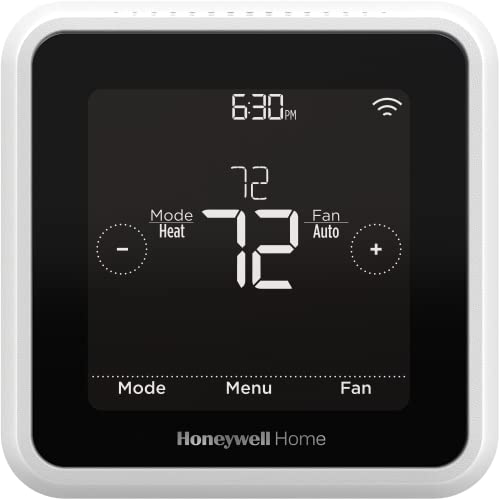
Against the field, the T9 wins on continuity: room-sensor prioritisation from the name already on the wall in millions of homes, with documentation in the trade’s own language. It is the review’s recommendation for conventional systems gaining sensing without changing brands. Best for: existing Honeywell households. Not suited for: the widest platform ambitions. Check price on Amazon for the current listing.

Amazon Smart Thermostat — the entry benchmark for Alexa homes
Against the field, the Amazon model wins on focus: the connected core, Alexa-native, at the entry tier, with automation hunches doing quiet work in the background. It is the review’s recommendation for Alexa households with simple systems. Best for: flats, rentals with permission, second zones. Not suited for: non-Alexa homes or complex staging. Check price on Amazon for the current listing.
Wyze Thermostat — the minimalist entry
Against the field, the Wyze model wins on sufficiency: app control and scheduling at the entry tier for standard, labelled systems whose owners want the essentials and nothing else, provided its stated requirements are met exactly. It is the review’s recommendation for the tightest briefs. Best for: simple systems, confident installers. Not suited for: accessory-heavy or multi-stage setups. Check price on Amazon for the current listing. The tier logic behind these verdicts is expanded in the smart thermostat buying guide.
Who Should Buy It, and Who Should Skip It
Renters and landlords split this section between them and both deserve a sentence. A renter with written permission, a standard system, and a reversible swap collects most of the category’s value and should buy the middle tier without guilt, keeping the original unit for restoration. A landlord fitting between tenancies collects the vigilance value and should buy for alerts and durability, because the thermostat that reports a failing system in an empty rental is earning money while it sleeps.
Buy into this category if your house empties irregularly, your rooms disagree, your schedule has fossilised, or your system is complex enough to deserve a manager rather than a switch. Buy the flagship tiers when the diagnosis includes problem rooms, multi-stage equipment, or accessories; buy the middle when it includes none of those but values polish; buy the entry when the brief is honestly a connected schedule and remote control. Skip the category — for now — if your home is small, even, always occupied, and already run on a living schedule; if your system is line-voltage, millivolt, or proprietary-communicating and no supported smart path has been identified; or if nobody in the household will open an app after the first week. That last condition is not snobbery: an unmonitored smart thermostat delivers a fraction of its value, and the fraction rarely justifies the flagship tiers. The standalone value verdict, household by household, is in is a smart thermostat worth it.
Before buying any model here, run the pre-purchase checklist this review applies to the whole field. Confirm the manufacturer’s checker against your exact system, stages, and accessories. Resolve the C-wire question on paper. Match the philosophy to the routine in one honest sentence. Confirm the assistant and platform fit, and that the features you want are not subscription-gated. Decide the installer — yourself under the safety discipline, or a technician for anything near a stop sign. A model that survives that checklist will very likely satisfy; a model bought around it is a lottery ticket with a nice screen.
Setup, Care and Maintenance Essentials
One maintenance item belongs to the equipment rather than the thermostat and the review lists it because thermostats get blamed for it: the system filter. A clogging filter lengthens runtime, widens the gap between set point and satisfaction, and persuades owners their new controller is underperforming, when the controller’s lengthening runtime report is in fact the messenger. Households that act on the filter reminder the thermostat sends will never meet this confusion; households that dismiss it will meet it every season, wearing a different disguise each time.
Ownership quality in this category is set in the first evening and maintained in minutes. Set a real schedule before bed on installation day; place sensors at living height away from sun, vents, and exterior doors; enrol every household phone if geofencing is used, and test a departure; add household members with their own accounts; switch on the alerts — low temperature, system fault, filter reminder — and aim them at someone who acts. Then test each mode once, heating, cooling, and fan, and on heat pumps confirm auxiliary heat stays out of mild weather. Care thereafter: dust with a dry cloth, keep vents clear, reconnect promptly after network changes, read the runtime report monthly in the first year, and re-aim the schedule each shoulder season. Keep the installation archive — photographs, labels, configuration answers — with the house papers. That is the complete maintenance burden of the class at its best, and the two-sided summary of living with it is in smart thermostat pros and cons.
Final Verdict
If this review were forced to keep one sentence for the time capsule, it would be that the category’s centre of gravity has moved from control to knowledge: the winning products are no longer the ones that merely obey remotely, but the ones that know the house — its rooms, its rhythms, its equipment’s habits — and act on that knowledge without being asked. Every recommendation above is that sentence wearing a household’s clothes.
Reviewed as a class, the smart thermostat is a mature category with three honest philosophies and no bad flagship — only bad matches. The ecobee Smart Thermostat Premium is this review’s benchmark for the sensing-led home; the Nest Learning Thermostat for the regular, complex one; the Google Nest Thermostat is the default for everyone between; the T9, Amazon, and Wyze models serve their narrower briefs without apology. Buy the match, install it with respect for the wiring, configure it on the first evening, and the category delivers what it promises: a house whose climate quietly agrees with its life. Choose by brochure instead, and the same products will spend a decade explaining the difference.
A Day With the Category: Morning to Midnight
Reviews earn their keep in the hours spec sheets ignore, so consider the field across one ordinary winter day in a house that uses it well. At the waking hour the system has already recovered from the overnight setback, timed by the schedule in the explicit models and by the learned pattern in the flagship that studies; the house is warm when feet meet floor, which is the entire point of recovery done properly, and the auxiliary heat on the heat pump stayed out of it because the recovery began early enough to be gentle. By mid-morning the house has emptied. The schedule-driven models follow their programme; the presence-aware ones notice the quiet and deepen the setback beyond the programme’s guess; the geofencing households watch the setback engage as the last phone crosses the radius, a small automation that never gets old because it never asks to be remembered.
Afternoon tests the sensing. Sun loads the front rooms while the back stays cold, and the models divide exactly as this review’s sensing section predicted: the sensor-led systems average the disagreement away, the hallway-bound models chase their own microclimate, and the entry models hold their single reading with honest simplicity. Evening is the app’s hour — a hold set from the sofa, a voice adjustment with hands full of cooking, the bedroom sensor taking priority as the house winds down. Midnight closes the loop with the day’s runtime quietly filed into the report the owner will glance at monthly. Nothing in the day was dramatic, and that is the review’s deepest finding about the category: its excellence is the absence of events. The houses that love these products are not entertained by them. They are simply never cold at the wrong moment, never warm at an empty one, and never surprised by the system that heats them.
Living With the Display: Light, Information, and Restraint
A thermostat is the only screen in the house that is never switched off, and the field’s restraint varies enough to matter. The best implementations wake on approach, show the one number that matters large, and go dark with a discipline that respects bedrooms and hallways at night. The flagship displays can show weather, air information, and system state in layers an owner can configure down to near-blankness, and this review’s advice is to configure them down: a thermostat that performs its data all evening becomes furniture that argues. The disappearing designs make the opposite bet by default and win hallways where calm is the brief.
Sound belongs in the same judgement. Relay clicks, fan calls, and the small mechanical noises of control are part of the category’s texture; the better models keep them minimal and, more importantly, keep their cycling behaviour smooth enough that the system itself does not announce every decision through the ducts. Owners sensitive to night noise should weight staging smoothness and cycle behaviour above display features, because a thermostat is heard more often than it is looked at, and it is looked at most in the first month and heard for a decade.
The Reports, Reviewed as a Feature
Because this review keeps returning to information as the category’s sleeper value, the reports deserve their own assessment. The field’s best reporting relates runtime to weather, distinguishes stages — above all, it shows auxiliary heat separately on heat pump systems — and presents the month in language a non-engineer can act on. Weaker reporting shows bars without causes. The difference decides whether owners actually use the feature, and usage decides whether the fault-catching pro exists at all. Google’s summaries lean toward the plain-language end; ecobee’s toward the data-rich end; the entry models offer the basics. None of them can make an owner look, and this review’s recurring counsel stands: the household that will not glance monthly should not pay flagship prices for reporting depth it will never open.
Alerts are the reports’ urgent cousins and grade similarly. Low-temperature warnings, system-not-responding notices, and filter reminders are only as good as their delivery — timely, aimed at a person, and rare enough to stay alarming. Every model in this review offers some version; the flagships offer the most configurable. Second-home owners should treat this subsection as the review’s centre of gravity, because for an empty house the alert is not a feature of the thermostat. It is the thermostat.
Long-Term Ownership: Years Two Through Ten
Most reviews end at the honeymoon; this one insists on the marriage. In year two, the category’s products have settled into their households’ rhythms, and the differences that remain are the differences that mattered all along: whether the schedule still matches the life, whether the sensors ended the room arguments, whether the reports have caught anything real. Software updates across the field arrive quietly and mostly improve; the established makers in this review have track records of refining rather than abandoning, which is the trait that separates a fixture from a gadget over a decade.
The ownership risks of the long term are the ones this review has flagged from the start, arriving on schedule. A household’s routine changes — a job goes remote, a child leaves, a parent arrives — and the learning models must be retaught while the explicit models must be reprogrammed; both tasks are easy and both are skipped by exactly the households who then conclude the thermostat has gone stupid. A router changes and a thermostat sits offline for a season, heating loyally and reporting nothing. A maker is acquired and an app’s roadmap wobbles. Against each risk the defences are the same boring ones: choose support records over launches, keep the local schedule meaningful, and spend the ten seasonal minutes this review keeps prescribing. Ownership of this category is not demanding. It is merely, like the heating it governs, a background discipline — and the products reviewed here reward exactly the households willing to keep it.
How This Review Judged, and What It Refused to Do
A note on method, because the category invites bad reviewing. This review refused three common practices. It refused fixed savings figures, because savings are a property of the household’s starting waste and any number printed here would describe a stranger’s house. It refused fixed performance scores detached from system fit, because the same thermostat is excellent on one furnace and wrong on another, and a single score hides the only fact the buyer needs. And it refused to quote specification tables as verdicts, because staging counts and sensor lists become true or false only against a specific installation. What it did instead — judge behaviour across a day, a season, and a decade, by household type — is slower reviewing and, for a product that manages a house’s climate for ten years, the only kind that respects the purchase.
Readers who want the decision machinery behind the verdicts will find it in the companion guides: the choosing method, the installation discipline, the value audit, and the two-sided ledger are each given their own full treatment in this cluster, and the plural companion to this review gathers the cross-model, cross-owner evidence in one place. This review’s own contribution is the ranking of behaviours: sensing first for uneven houses, learning first for regular ones, configuration above all for heat pumps, and proportion — the balanced middle model, honestly bought — for the large, quiet majority in between.
Edge Cases the Field Handles Unevenly
Four situations expose the field’s unevenness and deserve a buyer’s attention before the shortlist hardens. The first is the home with a wood stove or strong solar gain in the thermostat’s room, where every model without remote sensing will underheat the rest of the house whenever the local heat source flatters its reading; sensor-led models solve this structurally, others endure it. The second is the household with a member whose phone is often off, absent, or location-silent, where geofencing-led models misjudge occupancy and presence-sensing models prove their worth. The third is the zoned home, where thermostat families behave differently across a zone panel and the maker’s zoning documentation — rarely advertised, always decisive — should be read before purchase, ideally with the panel’s model number in hand.
The fourth is the home planning electrification: a boiler household expecting a heat pump within the thermostat’s life should buy for the future system’s staging and configuration needs, not the present one’s simplicity, because the thermostat is one of the few components that can survive the conversion if it was chosen with headroom. In each case the pattern repeats this review’s thesis — the product is constant, the house is the variable — and the buyers who surface their edge case early are the ones the category serves best. Support lines and compatibility tools answer these questions well when asked specifically; they cannot answer them at all when the buyer assumes their house is the standard one in the brochure.
Cooling Season: The Other Half of the Year
Heating dominates this category’s reputation, but half its working life is cooling, and the field’s cooling behaviour deserves the same scrutiny. The standout trait is humidity awareness: models that sense indoor humidity can hold comfort at a gentler cooling setting and, where the equipment supports it, coordinate dehumidification, which in muggy climates changes the feel of a house more than any temperature adjustment. The ecobee and Nest flagships handle this most completely; the entry models cool to the number and stop thinking. Scheduling discipline matters symmetrically — the empty-house setback that saves heating fuel in January saves compressor hours in July — and the reports’ seasonal symmetry is genuinely useful, because a cooling system straining in June announces the fault that would have stranded the house in August.
Cooling also exposes placement sins the heating season forgives. A thermostat in afternoon sun will overcool a shaded house all summer while its owners blame the equipment, and a sensor-led system earns its price a second time by governing from the rooms the sun is not flattering. Households in cooling-dominated climates should read this whole review with the seasons swapped — humidity where it says auxiliary heat, sun where it says cold spots — and they will find the rankings hold, because the underlying virtues are the same: honest sensing, careful staging, legible information, and configuration that respects the specific machine outside the wall.
What Owners Argue About, Settled as Far as a Review Can Settle It
Three arguments recur wherever these products are discussed, and a review owes its readers a position on each. The first is whether learning is intelligence or interference. The evidence of ownership says it is both, sorted by household regularity with unusual cleanliness: regular homes report a thermostat that vanishes into competence, irregular homes report a polite antagonist. There is no product fix for this, because the disagreement is not about the algorithm’s quality but about whether a pattern exists to be learned. The second argument is whether the screen matters. It matters for exactly one month and one audience — the household’s first impression and its guests — and thereafter the app and the sensors carry the ownership experience; buyers should therefore let the screen break ties and never make them.
The third argument is whether the category saves money, and it is the one this review has refused to answer with a number from its first page. The settled position is narrower and more useful: the category reliably converts three specific wastes — empty-hour runtime, fossilised schedules, and undetected equipment faults — into savings, in proportion to how much of each waste the household was producing. Owners who argue the category is transformative are usually describing a house rich in all three. Owners who argue it is a toy are usually describing a house poor in them. Both are telling the truth about their hallways, and the review’s job — done, it hopes, by this point — is to help the reader decide which hallway is theirs before the purchase, rather than after the first season’s bills.
Accessories and the Ecosystem Around the Thermostat
No model in this review lives alone, and the accessories around each reshape its value. Room sensors are the headline accessory and have been treated as such throughout, but the supporting cast matters: trim plates that forgive old footprints, power adapters that answer the C-wire question within the manufacturer’s own engineering, temperature and occupancy sensors that extend a platform’s awareness beyond the thermostat’s rooms, and integrations with alarms, locks, and lighting that turn climate into one voice in the household’s routines. When comparing prices of ownership — a comparison this review conducts in tiers rather than figures — the accessory path must be counted: a mid-tier thermostat plus the two sensors a house needs can overtake a flagship that includes one, and a flagship whose sensors multiply cheaply can undercut a mid-tier model bought bare and expanded later.
The ecosystem judgement extends to the maker’s other products, because households rarely stop at one device. A thermostat bought inside a platform the household already uses for speakers, cameras, or security inherits routines and accounts instead of demanding new ones, and that inheritance is worth real money and real patience over a decade. This is the final reason the review’s default recommendation is a balanced model inside the major ecosystems rather than a brilliant orphan: in year seven, the thermostat that still talks to the house is the one whose maker kept the conversation going.
The Long-Term Checks That Separate a Good Smart thermostat From a Tiring One
A review that stops at the first week tells you how a smart thermostat arrives, not how it lives. The checks below are the ones that separate a product that stays satisfying from one that slowly becomes a chore, and they are the checks worth repeating with any model you shortlist. Treat this as a verification routine: run it during the return window, while changing your mind is still free.
Judge a smart thermostat by your heating and cooling system first: compatibility with your equipment and wiring decides the shortlist before features get a vote. Then judge the scheduling and sensing model, whether it learns, follows room sensors or simply runs a programme you set, against how your household actually lives. Photograph your current thermostat’s wiring before buying, check for the common wire many models need, and note your system type from the existing unit’s labels. Decide where temperature should be sensed, because the hallway where thermostats live is rarely the room whose comfort matters most.
In a home with a predictable work pattern, a thermostat that pre-warms or pre-cools for arrival beats one that reacts after you walk in uncomfortable. For bedrooms that run hot or cold relative to the hall, remote room sensors that let the system average or prioritise the sleeping rooms fix the oldest complaint in heating. For a second home or rental, remote alerts for very low temperatures and the ability to check the system from afar justify the smart layer on their own. Score each check honestly rather than generously. A smart thermostat that passes nine and fails one has told you exactly what living with it will be like, and you can decide with open eyes whether that one failure touches your routine.
Apply all of this to the listings in front of you. When a listing such as the ecobee Smart Thermostat Premium, Nest Learning Thermostat and Google Nest Thermostat catches your eye, resist judging it by its headline claim and instead run the checks above against it: does its stated role match the room you measured, does its control path suit your household, and does the maker’s own guidance support the job you have in mind. A model that answers those questions cleanly on paper usually answers them cleanly in the home, and one that dodges them in the listing will dodge them on your wall, shelf or desk as well.
Systems with proprietary communicating controls and some older high-voltage setups sit outside most smart thermostats’ compatibility, whatever the box suggests. A thermostat is only as good as its sensor’s position; direct sun, a draught or a hot appliance nearby will run the whole house wrong. If the system short-cycles or the thermostat reboots when heating starts, the power supply to the thermostat is the first suspect, not the schedule. If one room never reaches the set point, check vents, doors and sensor placement before raising the temperature for the whole house.
- Run the placement check in the room where the product will actually live for your smart thermostat.
- Test the failure mode: network down, power cut, battery flat for your smart thermostat.
- Note the chore the product creates and time how long it really takes for your smart thermostat.
- Repeat the key test at the hour of day you will use it most for your smart thermostat.
- Write down the one behaviour you would change if you could for your smart thermostat.
- Decide before the return window closes, not after it.
If the app and the wall unit disagree, confirm both are on the same account and system after any router or password change. Keep the thermostat’s vents and sensors dust-free, replace room-sensor batteries on a rota, review the schedule at each season change, keep firmware updated, and have the heating system itself serviced on its own schedule regardless of the thermostat’s cleverness.
If a model passes these checks in your home, keep the notes you made. They become your baseline for judging its replacement years from now, and they are worth more than any fresh round of research done from memory.
It also helps to think in seasons rather than in days. A smart thermostat that seems ideal in the week it arrives may face different light, different temperatures, different routines and different demands a few months later, and the models that age well are the ones chosen with that longer view in mind.
Keep the household in the loop as you decide. The person who did not choose the smart thermostat is usually the person who discovers its most annoying habit first, and a two-minute conversation before buying can surface the objection that saves a return.
Frequently Asked Questions
Which smart thermostat is best overall?
For the widest range of real houses, the ecobee Smart Thermostat Premium, because its room sensing fixes the comfort problem most homes actually have and its platform support fits mixed households. Households with regular routines and complex systems may find the Nest Learning Thermostat the better flagship. Best overall in this category always carries a condition, and the condition is your house.
Is a learning thermostat better than a sensor-led one?
Neither is better in the abstract. Learning removes programming for households with regular routines; sensors remove the hallway’s error for households with uneven rooms. Many homes have one problem clearly and the other faintly, and the honest choice follows the clearer problem. Buying both capabilities is possible at the flagship tier but rarely necessary.
Do smart thermostats work with heat pumps?
Yes, broadly, and they can manage auxiliary heat more carefully than basic controls — provided configuration matches the specific system. Reversing valve behaviour, staging, and lockout settings must be set correctly, ideally verified against the equipment documentation or by the technician who services it. Heat pumps are where this category earns its keep and where guesswork costs the most.
What happens when the internet goes down?
The thermostat keeps its schedule and its wall control, and the heating and cooling run. App control, voice control, learning updates, and reports pause until the connection returns. For most households this is a minor event; for second homes it argues for models with strong alerting and recovery behaviour, and for every home it argues for checking local behaviour before buying rather than after.
How long do smart thermostats last?
The hardware is a wall fixture with no moving parts beyond its controls, and should serve for many years. The variable is software support, which is why this review weights manufacturers’ support records. Choose an established maker, keep the device updated, and the realistic expectation is that the heating system around it will be serviced, repaired, and eventually replaced on a shorter cycle than the thermostat’s own.
Can I install one myself?
On a standard low-voltage system with labelled wires and a C-wire, yes, carefully: power off at the breaker, photograph and label the old wiring, follow the manufacturer’s steps, and test every mode. Line-voltage and millivolt systems, damaged or mystery wiring, and complex heat pump arrangements are professional work. The boundary is bright, and respecting it is part of the product’s real cost.
Related Guides
Complete the platform with the best smart speakers, the best smart door locks, the best Wi-Fi smart plugs, and the best smart light switches. For the plural, cross-owner view of the same field, continue to our collected smart thermostat reviews and the decision method in how to choose a smart thermostat.