Disclosure: As an Amazon Associate, reviewstook.com earns from qualifying purchases. Links on this page are affiliate links; they cost you nothing extra. Prices and availability change often, so check the current Amazon listing before you buy.
Short answer: is a smart thermostat worth it? Worth it if your heating or cooling currently runs on habit — the same temperature around the clock, rooms heated while empty, a schedule nobody has touched since the thermostat was fitted — because connected control attacks exactly that waste while making the house more comfortable, not less. Not worth it if your home is small, evenly tempered, occupied around the clock, and already run on a disciplined setback schedule, because then the smart layer has almost nothing left to fix and you are buying an app for a problem you do not have. The honest answer lives between those poles, and this article maps it household by household.
Key Takeaways
- The value of a smart thermostat comes from setbacks you actually keep, rooms sensed where people live, and empty hours no longer heated or cooled — not from the screen on the wall.
- Households with irregular occupancy gain the most from occupancy sensing and geofencing; households home all day gain the least in savings and should judge on comfort features instead.
- Comfort value is real value: ending the cold-bedroom problem or the morning recovery scramble counts, even when the energy maths is modest.
- The costs beyond money are modest but real: installation effort, a C-wire question for many homes, an app to learn, and features that depend on your network.
- Installation safety frames everything: power off at the breaker, photograph the old wiring, and leave line-voltage, millivolt, and complex heat pump work to an HVAC technician.
- Judge payback by your own baseline — your empty hours and forgotten schedules — never by a headline figure drawn from someone else’s house.
- Even a discontinued cloud leaves a working programmable thermostat behind, which caps the downside of buying from an established maker.
In this guide
Is a Smart Thermostat Worth It? Start With What You Actually Get
Strip away the marketing and a smart thermostat delivers four concrete things. The first is a schedule that finally matches your life, because it can be built from your behaviour, adjusted from the sofa, reshaped for a holiday in seconds, and applied without the button-pressing archaeology of an old programmable thermostat. Many homes technically own a programmable thermostat today and run it on permanent hold, which means they own a manual thermostat with extra menus. The smart version’s real gift is that programming becomes easy enough to actually happen, and to keep happening as routines change with jobs, schools, and seasons.
The second delivery is awareness of occupancy. Between sensors in the thermostat, optional room sensors, and the phones in household pockets, a smart thermostat can tell the difference between a house that is empty and a house that is merely quiet, and trim its work accordingly. Heating an empty house is the purest waste in home energy: nobody enjoys it, nobody notices it, and it runs for hours. A thermostat that reliably notices emptiness and sets back, then recovers before the first person returns, removes that waste without asking anyone to remember anything. That forgetfulness-proofing is, for most households, the core of the value case. It deserves emphasis because it inverts the usual smart home pitch: the feature is not that you can control the heating from your phone, delightful as that is on a train home in February, but that nobody has to control it at all on the ordinary Tuesday when the house empties at eight and fills at six. Automation that removes a daily obligation outperforms automation that adds a daily toy, and occupancy awareness is the rare feature firmly in the first category. When owners defend the purchase years later, this — the house quietly doing the obvious thing, unwitnessed — is what they describe.
The third delivery is sensing where life happens. A conventional thermostat judges the whole house by the hallway it hangs in. Room sensors let the system average across occupied rooms or prioritise the nursery at nap time and the bedroom at night. In houses with uneven temperatures — which is to say, most houses with more than one floor — this changes comfort in a way no schedule can, because the problem was never when the system ran; it was what the system believed. Owners consistently describe this as the upgrade they feel, while the schedule improvements are the upgrade they merely save from.
The fourth delivery is information. Runtime reports set against outdoor weather turn vague impressions into evidence: the system ran longer this month because the month was colder, or because a filter is clogging, or because auxiliary heat is doing work the heat pump should be doing. That last pattern, caught early, can matter more financially than a year of setbacks, because a heat pump quietly leaning on its backup heat is one of the most expensive ordinary faults in home heating. A thermostat that surfaces it in a monthly report is not a gadget; it is a monitoring service for the most expensive machine you own.
The Real Costs Beyond Money
The purchase price is the least interesting cost, and this article follows the house rule of discussing tiers rather than figures: entry models cost modestly, flagships cost several times more, and the tier question is covered in the smart thermostat buying guide. The costs that decide satisfaction are the others. There is the installation cost in effort: a standard low-voltage swap is a careful hour for a homeowner, but many homes first face the C-wire question, answered by a spare wire, a manufacturer power adapter fitted exactly as directed, or a technician’s visit. None of those is unreasonable; all of them should be counted before, not discovered during.
There is a learning cost, small but unevenly distributed. One household member usually becomes the thermostat person, sets up accounts, teaches the schedule, and fields the questions. If the rest of the household cannot work the wall control intuitively, the system generates friction out of proportion to its benefits, which is why the walk-up test matters when choosing a model. There is a dependency cost: app control, voice control, and reports ride on your Wi-Fi and the manufacturer’s cloud, so an outage or a discontinued service can strand the smart layer even though the heating itself keeps running locally. Choosing established manufacturers with long support histories is the practical hedge, and so is preferring models whose schedule and manual control remain fully available on the device itself, so that even a total cloud failure demotes the thermostat to programmable rather than to useless.
There is also an attention cost in the first weeks. A learning thermostat needs a fair teaching period; a sensor system needs its priorities set and left alone long enough to judge; geofencing needs every phone enrolled and its radius tested. Households that enjoy this sort of tuning will call it fun. Households that wanted the thermostat to simply work may find the first fortnight faintly annoying, and should choose the most schedule-driven, least clever model that meets their needs — a choice this article treats as wisdom, not failure. Finally, there is a privacy consideration worth naming calmly: occupancy and location features work by knowing patterns of home life. The leading platforms document what they collect and offer controls, and every household should set those controls deliberately rather than by default.
Who It Pays Off For
The commuter household with a house that sits empty
This is the textbook case. The home empties on weekday mornings, refills in the evening, and empties again for weekends away and holidays. A conventional schedule can serve the weekday pattern but fumbles the irregular absences, and a manual household simply forgets. Occupancy sensing plus geofencing trims every one of those empty hours automatically, and the recovery-before-arrival behaviour means the savings never feel like sacrifice. For this household the thermostat typically justifies itself on waste removal alone, with the app control for the return journey — warming the house from the train — as the feature they will actually brag about. Note, too, the secondary gain: a house that is only heated when occupied is a house whose heating system accumulates fewer running hours, which spreads service intervals and wear across more years of calendar life.
The multi-storey family with the cold bedroom problem
Here the payoff is comfort first and money second. The hallway reads satisfied while the children’s rooms run cold, or the main bedroom bakes while the office freezes, and no schedule fixes a sensing problem. A room-sensor thermostat, prioritising bedrooms overnight, ends the nightly negotiation with blankets and portable heaters. Portable electric heaters, incidentally, are among the most expensive ways to warm a room, so retiring even one of them strengthens the value case considerably. This household should weight sensor ecosystems above learning features when choosing, a comparison worked through in how to choose a smart thermostat.
The second-home owner and the frequent traveller
For a property that sits empty by design, the value is vigilance. Remote visibility, low-temperature alerts before pipes are threatened, and the ability to arrive to a warm house without heating an empty one all week are services no conventional thermostat offers at any setting. Travellers with one home gain a milder version of the same: the holiday mode that is set from the airport rather than remembered at the door, and the mid-trip check that the heating is alive during a cold snap. For these owners, alert quality and outage behaviour outrank every other feature, and the worth-it answer is usually the clearest yes of all.
Who Should Skip It
The always-home household in a small, even home
If someone is home nearly all the time, the setback opportunity shrinks toward zero, and if the home is small and evenly tempered, room sensors have nothing to correct. What remains is app control and nicer reports, which may still please a technology enthusiast but should be bought honestly as convenience, not as an investment. This household’s money usually works harder elsewhere in the home’s energy story: draught-proofing, a service visit, or the filter replacements the runtime report would only remind them about anyway.
The disciplined scheduler whose system already behaves
Some households genuinely run their programmable thermostat well: setbacks set, seasons adjusted, holiday mode used. Their remaining waste is small, so a smart thermostat’s recoverable waste is small too. The upgrade buys them polish — easier edits, remote control, better information — and if that polish is worth the tier price to them, fine. But nobody should sell them savings that their own discipline has already banked. The mirror-image household, whose programmable thermostat has sat on hold for a decade, should read this section in reverse: they are the strongest candidates of all.
The incompatible system without a plan
A smart thermostat is not worth it, at any tier, if it does not properly fit the system: line-voltage baseboards needing specialist controls, a millivolt appliance, a proprietary communicating system whose best features a generic thermostat cannot drive, or a complex dual-fuel heat pump that nobody has configured correctly. In each case the answer is not never; it is not yet, and not this model. Talk to the equipment manufacturer or an HVAC technician about the supported smart control path, because the wrong thermostat on an expensive system is the one purchase in this category that can genuinely make a home worse.
Strengths and Trade-Offs of Owning One
Strengths
- Empty hours stop being heated and cooled, automatically, through occupancy sensing and geofencing that need no daily discipline from anyone.
- Comfort improves where it is actually lived, because room sensors let the system judge bedrooms and offices rather than a hallway.
- The system becomes legible: runtime and weather-aware reports expose faults like auxiliary heat overuse early, when they are cheap to fix.
- Control follows you: holidays, late nights, and early returns are handled from the phone instead of by heating a house just in case.
- Schedules stay current because editing them is pleasant, ending the decade-old programme running a household that no longer exists.
Trade-offs
- The smart layer depends on Wi-Fi, accounts, and a manufacturer’s cloud continuing to be supported; the heating survives outages, the cleverness pauses.
- Installation has a real threshold: compatibility checks, a possible C-wire solution, and firm safety boundaries that send some homes to a technician.
- Learning and sensing features need a settling period and occasional supervision; a household that ignores them entirely may be mis-served by its own automation.
- Premium tiers charge for ecosystems — sensors, displays, accessory control — that simple homes cannot use, so overbuying is easy.
- Occupancy and location data are the price of the smartest features, and households must set privacy controls consciously.
Alternatives to Consider Before You Decide
The first alternative is the honest one: keep your existing thermostat and fix your habits. Set the setbacks your programmable model already offers, use its holiday mode, and revisit the schedule each season. For a disciplined household this captures much of the benefit at no cost, and a month of trying it is the cheapest market research you will ever do: if the discipline holds, you have your answer; if it collapses by the second week, you have proven the case for automation better than any review could.
The second alternative is to spend the money on the system rather than its controller. A professional service visit, fresh filters on schedule, sealed draughts, and balanced registers can each out-save a thermostat in the right house, and they make any later smart thermostat perform better too. In homes where the equipment itself is ageing toward replacement, there is a sequencing argument: new equipment often arrives with its own matched controls, and buying a flagship thermostat a year before replacing the system can strand features or duplicate spend. Ask your HVAC company about the roadmap before buying the flagship tier.
The third alternative is a simpler connected model rather than a flagship. If your value case rests on remote control and a schedule you can edit from the phone — the second-home owner, the traveller — an entry or mid-tier model delivers that core without the sensor ecosystem and learning layers you will not use. The detailed category review compares what each tier actually feels like in daily ownership, and the full pros and cons analysis separates the durable advantages from the launch-day novelties.
How to Get the Most Value If You Buy
Value is decided less by the model than by the first month of ownership. Install it properly — power off at the breaker, wiring photographed and labelled, the manufacturer’s steps followed, and a technician used without hesitation for anything line-voltage, millivolt, unlabelled, or complex — because a misconfigured thermostat quietly taxes every day that follows. Then set a real schedule in the first evening, enrol every household phone for geofencing, and place room sensors in the rooms that motivated the purchase rather than the rooms that were convenient.
During the first weeks, adjust when genuinely uncomfortable and otherwise leave the system alone, so learning models learn and sensor priorities can be judged on evidence. Read the first monthly report with a notebook mindset: compare runtime with the weather, look for auxiliary heat behaving suspiciously, and note the filter’s age. Twice a year, in the shoulder seasons, spend ten minutes re-aiming the schedule at the season ahead. Households that do these unglamorous things are the ones whose thermostats pay; households that fit and forget a flagship get an entry-tier experience at a flagship tier, which is the most common way this purchase disappoints.
The Decision Checklist
Answer honestly, counting the yeses. Is your home empty for predictable or unpredictable stretches most weeks? Does your current thermostat sit on permanent hold, or run a schedule older than your current routine? Do some rooms run noticeably hotter or colder than the room with the thermostat? Do you travel, own a second property, or worry about the house during cold snaps? Is your system a standard low-voltage setup the compatibility checker approves, with the C-wire question answered? Can everyone in the household work the wall control of the model you favour? Would remote control and alerts genuinely change what you do, rather than merely please you?
Five or more yeses: buy with confidence, at the tier your system complexity justifies. Three or four: buy the mid-tier or entry model that covers your specific yeses, and skip the flagship ecosystem. Two or fewer: keep your current thermostat, spend a month disciplining its schedule, and revisit the question with evidence. Whatever the count, if installation reaches a stop sign — high voltage, millivolt, mystery wiring — the checklist’s final line is always the same: a technician’s visit is part of the purchase, and budgeting for it is part of answering yes honestly. When you are ready to fit one, our step-by-step installation guide keeps the job safe and methodical.
The Models That Make the Value Case Concrete
Worth-it judgements sharpen when they attach to real tiers. Check price on Amazon for the current listing of whichever tier your checklist answers pointed to.

Amazon Smart Thermostat — the low-risk way to test the idea
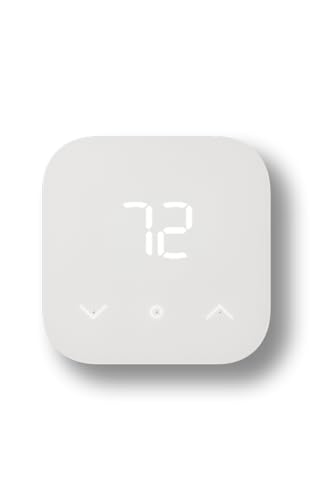
For an Alexa household unsure whether connected control will change anything, the entry-tier Amazon model is the cheapest honest experiment: scheduling, app and voice control, and presence-aware automation through Alexa, without paying for ecosystems you may never use. If the experiment succeeds, you have your answer at the lowest tier; if it fails, you have learned cheaply. Its requirements, including its power expectations, must be met exactly, and households outside the Alexa ecosystem should look at the other two instead.
Best for: Alexa households testing connected control, flats, and simple systems. Not suited for: multi-platform homes or complex staging.
Google Nest Thermostat — the middle tier where most value sits
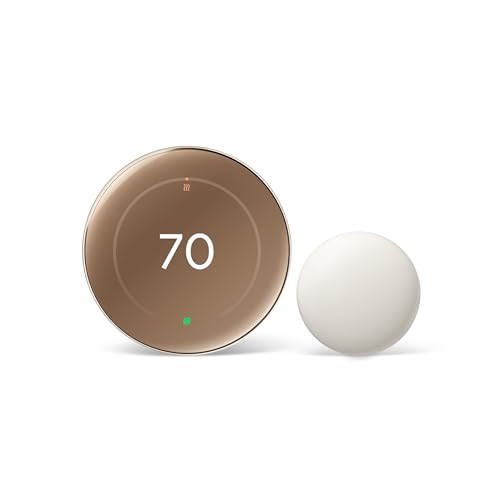
The mainstream Nest model is where the worth-it curve bends for many homes: polished scheduling, presence-based setbacks, energy summaries, and hardware that disappears into the hallway, at the middle tier. It delivers the four concrete benefits this article opened with, without charging for the flagship learning layer. Households with a regular routine who will actually set a schedule — or let presence sensing carry the load — tend to find this tier the rational stopping point.
Best for: standard systems, regular routines, design-conscious homes. Not suited for: houses whose main problem is uneven room temperatures.

ecobee Smart Thermostat Premium — worth it when rooms disagree
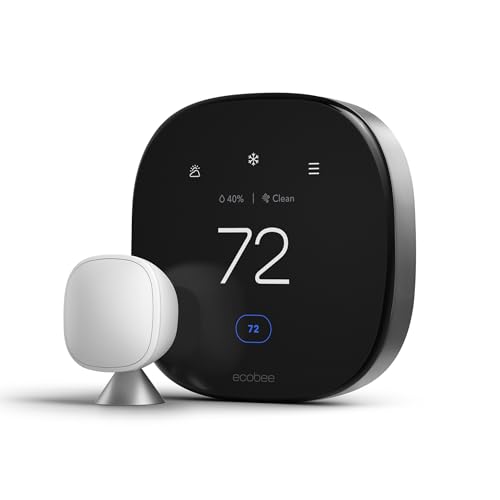
The ecobee flagship justifies its premium tier on one capability above all: sensing the rooms you live in, through its room sensor ecosystem, and acting on what it learns there. In an even-tempered home that capability is wasted money; in a house with a cold nursery and a hot office it is the entire point. Judge this model by your floor plan, not by its feature list, and it will either be obviously worth it or obviously not — which is exactly how premium purchases should feel: a decision the house itself makes for you, once you describe it honestly.
Best for: multi-storey and uneven homes, multi-platform households. Not suited for: small, even homes where a sensor has nothing to correct.
The Value Story, Season by Season
A thermostat is bought once and judged four times a year, and its worth shifts with the calendar in ways worth anticipating. In deep winter, the value is defensive: setbacks that respect recovery, auxiliary heat kept in its place on heat pump systems, and alerts that catch a struggling system before a freeze does. Owners of heat pumps in cold climates consistently find this season decisive, because the difference between a well-configured smart thermostat and a careless one is largest exactly when the weather is worst and the backup heat is most tempted to take over.
In summer, the value turns on humidity as much as temperature. A thermostat that watches indoor humidity can hold comfort at a gentler cooling setting, coordinate dehumidification where the equipment supports it, and avoid the clammy overcooling that sends people reaching for ever-lower set points. In muggy climates this is not a refinement; it is the difference between a house that feels right and a house that feels refrigerated. Shoulder seasons reward a different talent: flexibility. Heating in the morning, cooling by afternoon, windows open by evening — the systems that handle changeover gracefully and let occupancy logic idle the plant on mild days earn quiet appreciation twice a year.
There is also a seasonal rhythm to the information. The first cold snap’s report tells you whether last summer’s configuration survived; the first hot week’s report tells you whether the cooling side stages as it should. Households that glance at those two reports a year catch nearly every slow fault this category of product can reveal. That habit, more than any single feature, is what separates owners who call the purchase obviously worth it from owners who call it a nice screen.
What Owners Commonly Overestimate, and What They Underestimate
New buyers overestimate the novelty features: the beautiful display, the weather on the wall, the voice command performed for guests. These delight for a fortnight. They overestimate, too, the savings available to an already-efficient household, because savings claims are photographed against the wasteful baseline, not against theirs. And they overestimate how much learning can do in an irregular home, expecting the thermostat to find a pattern in a life that honestly does not contain one.
The same buyers underestimate the boring features that dominate year three: a schedule editor so pleasant the programme still matches the household, a report that flagged the heat pump’s bad habit in November rather than in the January bill, a sensor that ended the spare-room heater’s career, an alert that arrived while the house was still warm enough to save. They underestimate, above all, the value of the house feeling right without anyone thinking about it. Comfort that requires no attention is easy to underrate precisely because it asks for none, and it is the return owners mention last and mean most.
The Payback Question, Answered Without Invented Numbers
Every buyer eventually asks the payback question, and this article refuses to answer it with a borrowed figure, because the honest answer is a method rather than a number. Start with your own energy spending for heating and cooling across a full year, which your bills or your supplier’s app will show. Then estimate, soberly, what share of that spending currently heats or cools an empty or sleeping house beyond what comfort requires: the overnight hours at full temperature, the weekday hours with nobody home, the holidays away. That share, realistically trimmed rather than eliminated, is the pool a smart thermostat draws its savings from. A household that finds a large pool can expect the purchase to justify itself in energy terms within a reasonable horizon at any sensible tier. A household that finds a puddle should either buy at the entry tier for comfort and control, or not buy at all.
Two adjustments keep the method honest. First, subtract nothing for the features’ imperfections: geofencing misses, sensors average imperfectly, and real savings land below the theoretical pool. Second, add the non-energy returns to the other side of the ledger without pretending they are cash: the fault caught early, the portable heater retired, the pipes watched over in January, the argument about the cold bedroom that simply stops happening. Different households price those returns differently, and that is legitimate. What is not legitimate is a review — or a salesperson — converting your neighbour’s baseline into your promised payback. The worth-it question is personal arithmetic, and this method is the whole of it.
Resale, Renting, and the Next Owner
A smart thermostat is one of the few upgrades that visibly greets a buyer or a tenant at the hallway wall, and estate agents have learned to point at them. The effect on a sale price is impossible to isolate honestly, and this article will not pretend otherwise, but the effect on perception is real: a home whose climate control is current, app-managed, and documented reads as a home that has been maintained. Sellers maximise that effect by leaving the installation archive — wiring photographs, configuration notes, and the account properly transferred or reset — because a smart thermostat the new owner cannot adopt is a liability wearing a nice screen.
Renters sit on the other side of that transfer. With a landlord’s written permission, a thermostat swap that touches nothing beyond the wall plate, keeps the original unit safe, and restores it at departure can be worth it even for a tenancy of a couple of years, particularly in homes left empty on working days. Without permission, it is not worth it at any tier, full stop; the deposit argument costs more than the energy saving. Landlords themselves increasingly fit mid-tier models between tenancies for the same reason hotels do: remote visibility between occupants and a system that reports its own faults is worth money to the person who owns the pipes.
Five Years On: How the Verdict Ages
The last test of worth is time, because a thermostat is not a phone you replace on a cycle; it is a fixture that should outlast several of them. The models that age well share traits that rarely headline a launch: a manufacturer with a long record of supporting older hardware, core functions that live on the device rather than in a cloud feature that can be retired, standard wiring that the next thermostat will also accept, and an app that improves by refinement rather than reinvention. When those traits hold, year five feels like year one with better reports. When they do not — when a service shutters, an app is abandoned, or a subscription creeps toward the basics — the thermostat degrades gracefully into a programmable one, still heating your home but no longer earning the smart premium you paid.
That graceful floor matters to the verdict. Unlike many connected products, a smart thermostat whose cloud dies does not become a brick; it becomes the thermostat you replaced, roughly speaking, which caps the downside of the purchase in a way few gadgets can match. Weigh that floor alongside the ceiling — the monitored, sensed, self-adjusting house — and the risk profile of the whole category comes into focus: modest downside, household-dependent upside, and a decision that hinges, as this article has argued throughout, on the honesty of your own baseline. Count your empty hours, your cold rooms, and your forgotten schedules. The thermostat is worth it exactly to the extent that those counts are high, and no advertisement knows them better than you do.
Special Situations That Flip the Answer
A few circumstances override the general arithmetic in either direction, and they are worth checking before you settle. A household caring for an infant, an elderly relative, or anyone medically sensitive to temperature should weight stability and alerts far above savings: the ability to hold a nursery in a narrow band, to be warned remotely if the heating fails on a cold night, and to check the house from another room or another city can make the answer yes at the flagship tier regardless of the energy ledger. Conversely, a household mid-way through a major renovation, with walls about to open and equipment about to change, should almost always wait: the right thermostat for the finished house may differ from the right one for the building site, and patience costs nothing but a season.
Utility programmes form the third situation. In many regions, energy suppliers offer incentives, rebates, or demand-response programmes that reward connected thermostats, sometimes supplying them directly, in exchange for allowing tiny, brief adjustments during grid peaks. The details vary too much by place and year for any general figure to be honest, so check your own supplier’s current programme before buying: an incentive can move a model down a tier in effective cost, and enrolment terms deserve the same clear-eyed reading as any subscription. Households already enrolled through a supplier-provided thermostat should read the fine print before replacing it, since programme benefits may be tied to that device.
The fourth situation is the all-electric or heat pump household in a cold climate, where the stakes of configuration are highest. For them the worth-it question is less about the thermostat’s price and more about its competence: staging logic, auxiliary heat restraint, and defrost behaviour decide bills that dwarf the hardware cost in a single winter. These households should buy the tier their system deserves and pay for professional configuration without flinching, because in their ledger the thermostat is not an accessory to the heating system. It is the part of the heating system that thinks.
A Worked Example in Words: Two Identical Houses, Two Opposite Answers
Imagine two identical houses on the same street, with the same heating system fitted the same year. In the first, two adults commute, a teenager keeps school hours, and the house stands empty most weekdays and many weekends. Their old thermostat runs one temperature from October to April because nobody can face its programming buttons. In the second house, a retired couple is home nearly always, rises and sleeps at steady hours, and runs a setback programme they set up carefully years ago and still adjust each season. Their grandson visits on Sundays and finds the house, as always, exactly right.
Fit both houses with the same flagship thermostat and the outcomes diverge completely. The first house gains on every axis this article measures: empty hours trimmed automatically, arrivals met by a warm hallway, holidays handled from the airport, a monthly report that finally shows them what their heating does. The second house gains a prettier wall, an app the couple opens twice, and savings so small they would need a spreadsheet and some generosity to detect. Same street, same system, same product — opposite verdicts. That is not a contradiction in the product. It is the entire thesis of the worth-it question: the thermostat supplies capability, and the household supplies the waste, the uneven rooms, or the absences that capability converts into value. Audit your own household with the checklist above, believe its count, and you will buy — or skip — with the confidence that no generic verdict, including this article’s opening one, could give you on its own.
The Environmental Ledger, Kept Honest
Some buyers weigh the environmental side, and it deserves the same discipline as the financial side. Heating and cooling dominate most homes’ energy use, so trimming genuinely wasted runtime is among the more meaningful reductions an ordinary household can make without changing the building itself — provided, again, that the waste exists to trim. The embodied cost of one small electronic device is real but modest, and it shrinks further when the thermostat serves a decade, is chosen once rather than replaced in frustration, and is recycled as electronic waste at the end rather than binned. The least green outcome in this category is not buying one; it is buying three in five years because each was chosen on gloss rather than fit. The environmental advice and the financial advice turn out to be the same advice: audit the household, buy the right tier once, install it properly, and let it work for years.
There is one more quiet environmental benefit in the information layer. A thermostat that shows a household its own patterns — the cost of the degree everyone argues about, the runtime of the week the windows were left open upstairs — teaches more durably than any campaign, because the data is personal. Families report negotiating set points with evidence instead of folklore, and teenagers, presented with the graph of their own open-window heating, occasionally close the window. No review can quantify that effect for your house. It belongs on the soft side of the ledger, next to the ended arguments and the watched-over pipes, where much of this product’s real worth has always lived.
So the verdict, restated with everything above in view: a smart thermostat is worth it when it is bought as a remedy for a diagnosed inefficiency — empty hours, uneven rooms, a forgotten schedule, an unwatched second home — and installed with the same care as any other work on the heating system. It is not worth it as a speculative upgrade to a house that already runs lean, nor as jewellery for a hallway. Diagnose first, buy once, and let the checklist’s count, not the season’s advertising, make the decision. Households that follow that order rarely regret the purchase, whichever way their count falls, because even a confident no is a good outcome from an honest audit.
One final group deserves a direct word: households replacing a failed thermostat under pressure, in a cold house, with a decision to make by tonight. For them the worth-it question collapses into a simpler one — since a replacement must be bought anyway, is the smart increment over a basic programmable model justified? Usually yes, at the entry or middle tier, because the increment buys remote control and legible scheduling at the moment the household is most motivated to set them up. The cautions still apply: confirm compatibility before the shop trip, answer the C-wire question from the failed unit’s wiring while it is still on the wall, and let a technician handle anything outside the standard pattern. A cold house is a bad place to improvise, and a good place to discover how much calm a properly chosen thermostat returns.
The Usage Audit: Does a Smart thermostat Earn Its Place in Your Routine?
Worth-it questions are really usage questions. A smart thermostat earns its place through the hours it is used, the annoyances it removes and the problems it quietly prevents, so the honest way to answer is an audit of your own routine rather than a verdict in the abstract. Run the audit below against your last month, not your best intentions, and the answer usually becomes obvious.
Judge a smart thermostat by your heating and cooling system first: compatibility with your equipment and wiring decides the shortlist before features get a vote. Then judge the scheduling and sensing model, whether it learns, follows room sensors or simply runs a programme you set, against how your household actually lives. Photograph your current thermostat’s wiring before buying, check for the common wire many models need, and note your system type from the existing unit’s labels. Decide where temperature should be sensed, because the hallway where thermostats live is rarely the room whose comfort matters most.
In a home with a predictable work pattern, a thermostat that pre-warms or pre-cools for arrival beats one that reacts after you walk in uncomfortable. For bedrooms that run hot or cold relative to the hall, remote room sensors that let the system average or prioritise the sleeping rooms fix the oldest complaint in heating. For a second home or rental, remote alerts for very low temperatures and the ability to check the system from afar justify the smart layer on their own. Be strict about the difference between use you can point to and use you merely intend. A smart thermostat bought for a routine you do not have will not create the routine; it will join the cupboard of good intentions.
Apply all of this to the listings in front of you. When a listing such as the Amazon Smart Thermostat, Google Nest Thermostat and ecobee Smart Thermostat Premium catches your eye, resist judging it by its headline claim and instead run the checks above against it: does its stated role match the room you measured, does its control path suit your household, and does the maker’s own guidance support the job you have in mind. A model that answers those questions cleanly on paper usually answers them cleanly in the home, and one that dodges them in the listing will dodge them on your wall, shelf or desk as well.
Systems with proprietary communicating controls and some older high-voltage setups sit outside most smart thermostats’ compatibility, whatever the box suggests. A thermostat is only as good as its sensor’s position; direct sun, a draught or a hot appliance nearby will run the whole house wrong. If the system short-cycles or the thermostat reboots when heating starts, the power supply to the thermostat is the first suspect, not the schedule. If one room never reaches the set point, check vents, doors and sensor placement before raising the temperature for the whole house.
- Count the days in the last month this product would genuinely have been used for your smart thermostat.
- Name the annoyance it removes and how often that annoyance occurs for your smart thermostat.
- Check whether something you own already covers the same job for your smart thermostat.
- Decide the chore you accept in exchange and who will do it.
- Set a review date a month after purchase to judge it on evidence for your smart thermostat.
- Be honest about the difference between your routine and your intentions for your smart thermostat.
If the app and the wall unit disagree, confirm both are on the same account and system after any router or password change. Keep the thermostat’s vents and sensors dust-free, replace room-sensor batteries on a rota, review the schedule at each season change, keep firmware updated, and have the heating system itself serviced on its own schedule regardless of the thermostat’s cleverness.
If the audit shows steady use and removed annoyances, the smart thermostat has already answered the worth-it question in the only currency that counts. If it shows good intentions and an empty routine, the honest answer is to wait until the routine exists.
It also helps to think in seasons rather than in days. A smart thermostat that seems ideal in the week it arrives may face different light, different temperatures, different routines and different demands a few months later, and the models that age well are the ones chosen with that longer view in mind.
Keep the household in the loop as you decide. The person who did not choose the smart thermostat is usually the person who discovers its most annoying habit first, and a two-minute conversation before buying can surface the objection that saves a return.
Frequently Asked Questions
How much can a smart thermostat actually save?
It depends almost entirely on your starting point, which is why this article avoids fixed figures. A home heated or cooled to one temperature around the clock, with long empty hours, has substantial waste for setbacks and occupancy control to recover. A home already run on disciplined setbacks has little left. Judge your own case by your current schedule’s honesty, not by headline claims, and treat comfort gains as part of the return.
Is a smart thermostat worth it if I am home all day?
For savings, usually not much: with the house occupied, setbacks have nowhere to go. For comfort, it can still earn its place if your rooms disagree about temperature, because room sensors fix a sensing problem that occupancy does not change. Buy it, if at all, as a comfort purchase at a sensible tier, and skip the learning features whose raw material — an empty house — you do not provide.
Do I need a subscription for a smart thermostat to be worth it?
Core heating and cooling control, scheduling, and app access on the leading models do not require a subscription, and a thermostat whose basics sat behind a paywall would fail this article’s value test. Some ecosystems offer paid tiers with extended reports or bundled home services. Check what is free before buying, and count any subscription you would actually take as part of the long-term cost.
What if my home has no C-wire?
That is a solvable problem, not a verdict. Options include a spare wire connected properly as a common wire, the manufacturer’s own power adapter kit fitted exactly as instructed, or a technician running a wire. Count the solution in your cost and effort estimate, never improvise one, and treat the compatibility checker’s answer for your exact configuration as final.
Will a smart thermostat work with my old heating system?
Often yes, if the system is a standard low-voltage setup; age alone is not the barrier. The barriers are specific: line-voltage and millivolt controls, proprietary communicating systems, and heat pump arrangements that need expert configuration. Run the manufacturer’s compatibility checker with your real system details, and where it hesitates, ask an HVAC technician — they can usually tell you in minutes which smart path your equipment supports.
Is the learning feature worth paying extra for?
Only if your routine is regular enough to be learned and you dislike programming enough to need it learned. Irregular households often prefer explicit schedules with occupancy support, which can sit at a lower tier. Pay for learning when your life has a pattern; pay for sensors when your house has a temperature problem; pay for neither when both are already fine.
Related Guides
Complete the same platform with the best smart speakers for voice control, the best smart door locks for arrival and departure routines, the best smart light bulbs for lighting that follows the same occupancy logic, and the best smart humidifiers when winter air is part of the comfort problem. For a broader sense of what the current field offers, browse our smart thermostat reviews across the category.