Disclosure: As an Amazon Associate, reviewstook.com earns from qualifying purchases. Links on this page are affiliate links; they cost you nothing extra. Prices and availability change often, so check the current Amazon listing before you buy.
A smart water leak detector is one of the least glamorous devices in the smart home, and this smart water leak detector review exists because it may also be one of the most valuable. It does not brew coffee, stream music or light up a room. It sits quietly on a floor, behind an appliance or under a sink, sometimes for years, waiting for the one moment that matters: the first puddle from a failing water heater, a split washing machine hose, a dishwasher seal that finally gives up, or a supply line that starts weeping at 3 a.m. When that moment comes, the sensor’s whole job is to notice water before you do and to shout — through a siren, a phone alert, or both — while the damage is still a mop-and-towels problem instead of a flooring, drywall and mould problem.
That framing matters, because it defines what this review can and cannot promise. A point sensor like the ones covered here only alerts. It does not stop water, close a valve or call a plumber. Catching a leak early still depends on someone hearing the alarm, seeing the notification and knowing where the home’s main shutoff valve is. Whole-home automatic shutoff systems exist, but they are a different category of product — a motorised valve on the main line, usually fitted by a plumber — and they are discussed here only so you can judge whether a simple sensor is enough for your home or whether you should be shopping in that heavier category instead.
Key Takeaways
- A smart water leak detector watches specific spots and alerts you; it never stops the water itself.
- Placement matters more than features: water heater, washing machine, under sinks, dishwasher and refrigerator lines cover most home leaks.
- Connectivity decides reliability — hub-based long-range systems, Wi-Fi sensors and alarm-only pucks behave very differently when you are away from home.
- Every sensor in this review needs periodic testing with a damp finger or a splash of water; an untested sensor is a guess, not protection.
- Buy for the spots you will actually cover, and learn where your main shutoff valve is before you need it.
Best for: homeowners and landlords who want early warning at the handful of places leaks actually start, and who will act on an alert quickly. Not suited for: anyone expecting the device to prevent damage on its own while nobody is home for weeks — that job belongs to an automatic shutoff valve, ideally paired with sensors like these.
In this guide
What a Smart Water Leak Detector Is and Where It Fits
At its simplest, a smart water leak detector is a small puck or probe with two or more metal contacts. When water bridges those contacts, it completes a circuit and the device reacts: a built-in siren sounds, an app notification fires, or both. Some models add a sensing cable that extends the detection area along a baseboard or around an appliance. Some add temperature sensing, so the same device can warn about freezing conditions near pipes — the “flood and freeze” combination — which matters because a burst frozen pipe is one of the most destructive leak sources of all.
The category splits into three broad families, and understanding them is most of this purchase. The first is the alarm-only puck: no app, no Wi-Fi, just a loud local siren. These are the simplest and cheapest per spot, and they work brilliantly if someone is home to hear them — and do nothing at all if the house is empty. The second family is the Wi-Fi sensor, which connects directly to your router and pushes alerts to your phone wherever you are. These suit one or two high-risk spots but can be harder on batteries and depend entirely on your home network staying up. The third family is the hub-based system: sensors talk to a dedicated hub using a long-range, low-power radio, and the hub connects to the internet. Range through walls and floors is typically far better than Wi-Fi, battery life stretches out, and adding a fifth or tenth sensor is painless — but you are buying into an ecosystem, and the hub is one more box to set up.
Where does the category fit in a smart home overall? Alongside the other quiet guardians: the security camera that watches a door, the smart lock that reports its state, the sensor on a window. If you are building that layer of the home out, our guides to smart door locks and security cameras cover the neighbouring categories. Leak sensors are the least interactive of the group — there is nothing to watch or play with — which is precisely why they get forgotten, and why the testing routine later in this review matters so much.
It also helps to be honest about what “smart” adds here. A basic water alarm has existed for decades. The smart layer adds remote alerts, alert history, low-battery warnings delivered to your phone instead of a chirp you might miss, freeze warnings on some models, and integration with wider systems — a siren hub, a smart plug routine, or a voice assistant announcement. If you are always home and your risky appliances are within earshot, the smart layer may add little. If you travel, work long days, own a rental, or have a finished basement you rarely enter, the smart layer is the entire point.
Smart Water Leak Detector: Design, Build and Setup
YoLink Water Leak Sensor
The YoLink sensor represents the hub-based family at its most range-focused. YoLink devices use a long-range, low-power radio link back to a YoLink hub, a design aimed squarely at the real-world problem of sensors placed in basements, garages and utility rooms — exactly the spots where Wi-Fi is weakest and leaks are likeliest. The sensor itself is a compact puck intended to sit flat where water would pool, and the system is built to scale: one hub can serve many sensors spread across a large home. Setup means placing the hub within reach of your router, adding sensors in the app one by one, naming each by location — a naming discipline that pays off the first time an alert tells you “Water Heater” instead of “Sensor 4” — and then testing each one in place. Treat this as a mid-tier system pick: the per-sensor cost only makes sense once the hub is in place, after which expanding coverage is the economical part. Check price on Amazon once the pick is linked, and confirm hub requirements on the listing, because the sensor alone does nothing without it.
Govee Water Sensor
Govee’s water sensors are best known in their alarm-forward form: a puck with a loud built-in siren and probes positioned to catch water from more than one direction, designed so a leak announces itself in the room even before any phone is checked. Govee has offered these both as standalone alarms and in gateway-connected sets that add app alerts, so the listing in front of you decides which family you are buying — read it carefully, because the two look similar and behave very differently when the house is empty. As a standalone or gateway-backed spot alarm, this is an entry-to-mid-tier pick that suits kitchens and laundry rooms where a loud local alert plus, on connected versions, a phone push covers the realistic scenarios. The design lesson it teaches the whole category: probes on the underside and top of a puck catch both pooling water and drips from above, which is how leaks under sinks actually arrive.

Ring Flood & Freeze Sensor
Ring’s Flood & Freeze Sensor folds leak detection into the Ring Alarm ecosystem. It is a small disc that watches for water and also monitors for low temperatures that signal freeze risk near pipes. The catch is structural: it works as part of a Ring Alarm system, so it suits households already invested in that base station and app, where adding water coverage is a natural extension of the security setup they already monitor. Alerts flow through the same channel as their door and motion alerts, which is a genuine usability advantage — one app, one alert habit. As a standalone purchase for a home with no Ring Alarm, it makes little sense; as an add-on for Ring households, it is a tidy mid-tier way to cover a water heater or a laundry room. Confirm the current system requirements on the listing before buying, since ecosystem requirements are exactly the kind of detail that changes between generations.
Resideo WiFi Water Leak Detector
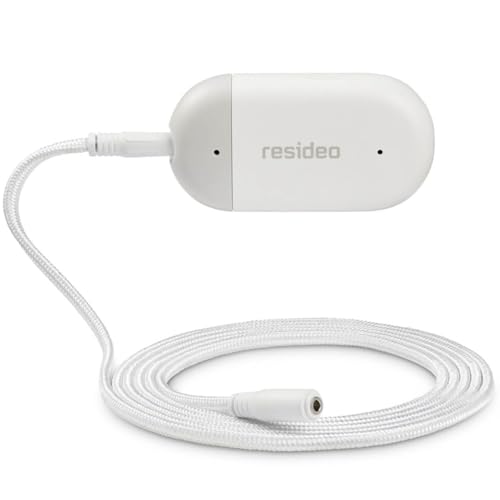
Resideo — the home-comfort business that grew out of Honeywell Home — takes the Wi-Fi route with its leak detector, and adds a feature the pucks cannot match: a sensing cable. Instead of watching a single point, the cable extends detection along its length, so it can trace the base of a water heater, run behind a washing machine, or line the floor under a run of cabinets. The device connects directly to home Wi-Fi and reports through Resideo’s app, with leak and freeze alerts and a local audible alarm. This is the pick that best illustrates the cable-versus-point trade-off: for a long, linear risk — a row of appliances, a boiler room perimeter — one cable device can replace several pucks. It sits in the mid-to-premium tier, and its value depends on whether your riskiest spot is a point or a line. Battery and placement practicalities are covered in the setup guidance later in this review.
D-Link Wi-Fi Water Sensor
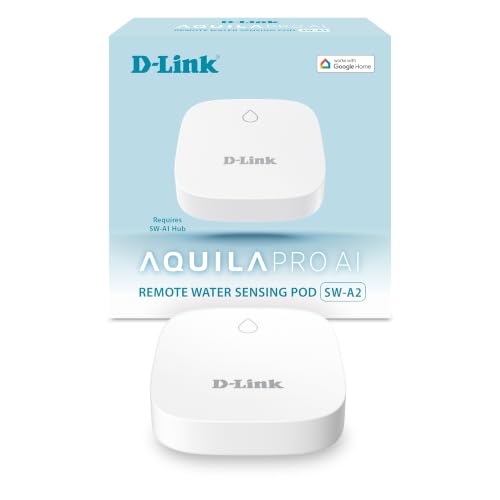
D-Link’s approach pairs a mains-powered Wi-Fi unit with a sensor probe on a lead, a design with one underappreciated virtue: no battery to die quietly in year two. The main unit plugs into a wall outlet, the probe rests where water would gather, and alerts go out over your Wi-Fi through D-Link’s app, with a local alarm as backup. The trade-off is placement — you need an outlet within lead-reach of the risky spot, which rules out some under-sink and behind-appliance locations — and, as with every Wi-Fi sensor, protection pauses if the network or power is down. As a mid-tier pick for a laundry room or utility area with a handy outlet, the no-battery-maintenance angle is a real differentiator for owners who know they will forget battery checks. Verify the current app and model details on the listing, as D-Link has revised its smart home line over the years.
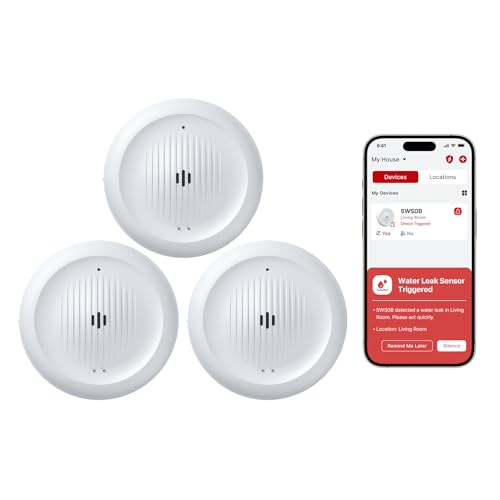
X-Sense Water Leak Sensor Alarm
X-Sense represents the alarm-first end of the category, including sets built around a base station that relays alerts within the home. The sensors are compact pucks with a loud siren, intended to be scattered generously — under every sink, behind every toilet, beside the water heater — which matches how leaks actually distribute themselves across a house. In its base-station form, the system adds in-home relaying so an alarm in a distant bathroom is heard centrally, though it is not the same as a phone alert when you are across town; standalone versions are purely local. This is the entry-tier way to blanket many spots, and for always-occupied homes it may be all the “smart” that is needed. The honest limitation, shared with every alarm-only design: an empty house hears nothing.
Performance in Real Use
Scenario One: The Water Heater Gives Up Slowly
Water heaters rarely explode; they seep. A tank corrodes, a drain valve weeps, a fitting sweats until it drips steadily into the pan and then onto the floor. This slow-leak scenario is where point sensors earn their keep most reliably, because the water arrives exactly where a sensor should already be sitting: in or beside the pan, on the floor at the tank’s base. In this scenario the differences between models shrink — almost any puck detects a growing puddle — and the differences between alert channels grow. A siren in a closed utility room may go unheard two floors up; a phone alert reaches you in the garden. The practical verdict: for the water heater, prioritise the alert path (hub or Wi-Fi) over sensor sophistication, and place the sensor where the pan would overflow, not where it looks tidy.
Scenario Two: The Washing Machine Hose at 3 A.M.
Supply hoses are among the most failure-prone parts in the home, and they fail under full mains pressure. A burst hose is not a puddle problem; it is a flood-rate problem, and no sensor changes that physics. What the sensor changes is the timeline: an alert within the first minute, a household member who knows the shutoff, and the difference between a laundry room mop-up and water through the ceiling below. This scenario is the strongest argument for two habits this review keeps repeating. First, put the sensor behind the machine where hose water lands first, even though reaching it for tests is awkward. Second, make sure everyone in the house knows where the main shutoff valve is and how to turn it — a sensor that wakes you is only useful if the waking leads somewhere. If your laundry is on an upper floor, weigh the automatic shutoff category seriously; sensors alone are a thin defence there.
Scenario Three: The Slow Drip Under the Kitchen Sink
The under-sink drip is the most common and most quietly destructive leak: a trap joint or supply connection weeping drop by drop into a cabinet floor, warping it over weeks and feeding mould behind the scenes. Detection here is about probe geometry. A puck with underside contacts catches the film of water as it spreads; a top probe catches drips falling from the trap above; a cable traces the cabinet floor’s low edge. Sensors earn mixed marks in this scenario if placed carelessly — a puck pushed to the back corner may sit centimetres from a drip that pools at the front. The fix is embarrassingly low-tech: place the sensor at the cabinet floor’s lowest point, roughly under the trap, and test it there with a splash from a cup during your periodic checks. Among our picks, top-and-bottom probe designs and cable designs have a structural edge in this scenario.
Scenario Four: Nobody Is Home
The holiday scenario separates the category cleanly. Alarm-only pucks contribute nothing. Wi-Fi and hub sensors contribute an alert — and then everything depends on your plan: a neighbour with a key, a family member nearby, or at minimum the knowledge that you should arrange a shutoff before long trips. This is also where freeze sensing earns its place on models that offer it: in a cold snap, a low-temperature warning near vulnerable pipes can arrive while there is still time to act, before the burst, not after. Our honest assessment across the category: a smart water leak detector is an excellent early-warning layer for occupied homes and a useful but incomplete one for empty homes. Pairing sensors with a plan — or with a shutoff valve — is what closes the gap. If remote alerts are your priority, that requirement should drive you toward the hub and Wi-Fi picks and away from alarm-only sets, however many pucks they include.
Strengths and Trade-Offs
Strengths
- Early warning where damage starts: sensors sit at the exact points — heaters, hoses, traps — where costly leaks begin, and minutes of warning routinely mean the difference between drying out and renovating.
- Simple, cheap coverage per spot: most models need no wiring, no plumber and no subscription to do their core job; you place them and test them.
- Alert channels for real life: between sirens, app pushes, hub relays and freeze warnings on some models, there is a configuration for occupied homes, travellers and landlords alike.
Trade-Offs
- Alert only, never prevention: the device cannot close a valve; if nobody acts, the water keeps coming.
- Point coverage is literal: a sensor protects the few centimetres around its probes; a leak two metres away may run for hours before water reaches it.
- Maintenance is on you: batteries fade, Wi-Fi passwords change, apps update — an untested, unmaintained sensor quietly becomes decoration.
How It Compares
Set against its neighbours, the category divides by alert architecture. Alarm-only sets such as the X-Sense style pucks maximise spots-per-budget and minimise setup, and they are the right answer for occupied homes with good hearing coverage. Wi-Fi models — the Resideo cable detector and the D-Link plug-in sensor among our picks — remove the hub and reach your phone anywhere, at the cost of battery or outlet constraints and total dependence on the home network. Hub systems — YoLink most explicitly, Ring within its alarm ecosystem — trade an extra box for range, battery life and painless expansion. Govee straddles the line, with alarm-forward pucks and gateway options, which is why reading the exact listing matters so much with that brand.
Against the automatic shutoff category, the comparison is not really sensors versus valves but warning versus intervention. A shutoff system costs more, needs a plumber, and protects an empty house in a way no sensor can. Sensors cost less, cover the slow drips a flow-based valve system may miss, and pinpoint the location — “under the kitchen sink” — that a whole-home valve alert cannot give you. Many well-protected homes end up with both, and if this review pushes you toward a valve for an upper-floor laundry or a holiday home, it has done its job. For broader context on the alert-and-automation layer these devices join, see smart light switches and Wi-Fi smart plugs — plugs, incidentally, are how some owners cut power to a suspect appliance when a leak alert arrives.
Who Should Buy It, Who Should Skip It, and a Pre-Buy Checklist
Buy a smart water leak detector if your home has the usual risk map — a tank water heater, a washing machine, a dishwasher, an ice-maker line, sinks and toilets on finished floors — and someone is usually able to respond to an alert. Buy more coverage, not fancier coverage: five plain sensors in the right places beat two premium sensors in the easy places. Landlords should buy for the alert path, since tenants may not hear or report a siren promptly. Owners of homes with finished basements should treat sensors as close to mandatory; the basement is where leaks run longest unseen.
Skip — or rather, escalate beyond — sensors if the home stands empty for long stretches, if the laundry sits above finished living space, or if a previous leak has already shown you the cost of a slow response. In those cases, budget for an automatic shutoff valve and use sensors as its location-aware companions. Also skip ecosystem sensors that require a base station you do not own; the Ring pick, for example, only makes sense inside its system.
Before you buy, walk this checklist. One: list your spots — heater, washer, dishwasher, refrigerator line, each sink and toilet on a finished floor. Two: check connectivity at the worst spot; if Wi-Fi is weak in the utility room, lean hub-based. Three: decide the alert you will actually respond to — siren, phone, or both. Four: confirm power — battery pucks need a battery routine; plug-in models need outlets. Five: know your main shutoff location today, not after the first alert. Six: plan the test — you will wet-test every sensor on day one and on a repeating schedule. Seven: think one purchase ahead, and choose an architecture you can extend, so the second round of sensors joins the same app and the same alert habit instead of fragmenting both. Eight: tell the household — a sensor whose alerts only one person understands is a single point of failure, so share the app, share the drill and share the shutoff location before the system ever has to prove itself. Our companion guides go deeper: how to choose a smart water leak detector works through the decisions step by step, and the smart water leak detector buying guide organises the picks by home type.
Setup, Care and Maintenance Essentials
Setup is placement plus verification. Wipe the spot dry, place the sensor flat with its probes down (or run the cable along the risk line), name it by location in the app, and then prove it: touch the probes with wet fingers or drip water onto them and confirm the siren sounds and the phone alert arrives. Repeat the alert-path test from the furthest room in the house. For hub systems, place the hub centrally and elevated where possible; for Wi-Fi models, confirm the sensor reconnects after you reboot the router — do this once, deliberately, rather than discovering a failure during a real leak.
Care is a calendar habit. Test every sensor on a fixed rhythm — many owners tie it to changing smoke-alarm batteries or to the start of each season — and replace batteries at the first low-battery notice rather than the last. Keep probes clean and free of dust and detergent residue, especially in laundry rooms where lint and spilled detergent coat everything. After any alert, dry the sensor thoroughly before returning it to duty, and find the leak’s source rather than just mopping its evidence. Finally, re-run the placement audit whenever appliances change: a new dishwasher or a replaced water heater resets the risk map, and the sensor should move with it. The balanced view of ownership is in smart water leak detector pros and cons, and the value question is tackled head-on in is a smart water leak detector worth it.
Final Verdict
A smart water leak detector is not exciting, and that is its virtue: it is a small, patient guard posted at the exact places homes get hurt. Judged as a category, it succeeds when three things line up — sensors in the genuinely risky spots, an alert channel that reaches a human fast, and a household that has rehearsed the response, starting with the main shutoff valve. None of those three is a specification you can sort by in a store, which is why this review has spent as much time on placement, testing and drills as on the devices themselves. The products are the easy part; the system — product plus placement plus people who know the drill — is what actually protects a home, and it is achievable with any of the architectures covered here when they are matched honestly to the house.
The picks in this review cover the realistic architectures: YoLink for long-range hub coverage, Govee for loud local alarming with connected options, Ring for homes already inside its alarm system, Resideo for cable coverage of long risk lines, D-Link for mains-powered no-battery upkeep, and X-Sense for blanketing many spots on an entry budget. Choose the architecture first and the brand second, test on day one, and the quiet puck on the floor becomes one of the best-value devices in the house. For the plural view — how owners rate these devices after months of living with them — continue to smart water leak detector reviews.
Connectivity, Batteries and Daily Living: What Ownership Actually Feels Like
Specifications tell you how a sensor connects; ownership tells you how often you think about it, and the honest answer for a good installation is “almost never, except on test day.” The differences between architectures show up in small, recurring moments. A hub system’s moment is the low-battery push notification that arrives months before the battery actually fades, giving you a lazy weekend to swap it. A Wi-Fi sensor’s moment is the router change: new network name or password, and every Wi-Fi sensor in the house silently goes offline until you re-provision it — the single most common way these devices fail in real homes, and the reason the router-reboot reconnection test in our setup section matters. An alarm-only puck’s moment is the chirp at 2 a.m. that means “battery,” heard by the whole house, teaching everyone where that puck lives.
Range deserves a plain-language explanation, because it decides more purchases than any other factor. Wi-Fi was designed for bandwidth, not for reaching a damp corner of a basement through two floors and a concrete wall, and sensors placed at the edge of coverage behave accordingly: fine for months, then a missed check-in after a router update. Hub radios designed for sensor traffic trade speed for reach and battery life, which is the right trade for a device that sends a few tiny messages a year. If your home is large, multi-storey or built with dense materials, the hub architecture is not a luxury; it is the difference between a system and a hope. Conversely, in a flat or small house where the router hears everything, Wi-Fi sensors are simpler and the hub is one box too many.
Battery reality is similarly unglamorous. Sensor batteries last a long time precisely because the device sleeps almost always, waking to check its probes and check in. Cold shortens battery life, so sensors guarding unheated spaces deserve more frequent tests in winter. Keep spares of the right cells in the house; a low-battery warning you cannot act on for a fortnight is a small, avoidable risk window. And label each sensor with its install date on a piece of tape — two years from now, that label is the only memory the system has.
False Alarms, Missed Leaks and the Limits of Point Sensing
No honest review should skip the failure modes. False alarms happen: condensation under a cold-water pipe in humid weather can bridge probes, a mopped floor can trigger the puck you forgot was there, and a pet’s water bowl with an enthusiastic drinker is a classic. The fixes are placement fixes — raise the sensor slightly on its feet where the design allows, move it out of the mop’s path, keep it clear of the splash zone — and they are worth the small effort, because the real cost of false alarms is not annoyance; it is the day a real alert gets dismissed as “that sensor again.”
Missed leaks are the other limit, and they are geometric, not electronic. Water follows slope and seams. A leak behind a washing machine may run along a wall plate and emerge a metre from the sensor. A pinhole spray can soak a cabinet’s underside without ever pooling on the floor where the probes wait. You reduce this risk with coverage thinking — sensors at low points, cables along base lines, a second puck for a wide appliance run — but you never reduce it to zero, which is why sensors complement rather than replace the older defences: braided steel hoses in good condition, pans under heaters, and simply looking behind your appliances a few times a year. A sensor that has never alarmed has not failed; but a home that relies on sensors alone, with hoses older than anyone can remember, has misunderstood the product.
There is also the human failure mode: the alert that reaches a phone on silent, in a bag, during a flight. Multi-channel thinking helps — siren plus push plus a hub that can announce through a speaker, or a second household member on the alert list where the system allows it. Landlords in particular should design for this: the tenant’s phone is the alert path, so choose systems whose alerts can reach more than one person, and put the response steps — shutoff location, who to call — in writing inside the property.
A Room-by-Room Placement Playbook
The utility room and water heater. This is the highest-value square metre in most homes. Put a sensor in the heater’s drain pan if it has one, or on the floor at the pan’s overflow side, and consider a second sensor near the main shutoff and any water softener or filtration unit, whose fittings and housings are quiet leak sources of their own. If the heater is in a finished basement, treat this spot as non-negotiable and choose a model whose alert you will hear upstairs — hub or Wi-Fi, not siren alone.
The laundry room. Behind the washing machine, centred between the two supply hoses, is the textbook placement, and the hardest to reach for testing — which is why you test before you push the machine back, and why long-probe or cable designs earn fans here. If the laundry shares a wall with finished rooms or sits above them, upgrade this spot’s priority and re-read the shutoff discussion in this review. Also check the standpipe and drain hose area; leaks there appear only during drain cycles, so a sensor slightly downstream of the machine’s footprint catches what a hose-side sensor might miss.
The kitchen. Two spots compete: under the sink, beneath the trap at the cabinet floor’s low point, and behind or beside the dishwasher, where inlet and drain connections live. If you can only cover one, the sink usually wins on leak frequency; if the dishwasher is old or its hoses are original, it argues hard the other way. The refrigerator’s ice-maker and water-dispenser line is the kitchen’s third spot — a thin line under pressure, often run carelessly, and a classic source of slow floor damage behind an appliance nobody moves.
Bathrooms. Behind each toilet, at the base near the supply line, covers the most common bathroom leak: the tank-to-bowl and supply connections that weep onto the floor and rot the subfloor silently. Under bathroom sinks matters most where the floor below is finished. In bathrooms, sensors fight clutter and cleaning; place them where the mop does not go weekly, and tell whoever cleans that the puck is a guard, not litter.
The rest of the map. HVAC condensate lines and air-handler pans in attics and closets, sump pump pits (where a high-water warning buys time before the pump is overwhelmed), aquarium equipment for hobbyists with large tanks, and any plumbing running through a garage or crawl space where freeze risk lives. Walk your home once with this list and a phone camera; photograph each spot, and let the count of real spots — not a bundle’s marketing — decide how many sensors you buy.
What to Do When the Alert Sounds: A Response Drill
The sensor’s alert is the start of a drill, and the drill goes better if the household has walked it once in daylight. Step one is water off, questions later: if the source is obvious — a hose, a trap, an appliance — close that fixture’s own shutoff valves, which for sinks and toilets are the small valves on the supply lines beneath or behind the fixture, and for washing machines are usually on the wall box behind the unit. If the source is not obvious, or water is flowing fast, go straight to the home’s main shutoff. Every adult in the house should be able to find it in the dark: typically where the main line enters the home, near the meter, in the basement, utility room, garage or an exterior wall box, depending on the house and climate. Turn it, confirm the flow stops at a tap, and only then go hunting.
Step two is damage control while the floor is still wet rather than soaked through: towels and a mop for the visible water, a wet vacuum if you own one, buckets under active drips, and anything absorbent or valuable lifted off the floor. Move quickly on the quiet threats — water wicking into baseboards, cabinet floors and the edges of flooring — by getting air moving with fans once the source is stopped. Step three is finding the actual source, because mopping without diagnosing guarantees a sequel. Check, in order, the nearest supply connections, hoses and their washers, trap joints, appliance inlets and the heater’s valves and pan. Photograph what you find; the photos help a plumber, a landlord or an insurer far more than a verbal description.
Step four is the decision: tighten and monitor, repair yourself within your competence, or call a plumber — with the water staying off to that fixture until the repair is proven dry. Step five, the one everyone skips, is resetting the system properly: dry the sensor’s probes, return it to its spot only when the area is genuinely dry (a sensor reset onto a damp floor will simply alarm again, which is correct behaviour), and log the event — date, source, fix — in the same note where you track your test dates. A household that has run this drill once, even in simulation on a quiet Sunday, responds to the 3 a.m. version with a fraction of the panic and a much smaller repair bill. That rehearsal, more than any single feature on any single sensor, is what this category is really selling.
Bundles, Singles and Expanding Later
Most owners buy these sensors twice: a first purchase for the two or three spots they already worry about, and a second, wiser purchase after the placement walk-through reveals the full map. That pattern argues for starting inside one architecture you can extend. Hub systems make expansion trivially easy — add pucks as you find spots — while mixing brands means multiple apps and multiple alert habits, which quietly degrades the whole system. If you start with Wi-Fi singles, stay within one maker’s app for the same reason. Bundles earn their discount when the spot count in the bundle roughly matches your real map; a cheap bundle of the wrong architecture — sirens for a house that stands empty all day — is not a saving at all. Buy the alert path first, the count second, and let brand loyalty follow from whichever system you have already tested and trust in your own home.
The Long-Term Checks That Separate a Good Smart water leak detector From a Tiring One
A review that stops at the first week tells you how a smart water leak detector arrives, not how it lives. The checks below are the ones that separate a product that stays satisfying from one that slowly becomes a chore, and they are the checks worth repeating with any model you shortlist. Treat this as a verification routine: run it during the return window, while changing your mind is still free.
Judge a leak detector by its sensing method and its alarm path: a probe that reaches the exact low point where water collects, a sounder loud enough to be heard through a closed door, and alerts that reach your phone when you are away. Battery life and how the detector reports a dying battery decide whether it protects you in year three. Crawl the spaces you fear most, under sinks, behind the washing machine, beside the water heater, and find where water would actually pool first; that low point, not the convenient spot, is where the sensor belongs. Check the network signal in those utility corners, which are often the weakest in the house.
Under a kitchen sink crowded with pipework, a slim probe on a lead reaches the drip point a puck-style sensor cannot touch. Beside a water heater or in a basement, a detector whose alert reaches your phone while you travel turns a disaster into a manageable repair. Near an aquarium, sump or laundry tray, a detector paired with an automatic shutoff valve is the combination that truly limits damage. Score each check honestly rather than generously. A smart water leak detector that passes nine and fails one has told you exactly what living with it will be like, and you can decide with open eyes whether that one failure touches your routine.
Apply all of this to the listings in front of you. When a listing such as the YoLink Water Leak Sensor, Govee Water Sensor and Ring Flood & Freeze Sensor catches your eye, resist judging it by its headline claim and instead run the checks above against it: does its stated role match the room you measured, does its control path suit your household, and does the maker’s own guidance support the job you have in mind. A model that answers those questions cleanly on paper usually answers them cleanly in the home, and one that dodges them in the listing will dodge them on your wall, shelf or desk as well.
Detectors only sense water that reaches them; a slow leak inside a wall or under a floor may run for a long time before any surface sensor knows. Condensation and mopping splash cause false alarms in bathrooms and utility rooms, and repeated false alarms teach households to ignore the real one. If a detector alarms with no visible water, check for condensation, a damp floor from mopping and a probe resting in a low damp spot. If alerts stop arriving, test the detector with a damp finger on the contacts and check its battery and network status in the app.
- Run the placement check in the room where the product will actually live for your smart water leak detector.
- Test the failure mode: network down, power cut, battery flat for your smart water leak detector.
- Note the chore the product creates and time how long it really takes for your smart water leak detector.
- Repeat the key test at the hour of day you will use it most for your smart water leak detector.
- Write down the one behaviour you would change if you could for your smart water leak detector.
- Decide before the return window closes, not after it.
If the sounder seems faint, move the unit out from behind appliances; sound blocked by a cabinet is sound wasted. Test each detector with a little water on its contacts every few months, replace batteries on the maker’s schedule rather than after a failure, wipe contacts clean of dust and corrosion, and re-walk your risk spots after any plumbing work.
If a model passes these checks in your home, keep the notes you made. They become your baseline for judging its replacement years from now, and they are worth more than any fresh round of research done from memory.
It also helps to think in seasons rather than in days. A smart water leak detector that seems ideal in the week it arrives may face different light, different temperatures, different routines and different demands a few months later, and the models that age well are the ones chosen with that longer view in mind.
Keep the household in the loop as you decide. The person who did not choose the smart water leak detector is usually the person who discovers its most annoying habit first, and a two-minute conversation before buying can surface the objection that saves a return.
Frequently Asked Questions
Does a smart water leak detector stop a leak?
No. A point sensor only detects water at its probes and alerts you — by siren, app notification, or both. Stopping the water is your job, at the fixture valve or the home’s main shutoff, which is why knowing that valve’s location is part of owning a sensor. Automatic shutoff is a separate category: a motorised valve on the main line, usually installed by a plumber, which can close the water when a linked system detects a leak.
Where should I place my first sensors?
Start where leaks are both likely and costly: beside or in the pan of the water heater, behind the washing machine near its hoses, under the kitchen sink beneath the trap, by the dishwasher, and behind toilets on finished floors. Add the refrigerator ice-maker line and any sink above finished space next. Place each sensor at the lowest point where water would pool first, not where it is most convenient to reach.
What is the difference between Wi-Fi, hub and alarm-only sensors?
Wi-Fi sensors connect straight to your router and send phone alerts anywhere, but depend on your network and, for battery models, on battery health. Hub sensors use a low-power, long-range radio to a hub, which usually means better reach into basements and longer battery life, at the cost of buying the hub. Alarm-only pucks just sound a siren — excellent if someone is home, useless if the house is empty.
How often should I test a leak sensor?
Test every sensor when you install it, then on a fixed rhythm — seasonally is a sensible habit many owners pair with smoke-alarm checks. Wet the probes with damp fingers or a few drops of water, confirm the siren sounds, and confirm the phone alert arrives if the model sends one. Replace batteries at the first low-battery warning. An untested sensor offers confidence without evidence.
Can a leak sensor warn about frozen pipes?
Some can. Models that combine leak and low-temperature sensing — the flood-and-freeze style — alert you when temperatures near the sensor fall toward freezing, which can give you time to act before a pipe bursts. Place such sensors near vulnerable plumbing: exterior-wall pipes, unheated basements, crawl spaces and garages. Freeze sensing is a warning layer, not a guarantee, and insulating exposed pipes remains the primary defence.
Do I need a subscription for leak alerts?
For most standalone sensors and hub systems, basic leak alerts through the maker’s app do not require a subscription, but features and policies differ by brand and ecosystem, and security-system-linked sensors may tie some alerting or monitoring features to a plan. Check the current listing and the maker’s current terms before buying, especially if the sensor joins a wider alarm system, and factor any plan into your comparison if it applies.
Related Reading
how to choose a smart water leak detector
smart water leak detector buying guide