Disclosure: As an Amazon Associate, reviewstook.com earns from qualifying purchases. Links on this page are affiliate links; they cost you nothing extra. Prices and availability change often, so check the current Amazon listing before you buy.
Reading smart water leak detector reviews is a strange exercise, because the happiest owners are the ones with the least to report. A smart water leak detector that works perfectly produces years of silence: no story, no drama, nothing to write about except a battery change. The reviews that teach you something come from the edges — the night a sensor woke a household before a burst hose flooded a kitchen, the winter a freeze warning arrived in time, and equally, the bitter accounts where an alert never arrived because a battery had died unnoticed or a Wi-Fi sensor had quietly dropped off a changed network. This roundup of smart water leak detector reviews is organised around those lived patterns rather than spec sheets, because with this category, ownership experience is the specification that matters.
One honesty note before the patterns. A leak sensor only ever alerts; it never stops water. Every glowing “it saved my home” story in owner reviews has the same hidden second act: a person heard the alert, knew where the main shutoff valve was, and acted. Every disappointed review has the mirror-image second act: an alert unheard, a house empty, a valve nobody could find. Keep that frame in mind and the reviews below sort themselves. There is a third kind of story too, quieter than either: the leak that happened in a sensored home and still cost real money, because the water ran somewhere no sensor watched. Those reviews are not indictments of the products — they are maps, drawn in hindsight, of the spots the owners covered next, and this roundup treats them as the most generous reviews of all, because each one tells the next buyer exactly where to place a sensor the writer wishes they had placed a year earlier. If you want the single-product deep dive instead, our companion smart water leak detector review takes one pass at the category in depth; this page is the chorus of owners.
Key Takeaways
- Owners consistently praise early warnings at water heaters and washing machines — and consistently blame placement, dead batteries and changed Wi-Fi for the failures.
- Hub-based systems collect the strongest long-term reviews for range and battery life; alarm-only pucks collect the best value reviews from always-home households.
- The most common regret is buying too few sensors, not buying the wrong brand.
- Freeze alerts, where offered, are the surprise favourite feature among owners in cold climates.
- Every positive long-term review mentions testing; almost every negative one reveals the sensor was never tested after installation day.
Best for: buyers who want to learn from ownership patterns before choosing an architecture. Not suited for: anyone looking for a device that prevents leaks — none of these do; they warn, and people prevent.
In this guide
How These Smart Water Leak Detector Reviews Were Compiled
Our method for this roundup was to read across the category the way a careful buyer would: manufacturer documentation for what each device claims to do, and the recurring themes in long-term owner accounts for what the devices actually do across seasons and years. We weighted repeated, specific experiences — a named appliance, a named room, a named failure — over vague praise, and we treated one-off extremes in both directions as anecdotes rather than evidence. We did not count stars or tally ratings; fixed scores go stale and say little about a device whose job is to sit silently for years. What survives that filter is a set of patterns consistent enough to build a purchase on.
Three questions structured the reading. First: when a sensor earned praise, what exactly happened — what leaked, where was the sensor, how did the alert arrive, and how fast did someone act? Second: when a sensor earned anger, where did the chain break — detection, connection, alert delivery, battery, or the human response? Third: what did owners change afterwards — more sensors, a different architecture, a testing routine, a shutoff plan? The sections below follow those questions, product by product and theme by theme, and they feed directly into the guidance in how to choose a smart water leak detector and the smart water leak detector buying guide. A fourth, quieter question ran underneath the reading: what did the reviewers not test, not know or not plan — because in this category the silences in the reviews are as diagnostic as the complaints. Owners rarely mention their shutoff valve until the review is about a disaster; they rarely mention testing until the review is about a dead battery; they rarely mention their router until the review is about an offline sensor. The roundup below therefore reads the absences too, and converts them into the checklists and drills that the happier households in the corpus describe doing from the start.
The Picks, Reviewed as Owners Experience Them
YoLink Water Leak Sensor
Owner accounts of the YoLink sensor return again and again to one word: range. The hub-based, long-range radio design wins its praise in exactly the homes where Wi-Fi sensors collect complaints — large houses, deep basements, detached garages, properties with outbuildings. Reviewers describe sensors reporting reliably from utility rooms and crawl spaces that their phones barely reach, and battery life measured in the kind of spans that make owners forget which year they installed the system. The recurring criticisms are the mirror of the design: you need the hub, so the first sensor carries an ecosystem cost, and the experience lives or dies inside YoLink’s app and system choices. Owners who bought in knowingly tend to become expanders — the second and third sensors are where the reviews turn enthusiastic, because marginal coverage is cheap once the hub exists. Verdict from the pattern: the long-haul system pick for bigger or awkwardly built homes, mid-tier once the hub is counted, and the name that appears most often when reviewers describe covering many spots without networking drama.
Govee Water Sensor
Govee’s reviews are dominated by the siren. Owners praise — sometimes in all caps — how loud the alarm is, and the stories share a shape: a drip under a sink or behind a toilet became a household event within seconds because the puck shouted from inside the room. The top-and-bottom probe design earns specific mentions in under-sink stories, where drips fall from the trap onto the sensor rather than pooling up to meet it. The split in the reviews is the connectivity split: owners of the purely local versions who later experienced a leak while away from home write the category’s most instructive regret reviews, while owners of gateway-connected sets praise having both the shout and the phone alert. The lesson the Govee reviews teach better than any other brand’s is to buy the alert channel, not the puck: identical-looking sensors, radically different outcomes depending on whether anyone was home. Entry-to-mid-tier, and a favourite for kitchens and bathrooms in occupied homes.

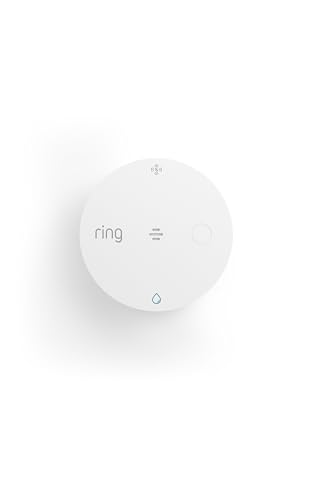
Ring Flood & Freeze Sensor
Ring’s sensor collects the most ecosystem-shaped reviews in the category. Owners who already run a Ring Alarm describe the experience in the language of relief: one app, one alert stream, water coverage added to the security system they already check. The freeze half of the device earns disproportionate praise in cold-climate reviews — low-temperature warnings near pipes are the kind of alert owners say they did not know they wanted until the first cold snap. The negative pattern is equally consistent: buyers who did not realise the sensor works as part of the Ring Alarm system, and bought it as a standalone gadget, write confused and frustrated reviews that are really about expectations, not hardware. Read as a whole, the Ring reviews describe a good sensor with a strict precondition. If your home already lives in that ecosystem, the pattern says you will be pleased; if it does not, the pattern says choose a system you will actually complete. Mid-tier as an add-on; not a starting point.
Resideo WiFi Water Leak Detector
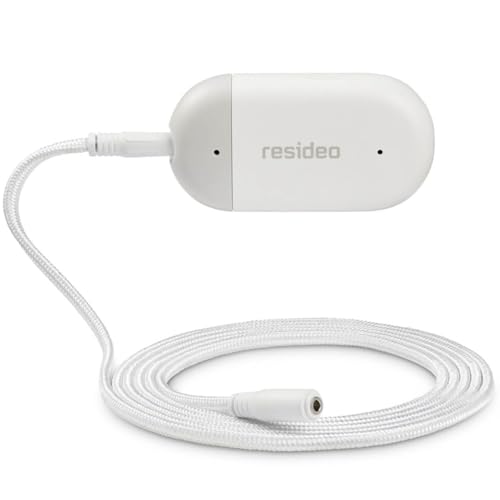
Resideo’s reviews cluster around the cable. Owners with long risk lines — a run of appliances, a boiler room, a wall of cabinets — describe the sensing cable as the feature that made one device do the work of several pucks, tracing the exact path water would travel. The brand’s heritage in home comfort shows up in reviews from owners who already use Resideo thermostats and like staying in one app. Criticisms follow the Wi-Fi pattern: placement is bounded by where the device and its cable can sensibly live, battery changes are a recurring chore owners mention scheduling, and network changes demand re-setup like every Wi-Fi device. Freeze alerting adds cold-climate fans. The pattern verdict: the considered pick for linear risks and for owners who think in systems rather than spots — mid-to-premium tier, bought deliberately rather than in a multipack impulse.
D-Link Wi-Fi Water Sensor
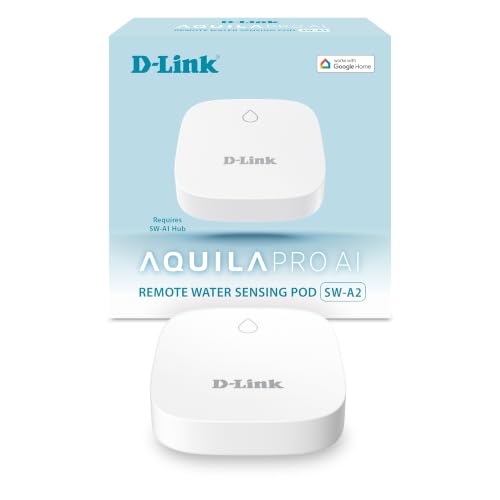
D-Link’s reviews are the quietest in the roundup, and their theme is maintenance avoided. The mains-powered design — a plug-in unit with the sensor on a lead — wins a specific, loyal praise: no batteries, ever, which owners who have been burned by a silently dead puck describe as the whole argument. The probe-on-a-lead arrangement also earns mentions for reaching into sump areas and behind appliances from a sensibly placed outlet. The criticisms are the design’s constraints stated back: you need an outlet near the risk, the lead’s reach bounds your placement, and like all Wi-Fi devices it depends on the network and the maker’s app support over the years — a point reviewers raise about D-Link’s evolving smart home line, and a fair reason to confirm the current model and app details on the listing before buying. Mid-tier, and the pattern pick for owners who know their own battery discipline is the weakest link.
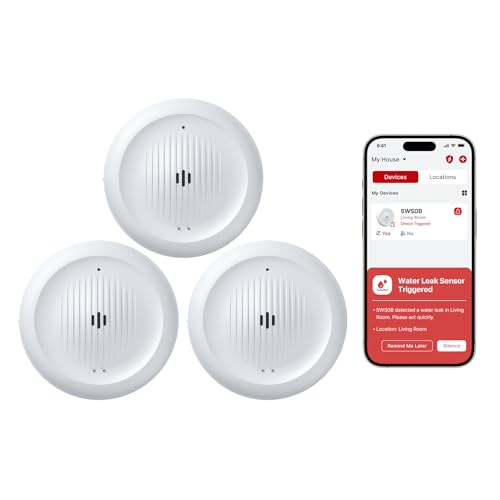
X-Sense Water Leak Sensor Alarm
X-Sense reviews read like a census of sinks. Owners buy these alarm-forward pucks in sets and scatter them — every bathroom, every sink, the heater, the washer — and the praise is about coverage math: at entry-tier per-sensor cost, blanketing a whole house stops being a decision. The siren earns the same loudness praise as Govee’s, and base-station versions earn extra credit for relaying a distant bathroom’s alarm to a central point in the home. The consistent limitation in the reviews is the empty-house problem: owners who travel describe upgrading or supplementing with connected sensors after realising a siren has no audience at noon on a workday. Read together, the X-Sense reviews describe the best first layer for occupied homes and an incomplete only layer for absent ones — a nuance the happiest reviewers state themselves, often while describing the connected sensor they later added for the water heater.
What Owners Praise Most, Across Every Brand
Strip the brand names away and the praise converges on four experiences. The first is the save: water heater pans, washing machine hoses and dishwasher inlets dominate the success stories, which is why placement guidance in every serious guide — including smart water leak detector pros and cons — starts with those three appliances. The second is speed of awareness: owners describe the psychological difference between finding a leak and being told about one, between a saturated cabinet floor discovered during a clean-out and a damp one flagged the day the drip began. The third is freeze warning, the feature owners undervalue at purchase and praise out of proportion afterwards. The fourth is boring reliability: sensors that simply check in, month after month, with batteries that outlast the owner’s memory of installing them. Notably absent from the praise patterns: app beauty, voice assistant tricks and novelty features. This category’s reviews reward the unglamorous virtues, which makes them unusually trustworthy as a group.
What Owners Complain About, and What Actually Caused It
The complaints converge just as tightly, and almost none of them are about detection itself — the probes work. The failures live in the chain around detection. Battery neglect leads the list: sensors that died silently and were discovered dead during a real leak, a failure owners describe with a particular bitterness because the fix — a test rhythm, heeding low-battery warnings — is so cheap. Network amnesia is second: Wi-Fi sensors stranded by a new router or password, offline for months, their absence invisible until needed. Third is placement optimism: sensors placed where they fit rather than where water goes, then blamed for a leak that pooled a metre away. Fourth is the empty-house gap, where alarm-only devices performed exactly as designed in a house with nobody to hear them. And fifth, expectation mismatch on ecosystem devices bought without their required base systems. The meta-lesson of the complaint patterns is uncomfortable and useful: in this category, the owner is part of the product. The households in the praise patterns test, place and plan; the households in the complaints installed and forgot. Buying guidance that ignores that — including ours in is a smart water leak detector worth it — would be lying by omission.
Long-Term Ownership: Years Two and Three
The most valuable reviews are the oldest, because leak sensors are a years-long product. Year-two and year-three accounts describe a predictable rhythm: a battery cycle, a test day that becomes a household habit, an expansion purchase after a near-miss or a renovation, and occasionally a real save that retroactively justifies everything. Owners also describe the subtle failure of success — alert fatigue never really arrives for leak sensors, because true alerts are rare, but test neglect compounds: the household that tested quarterly in year one tests “whenever” by year three. The owners who sustain the habit describe anchoring it to an existing ritual — smoke alarm checks, seasonal clock changes, the start of heating season. Multi-year reviews of hub systems mention the hub’s invisibility as a virtue; multi-year reviews of Wi-Fi devices mention router changes as the recurring tax; multi-year reviews of alarm-only sets mention, often, the connected sensor eventually added for travel peace of mind. If you are choosing an architecture today, you are really choosing which of those year-three sentences you want to write.
How the Category Compares to Doing Nothing, and to Shutoff Valves
Every review corpus implicitly compares against the alternative of no sensor at all, and the comparison is stark: undiscovered leaks are discovered by damage — warped floors, stained ceilings, mould remediation — while sensored leaks are discovered by notification. The honest middle ground owners describe is that sensors shift discovery earlier by hours to weeks depending on the leak, and the value of that shift scales with how finished and how empty the space is. Against automatic shutoff valves, owner discussions draw the line this whole program draws: valves intervene, sensors inform, and the two solve different halves of the problem. Valve owners still add sensors for location information and for the slow drips below a valve’s attention; sensor owners in high-risk layouts — upstairs laundries, holiday homes — describe adding a valve as the completion of the system. Neither corpus mocks the other, which tells you the categories are complements wearing the clothes of competitors. For the wider alert layer of the home, the neighbouring categories owners pair with leak sensors are covered in door and window alarms and security cameras.
Who Each Architecture Suits, Judged by the Reviews
For the always-occupied home with good hearing coverage, the reviews endorse alarm-forward sets — Govee and X-Sense style pucks — scattered generously, with the caveat that travel habits can outgrow them. For the large, multi-storey or weak-Wi-Fi home, the reviews endorse hub systems, YoLink foremost in owner accounts, where range and battery life remove the two biggest complaint categories at once. For the already-ecosystem home, Ring’s sensor reviews endorse staying inside the system you monitor. For the linear risk — appliance runs, boiler rooms, cabinet walls — Resideo’s cable reviews endorse tracing the line rather than dotting it. For the owner who distrusts their own maintenance discipline, D-Link’s mains-powered reviews endorse removing batteries from the equation. And for the frequently empty home, every corpus agrees: sensors alone are a half-measure, and the shutoff valve conversation should happen now, not after the first flood. Smart plugs enter some owners’ setups as a supporting actor — cutting power to a suspect appliance on alert — a small ecosystem touch covered in Wi-Fi smart plugs.
Final Verdict From the Reviews
Read as one body of evidence, smart water leak detector reviews describe a category that works — when its owners do a small amount of work too. The products detect; the patterns prove it across thousands of saved floors and a smaller number of preventable failures. That small amount of owner work is worth pricing into your decision honestly: an afternoon of placement and testing at the start, a few minutes of testing each season, a battery now and then, and one household conversation about the shutoff valve. Owners who describe that rhythm call it trivial, and across this many households and winters there is no fourth group — no body of owners who tested, placed and planned, and still found the category worthless — which is the strongest verdict the reviews have to offer. Choose the architecture that matches your home’s occupancy, size and network, place sensors where water actually goes, test them on a rhythm you will still be keeping in year three, and know — today, before any alert — where your main shutoff valve is and how to turn it. Do those things and the odds are strong that your own eventual review will be the best kind: a short one, about a small puddle, caught early. Start the choosing process with how to choose a smart water leak detector, keep the honest balance sheet in smart water leak detector pros and cons beside you, and if your wider smart home is growing too, smart light switches covers the neighbouring category owners most often tackle next.
Review Patterns by Room: Where the Stories Come From
Sort the owner stories by room and a map of the risky house emerges. The utility room produces the most dramatic reviews because the water heater is the most consequential single appliance: when it fails, it fails with a tank’s worth of water plus a pressurised refill behind it. Heater stories in the reviews share a detail worth copying — the sensor was in the pan or at its overflow edge, not beside the tank where it looked neat. Owners who placed for tidiness rather than for water flow wrote the “it never went off” reviews; owners who placed for flow wrote the saves. The laundry room produces the most urgent reviews, because hose failures run at full pressure, and it also produces the most placement complaints, because the correct spot — behind the machine, between the hoses — is the least accessible spot in the house. Reviewers who tested before pushing the machine back, and who chose long-probe or cable designs for that spot, form a visibly happier group.
Kitchen stories are the slow ones: trap drips, dishwasher inlet weeps, refrigerator lines sweating through floors over a season. These reviews praise patience-detection — top probes catching drips, cables tracing cabinet floors — and they are where the mould word appears, because slow kitchen leaks are discovered by smell and warped cabinet floors when no sensor is present. Bathroom stories are the quietest and the most numerous in the alarm-only sets’ reviews: toilet supply leaks caught by a puck behind the bowl, in homes where someone was present to hear it. And the basement stories split cleanly in two — finished basements, where sensors are praised like insurance that paid out, and unfinished ones, where owners admit the sensor was bought after the first flood rather than before it. If your home has a finished basement and no sensor at the heater, the review corpus is effectively shouting at you.
The Battery Conversation Running Through the Reviews
No topic recurs in long-term reviews like batteries — not because the batteries are bad, but because they are the one component guaranteed to need the owner eventually. Three battery philosophies emerge from the accounts. The first is the long-life hub sensor, whose owners describe battery changes as rare, announced well in advance by app warnings, and roughly as burdensome as changing a clock. The second is the Wi-Fi sensor, whose owners describe shorter intervals and a sharper cliff: the same radio that frees the sensor from a hub spends its battery staying in conversation with the router. The third is the mains-powered design, whose owners opted out of the conversation entirely and accept outlet constraints as the price. What the reviews punish is not any of these philosophies but the absence of one: owners who never decided how they would know a battery was dying, and found out from a leak. Every ecosystem here offers some warning path — an app notice, a chirp, a check-in gap — and the positive reviews consistently belong to owners who could name theirs. When you choose a system, choose its battery story too, and write the test-and-check rhythm into a calendar before the first box is opened.
Renters, Landlords and Second Homes: The Specialist Reviews
Three specialist audiences write distinctive reviews. Renters praise the category’s renter-friendliness: no wiring, no plumbing changes, nothing to reverse at move-out — a sensor under the sink and behind the washer is protection a tenant can install in minutes and take to the next home. Their complaints aim at alert routing in shared buildings and at landlords who were slow to act on a reported alert, a reminder that the response plan matters as much as the device. Landlords write the most economics-minded reviews in the corpus: for them a sensor system is not a gadget but a damage-interruption tool across properties, and their praise concentrates on hub systems whose alerts reach the owner directly rather than relying on a tenant hearing a siren. Their hard-learned detail: put the response steps in the tenancy paperwork, because an alert a tenant ignores is a system half-installed.
Second-home and holiday-home owners write the most cautionary reviews of all. Their properties stand empty for exactly the stretches when pipes freeze and heaters fail, and their accounts trace a consistent evolution: alarm-only first (useless, as they discovered), then connected sensors (better — an alert with nobody within hours of the property), and finally, for many, connected sensors plus an automatic shutoff valve, the only configuration that protects an empty house end to end. If you are buying for a property you visit monthly, read this group’s reviews as addressed to you personally, and start the shutoff conversation alongside the sensor purchase rather than after your own cautionary tale.
What Reviewers Get Wrong, and How to Read Them Better
A field guide to reading this category’s reviews saves money. Discount reviews that fault a sensor for not stopping water; that was never the product. Discount reviews written in the first week that praise “peace of mind” without a test or an event; peace of mind is not data. Weight heavily any review that describes a specific event with a specific appliance and a specific alert path — those are the category’s lab reports. Watch for the silent confound in ecosystem reviews, where the reviewer is really reviewing their base station, their router or their own follow-through. And notice what almost no reviewer mentions: subscriptions for basic alerts are rarely a theme in this category’s owner accounts, but plan structures differ by brand and ecosystem, so the listing’s current terms — not an old review — are the authority if a connected feature matters to you. Read this way, the review corpus stops being a star-counting exercise and becomes what it should be: thousands of households reporting where water goes, what warned them, and what they wish they had placed, tested or planned earlier. Their collective answer is this whole cluster of guides, and the shortest version of it fits in one line — place it where the water will be, test it like you mean it, and know your shutoff.
Setup Day, as Described in the Reviews
Installation stories in this category are short, which is itself a finding: nobody writes sagas about placing a puck. But the details owners bother to mention are instructive. Naming discipline is the first — reviewers who named sensors by location (“Water Heater,” “Kitchen Sink,” “Upstairs Bath”) describe calmer, faster responses than reviewers decoding “Sensor 3” mid-panic, and several describe renaming everything after their first real alert taught them the lesson. The second detail is the day-one test: owners who dripped water on every probe and watched the alert arrive — siren heard from the furthest bedroom, push notification landing on the phone — describe a confidence that untested installations never quite reach, and the minority who skipped it describe, in later reviews, discovering dead spots and silent failures the hard way. The third detail is hub and router placement: hub owners who put the hub centrally and elevated report whole-house coverage without a second thought, while corner-of-the-basement hub placements generate the range complaints that then get unfairly attached to the sensors. The fourth is photographing the installation — sensor spots, shutoff valve, hose ages — a habit mentioned by the most organised reviewers and adopted, several say, only after their first incident. Setup day is thirty unglamorous minutes; the reviews suggest it decides the next five years.
Seasonal Patterns: What the Reviews Teach About Timing
Read a few hundred reviews with their dates attached and the calendar starts to speak. Freeze-related praise clusters in the cold months, obviously — but the instructive part is how many freeze saves came from sensors bought for leaks, whose temperature warnings were a forgotten bonus until a cold snap made them the headline. Summer reviews carry the humidity theme: condensation false alarms under cold-water lines, and the placement adjustments — a small lift, a few centimetres sideways — that ended them. Autumn reviews are purchase-and-preparation stories, owners installing before the heating season and the holiday travel season, which the corpus quietly endorses as the two highest-risk windows of the year. Spring reviews bring the thaw and the sump pump: high-water warnings near pits, and air-handler condensate stories as cooling season starts. The practical extraction is a maintenance calendar owners converge on without coordinating: test everything in autumn before cold and travel, re-check after any winter incident, glance at the laundry hoses whenever the clocks change, and treat the start of summer humidity as the moment to confirm that under-sink sensors are not sitting in last winter’s cleaning-product residue. The seasons are the test schedule, if you let them be.
Switchers’ Stories: Owners Who Changed Architectures
The single most persuasive slice of any review corpus is the switchers — owners who lived with one architecture and paid their own money to change. In this category, three migration paths dominate. The first is alarm-only to connected: owners who began with siren pucks and, after a trip away or a leak discovered late, added a hub or Wi-Fi layer. Their reviews rarely condemn the pucks — many keep them as the in-room shout — but they are blunt that the alert audience defines the product. The second path is Wi-Fi to hub, walked by owners of larger homes whose reviews trace a familiar arc: individual Wi-Fi sensors praised at first, then a growing list of offline mysteries after router changes, then a hub system described with the relief of a problem class eliminated. The third path is single-brand singles to a unified system, where the complaint was never any device but the sprawl — three apps, three alert styles, three battery types — and the praise is for boring unity. Almost nobody migrates the other way, from hub to scattered singles, and nobody at all migrates from sensors to nothing. If you are deciding today, the switchers have effectively run your experiment for you: start with the architecture your house’s size, occupancy and network argue for, because the corpus says you will end there anyway — the only question is whether the lesson costs you a second purchase or a water-damaged floor.
The Value Conversation in the Reviews, Without a Single Price Tag
Owner reviews discuss value in a vocabulary worth borrowing, because it avoids the trap of comparing sticker prices for devices whose real cost is measured in damage avoided. Reviewers talk in tiers: the entry tier of alarm pucks, bought in sets and judged on coverage per purchase; the mid tier of hub and Wi-Fi systems, judged on alert reliability and battery peace; the premium decisions, which in this category are rarely a fancier puck and usually the jump to cable coverage for a long risk line or to a shutoff valve for an empty house. The value regrets in the corpus are almost never “I paid too much for this sensor.” They are “I covered three spots when the house needed seven,” “I saved by choosing sirens for a house that stands empty,” and “I bought the ecosystem sensor without the ecosystem.” The value praise is the mirror: coverage completed, alert path matched to lifestyle, architecture matched to the building. That is why the buying guidance across this cluster — in the smart water leak detector buying guide especially — keeps steering you to count spots and audit your alert path before comparing models. The reviews have already done the maths, in flooded and unflooded kitchens, and the answer is that the expensive mistake in this category is under-buying the system, not over-paying for a sensor.
The Response Half: What the Reviews Reveal About Households
Perhaps the most useful pattern in the entire corpus has nothing to do with products. Compare the save stories closely and the households share a script: someone received the alert, someone knew the shutoff, water stopped within minutes, drying began the same hour. Compare the disaster stories and the script breaks at a human joint — the alert reached a phone that was silenced, the one person who knew the valve was travelling, the tenant assumed the landlord’s siren was a neighbour’s alarm. Manufacturers cannot ship you a household script, which is why the strongest reviews read less like product evaluations and more like after-action reports from families that had quietly rehearsed. The rehearsal the corpus recommends is almost embarrassingly small: locate the main shutoff together, turn it once so the motion is familiar, agree who gets alerts and who is the backup when that person is unreachable, and write the plumber’s number somewhere that survives a dead phone. Owners who describe doing this describe their sensors differently afterwards — as the trigger of a plan rather than the plan itself. It is the deepest lesson in thousands of reviews of a palm-sized puck: the technology is the easy half, and it has been solved well by every architecture in this roundup; the response half is yours, and it is where the outcomes are decided.
A One-Minute Checklist Distilled From the Negative Reviews
Nearly every preventable failure in the corpus maps to one line of this checklist, which costs nothing and takes a minute to run. Battery: do I know how this system warns me, and have I seen the warning path work? Network: after my last router change, did I confirm every connected sensor checked back in? Placement: is each sensor where water will actually pool or drip, at the low point, probes clear? Audience: if the alert fired at noon on a workday, who exactly would act, and how fast? Ecosystem: does this sensor need a base or hub, and do I own it and keep it powered? Knowledge: can every adult in the house find and turn the main shutoff in the dark? If any answer is “not sure,” the reviews suggest fixing that line before buying anything else — the households in the praise patterns are, almost without exception, the ones who could answer all six.
How the Six Picks Divide the Corpus: A Closing Synthesis
Step back from the individual accounts and the six products in this roundup stop looking like rivals and start looking like answers to six different questions. YoLink answers the range question — how do I cover a big, awkward, weak-signal house without drama — and its reviews are the corpus’s most consistent over the longest ownership spans. Govee answers the noise question — how do I make a leak impossible to ignore in the room where it starts — with gateway versions extending the answer to the phone. Ring answers the ecosystem question for households already living in its alarm system, adding water and freeze to an alert stream they already trust. Resideo answers the geometry question for long, linear risks that point sensors serve badly, with a cable that follows water’s actual path. D-Link answers the maintenance question for owners who want batteries out of their lives entirely. X-Sense answers the coverage question — how do I guard every sink and toilet in the house without a flagship budget — for homes with someone in them to hear the answer. The reviews, read whole, suggest most households need a primary answer and one supporting one: a connected backbone at the catastrophic spots, heater and laundry first, and generous local coverage everywhere else. Choose in that order, and you will be writing the kind of review this corpus likes best — a brief one, after a small puddle, on a dry floor.
The Long-Term Checks That Separate a Good Smart water leak detector From a Tiring One
A review that stops at the first week tells you how a smart water leak detector arrives, not how it lives. The checks below are the ones that separate a product that stays satisfying from one that slowly becomes a chore, and they are the checks worth repeating with any model you shortlist. Treat this as a verification routine: run it during the return window, while changing your mind is still free.
Judge a leak detector by its sensing method and its alarm path: a probe that reaches the exact low point where water collects, a sounder loud enough to be heard through a closed door, and alerts that reach your phone when you are away. Battery life and how the detector reports a dying battery decide whether it protects you in year three. Crawl the spaces you fear most, under sinks, behind the washing machine, beside the water heater, and find where water would actually pool first; that low point, not the convenient spot, is where the sensor belongs. Check the network signal in those utility corners, which are often the weakest in the house.
Under a kitchen sink crowded with pipework, a slim probe on a lead reaches the drip point a puck-style sensor cannot touch. Beside a water heater or in a basement, a detector whose alert reaches your phone while you travel turns a disaster into a manageable repair. Near an aquarium, sump or laundry tray, a detector paired with an automatic shutoff valve is the combination that truly limits damage. Score each check honestly rather than generously. A smart water leak detector that passes nine and fails one has told you exactly what living with it will be like, and you can decide with open eyes whether that one failure touches your routine.
Apply all of this to the listings in front of you. When a listing such as the YoLink Water Leak Sensor, Govee Water Sensor and Ring Flood & Freeze Sensor catches your eye, resist judging it by its headline claim and instead run the checks above against it: does its stated role match the room you measured, does its control path suit your household, and does the maker’s own guidance support the job you have in mind. A model that answers those questions cleanly on paper usually answers them cleanly in the home, and one that dodges them in the listing will dodge them on your wall, shelf or desk as well.
Detectors only sense water that reaches them; a slow leak inside a wall or under a floor may run for a long time before any surface sensor knows. Condensation and mopping splash cause false alarms in bathrooms and utility rooms, and repeated false alarms teach households to ignore the real one. If a detector alarms with no visible water, check for condensation, a damp floor from mopping and a probe resting in a low damp spot. If alerts stop arriving, test the detector with a damp finger on the contacts and check its battery and network status in the app.
- Run the placement check in the room where the product will actually live for your smart water leak detector.
- Test the failure mode: network down, power cut, battery flat for your smart water leak detector.
- Note the chore the product creates and time how long it really takes for your smart water leak detector.
- Repeat the key test at the hour of day you will use it most for your smart water leak detector.
- Write down the one behaviour you would change if you could for your smart water leak detector.
- Decide before the return window closes, not after it.
If the sounder seems faint, move the unit out from behind appliances; sound blocked by a cabinet is sound wasted. Test each detector with a little water on its contacts every few months, replace batteries on the maker’s schedule rather than after a failure, wipe contacts clean of dust and corrosion, and re-walk your risk spots after any plumbing work.
If a model passes these checks in your home, keep the notes you made. They become your baseline for judging its replacement years from now, and they are worth more than any fresh round of research done from memory.
It also helps to think in seasons rather than in days. A smart water leak detector that seems ideal in the week it arrives may face different light, different temperatures, different routines and different demands a few months later, and the models that age well are the ones chosen with that longer view in mind.
Frequently Asked Questions
What do owners say is the most important feature in a leak sensor?
Not a feature — a behaviour: the alert arriving fast, on a channel someone actually notices. Owner praise concentrates on alert speed and reliability, placement flexibility and battery life, in that order. Sirens win praise in occupied homes, phone alerts in working and travelling households, and freeze warnings are the most praised extra. App polish and novelty integrations barely register in long-term accounts.
Why do some leak sensor reviews describe total failure?
Almost always because a link around detection broke: a battery died untested, a Wi-Fi sensor never reconnected after a router change, the sensor sat a metre from where the water pooled, or the house was empty and the device was alarm-only. The probes themselves are simple and reliable. Reading negative reviews for which link broke is the fastest way to learn how to install your own system well.
How many sensors do owners end up buying?
More than they first planned is the consistent pattern. First purchases cover the water heater and washing machine; the placement walk-through then adds sinks, toilets, the dishwasher and the refrigerator line. Owners describe five to eight sensors as a typical whole-home count across the reviews, with hub-system owners expanding most easily because each added sensor is cheap once the hub exists.
Are hub-based sensors really better than Wi-Fi ones, according to owners?
For range and battery life, owner accounts say yes — especially in larger homes and basements where Wi-Fi is weak. For simplicity in a small home with strong Wi-Fi, owners are equally content with Wi-Fi models and value skipping the hub. The reviews do not crown a universal winner; they crown the match between architecture and house.
Do owners regret buying alarm-only sensors?
Only in one circumstance: when their homes stand empty regularly. Occupied-home owners praise alarm-only sets for value and loudness. Travelling owners describe adding connected sensors afterwards, usually for the water heater first. The regret pattern is about alert audience, not detection quality — a siren with nobody home is information delivered to an empty room.
What do long-term owners say about maintenance?
That it is light but non-negotiable. The rhythm owners describe is a periodic wet test of every sensor, batteries replaced at the first low warning, and a reconnection check after any router or network change. Owners who anchor testing to an existing habit — smoke alarm checks, seasonal changes — report sustaining it for years; owners who relied on remembering describe the habit quietly dying. Several long-term reviewers add one more habit worth copying: a photo log. A dated phone photo of each sensor in place, and of the shutoff valve, turns the year-three questions — when did I install that, which battery does it take, where exactly did I put it — into lookups instead of archaeology.
Related Reading
Everything in this roundup points the same way: choose deliberately, place carefully, test faithfully, and rehearse the response once.
smart water leak detector review
smart water leak detector buying guide