Disclosure: As an Amazon Associate, reviewstook.com earns from qualifying purchases. Links on this page are affiliate links; they cost you nothing extra. Prices and availability change often, so check the current Amazon listing before you buy.
So, is a smart water leak detector worth it? The short answer: worth it if your home has the standard risk map — a tank water heater, a washing machine, sinks and toilets standing on finished floors — and someone in your life can respond to an alert within the hour. Not worth it if you expect the device to protect an empty house by itself, because a smart water leak detector only ever alerts; it never stops the water. Between those two sentences sits one of the clearest value equations in the smart home: a modest purchase and a few minutes of seasonal attention, traded against the chance of converting a renovation-scale disaster into a mop, a bucket and a story. This page prices both sides of that trade honestly — in money terms only qualitatively, because prices move, but in damage, time and attention terms as precisely as the evidence allows. It will also, where the evidence points that way, tell you to buy something else entirely, or nothing — because a worth-it page that always lands on “worth it” is not an evaluation. It is an advertisement with extra steps.
Key Takeaways
- Worth it for occupied homes with finished floors and ageing appliances — the earlier the warning, the cheaper the leak.
- The value is time: minutes of warning are worth more than any feature on the box.
- The real costs are attention costs — testing, batteries, placement care — not purchase tiers.
- Not worth it as the sole protection for empty homes; that scenario belongs to automatic shutoff valves, with sensors as partners.
- The decision checklist at the end settles the question for your house in seven yes-or-no answers.
In this guide
What You Actually Get
Strip the marketing away and a smart water leak detector buys you four concrete things. The first is time — the minutes or hours between a leak’s beginning and your knowledge of it. Water damage is a function of flow multiplied by time, and the detector attacks the time term, which is the only term a household can cheaply change. A hose failure discovered in two minutes is a wet laundry floor; the same failure discovered in six hours is a ceiling, a floor structure and a call to a restoration company. The second thing you get is location: the alert names the room and the appliance — “Water Heater,” “Kitchen Sink” — converting a house-wide mystery into a targeted errand, and turning a plumber’s exploratory visit into a repair. The third is coverage of the unwatched hours and rooms: the utility room at 3 a.m., the guest bathroom in month two of nobody entering it, the basement during your holiday. Human attention is rationed and decays; the sensor’s does not. The fourth, on equipped models, is freeze warning — the chance to prevent the single most destructive leak type rather than report it, delivered as a low-temperature alert while the remedies are still gentle. A fifth, quieter acquisition deserves naming: evidence. A household with named sensors and a small log of alerts and tests owns a documented history of its plumbing’s behaviour — useful to a plumber diagnosing a repeat offender, useful to a landlord demonstrating care, useful to your future self deciding whether the heater’s weeping is new or chronic. None of these five requires the sensor to be clever. All five require it to be present, powered and believed — which is the whole maintenance sermon of this cluster in one sentence.
Notice what is not on the list: prevention. The water still comes; the sensor’s whole contribution is that you meet it early, in the right room, with the shutoff valve already in mind. Owners who understand this rate the category highly, because the promise they bought is the promise delivered. Owners who half-believed the puck would handle things rate it poorly, and their reviews are the tuition this page exists to save you from paying. If you want the product-level detail behind the value claim, smart water leak detector review walks the scenarios, and smart water leak detector reviews collects the outcomes owners actually report.
The Real Costs Beyond Money
The purchase price — entry tier for alarm sets, mid tier for hub and Wi-Fi systems, premium only for cable coverage or the jump to a shutoff valve — is the smallest cost of ownership, and this page will not print figures that go stale. The real costs are these. Attention: a seasonal test of every sensor, a battery rhythm, a reconnection check after router changes — minutes at a time, a few times a year, forever. Households that sustain rituals pay this cost invisibly; households that rely on memory pay it in anxiety or in failure. Placement effort: the honest hour of mapping, pour-testing and fitting sensors behind appliances that do not want to move. Response readiness: the one-time work of finding, labelling and rehearsing the main shutoff — a cost that is really a benefit wearing a costume, since the knowledge protects the home with or without sensors. Alert tolerance: the occasional false alarm from condensation or a mopped floor, and the discipline of fixing its placement rather than learning to ignore the sound. Ecosystem weight: for hub and platform systems, one more app, one more account, one more box that must stay powered. Decision residue: the small, real cost of choosing an architecture and living inside it — mitigated by choosing the extensible one first, so the second purchase extends the system instead of restarting the debate. Totalled honestly, the non-money costs amount to an afternoon at the start and a recurring quarter-hour — which is precisely why the value equation tilts so far for households willing to pay them, and why it collapses for households that will not: an untested sensor is not a cheaper system, it is an ornament with a battery.
Who It Pays Off For
The family in the finished-basement house. Your water heater stands on or above the most expensive floor in the home to flood, your laundry runs daily, and your weekdays empty the house. A connected backbone at the heater and washer, alarm coverage at the sinks and toilets, and the alert reaching two phones converts your largest uninsured-feeling risk into a managed one. For this profile the question is not really whether it is worth it; it is why the sensors were not installed when the basement was finished. The landlord. Your risk is multiplied by units and divided by other people’s attentiveness. Sensors whose alerts reach you directly, at heaters and laundries, with the response steps written into the tenancy, pay off in the currency landlords actually bank: small maintenance events instead of large insurance events, and a documented standard of care for the property. The cold-climate owner. Your worst case is not a drip but a burst, and it schedules itself for the coldest, emptiest week of the year. Freeze-capable sensors at the vulnerable runs, plus leak coverage at the heater, buy the only thing that matters in that scenario — hours of warning while the pipe is still a threat rather than a flood. For this profile, the freeze feature alone can justify the system. The new homeowner in an older house. You have inherited plumbing whose ages and habits you do not yet know, in the years when its surprises are statistically likeliest to introduce themselves. Sensors buy you a supervised introduction: the weeping valve announces itself in your first season rather than your third, and the placement walk-through doubles as the inspection tour your survey never gave you. For this profile the system is worth it partly as protection and partly as education — the house explains itself, one small, cheap, early event at a time, instead of all at once.
Who Should Skip It
The owner of the long-empty property. If your house stands vacant for weeks — a second home, a property between tenants, a posting abroad — a sensor alone is the wrong purchase, not because it is a bad product but because its one output, an alert, has no one to complete it. Skip to the shutoff valve conversation, and return for sensors as the valve’s locating scouts. The buyer who will not maintain anything. If the household’s honest answer to “who tests these seasonally?” is a shrug, the value equation inverts: you would be buying confidence without coverage, the most expensive kind. Either choose the lowest-maintenance architecture — mains-powered probes, long-life hub systems — and a test tied to an unbreakable ritual, or skip the category until the ritual exists. The very low-risk home. A new flat with modern plumbing, appliances on waterproofed floors with drainage, no tank heater, no finished space below — such homes exist, and for them the expected loss a sensor insures against is genuinely small. A single alarm puck at the washer may still be rational; a whole system is a solution shopping for a problem. Knowing your home is low-risk, honestly assessed, is a legitimate outcome of this page. One caution attaches to the exemption: risk is a property with a half-life. The new flat’s plumbing ages, the waterproofed floor acquires rugs and furniture and stored boxes, the household’s travel grows. Revisit the exemption at the life events listed later in this page, because the homes that get hurt worst by water are disproportionately the ones whose owners filed themselves, years earlier, under “not us.”
Strengths and Trade-Offs of Owning One
Strengths
- Asymmetric payoff: the downside is capped at a modest purchase and some minutes; the upside is a disaster converted into an errand.
- No installation barrier: no wiring, plumbing or permission needed — renters and the non-technical get full value.
- Attention that never sleeps: the unwatched rooms and hours, where damage breeds, are exactly what it covers.
Trade-Offs
- Alert without intervention: the system’s ceiling is set by the household’s response, never by the sensor.
- Perpetual light maintenance: tests and batteries are forever costs, small but non-negotiable.
- Literal coverage: protection extends exactly as far as your placement map — and not one centimetre further.
The fuller ledger, argued at greater length and with fewer verdicts, lives in smart water leak detector pros and cons.
Alternatives to Consider
If You Buy One System: YoLink Water Leak Sensor
Within the category, the value-maximising default for most houses is a hub system, and YoLink’s long-range, long-battery design is its representative here: the hub is a one-time mid-tier entry, after which each covered spot is economical and the maintenance story is the gentlest in the category. Best for whole-home coverage and awkward buildings. Check price on Amazon once linked; confirm the hub requirement on the listing.
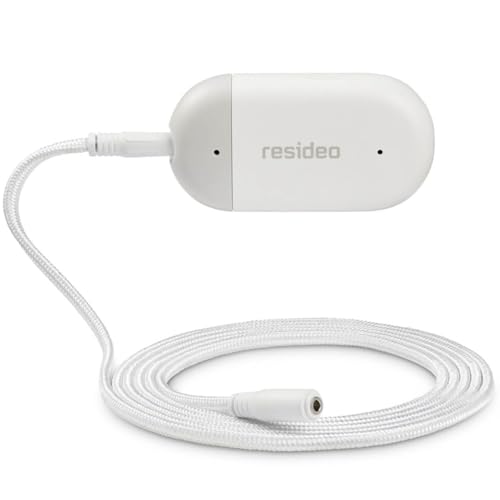
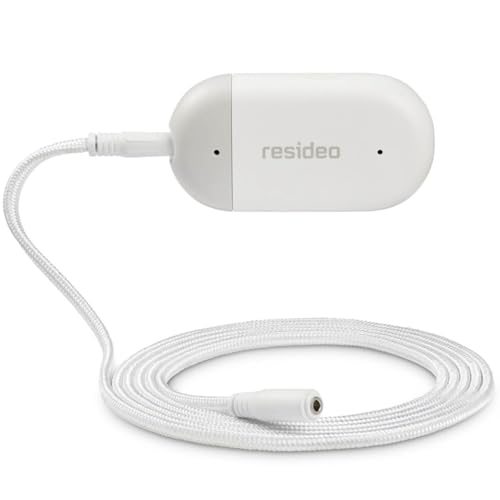
If Your Risk Is a Line: Resideo WiFi Water Leak Detector
For the appliance wall, the boiler room or the long cabinet run, a cable detector can be worth more than three pucks, because it watches the whole path water travels. Mid-to-premium tier, justified by geometry rather than features, with freeze alerting included in the bargain.
If Budget Decides: X-Sense Water Leak Sensor Alarm
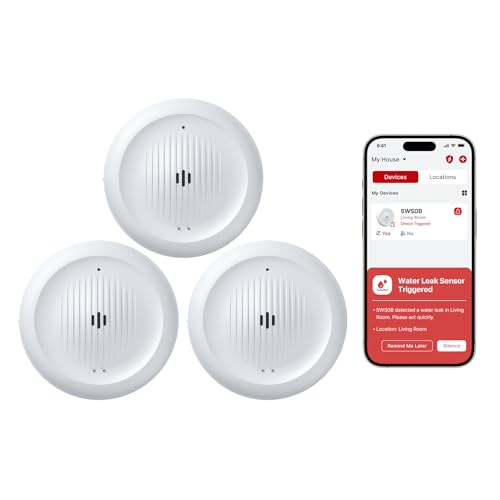
The entry-tier way to make the value equation work in an occupied home: sets of loud alarm pucks covering every sink and toilet, accepting the empty-house limitation openly. As a first layer — especially with one connected sensor added at the water heater — it is the configuration budget-conscious owners rate most kindly in hindsight.
Beyond the category sit two true alternatives. The automatic shutoff valve — plumber-installed, a different budget tier — is the alternative for intervention, and for empty homes it is not so much an alternative as the correct primary purchase. And disciplined inspection alone — hoses, connections and heaters eyeballed on a rhythm — is the free alternative whose weakness is sampling: it sees the plumbing on the days you look. Most well-protected homes end up layering all three, which is less a contradiction than the definition of taking water seriously. For the neighbouring layers of the alert home, see smart door locks and door and window alarms.
How to Get the Most Value If You Buy
Value in this category is manufactured after purchase, in five habits. First, complete the map: the second purchase — the refrigerator line, the second bathroom — is where the system’s value quietly doubles, because leaks favour the unwatched spot with something approaching intent. Second, test on a ritual, not a resolution: tie the wet test to smoke alarm day or the clock changes, and the habit will outlive your motivation. Third, rehearse the response once: every adult to the shutoff valve, hands on it, drill agreed — five minutes that multiply every alert’s worth. Fourth, fix false alarms immediately, because a believed alarm is the asset and every tolerated nuisance spends it. Fifth, let the system teach you your house: log alerts and near-misses, replace the hoses the log indicts, and re-audit placement at every appliance change. A sixth habit, unglamorous and decisive, belongs on the list: keep the system boring. Resist sprawling into a second app, a novelty integration, a rival brand bought on a whim — the system’s value compounds through sameness: one alert sound the household knows in its sleep, one battery routine, one health screen to glance at twice a year. Novelty is the tax this category charges the curious, and the owners who refuse to pay it are the ones still protected in year five. Owners who do these things describe the purchase, years later, the way people describe good insurance they once had to use. Owners who skip them describe a puck. The difference was never in the box, and how to choose a smart water leak detector exists to make sure the choosing — the one part fully in your control — is done in the right order.
The Decision Checklist
Answer honestly; count the yeses. One: does your home have a tank water heater, a washing machine, or sinks and toilets on finished floors? Two: is there any room with plumbing that goes unentered for days at a time? Three: can someone — resident, neighbour, family member — respond to an alert within the hour on your emptiest day? Four: does your household keep any seasonal ritual a sensor test could ride on? Five: do any pipes run through cold or unheated space? Six: would a single serious leak in your home mean contractors rather than towels? Seven: are you willing to spend one afternoon on placement and rehearsal? A word on answering honestly, because this checklist’s only failure mode is diplomacy: question three is not “would someone probably notice eventually” but a name and a travel time; question four is not “we could start a ritual” but whether one exists today that has survived a full year; question seven is not assent in the abstract but a specific afternoon you can already see on the calendar. Answer the questions you are asked, not the ones you prefer, and the count that follows will deserve your trust. Five or more yeses: it is worth it — buy the coverage, starting with the backbone spots, per the smart water leak detector buying guide. Three to four: worth it in reduced form — a connected sensor at the heater and washer, alarm pucks at the wettest spots. Two or fewer, or a no on question three that cannot be fixed: skip the sensors for now and put the money toward the shutoff valve or the plumbing itself. Supporting actors in a wider setup — Wi-Fi smart plugs for remote power cuts, smart light switches for the alert-lit hallway — can wait for the second round.
The Arithmetic of a Leak, Without a Single Price
Since this page prints no prices, do the arithmetic in the units that actually decide it: time and consequence. A pressurised supply failure — the burst hose, the split line — moves water at the rate of a running tap, fully open, into a room that was never designed to be a pond. Multiply that rate by the discovery gap and you have the event’s size. Without sensors, the gap is set by luck and architecture: minutes if someone is in the next room, hours on a workday, days on a holiday, weeks for the slow drip in the unwatched cabinet, which compensates for its slowness with duration and mould. With sensors, the gap collapses to the alert-plus-response time for every covered spot — which is why the same device is worth a fortune in a finished-basement house and a pittance in a concrete-floored utility flat. The consequence term is equally concrete: water respects a hierarchy of expense, from towels on tile, through warped cabinet floors and replaced flooring, to ceilings, structure and remediation. A sensor’s value is the distance it moves your likely event down that hierarchy. Priced that way — in gaps closed and rungs descended — the category’s worth stops being a matter of opinion and becomes a property of your house, measurable before you spend anything: count your finished floors below plumbing, your unwatched hours, and your ageing pressurised connections, and the answer assembles itself.
Worth It, Room by Room
Global verdicts blur what local analysis sharpens, so walk the house. Utility room: the strongest yes in the building — the highest-volume appliance, the least-visited room, the clearest case. If this page persuades you to place exactly one sensor, it goes in the heater’s pan. Laundry: yes, escalating to emphatic when the room sits above finished space, where the valve conversation joins. Kitchen: yes on frequency — the slow drip is the likeliest leak you own — with the value realised only if the placement respects drip geometry. Bathrooms: yes in aggregate; individually modest, collectively the source of a large share of real claims on floors and subfloors, and cheap to cover in sets. Basement generally: the answer is the floor’s finish — concrete says optional, carpet and drywall say buy the backbone today. The refrigerator line: the connoisseur’s yes — thin, pressurised, hidden behind the one appliance nobody moves, responsible for a quiet genre of ruined kitchen floors. Room by room, the pattern is unmistakable: worth it concentrates exactly where water, pressure, finish and absence intersect, and a buyer who maps those four factors never needs this page’s verdict at all.
Five Years With a System: The Diary Owners Describe
Project the purchase forward, because worth-it is a five-year question wearing a one-day disguise. Year one is the honeymoon: installation afternoon, the first test’s small theatre, a false alarm from the mop that teaches everyone the sound. Year two is the quiet test of character — a battery warning answered or ignored, a router replaced, the reconnection check done or forgotten; this is the year the system’s real value is decided, in minutes, by habits. Year three brings the expansion nobody planned: the spot discovered during a clean-out gets its sensor, and the map quietly completes itself. Somewhere in years two to five, for a large share of owners, comes the event — rarely cinematic, usually a weeping valve or a tired hose — met early, in the right room, with the shutoff already in mind; and in that hour the entire five-year cost of the system, purchase and attention together, is repaid with interest that does not fit in a spreadsheet. The owners who describe this diary call the purchase one of the best in the house. The owners whose diary diverges — the ignored battery, the untested year — describe a different product entirely, though the box was the same. Worth it, in this category, is less something you buy than something you keep being, briefly, a few times a year.
Life Events That Reprice the Decision
The answer to “worth it” is not stable across a life, and several common events should trigger a fresh look. Finishing a basement converts the utility area from forgiving to fragile overnight; sensors that were optional become close to mandatory the day the carpet lands. A new baby, a new job, a new commute — anything that empties the house longer or fills the nights deeper — reprices the alert path upward and argues for connected coverage. An ageing appliance fleet raises the likelihood term year by year; the house that was low-risk at purchase may not be at the heater’s tenth birthday. Becoming a landlord, or taking in an elderly parent, changes who responds and who is at risk, and both changes argue for owner-side or family-side alerting designed on purpose. A first leak anywhere in the house is the loudest repricing of all: it replaces statistical risk with demonstrated risk, at a demonstrated address. And retirement and the travel it enables quietly move a household from the worth-it column toward the worth-it-plus-valve column. Revisit the checklist at each of these moments; the decision you made for the household you were deserves review by the household you have become.
Thinking Like an Underwriter
It clarifies the question to borrow the insurance industry’s cold eyes for a moment — not because any policy is promised here (ask your own insurer what, if anything, documented leak protection means for your cover; practices vary), but because the underwriter’s frame is the honest one. An underwriter prices a home’s water risk from exactly the factors this page keeps naming: pressurised connections and their ages, finished space below plumbing, occupancy patterns, and the presence or absence of early warning and automatic shutoff. In that frame, a sensor system is a risk-reduction measure whose value rises with every risk factor your house honestly carries — which is why the same product is simultaneously overkill for a new, drained, concrete-floored flat and underpriced protection for a twenty-year-old house with a finished basement and a travelling owner. You do not need the industry’s tables to use its logic. List your risk factors without flinching, and you have your verdict in the industry’s own language: the more of them you carry, the more the minutes a sensor buys are worth, because minutes are the currency in which water damage is denominated.
A Tale of Two Identical Houses
Imagine two houses on one street, same age, same heater, same hoses, same February cold snap. In the first, a supply line lets go at 2 a.m. behind the washing machine. There is no sensor. The water runs until a downstairs ceiling, saturated, announces the news at breakfast — and the event unfolds across weeks: drying, flooring, a ceiling, a mould check, a household living around contractors. In the second house, a sensor behind the machine speaks within the first minutes. A groggy owner — who knows the shutoff because installation day included turning it once — stops the water before it finds the floor below, mops the laundry, and replaces a hose in daylight. The two houses paid the same for their plumbing and will pay the same for their next hose. They differ by one small purchase and one rehearsed habit, and by an outcome measured in seasons of disruption. Worth-it calculations in this category are really asking which of these two houses you intend to live in when your February arrives — because the houses are identical, the winter is identical, and the only variable ever on sale is the warning.
The Opportunity Cost Question, Answered Fairly
A skeptic’s last stand deserves a fair hearing: the money and afternoon a sensor system consumes could go elsewhere — toward the shutoff valve fund, toward new hoses, toward nothing at all. Ranked honestly, some of those rivals outrank sensors in specific houses. New supply hoses for a washer whose hoses are of unknown age may be the single highest-value spend in the whole risk map, because they attack likelihood itself; this page endorses them without reservation, and notes that they pair with sensors rather than compete — the hose prevents, the sensor reports the failures prevention misses. The shutoff valve outranks sensors wherever response cannot be arranged, as the skip profiles above concede. But for the ordinary occupied house, the opportunity-cost argument mostly dissolves on inspection: the sensor system’s cost is small enough, and its coverage of the unwatched hours unique enough, that the true rival is not another purchase but inertia. Nobody’s renovation was ever cancelled to fund leak sensors. The afternoon, admittedly, is real — and it is also the same afternoon that produces the shutoff knowledge and the hose inspection, so even the time is spent three ways at once. Fairly answered, the opportunity-cost question ends up strengthening the case it was meant to test.
What “Worth It” Looks Like When It Is Wrong
Completeness demands the negative diary too, because some owners buy these systems and are right to call them not worth it — and their reasons instruct. The empty-house buyer who chose sirens owns a chorus with no audience; the purchase failed at the alert path, not the product. The sprawl buyer with three brands and three apps owns a maintenance burden that guarantees neglect; the failure was architectural discipline. The tidiness placer owns sensors beside appliances, dry sentinels at real floods; the failure was geometry. The never-tester owns a system whose state is unknown, which is to say owns a hypothesis. Notice that every entry in the negative diary is a process failure available to be avoided at purchase time, at no extra cost, by the guidance in this cluster — the choosing order in how to choose a smart water leak detector, the placement discipline in the smart water leak detector buying guide. “Not worth it” is a real verdict with real owners behind it; it is also, in case after case, a verdict on a purchase process rather than on the category. Buy the process right and the product’s worth follows with a reliability that few categories can match.
Worth It at Each Tier
Because the category sells in tiers, the verdict can be given per tier without printing a single price. At the entry tier — alarm sets for occupied homes — the worth-it case is at its most lopsided: the smallest outlay in the category buys genuine, if local, warning at every sink and toilet, and the only households for whom it fails are those whose houses stand empty. At the mid tier — a hub system or a small fleet of Wi-Fi sensors — the purchase buys the alert’s reach, and the verdict turns on whether your life contains the empty hours and distant rooms that reach serves; for working households and larger homes it clearly does, and the tier earns its place as the category’s centre of gravity. At the premium edge — cable coverage for the one long line that matters, freeze sensing across a vulnerable house — worth is geometric and climatic rather than general: expensive per device, cheap per metre of risk retired. And beyond the category, the shutoff valve’s tier is justified by a single variable, response distance, which no sensor at any tier can buy down. Read the tiers as answers to different questions rather than as good, better and best, and the worth-it decision becomes what it should have been from the start: a matching exercise between a house’s risks and the cheapest tier that honestly covers them.
Is a Smart Water Leak Detector Worth It? The Verdict, Restated for the Impatient
If you have read nothing else: for the ordinary occupied home — heater in the basement, laundry running weekly, floors you would grieve — a smart water leak detector is worth it, and the burden of proof sits on the skip. Buy the alert path your emptiest day can hear, cover the catastrophic spots with connected sensors and the frequent spots with whatever the same system offers cheaply, test on a ritual, and teach the household the shutoff valve. If your home stands empty for long stretches, the verdict inverts: the sensor alone is not worth it, the valve is, and the pair of them together are worth more than either. If your home is new, drained, concrete-floored and low-stakes, a single puck at the washer discharges your duty to this entire question. Everyone else — which is to say, most houses, most winters, most ageing heaters — belongs in the first paragraph. The water in your walls is patient, pressurised and indifferent; the only question this page has ever been asking is whether you intend to hear from it early, by appointment with a small sensor, or late, by way of a stain spreading across a ceiling.
Three Owners, Three Verdicts
The commuter couple, verdict: unambiguously worth it. Two jobs, one dog, a heater in a finished basement and a house empty ten hours a day. They bought a hub backbone and alarm coverage, tied testing to the clock changes, and in the second winter a freeze alert reached them at work in time to send a neighbour in with a space heater and open cabinet doors. They describe the system the way people describe a good umbrella in a wet climate: uninteresting, until the day it is the only thing they talk about. The retired widower in the bungalow, verdict: worth it, in reduced form. Home nearly always, one floor, a daughter an hour away. His system is two loud pucks and one connected sensor at the heater whose alerts reach both his phone and his daughter’s — a configuration chosen, deliberately, so that the response does not depend on his hearing or his knees. He tests on the first of each season, a ritual he describes as “checking the house’s pulse,” and considers the whole arrangement cheap at the price of his daughter’s sleep. The second-home owner in the mountains, verdict: the sensor alone was not worth it — the system is. Her first purchase, connected sensors alone, produced exactly the scenario this page warns about: a correct alert, received promptly, four hours from the property, in a cold snap. Her second purchase, the shutoff valve the sensors now serve as scouts, closed the loop. Asked whether the sensors were worth it, she gives the answer this entire cluster is built around: “As a warning with no one to act? No. As the eyes of a system that can act? Every penny of attention.” Three owners, three configurations, one principle — worth follows the completeness of the response, never the cleverness of the device.
The Usage Audit: Does a Smart water leak detector Earn Its Place in Your Routine?
Worth-it questions are really usage questions. A smart water leak detector earns its place through the hours it is used, the annoyances it removes and the problems it quietly prevents, so the honest way to answer is an audit of your own routine rather than a verdict in the abstract. Run the audit below against your last month, not your best intentions, and the answer usually becomes obvious.
Judge a leak detector by its sensing method and its alarm path: a probe that reaches the exact low point where water collects, a sounder loud enough to be heard through a closed door, and alerts that reach your phone when you are away. Battery life and how the detector reports a dying battery decide whether it protects you in year three. Crawl the spaces you fear most, under sinks, behind the washing machine, beside the water heater, and find where water would actually pool first; that low point, not the convenient spot, is where the sensor belongs. Check the network signal in those utility corners, which are often the weakest in the house.
Under a kitchen sink crowded with pipework, a slim probe on a lead reaches the drip point a puck-style sensor cannot touch. Beside a water heater or in a basement, a detector whose alert reaches your phone while you travel turns a disaster into a manageable repair. Near an aquarium, sump or laundry tray, a detector paired with an automatic shutoff valve is the combination that truly limits damage. Be strict about the difference between use you can point to and use you merely intend. A smart water leak detector bought for a routine you do not have will not create the routine; it will join the cupboard of good intentions.
Apply all of this to the listings in front of you. When a listing such as the YoLink Water Leak Sensor, Resideo WiFi Water Leak Detector and X-Sense Water Leak Sensor Alarm catches your eye, resist judging it by its headline claim and instead run the checks above against it: does its stated role match the room you measured, does its control path suit your household, and does the maker’s own guidance support the job you have in mind. A model that answers those questions cleanly on paper usually answers them cleanly in the home, and one that dodges them in the listing will dodge them on your wall, shelf or desk as well.
Detectors only sense water that reaches them; a slow leak inside a wall or under a floor may run for a long time before any surface sensor knows. Condensation and mopping splash cause false alarms in bathrooms and utility rooms, and repeated false alarms teach households to ignore the real one. If a detector alarms with no visible water, check for condensation, a damp floor from mopping and a probe resting in a low damp spot. If alerts stop arriving, test the detector with a damp finger on the contacts and check its battery and network status in the app.
- Count the days in the last month this product would genuinely have been used for your smart water leak detector.
- Name the annoyance it removes and how often that annoyance occurs for your smart water leak detector.
- Check whether something you own already covers the same job for your smart water leak detector.
- Decide the chore you accept in exchange and who will do it.
- Set a review date a month after purchase to judge it on evidence for your smart water leak detector.
- Be honest about the difference between your routine and your intentions for your smart water leak detector.
If the sounder seems faint, move the unit out from behind appliances; sound blocked by a cabinet is sound wasted. Test each detector with a little water on its contacts every few months, replace batteries on the maker’s schedule rather than after a failure, wipe contacts clean of dust and corrosion, and re-walk your risk spots after any plumbing work.
If the audit shows steady use and removed annoyances, the smart water leak detector has already answered the worth-it question in the only currency that counts. If it shows good intentions and an empty routine, the honest answer is to wait until the routine exists.
It also helps to think in seasons rather than in days. A smart water leak detector that seems ideal in the week it arrives may face different light, different temperatures, different routines and different demands a few months later, and the models that age well are the ones chosen with that longer view in mind.
Frequently Asked Questions
Is a smart water leak detector worth it for a small flat?
Usually, in reduced form. A small flat has fewer spots — typically the washer, the kitchen sink and a bathroom — and often strong Wi-Fi and an occupant who is never far away. One or two sensors at the highest-consequence spots capture most of the category’s value at entry cost. The full multi-sensor system is what small flats can skip; the washer hose and the under-sink trap justify a puck almost anywhere. Two flat-specific notes sharpen the answer. First, the flat’s consequence map includes a neighbour: a leak that runs long enough becomes the downstairs ceiling’s problem, which adds a social and sometimes legal weight to early warning that a detached house never carries. Second, small flats concentrate their plumbing — one wet wall often serves kitchen and bathroom together — so a single well-placed sensor can stand guard over an unusual share of the whole home’s risk. Both notes push the same way: in a small flat, one or two sensors, placed with unusual care, are among the best-value purchases in this entire guide.
How does the value compare to a shutoff valve?
They buy different things. Sensors buy information — early, located, cheap per spot. A valve buys intervention — the water actually stops, at a plumber-installed tier sensors never approach. For occupied homes, sensors deliver the better value first. For empty homes, the valve is the only purchase that completes the job, and sensors become its valuable second layer rather than its competitor.
What if the sensor never alerts in ten years — was it wasted?
No more than a decade of quiet smoke alarms is wasted. The purchase insures a low-frequency, high-severity event, and its cost — a modest tier plus minutes of seasonal testing — is the premium. Owners in the reviews who never had an event overwhelmingly describe the system as worth it for the unwatched rooms alone; owners who had one event describe the question as settled permanently. There is a subtler dividend in the quiet years, too, easy to miss because it arrives as an absence: the background worry about the basement, the holiday-eve circuit of the house checking taps, the low hum of “what is the heater doing while we are away” — these diminish measurably in households with a tested, trusted system. Peace of mind is a soft metric and this page has avoided leaning on it, but after ten quiet years it may honestly be the largest single thing the purchase bought, and it was delivered every single day.
Is the freeze warning alone worth choosing a model for?
In a cold climate with plumbing in unheated or exterior-wall spaces, it can be the deciding feature. A burst pipe is the most destructive leak in the home, and a low-temperature alert is the only sensor output that arrives before the damage rather than after it. In a mild climate or a home with no cold-exposed plumbing, treat freeze sensing as a pleasant extra and choose on alert path and coverage instead. One refinement for the cold-climate buyer: the freeze warning’s worth depends on the same response logic as everything else on this page. An alert received by someone who can act — raise the heat, send a neighbour, drip the taps remotely by proxy — is prevention. The same alert received by an empty house’s absent owner, hours from help, is merely an earlier obituary for the pipe. Choose the model for its freeze sensing, by all means; then spend the saved deliberation on the winter response plan that makes the sensing pay.
Are cheaper alarm-only sensors worth it, or should I save for connected ones?
Both, in sequence, is the configuration the evidence favours for most homes. Alarm-only sets are genuinely worth it as coverage — every sink, every toilet — in homes where someone is present to hear them. Connected sensors are worth it at the catastrophic spots and for any home with empty hours. Buying only sirens for an empty house is the false economy; buying only premium connected singles and leaving sinks bare is the other one. Sequencing matters for a practical reason as well: the alarm layer teaches the household its own risk map at the lowest cost, so by the time the connected backbone is added, it is placed by experience rather than guesswork — behind the machine that actually splashes, under the trap that actually sweats. Owners who built in that order report the fewest orphaned sensors and the least regret, which is as close as this category comes to a proven buying path.
When is a leak detector definitely not worth it?
Three situations. A property that stands empty for long stretches with no responder arranged — buy intervention instead. A household that honestly will not test or maintain anything and will not choose a low-maintenance architecture — the confidence would be false. And a genuinely low-risk home: modern plumbing, appliances on drained waterproof floors, no finished space at stake. In all three, the honest answer this page owes you is to spend the money elsewhere — on the valve, on the plumbing, or on nothing at all. A fourth situation deserves adding, because it is the one readers most often smuggle past themselves: the home where the money is genuinely needed for the plumbing itself. If the choice is between sensors and replacing the visibly perished hoses they would be watching, replace the hoses. Detection is the second line of defence, and funding it by starving the first is the one allocation this page will call wrong without qualification — with the note that the household which replaces its hoses this year becomes, next year, the ideal sensor buyer.
Related Reading
Run the checklist, trust the count, and buy — or skip — with the whole house, its winters, its emptiest weeks and its oldest hoses all in view at once, because those are the terms in which the answer was always going to be delivered.
smart water leak detector review
smart water leak detector buying guide