Disclosure: As an Amazon Associate, reviewstook.com earns from qualifying purchases. Links on this page are affiliate links; they cost you nothing extra. Prices and availability change often, so check the current Amazon listing before you buy.
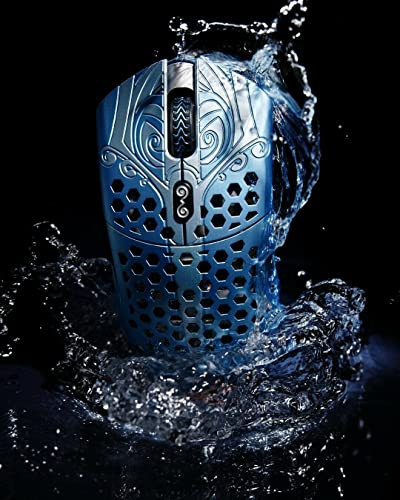
The starlight x is one of those products that exists under two names at once, and clearing that up is the honest place to start. Reviewers, including the measurement sites that popularised it, discuss this ultralight magnesium gaming mouse as the Finalmouse Starlight X. Amazon, however, does not sell a listing with that exact title. What Amazon sells are editions of the Finalmouse Starlight-12 — the same mouse family, in named colourway editions such as Poseidon and Phantom, in the Small size. This guide treats those Starlight-12 listings as what they are: the retail form of the mouse the review world calls the Starlight X, presented with the naming note attached rather than hidden.
That distinction matters because Finalmouse built its reputation on limited runs, named editions and a shape that competitive players either love immediately or cannot get along with at all. The Starlight line is a small, symmetrical, extremely light wireless mouse with a magnesium alloy shell full of cut-outs, aimed squarely at fingertip and claw players in tactical shooters. It is not a general-purpose mouse, it is not an MMO mouse, and it is not a safe blind recommendation for large hands. It is a specialist tool, and this page explains who the specialism serves, what the two verified Amazon listings actually are, and how to decide whether a limited-edition ultralight belongs on your desk at all.
Key takeaways
- There is no Amazon listing literally titled Starlight X; the verified listings are Finalmouse Starlight-12 editions — Poseidon Small and Phantom Small — and they are presented that way here.
- This is a small, symmetrical, ultralight magnesium mouse built for fingertip and relaxed claw grips in fast shooters.
- Hand size decides almost everything: players with large hands or a palm grip should look elsewhere first.
- Limited editions mean availability and colourway come and go, so verify the exact edition and size on the listing before ordering.
- The shape and weight are the product; the software, button count and extras are deliberately minimal.
Where can you actually buy the Starlight X?
Because of the naming split, buying this mouse takes one extra minute of care. The two listings linked below were verified against Amazon’s own catalogue data for this site: each carries an official product image, and each title names a Starlight-12 edition in the Small size. When you follow a link, re-read the title on the listing itself and confirm three things before paying: that it says Starlight-12, that the edition name matches the colourway you want, and that the size is the one you intend. Finalmouse editions have historically appeared in more than one size, and a marketplace listing title is the only contract you have. If the size in the title is not the size you want, do not assume a selector elsewhere on the page will fix it.
Each linked pick below says Check price on Amazon rather than quoting a figure, because limited-run hardware like this moves around in price as stock thins out, and a printed number would mislead you within weeks. Treat the listing as the live source of truth for price, stock and seller, and be wary of third-party sellers whose listing title drifts away from the edition names verified here.
In this guide
Quick picks at a glance
| Listing | Edition | Best for |
|---|---|---|
| Finalmouse Starlight-12 Poseidon Small | Poseidon | Small-handed fingertip players who want the blue-toned edition |
| Finalmouse Starlight-12 Phantom Small | Phantom | Small-handed claw players who prefer the dark edition |
The two listings are the same mouse in different editions, so the choice between them is about colourway, availability and which seller’s listing is live when you shop — not about performance. Everything below therefore reviews the mouse once, as a design, and then helps you pick the edition and, more importantly, decide whether the design fits your hand and your games in the first place.
How were these listings chosen and verified?
The rule applied here is strict: a product only earns a link if Amazon’s catalogue returns an exact, matching listing with an official image. For this keyword that rule produced a naming problem worth surfacing rather than smoothing over. Searches for the review name returned Starlight-12 editions, not a Starlight X listing, so this guide links the Starlight-12 listings and labels them accurately. No other Finalmouse model has been substituted, no size other than Small is implied, and no specification in the sections below comes from a listing title that does not support it. Where a detail is a widely known property of the Starlight design — the magnesium shell, the small symmetrical shape, the minimalist feature set — it is described in those general terms.
What is the Starlight X, really?
Start with the object itself. The Starlight design is built around a magnesium alloy chassis rather than a plastic shell, which is how Finalmouse reached an ultralight weight without turning the mouse into a honeycomb of thin plastic alone — although the shell does use extensive cut-outs, giving the mouse its distinctive skeletal look. Magnesium feels different in the hand from plastic: cooler at first touch, rigid, and slightly textured depending on the edition’s finish. Players tend to have a strong reaction to it, positive or negative, within the first session.
The shape is a small, low, symmetrical shell with a gentle hump placed for fingertip control rather than palm support. There is no ergonomic sculpting for the ring finger, no thumb rest, and no attempt to fill the hand. The design assumption is that your fingers steer the mouse and your palm mostly stays off it. If that sentence describes how you already play, the Starlight makes immediate sense. If you rest your whole hand on the mouse and push with your arm from the shoulder, the same shape will feel like a toy that keeps escaping you, and no amount of weight reduction will change that.
Around that core, everything is deliberately sparse. You get the standard pair of main clicks, a scroll wheel, and a small number of side buttons, because the target games — tactical and arena shooters — bind a handful of actions to the mouse and everything else to the keyboard. There is no tilt wheel, no button cluster for macros, no sniper button, and no onboard productivity tricks. Judged as an office mouse it is spartan. Judged as an aiming instrument it is focused, and the review sections below keep that framing: this mouse is scored against the job it was built for.
The two verified Starlight X listings, reviewed as one mouse

Finalmouse Starlight-12 Poseidon Small — the blue-toned edition
Badge: Verified Starlight-12 listing — Poseidon edition, Small
| Spec | Detail |
|---|---|
| Listing title | Finalmouse Starlight-12 Poseidon Small |
| Size | Small |
| Shell | Magnesium alloy ultralight chassis with cut-outs |
| Shape | Small symmetrical, low profile |
| Intended grip | Fingertip first, relaxed claw second |
| Connection | Wireless |
The Poseidon edition is the Starlight-12 in its blue-toned finish, and it is the listing most buyers searching for this mouse will land on first. In the hand — if your hand suits it — the defining experience is how little there is to think about. The mouse disappears during flicks because there is barely any mass to start or stop, and the rigid magnesium shell means the shape you grip at the start of a session is exactly the shape you grip at the end, with no flex when you squeeze during a tense round. Players coming from a conventional gaming mouse in the usual weight class typically describe the first evening as the mouse feeling almost hollow, then recalibrate and find their old mouse feeling sluggish by the third evening.
Aiming character follows from the shape. The low hump and short length encourage micro-corrections with the fingers, which is precisely what holding tight angles in a tactical shooter asks for: small, frequent, precise adjustments rather than long sweeping arcs. Tracking-heavy play is more divisive. The same lightness that makes flicks effortless gives you less inertia to smooth a long tracking motion, so players who main tracking-heavy heroes sometimes prefer a slightly heavier mouse. That is a preference, not a defect, but it is worth knowing before you pay limited-edition money.
The clicks and wheel follow the minimalist brief. The main buttons are tuned for rapid, repeated actuation in bursts, the wheel is a straightforward stepped wheel for weapon switching, and the side buttons cover the usual melee and ability binds. Nothing here tries to be a macro platform. The wireless connection is the competitive baseline you would expect at this level: the mouse is built for ranked play, not for a living-room couch, and it expects to live on a proper mouse pad within easy range of its receiver.
Strengths
- Featherweight magnesium shell makes starting and stopping the mouse nearly effortless in flick-heavy games.
- Small symmetrical shape gives fingertip players direct, unfiltered control over micro-adjustments.
- Rigid metal chassis with no perceptible flex under a hard grip during tense moments.
Trade-offs
- Small size genuinely excludes large hands and palm grips — this is a fit filter, not a preference.
- Minimal button set offers nothing to MMO, MOBA or productivity users who bind heavily to the mouse.
- Limited-edition availability means your preferred colourway may simply not be listed when you shop.
Best for: small-to-medium handed fingertip and claw players in tactical shooters who want the lightest possible tool. / Not suited for: palm grippers, large hands, or anyone who needs more than a handful of mouse buttons.
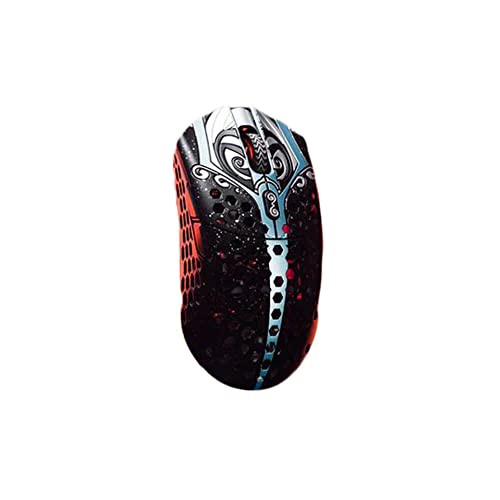
Finalmouse Starlight-12 Phantom Small — the dark edition
Badge: Verified Starlight-12 listing — Phantom edition, Small
| Spec | Detail |
|---|---|
| Listing title | Finalmouse Starlight-12 Phantom (Small) |
| Size | Small |
| Shell | Magnesium alloy ultralight chassis with cut-outs |
| Shape | Small symmetrical, low profile |
| Intended grip | Fingertip first, relaxed claw second |
| Connection | Wireless |
The Phantom edition is the same Starlight-12 Small in the dark finish, and everything said about the shape, shell and aiming character above applies unchanged. What differs is the practical side of ownership. Dark finishes tend to show skin oils and dust differently from pale ones — the cut-outs in the shell collect desk dust whatever the colour, and a soft brush or a blast of air belongs in your routine either way — and the Phantom’s stealthier look pairs more easily with the muted, blacked-out desk setups most competitive players run. If you are choosing between the two listings purely on looks, choose the one you will enjoy seeing every day; there is no performance gap to hunt for.
There is one buying nuance specific to this listing: its title formats the size in brackets, and marketplace titles get re-written by sellers more often than brands admit. Before ordering, confirm the listing in your basket still names the Phantom edition and the Small size, and check who the seller is. With limited-run hardware, the second-hand and reseller market blends into the new market, and a listing that began life as one edition can be re-pointed at another. The verified link here lands on the listing that was checked; your final click deserves the same three-second title check described in the buying section above.
Ownership over months is where the magnesium shell earns its keep. Plastic ultralights can develop creaks as shells age; a metal chassis tends to feel the same in month six as in week one, provided you keep grit out of the cut-outs and the sensor lens clean. The trade is that metal dents and finish wear tell their story more honestly than plastic does — a dropped Starlight wears its history. For a mouse bought as a long-term main rather than a rotation piece, that durability of feel is the real argument.
Strengths
- Identical ultralight magnesium design to the Poseidon, in a finish that suits understated setups.
- Shell rigidity keeps the grip feel consistent across a long ownership span.
- Dark edition tends to be the easier match for the black peripherals most players already own.
Trade-offs
- Same small-shape fit limits as every Starlight-12 Small — hand size still decides.
- Finish and edition naming on marketplace listings can drift, so the title check before buying is essential.
- No extra features arrive with this edition; the premium is for the edition and finish, not new hardware.
Best for: players who already know the Starlight shape suits them and want the dark edition. / Not suited for: first-time ultralight buyers unsure of their grip — resolve the fit question before choosing a colourway.
Is the Starlight X the right shape for your hand?
Everything about this mouse is downstream of fit, so treat this section as the real review. Measure your hand honestly: length from middle fingertip to wrist crease, and width across the knuckles. The Starlight in Small is built for the smaller half of the hand-size range. If your hand is large, the shell will sit entirely under your fingers with your palm hovering unsupported, and after an hour that hover becomes forearm fatigue that players misdiagnose as a weight problem. It is a geometry problem.
Grip style is the second filter. Fingertip players, who steer with the fingers and rest nothing on the mouse, are the design centre. Relaxed claw players, whose fingers arch and whose palm brushes the rear of the shell, usually adapt well because the low hump gives the palm something to register against without forcing contact. Aggressive claw players who dig in hard may find the cut-outs and short rear less anchored than they like. Palm players should simply stop here and take the money to a larger ergonomic or symmetrical shape; the Starlight will never become comfortable for them, and forcing it teaches your hand compensations that hurt your aim in other games too.
There is a useful home test if you are between sizes in spirit. Play two full sessions with your current mouse using only your fingertips, palm deliberately lifted. If your accuracy feels liberated and your hand stays relaxed, you are the target user and the weight reduction will feel like removing a governor. If your hand cramps or your aim turns shaky by the second session, your grip is doing more work than you realised, and an ultralight small mouse will amplify that rather than fix it.
How does the Starlight X compare with mainstream ultralights?
The obvious comparison class is the mainstream ultralight wireless mice from the big peripheral brands — the symmetrical esports models sold everywhere, in multiple sizes, with conventional plastic shells and full software suites. Against those, the Starlight’s case rests on three things: the magnesium construction, the extreme end of the weight range, and the edition-based ownership experience. The mainstream mice answer with better availability, more sizes, easier returns, deeper software, and shapes refined across far larger user bases. Neither answer is wrong; they are aimed at different buyers.
For a first ultralight, the mainstream route is honestly the safer recommendation, because size choice and easy returns de-risk the fit question that dominates this category. The Starlight is the second mouse — the one bought by a player who already knows their grip, their size and their sensitivity, and wants the specific feel of a metal shell at the lightest end of the market. Readers weighing a broader shortlist will find our guide to choosing a gaming mouse useful for the size and grip groundwork, and anyone building a full competitive loadout can cross-check the surface side with our gaming mouse pad picks, because an ultralight on a worn-out pad wastes the entire point of the mouse.
How do you set up a Starlight X for competitive play?
Setup is short because the mouse is simple, but each step matters more on a mouse this light. Work through it in order the first evening you own one.
- Charge it fully, then place the wireless receiver as close to the pad as the cable allows — ideally on the desk in line of sight of the mouse, not buried behind the PC case.
- Set your sensitivity from your old mouse by measuring centimetres per 360-degree turn on the pad, not by copying a number between different mice and games.
- Lower your expectations for the first two days: an ultralight changes your stopping behaviour, so run aim routines and deathmatch before ranked matches.
- Bind the side buttons deliberately — melee and one utility is the classic tactical-shooter split — and leave everything else on the keyboard where your muscle memory already lives.
- Clean the pad. A mouse this light exposes every gritty patch and worn spot that a heavier mouse used to plough through.
- Re-check your grip after a week. Many players discover they can relax their fingers further than they dared on day one, and that relaxation is where the consistency comes from.
On sensitivity specifically: players migrating to a much lighter mouse often find the same sensitivity feels faster, because less force is needed to start the mouse moving. A small reduction for the first week, then a gradual return if your flicks start falling short, is a saner path than changing everything at once. Change one variable at a time, or you will never know which change helped.
What mistakes do Starlight X buyers keep making?
The first mistake is buying the name instead of the fit — ordering a Small because it is the listing that exists, while owning a large hand. The second is assuming the review name and the listing name are interchangeable and ordering the wrong Finalmouse model entirely; the Starlight-12 editions linked here are the verified listings, and anything titled differently is a different product until proven otherwise. The third is judging the mouse in the first hour. Ultralight aiming has a genuine adaptation curve measured in days, and players who decide in an evening either return a mouse they would have loved or keep forcing one they should return, past the window where returning was easy.
The fourth mistake is neglecting the surface and receiver placement, then blaming the sensor. The fifth is treating a limited edition as an investment rather than a tool: buy it to play on, in the edition you like, at a price you are comfortable with — the moment the purchase becomes about scarcity rather than aim, the decision has stopped being about mice. Finally, do not ignore the mundane check of what is actually in the basket at checkout; edition and size in the title, every time.
Final verdict: who should buy the Starlight X?
If you are a small-to-medium handed fingertip or relaxed claw player in flick-heavy shooters, and you already understand your sensitivity and grip, the Starlight — bought honestly as the Starlight-12 Poseidon Small or Phantom Small listings above — is one of the most single-minded aiming tools ever sold, and its magnesium shell gives it a feel nothing plastic quite copies. If your hand is large, your grip is palm, your games need buttons, or this would be your first ultralight, the wiser purchase is a mainstream mouse in your correct size, and there is no shame in that answer: fit beats fame in this category every single time. Players assembling a full competitive setup may also want our pick of the best CS2 skins explained for the cosmetic side of the loadout and the best MMO gear setup if your evenings split between shooters and an MMO mouse with real buttons.
Frequently asked questions about the Starlight X
Is the Starlight X the same mouse as the Starlight-12?
The review world, following Finalmouse’s own naming drift across generations, often discusses this mouse as the Starlight X, while Amazon’s verified listings title it the Finalmouse Starlight-12 in named editions such as Poseidon and Phantom. The listings linked in this guide are Starlight-12 editions, presented under their real titles, and they are the retail listings that correspond to the mouse reviewers cover. Always buy by the listing title, not by the nickname.
Which size should I choose?
The verified listings here are both the Small size, and Small genuinely means small: it suits smaller hands and fingertip grips. If your hand is medium-to-large, measure before ordering and be honest about the result — a mouse that is too small cannot be fixed with grip tape or optimism, and the correct move is a different mouse in a larger shell.
Is a magnesium shell worth it over plastic?
Magnesium buys rigidity and a distinctive cool, solid feel at the very lightest end of the market, and it tends to keep that feel over years of use. Plastic buys easier availability, more sizes and simpler returns. The aiming difference is smaller than the ownership difference, so decide based on which ownership experience you actually want.
Does the Starlight X suit claw grip?
Relaxed claw, yes — the low rear hump gives the palm a reference point without forcing contact. Aggressive claw players who anchor hard on the rear of the shell sometimes find the short, cut-out body less planted than a larger mouse, so if your claw is aggressive and your hand is not small, test the fit question carefully before committing.
What games does it not suit?
Anything that wants many mouse-bound actions: MMOs with two dozen ability binds, MOBAs with item actives on the mouse, and heavy productivity work with layered shortcuts. The button count is a deliberate minimum for shooters. If your week mixes genres, keep a button-rich mouse in the drawer for the other games rather than asking one mouse to be two tools.
How should I care for the magnesium shell?
Keep the cut-outs free of dust and skin debris with a soft brush or compressed air, wipe the finish with a dry or barely damp cloth, and keep the sensor lens clean. Metal shows wear honestly, so a desk without grit and a pad that gets washed regularly will keep both the glide and the finish in good shape.
Why does mouse weight change your aim so much?
Weight is not a comfort statistic; it is a physics input to every aim movement you make. Starting a mouse moving requires overcoming its inertia, and stopping it precisely requires absorbing that same inertia with your fingers and wrist. Halve the mass and both halves of the movement get cheaper: flicks begin with less effort, and — more importantly for accuracy — they end with less overshoot, because there is less momentum carrying the crosshair past the target. This is why ultralight adopters report their flicks feeling “calmer” after the adaptation week rather than faster. The speed was always there; the stopping is what improved.
The same physics explains the tracking caveat mentioned earlier. During a long, smooth tracking motion, a heavier mouse’s inertia acts as a low-pass filter, smoothing tiny hand tremors out of the path. A very light mouse transmits those tremors more faithfully, which is why some tracking-focused players add a slower, more controlled pad or drop their sensitivity slightly when they go ultralight. Neither effect is magic and neither is marketing: they are the two sides of one trade, and knowing which side your main games live on tells you most of what you need to know about whether this category — and this mouse — is for you.
There is also a fatigue dimension that compounds over a long session. A ranked evening might involve thousands of micro-movements. Shaving the effort of each one by a fraction does not feel dramatic in minute five, but by hour three the ultralight user’s fingers have done meaningfully less total work, and late-session consistency is where ranked results are actually decided. Players who grind long sessions are often the ones who convert permanently, even if their first impression was lukewarm.
What should you know about the shell cut-outs and grip?
The skeletal shell divides opinion, so here is the practical version. The cut-outs remove material where your hand does not need support, which is how the design reaches its weight while keeping a metal structure. In play, most fingertip players stop noticing them within days because their contact patches are the sides and the rear spine of the mouse, not the perforated top. Players with a firmer claw sometimes feel the edges of the cut-outs under their fingertips; grip tape over the main contact points is the community’s standard answer, and it has the side benefit of protecting the finish.
Grip tape deserves a word of its own, because on a mouse this light it is a tuning tool, not an accessory. Sweaty hands on smooth magnesium can feel less secure than on textured plastic, and a thin tape layer on the sides restores purchase without meaningfully changing the shape. Apply it only where your fingers actually land, keep it off the sensor area and the seams, and replace it when the edges start to lift — lifting tape catching on the pad is worse than no tape at all. If you find yourself wanting tape over most of the shell, take the hint: the shape itself may not be your shape.
The stock feet are the other half of the glide equation. On a fresh pad, the mouse should move with an even, quiet glide in every direction. If one corner drags, the cause is usually a contaminated pad or debris in the cut-outs working its way down, not the feet themselves. Break in new feet with a day of normal play before judging them; most skates feel scratchy for the first hours and then settle.
How does living with a limited-edition mouse differ?
Ownership logistics are part of this product whether buyers plan for them or not. Editions sell through, colourways rotate, and the listing you verified in one month may be a different seller’s listing the next. Practical consequences follow. Keep your proof of purchase somewhere findable, because warranty conversations about limited hardware go faster with paperwork. Photograph the underside label of your mouse when it arrives, so the edition and size details are recorded if a listing later changes. And if the mouse becomes your main, consider that replacement parts, feet and even exact-edition replacements will never be as casually available as they are for a mass-market mouse.
None of that should scare the right buyer off; it should simply be priced into the decision. A mainstream mouse is an appliance. A Starlight is closer to a small-run instrument — bought deliberately, kept deliberately, and maintained with a brush and a clean pad rather than replaced on a whim. Players who enjoy that relationship with their gear tend to be this mouse’s happiest owners, and players who find it fussy tend to be happiest with the mainstream alternative they nearly bought. Self-knowledge, again, is the whole game with this product.
Starlight X troubleshooting: the four problems owners actually hit
First, the mouse feels slippery in summer or long sessions. That is the smooth metal finish meeting sweat; grip tape on the side contact points, or simply wiping the shell during breaks, solves it. Second, aim feels jittery after switching from a heavy mouse. That is transmitted tremor plus an unchanged sensitivity; drop sensitivity slightly for a week and use a pad with a touch more control before blaming the sensor. Third, the glide feels uneven. Clean the pad, clear the cut-outs, and inspect the feet under bright light for a lifted edge. Fourth, wireless feels inconsistent in a cluttered desk setup. Move the receiver to the desk surface in clear view of the pad, away from metal hubs and other receivers; on a mouse built for ranked play, receiver placement is part of the product setup, not an afterthought.
Notice what is not on that list: the shape being wrong for your hand disguised as a technical fault. If the mouse is uncomfortable — palm hovering, fingers cramping, forearm aching — no setting fixes it, and the honest troubleshooting step is to accept the fit verdict early, while returning or reselling a sought-after edition is still easy. Limited hardware holds its appeal to other buyers; a bad fit does not have to become a sunk cost.
Which games does the Starlight X genuinely suit, game by game?
Tactical shooters are the home turf. In round-based play built on holding angles, clearing corners and taking one decisive flick at a time, the mouse’s virtues — effortless starts, clean stops, fingertip micro-correction — map directly onto what the game asks. Players in this genre also bind little to the mouse beyond fire, aim, jump or crouch variants and one or two utilities, so the minimal button set never becomes a constraint. If this is your main genre and your hand is the right size, the Starlight’s design brief and your evenings align almost perfectly.
Arena and movement shooters are a close second. Constant direction changes and repeated target switching reward the same low inertia, and the small shell tolerates the violent grip adjustments that movement play involves. Battle royale play sits nearby: long looting phases are neutral, but the fights are flick-and-track mixes where the mouse performs well, with the tracking caveat handled by pad choice and a considered sensitivity. Hero shooters split by role — hitscan flick heroes feel ideal, tracking heroes feel good with the adjustments described earlier, and ability-heavy heroes start pressing against the button ceiling.
Outside shooters the case weakens in predictable ways. Real-time strategy and MOBA play is playable — the mouse is light and precise — but players who bind actives and camera actions to the mouse will run out of buttons and patience. MMO play is the clear mismatch, as the FAQ notes. Desktop productivity is the quiet surprise: for general computing the mouse is perfectly pleasant if your grip suits it, though the absence of a free-spinning wheel and extra buttons makes long spreadsheet or editing sessions less convenient than a dedicated office mouse. None of this is a flaw in the product; it is the shape of a specialist doing exactly one job.
How should you choose between an ultralight and a conventional mouse?
If the Starlight has you considering the category rather than the specific mouse, run the decision in this order. First, grip and hand size, because they eliminate more mice than every specification combined. Second, your main genre’s button demand, because a mouse you cannot bind is a mouse you will replace. Third, weight preference, tested honestly: borrow or briefly try the lightest mouse you can access, and play for days rather than minutes before deciding which end of the weight range feels like home. Fourth, shape details — hump position, width at the grip points, side curvature — which decide comfort once the first three filters pass. Only fifth come the headline specifications, because between credible competitive mice the sensor and wireless differences are the smallest part of the lived experience.
That ordering is also the answer to the most common question about this mouse: whether its specifications justify choosing it over a mainstream ultralight. Specifications justify almost nothing at this level; fit and feel justify everything. The Starlight’s genuine differentiators are construction and edition, not numbers — the metal shell, the extreme weight, the small-run character. A buyer choosing on those grounds, with the right hand and grip, will be satisfied in a way a spec-sheet buyer rarely is. A buyer choosing on numbers will find the numbers matched elsewhere within a season and wonder what the fuss was about.
What sensitivity and settings pair well with a mouse this light?
Settings advice for ultralights generalises better than settings for any single game. Work in centimetres per full turn, the one measure that survives changing games and mice. Most tactical-shooter players on small ultralights settle somewhere in the broad middle band of that measure — fast enough for a comfortable 180-degree turn on a standard pad, slow enough that a one-centimetre error does not throw a duel. If your current setup needs the whole pad for a half-turn, a lighter mouse is your chance to reclaim desk space; if your current setup turns fully in a few centimetres, the lighter mouse will feel nervous until you slow it down.
Change discipline matters more than the number. Adjust in small steps, play at least two real sessions between steps, and keep a note of what you changed and when — memory lies about settings within a week. Resist copying a professional’s sensitivity wholesale: their number is the residue of their hand size, pad, posture and years of habit, and on a mouse this individual the copied number is even less transferable than usual. Your settings are the final stage of fitting the mouse, and fitting, as this entire guide has argued, is the product.
Poseidon or Phantom: how do you actually decide?
Since the hardware is identical, the edition decision is really three smaller decisions wearing one coat. The first is availability: buy the edition whose verified listing is live and sold on terms you trust, rather than hunting the other colourway through progressively stranger sellers. A sought-after mouse attracts listings of uneven provenance, and the discount on a suspicious listing is never worth the risk of receiving the wrong edition, the wrong size, or a mouse with a previous life. The verified links in this guide exist precisely to anchor that decision.
The second decision is aesthetic and more legitimate than players admit. You will look at this mouse every day, on a desk you have probably already styled, and the blue-toned Poseidon and the dark Phantom create genuinely different desk moods — one a deliberate accent piece, the other disappearing into a monochrome setup. Keyboards, pads and headsets already on your desk should break the tie. The third decision is wear: lighter finishes tend to disguise dust and pale wear marks, darker finishes tend to disguise oils and look cleaner between wipes, and the cut-outs collect visible dust on both. If you are fastidious, pick by which kind of mess bothers you less; if you are not, pick by mood and move on.
What should never decide it is a rumour of a performance difference between editions. There is none to buy: same shell, same shape, same size, same brief. Any listing or seller implying one edition is a performance upgrade over the other is telling you something about the seller, not the mouse, and the correct response is to return to the verified listings and choose there.
A seven-day test protocol for new owners
Because adaptation decides whether this mouse works for you, give it a structured week instead of a vibes-based evening. Day one: unbox, charge, set centimetres-per-turn to match your old mouse, and play only casual modes while your fingers learn the shell. Days two and three: add aim routines focused on stopping — flick to a target and freeze — because stopping is the skill the lighter mouse changes most. Day four: review honestly whether your hand is relaxed at the end of sessions; relaxation trending up is the green light, tension trending up is data too. Day five: adjust sensitivity once, in a small step, only if a consistent pattern — always overshooting or always falling short — has emerged. Days six and seven: return to ranked or serious play and compare not your highlights but your ordinary rounds; the mouse earns its place in your average performance, not your best clip.
At the end of the week you will know three things no review can tell you: whether the Small shell fits your hand across real sessions, whether your grip relaxes or fights, and whether your average duel outcomes improved, held, or slipped. Keep the mouse on the first two answers alone if the third is neutral — aim metrics wobble for weeks — but respect a bad fit verdict immediately. The players who love this mouse all describe the same end to the test week: they stopped thinking about the mouse at all. That disappearance is the product working as designed.
Related reading and next steps
If the fit verdict was negative, do not abandon the ultralight idea entirely — a larger mainstream shell may deliver most of the benefit with none of the squeeze, and the mouse-choosing guide linked earlier walks through the sizes properly. If the verdict was positive, your remaining upgrades are the surface under the mouse and the patience to let the adaptation finish. Either way, the naming lesson of this page is worth keeping for every limited-run product you buy in future: shop by the exact listing title, verify edition and size at checkout, and let reviews supply the opinions while listings supply the facts.
Why do the names keep drifting, and how do you buy safely anyway?
The Starlight naming tangle is not an accident; it is the predictable result of how this corner of the market works. A small brand releases mice in named, limited editions rather than in permanent, numbered product lines. Reviewers, who need a stable name to file a review under, settle on the name the community uses — here, Starlight X. Retail listings, written by the brand’s storefront team and by marketplace sellers, title what is actually in the box — here, Starlight-12 editions with colourway names. Add a generation or two, a few restocks under slightly different titles, and the same physical mouse accumulates three or four names across the internet, each one sincerely used by the people using it.
The safe-buying protocol that follows from that reality is boring and total. One: decide the product by reviews and by shape, using the community name freely at that stage. Two: translate to the retail name before shopping, and treat the translation as a hypothesis — exactly what this guide did when it verified that Starlight-12 listings are what Amazon actually sells. Three: buy only a listing whose title states the model line, the edition and the size, and screenshot or save the listing details at purchase. Four: on delivery, check the physical mouse against the title before the return window becomes a negotiation. Five: if any step contradicts the previous one — a title that names a different model, a box that names a different edition — stop and resolve it with the seller while you still hold all the leverage.
That protocol generalises well beyond one mouse. Limited and enthusiast hardware across keyboards, keycaps, pads and audio follows the same pattern of community names drifting away from listing titles, and the buyers who get burned are rarely burned by the product — they are burned by assuming the name they read in a review is the name on the box. The Starlight, bought with its naming note understood, is a superb specialist mouse. Bought carelessly under the wrong name, it is an expensive way to learn a lesson this page has now taught you for free.
What does the Starlight X cost you beyond the purchase?
Total cost of ownership for a specialist mouse includes a few quiet line items worth naming. A good control-leaning pad, if your current one is a worn speed pad, is effectively part of the purchase, because the pairing decides how the mouse actually aims. Grip tape is a small recurring cost for players who rely on it. Replacement feet, when the originals eventually wear, are another. None of these are large, but together they mean the honest budget for switching to an ultralight is the mouse plus a modest setup allowance — and buyers who plan for that allowance end up judging the mouse itself more fairly, instead of blaming it for a pad it was never going to enjoy.
Set against that, the mouse asks unusually little in software and upkeep. There is no ecosystem to maintain, no suite of background applications, and no accessory ladder to climb. For players whose desks already groan under companion apps for every peripheral, a flagship tool that simply works when picked up has a value that never appears in a specification table. It is the final, fitting expression of the design: everything about the Starlight, including owning it, is the essential act with the decoration removed.
One last perspective for the undecided: the players who regret ultralight purchases almost never regret the weight — they regret skipping the fit homework, while the players who regret skipping this mouse are the ones who knew their grip, knew their size, and talked themselves into a safer, duller tool they never quite bonded with. If you have done the reading in this guide and the description of the target player sounds like a description of you, that recognition is the most reliable specification of all. Buy the verified listing, in the edition you prefer, give it the honest seven days, and let your own average rounds deliver the verdict.
And if the test week ends in a return, treat that as the process working rather than failing. You will leave knowing your grip, your size and your sensitivity preferences with a precision that improves every mouse decision after this one — which is why working through a specialist mouse honestly, even one you send back, is worth more than a year of guessing from specification tables written for nobody in particular.
Fit first, edition second, settings third — in that order, this mouse rewards its intended player like few others.
Everything else about the Starlight — the fame, the editions, the arguments it starts in forums — is decoration on that single, simple sequence of decisions.