Disclosure: As an Amazon Associate, reviewstook.com earns from qualifying purchases. Links on this page are affiliate links; they cost you nothing extra. Prices and availability change often, so check the current Amazon listing before you buy.
The moondrop aria is one of those rare products that outgrows its own production run. Released as an affordable single-dynamic-driver in-ear monitor with a metal shell, a tasteful matte finish and a tuning that chased the Harman-style target with unusual discipline for its tier, the original Aria became the default recommendation of its era — the earphone reviewers handed to newcomers and the benchmark against which a generation of budget rivals was measured. This article tells that story honestly, including its ending: the original Aria’s listing could not be verified in current catalogue checks for this review, so nothing here pretends to sell you one. What can be verified, and what this review covers in full, is the Aria’s living legacy — its successor, the Moondrop Aria 2, presented plainly as the successor it is, and its sibling the Starfield 2, for readers deciding where the Aria idea lives now.
That framing matters because the Aria name carries real weight in search results and second-hand listings, and buyers deserve a page that separates the three things the name can mean: the original product, fondly remembered and increasingly scarce; the successor that inherited its brief; and the idea itself — a single dynamic driver, honestly tuned, in a shell built like it matters. The sections below take them in that order, and the buying guidance at the end is written for the market as it actually is, not as nostalgia wishes it were.
Key takeaways
- The original Moondrop Aria was a landmark budget IEM: metal shell, single dynamic driver, disciplined tuning, replaceable 0.78 mm 2-pin cable.
- No verified current listing for the original Aria was returned in this review’s catalogue checks; be sceptical of listings that blur it with its successor.
- The Aria 2 is the successor — a distinct, current model that inherits the brief — and it is reviewed here as exactly that, never as the original.
- The Starfield 2 is the Aria family’s more decorative sibling alternative, with its own driver story.
- Second-hand originals can still delight, but they should be bought with the checks in the buying guide below.
In this guide
The original Aria: what it was and why it mattered
To understand the Aria’s reputation, recall the budget IEM market it entered: a bazaar of exaggerated bass, fragile plastic shells and tunings that treated the midrange — where voices and most instruments live — as an afterthought. The Aria arrived with a metal enclosure that felt like jewellery next to its rivals, a single dynamic driver tuned toward a recognised target curve with the bass kept in proportion, and a detachable cable on the standard 0.78 mm 2-pin system that the hobby uses to this day. None of those choices was exotic. Together, at its tier, they were a manifesto: that an affordable earphone could be balanced, durable and adult.
The sound that made its name was a study in proportion. Bass present and textured rather than swollen; midrange clear enough that vocals sat forward naturally; treble extended without the metallic edge that fatigued listeners in so many rivals. It was not the most exciting earphone of its year, nor the most analytical — it was the most correct, and correctness at a friendly price is what default recommendations are made of. Its weaknesses were equally consistent across its long life: the cable’s behaviour divided opinion, the finish could chip if the shells knocked together in a pocket, and the fit, while broadly compatible, rewarded a session of tip experimentation like every IEM of its shape.
An honesty note on availability
This review checked current Amazon catalogue data for the original Aria and no verified listing for it was returned — across repeated searches, the name resolved to the successor model and to siblings. Rather than present the Aria 2 as if it were the original, or link a marketplace listing of uncertain identity, this article does the transparent thing: the original is covered as history and as a second-hand purchase, with guidance; the linked products are the current, verified ones, labelled precisely. Readers who find an original Aria listed anywhere should apply the identification checks in the buying guide, because the name’s fame makes it a magnet for careless and occasionally misleading listings.
What the Aria taught the market
The Aria’s influence is visible everywhere in today’s budget IEM scene: metal shells at prices that once bought plastic, target-curve tuning discussed openly in product pages, detachable cables as a default expectation. Rivals answered it, undercut it and occasionally surpassed it in single dimensions, but the template was Moondrop’s. The Aria also taught a generation of listeners what balanced sound was, which permanently raised the market’s floor: after the Aria, a budget earphone with bloated bass and absent midrange could no longer plead its price as an excuse. Products that change what buyers expect outlive their production runs in the only way that matters — as the standard inside every subsequent comparison, including this one.

Moondrop Aria 2 review: the successor, on its own merits
Badge: The current successor
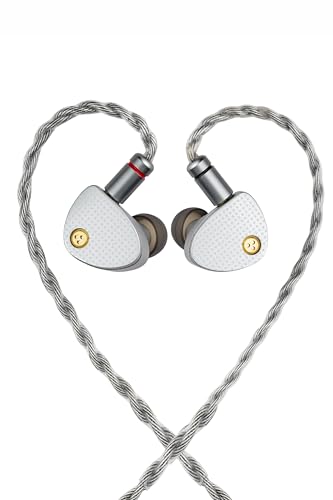
The Aria 2 is not the original Aria, and this review will not blur that line for a click: it is the model Moondrop built to carry the Aria brief into the current market, sold today, verified for this article, and judged here as a contemporary product rather than as a relic. Its verified listing confirms the essentials of the inheritance — an in-ear headphone on the same 0.78 mm 2-pin replaceable cable system — within a design that reflects what the company learned in the intervening years about drivers, shells and what its audience now expects at the tier. The fuller, dedicated review of this model lives at Moondrop Aria 2 reviewed in full; here, the Aria 2 is assessed in its role as this article’s answer to the question every Aria searcher is really asking: what do I buy now?
Mini spec box — the Aria 2, as successor
- Role: current successor to the original Aria
- Cable system: replaceable 0.78 mm 2-pin, as its listing confirms
- Type: wired in-ear headphone
- Positioning: the Aria brief, renewed for the current market
As a successor, the Aria 2’s task is double: satisfy the newcomer who wants today’s version of the famous recommendation, and satisfy the original’s owner who wants to know whether the name was honoured. On the evidence of its design and reception, it pursues the same virtues — balanced, target-aware tuning, a shell with real material presence, the hobby-standard cable — with the refinements a few more years of Moondrop’s driver work can buy. The honest difference from the original is context: the Aria 2 competes in a market the original created, full of rivals built to the Aria’s own template, so its margin of distinction is narrower even where its absolute quality is higher. That is the fate of successful successors, and it makes the Aria 2 a considered purchase rather than an automatic one — which the detailed review linked above explores at full length.
Strengths
- The Aria brief — balance, build, replaceable cable — carried into a current, supported product.
- Verified and available now, with the warranty and returns reality that second-hand originals cannot offer.
- Shares the 0.78 mm 2-pin ecosystem with a vast accessory and cable market.
Trade-offs
- It is not the original; collectors and nostalgists should not buy it under that illusion.
- Its market is crowded with Aria-inspired rivals, so its case rests on execution rather than novelty.
- Owners of a healthy original Aria gain refinement, not reinvention, from the upgrade.
Best for: newcomers who want the Aria idea in its current, supported form. Not suited for: anyone specifically hunting the original as a collectible — read the second-hand guidance instead.

Moondrop Starfield 2 review: the sibling with its own story
Badge: The alternative sibling
The Starfield name predates even the Aria’s fame in Moondrop’s line — the original Starfield was the Aria’s glamorous contemporary — and the Starfield 2 continues that branch with a lithium-magnesium dynamic driver, per its verified listing, on the same 0.78 mm 2-pin cable standard. Where the Aria line speaks of balance and restraint, the Starfield line has always allowed itself more personality, in finish and in presentation. As an alternative for Aria shoppers, it suits the listener who wants Moondrop’s single-driver craft with a step toward the expressive — and who prefers buying a model with its own identity rather than a successor carrying a famous name’s expectations.
Mini spec box — Moondrop Starfield 2
- Driver: dynamic driver with lithium-magnesium diaphragm, per the listing
- Cable: 0.78 mm 2-pin, replaceable
- Type: wired in-ear headphone
- Role: sibling alternative within Moondrop’s single-driver family
Strengths
- A distinctive driver material story within the same trusted family and cable standard.
- Its own identity — no successor’s burden of comparison with a legend.
- Same ecosystem of tips, cables and accessories as the Aria models.
Trade-offs
- Its personality will suit some listeners less than the Aria line’s balance.
- Shoppers set on the Aria name specifically are buying a different chapter of the story.
- As with all wired IEMs, it asks a phone or player with a suitable output or adapter.
Best for: listeners who want Moondrop’s craft with more character. Not suited for: buyers whose heart is set on the Aria name and its particular restraint.
Original Aria vs Aria 2: a comparison across time
Comparing across generations is fair only if the terms are honest. The original wins on history, on price when found fairly second-hand, and on the specific tuning that a generation memorised. The Aria 2 wins on availability, support, warranty, condition and the refinements of newer driver work — the things that matter to a product you will use daily rather than display. Sonically they are relatives, not twins: the family resemblance is balance and proportion, the differences are the years between them. A listener choosing today, without nostalgia in the equation, should choose the Aria 2 and never look back. A listener with nostalgia in the equation should buy the original knowingly, as the artefact it now is, using the checks below — and may well end up owning both, which is the Aria story’s most common ending.
Buying guide: hunting the original, or choosing the successor
For the original, buy like a collector even if you are not one. Verify the model from the shell markings and packaging rather than the listing title; ask for photographs of the actual unit, including the connectors, where wear hides; confirm the cable is present and functional, since a missing cable is a cost, not a detail; and price the unit against the Aria 2’s current tier, because an original priced above its successor is selling nostalgia at a premium you should pay only deliberately. Prefer sellers who describe condition in specifics — finish chips, cable state, tip selection included — over sellers who describe it in adjectives.
For the successor, buy like a normal person, because you can: the Aria 2’s verified listing is linked above, its identity is unambiguous, and the decision is the ordinary one of fit, source and taste. Whichever route you take, budget a tip selection session into the first evening — the Aria family’s shells reward the right tips with their intended bass and comfort — and remember that every model in this article is wired, so your phone’s output or a small adapter or DAC is part of the purchase’s reality. Readers researching that chain can continue at dedicated music players and portable sources.
How to get the best from any Aria-family IEM
Fit first, as always with in-ear monitors: work through the supplied tips, test the seal with a familiar bass line, and wear the cable over the ear as the design intends, which kills microphonics and keeps the shells seated. Source second: these are efficient earphones that reveal a noisy output, so a clean phone dongle or a modest portable DAC improves them more than any cable upgrade. Volume third, and gently: balanced tunings tempt listeners to raise levels hunting for excitement the tuning deliberately declines to exaggerate, and the correct response is to let a week of listening recalibrate what excitement means — detail and proportion are quieter virtues that outlast the loud ones. Store the shells separated or in their case, because the Aria family’s finishes reward owners who keep the metal from knocking against itself.
Common mistakes Aria buyers make
The signature mistake is buying an Aria 2 while believing it is the original — or, in the mirror image, paying an original’s nostalgia premium for what turns out to be a successor in a careless listing. Identification is the whole game, and this article’s insistence on the distinction is practical, not pedantic. The second mistake is judging any of these earphones with the wrong tips in the first ten minutes. The third is feeding them from a hissy source and blaming the drivers. The fourth is storing the shells loose in a pocket, the specific habit the original’s finish was famous for punishing. The fifth is expecting the balanced tuning to perform like a bass cannon at a party; the Aria idea was always proportion, and buyers who want theatre should choose theatre, in the Starfield’s direction or beyond.
The Aria idea, and why it will outlive both models
Step back and the Aria story is about an idea’s durability. A single dynamic driver, tuned with discipline, in a shell built honestly, on a cable you can replace: that formula was not new when the Aria embodied it, and it will not retire when the Aria 2 does. What Moondrop did was execute the formula at a price and a moment that made it the reference, and references shape markets for a decade. Readers who buy the successor are buying the current verse of that song; readers who hunt the original are buying its first recording. Both are legitimate ways to love the same music, and this article’s only firm position is that the two should never be confused at the checkout.
Final recommendation
For almost every reader: buy the Aria 2, through the verified listing above, and hear the Aria brief in its living form — then read its dedicated review at the full Moondrop Aria 2 review for the deep dive. Consider the Starfield 2 if your taste runs more expressive. Hunt the original only with your eyes open and this guide’s checks in hand, as the piece of history it has become. And for the wider Moondrop world, continue at Moondrop Space Travel earbuds reviewed and Sennheiser Momentum True Wireless 5 flagship earbuds.
The budget IEM era the Aria defined: a short history
Every product category has a before and an after, and for affordable in-ear monitors the Aria is one of the dividing lines. Before it, the budget tier’s centre of gravity was novelty — hybrid driver counts as a headline, tunings as rollercoasters, shells as disposable. The Aria’s success taught manufacturers that the budget buyer was not a lesser listener: given balance, build and honesty at a fair tier, that buyer would reward it with years of recommendations, the most valuable currency in audio. The flood of target-tuned, metal-shelled, cable-detachable rivals that followed is the Aria’s true legacy, and it is why a review of a discontinued earphone can still be a review of the present market. When you shop the tier today, you are shopping in the Aria’s house, whether the name on the shell says so or not.
Single dynamic drivers: the technology behind the name
The Aria family’s engine is the oldest in the earphone world: one dynamic driver per side, a diaphragm moved by a voice coil, doing the whole frequency range alone. The design’s virtues are coherence and simplicity — no crossover handing the midrange between drivers, no armature’s different texture intruding — and its challenges are equally classic: one diaphragm must be both the bass’s piston and the treble’s feather, which is why diaphragm materials and tuning discipline define these products. Moondrop built its reputation on taking that challenge seriously at low prices, and the Starfield 2’s lithium-magnesium diaphragm, named in its listing, is the family’s current materials chapter: a light, stiff diaphragm chosen for exactly the double duty a single driver performs. Understanding this helps a buyer read the whole category: multi-driver rivals offer specialisation, the Aria line offers unity, and ears differ in which they prize.
Fit, tips and the Aria shell in daily life
The Aria family’s metal shells have a density that budget plastic lacks, and density cuts both ways: the shells feel precious and stay seated with the right tips, but they ask the ear to carry real weight, which small ears notice on long sessions. The tip session is therefore not a ritual but a fitting for a metal instrument — silicone for seal and neutrality, foam for security and a touch of treble calm — and owners should expect to settle on a size that feels almost too secure in the first minute, because metal settles as it warms to the ear. Cable-down wear works for desk listening; over-ear routing is the walking configuration. None of this is burden; it is the ordinary craft of the wired hobby, and the Aria line rewards it as reliably as any product in its class.
The second-hand original: a field guide in prose
Because the original now lives in the used market, its buyers need the used market’s skills. Inspect the connectors first: the 2-pin sockets and pins are the wear points, and a loose or green-tinged connection predicts intermittent sound. Inspect the finish second, not for beauty but for biography — pocket-worn shells with honest chips suggest a unit that was used and kept, while a supposedly new original at a suspicious tier suggests a listing that deserves suspicion. Test both channels at low volume for balance, flex the cable gently at its strain reliefs while listening, and confirm the accessories the seller claims are actually in the parcel. Buy from sellers who answer questions with photographs. And keep the whole purchase in proportion: the original is a pleasure and a piece of history, and its price should leave room for the tips, and perhaps the cable, that a used unit often needs to sing again.
What owners of the original should do now
If you already own a healthy original Aria, this article’s advice is unfashionable: keep it, maintain it, and let the successor wait. Replace its tips on schedule, treat its cable as the consumable it is, store the shells apart, and the earphone that defined its era will keep defining your desk’s sound for years. The Aria 2 becomes relevant when the original fails, when its cable ecosystem needs refreshing beyond a cable, or when curiosity simply wins — and by then the dedicated Aria 2 review linked above will help you judge the succession with fresh ears. Ownership of a classic is not a problem to be solved by upgrading; it is the reward for having bought well the first time.
The Aria in a collection: where it sits among its rivals
Collectors of the budget era’s landmarks usually hold the Aria beside the other tunings that argued with it — the brighter rivals, the warmer ones, the hybrid experiments — and the Aria’s role in that company is the reference: the one played to recalibrate the ear before judging the others. That role explains its second-hand resilience. A reference is useful even when it is no longer the favourite, and an earphone that remains useful remains owned, traded and discussed. Newcomers building a first small collection could do worse than start exactly there: one Aria-family model as the reference, one contrasting tuning as the alternative, and a library wide enough to teach the difference. The hobby’s whole education is contained in that modest arrangement.
Listening notes: what the Aria family does with a library
Balanced earphones reveal libraries rather than flattering them, and a week across genres is the honest audition for any Aria-family model. Vocal jazz exposes the midrange’s honesty, and it is here the family’s reputation was earned — a singer sits in front of the band, neither buried nor spotlit. Orchestral recordings test proportion at scale: the bass section has weight without fog, and the violins keep their sheen without turning to wire. Electronic music tests the discipline’s other edge, because a restrained low end will not manufacture the club pressure some listeners crave; those listeners should choose accordingly, toward the Starfield’s personality or beyond the family entirely. Spoken word and podcasts, the unglamorous majority of many listeners’ days, are where balanced tuning quietly triumphs: voices sound like voices, sibilance stays civilised, and long listening never fatigues. Judge any Aria by that whole week, not by the first track, because proportion is a virtue that announces itself slowly.
Cables, connectors and the 2-pin ecosystem
The 0.78 mm 2-pin standard that all three models in this article share is one of the wired hobby’s great conveniences: cables are replaceable when they wear, upgradeable when taste or microphonics demand, and interchangeable across a vast range of earphones, which turns a cable purchase into an ecosystem investment. Owners should learn the gentle art of the swap — align the pins, press straight, never lever — because the sockets are the one place enthusiasm can damage the product. A spare cable in the drawer is the Aria owner’s equivalent of a spare tyre: rarely needed, decisive when needed, and the reason a cable failure on a trip is an errand rather than an ending.
Moondrop as a maker: the house that tuning built
The Aria cannot be understood apart from its maker’s unusual identity: a company that publishes its target curves, courts the measurement community and treats its audience as literate. That transparency created a feedback loop — reviewers measured, the company answered, the tunings converged on the audience’s informed preferences — and the Aria was the loop’s most famous product. It also explains the successor’s burden: an audience trained to read graphs will judge the Aria 2 by evidence, not by the name, and Moondrop plainly knows it. For a buyer, the practical consequence is trust with verification: this is a maker whose claims can be checked, in a category where many cannot, and that checkability is itself a product feature worth paying for.
The name game: why successor confusion keeps happening
Audio is full of names that outlive their first product — lines, series and editions blur in listings written by sellers who may not know or may not care which generation they hold. The defence is a habit, and this article has tried to teach it by example: identify by model specifics, not by the famous word; read the listing’s own details against the maker’s line; and when a page — including, especially, a review page — treats two models as interchangeable, close it and find a more careful one. The Aria and Aria 2 are this lesson’s current case study, but the habit will serve you across every hobby where heritage is a selling point, which is to say every hobby worth having.
For the newcomer who found this name first
Many readers arrive at the Aria the way they arrive at any classic: a forum post, a friend’s recommendation, a ‘start here’ list written in the model’s prime. Welcome — and a word of orientation. You have not missed the boat; you have found the harbour. The current Aria 2 gives you the experience those recommendations were describing, in a supported product you can actually buy with a warranty, and the original’s story, told above, gives you the context that makes the experience richer. Start with the successor, learn what balance sounds like across a month of listening, and let the original become what it should be for a newcomer: not a shopping obstacle, but the first piece of audio history you happen to know well.
The Aria’s place in a modern desk and pocket
Wired earphones in a wireless decade survive by being better at the desk and simpler in the pocket than their battery-powered rivals: no charging, no latency, no pairing rituals, a cable that tethers them to your work and keeps them from wandering. The Aria family embodies that survival case — a metal instrument that lives in a case in the bag, works with every source you own through one standard connector, and sounds like the reference it is. Paired with a phone for the commute and a small DAC at the desk, an Aria 2 is a complete personal audio system in a coat pocket, which is a sentence that could not be written about its era’s rivals at anything like its tier. The original wrote that sentence first; the successor keeps it in print.
Value, across the three ways to buy the Aria idea
There are three prices of admission to this story, and they buy three different goods. The second-hand original buys history and the reference tuning, at the cost of condition risk and homework. The Aria 2 buys the living product — supported, warrantied, refined — at the cost of the original’s mystique. The Starfield 2 buys a detour into personality at a similar tier. None is the value choice in the abstract; each is the value choice for the buyer whose desire matches its good. The expensive mistake is paying one good’s price for another’s — the nostalgia premium for a unit bought to be a daily tool, or the new-product price for a buyer who secretly wanted the artefact. Name your good before you shop, and the Aria market, for all its naming fog, becomes a clear place.
A closing note on classics
Products become classics by being right in a way that survives their moment, and the test of a classic’s coverage is whether it can be written about without exaggeration. The original Aria needs no inflation: a balanced, well-built, affordable earphone that taught a market to expect more. Its successor needs no apology: a current product carrying the brief with the benefit of everything learned since. This article has tried to give both their exact due — the original its history, the Aria 2 its present tense — and to leave the reader with the distinction between them bright and usable, which is the most useful thing a review of a famous name can do.
How this article’s structure mirrors its advice
Readers who noticed that this review spends its first half on a product it cannot sell them have noticed its point. The Aria name is a story before it is a shopping result, and understanding the story — what the original was, why it mattered, how its market changed — is what makes the shopping at the end of it intelligent rather than accidental. The successor and the sibling are reviewed in their own sections, with their own verified listings, because the present tense deserves the same care as the past. If you take one habit from this page into the rest of your audio life, let it be that order of operations: story first, identification second, purchase third. It is slower than clicking the first listing with the famous name. It is also how classics are bought well.
Practical pairing: sources that flatter the Aria family
Because these earphones are efficient and revealing, their ideal source is defined by cleanliness rather than power. A phone’s own output, where one exists, is usually sufficient; a quality dongle DAC adds quiet and consistency for phones without a jack; a dedicated portable player — the category explored in the mp3 player guide linked earlier — adds the library-focused experience some listeners prefer. Desktop listeners can run any Aria from a modest headphone output with room to spare. What to avoid is the false economy of a bargain no-name adapter whose hiss the earphones will faithfully reproduce: the Aria family was built to tell the truth about recordings, and it will tell the truth about your source with the same loyalty.
The reviewer’s final word on a famous name
There is a temptation, covering a beloved product, to write either a eulogy or an advertisement. The Aria deserves neither. It deserves what this article has attempted: an accurate history, a clear-eyed account of its market today, a successor presented as itself, and guidance that respects the reader’s money in both directions — toward the new product when new is right, toward the old when old is the honest desire. If you finish this page and buy the Aria 2, you have bought well. If you finish it and hunt the original with the checks in hand, you have also bought well. The only poor outcome the page exists to prevent is buying one while believing it is the other — and that outcome, at least, is now firmly in your own hands.
The Aria’s tuning target, explained for the curious
Much of the original Aria’s fame rests on a phrase — tuned to a target — that deserves unpacking for readers meeting it here first. A target curve is a researched preference for how an earphone should distribute its energy across the frequencies, derived from studies of what listeners, on average, judge natural. The Aria’s generation of Moondrop products pursued such a target with a fidelity unusual at the price, which is why its sound struck so many listeners as simply correct: the bass shelf supported without crowding, the midrange rose where ears are most sensitive, and the treble extended without inventing detail. Targets are not commandments — individual ears and tastes vary, and the years since have produced refinements and rival schools — but a product tuned to a studied target starts its life closer to most listeners’ idea of right than one tuned by whim. That head start, more than any single specification, is what the Aria’s reputation is made of, and what its successor inherited as a design brief.
What the Aria’s era looked like from inside a listener’s week
It is easy to mythologise a classic and hard to remember its ordinariness, which was its charm. An Aria in its prime was not a shrine object; it was the earphone in the jacket, the one lent to a colleague with confidence, the one whose cable was replaced at a kitchen table while the kettle boiled. Its owners argued about tips the way photographers argue about straps — affectionately, and as a sign of use rather than of doubt. Remembering that ordinariness matters for today’s buyer, because it sets the correct expectation for both routes this article offers: the original, bought second-hand, should be bought to be used exactly that way, and the Aria 2 should be judged by whether it earns the same unremarkable, indispensable place in a week. Classics are not worshipped into relevance; they are worn into it.
The Aria and the measurement culture it helped create
Before the Aria’s era, budget earphone reviews ran on adjectives. After it, they increasingly ran on graphs — because Moondrop published its targets, reviewers published their measurements, and an audience learned to read both. That culture shift is part of this product’s legacy and part of its successor’s operating environment: the Aria 2 was always going to be measured, compared and argued over with evidence, by a community the original helped educate. For a buyer, the practical benefit is a market with fewer places for a bad product to hide. When this article declines to link an unverified listing for the original, it is practising the same evidentiary discipline in commerce that the Aria’s generation practised in acoustics — which feels, for a product that taught a hobby to check its facts, entirely appropriate.
Storing, insuring and generally keeping a classic
Owners of original Arias — and of the successor, in time — should treat storage as part of the product. The shells live separated in a case, never loose against each other; the cable lives loosely coiled, never wound tight around anything; the whole kit lives away from the bag’s bottom, where keys and coins conduct their own reviews. A photograph of the unit and its serial details, kept with household records, costs nothing and settles any future dispute about identity or condition — a real consideration for a model whose name attracts confusion. None of this is preciousness. It is the ordinary stewardship that separates a classic in service from a classic in a drawer, and the Aria, original or successor, was built to be in service.
The Aria name across the wider Moondrop range
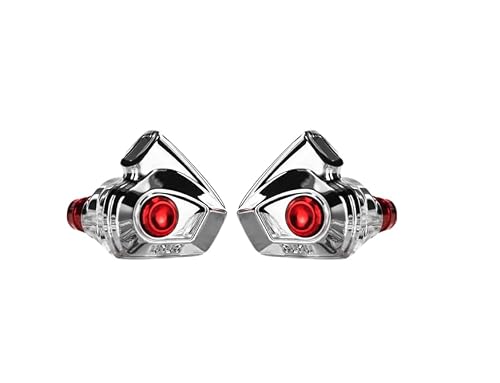
Newcomers sometimes meet the Aria name in unexpected places — editions, collaborations and seasonal variants have attached themselves to famous Moondrop models across the years, and the RED Aria 2 reviewed in the companion article is the current example. The navigation rule is the one this article has taught throughout: the famous word is the family, the full model name is the product, and the listing’s own details are the evidence. Buyers who internalise that rule can shop the whole range — Aria, Starfield, Chu and beyond — without fear of the fog, because the fog was never in the products. It was only ever in the listings, and listings can be read carefully.
A final thought for the reader who has stayed with this long, two-product story to its end. The healthiest relationship with a classic is neither worship nor dismissal but use — the original on its second-hand journey, the successor on its first — and the Aria, in whichever tense you buy it, rewards exactly that relationship. Products that teach their owners to listen do not really retire. They graduate, from the ear to the memory to the standard by which everything after them is judged, and by that measure the Aria’s production run never actually ended.
One more distinction: Aria the product, Aria the recommendation
Part of the original’s afterlife is linguistic: in forums and group chats, ‘get an Aria’ long outlived the shelf stock it referred to, becoming shorthand for ‘get the balanced one, the safe one, the one that will not embarrass your library’. Successors inherit such shorthand awkwardly, because the advice was written about a specific object and now lands on a different one. This article’s position is that the shorthand survives translation — the Aria 2 is, today, the balanced one and the safe one in its line — provided the translation is made openly, as it has been here, rather than silently at a checkout. Readers repeating the famous advice to friends should repeat the version note with it. That small honesty keeps a good recommendation good.
And if, after all this history, you simply buy the Aria 2 and get on with your listening — that is not a failure of reverence. It is the exact outcome the original’s makers would have designed for: a listener, a library and an honest earphone between them, with the name on the shell mattering less than the music coming through it. The story got you here. The listening keeps you here. That division of labour is the Aria’s whole career in one sentence.
What to do while you wait for a fairly priced original
Second-hand hunts reward the patient and punish the hurried, so here is the waiting done properly. Set alerts for the exact model name and its common misspellings, because careless listings are where the fair prices hide. Keep the Aria 2’s current tier in mind as your ceiling of sanity — an original asking more than the successor is asking you to fund its nostalgia, which you may do once, knowingly, and not by accident. Use the waiting weeks to assemble the kit the original will want on arrival: fresh tips in your size, a spare cable, a case with room for both. And if the hunt stretches past a season, reconsider the successor without treating it as surrender. Many collectors own the Aria 2 as their daily earphone and the original as their Sunday one, which is not indecision — it is the two tenses of this article, living in one drawer.
Aria ownership as an introduction to the wider hobby
For many listeners, an Aria — in either tense — is the first audio product they own that was designed to be understood: measured, discussed, compared against a published target, serviced with a cable swap at a kitchen table. That understandability is a gateway. Owners go on to learn their preferences with unusual precision, because the reference gave them a fixed point to measure departures from: warmer from here, brighter from here, more intimate from here. Even listeners who eventually settle on a very different flagship usually keep the Aria’s lesson as their coordinate system. A product that teaches its owner how to judge the next product has done something rarer than selling well; it has educated its own market, and markets remember their teachers.
That coordinate system is, in the end, the most defensible reason to buy into this name in either of its tenses today. The earphone itself will be enjoyed daily; the judgement it teaches will be used for decades, across every audio purchase that follows. Few products at any price can promise their buyers an education as a side effect. The Aria, characteristically, never promised it at all — it simply delivered it, one balanced album at a time.
Keep the lesson, whichever tense you buy, and the name will have earned its place in your listening life twice over.
Frequently asked questions
Is the Moondrop Aria discontinued?
The practical answer is that the original Aria has faded from current retail availability: this review’s catalogue checks returned no verified listing for it, while its successor, the Aria 2, is the model Moondrop’s line presents today. Originals circulate second-hand and through residual stock, with all the identification care that implies. Readers should treat any listing using the Aria name as a question — original, successor or confusion — and answer it from the model details before paying, using the checks in the buying guide above.
Is the Aria 2 the same as the original Aria?
No, and the distinction is this article’s backbone. The Aria 2 is the successor model: a distinct, current product that inherits the original’s brief — balanced single-driver tuning, quality shell, replaceable 0.78 mm 2-pin cable — with newer execution. It is not a reissue, a relabelling or old stock, and it should not be bought as the original by anyone collecting the original. Judged as a successor it is the natural recommendation for most listeners; judged as the original it would be a misunderstanding, which is why this review names it precisely every time it appears.
How does the original Aria sound, for second-hand hunters?
Balanced, in the specific sense its era celebrated: bass with proportion and texture rather than emphasis, a clear and forward midrange that flatters voices, and treble that extends without turning brittle. It is a tuning that suits long listening and wide libraries — acoustic, vocal and produced music all sit comfortably — and that can initially seem restrained to ears raised on bass-forward budget earphones. Give a fairly bought original a week with the right tips before judging it; the Aria’s virtues are the kind that accumulate, which is precisely how it became a default recommendation in the first place.
Aria 2 or Starfield 2 — which should I choose?
Choose the Aria 2 for the classic brief: balance, restraint and the direct line of descent from the famous original, in a current and supported product. Choose the Starfield 2 for a sibling with more personality and its own driver story — a lithium-magnesium dynamic driver, per its listing — within the same family and cable ecosystem. Neither is a wrong answer; they are two temperaments in one house. Listeners who can audition both should trust the recording they know best and the fit that seals easiest, in that order.
Do these earphones work with a phone that has no headphone jack?
Yes, through the standard modern routes: a USB-C or Lightning adapter with a built-in DAC, a small portable DAC, or a dedicated player. The Aria family’s efficiency makes it undemanding to drive, so even a modest adapter serves it well; the upgrade path to a better portable DAC is one of the pleasures of the wired hobby and improves every earphone you own, not only these. What you should not do is judge any of these models through a noisy, poor-quality adapter and blame the earphones — the chain is only as honest as its weakest link.
Why does this article make such a point of the original’s unavailability?
Because readers are searching for the original by name, and the kindest thing a review can do is tell them the market’s actual shape: the original is a second-hand and residual-stock hunt, the Aria 2 is the living product, and listings blur the two often enough that the confusion costs real money. A page that quietly linked the successor under the original’s name would be easier to write and worse to read. This one chose the reader’s side of that trade, and the buying guidance above exists so that whichever Aria you pursue, you pursue it knowingly.