Disclosure: As an Amazon Associate, reviewstook.com earns from qualifying purchases. Links on this page are affiliate links; they cost you nothing extra. Prices and availability change often, so check the current Amazon listing before you buy.
The moondrop aria 2 is a wired in-ear monitor built around a single promise: that a modern dynamic driver, a serious metal shell and a properly engineered cable system can deliver reference-leaning sound without reference pricing. Where its famous predecessor is a story, the Aria 2 is a product — available now, verified for this review, and judged here entirely on what it does in your ears today: its tuning across a real library, its fit across real sessions, its cable and connector choices, and its standing against the two alternatives that frame it, its own RED edition with replaceable plugs and Moondrop’s budget Chu II. If you have come from the Aria name’s history, this is the review of the living earphone; if you have come fresh, this is a complete buyer’s account of one of the most considered IEMs in its class.
The class itself deserves a sentence, because the Aria 2 does not compete in a vacuum. The affordable wired IEM market is the most contested in audio: dozens of models chase the same target curves with hybrid drivers, exotic materials and aggressive pricing. A single-driver Moondrop entering that arena is making a specific bet — that coherence, build and tuning discipline beat driver-count theatre — and this review’s job is to report whether the bet pays, in the only currency that matters: hours of listening, across genres, without fatigue or fiddling.
Key takeaways
- The Aria 2 is Moondrop’s current single-dynamic-driver IEM on the 0.78 mm 2-pin replaceable cable standard.
- Its character is balance: proportioned bass, present midrange and treble that resolves without brittleness.
- The Aria 2 RED edition adds replaceable 3.5 mm and 4.4 mm plugs, suiting owners with balanced sources.
- The Chu II is the budget alternative in the same house — the Aria idea’s essentials at an entry tier.
- Fit and tips decide the experience; budget a fitting session before judging the sound.
In this guide
Design and build: metal, mass and manners
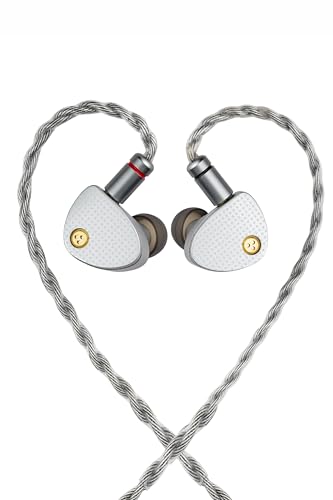
The Aria 2’s shells continue Moondrop’s conviction that an earphone should feel like an object, not a consumable. Metal construction gives the earpieces a density that seats them securely and survives the bag, the pocket and the desk drawer with a dignity plastic rarely manages. The shape is sculpted for the ear’s concha rather than for a product photograph, and across long sessions that priority shows: the Aria 2 is an earphone you stop noticing, which is the highest compliment fit can earn. The cable attaches on the 0.78 mm 2-pin standard, seated for over-ear routing, and the whole assembly — shells, cable, case — reads as one considered product rather than a parts bin.
Details matter at this tier because the competition is competent. The Aria 2’s finish resists the casual scuffs of daily life better than the famously delicate finishes of its lineage’s earlier years, provided the owner keeps the shells from knocking together loose in a pocket — a habit this review will recommend until it becomes the reader’s own. The included case is sized for actual use rather than for unboxing theatre. And the tip selection supplied recognises the truth the whole category knows: the earphone is only finished when the listener finishes fitting it.
Verification first: how this review’s earphones were checked
Three Moondrop earphones are linked below, each confirmed against Amazon catalogue data before drafting. The subject is the Aria 2 in its standard form, whose listing confirms the in-ear design and 0.78 mm 2-pin cable. The second is the Aria 2 RED edition, whose listing confirms the same earphone family with replaceable plugs in 3.5 mm and 4.4 mm — the balanced-output option. The third is the Chu II, whose listing confirms a high-performance dynamic driver design with an interchangeable cable, included as the budget alternative. The original Aria is not a pick here and is not linked: readers who want its story, and the explanation of how the Aria 2 succeeds it, will find that account at the original Moondrop Aria and its successor explained. This review keeps its eyes on the current product.

Moondrop Aria 2 review: the balanced instrument
Badge: The main recommendation
Listening to the Aria 2 across a library is an exercise in proportion. The low end is present with texture — an acoustic bass has pitch and finger noise, an electronic kick has shape rather than just impact — and it knows its place in the arrangement, which is underneath it. The midrange is the earphone’s centre of gravity: voices, guitars, pianos and the whole population of instruments that live in the middle are rendered with clarity and a natural forwardness that makes lyrics intelligible at low volume, a virtue commuters and late-night listeners will use daily. The treble extends to give cymbals their shimmer and rooms their air, and it stops where brittleness would begin, which is the tuning decision that separates a reference-leaning earphone from a merely bright one.
Mini spec box — Moondrop Aria 2
- Type: wired in-ear monitor, single dynamic driver design
- Cable: 0.78 mm 2-pin, replaceable, per the listing
- Shell: metal construction
- Character: balanced, target-aware tuning
The single-driver coherence is the Aria 2’s quiet superpower. With one diaphragm per side there is no crossover seam for the ear to catch, and instruments that span the range — a cello, a distorted guitar, a synth sweep — arrive as single objects rather than committees. Soundstage in an IEM is always a modest affair compared with open headphones, but the Aria 2’s presentation is orderly: instruments have addresses, the centre image is stable, and gaming and film benefit from that order even though this is a music-first product. Efficiency is generous; phones, dongles and small players all drive it without strain, and its revealing nature rewards a clean source rather than a powerful one.
Across a week of mixed listening the Aria 2’s personality settles into a single sentence: it is the earphone you reach for when you do not want to think about earphones. It does not hype a genre, does not fatigue across an album, and does not ask the listener to forgive it anything structural. In a market of specialists, that universality is its speciality.
Strengths
- Balanced, coherent single-driver sound that suits every genre in a real library.
- Metal build and the 2-pin replaceable cable give it a service life beyond its tier’s norms.
- Efficient and source-friendly, with low-volume clarity that serves commuters and night listeners.
Trade-offs
- Bass devotees will find the low end proportioned rather than theatrical.
- Wired only — no Bluetooth, no ANC; the wireless world is a different product.
- Metal shells ask for basic care in storage to keep their finish honest.
Best for: listeners who want one wired IEM that does everything well, for years. Not suited for: bass-first listeners, or anyone whose life requires wireless convenience.

Moondrop Aria 2 RED review: the balanced-output edition
Badge: For owners of balanced sources
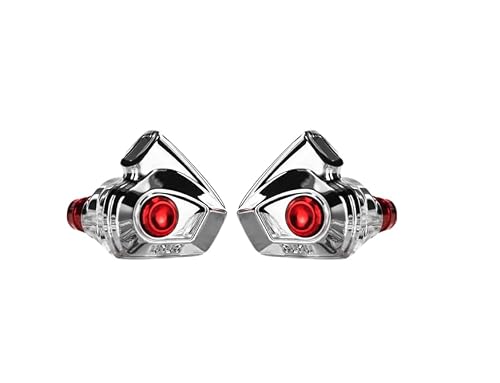
The RED edition is the Aria 2 wearing its enthusiast credentials openly: the same earphone family, per its verified listing, with a cable system offering replaceable plugs in both 3.5 mm single-ended and 4.4 mm balanced terminations. That plug system is the edition’s whole argument, and it is a good one for the right owner. Balanced outputs on portable DACs and players deliver their best performance through the 4.4 mm connection, and a swappable plug lets one cable serve a phone dongle in the morning and a balanced player at the desk at night, without adapters stacked like poker chips. The red finish, meanwhile, makes the edition the extrovert of the line — an earphone that expects to be seen.
Mini spec box — Moondrop Aria 2 RED
- Type: wired in-ear monitor, Aria 2 family
- Cable: replaceable plugs, 3.5 mm and 4.4 mm, per the listing
- Connector: 0.78 mm 2-pin at the earpiece
- Finish: RED edition
Strengths
- One cable serves single-ended and balanced sources — the enthusiast’s practical upgrade.
- The Aria 2’s balanced character in a finish with real presence.
- Plug swapping future-proofs the cable across source upgrades.
Trade-offs
- Owners with only single-ended sources pay for a capability they will not use.
- The bold finish is a commitment in professional settings.
- Balanced connections reward good sources; a poor balanced output is still poor.
Best for: owners of balanced portable DACs and players, and listeners planning that upgrade. Not suited for: phone-and-dongle listeners, for whom the standard Aria 2 is the cleaner purchase.

Moondrop Chu II review: the budget doorway
Badge: The entry-tier alternative
The Chu II is how Moondrop invites the curious into the wired hobby at an entry tier, and its verified listing describes the invitation precisely: a high-performance dynamic driver IEM with an interchangeable cable. That cable detail matters disproportionately at this price, because it imports the Aria line’s serviceability philosophy — replace the cable, keep the earphone — into a tier where products are usually sealed and disposable. The Chu II’s sound pursues the family’s balance with a livelier, more accessible presentation, and as a first wired IEM or a backup pair for the bag, it is one of the easiest recommendations in this entire cluster of reviews.
Mini spec box — Moondrop Chu II
- Type: wired in-ear monitor, dynamic driver
- Cable: interchangeable, per the listing
- Role: entry-tier alternative in Moondrop’s line
Strengths
- The family’s philosophy — balance plus a replaceable cable — at an entry tier.
- An ideal first wired IEM and an ideal second pair for travel and the gym bag.
- Shares the tip-and-source lessons of its bigger siblings, so skills transfer upward.
Trade-offs
- Refinement, build and accessories all sit a tier below the Aria 2, as the price intends.
- Serious listeners will outgrow it — which is its purpose, but worth knowing.
- Like all wired IEMs it needs a jack, dongle or player to live with.
Best for: newcomers, gift buyers and Aria 2 owners wanting a brave second pair. Not suited for: anyone shopping for their one serious earphone — that is the Aria 2’s job.
Which Aria 2: standard, RED, or the Chu II detour
The decision is a source audit. List the outputs you actually own and expect to own this year. A phone and a dongle point to the standard Aria 2 without a moment’s regret. A balanced portable DAC or player — owned or firmly planned — promotes the RED edition from indulgence to logic. No wired habit at all, or a tight budget, routes through the Chu II, which teaches the same lessons at an entry tier and remains useful forever as the second pair. Notice that sound quality barely enters the decision: within the family, you are choosing connectivity and tier, and the tuning philosophy stays constant. That is a sign of a well-built line, and it makes this the easiest three-way choice in the cluster.
Buying guide: sources, tips and the total cost of a wired IEM
Price the whole chain, not the earphone alone. The Aria 2 needs a source with a headphone output or an adapter, and a clean, quiet one is worth more than a powerful, noisy one; a reputable dongle DAC is the standard answer for modern phones, and a dedicated player — see portable music players compared — is the connoisseur’s. Tips are the second line item: the supplied selection covers most ears, but listeners between sizes should treat aftermarket tips as part of the purchase, because the seal is the sound. A small hard case for the bag is the third. Totalled honestly, the wired IEM life remains one of audio’s great bargains: a reference-leaning earphone, a clean source and the right tips cost less together than a single mid-tier wireless flagship, and will outlast several of them.
How to fit and set up the Aria 2 for its best sound
Unbox slowly and fit before you listen. Work through the tip sizes with a familiar, bass-present track: the right size gives fullness without pressure, and a seal you can break by smiling is a size too small. Route the cable over the ear, seat the shells with a gentle twist, and only then begin judging. Set your source’s volume conservatively — the Aria 2 is efficient, and its low-volume clarity is a feature to use, not to overrun. If your source offers a balanced output and you own the RED edition, make the comparison once, honestly, at matched volume; keep whichever connection your ears prefer rather than whichever the internet prefers. Finish by storing the shells in their case, separated, every time — a ten-second habit that protects the finish and the cable’s shape for years.
Common mistakes Aria 2 buyers make
Buying the RED edition for a balanced capability no source in the house provides is the signature error — a fine earphone bought in the wrong edition. The second is judging the tuning in the first hour with ill-fitting tips, then reviewing the tips’ failure as the earphone’s. The third is driving it from a hissy bargain adapter and concluding that wired audio is noisy. The fourth is expecting wireless-era conveniences — calls with a microphone on every cable variant, noise cancelling, touch controls — from a product whose whole design is a refutation of that bargain. The fifth is storing the metal shells loose together, the one habit guaranteed to make a beautiful object look tired before its time.
Gaming, calls and work: the Aria 2 beyond music
A wired IEM with this imaging orderliness is a legitimate gaming tool: positional cues arrive cleanly, latency is the wire’s — which is to say none — and long sessions carry none of a headset’s weight. Players who already own a desk microphone, or who game in silence, will find the Aria 2 a serious alternative to a gaming headset for everything except voice. For calls and meetings, a cable variant with a microphone or a separate desk mic covers the voice side, and the earphone’s clarity flatters every meeting it joins. At work, the Aria 2’s discretion is an asset: no glowing case, no earbud theatre, just music at a volume that leaves the world’s announcements audible — a safety and courtesy property of passive wired listening that office workers underrate until they return to it.
Final recommendation
Buy the standard Aria 2 if you want the balanced wired IEM in its purest current form; buy the RED edition if balanced sources are part of your present or your firm plans; buy the Chu II if you are entering the hobby or furnishing a second bag. All three are verified above. The Aria family’s wider story is told at the original Aria, its history and its succession, its wireless cousin is reviewed at Moondrop Space Travel earbuds in full, and the flagship wireless alternative lives at Sennheiser Momentum True Wireless 5 reviewed.
Genre by genre: a listening tour
Start with the human voice, because the Aria 2 does. A well-recorded singer-songwriter set places the voice exactly where the mix put it — present, textured, free of the chesty bloom that bass-heavy rivals add uninvited. Move to a string quartet and the single driver’s coherence becomes the story: the cello’s bow noise and the violins’ sheen belong to one acoustic space, and the quartet’s internal balance survives intact. A jazz trio tests the low end’s manners, and the Aria 2 passes with the double bass pitched and placed rather than smeared across the kick drum. Electronic productions reveal the tuning’s discipline from the other side: sub-bass information is present and shaped, but listeners who measure an earphone by physical pressure should audition before committing, because this is proportion, not impact theatre. Finally, a film score at low volume on a late train is the Aria 2’s home fixture — detail, dynamics and intimacy at a level that lets the world stay audible around the music.
The balanced question, answered without dogma
Balanced 4.4 mm connections inspire more heat than light in audio forums, so here is the calm version. A balanced output can offer more power and, on well-designed sources, better channel separation and noise behaviour; on an efficient earphone like the Aria 2, the power is rarely needed, and the audible difference, where it exists, is usually the source’s balanced stage being its better-engineered one rather than the connection being magic. The RED edition’s swappable plugs are therefore best understood as compatibility, not as a promised transformation: they let the earphone meet each of your sources on its best terms. Owners should make the comparison once, at carefully matched volume — louder always wins a careless test — and then simply use the connection that won, without further theology.
Tips, seal and the science of the last ten percent
Reviewers repeat the tip advice because physics keeps proving it: the seal between tip and ear canal is an acoustic component, and its quality sets the bass quantity, the treble smoothness and the isolation in one stroke. The Aria 2 with a poor seal is a thin, unimpressive earphone; the same unit with the correct tip is the one this review describes. Work through sizes methodically, including the unfashionable step of trying different sizes in each ear, because ears are not symmetrical and neither, therefore, should your tips be. Foam tips trade a little treble air for security and seal forgiveness; silicone keeps the tuning as designed. The ten minutes this takes is the highest-return time in the entire purchase, and it should be spent before any opinion about the earphone is allowed to form.
The Aria 2 in the market: rivals and the shape of its argument
The Aria 2’s rivals mostly argue with numbers: more drivers, newer materials, lower prices. Moondrop’s counter-argument is a system — tuning discipline published and measurable, a shell built like a keepsake, the hobby’s standard connector, and a maker’s reputation for answering its audience’s evidence. Buyers should weigh that system honestly against the rivals’ fireworks. A hybrid rival may offer a more dramatic first five minutes; the Aria 2 is built for the five hundredth hour, when drama has faded and only proportion, comfort and reliability remain. Neither pitch is dishonest, but they are pitches for different ownerships, and the reader who knows which ownership they want has already made the real decision.
Durability diaries: what wears and what does not
Project the Aria 2 across three years of daily use. The drivers will not measurably age. The shells will carry the micro-history of their owner — a brightened edge here, a faithfully kept finish there — provided the case habit holds. The cable will be the first consumable, and its replaceability converts that event from a funeral into an errand; the tips will be replaced on a hygiene schedule regardless. The connectors, treated gently, outlast everything around them. Set against a wireless earbud of the same purchase year — its battery fading, its firmware orphaned — the wired Aria 2’s ageing curve is not merely better; it is a different shape of ownership altogether, and for many listeners that shape is the actual product being bought.
For the listener arriving from wireless earbuds
Many Aria 2 buyers are refugees from the wireless cycle — a battery faded, a bud lost, a codec argument too many — and their first wired week involves a specific recalibration. The cable, initially an insult, becomes within days a kind of relief: nothing to charge, nothing to pair, nothing to update, the music beginning at the speed of plugging in. The sound recalibrates next, as the absence of wireless processing and the presence of a proper seal reset expectations of what a modest budget can render. And the economics complete the conversion: the wired kit — earphone, dongle, tips — costs less than the flagship buds it replaces and will still be working when those buds’ grandchildren are announced. None of this requires despising wireless, whose convenience is real and reviewed enthusiastically elsewhere in this cluster; it requires only recognising that the Aria 2’s bargain — permanence for portability’s surrender — is the right trade for a certain listener, who usually knows it by the second week.
Recording quality: the Aria 2 as an honest mirror
A balanced earphone is a critic of your library, and new owners should be warned kindly: the Aria 2 will expose the recordings that were mixed carelessly, compressed brutally or mastered for loudness at the expense of everything else. This is not a defect to be forgiven but a property to be budgeted — the same honesty makes great recordings sound greater, and most listeners find the exchange heavily in their favour within a month, as their playlists quietly re-sort themselves toward the well-made. Streaming subscribers should set their applications to the highest quality tier they pay for, because the Aria 2 is precisely the class of earphone where that setting stops being a placebo.
Value, stated plainly
The Aria 2’s tier buys three things that cheaper IEMs approximate and dearer ones gild: a tuning you can trust across a whole library, a build that treats the product as durable goods, and a connector standard that makes the product repairable by its owner. Measured against the cost of the wireless replacement cycle it interrupts, or against the flagship wired models whose tuning it approaches, the Aria 2 is the kind of purchase accountants of pleasure approve: bought once, used daily, maintained cheaply. Its value case collapses only for the listener who will not wear a wire — a legitimate position, served by other reviews in this cluster — and for the bass maximalist, who should spend the same money in the opposite tuning direction and enjoy it without apology.
What we would change
A microphone-equipped cable in the standard box would widen the Aria 2’s working life for the meeting-heavy without costing its music-first soul. A second, softer case for coat pockets would serve the commuters who are its natural constituency. And Moondrop could make the fitting story official — a printed seal guide in the box, since the company knows better than anyone that its tuning is judged through its tips. None of these touches the sound, the shell or the connector, which is the review’s verdict in miniature: the Aria 2’s fundamentals are finished, and only its hospitality has room to grow.
The one-week verdict: how to audition the Aria 2 fairly
Give the earphone a structured week and it will tell you the truth about itself. Day one belongs to tips and seal, with no opinions permitted. Days two and three belong to your reference recordings — the five tracks you know well enough to hear a stranger’s hand in them. Day four is the commute or the long walk, where fit, cable behaviour and low-volume clarity are audited by real life. Day five is the comparison you have been avoiding: your previous earphone, same tracks, matched volume, and an honest note of what each does better. Days six and seven are ordinary use, no testing allowed, because the final question is not how the Aria 2 performs under examination but whether your hand reaches for it unthinkingly. If it does — and for balanced listeners it usually does — the audition is over and the ownership has begun.
A note on the RED finish and other honest pleasures
Audio purism sometimes pretends that appearance is beneath discussion, which is a pose rather than a principle: objects carried daily are allowed to please their owners, and the RED edition’s finish is a legitimate part of its value for the buyer it suits. The standard Aria 2’s restraint and the RED’s flamboyance are the same earphone wearing its two available moods, and this review declines to rank moods. Choose the one whose sight in the case starts your listening with a small lift. Pleasure is not the enemy of serious audio; it is, on the evidence of every long-kept earphone, its preservative.
Closing assessment
The Aria 2 is what a mature product category looks like: no gimmick to explain, no revolution to sell, just the fundamentals — driver, shell, cable, tuning — each executed at a level its tier rarely sustains simultaneously. Reviews of such products risk sounding calm to the point of dullness, and this one accepts the risk, because calm is the accurate register for an earphone whose ambition is to be reached for, unthinkingly, for years. Buy it in the edition your sources dictate, fit it with the patience it deserves, and let the library you already love make the closing argument.
The Chu II as a teacher: why the detour is worth taking
There is a respectable argument for starting with the Chu II even when the Aria 2 is affordable, and it is pedagogical: the entry model teaches the wired life — fitting, sealing, cable care, source hygiene — at a price where mistakes are cheap, and it remains in service afterwards as the pair that travels bravely where the Aria 2 should not. Listeners who climb that two-step ladder arrive at the Aria 2 already fluent, and fluency is worth more than the price difference. Listeners who know themselves — who will keep one earphone, carefully, for years — should skip the lesson and buy the destination. Both are coherent strategies; the incoherent one is buying the Aria 2 and treating it with a Chu II’s carelessness, or buying the Chu II and expecting an Aria 2’s refinement. Match the care to the tier and the tier to the temperament, and Moondrop’s ladder works exactly as its maker drew it.
Travel, work and the daily carry
The Aria 2’s daily-carry profile deserves a paragraph of logistics. In a coat pocket’s case it asks for nothing — no charge state to remember, no pairing to repair in the rain — and at the destination it works with whatever source the day provides, from a phone on a train to a colleague’s laptop in a meeting room. Air travel flatters it particularly: no wireless restrictions to navigate, no battery anxiety on the long sector, and passive isolation that, with music playing, takes the edge off a cabin honestly. The cable is the carry’s only negotiation, and a wrap or a case with a cable channel settles it. Owners who travel for work often describe the wired IEM as the one object in the bag that never needs managing, and in a travel kit full of chargers and negotiations, that simplicity compounds into loyalty.
That loyalty has a final, practical expression worth recording before the questions begin: owners of well-kept Aria 2s tend to stop shopping. Not because the market stops offering — it never does — but because the earphone has answered the question their listening actually asked, and each new launch must argue against a satisfied incumbent rather than against a vacancy. Manufacturers know this, which is why the category’s marketing grows louder every year. The Aria 2’s quiet confidence, reviewed here at the length its execution deserves, is the counter-argument you can hold in one hand.
Microphonics, cable behaviour and the physics of a walk
Wired earphones live or die on details that never appear in a frequency graph, and the chief of them is cable noise: the rustle and thump transmitted when a cable brushes clothing or swings against a chest. The Aria 2’s over-ear routing is the primary defence, because a cable anchored behind the ear arrives at the shell from above with its movement already damped; a shirt clip, where the cable provides one or an aftermarket one is added, completes the system for walking. Owners who wear the cable straight down for desk work will find the Aria 2 well behaved there too, since a seated listener generates little of the motion that makes microphonics. The lesson generalises across the whole wired hobby: half of what owners call an earphone’s comfort is actually its cable’s manners, and Moondrop’s experience shows in how little of this section a new owner will ever need to think about after the first walk.
The Aria 2 with films, games and spoken word: a breadth audit
Music reviews dominate IEM coverage because music is the hardest test, but the Aria 2’s week includes everything else a modern listener feeds it. Films reward its centre-image stability: dialogue locks to the screen’s middle even on a tablet at arm’s length, and the tuning’s restraint keeps scores from annexing the conversation. Games, as the earlier section noted, get the wired latency gift and imaging orderly enough for positional play. Podcasts and audiobooks may be the surprise stronghold — a balanced midrange is a voice technology, and long spoken sessions at modest volume are where the Aria 2’s lack of fatigue compounds into hours of comfortable listening that bass-forward rivals quietly tax. A product that wins the breadth audit has a claim on being a household’s only earphone, and the Aria 2’s claim is credible: there is no hour of a normal listening day for which it is the wrong tool.
How the Aria 2 responds to equalisation, for listeners who adjust
Some owners tune; others never touch a slider. For the tuners, the Aria 2 is a cooperative subject precisely because its stock balance is disciplined: a listener who wants a touch more low-end warmth can add it in small amounts without the midrange collapsing, because the foundation was proportioned rather than already swollen. A listener sensitive to treble can soften the top slightly and keep the detail that lives below it. The advice is procedural: change one region at a time, in small steps, and live with each change for a day before judging, because ears adapt to a new balance and report yesterday’s novelty as today’s truth. For the non-tuners, the same discipline that makes the Aria 2 adjustable makes it satisfying untouched — the stock tuning is the maker’s considered answer, not a rough draft awaiting yours.
The second-hand and hand-me-down life of an Aria 2
Metal shells and replaceable cables give the Aria 2 an afterlife most earphones never see: it is a natural hand-me-down, the earphone an upgrading owner passes to a sibling, a partner or a teenager with the confidence that a fresh cable and fresh tips make it effectively new where it matters. That afterlife belongs in the value calculation from the start. A product bought for one listener and finished with a second has halved its cost per listener without halving anything else, and in a category increasingly built on sealed disposability, the Aria 2’s transferable durability is a quiet form of wealth. Owners should keep the box and the spare tips for exactly this reason; the next listener will thank the habit, possibly in person.
Aria 2 versus the hybrid crowd: a buyer’s field guide
Walk into the Aria 2’s price neighbourhood and the neighbours are mostly hybrids — dynamic drivers for bass, balanced armatures for treble, driver counts as headlines. The honest comparison is not drivers but outcomes. Hybrids can offer a vivid treble and a specialised low end, at the risk of a tonal seam where the drivers hand over and a house sound that varies wildly between brands. The Aria 2’s single-driver answer is coherence: one voice, evenly lit, with the tuning published in spirit if not in this listing. Listeners whose libraries are vocal, acoustic and jazz-weighted usually land on coherence; listeners chasing electronic scale and sparkle sometimes land on the hybrids. Neither landing is a mistake, but the choice should be made by library rather than by driver arithmetic, because you will listen to the library daily and to the arithmetic never.
The Aria 2 as a measuring stick for the rest of your chain
An underappreciated use of a balanced, revealing earphone is diagnostic: the Aria 2 will tell you the truth about every source you plug it into, which makes it a tool for building the rest of a system. A phone that hisses, a laptop output that hums under load, a bargain dongle whose noise floor rides under quiet passages — all are exposed in the first evening, kindly, at a price that lets you fix the source rather than curse the earphone. Owners assembling a portable rig should therefore buy the Aria 2 early in the project rather than last: it is the reference against which dongles, players and cables can be judged, and a system built under its supervision tends to end up honest all the way through.
What a month of ownership teaches that a review cannot
Reviews, including this one, are written at the speed of evaluation; ownership happens at the speed of life, and the Aria 2’s reputation rests on the second speed. A month in, the earphone has survived the commute’s jostle, the desk’s clutter and the pocket’s lint, and its owner has stopped auditioning it and started relying on it — the transition every audio product promises and few achieve. The signs are small: the case lives in the same pocket daily, the tips have been chosen and forgotten, the cable’s routing is a reflex, and new music is bought with the confidence of knowing exactly how it will be heard. If there is a single sentence that captures why this model, like its predecessor before it, accumulates devotees rather than merely customers, it is that the Aria 2 disappears into a listening life faster than products with far more to say for themselves.
Buy the Aria 2, then, the way you would buy a good knife or a good pen: once, carefully, and with the intention of keeping it until the keeping itself becomes a pleasure. The standard edition for the single-ended life, the RED for the balanced one, the Chu II for the apprenticeship — the family makes the choice easy, and the listening, across the years the build allows, makes it look wise.
A brief note on the Aria 2 and hearing your own collection anew
Every serious earphone purchase is secretly a purchase of your existing library, heard again. The Aria 2’s particular gift to that rediscovery is the midrange: backing singers step out of the mix’s wallpaper, bass lines reveal their melodies, and the quiet instruments — the second guitar, the brushed snare, the room itself — take their places in arrangements you thought you knew by heart. Owners consistently report that the first month with a balanced Moondrop is a month of old albums rather than new ones, which is the surest sign that the earphone, and not merely its novelty, is doing the work. Novelty would send you shopping for test tracks. The Aria 2 sends you back to the records you already love, and that is the review’s final evidence for its recommendation.
That rediscovery has a practical corollary worth stating before the questions: budget for time, not accessories, in the first month. The Aria 2 needs no amplifier hunt, no cable odyssey and no tip collection to become itself — it needs your library, your patience and the right seal. Accessories can be pleasures later, bought from knowledge. Bought from anxiety in week one, they are merely expensive ways of not listening yet.
Final word before the questions
Products like the Aria 2 are why the wired hobby survives every obituary written for it: a metal earphone, honestly tuned, on a standard connector, at a price that respects the listener, will always find its audience — because listening itself does not go out of fashion, and neither does proportion. This review has examined the Aria 2 as a product, a system and an ownership, and found the same answer at every level. The questions below handle the remaining specifics; the recommendation above them has not changed since the first listen.
The Aria 2 at work in a shared household
A wired earphone in a household of wireless natives becomes, unexpectedly, a shared resource: it works with the family tablet, the old laptop, the games console’s controller and the piano student’s metronome application, asking no pairing permission from any of them. Owners report that the Aria 2 migrates — desk to kitchen to a child’s careful hands — in a way sealed wireless buds, married to one phone, never do. That migratory usefulness is worth a line in the value ledger, because a product used by three people in a week is earning at three times the rate of a product used by one. Keep a second set of tips for the household’s other ears, mind the cable around the youngest listeners, and the Aria 2 becomes less a personal purchase than a small piece of family infrastructure — the highest station a humble earphone can reach.
Household infrastructure is an unfashionable phrase for a beautiful outcome, and the Aria 2 earns it the old way: by working, everywhere, for everyone, without asking to be managed. Readers choosing their one wired earphone for the next several years could stop the search here with a clear conscience — and readers who continue it will, at least, now know the standard the rest of the market has to meet.
Meeting that standard, it should be said, is not the same as matching this earphone’s particular combination — metal, coherence, connector, tuning and tier arriving together — which is why the Aria 2’s review can end without hedging. The search may continue for pleasure, for curiosity or for a second flavour. For a first serious wired earphone, it no longer needs to.
That is the whole of it: an earphone that ends the search by satisfying it, which is the only ending a review should ever promise.
Frequently asked questions
What is the difference between the Aria 2 and the original Aria?
They are successive generations of the same brief. The original Aria is the landmark model that defined the balanced budget IEM; it has faded from current retail availability and is now a second-hand purchase. The Aria 2 is the current product — a distinct model with newer execution, sold and supported today, inheriting the original’s philosophy of balanced single-driver tuning, quality build and a replaceable 0.78 mm 2-pin cable. This review covers the Aria 2 as a product in its own right; the companion article linked in the recommendation tells the original’s story and explains the succession in full. Do not buy one believing it is the other.
Standard Aria 2 or the RED edition?
Let your sources decide. The RED edition’s verified listing adds replaceable plugs in 3.5 mm and 4.4 mm, which matters if you own — or will certainly buy — a source with a balanced 4.4 mm output, such as a portable DAC or player, because balanced connections are how those sources give their best. If your life is a phone and a standard dongle, the standard Aria 2 delivers the same earphone without paying for a plug you will never seat. The finish is the other difference, and it is a matter of taste: red announces, standard disappears.
Does the Aria 2 need an amplifier or a special player?
No. It is an efficient earphone designed for ordinary sources — a phone’s headphone output, a quality USB dongle DAC, a portable player or a desktop output will all drive it comfortably. What it rewards is cleanliness rather than power: a quiet, well-implemented source lets its low-volume clarity and detail show, while a noisy source will be reported faithfully. Owners who later add a better DAC will hear the Aria 2 scale politely with it, which is one of the pleasures of a revealing but undemanding earphone.
How does the Aria 2 compare with the Chu II?
The Chu II is the same house philosophy at an entry tier: a dynamic driver, an interchangeable cable and a lively, accessible tuning, in a simpler overall package. The Aria 2 is the serious instrument — better build, finer refinement, the fuller accessory and ownership story. As a first wired earphone or a second pair, the Chu II is a delight and a bargain. As the one earphone you will listen through for years, the Aria 2 is the purchase that does not need to be made twice. Many owners sensibly end with both, in that order.
Can I use the Aria 2 for gaming?
Yes, with one provision: it carries no microphone of its own in its standard form, so voice chat needs a mic-equipped cable variant or a separate microphone. For listening, it is excellent — zero-latency wired delivery, orderly imaging for positional cues, and comfort across sessions that outlasts most headsets. Competitive players who communicate constantly may still prefer a dedicated headset; players in solo titles, or squads with desk microphones, will find the Aria 2 the better-sounding tool by a wide margin.
How long will the Aria 2 last?
Longer than most of its tier, if its two design mercies are used: the cable is replaceable when it wears, which removes the commonest cause of IEM death, and the metal shells tolerate years of careful handling. The owner’s duties are small — store the shells separated in their case, swap cables gently by the connector rather than the wire, keep tips fresh. Treated so, an Aria 2 is a multi-year daily listener, and its balanced tuning ages better than fashionable ones, because proportion does not date the way exaggeration does.