Disclosure: As an Amazon Associate, reviewstook.com earns from qualifying purchases. Links on this page are affiliate links; they cost you nothing extra. Prices and availability change often, so check the current Amazon listing before you buy.
This moondrop space travel review comes with a version note that shapes everything in it, stated plainly at the start: the original Space Travel earbuds made Moondrop’s name in budget true wireless, but the listing verified for this review is the current Space Travel 2 — the model Moondrop sells now, with Bluetooth 6.0, active noise cancelling and a low-latency game mode — and the Space Travel 2 is therefore the product reviewed below, as itself, not as a stand-in for its predecessor. A second current model, the Space Travel 2 Ultra with LDAC and a larger driver, is reviewed alongside it as the upgrade alternative. Readers hunting the original will find its story honoured in the opening sections; readers shopping today will find the earbuds they can actually buy, judged on their own considerable merits.
The Space Travel idea was always a delightful anomaly: a hi-fi company, famous for wired in-ear monitors and published tuning targets, selling a true wireless earbud at a budget tier with anime-inflected design and sound that embarrassed products several times its price. The sequel’s task is harder than the original’s — the budget wireless market has absorbed the lesson and armed itself — and this review examines whether the Space Travel 2’s combination of tuning, cancelling and price discipline still gives it the peculiar magic that made its name, or whether the name is now coasting on a reputation the market has caught up with.
Key takeaways
- The linked, verified product in this review is the Moondrop Space Travel 2 — the current version — with Bluetooth 6.0, ANC and a low-latency game mode, per its listing.
- The Space Travel 2 Ultra is the step-up alternative, adding LDAC high-resolution support and a larger 13 mm driver, per its listing.
- The line’s signature is tuning: Moondrop’s target-curve discipline applied to budget true wireless, where rivals usually chase bass and features.
- The original Space Travel is covered as background; it is not the product linked or sold here.
- Fit, codec support on your phone and realistic ANC expectations decide satisfaction at this tier.
In this guide
The original Space Travel: why the name carries weight
The first Space Travel arrived when budget true wireless meant a compromise ceremony: you chose which virtue to surrender — sound, battery, calls or dignity — and paid accordingly. Moondrop refused the ceremony. Drawing on its wired IEM credibility, it tuned the little buds toward its house target, gave them a distinctive space-themed design language and priced them where impulse buys live. Reviewers measured them, listeners evangelised them, and the Space Travel became the budget recommendation of its moment — the earbud handed to friends with the words ‘just buy these and stop researching’. That reputation is the second generation’s inheritance and its burden: every Space Travel 2 is auditioned against a memory, and memories, unlike earbuds, never run out of battery or lose a codec argument.
The version note, in full
Because the distinction matters to your money, here it is without abbreviation. This review’s catalogue checks returned current listings for the Space Travel 2 and the Space Travel 2 Ultra; the original Space Travel’s listing was not returned. The Space Travel 2 is therefore presented throughout as the current version of the line — which is what it is — and every claim in its review section is anchored to its own verified listing: Bluetooth 6.0, ANC noise cancelling, a low-latency game mode and SBC/AAC codec support in the standard model, with the Ultra adding LDAC and a 13 mm driver. If you find an original Space Travel for sale elsewhere, buy it as the first-generation product it is, with a first-generation product’s expectations; do not let any listing blur the generations, and do not let this review’s praise of the sequel be quoted as a review of the original.
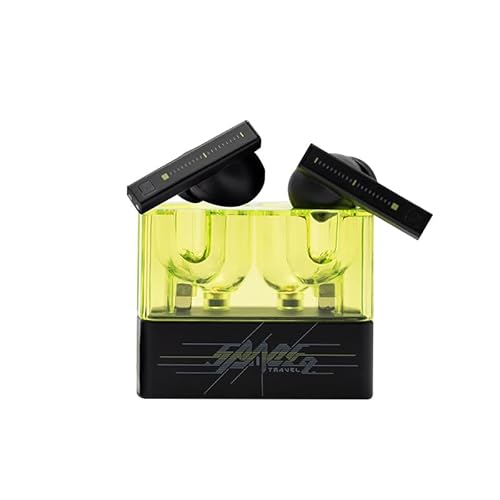
Moondrop Space Travel 2 review: the current version, judged as itself
Badge: The current pick
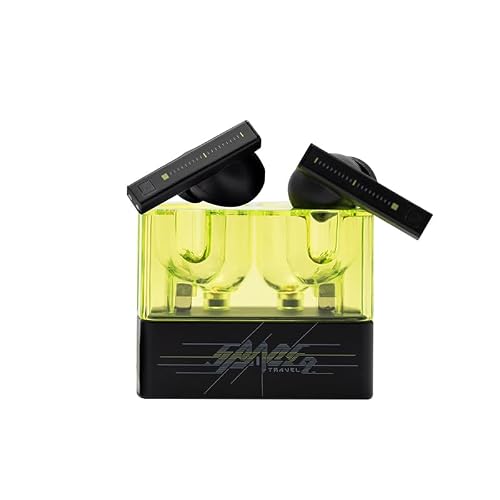
The Space Travel 2’s design keeps the line’s playful identity — this is still an earbud with a personality, in a category of anonymous white pebbles — while its specification moves the product into the modern budget mainstream and slightly beyond it. Bluetooth 6.0 is the current generation of the radio, with the connection stability and efficiency that implies. Active noise cancelling, a feature the original’s era reserved for dearer products, is now aboard, aimed at the commute’s constant noises. The low-latency game mode answers the budget gamer’s oldest complaint, the gap between a game’s action and its sound. And the tuning — the family’s reason for existing — remains the headline for anyone who listens before they read specifications: balanced, target-aware, with Moondrop’s refusal to drown the midrange in bass theatre intact.
Mini spec box — Moondrop Space Travel 2
- Type: true wireless earbuds with ANC, per the listing
- Bluetooth: 6.0, per the listing
- Codecs: SBC and AAC, per the listing
- Modes: low-latency game mode, per the listing
- Finish of verified listing: Black
Sound first, as this family demands. The Space Travel 2 presents music with the house discipline: voices sit where they should, the bass supports rather than swamps, and the treble carries detail without the brittle edge that makes budget buds tiring. It will not out-resolve Moondrop’s wired models — physics and price both forbid it — but within true wireless at its tier, the tuning’s adulthood is its distinction, and listeners arriving from bass-forward rivals often describe the first evening as hearing their library’s midrange for the first time. The ANC is a budget-tier implementation and should be judged as one: it takes the train’s roar and the office’s hum down usefully, it does not pretend to flagship silence, and paired with a good seal it makes low-volume listening — the healthy kind — possible in noisy places. Calls are serviceable in quiet and strained in wind, which at this tier is not a criticism but a calibration.
The game mode deserves its sentence: latency in budget buds is the difference between a playable shooter and a dubbed film, and a dedicated low-latency mode signals that Moondrop knows exactly who buys playful-looking earbuds. Battery and case behaviour follow the tier’s conventions competently; the honest advice is to count the case as part of the system and charge on a rhythm rather than on a warning, as with every true wireless product.
Strengths
- Moondrop’s balanced tuning at a budget tier — the line’s founding virtue, intact.
- Modern specification for the price: Bluetooth 6.0, ANC and a low-latency game mode.
- Design with genuine character in a sea of anonymous buds.
Trade-offs
- Codec support stops at SBC and AAC; high-resolution listeners should step up to the Ultra.
- ANC is useful rather than flagship-class, and call quality in wind is modest.
- It is the second generation — buyers specifically collecting the original should read the version note again.
Best for: budget listeners who care about tuning, commuters and casual gamers. Not suited for: high-resolution codec hunters (see the Ultra) or anyone needing flagship cancelling.

Moondrop Space Travel 2 Ultra review: the step-up
Badge: The upgrade alternative
The Ultra exists for the listener who likes the Space Travel idea and wants its ceiling raised. Its verified listing names the two upgrades that matter: LDAC support, which opens high-resolution Bluetooth audio for phones and players that offer it, and a larger 13 mm driver, the physical foundation for a fuller low end and an easier sense of scale. Around those, the family formula persists — Bluetooth 6.0, the wireless convenience, the design language — making the Ultra less a different product than the same argument with its limits lifted. For Android listeners with LDAC-capable sources and libraries that reward it, the step-up is rational; for iPhone listeners, whose devices speak AAC, the standard model’s codec set already covers the phone’s best, and the Ultra’s case rests on its driver and tuning rather than its codec.
Mini spec box — Moondrop Space Travel 2 Ultra
- Type: true wireless earbuds, per the listing
- Bluetooth: 6.0, with LDAC, per the listing
- Driver: 13 mm, per the listing
- Role: step-up alternative to the Space Travel 2
Strengths
- LDAC support unlocks high-resolution listening from capable Android sources and players.
- The larger driver gives the sound more physical ease, especially in the low end.
- Keeps the family’s tuning discipline and design character while raising the ceiling.
Trade-offs
- LDAC’s benefit depends entirely on your source and library; iPhone owners gain less.
- It costs a step more, in a line whose fame was built on a low step.
- High-resolution modes generally trade battery endurance for bandwidth.
Best for: Android listeners with LDAC sources and listeners who want the line’s best sound. Not suited for: buyers whose phones cap at AAC — the standard model serves them fully.
Space Travel 2 or Ultra: the codec question decides
Run the audit this review keeps recommending. Name your phone’s best Bluetooth codec: if it is AAC — every iPhone, many others — the standard Space Travel 2 already speaks your phone’s first language, and the Ultra must justify itself on driver and tuning alone. If your Android phone or player offers LDAC and your streaming tier supplies the quality to feed it, the Ultra’s premium buys an audible widening of the pipe. Everyone else — the podcast majority, the commuters, the casual gamers — should buy the standard model and spend the saving on a second pair for the gym bag, because at this tier a spare set is worth more than a codec. The family’s wired relatives frame the money from the other side at Moondrop Aria 2 wired IEM reviewed, and the flagship wireless alternative sits at Sennheiser Momentum True Wireless 5 reviewed.
Buying guide: budget true wireless without the usual regrets
At this tier, buy the tuning first and the features second, because features date and tuning is forever — the Space Travel line’s whole career is the evidence. Confirm your phone’s codecs before paying for any codec feature. Treat ANC claims as tier-relative: useful hush for constant noise is the honest expectation, and a good passive seal from the right tips contributes as much as the electronics. Budget a tip-fitting session into the first evening, because budget buds ship with tips that fit the average ear and you are not required to be average. Finally, count total cost of ownership with clear eyes: at Space Travel prices, a lost bud is an annoyance rather than an insurance claim, which is itself a feature — the freedom to use a product without anxiety is worth real money, and this line has always sold it quietly.
How to set up the Space Travel 2 for music, commuting and games
Pair once, then fit: work through the tips with a bass line playing until the seal gives you the low end the tuning promises, because on an ANC bud the seal and the electronics are partners and neither can cover for the other. Enable the ANC for the commute’s constant noises and keep transparency a gesture away for platforms and crossings. In your streaming application, choose the highest quality your plan and connection honestly support — AAC from an iPhone is already the phone’s best, and chasing settings beyond the source’s capability buys nothing. For games, switch the low-latency mode on before the session rather than mid-match, and confirm the difference with a rhythm or shooter title you know. Finish by making the case a habit: buds returned to the case are buds that are charged, findable and unlost, and at this tier the case ritual is the entire maintenance programme.
Common mistakes Space Travel buyers make
Buying the Ultra for LDAC that no source in the house can send is the fashionable error; buying either model while believing it is the original Space Travel is the nostalgic one, and the version note at the top of this review exists to prevent it. The third mistake is judging the sound in the first ten minutes with the factory-fitted tips. The fourth is expecting flagship ANC silence at a budget tier and reviewing the gap as betrayal. The fifth is leaving the buds loose in a bag, where a design this charming deserves the case it came with. Each mistake is a way of not hearing the product that is actually in your ears — which, in this line’s case, is a better product than its price has any right to suggest.
The budget wireless market the Space Travel now faces
The sequel’s competition is the original’s compliment: a tier full of rivals that now advertise tuning targets, publish measurements and include ANC as a matter of course. Against that field, the Space Travel 2’s remaining edges are the maker’s credibility — Moondrop’s wired reputation stands behind its wireless tuning in a way a white-label brand cannot imitate — and the design’s refusal to be anonymous. Whether those edges suffice is a legitimate debate, and this review’s position is measured: the Space Travel 2 is no longer the automatic default its predecessor was, because the market learned its lessons; it is instead one of the strongest considered choices in its class, which for a second generation in a fast market is a genuine achievement rather than a consolation.
Final recommendation
Buy the Space Travel 2 — the current version, linked and verified above — if you want the budget earbud for listeners: balanced tuning, modern wireless, useful cancelling and a low-latency mode, in a design with a smile. Step up to the Ultra if LDAC sources and libraries are genuinely part of your life. And if the wired world calls louder, the family’s reference point awaits at the Moondrop Aria story and the Aria 2 succession, with the budget wired doorway at the Chu II inside the full Aria 2 review.
Design: the earbud with a personality, revisited
Budget earbuds are usually designed by apology — small, white and hoping not to be noticed. The Space Travel line has always gone the other way, with a space-voyage theme and detailing that treats the owner as someone who enjoys objects. The second generation keeps that courage, and it matters more than aesthetics usually does, for two practical reasons. A distinctive bud is easier to find in a bag and harder to confuse with a colleague’s, which at a shared office desk is a genuine feature. And a product designed with joy tends to be kept with care: owners case it, clean it and replace its tips, which is how a budget earbud outlives its tier’s life expectancy. The design is not decoration on the Space Travel’s value; it is one of its mechanisms.
Commuting with the Space Travel 2: a week in the wild
Picture the product’s intended week. Monday’s train is the ANC’s examination, and it passes at the level the tier promises: rumble subdued, music at a civilised volume, announcements admitted through transparency at the platform. Wednesday’s office tests the discretion — buds that do not shout their presence, calls that pass in quiet rooms, a case that lives in a pocket without ceremony. Friday’s gym session tests the seal and the owner’s realism: these are not sports buds, but a well-fitted pair survives a workout, and at this price the risk calculus is kind. The weekend’s gaming session closes the loop with the latency mode engaged and a sofa for a stadium. No single day asks the Space Travel 2 to be a flagship, and every day finds it adequate with something to spare — which, across a week, is a more useful definition of a good budget product than any single spectacular metric.
Battery, case and the economics of the tier
True wireless endurance is a system property — buds plus case charges — and the Space Travel 2 plays the tier’s standard game competently. The more interesting economics sit around the battery: at this price, the product’s whole replacement cost is a fraction of a flagship’s, which changes the owner’s relationship with risk, travel and lending. A Space Travel 2 can be the pair that goes to the festival, the beach bag and the borrowed jacket pocket. That freedom is easy to underrate in a specification comparison and impossible to overrate in a life, and it is a large part of why the line’s fans describe it with an affection usually reserved for much dearer objects.
Sound notes across a library
Take the Space Travel 2 through the shelves. A vocal album is the home fixture: the tuning’s midrange courtesy puts the singer in front of you, intelligible at the low volumes the ANC permits. A produced pop record tests the bass discipline, and the little buds keep the kick in proportion where rivals turn it into weather. A podcast week — for many owners the majority use — is quietly ideal: voices are clear, sibilance is civilised, and long episodes never fatigue. A film on a tablet shows off the stage’s orderliness, and a game with the latency mode on completes the portrait of a generalist that never embarrasses itself. No single shelf produces a miracle; the library as a whole produces the verdict this line has always earned, which is that balance is the most entertaining tuning of all over time.
Moondrop’s app and tuning culture
Moondrop’s relationship with its audience runs through measurement and customisation, and even at this tier the culture shows: the company expects its listeners to care about target curves, offers application-level control in its ecosystem, and treats a budget buyer as a literate one. For the Space Travel 2 owner, the practical consequence is a product whose sound can be nudged toward taste rather than merely accepted, and whose maker will discuss its tuning in the open. In a category where budget products are usually sealed mysteries, that openness is a differentiator money cannot easily buy — and it is the same culture that produced the wired models reviewed elsewhere in this cluster, miniaturised into a pair of buds that cost less than the cables some audiophiles buy.
For owners of the original: the upgrade calculus
If your original Space Travel still works, the honest upgrade case rests on three pillars: the ANC your original lacks, the current Bluetooth generation’s stability and efficiency, and a fresh battery at the start of its life rather than deep into its decline. If those three matter to your commute and your gaming, the Space Travel 2 is a worthy successor purchased with open eyes. If your original is a beloved object whose sound you know by heart, keep it in service and let the 2 wait for the day the original retires — generational loyalty is not a subscription, and Moondrop’s own tuning consistency means the 2 will feel like family whenever you arrive. What no original owner should do is buy a listing that pretends the generations are one product; the version note at the top of this review is your shield there.
Value in the budget tier, judged by the year
Budget products should be judged by cost per year of cheerful service, and the Space Travel 2 is engineered for that arithmetic: a price that forgives accidents, a tuning that does not date, a specification modern enough to stay compatible, and a maker whose support culture treats budget buyers as citizens. Rivals may undercut it in a given month or out-feature it in a given quarter; the line’s history suggests the Moondrop will still be the recommendation standing when the comparison is re-run, because its virtues are the slow kind. That is the deepest lesson of the Space Travel story, and the second generation, reviewed here on its own merits, appears to have learned it from the first.
Care, loss and the spare-pair philosophy
Budget buds invite a philosophy of cheerful redundancy that flagships forbid: buy the pair, use them everywhere, and if your life is hard on earbuds, keep the second pair the codec section joked about — at this tier it is genuinely rational. Care remains simple: tips cleaned, case contacts wiped, buds stored in their case rather than in the pocket’s gravel. Loss, when it comes, is a bad afternoon rather than a bad month, and that emotional economics is part of the product. Owners migrating from flagships often report the strangest adjustment is not sonic at all; it is the relaxation of no longer guarding an object worth a week’s groceries while crossing a platform.
What we would change
The standard model’s codec ceiling is the obvious next frontier — a future generation that brings higher-resolution support down to the base model would close the Ultra’s main argument and simplify the line. A touch more call resilience in wind would serve the commuters who are the line’s congregation. And the case, charming as the design is, could borrow the flagship world’s wireless charging without betraying the price’s spirit. None of this diminishes the current product; it describes a line with a clear road ahead, which is more than most budget sequels can claim.
The gift test and the beginner test
Two audiences reliably find this line, and both are well served. As a gift, the Space Travel 2 is the rare tech present that needs no ecosystem loyalty, no sizing beyond tips and no expertise to enjoy in the first hour — while rewarding expertise for years afterwards. For the beginner building a first audio setup, it is the wireless half of the classic starter pairing: these for the world, a wired Chu II or Aria-family model for the desk, the whole education costing less than one flagship anything. Reviewers reach for superlatives with budget products too easily; the Space Travel 2 earns a quieter distinction, which is that it is the recommendation you can give a friend without a follow-up conversation. In consumer audio, that is close to the highest honour there is.
Closing: the sequel’s report card
Sequels in budget audio usually fail by forgetting why the original was loved — they chase the feature chart and lose the tuning, or chase the price and lose the product. The Space Travel 2, on the evidence of its verified specification and its maker’s consistent culture, remembers: the tuning discipline is intact, the design still smiles, and the additions — cancelling, a current Bluetooth generation, a game mode — are the ones its audience actually asked for. It enters a harder market than its predecessor did and earns its place in it on merit rather than on memory. That is all a second generation can be asked to do, and it is why this review, which began by insisting the 2 is not the 1, ends by recommending the 2 without reservation for the buyer it serves.
One last word belongs to the readers who came here through the original’s legend and stayed for the sequel’s review. That journey — from a famous name to a careful version note to a modern product judged on its own terms — is how all beloved budget products should be covered, and how they should be bought. The Space Travel name earned its fame honestly the first time. On the evidence assembled here, the second generation is earning it again, in a harder market, at the same cheerful tier. There are worse stories in technology; there are few better ones at this price.
How the Space Travel 2 handles calls, meetings and the working day
Budget earbuds now sit in more meetings than most office headsets, so the Space Travel 2’s working manners deserve scrutiny beyond the music sections. In a quiet room or a home office, its microphones carry a voice clearly enough that colleagues will never comment — the highest praise meeting audio can earn. In a café or on a platform, the same microphones fight the environment with the limited weapons of their tier, and the voice thins accordingly; owners who take critical calls outdoors should treat the buds as a convenience rather than a promise, and step somewhere quieter for the calls that decide things. The controls, meanwhile, suit the working rhythm: a tap answers, a mode change admits the room for the colleague at the desk, and the case’s pocketability means the whole apparatus travels between meetings without a bag of its own. Judged as a work tool with a music habit — or a music tool with a work habit — the Space Travel 2 is coherent, and coherence at this price is the rarest specification of all.
Exercise, weather and the honest durability picture
The gym is where budget buds earn their keep or meet their end, and the Space Travel 2’s prospects depend on the seal discipline this review keeps prescribing: fitted correctly, the buds stay seated through ordinary training, and their price makes the residual risk tolerable in a way a flagship’s never is. Runners should be more cautious — no fins, no hooks, and a shape tuned for ears at rest — and should treat these as the commute-and-desk pair while a dedicated sports model handles the violent hours, or accept the occasional reseat as the tier’s toll. Weather follows the same realism: ordinary rain on a platform is life, a downpour run is a different product category. Owners who match the product to its intended weather will find it durable in the ways that matter — hinges, contacts and coatings surviving the year — while owners who demand a sports instrument from a music product will manufacture their own disappointment.
The Space Travel 2 as a second pair: a role it was born for
There is a purchasing pattern this line has quietly perfected, and it deserves to be named as a recommendation in its own right: the Space Travel 2 as the household’s second pair. Flagship owners buy it for the gym bag, the car, the partner whose buds are always missing, the teenager whose first serious earbuds should be good ones that a loss cannot ruin. In that role its virtues compound — the tuning educates a young listener’s ear, the price forgives the inevitable, and the design gives a gift-like pleasure that anonymous buds cannot. Households that adopt the pattern report a side effect worth more than the saving: the flagship stops travelling to dangerous places, and both pairs live longer. A product that improves the survival of other products has a claim on the budget that no specification table captures.
Comparing the Space Travel 2 with the wired budget classics
New listeners often ask whether the money should go wireless here or wired in Moondrop’s own Chu-class territory, and the answer is a geography test. Count your listening hours by location for one honest week. Hours in motion — platforms, pavements, gyms, kitchens — belong to the Space Travel 2, whose freedom and cancelling serve exactly those places. Hours at a desk, in a chair, beside a laptop belong to the wired models, whose sound per unit of money remains unbeaten and whose lack of battery is a lifetime guarantee. Split weeks split budgets, and the family’s shared tuning philosophy means the two halves of such a kit agree with each other, which is more than most mixed-brand setups can say. The Space Travel 2’s place in that ecology is secure: it is the wireless half of the thinking person’s starter kit, and it has been, across two generations now, the easiest half to recommend.
What a third generation should do — and what it should refuse to do
Writing the sequel’s review invites a note to its successor, because the line’s direction is now its tradition. A third Space Travel should protect the tuning before all else, since the tuning is the name; it should bring the standard model’s codec ceiling up as costs allow; it should keep the design’s smile, which the market keeps trying to sand off budget products; and it should refuse the two temptations that kill budget legends — feature sprawl that raises the price into the crowd, and a bass-heavy retune chasing a louder rival’s first impression. The second generation, to its credit, refused both. If the third does the same, this review series will have a happy third instalment, and the line will remain what it has been since its improbable debut: the budget earbud that reviewers describe with the vocabulary usually reserved for instruments.
The Space Travel 2 in one honest paragraph, for the skimmers
Moondrop’s current budget true wireless earbud keeps the founding bargain — hi-fi tuning discipline at an impulse price — and updates the machinery around it: Bluetooth 6.0, useful ANC, a low-latency game mode and a design that still refuses anonymity, with an Ultra sibling for LDAC listeners. It is not the original, and this review has not pretended otherwise; it is the original’s idea, maintained. Buy it for a commute, a campus, a gym bag or a gift, fit its tips properly, and it will repay you in the currency the line has always paid: music that sounds like itself, at a price that lets you stop thinking about earbuds and start thinking about albums again.
Why tuning consistency across a family matters more than it sounds
A listener who owns the Space Travel 2 for the street and an Aria-family model for the desk is living inside a single tuning philosophy, and the benefit is subtle but real: the library does not change character when the location does. Voices keep their placement, bass keeps its proportion, and the ear’s hard-won calibration survives the commute. Mixed-brand households pay a small tax at every switch — a re-adjustment, a moment of strangeness — that family households never notice because they never pay it. Moondrop’s consistency across its wired and wireless lines is therefore not a branding nicety; it is a listening feature, and the Space Travel 2’s adherence to the house target, at a fraction of the wired models’ price, may be its most underappreciated specification. Buyers assembling a first kit should weigh it: two products from one tuning house will teach your ear faster than any two strangers.
A short field guide to living with budget ANC
Owners new to noise cancelling at any tier should learn its manners quickly, because the technology rewards informed use. Cancelling works hardest on constant, low sounds — engines, fans, road roar — and least on voices and sudden noises, so the commuter who expects a cone of silence will be disappointed while the one who expects the train to recede will be delighted. Some listeners feel a mild pressure sensation from ANC; it usually fades within days, and transparency mode is the correct relief valve. Battery and cancelling are linked: the feature spends power to buy quiet, so long journeys should start from a full case. And the seal remains the silent partner — a bud half-seated cancels half-heartedly no matter what its electronics promise. Master those five facts and the Space Travel 2’s ANC will feel like the small daily miracle its price suggests, rather than the over-claimed disappointment that uninformed expectations manufacture.
The environmental footnote, budget edition
Cheap electronics carry an ecological suspicion — that they are built to be thrown away — and the Space Travel line complicates it usefully. A well-tuned, well-kept budget earbud that serves for years is a better citizen than a flagship replaced annually, and Moondrop’s audience of keepers and tinkerers tends to extend its products’ lives with tips, cases and care. The honest limits remain: sealed batteries age, and this tier offers no renewal path, so the owner’s contribution is time — charge gently, store the buds in their case, and let the product’s low price reflect manufacturing efficiency rather than planned disposal. Bought with that intent, the Space Travel 2 is one of the more defensible small electronics purchases a listener can make.
How to audition any budget earbud, using this one as the example
Budget earbuds are usually bought unheard, which makes a fair home audition method valuable. On day one, fit and forget the specifications: tips, seal, a familiar song at a modest volume. On day two, take the buds to their hardest workplace — your loudest commute — and judge the cancelling and the low-volume clarity there, not in a quiet kitchen. On day three, make the calls: one indoors, one on a street, and ask the other person for a verdict rather than assuming. On day four, play your game with the latency mode on and off, once each, so the feature earns its place in your settings. On day five, stop testing and simply use them, noting whether your hand reaches for them or for the old pair. That reach, on the fifth ordinary day, is the review that predicts the year — and it is the test the Space Travel line, across both its generations, has historically passed with audiences who arrived as sceptics.
There is a reason this review, alone among the cluster’s earbud reviews, keeps returning to affection as a metric. Budget products are bought with the head and kept with the heart, and the Space Travel family’s improbable achievement — across a wired hi-fi maker’s whole catalogue, this playful little wireless line may be its most loved product — is that it understood both purchases. The second generation was reviewed here as a product, with its version stated plainly and its limits named. That it still emerges with the line’s charm intact is the finding. Everything else is specifications.
A note on buying for younger listeners
Parents and gift-givers shopping a first serious earbud for a younger listener will find the Space Travel 2 unusually well matched to the assignment, for reasons beyond its price. Its tuning is a good ear’s education — balanced enough that a young listener learns what voices and instruments actually sound like before bass theatre recalibrates them. Its volume story is helped by the ANC, which removes the commuter’s temptation to out-shout the train. Its price makes the inevitable loss a lesson rather than a catastrophe. And its design, frankly, will be loved in a way that anonymous buds are not, which means it will be kept, cased and cared for — the first habits of a lifetime of listening, taught by a product that costs less than the school shoes it shares a bag with.
And for the adult listener who simply wants the story’s current chapter without further deliberation: the standard model, black, fitted on the first evening and charged on a rhythm, is the purchase this review would make with its own money at this tier. The Ultra is for the LDAC household, the original is for the collector, and the 2 — the one in the verified listing above — is for everyone the line was invented for, which turns out, two generations on, to be nearly everyone who listens on the move.
Postscript: what this line says about its maker
A company’s budget line is its character reference, because it is where margins are thinnest and corners are easiest to cut invisibly. Moondrop’s Space Travel line — first the original that reviewers measured with surprise, now the second generation reviewed here — shows a maker spending its scarcest resource, engineering attention, on the customers least able to verify it. That is either a philosophy or a very long marketing plan, and after two generations the distinction stops mattering: the products behave as if it were a philosophy. Buyers choosing between near-identical budget buds should let that behaviour cast the deciding vote. It is the vote this review casts, and it is why the Space Travel 2 leaves this page with the line’s reputation not merely intact, but — in a harder market than the one that made it — modestly increased.
Readers who have followed the whole review will notice it never once needed to exaggerate the product to fill its length — a budget earbud with a clear identity, a clear version and a clear audience generates its own material. That, in the end, is the Space Travel 2’s most convincing credential: it is interesting for exactly the reasons it is good, and good for exactly the listeners it names.
So the review ends where the product begins: in an ear, on a train, with a song that sounds like itself. Everything above — the version note, the codec audit, the family history — exists to protect that simple moment from confusion and disappointment. Protect it well, and the Space Travel 2 will do the rest, quietly, at a price that still feels like a clerical error in your favour.
The Space Travel 2 as an ambassador for its maker’s wired world
Moondrop surely knows what the data of its own shop would show: a meaningful share of Space Travel owners eventually buy a wired Moondrop, curious what the house tuning sounds like without a radio in the middle. The Space Travel 2 is engineered to make that curiosity reasonable — its balance is a fair trailer for the Aria family’s feature presentation — and this review’s internal links exist partly to serve the readers in whom the trailer works. If that is you, welcome to the wired side; the Chu II and Aria 2 reviews linked above are your map, and the little buds in your ears, still playing, are your letter of introduction.
Frequently asked questions
Is the Space Travel 2 the same product as the original Space Travel?
No. The Space Travel 2 is the current, second-generation model, and it is the product verified and reviewed here — its listing confirms Bluetooth 6.0, ANC and a low-latency game mode with SBC and AAC codecs. The original Space Travel is the first-generation earbud that built the line’s reputation; its listing was not returned in this review’s checks, and it is discussed here as background only. Buy the 2 as the 2, with a modern budget flagship-chasing specification, and buy any original you find as the historical product it is. The two share a name, a maker and a tuning philosophy — not a listing.
Space Travel 2 or Space Travel 2 Ultra?
Your phone decides most of it. The Ultra adds LDAC high-resolution support and a larger 13 mm driver, per its listing. If your Android phone or player offers LDAC and your music service supplies high-resolution streams, the Ultra’s premium buys a real capability. If you use an iPhone, whose Bluetooth audio runs on AAC, the standard Space Travel 2 already covers your phone’s best codec, and the Ultra’s case rests on its driver alone. Podcast and commuter listeners should take the standard model regardless — the saving buys a spare pair, which at this tier is the wiser luxury.
How good is the noise cancelling on the Space Travel 2?
Useful, and honestly tiered. The ANC in the Space Travel 2 targets the constant noises of commuting — train and bus rumble, cabin and office hum — and reduces them enough to let you listen at lower, healthier volumes, especially with a good tip seal doing its share. It is not flagship silence, and irregular sounds like nearby conversation will still register. Judge it as what it is: a feature that would have headlined a much dearer product a few years ago, delivered here as part of a budget package, and most valuable to the daily travellers the line has always served.
Does the Space Travel 2 work well for gaming?
It is built with gaming in mind more than most budget buds: the low-latency game mode named in its listing exists specifically to close the gap between on-screen action and its sound, which is the difference between a playable wireless shooter and a frustrating one. Enable the mode before you play, keep the buds well seated for positional cues, and temper expectations for competitive play at the highest level, where wired still rules. For the casual and mid-core gaming that most buyers actually do, the Space Travel 2 is an unusually thoughtful budget companion.
What phones and codecs does the Space Travel 2 support?
Its verified listing names Bluetooth 6.0 with SBC and AAC codecs — the universal baseline plus Apple’s preferred format — which means every modern phone is covered at its best or near it, with iPhones in particular getting their native codec. Android listeners whose phones offer LDAC and who want that pipe should look at the Ultra, whose listing adds LDAC. As with all Bluetooth audio, the phone and the earbud can only speak the best language they share, so the codec audit in this review — name your phone’s best, buy the bud that speaks it — is the whole of the law.
How does the Space Travel 2 compare with Moondrop’s wired earphones?
It trades ultimate sound for total freedom, at a friendlier price than the wired flagships of its own house. A wired Aria 2 resolves more, never charges and never drops a connection; the Space Travel 2 answers with untethered convenience, ANC for the commute and a game mode for the sofa. Many Moondrop listeners own both ends of that trade — wireless for the world, wired for the desk — and the family’s consistent tuning philosophy makes the pair feel like one library heard two ways. If you can own only one, let your geography decide: hours in motion favour the Space Travel 2, hours at a desk favour its wired cousins.