Disclosure: As an Amazon Associate, reviewstook.com earns from qualifying purchases. Links on this page are affiliate links; they cost you nothing extra. Prices and availability change often, so check the current Amazon listing before you buy.
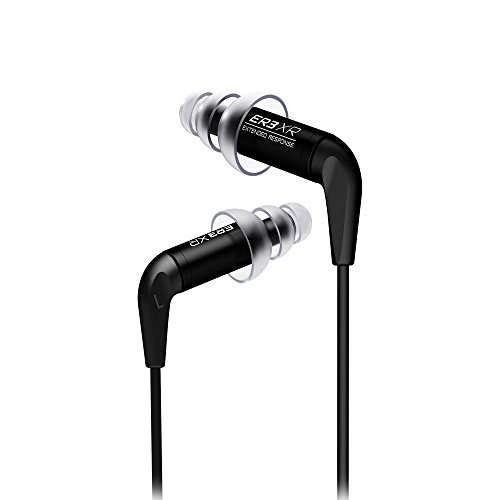
The etymotic er2xr is an earphone built around two decisions that most of its competitors refuse to make. The first is fit: it seals deep in the ear canal, far past where ordinary earbuds rest, using slim nozzles and triple-flange tips that many people need a week to accept. The second is tuning: the XR in the name stands for extended response, which in Etymotic’s vocabulary means its otherwise reference-flat signature carries a deliberate lift in the bass, added for listeners who found the company’s studio tuning accurate but austere. Everything else about the ER2XR — its single dynamic driver, its plain cable, its almost total absence of lifestyle features — follows from a company that has sold accuracy and isolation to musicians, engineers, and frequent flyers for decades and sees no reason to decorate either.
One disclosure about this page itself, made plainly because it shapes the recommendations: at the time this article was prepared, the ER2XR did not appear in the verified listings available to us, while its closest relatives did. So the ER2XR is covered here in full as a prose-only subject — what it is, who it suits, where it frustrates — and the linked alternatives are its flat-tuned sibling, the ER2SE, and Shure’s SE215 Pro, the earphone most often cross-shopped against it by people who want isolation and bass without the deep fit taken quite so far. If you came here decided on the ER2XR itself, the buying-guide and fit sections are written for you; the links exist for readers whose ears, budgets, or tuning preferences point one step sideways.
Key takeaways
- The ER2XR is the bass-lifted member of Etymotic’s dynamic-driver ER2 pair; the ER2SE is the same earphone concept tuned flat for studio-style listening.
- Deep insertion is not a quirk but the mechanism: the seal is what produces both the isolation and the accurate low-frequency response.
- Passive isolation from a correct deep seal quiets aircraft, trains, and offices without batteries, circuitry, or the pressure sensation some listeners dislike in active cancellation.
- Fit decides everything — a shallow seal makes these earphones sound thin and feel insecure, and most early returns trace back to fit rather than sound.
- The linked ER2SE suits listeners who want the flatter tuning; the Shure SE215 Pro suits listeners who want a warmer sound, an over-ear cable, and a shallower, more conventional fit.
In this guide
Rapid picks for Etymotic Er2xr
| Item | Best for | Page |
|---|---|---|
| Etymotic ER2SE | Best for lengthy bouts | Check price on Amazon |
| Shure SE215 Pro | Best for shared chambers | Check price on Amazon |
The subject of this article sits above the table in prose because no verified listing for it was available when the page was prepared — and that absence is worth a sentence of interpretation. Etymotic’s range is sold through channels that come and go, and a missing listing on a given day says nothing about the earphone’s legitimacy or availability elsewhere; it only means this page will not send you to a listing it could not verify. What the table offers instead are the two decisions a real ER2XR shopper actually faces. Choose the ER2SE if the deep-fit Etymotic concept appeals but you would rather have the flatter, studio-leaning tuning and add your own bass with equalisation if you miss it. Choose the SE215 Pro if the concept of a deep canal seal is the part you are unsure about, because Shure’s design isolates well with a shallower fit, routes its cable over the ear, and presents a warmer, bass-forward sound that asks less adjustment from listeners arriving from consumer earbuds.
How the lineup was chosen
The selection rule for this article was family honesty. An ER2XR page that linked to unrelated fashionable earbuds would be useless, so the linked pair was drawn from the two directions a genuine buyer hesitates: within the family, toward the flat tuning, and outside the family, toward the mainstream isolating alternative with the longest track record. Both were verified through the site’s own Amazon data on the day of preparation, and both listings state the facts relied on below — the ER2SE’s listing names it as the Studio Edition in-ear earphone, and the SE215 Pro’s listing names its single dynamic MicroDriver, its sound-isolating design, its secure fit, and the carrying case and fit kit in the box. The ER2XR itself, the ER3XR, and the ER4XR are discussed in prose where comparison requires them, without links, because discussion does not need a listing and a link should never pretend to a verification that did not happen.
Excluded, deliberately: wireless earbuds of every kind, because a reader researching a wired reference earphone is not served by being redirected to a different product category with different compromises; multi-driver showpieces at multiples of the price, because the ER2 family’s entire argument is that one well-implemented driver, correctly sealed, beats driver-count marketing; and the ER4 series as a linked pick on this page, because stepping that far up the range is a decision that deserves its own comparison rather than an impulse upgrade at the bottom of someone else’s review.
Detailed reviews

Etymotic ER2SE
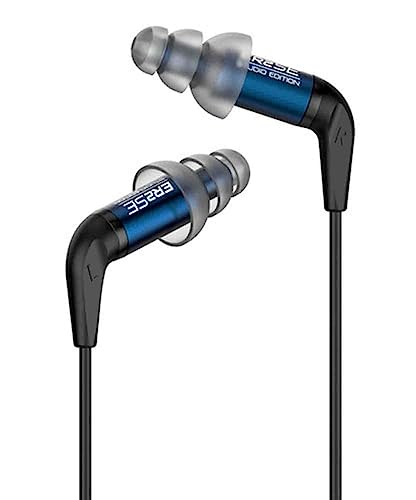
The same deep-fit idea with the studio tuning — the ER2XR’s other half. The verified listing identifies this as the Etymotic Research ER2SE Studio Edition in-ear earphones. SE stands for Studio Edition, and the name is the whole review in miniature: where the XR adds a bass shelf for listeners who want their reference with some warmth in the floor, the SE holds the line flat, presenting recordings with the balance Etymotic’s measurement tradition treats as accurate. In practice the two earphones share the ownership experience — the same deep-insertion fit, the same slim shells disappearing into the ear, the same isolation that turns a train carriage into a quiet room, the same dependence on a proper seal for everything downstream. Choosing between them is purely a tuning decision, and it is worth making consciously, because equalising an SE upward is easy while un-lifting an XR’s built-in shelf is equally easy — the honest tiebreaker is which presentation you prefer at flat settings on the music you actually own.
| Label | Etymotic ER2SE |
|---|---|
| Category | In-Ear Monitors |
| What its page leads with | Studio Edition in-ear earphones — the flat-tuned ER2 variant |
| Entry tag | Check price on Amazon |
The SE earns its “best for lengthy bouts” label in the comparison table through a quality that only appears over hours: a flat tuning does not fatigue. Bass-lifted earphones are exciting in the first ten minutes and, for many listeners, wearing across a workday of albums; the SE’s even hand keeps cymbals, voices, and bass in their recorded proportions, so attention stays on the music rather than on the earphone’s opinion of it. Listeners who mix, edit, transcribe, or study recordings will find the SE the more informative tool. Listeners whose libraries lean on electronic, hip-hop, and film scores — recordings mixed to be felt as much as heard — are the ones the XR’s shelf was designed for, and they should read this SE review as a description of the road not taken: identical fit, identical isolation, cooler presentation.
There is a working use for the SE that its name promises and delivers: it is a genuinely useful cheap reference for anyone who records. A singer checking a take, a podcaster editing breaths and sibilance, a student transcribing parts by ear — all of them need an earphone that adds nothing, because every addition becomes an error they chase in the recording that is not there. The SE’s flatness also exposes bad recordings without mercy, which is a strength professionally and a disappointment recreationally: a thin, harsh master sounds thin and harsh, and owners sometimes blame the messenger. Knowing which of those two relationships you want with your library — audit or entertainment — is the cleanest predictor of whether the SE or the XR will still be in your ears in a year.
Strengths
- Flat studio tuning presents recordings without an editorial bass lift, which suits critical listening and long sessions.
- The deep-seal isolation is shared with the XR, so choosing the SE sacrifices nothing in quiet.
- One dynamic driver keeps the presentation coherent, with no crossover seams between drivers to hear.
Trade-offs
- Listeners raised on consumer bass will hear the first hour as lean, however accurate the balance is.
- The deep fit is mandatory, not optional — there is no shallow way to wear it that sounds right.
- It shares the family’s plain presentation: no microphone-forward lifestyle features, no wireless option, nothing to show off.
Best for: listeners who want the Etymotic concept at its most literal — accuracy first — and anyone mixing or studying recordings on a budget tier. Not suited for: listeners who already know they want warmth and weight in the bass, who should take the XR’s tuning as the signpost it is. Check price on Amazon

Shure SE215 Pro
The mainstream isolating alternative — warmer, shallower, stage-bred. The verified listing describes the Shure SE215 PRO wired earbuds as professional sound-isolating earphones with clear sound and deep bass from a single dynamic MicroDriver, a secure in-ear-monitor fit, and a carrying case and fit kit included, in the clear finish. The SE215’s long career on stage as an entry in-ear monitor explains its design priorities: it must stay put under movement, isolate enough to protect hearing at sane volumes, survive being coiled into a case nightly, and present a sound that flatters live and recorded music alike. Against the Etymotics, its fit is the headline difference — it seals at the canal entrance rather than deep within it, with the cable routed up and over the ear, which most newcomers accept within minutes instead of days.
| Unit | Shure SE215 Pro |
|---|---|
| Part | In-Ear Monitors |
| Headline features from its entry | Single dynamic MicroDriver, sound isolating, secure fit, case and fit kit included |
| Page cost | Check price on Amazon |
Sonically, the listing’s own words — clear sound and deep bass — describe a deliberate contrast with the ER2SE’s flat line and a partial convergence with the ER2XR’s intent. The SE215 presents bass generously, which suits listeners who found the Etymotic shelf tasteful to the point of invisibility. What it does not match is the Etymotic depth of isolation or the reference neutrality: Shure’s tuning is a presentation, not a measurement. The fit kit in the box matters more than its billing, because the SE215’s isolation and bass both depend on choosing the right tip size and material from the included selection; owners who skip the kit and wear the factory-fitted tips are hearing a draft of the earphone rather than the finished article. Its “best for shared chambers” label reflects the stage heritage — an earphone built to keep a performer’s mix private and the room’s noise out works equally well in a shared office or a dormitory.
Durability thinking differs between the two designs in an instructive way. The Shure was built for performers who coil, drop, sweat on, and generally abuse earphones nightly, and its ownership culture reflects that: cables are treated as replaceable wear parts, the shells are expected to survive a life in gig bags, and the fit kit’s spares anticipate loss as a normal event. A commuter who is hard on equipment — earphones in coat pockets, cables caught in straps, the occasional drop onto pavement — is statistically safer with the design that assumed abuse from the start. The Etymotics survive for years too, but their longevity strategy is care rather than armour: a case used religiously, tips and filters maintained, a cable treated as something to protect. Neither strategy is superior; they suit different owners, and recognising which owner you are is a legitimate deciding factor between the two.
Strengths
- Shallower, over-ear fit that most listeners accept immediately, with a fit kit to fine-tune the seal.
- Warm, bass-forward presentation that flatters mainstream recordings without equalisation.
- Stage-monitor heritage shows in the secure fit and the included carrying case for daily transport.
Trade-offs
- Isolation is good rather than class-defining; the Etymotic deep seal quiets more, especially low-frequency rumble.
- The bass emphasis is a fixed editorial choice — listeners seeking neutrality will hear it as colouration.
- Over-ear cable routing takes a day of practice and can annoy glasses wearers until the wire is shaped.
Best for: newcomers to isolating earphones who want the benefits without the deep-fit apprenticeship, and performers or commuters who move while they listen. Not suited for: listeners whose priority is the deepest possible quiet or a flat reference balance. Check price on Amazon
Sources deserve a paragraph before the guide proper, because a sensitive, deeply isolating earphone is an unusually honest reporter of whatever feeds it. The ER2 family asks little power — these are earphones designed to run from ordinary phone and player outputs — but the deep seal removes the room noise that normally masks a source’s flaws, so a faint hiss from a cheap laptop output or an ageing dongle, inaudible through ordinary earbuds, becomes part of the listening experience. The practical guidance is simple: judge the earphone first from the quietest source you own, treat any hiss that follows the source rather than the earphone as a source problem, and do not buy amplification to solve a noise floor — a clean, modest output beats a powerful, noisy one for this design every time. Listeners moving from wireless earbuds should also expect the wired connection to change their habits in small ways: no battery anxiety and no pairing, in exchange for a cable that must be routed, clipped, and kept out of zips and chair wheels.
Buying guide: what really determines Etymotic Er2xr
Deep-match seal and ease learning curve
Everything about the ER2XR’s sound is downstream of insertion depth, and this is the section to read twice. The earphone is designed to seal in the narrower inner portion of the ear canal, past the first bend, using triple-flange tips that look intimidating and feel, for the first few sessions, genuinely strange. The payoff for that depth is twofold. Physically, the deep seal blocks outside sound at the canal wall rather than at its entrance, which is why Etymotic’s isolation has been the reference point for passive earphones for decades. Acoustically, the deep placement smooths the ear canal’s own resonance, which is part of how the tuning achieves its measured accuracy. The cost is an apprenticeship: most listeners need several days of short sessions for the canal to stop objecting, and the technique — pull the ear up and back, insert with a slight twist, let the flanges settle — must be learned rather than improvised.
The failure mode is so consistent it has a signature sound. A shallow-sealed ER2XR sounds thin, distant, and bass-free, and its owner concludes the earphone is overrated, when in fact they have heard it with its defining mechanism disengaged. Before judging any deep-fit earphone, run the seal test: with music playing quietly, press each earphone gently deeper for a moment — if the bass blooms and the room falls away, your everyday fit is too shallow and the tips, the size, or the angle need work. Foam tips, which compress before insertion and expand in place, are the usual bridge for listeners who cannot settle the flanges; they trade a little of the flanges’ durability and insertion speed for a seal that is easier to achieve repeatably. Ear canals are also frequently asymmetric, and wearing a different tip size on each side is not a defect in you or the earphone — it is the normal outcome of fitting two different ears properly.
Isolation for travel and open offices
Passive isolation and active noise cancelling solve overlapping problems by unrelated means, and the ER2XR is the passive argument at its strongest. Cancellation electronics excel against steady low-frequency drone and do nothing for a colleague’s conversation; a deep physical seal attenuates across the spectrum, voices included, and it does so with no battery to charge, no circuitry hiss, and no sense of pressure that some travellers find fatiguing on long flights. On an aircraft, the deep seal plus music at a modest volume replaces the roar with a backdrop quiet enough that listeners consistently report turning the volume down compared with ordinary earbuds — which is the hearing-health benefit hiding inside the isolation specification. In an open office, the same seal converts the room’s chatter into an indistinct murmur, and because the earphone leaks almost nothing outward, your own music stays yours.
The limits deserve equal clarity. Isolation this effective is a hazard anywhere awareness matters — cycling, running near traffic, walking a dog at night, supervising children — because the seal does not distinguish between noise you dislike and signals you need. Parents, carers, and anyone on call should treat the ER2XR as a seated, stationary tool. Fit also interacts with movement: jaw motion from talking or eating flexes the canal and can work a flange seal loose over a long session, which is why frequent flyers often end up preferring foam tips for flights even if they use flanges at a desk. And the seal is only as consistent as your tip hygiene — flanges accumulate wax, foam accumulates everything, and a degraded tip leaks sound and bass together.
One benefit of the seal deserves isolation of its own, because it changes listening health rather than merely listening pleasure. Most earphone-related hearing risk does not come from earphones; it comes from environments. In a loud carriage or cabin, the listener raises the volume until the music clears the noise, and the total dose — music plus whatever noise still leaks in — climbs with every notch. A deep seal attacks the equation from the other side: with the noise attenuated physically, the music can remain at the level chosen in a quiet room, and the total dose falls even though the experience feels richer. This is also why the fit checks in this guide are safety checks in disguise. A leaking seal quietly restores the old equation, the volume creeps back up to compensate, and the owner concludes the earphone is “not that isolating” while their ears absorb the difference.
Reference tuning with the XR bass shelf
Etymotic’s tuning philosophy starts from a measurement target derived from how sound actually arrives at the eardrum, and the ER2 line applies it with a single dynamic driver — a deliberate contrast with the balanced-armature designs higher in the range. Within that philosophy, the XR’s bass shelf is a considered deviation, not a lapse: a gentle low-frequency lift that compensates for the bass listeners lose to imperfect seals, noisy environments, and the simple fact that recordings mixed on speakers are felt through the body in a way earphones cannot reproduce. The result, when the seal is right, is a presentation that reads as accurate through the voices and instruments and quietly generous underneath them. The SE removes the shelf and trusts the listener and the recording entirely. Neither is the correct answer; they are two editorial positions from the same measurement desk, and the guide’s honest advice is to choose by library: acoustic, classical, jazz, and spoken word reveal the SE’s purity, while electronic, rock production, and film scores reveal why the XR exists.
One more tuning reality belongs here: a single dynamic driver covering the whole range gives the ER2 pair a coherence that multi-driver designs work hard to imitate. There is no crossover handing frequencies between drivers, no phase seam in the middle of a voice. The trade is ultimate treble extension and the last measure of detail retrieval, which is where the balanced-armature ER3 and ER4 models make their case. For most listeners, most of the time, coherence at this level is the more musical property — and it is why the cheapest models in the range have defenders who could afford the dearer ones.
Hearing the shelf difference honestly requires the right comparisons, and they are more specific than “more bass.” Put on a recording with a stand-up bass or a cello playing low, long notes: on the SE the instrument sits in exact proportion to the ensemble; on the XR it gains a measure of body and floor, the sense that the note has weight behind it. Put on a kick drum in a dense rock mix: the SE reports its placement and lets the bass guitar keep its own lane; the XR lets the two reinforce, which many listeners experience as the mix sounding more like the room it was mastered for. Voices, the centre of both tunings, barely move between the two — which is the real signature of the shelf’s restraint. If your listening diary is mostly the first kind of record, the SE is your earphone; if it is mostly the second, the XR was drawn for you, and neither conclusion requires the other to be wrong.
Lead and tip ecosystem
An earphone this dependent on consumables should be bought with its ecosystem in view. Tips are consumables: foam tips compress permanently and harbour grime over weeks of use, flanges stiffen and tear over months, and both are replaceable parts whose cost and availability over the earphone’s life matter more than any single specification. The ER2 family’s small nozzle filters are the other consumable — they protect the driver from wax, they clog gradually, and a clogged filter quietly dulls one channel, producing the classic “my left earphone is dying” report that a filter change resurrects. The cable is detachable, which converts the most common earphone death — a failed cable at a strain relief — from a funeral into a spare part. None of this is glamorous, and all of it is why these earphones remain in service for years while sealed, disposable designs are replaced whole.
Etymotic Er2xr in real habits
Scene: a frequent flyer who wishes muted without batteries
For the flyer, the ER2XR’s case is arithmetic: no battery to die over the Pacific, no case the size of a soap dish, no pairing ritual in a crowded cabin — just a seal, a cable, and quiet that includes the announcements-muffled, neighbour-softened kind that cancellation alone does not deliver. The routine that makes it work is tip discipline: foam tips for the flight, fitted before boarding while hands are clean, spares in the carry-on because a tip lost into an aircraft seat is gone for the duration. The flyer should also expect the first trip to be the apprenticeship — fit learned at home, over a week of evenings, not at altitude with a cabin crew waiting — and should keep one earphone out during boarding and descent announcements if being reachable matters, because a full seal genuinely removes the cabin from your awareness.
Situation: a commuter on loud trains who listens at low volume
The train commuter’s enemy is the volume control’s slow creep: as the carriage noise rises, ordinary earbuds invite another notch, and another, until the music is loud enough to be its own hazard. A deep seal breaks that cycle by removing the competition — the music no longer has to outshout the train, so it can live at the modest level the listener chose at the quiet platform. Podcasts benefit even more than music, because speech intelligibility collapses when background rumble masks consonants, and the seal restores them without amplification. The commuter’s practical notes are cable management — a cable long enough to reach a pocketed phone will find every bag strap and door handle, so a clip or a wrap is not fussiness — and station awareness: many commuters keep the seal shallow or one side out on platforms, accepting worse sound for a few minutes in exchange for hearing the world that can hurt them.
Scene: a mixing hobbyist who hopes a cheap reference confirm
The hobbyist mixing on speakers in an untreated room faces a translation problem: does the mix survive outside the room? A flat-ish, isolating earphone is the classic second opinion, and here the ER2 family choice sharpens — the SE is the stricter reference, the XR the one that tells you how the mix feels to a listener whose tastes include bass. Used well, the check is comparative rather than absolute: balances, vocal placement, harshness, and whether the low end is present without being swollen all read clearly on either model, while the room’s own lies are removed by the seal. Used badly — mixing entirely on earphones, at enthusiastic volumes, for hours — the same tool misleads, because no earphone reports stereo width or room interaction the way speakers do. The hobbyist’s verdict after a month is usually that the earphone did not replace the monitors; it disciplined them.
Each of these three routines shares one adaptation worth naming: the world sounds different for a few minutes after the earphones come out. Deep isolation rests the ears, and ordinary rooms feel briefly louder and harsher by contrast — flyers notice it in the terminal, commuters on the platform, hobbyists when the speakers come back on. It passes quickly and it is not a warning sign; it is the measure of how much noise the seal was excluding. The routines also share a storage habit that separates long-term owners from frustrated ones: the earphones live in their case, every time, because a deep-fit earphone’s worst enemies are not dramatic accidents but pocket lint in a nozzle filter, a flange torn by a zip, and a cable pinched by whatever else shares the bag.
Setup and at the outset-seven days how-to
Stage 1 for Etymotic Er2xr: connect or match the model precisely as its manual describes before changing any setting
Start with the manufacturer’s own method: read the fitting instructions, use the included tips first, and learn the insertion technique — ear pulled up and back, tip inserted deep with a gentle twist — before experimenting with alternatives. The manual’s method is not ceremony; it encodes decades of fitting these exact shells, and most early discomfort is technique, not anatomy.
Stage 2 for Etymotic Er2xr: compare next to the old gear one final whilst prior to selling it
Keep your previous earphones for the first week and alternate on familiar tracks. The comparison teaches you what the Etymotic presentation is doing — the quiet between notes, the unexaggerated bass, the detail in quiet passages that noise used to bury — and it protects you from the classic error of selling the old pair, hitting a fit problem on day three, and owning nothing you can listen to while tips are reordered.
Move 3 for Etymotic Er2xr: run one unremarkable bout at default options and write down what bothers you
Listen at flat settings, moderate volume, for one ordinary session, and note the specific complaints in words — “left seal loosens when I talk,” “bass shy on this album,” “cable noise when I walk.” Written specifics are what tip changes and technique fixes answer; a general impression of dissatisfaction answers nothing and usually ends in a return that a foam tip would have prevented.
Step 4 for Etymotic Er2xr: save or photograph the configuration that finally functions
When a combination works — this tip, this size, this insertion depth, per ear — record it. Tips get changed, spares get mixed in a drawer, and the working configuration is genuinely easy to lose. A note in your phone with left and right sizes has saved more Etymotic ownerships than any accessory.
Stage 5 for Etymotic Er2xr: test the model on your worst typical date
Judge the earphone on the noisiest commute, the longest flight, the open-office afternoon — the conditions you bought it for — not on a quiet evening at home where everything sounds good. An isolating earphone that wins at home and loosens its seal on the train has failed its actual job, and you want to learn that inside the return window.
The commuter scenario generalises to any routine built around a noisy hour: the school run on a bus, the warehouse shift’s break room, the long dog-free hour in a laundromat. In each, the seal converts found time into listening time at sane volumes, and the earphone’s lack of batteries or pairing removes the two frictions that make people leave wireless earbuds at home on exactly the days they would have used them. What these routines teach, within a fortnight, is which tip survives movement: walking flexes the canal less than talking but more than sitting, and commuters commonly land on a different tip from the one that won at their desk. Fitting for the routine you actually have — standing, walking, jaw moving — rather than for the armchair is the adjustment that turns a good first week into a settled ownership.
Common mistakes with Etymotic Er2xr
Giving up on match before trying every single tip size
The included tip selection is not packaging filler; it is the fitting system. Listeners who wear the factory-fitted size, dislike the shallow result, and return the earphone have evaluated a size, not a product. The full fitting ritual — every included size, both flange and foam, per ear, with the press-deeper test after each — takes twenty minutes and is the single highest-value activity in the first week of ownership. Asymmetric sizing between ears is common and should be expected rather than resisted.
Listening loudly to fight noise the seal extended blocks
Volume creep on an isolating earphone is a diagnostic: if you are turning it up, the seal is leaking, and the correct response is to refit, not to amplify. Listening over a broken seal at high volume combines the worst of both worlds — the noise still arrives, the music is now loud enough to matter to your hearing, and the earphone gets blamed for thin sound that the leak caused. Refit first; the volume you actually need afterwards is the honest measure of the seal.
Wearing them where situational awareness signifies
Deep isolation is indiscriminate. It removes the colleague calling your name, the cyclist’s bell, the smoke alarm in the next room, and the child who needs you — with the same efficiency it removes the train. The mistake is not owning the earphone; it is deploying it in roles that require awareness. Keep the ER2XR for seated listening, travel as a passenger, and focused work, and keep a situational-awareness option — an open earbud, a single earphone, a speaker — for the rest of life.
Head-to-head: separating the selection
The ER2XR’s real comparison set is a triangle. Against its own sibling, the ER2SE, the difference is one shelf of bass and everything else is shared — fit, isolation, driver, discipline — so that decision is a pure tuning preference and can be made from your library in an afternoon. Against the Shure SE215 Pro, the difference is philosophy: Etymotic asks more of your ears and gives more quiet and neutrality in return; Shure asks little, fits almost everyone on day one, and presents music with a warmth that flatters the mainstream catalogue. Against the models above it in Etymotic’s own range — the ER3XR and ER4XR, covered in prose on this page because they belong to the comparison even without links here — the ER2XR’s dynamic driver trades the balanced-armature models’ last degree of detail for a coherence and a price tier that many listeners, having heard both, judge the smarter allocation. The triangle resolves by asking which currency you are spending: patience for fit, money for refinement, or neutrality for warmth.
The comparison with the models above deserves one more level of detail, because “more detail” is a phrase that hides a real trade. The balanced-armature ER3XR and ER4XR resolve fine texture — the grain of a bowed string, the tail of a studio reverb — with a precision the dynamic ER2 driver rounds off, and on quiet, well-recorded material the difference is audible to a listener who has learned the fit. What the ER2 returns for that concession is a low-frequency naturalness and an absence of any edge that many listeners prefer across a whole evening, plus a purchase tier that leaves budget for the tips, filters, and music that ownership actually consumes. The honest summary is that the ER2XR is not the budget apology for the ER4XR; it is a different answer to the same question, and the range’s own longevity — all of these models coexisting for years — is the market agreeing.
A final comparison belongs to the used market and the gift market, because these earphones circulate in both. A used ER2-family earphone is only ever as good as its consumables, so a second-hand purchase should be priced as a shell, a driver pair, and a cable — with fresh tips and filters budgeted immediately, both for hygiene and because worn tips make a healthy earphone sound and seal like a tired one. As a gift, the deep-fit models are a genuinely risky choice however good they are: fit is personal, the apprenticeship is real, and a recipient who never asked for either will experience the earphone as an imposition. The SE215, with its forgiving fit and included kit, is the safer gift of the three by a wide margin, and the Etymotics are better given as a recommendation, a borrowed pair to try for a week, or a voucher toward a considered purchase. Knowing which transaction you are in — considered personal purchase, bargain hunt, or gift — legitimately changes which of these three earphones is the right answer.
Living with the decision: care and longevity
Ownership settles into small rituals. Filters are checked when a channel dulls and changed before the earphone is condemned. Tips are replaced on schedule rather than on failure, because a tip’s last week sounds noticeably worse than its first and owners adapt to the decline without noticing. The cable is coiled loosely, never wrapped tight around a phone, and its detachability is treated as the insurance it is. Ears themselves benefit from moderation: deep-fit earphones reward clean tips and sensible volumes, and any persistent discomfort is information to act on — a different tip, a shallower day, a break — rather than a toll to endure. Looked after this way, the ER2 family’s ownership horizon is measured in years and tip orders, not in product cycles, which is precisely the relationship its buyers were seeking.
Cable behaviour is the last ownership topic, and it is the one new owners mention most after fit. A cable worn straight down transmits handling noise — microphonics — into a deep seal efficiently, because the canal is closed and every brush of the cable against a coat arrives unfiltered. The established countermeasures are unglamorous and effective: route the cable under a layer of clothing, use a shirt clip to anchor it below the chest so movement is absorbed before it reaches the earphones, and keep the run to the player as still as the activity allows. At a desk none of this matters; on a train platform in a winter coat it is the difference between an earphone that disappears and one that announces its cable with every step. Owners who know they will listen mostly while moving should weigh this honestly against the Shure’s over-ear routing, which exists largely to solve exactly this problem.
Final recommendation
Buy the ER2XR’s idea only if you are willing to learn its fit, because the fit is the product: a week of apprenticeship in exchange for isolation and accuracy that earphones at many times the commitment struggle to match. Within that decision, choose the XR’s tuning if your library lives in the bass and the SE’s if it lives in the balance — and choose the Shure, without any sense of settling, if the deep seal itself is the step too far, because a very good earphone you wear daily beats a reference earphone that lives in its case. What no reader should do is judge any of the three from a first shallow listen. Seal them properly, on your worst noisy day, at a modest volume, with your own familiar recordings — and then decide.
Frequently asked questions
What counts most when choosing for etymotic er2xr?
Fit willingness counts first, because the deep seal determines the isolation, the bass response, and the comfort all at once; a listener who will not spend a week learning insertion should choose a shallower design and lose nothing to regret. Tuning counts second — XR warmth against SE flatness — and can be decided from your music library. Everything else, cable, case, and accessories, is genuinely secondary on an earphone this single-minded.
How much should a beginner funds for etymotic er2xr?
Budget for the earphone plus its consumables rather than the earphone alone: a stock of the tips you settle on and spare filters are recurring, modest costs that belong in the ownership arithmetic from day one. Within the range, the ER2 tier is the value position — the step to the ER3 and ER4 tiers buys refinement in detail rather than a different experience — and the Shure alternative sits in a comparable tier with its fit kit included. What a beginner should not do is stretch to the flagship hoping it forgives fit; it demands the same seal.
Which slip do buyers of etymotic er2xr regret most?
Judging the sound from a shallow fit and returning the earphone as bass-less — the regret usually arrives later, when the buyer hears a properly sealed pair and realises the evaluation was of their technique. The close runner-up is the opposite error: forcing the fit deeper than comfort allows, enduring soreness as a supposed rite of passage, when the correct move was a different tip size or material. Both regrets are fit regrets, which is the article in miniature.
How long does it take to get used to the ER2XR’s deep fit?
Most listeners need several days of short sessions — twenty to forty minutes at first — before the deep fit stops being noticeable, and about a week before insertion becomes automatic. Tip selection can add a second week if the first choice was wrong. Listeners with very small or unusually shaped canals occasionally conclude, honestly, that the design is not for them; that conclusion is trustworthy only after the full tip range has been tried, not before.
When is the premium choice in etymotic er2xr really worth it?
The premium step within this family is toward the balanced-armature models, and it pays when your listening is analytical — when you listen for the edit, the room, the bow noise — and your source material rewards the extra detail retrieval. For listeners whose priority is isolation, coherence, and long comfortable sessions, the ER2 tier already delivers the essential experience, and the premium buys refinement rather than transformation. Premium spent on tips and spares, by contrast, pays every single week.
What should I check initially if my etymotic er2xr purchase disappoints?
Check the seal before anything else: run the press-deeper test, try the next tip size in both directions, try foam if you have been using flanges, and confirm each ear separately, because asymmetric fits are normal. Then check the nozzle filters for clogging if one side sounds duller. Only after fit and filters are cleared should the tuning itself be judged — and if a properly sealed listen still leaves you cold, the honest conclusion is a tuning preference, answered by the sibling model rather than by perseverance.
Linked guides
Best Earbuds And Iems for Minor Ears
Earfun Clip 2 Earbuds Wave Pro X Headphones CES
Google Adds Actual Time Audio Translation to Any Headphones
Headsets vs Headphones What Is the Difference
One more angle: isolation for travel and open offices, revisited
Isolation compounds with modest volume in a way worth restating for travellers: the quieter the seal makes the cabin, the lower your listening level can sit, and the fresher your ears feel at the destination. Listeners who arrive less fatigued after long flights usually credit the aircraft or the seat; a share of them should credit the seal that let them listen at conversation level for six hours.
One more angle: deep-match seal and relief learning curve, revisited
If the first week is discouraging, shorten the sessions rather than abandoning them. Canals adapt to minutes, then to an album, then to a workday, in that order, and the listeners who succeed are almost always the ones who treated the fit as a skill with a practice schedule instead of a verdict delivered on day one.
One more angle: lead and tip ecosystem, revisited
Order your settled tips and a set of filters while the first set is still fresh, not when it fails. The earphone’s worst ownership moments — a torn flange the night before a flight, a clogged filter before a session — are all converted into non-events by a spares envelope that costs little and weighs nothing.
One more angle: reference tuning with the XR bass shelf, revisited
Revisit the XR-versus-SE question after a month, not before. Ears recalibrate: bass that seemed shy in week one often reads as correct by week four, once the memory of consumer tuning fades. Owners who can, should make the final tuning judgement with that recalibration complete — it is the judgement they will live with for years.