Disclosure: As an Amazon Associate, reviewstook.com earns from qualifying purchases. Links on this page are affiliate links; they cost you nothing extra. Prices and availability change often, so check the current Amazon listing before you buy.
The earfun clip 2 earbuds wave pro x headphones ces story was one of the quieter audio headlines of CES 2026: EarFun, a brand built on giving buyers more features than its price tier usually allows, used the show to unveil two new flagships — the Clip 2 open-ear earbuds with built-in AI translation, and the Wave Pro X over-ear headphones with a dual-driver design and Auracast. This article explains what was actually announced, what is confirmed versus what remains to be proven in independent testing, how the two new models relate to the EarFun products already on sale, and who should care. Everything factual below is anchored either in reporting from the show floor or in the products’ current Amazon listings, which were verified before this article was written.
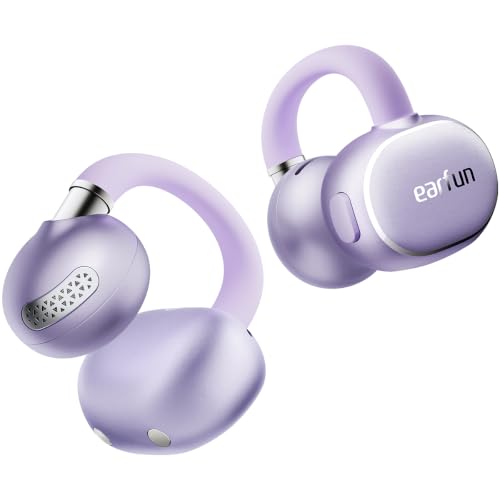
What happened at CES 2026: the announcement in brief
At CES 2026, EarFun introduced the two products as a new generation of its wireless audio line, with the company emphasizing artificial intelligence features, next-generation Bluetooth connectivity, high-resolution wireless audio, and longer battery performance. The Clip 2 was presented as a world-first combination in its category — Hi-Res-capable comfort ear-clip earbuds with built-in AI translation at a budget-tier price — while the Wave Pro X was positioned as the brand’s flagship over-ear noise-canceling headphone for 2026, described by EarFun as the first dual-driver Qualcomm ANC headphone design with Auracast support.
Two framing cautions belong right here, because they shape everything else in this article. First, “world-first” claims at trade shows are the manufacturer’s own positioning, reported as such; they describe a combination of features at a price, and they are not independently audited titles. Second, CES announcements describe products as their makers intend them to ship; final retail units can differ in detail, and the honest test of both products is independent measurement and listening once review units circulate. What we can do now — and what this article does — is separate the confirmed facts (the products exist, were shown, have published specifications, and have since appeared in retail listings) from the performance questions (how well the noise canceling, translation, and drivers actually work) that only testing can answer.
In this guide
EarFun Clip 2 Earbuds Wave Pro X Headphones Ces: what is confirmed
- Both products were unveiled by EarFun at CES 2026 and covered by audio press reporting from the show, including SoundGuys.
- The Clip 2 is an open-ear, ear-clip design — it sits outside the ear canal — with built-in AI translation accessed through the EarFun Audio app.
- The Clip 2’s announced hardware includes 12mm dual-magnetic titanium composite dynamic drivers, Hi-Res Audio and LDAC support, Bluetooth 6.0, multipoint connection, an IP55-rated build, and a quad-microphone system for calls.
- The Wave Pro X is an over-ear headphone with a dual dynamic driver design — a 40mm diamond-like carbon driver plus a 10mm LCP driver — and an 8-microphone adaptive hybrid ANC system built on a Qualcomm chipset.
- The Wave Pro X’s announced connectivity includes Bluetooth 6.0, Auracast, LE Audio, aptX Adaptive, aptX Lossless, and LDAC, plus multipoint and Google Fast Pair.
- Both products have since appeared as Amazon listings, verified for this article through Amazon’s own catalog data: the Clip 2 listing describes open-ear earbuds with AI translation, LDAC, Hi-Res Audio, and Bluetooth 6.0; the Wave Pro X listing describes hybrid ANC over-ear headphones with aptX Lossless, LDAC, an 8-microphone call system, and dual drivers.
- Launch timelines reported from CES placed the Clip 2 ahead of the Wave Pro X in EarFun’s 2026 schedule; as with all announced timelines, the listings themselves are the final word on availability, so check the current listing if you are buying.
The EarFun Clip 2 in detail

EarFun Clip 2 — open-ear earbuds with AI translation
Badge: The CES 2026 open-ear announcement, now listed. The Clip 2 continues EarFun’s clip-style open-ear line, which hooks over the ear and rests outside the canal rather than sealing inside it. The design goal is the one this whole category pursues: all-day comfort, awareness of your surroundings, and no ear-canal pressure — for commuting, office wear, and outdoor exercise where hearing traffic and colleagues is a feature, not a flaw.
- Type: open-ear clip earbuds
- Driver: 12mm dual-magnetic titanium composite dynamic (announced)
- Codecs: LDAC, Hi-Res Audio support
- Bluetooth: 6.0 with multipoint; Google Fast Pair
- Rating: IP55 dust and water resistance (announced)
- Headline feature: built-in AI translation via the EarFun Audio app
The translation feature is the announcement’s centerpiece. As described at the show, the system provides real-time speech translation through the companion app, letting the wearer hear translated audio while following text on the connected device — aimed at travel, meetings, and everyday cross-language conversation without separate translation hardware. How accurate and how fast it proves in noisy real-world conditions is exactly the kind of question announcement coverage cannot settle; it needs testing with real conversations, and buyers should treat the feature as promising until independent reviews weigh in. The same honesty applies to the redesigned elliptical sound port, which EarFun says widens the perceived sound versus earlier open-ear designs — plausible engineering, awaiting ears.
The supporting specifications are easier to take at face value because they are concrete and checkable: Bluetooth 6.0 with multipoint for two-device use, an IP55 build for workouts and weather, a quad-microphone array intended to keep calls clear, and total playtime with the case reported at up to 40 hours with wireless charging for the case. Its current Amazon listing — verified for this article — matches the announcement’s identity: open-ear clip earbuds with AI translation, LDAC, Hi-Res Audio, and Bluetooth 6.0, built around a 12mm titanium driver. Check price on Amazon
Best for: commuters, runners, office workers, and travelers who want open-ear comfort plus the translation experiment. Not suited for: listeners who want sealed-ear bass and isolation, or buyers who need proven — not announced — translation performance today.
The EarFun Wave Pro X in detail

EarFun Wave Pro X — dual-driver ANC flagship
Badge: The CES 2026 flagship headphone announcement, now listed. Where the Clip 2 is about openness, the Wave Pro X is about immersion: an over-ear, closed design with adaptive hybrid noise canceling driven by an 8-microphone system, which EarFun says it spent an extended engineering period tuning to balance cancellation strength, sound quality, and power use. Unusually, the company states that ANC remains available over a wired AUX connection as well as wirelessly.
- Type: over-ear ANC headphones
- Drivers: dual dynamic — 40mm DLC plus 10mm LCP (announced)
- ANC: adaptive hybrid, 8-microphone system, Qualcomm platform
- Codecs: aptX Lossless, aptX Adaptive, LDAC; Hi-Res Audio certified
- Bluetooth: 6.0 with Auracast, LE Audio, multipoint, Google Fast Pair
- Extras announced: Theater Mode, low-latency Game Mode, USB audio
The dual-driver architecture is the engineering headline. Splitting the frequency range between a large main driver and a smaller secondary driver is a strategy borrowed from in-ear monitors, intended to let each driver work where it is most controlled. Whether the benefit is audible over the already well-regarded single-driver tuning of the previous Wave Pro is — again — a testing question, and a genuinely interesting one, because EarFun’s earlier headphones earned their reputation on sound-per-money rather than on exotic hardware.
Auracast is the forward-looking feature: it allows one source to broadcast audio to many listeners, the Bluetooth LE Audio use case designed for shared listening and public audio streams. Support in phones, venues, and operating systems is still rolling out, so treat Auracast as future-proofing rather than a day-one utility. The battery claim reported from the show — up to around 100 hours of listening — is the specification most likely to be quoted, and the current listing describes a slightly different figure, which is a useful reminder to read the retail listing as the final specification sheet. That listing, verified for this article, confirms the product’s identity: hybrid ANC over-ear headphones with aptX Lossless, LDAC Hi-Res audio, an 8-microphone AI call system, dual drivers, and long playtime. Check price on Amazon
Best for: travelers and commuters who want flagship-style ANC features and codecs without flagship pricing, and early adopters who value Auracast readiness. Not suited for: buyers who only trust products with a long independent testing record — for them, the previous model below is the safer purchase today.
Why this announcement matters beyond two product names
EarFun’s CES showing is worth a moment of context, because it illustrates where the whole wireless audio market is moving. For years, the industry’s pattern was simple: flagship brands debuted features — high-resolution codecs, adaptive canceling, LE Audio, on-device AI — at flagship prices, and budget brands adopted them two or three years later. The cycle has compressed. A value brand announcing Bluetooth 6.0, aptX Lossless, dual-driver architectures, and app-based AI translation in the same season those features headline premium launches tells you the component ecosystem has matured to the point where the features themselves are no longer the expensive part. The expensive part is now tuning, testing, and trust.
That is also why the correct reader response to this announcement is interest without gullibility. When a value brand matches a flagship specification sheet, the open questions migrate from “does it have the feature” to “how well is the feature executed”: how clean is the ANC’s effect on the music itself, how natural does the translation voice sound, how stable is the multipoint handoff between a laptop and a phone, how does the dual-driver crossover behave at high volume. Those are execution questions, and execution is exactly what announcement coverage cannot measure. The products in this article are therefore best understood as strong claims with verified identities — and the verification that matters most is still to come, from reviewers with measurement rigs and from the first months of owner experience.
The open-ear category, and where the Clip 2 fits in it
Open-ear listening has grown from a niche for runners into a mainstream category with three distinct mechanical approaches. Bone conduction leaves the ear entirely open and transmits sound through the cheekbone — maximally aware, with the leanest bass. Air-conduction open buds, the Clip family’s approach, hover a small speaker at the ear’s entrance using a hook or clip, gaining fuller sound than bone conduction while keeping the canal unsealed. Sealed in-ear buds with transparency modes imitate openness electronically, which works well but depends on microphones and processing staying powered and correct.
Within that landscape, the clip form factor has become the comfort leader for long wear, because it distributes contact across the outer ear instead of relying on canal pressure or a headband-like conduction frame. Its known trade-offs travel with the Clip 2 as they do with every model in the class: bass is lighter than any sealed design, loud environments compete directly with your music, and sound leaks outward enough that quiet shared spaces deserve consideration. EarFun’s announced answers to those trade-offs — a larger, reshaped sound port and a bigger titanium-composite driver — are aimed squarely at the first two. Whether they land is, once more, a listening question. What can be said today is that the Clip 2 is aimed at the right problems, and that its translation feature gives the open-ear concept a second job — conversation — that suits a design you can wear all day without isolation fatigue.
The ANC flagship category, and where the Wave Pro X fits in it
Over-ear noise-canceling headphones are the most contested category in personal audio, with a clear hierarchy of expectations: cancellation strong enough for aircraft cabins, sound quality that survives the canceling being switched on, call performance that works on a windy street, battery life measured in days of use rather than hours, and codecs that satisfy both Android and laptop listening. Premium models from the biggest brands set those expectations at premium prices, and the value segment — where EarFun’s Wave line competes — exists to deliver most of that experience for notably less money.
The Wave Pro X’s announced specification reads like a checklist aimed at every one of those expectations: more microphones for the hybrid ANC and calls, a second driver for the sound, the full modern codec set including aptX Lossless for compatible Android phones, LE Audio and Auracast for the broadcast future, and a battery claim that, in any of its reported forms, sits at the long end of the category. The previous Wave Pro already competed credibly on this list with a simpler hardware set, which is why the Pro X is best framed as EarFun pushing from “credible value alternative” toward “specification leader in its tier.” The risk in that push is the classic one: added complexity must not subtract reliability, comfort, or the tuning restraint that made the simpler model easy to recommend. Testing will tell, and the comparison reviews against the original Wave Pro will be the most informative reading in this corner of the market this year.
Announced versus listed: reading the two specification sheets
| Item | Clip 2 | Wave Pro X |
|---|---|---|
| Form | Open-ear clip earbuds | Over-ear closed headphones |
| Headline feature | Built-in AI translation via app | Dual-driver design with Auracast |
| Driver(s) | 12mm titanium composite dynamic | 40mm DLC plus 10mm LCP dynamic |
| Noise technology | Quad-mic call noise reduction (open design, no ANC) | 8-mic adaptive hybrid ANC |
| Codecs | LDAC, Hi-Res Audio | aptX Lossless, aptX Adaptive, LDAC, Hi-Res Audio |
| Bluetooth | 6.0, multipoint, Fast Pair | 6.0, LE Audio, multipoint, Fast Pair |
| Durability / extras | IP55; wireless-charging case | Theater Mode, Game Mode, USB audio, wired ANC |
| Predecessor | EarFun Clip (listed, verified) | EarFun Wave Pro (listed, verified) |
Read this table with the discipline this article has applied throughout: these are announced and listing-confirmed features, not measured results. The identity of both products and the presence of their headline features are confirmed by their retail listings. The quality of each feature — how the translation handles a fast conversation in a train station, how the ANC treats a jet cabin, how the dual drivers actually sound — awaits independent testing, and this page deliberately makes no claim about any of it.
What we still do not know
- Measured ANC performance of the Wave Pro X against its predecessor and against premium rivals, across flight, office, and street noise profiles.
- Translation quality of the Clip 2 in real conditions: supported language depth, latency in conversation, and behavior with accents and background noise.
- Sound signatures of both products as measured on standard rigs, including whether the Wave Pro X’s second driver changes its tuning character.
- Real-world battery results at typical volumes with headline features enabled, which always differ from best-case laboratory figures.
- Long-term build feedback — hinge, cushion, clip, and case durability — which only months of ownership can produce.
- Firmware maturity: how complete the app features, Auracast behavior, and multipoint handling are on shipping software versus after early updates.
None of these unknowns is a criticism; they are the standard epistemic state of any product between announcement and review season. They are listed here so that readers can hold the announcement at its correct weight — genuinely interesting, properly documented, and not yet a verdict — and so that anyone buying on day one does so as a knowing early adopter rather than an uninformed one.
How the new models relate to the EarFun range you can already buy
Announcements make more sense with lineage. The Clip 2 succeeds the original EarFun Clip, and the Wave Pro X succeeds the EarFun Wave Pro — both predecessors are established, listed products, and comparing announced specifications against them shows exactly what EarFun claims to have improved: translation and a redesigned acoustic path on the clip side; a second driver, a larger microphone array, newer Bluetooth, and Auracast on the headphone side. The predecessors also frame the value question honestly, because they remain on sale and are the proven quantities in this story.

EarFun Clip (original) — the proven open-ear option
Badge: The safe open-ear buy today. The first-generation Clip offers the same open-ear, clip-on concept with an adaptive comfort fit, Bluetooth 6.0, and LDAC Hi-Res support in a grey finish, per its verified listing. It lacks the sequel’s translation headline, but it is the known quantity: a shipping product with an established track record for runners and commuters who want awareness and comfort.
- Type: open-ear clip earbuds
- Fit: adaptive comfort, secure clip fit
- Bluetooth: 6.0; LDAC, Hi-Res Audio
- Use case: sports, commuting, awareness listening
Best for: buyers who want the clip concept now, proven. Not suited for: buyers specifically shopping for the AI translation feature. Check price on Amazon — and for the wider open-ear landscape, our guide to bone conduction headphones covers the neighboring category.

EarFun Wave Pro — the proven ANC headphone
Badge: The safe ANC buy today. The original Wave Pro pairs active noise canceling with LDAC Hi-Res sound, a 5-microphone AI call system, multipoint, and long playtime, per its verified listing. The Pro X adds a driver, three microphones, newer codecs, and Auracast on paper; the Pro remains the model with a real-world record, and it is the comparison point every Pro X review will be measured against.
- Type: over-ear ANC headphones
- Audio: LDAC, Hi-Res sound
- Calls: 5-microphone AI clear call system
- Playtime: long-duration battery with multipoint
Best for: travelers who want proven ANC value now. Not suited for: early adopters chasing the newest platform features. Check price on Amazon — frequent flyers should also browse our roundup of ANC headphones for airplanes.
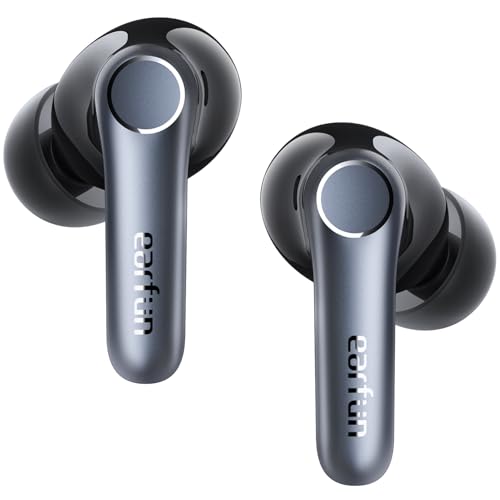
EarFun Air Pro 4 — the sealed in-ear alternative
Badge: For listeners who prefer a seal. Not everyone wants open ears. EarFun’s Air Pro 4 is the brand’s sealed in-ear flagship pattern: adaptive hybrid noise canceling, Qualcomm Snapdragon Sound with aptX Lossless, a 6-microphone call system, and LDAC Hi-Res audio, per its verified listing. It is included here because many readers of a Clip 2 announcement actually want isolation and bass seal — and if that is you, this is EarFun’s answer, while our guide to bass-heavy wireless earbuds covers the wider field.
- Type: sealed in-ear earbuds with adaptive hybrid ANC
- Platform: Qualcomm Snapdragon Sound, aptX Lossless
- Calls: 6-microphone AI system
- Audio: LDAC, Hi-Res support
Best for: listeners who want ANC and a sealed fit from the same brand. Not suited for: runners and commuters who need environmental awareness. Check price on Amazon
The codecs, translated: LDAC, aptX Lossless, and what they mean for you
Both announcements lean heavily on codec badges, so a plain-language pass is worthwhile. A codec is the compression system that carries music from your phone to your ears over Bluetooth; better codecs carry more data and preserve more of the original recording. LDAC, supported by the Clip 2, the Wave Pro X, and much of EarFun’s line, is Sony’s high-resolution codec and is widely supported on Android phones. The aptX family, headlined on the Wave Pro X by aptX Lossless, is Qualcomm’s counterpart, with Lossless aiming to deliver bit-perfect CD-quality audio over Bluetooth on phones whose hardware supports the Snapdragon Sound platform. Hi-Res Audio certification, which both products carry in their announcements and listings, is a capability badge covering the audio chain’s resolution handling rather than a guarantee about how any individual listener will judge the sound.
The practical translation for buyers is threefold. First, codec benefits require the whole chain: a supporting phone, a supporting app or file quality, and the headphone — remove any link and the system falls back to a standard codec that still sounds perfectly respectable. Second, Apple devices use their own codec path, so iPhone owners should weight fit, canceling, battery, and app features more heavily than codec badges when comparing these products. Third, codecs are a refinement layer, not the foundation: driver tuning, fit, and — for the Wave Pro X — ANC execution will shape your daily experience far more than the difference between two good high-resolution codecs. Buy the badges as future-proofing; judge the products on the fundamentals.
EarFun’s strategy, and why the value tier keeps winning headlines
EarFun’s rise follows a recognizable playbook: identify the features buyers can name — noise canceling, high-resolution audio, long battery life, wireless charging, app equalizers — and deliver them at prices that undercut the famous badges, accepting slimmer margins and a plainer brand story in exchange for specification-led word of mouth. The strategy has repeatedly produced headphones and earbuds that reviewers describe with some version of the same sentence: most of the flagship experience, at a fraction of the flagship cost. The CES 2026 announcements extend the playbook from features into frontiers — AI services and broadcast audio — which is a bolder version of the same bet: that buyers will choose tomorrow’s headline features from the brand that prices them for today.
For readers, the useful consequence is competitive pressure in both directions. Value launches like these push premium brands to justify their pricing with execution — better tuning, better canceling, better software — rather than with specification sheets alone. And they push value buyers to become more literate, because when every product at every price claims the same badges, the badges stop deciding purchases and the fundamentals in this article — fit, tuning, verified listings, and eventually independent measurements — decide them instead. That literacy, more than any single product, is what a show like CES is actually selling.
What to watch as reviews arrive
When independent coverage of shipping units appears, five checks will separate the announcement from the reality. First, measured frequency response of the Wave Pro X with ANC on and off, to see whether the dual-driver design changes the family’s established tuning. Second, standardized ANC measurements against the original Wave Pro, which is the comparison that tells existing owners whether an upgrade is real. Third, translation demonstrations with the Clip 2 in genuinely noisy environments, in both directions of a conversation, with attention to latency — the difference between a party trick and a travel tool. Fourth, battery verification at realistic volumes with headline features active. Fifth, the unglamorous software audit: app stability, firmware update cadence, multipoint behavior, and how Auracast behaves with the transmitters that exist so far. A product that passes those five checks has earned its announcement; until then, the correct posture — and the one this article has maintained — is documented interest.
Choosing between the Clip 2’s openness and a sealed alternative
Because the Clip 2 will be cross-shopped against sealed buds like EarFun’s own Air Pro 4, the decision deserves a direct treatment. Choose open-ear if your listening happens in motion and in company: running routes with traffic, offices where colleagues interrupt, homes where children and doorbells matter, and long wear where an unsealed ear simply tires less. Choose sealed if your listening happens in noise you did not choose: aircraft cabins, loud transit, shared quiet rooms where leakage matters, and any context where bass weight is central to the music you love. The translation feature complicates the choice interestingly — travel is the use case where open-ear awareness and translation most naturally overlap — but it does not repeal the physics: on a loud flight, the sealed bud with canceling remains the right tool, and no feature list changes that. Honest category advice beats brand loyalty here, and EarFun, to its credit, sells you either answer.
Buying guidance: who should wait, who should buy now
Buy the predecessors now if you need headphones or earbuds this month and value a tested track record over announced features. The original Clip and Wave Pro are shipping, listed, and understood; their successors’ advantages are, at announcement stage, specification advantages. Nothing about the CES news makes the current models worse purchases than they were in December.
Choose the new models if their specific headlines are your specific wants: live translation in an open-ear bud for travel or multilingual work, or Auracast readiness and a dual-driver flagship for the long term. In both cases, buy with the announcement-stage caveat in mind — early units of any audio product can vary, firmware matures over the first months, and the listings’ current details outrank any show-floor reporting, including ours. Readers interested in where translation audio is heading generally may also enjoy our roundup of AI translation earbuds and our explainer on real-time audio translation coming to ordinary headphones.
Either way, apply the standard checks: confirm Bluetooth and codec support on your phone (LDAC and aptX features are Android-centric; Apple devices use their own codec path), confirm the companion app supports the features you are buying for, and for the Clip design, be honest about whether open-ear listening suits your environments — it is wonderful outdoors and in offices, and the wrong tool on a loud aircraft, where the Wave line or sealed buds earn their keep.
How to get the most from open-ear clips and ANC headphones
For clip-style open-ear buds: fit is everything and it is not intuitive the first time. The clip should hook securely with the speaker element hovering at the ear’s entrance, not pressed into it; a small rotation changes both comfort and bass response noticeably, so spend the first session experimenting. Keep volume expectations realistic outdoors — open designs trade isolation for awareness, and raising volume to fight traffic noise defeats the safety purpose of the category. Use the app’s translation features on Wi-Fi or strong data connections for the smoothest performance, and download language resources ahead of travel where the app offers it.
For ANC over-ears: seal determines canceling, so take ten seconds to seat the cushions evenly, especially over glasses arms. Update firmware through the app before judging features — codec support, Auracast behavior, and ANC tuning are all firmware territory in this product class. For calls, the microphone arrays on both Wave models perform best when the headphone’s mic side faces away from direct wind. And for long flights, remember the announced wired-ANC capability on the Pro X: a cable plus canceling is the battery-anxiety-free way to cross an ocean, a trick worth testing before you travel.
The story so far, in order
For readers who like their news chronological, the confirmed sequence is compact. EarFun developed the two products as its 2026 generation — the company has described an extended tuning effort behind the Wave Pro X’s canceling system in particular. At CES 2026, both were publicly unveiled and demonstrated to press, with audio outlets including SoundGuys reporting the specifications, the world-first positioning, and the intended launch order, with the Clip 2 scheduled ahead of the Wave Pro X. Following the show, both products appeared in retail listings whose details match the announced identities — the Clip 2 as open-ear AI translation earbuds with LDAC and Bluetooth 6.0, the Wave Pro X as dual-driver hybrid ANC headphones with aptX Lossless and an 8-microphone call system. The chapter still to be written is the review season: independent measurements, long-term owner reports, and the firmware updates that typically refine a new platform’s first months. This article will deserve an update when that chapter exists; until it does, everything above this paragraph is as far as the evidence honestly goes.
Ownership notes for whichever model you choose
A few habits serve both products and their predecessors equally. Register and update through the companion app first, before forming opinions — modern EarFun products, like most of their class, route codec behavior, ANC tuning, equalizer presets, and feature toggles through firmware and app settings that may not be at their best out of the box. For the Clip 2, keep the charging contacts clean and the case’s wireless charging alignment in mind; small open-ear buds live in pockets and gym bags, and contact grime is the most common cause of one bud mysteriously failing to charge. For the Wave Pro X, store the headphones in their case rather than loose in a bag — hinges and cushions are the wear points on every over-ear design — and let cushions dry after long sessions before sealing them away. For both, a periodic gentle wipe of the ear-facing surfaces keeps sensors, microphones, and finishes performing as designed. None of this is exotic; it is the ordinary care that separates a product that delights for years from one that fades in a season, and it applies to the proven predecessors in this article exactly as much as to the CES newcomers.
Common mistakes to avoid when reading CES news
- Treating “world-first” as a quality verdict. It is a claim about a feature combination, usually at a price point — interesting, but not a test result.
- Confusing announced specifications with measured performance. Battery hours, ANC strength, and translation accuracy all need independent verification; listings confirm identity and features, not excellence.
- Assuming show timelines are guarantees. Announced launch windows slip; the retail listing in front of you is the only availability fact that matters.
- Ignoring codec and platform fit. A headphone’s headline codecs only help if your phone and apps support them.
- Writing off the previous generation. Announcement cycles make proven products cheaper and better understood, not obsolete.
How this article was put together
A short transparency note, because news-style articles live or die on it. The announcement facts here — the products’ identities, their headline features, their announced hardware, and their positioning — come from reporting published from CES 2026, principally audio-press coverage of EarFun’s unveiling. Separately, every product linked in this article was checked against Amazon’s own catalog data before writing: the Clip 2 and Wave Pro X listings exist and match their announced identities, as do the listings for the original Clip, the original Wave Pro, and the Air Pro 4 included for context. Where the announced material and the retail listings differ in detail — as happened with a battery figure on the headphone side — this article has treated the listing as the living document and said so. Where no source could confirm a claim, the claim was either attributed to its maker as positioning or left out entirely. No launch prices are printed here, in line with this site’s standing policy of not publishing static prices that age badly; the listings carry the current numbers. If EarFun’s specifications change as the products settle into the market, the listings will reflect it first, and readers should always let them outrank any article — including this one.
Final take
EarFun’s CES 2026 showing was a coherent bet: AI features and the newest Bluetooth platform, pushed down into price tiers where they used to be absent. The Clip 2’s translation-in-an-open-ear concept is the more novel of the two announcements; the Wave Pro X’s dual-driver, Auracast-ready flagship specification is the more ambitious. Both products have since surfaced in verified retail listings, which moves them from vaporware to purchasable — but the final verdict on each belongs to independent testing of shipping units, and this article will be read best as what it is: a careful map of what was announced, what is confirmed, and what remains to be proven. Readers deciding today have a clean choice in front of them — the proven predecessors at known value, or the new generation with its bigger promises and bigger questions — and either decision, made with the evidence laid out above rather than with the volume of a launch event, is a defensible one that this guide is content to leave in your hands.
Should travelers pay special attention to the Clip 2?
Travelers are the audience for whom this announcement’s two halves combine most interestingly. The open-ear half suits the journey itself: awareness in terminals and on platforms, comfort across hours of wear, and no sealed-ear fatigue on long itineraries. The translation half addresses the destination: menus, directions, negotiations, and small talk in places where your language runs out. Add the reported case battery and wireless charging, and the Clip 2 reads as a deliberate travel instrument rather than a general earbud with a bonus feature. The disciplined caveat remains the one this article has repeated: translation quality in the field is unproven until tested, and no traveler should retire their existing translation tools on the strength of an announcement. Carry the Clip 2 as an experiment layered on top of a working system, evaluate it across one real trip, and let that evidence — not a trade-show stage — decide whether it becomes your primary tool. That is, in miniature, the right relationship with every product in this article: informed by the announcement, guided by the verified facts, and settled in the end by evidence you gather yourself, at your own pace, in the places where you will actually use the thing you bought.
Reading a CES launch like a buyer: what to check between the announcement and the shelf
Show announcements compress months of engineering into a few headline claims, and the products above are no exception. The useful skill is knowing which claims you can take at face value, which ones need independent measurement, and which questions to ask again once retail units and firmware settle. This section is a buyer’s checklist for the weeks after any show launch, applied to these two products.
Claims that are safe to accept early
Physical and platform facts are the most reliable part of any announcement: the form factor you can see in photographs, the Bluetooth generation, the codecs the chipset supports, the water-resistance rating, and the control layout. These are fixed by hardware decisions made long before the show. When a clip-style earbud is shown with a particular case shape and charging method, or an over-ear is shown with a wired mode, those facts rarely change between the show floor and the box you buy.
Claims that need independent measurement
Noise-cancelling depth, translation accuracy, call quality in wind, and real-world battery life all depend on test conditions that a launch presentation chooses for itself. Treat announced figures as a ceiling set under favourable conditions, and wait for reviewers using consistent methods before comparing them against rival products. This is not cynicism; it is how the category works for every brand, including the established names these products compete with.
Firmware is part of the product now
App-driven features such as translation, adaptive cancellation, and spatial modes improve — and occasionally regress — through firmware updates after launch. Early buyers are effectively joining a product mid-development. If you buy at launch, keep the companion app updated and expect the experience at month three to differ from week one. If that idea bothers you, the established earlier models covered in this article are the rational purchase, because their firmware and quirks are fully known quantities.
Accessories and fit decide long-term satisfaction
For clip earbuds, the long-term question is whether the clip pressure suits your ears across a full day, and that varies more between people than any specification. For over-ear headphones, it is cushion depth, clamp, and whether replacement pads will be available in two years. Neither answer appears in a launch announcement. Where possible, buy from a seller with a straightforward returns route, try the product across several ordinary days rather than one excited evening, and judge fit on your longest realistic session, not your first song.
The generational question: new model or proven predecessor?
Every launch quietly discounts the model before it, which creates the classic choice between the newest feature set and a proven product at a friendlier point in its life. Choose the new model when its headline feature — here, translation in a clip format, or the dual-driver flagship arrangement — is something you will use weekly. Choose the predecessor when your use is ordinary listening and calls, because mature firmware, known fit, and a settled price usually serve ordinary use better than novelty does.
Frequently asked questions
What exactly did EarFun announce at CES 2026?
Two products: the Clip 2 open-ear earbuds, headlined by built-in AI translation, LDAC Hi-Res audio, and Bluetooth 6.0; and the Wave Pro X over-ear headphones, headlined by a dual-driver design, an 8-microphone adaptive hybrid ANC system, aptX Lossless and LDAC, and Auracast support. Both were positioned as world-first feature combinations in their categories at their price tiers — the manufacturer’s framing, reported from the show.
Are the Clip 2 and Wave Pro X actually available to buy?
Both products have appeared as Amazon listings, and those listings were verified against Amazon’s catalog data for this article — the Clip 2 as open-ear AI translation earbuds and the Wave Pro X as hybrid ANC over-ear headphones with dual drivers. Announced launch timelines from CES placed the Clip 2 earlier in 2026 than the Wave Pro X; for current availability and the exact shipping specification, the live listing is the authority, so check the current listing before ordering.
How does the Clip 2’s AI translation work?
As described at the announcement, translation runs through the EarFun Audio app: speech is translated in real time, with the wearer hearing translated audio while following text on the connected device. It is designed for travel, meetings, and everyday cross-language conversation. Accuracy and latency in noisy real-world conditions have not been established by independent testing yet, so frequent travelers should treat it as a promising feature to verify in reviews rather than a proven one.
What is Auracast, and why does the Wave Pro X include it?
Auracast is the Bluetooth LE Audio broadcast feature that lets one source transmit audio to many listeners at once — shared listening with friends, or tapping into public audio streams in venues as support rolls out. The Wave Pro X’s inclusion is future-proofing: the ecosystem of transmitters and venues is still developing, so the feature’s value grows over the headphone’s life rather than peaking on day one.
Should I buy the Wave Pro X or the existing Wave Pro?
If you want the newest platform — dual drivers, more microphones, aptX Lossless, Auracast — and accept announcement-stage uncertainty, the Pro X is the pick. If you want the proven, established model with a real-world record at a value position, the original Wave Pro remains a strong buy. The same logic applies to the Clip 2 versus the original Clip: new features versus known quantity.
Do open-ear clip earbuds like the Clip 2 stay on while running?
That is the design’s purpose: the clip hooks over the ear rather than relying on an ear-canal seal, and the Clip line is marketed for sports with an IP55 rating against dust and water on the new model. Fit varies with ear shape, so the first sessions should include the small positioning adjustments described above; a correctly seated clip is secure for running and training, while remaining instantly removable for conversation — the awareness trade that defines the category.
Should I preorder show-announced headphones or wait?
Wait, unless the product solves an immediate problem for you and the seller offers easy returns. The first weeks of any launch bring the highest prices of the product’s life, the least mature firmware, and the thinnest base of real user experience to learn from. Waiting a short while costs you nothing but novelty and buys you independent measurements of exactly the claims — cancellation strength, battery life, translation quality — that announcements cannot prove. Frequent travellers with a fixed trip date are the reasonable exception, and even they should keep the predecessor models in this guide in mind as the low-risk alternative.
How much do launch specifications usually change by release?
The hardware story rarely changes, but the soft numbers often do. Battery figures get restated as test methods are finalised, feature lists gain or lose app-dependent items, and launch timing slips. That is why this article attributes show figures to the show reporting and points to the retail listing as the final word on what is actually being sold. When the announcement and the listing disagree, believe the listing: it describes the product you are paying for, in the configuration you will receive.
What should I do with show coverage if I need headphones right now?
Buy for the need you have today from products you can evaluate today. If you need a clip-style earbud for running this month, the original Clip in this guide is a known quantity with settled firmware and real user history; if you need a flagship over-ear for a trip this month, the original Wave Pro carries the same advantage. The new models become the right answer when they have retail listings, independent measurements, and a few weeks of owner reports behind them — or sooner, if their one new feature is exactly the thing your current headphones cannot do and you are willing to accept early-adopter uncertainty as the price of having it first. Neither choice is foolish; buying a launch announcement to solve an immediate, ordinary need usually is.