Disclosure: As an Amazon Associate, reviewstook.com earns from qualifying purchases. Links on this page are affiliate links; they cost you nothing extra. Prices and availability change often, so check the current Amazon listing before you buy.
The fiio fa9 occupies a particular corner of the earphone world: it is an all-balanced-armature flagship for listeners who like to adjust things. Six balanced-armature drivers per side, a detachable cable on the MMCX standard, and a set of physical tuning switches on each shell add up to an earphone that invites experiment rather than demanding acceptance. If you want one fixed sound and no decisions, this is the wrong product; if you enjoy dialling a presentation toward your own taste, it is one of the few designs built around exactly that pleasure.
This review treats the FA9 as the main subject and places two alternatives beside it for honest contrast: FiiO’s own FH7S, a hybrid that pairs one dynamic driver with four balanced armatures, and Moondrop’s Blessing 3, another hybrid with two dynamic drivers and four armatures on a two-pin connector. The three disagree about how bass should be made and how much say the listener should get, and those disagreements are more useful than any ranking.
A note on method before the details. Everything factual in the pick sections traces to the verified listings recorded for this article: driver counts, connector types, cable descriptions, and plug options are stated as the listings state them. Listening character is described in the ordinary language reviewers use for these well-documented models, without invented measurements, and no prices or scores appear anywhere, because both change too often to print honestly.
Key takeaways
- Tuning switch combinations and their tangible differences
- Balanced-armature separation and imaging
- Shell size and extended-session comfort
- Cable and connector standard at this tier
In this guide
Quick picks for Fiio Fa9
| Item | Best for | Listing |
|---|---|---|
| FiiO FA9 | Best for tinkerers | Check price on Amazon |
| FiiO FH7S | Top pick | Check price on Amazon |
| Moondrop Blessing 3 | Best for specialists | Check price on Amazon |
The FA9 is the pick for listeners who want adjustment built into the hardware. The FH7S is the pick for listeners who want dynamic-driver bass weight with balanced-armature detail and the convenience of swappable plugs. The Blessing 3 is the pick for listeners who prefer a fixed, carefully voiced hybrid tuning and the two-pin cable ecosystem. None of the three is the sensible buy for someone who has not yet decided whether they like in-ear monitors at all; all three assume a listener who already knows the format suits them.
How the lineup was chosen
The FA9 needed rivals that challenge its two big claims. Its first claim is that an all-armature bass can satisfy; the FH7S and Blessing 3, both carrying dynamic drivers for the low end, test that claim directly. Its second claim is that physical tuning switches are worth having; both rivals ship with a fixed voicing, so the comparison forces the question of whether adjustability is a feature or a distraction.
Only models with verified listings and confirmed images were admitted as linked picks, and each had to represent a genuinely different design philosophy rather than a near-copy at another price. A roundup of three switchable all-armature earphones would have been easier to write and useless to read.
Detailed reviews
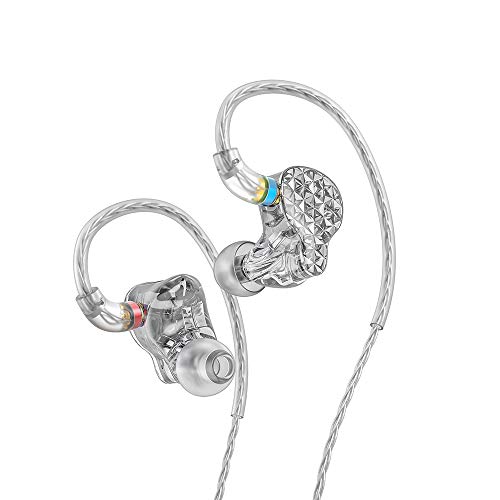
FiiO FA9
Best for tinkerers
| Unit | FiiO FA9 |
|---|---|
| Family | In-Ear Monitors |
| What its listing leads with | a detachable cord |
| Tag | Check price on Amazon |
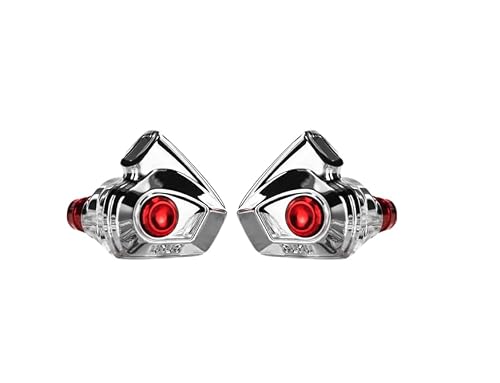
The verified listing describes the FA9 as a wired in-ear headphone with six balanced-armature drivers, a detachable MMCX cable in monocrystalline silver-plated copper, a DLP-printed shell, and Hi-Res positioning for use with phones, computers, laptops, and tablets. Balanced-armature drivers are small, efficient transducers that excel at detail and speed; using six of them lets the designer divide the frequency range into narrow jobs and give each driver an easy assignment.
What that division buys is separation. Busy passages stay legible because the driver reproducing a vocal is not also trying to reproduce a kick drum, and imaging, the placement of sounds left, right, and centre, tends to be precise in a way single-driver designs struggle to match. The trade is in the low end: armature bass is fast and textured but moves less air than a dynamic driver, so listeners raised on dynamic slam often describe the FA9’s bass as articulate rather than physical. Both descriptions are correct; they are preferences wearing technical clothes.
The tuning switches are the FA9’s party trick and its real substance. Small switches on each shell re-voice the earphone between settings that emphasise bass, vocals, or a more even presentation, and the changes are audible rather than theoretical, provided you change one thing at a time and listen to familiar music. Used carelessly, flipping switches at random, they become a slot machine. Used with a notebook, they become three earphones in one shell, which is the honest way to understand the price of admission.
Comfort deserves plain words. Six drivers and their crossover hardware make a substantial shell, and the FA9 will not suit every ear. Owners with smaller ears should treat fit as the first question, ahead of sound, because an earphone you cannot wear for an album cannot impress you with its imaging. The supplied tip selection matters more than usual here: a deep, stable seal is what lets the armature bass show its texture at all.
Strengths
- Six-armature separation keeps dense mixes legible and imaging precise.
- Physical tuning switches give several genuinely different presentations in one purchase.
- MMCX detachable cable on a quality silver-plated copper lead, replaceable if it ever fails.
Trade-offs
- Armature bass lacks the physical push that dynamic-driver listeners may expect.
- The large shell is a real risk for smaller ears and shallow fits.
- Switches reward methodical listening and punish random flipping with confusion.
Best for: a detail-focused listener who enjoys tuning and wants several voicings without buying several earphones. Not suited for: bass-first listeners or anyone whose ears reject larger shells. Check price on Amazon

FiiO FH7S
Best value route
| Unit | FiiO FH7S |
|---|---|
| Family | In-Ear Monitors |
| Extras named on its entry | its core extra set |
| Price | Check price on Amazon |
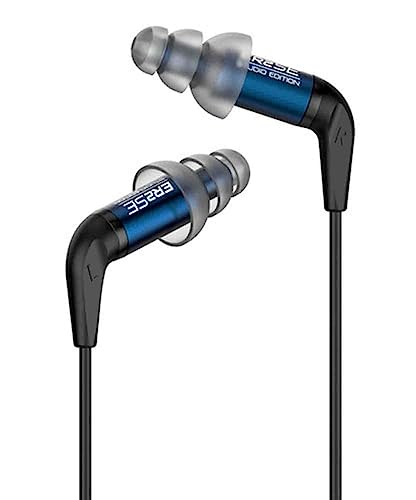
The FH7S listing describes a high-performance hybrid: one dynamic driver plus four balanced armatures, supplied with both 3.5mm and 4.4mm plugs. That architecture is the mainstream answer to the FA9’s experiment. The dynamic driver handles the low frequencies with the air movement that only a larger diaphragm gives, while the armatures take over the detail work above, and the swappable plugs let the same cable serve a phone dongle in the morning and a balanced desktop or portable player output in the evening.
Listeners who find the FA9’s low end too polite usually land here. Kick drums carry weight, electronic bass has body, and the armature section still delivers the clarity that makes hybrids attractive in the first place. The compromise is coherence: two driver types must hand over to each other invisibly, and on poorly matched recordings a hybrid can sound like two good earphones sharing a shell rather than one voice. The FH7S is well regarded precisely because its handover is tidy, but the risk is inherent to the design family.
As an ownership proposition it is the simplest of the three. No switches to learn, no tuning diary to keep, and plug flexibility that removes the adapter drawer from your life. If the FA9 is a hobby, the FH7S is an appliance, in the complimentary sense: it asks little and delivers a complete, energetic sound.
Strengths
- Dynamic-driver bass gives the low end physical weight the FA9 cannot match.
- Included 3.5mm and 4.4mm plugs cover single-ended and balanced sources without adapters.
- Fixed voicing means zero setup decisions between unboxing and listening.
Trade-offs
- No adjustability if the stock voicing is not quite your taste.
- Hybrid handover is a design risk that the FA9’s single-driver-type layout avoids.
- Listeners who prize the FA9’s separation may find the presentation less surgical.
Best for: a listener who wants one energetic hybrid that works with every source they own. Not suited for: tinkerers who would miss the switches within a week. Check price on Amazon

Moondrop Blessing 3
Best for lengthy sessions
| Unit | Moondrop Blessing 3 |
|---|---|
| Part | In-Ear Monitors |
| What its entry leads with | its core feature set |
| Entry tag | Check price on Amazon |
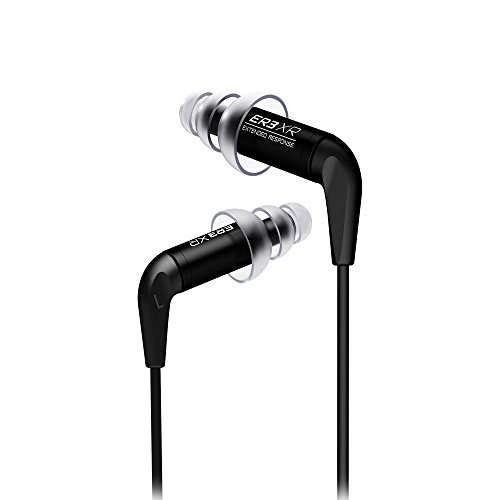
The Blessing 3’s listing describes a hybrid of two dynamic drivers and four balanced armatures with a triple-range frequency division, on the 0.78mm two-pin connector standard. The twin dynamic drivers are the interesting decision: sharing the low and lower-mid work between two larger drivers aims for low distortion and a natural, unforced foundation, while the armatures handle the upper ranges with the precision the format is known for.
Moondrop voices its monitors toward a clean, reference-leaning presentation, and the Blessing 3 follows that house style. Compared with the FA9 it sounds less like an instrument for dissecting mixes and more like a window onto them, with bass that has genuine dynamic texture. Compared with the FH7S it is the more reserved, analytical choice, which some listeners call honest and others call cool, depending on the warmth of the rest of their chain.
The two-pin connector matters to cable collectors. The 0.78 standard has a deep aftermarket, so owners who already own upgrade cables from other two-pin earphones can bring them along, while MMCX loyalists will need to start again. Shell shape is its own gamble, as with every universal monitor, and the Blessing family’s shells are known to be substantial; try before you commit if your ears run small.
Strengths
- Twin dynamic drivers give a low-distortion, natural foundation under the armature detail.
- A clean, reference-leaning voicing that suits analytical listening and mixing checks.
- The 0.78 two-pin standard opens a wide aftermarket of cables and accessories.
Trade-offs
- A reserved presentation can feel cool to listeners who want warmth and weight.
- No tuning switches, so the voicing you buy is the voicing you keep.
- A substantial shell, like the FA9, makes fit the first question for smaller ears.
Best for: an analytical listener who values a clean hybrid window onto the recording. Not suited for: anyone shopping for warmth, slam, or built-in adjustability. Check price on Amazon
Buying guide: what truly determines Fiio Fa9
Tuning switch combinations and their tangible differences
Switches on the FA9 re-route parts of its crossover network, changing how much energy each driver group receives. In practice the settings trade bass emphasis, midrange presence, and treble energy against one another. The differences are not subtle equaliser nudges; a bass-emphasis setting and a vocal-emphasis setting present the same recording with a different centre of gravity, which is why the feature survives scrutiny where many gimmicks do not.
The discipline that makes switches valuable is changing one variable and listening to music you know by heart. Pick two reference tracks, note the setting and your reaction in a sentence, and live with each setting for a day before judging it. Ears adapt quickly and first impressions flatter whatever is newest; a day per setting separates the voicing you enjoy from the voicing that merely surprised you.
Balanced-armature separation and imaging
Separation is the ability to follow one instrument inside a dense passage without the mix smearing into a wall. Multi-armature designs earn their reputation here because each driver works a narrow band at modest excursion, staying composed where a single driver covering everything would strain. On orchestral recordings, string sections stay distinct; on busy rock, backing vocals remain people rather than texture.
Imaging is separation’s spatial twin: where each sound appears to sit. Precise imaging makes games and films more legible and lets live recordings place the band across a believable stage. Judge both qualities with recordings that challenge them, a big-band session or a dense progressive track, rather than with a solo voice that flatters every earphone ever made.
Shell size and extended-session comfort
Comfort in a universal monitor is decided by three contacts: the tip seal in the canal, the shell’s weight against the outer ear, and the cable’s pull over the ear. A large shell like the FA9’s can be perfectly comfortable for hours if its contours match your anatomy, and miserable in twenty minutes if one edge presses a cartilage ridge. There is no specification that predicts this, which is why return windows matter in this category more than in almost any other.
Tip choice is the adjustable part of the equation. Foam tips forgive awkward angles and deepen the seal at the cost of a slightly softened top end; silicone tips keep the presentation crisp and clean easily. Work through the supplied selection before concluding anything about either comfort or bass, because a shallow seal robs an armature design of exactly the low-end texture it is praised for.
Cable and connector standard at this tier
At this level a detachable cable is not a luxury; it is insurance, because cables fail long before drivers do. The FA9’s MMCX connectors rotate freely, which some owners love for fit adjustment and others distrust for long-term contact wear. The Blessing 3’s two-pin system locks in one orientation and dominates the aftermarket. Neither is objectively superior; the practical question is which ecosystem your existing cables and habits already belong to.
Cable material claims deserve calm reading. The FA9’s monocrystalline silver-plated copper lead is a well-made, low-fuss cable by any standard, and the audible differences between competent cables are small compared with tip choice or switch settings. Spend your attention, and any spare budget, in that order: fit first, voicing second, cable last.
Fiio Fa9 in actual schedules
Scenario: a hobbyist who wants several tunings in one shell
A hobbyist with one listening chair and a shelf of recordings uses the FA9 as three earphones on a rota. The bass-emphasis setting serves electronic and hip-hop evenings, the vocal setting serves singer-songwriter records and podcasts with music, and the even setting is the default for everything new, because unfamiliar music deserves a neutral first hearing before preferences interfere.
His switch diary, kept in a notes app, is what makes the rota work. Without it he would be re-deciding his preferences every fortnight. With it, the FA9’s adjustability compounds into knowledge about his own taste, which is arguably worth more than the hardware, since it will inform every audio purchase he makes from now on.
Scenario: a stage musician needing a spare universal monitor
A gigging singer carries the FA9 as a backup to custom monitors, and the qualities that matter change completely in that context. Separation becomes the ability to hear her own voice inside a loud mix, the switches become a quick way to add vocal presence when a venue’s monitor engineer is struggling, and the detachable cable becomes the difference between a repairable failure and a silent night.
Isolation is the honest caveat. A universal fit with silicone tips seals less completely than a custom shell, so stage volume creeps in and she turns up to compensate. For a spare that lives in the gig bag and saves the show twice a year, that trade is entirely acceptable; as a main monitor for a loud band, she would tell you to go custom.
Situation: a detail-first listener upgrading from hybrid units
An upgrader arrives from a good hybrid complaining that busy passages blur. His first FA9 session, on a dense orchestral recording he knows well, delivers exactly the legibility he was chasing, and his second session delivers the surprise: he misses the physical thump of his old dynamic bass on rock records.
His resolution is the mature one this category teaches. He keeps the FA9 for the repertoire it illuminates, uses a bass-emphasis switch setting for rock, and stops expecting one earphone to win every genre. The FH7S would have been the single-box compromise; the FA9 plus honesty about preferences is the enthusiast’s answer.
Setup and first-week how-to
Step 1 for Fiio Fa9: show the setup to the next user who shares your space
If anyone else will handle the FA9, a partner borrowing it or a bandmate packing the gig bag, show them the MMCX removal technique and the switch positions before they learn by force. Armature earphones survive drops better than they survive cables ripped out at an angle, and a thirty-second demonstration is the cheapest protection the product will ever get.
Step 2 for Fiio Fa9: test the product on your worst typical day
Judge the FA9 on a tired evening commute or a noisy kitchen, not only in a silent room at midnight. Real ownership happens in imperfect conditions, and an earphone whose charms require silence will spend its life in a drawer while a hardier rival gets used. Note what survives the noise: usually the midrange clarity, which is the FA9’s home ground.
Step 3 for Fiio Fa9: re-confirm comfort after a session of use
Wear the FA9 for one full album at a sitting before the return window becomes a topic. Pressure points announce themselves around the forty-minute mark, not in the first five minutes, and tip changes need the same full-album test to judge fairly. Comfort conclusions drawn from a quick fitting are the leading cause of returns in this category.
Step 4 for Fiio Fa9: schedule a two-session review to catch annoyances that only repetition reveals
Book two deliberate listening sessions a few days apart, each with the same reference tracks and a different switch setting, and write one sentence after each. Repetition exposes what novelty hides: a treble edge that fatigues on the second day, a bass setting that flatters one genre and smothers another. Two sentences of evidence beat a fortnight of vague impressions.
Step 5 for Fiio Fa9: save or photograph the final configuration that finally works
When you land on your tips, your switch settings per genre, and your preferred cable routing, photograph the earphones as configured and save the note with the photo. Switch positions are easy to knock and easier to forget, and a photograph restores your own hard-won setup in seconds after the earphones have travelled in a bag.
Common mistakes with Fiio Fa9
Flipping switches randomly instead of logging changes
Random flipping produces a blur of impressions and a conclusion that the switches do nothing, when in fact the listener did nothing methodically enough to hear them. Change one setting, live with it for a day, write a sentence. The switches are an instrument; instruments reward practice and punish noodling.
Expecting dynamic-driver slam from an all-BA build
Armature bass is about speed and texture, and no switch setting turns it into the chest-moving push of a large dynamic driver. Buyers who need that physicality should be honest early and choose the FH7S or Blessing 3 instead, because a fortnight of hoping the FA9 will become a different technology ends in a return that satisfied nobody.
Wearing big shells without checking your ear anatomy
Both the FA9 and the Blessing 3 ask a lot of smaller ears. Check shell dimensions against earphones you already own, favour sellers with sane return terms, and treat the first long session as a fitting appointment. Sound quality is irrelevant in an earphone that hurts, and fit disappointment is the most preventable disappointment in this entire category.
Head-to-head: separating the lineup
Bass divides the three cleanly. The FH7S moves the most air and satisfies listeners who feel bass physically. The Blessing 3 sits in the middle, textured and natural, with dynamic weight that stays polite. The FA9 is the fastest and most detailed down low while asking you to value articulation over impact. There is no fourth possibility hiding in the switches; there is a spectrum, and your place on it is a fact about you, not about the products.
Adjustability divides them just as cleanly. The FA9 is the only one that changes its mind, and that flexibility is worth real money to listeners whose taste spans genres or whose ears change with fatigue. The two hybrids bet everything on a single voicing, which is a strength when the voicing suits you, because there is nothing to fiddle with and nothing to knock out of place in a bag.
Cable ecosystems make the quiet third division. MMCX on the FA9, swappable plugs on the FH7S, two-pin on the Blessing 3: an owner with an existing cable collection should let that collection vote. Connectors are the least glamorous specification in this guide and the one most likely to annoy you monthly if you choose against your own drawer.
Living with the decision: care and longevity
Armature earphones ask for dry storage, gentle cable handling, and a case used every single time they leave the desk. Earwax guards and nozzles should be checked monthly, because a partially blocked nozzle imitates a failing driver convincingly enough to frighten owners into unnecessary support calls. A soft brush and good light solve most of what looks like damage.
MMCX connectors reward a straight pull and punish a wiggle; make the straight pull a habit and the connection will outlast several cables. Store the earphones with the cable loosely coiled rather than wound tight around fingers, since tight winding work-hardens the conductors at exactly the point where they enter the connector housing.
Expect the product to age gracefully if you treat it this way. There are no batteries to fade and no firmware to abandon, which is one of wired audio’s under-sung virtues: a well-kept FA9 in five years is the same earphone you bought, while its wireless contemporaries are landfill with fond memories.
Final recommendation
Choose the FA9 if your listening is detail-led, your genres are varied, and the idea of tuning an earphone to a record sounds like pleasure rather than homework. It is a specialist instrument that rewards an engaged owner more richly than either rival here, and frustrates a passive one more quickly.
Choose the FH7S if you want the complete hybrid experience with the least friction, and the Blessing 3 if your taste runs clean and analytical with a two-pin cable drawer already waiting. All three are honest products; the recommendation is simply to match the philosophy to the listener, because in this category the wrong philosophy in a great product still ends in a return.
Frequently asked questions
What signifies most when choosing for fiio fa9?
Fit and bass philosophy signify most, in that order. Fit decides whether you can wear the FA9 long enough to hear it, and bass philosophy decides whether its armature low end delights you with texture or leaves you missing dynamic weight. Switches, cables, and separation all matter, but they matter after those two gates have been passed.
How much should a beginner spend for fiio fa9?
A beginner should be cautious here, not because the FA9 is poor value but because it is a specialist purchase. Listeners new to in-ear monitors rarely know their fit tolerances or bass preferences yet, and both are expensive to discover at flagship level. Start lower in a maker’s range, learn your ears, and let the FA9 be the deliberate second purchase it was designed to be.
Which slip do buyers of fiio fa9 regret most?
Judging the earphone in the first ten minutes with the wrong tips and a random switch position. That combination can make a superb monitor sound thin and confusing, and some buyers return it before ever hearing the deep seal and settled voicing that owners praise. The fix costs one patient evening: tips first, one setting, familiar music.
How long does it mostly take to get used to a new fiio fa9 setup?
Allow a week. The first sessions teach your ears the armature presentation, which differs from the dynamic sound most people grew up with, and the switch settings need a day each to judge fairly. By the end of that week most owners have a default setting, a favourite tip, and a clear sense of which records the FA9 was bought for.
When is the premium alternative in fiio fa9 actually worth it?
The premium step is worth it when separation is the thing you keep missing in your current earphones and when you will actually use the tuning switches across your library. If your listening is one genre, casually enjoyed, the FH7S delivers most of the pleasure with none of the decisions, and the saving is better spent on music.
What should I verify first if my fiio fa9 purchase disappoints?
Verify the seal first. Swap tips until the earphones sit deep and stable, then replay the track that disappointed you and listen to the bass again. A shallow seal is the single most common cause of a thin, unimpressive first impression with armature monitors, and it is free to fix. If a proper seal changes nothing, check the switch positions are matched on both shells before suspecting the product.
Associated guides
- Fiio Fh5s
- Fiio Utws5 Review
- Best Earbuds And Iems for Modest Ears
- Earfun Clip 2 genuinely Earbuds Wave Pro X mostly Headphones CES
- Google Adds Tangible Time Audio Translation to Any Headphones
- Headphones Not Working
Taken together, the guides above trace the FA9’s neighbourhood: its hybrid sibling, the wireless adapter that can untether it, and the wider world of small-ear fits and headphone troubleshooting. Read the sibling review before deciding between the two FiiO philosophies, because that choice, once made honestly, settles most of what this page debates.
One more angle: balanced-armature separation and imaging, revisited
Separation has a shadow side worth naming: an earphone this legible exposes poor recordings without mercy. Compressed, cluttered masters sound exactly as cluttered as they are, and some owners initially blame the FA9 for honesty they asked for. The adjustment period is partly your library’s fault lines being mapped, and most listeners come to value the map.
There is a practical test for whether you are a separation listener. Play a dense live recording and try to follow the bass player for a full minute. If that game delights you, multi-armature designs were built for your ears. If it feels like homework, a warmer, more blended presentation will make you happier for less money.
One more angle: tuning switch combinations and their tangible differences, revisited
Switches also serve an unglamorous purpose: compensation. A bright recording, a bass-shy one, a fatigued evening when treble feels sharp, each can be met with a setting rather than with a different earphone or a software equaliser buried in an app. Owners who travel with one earphone lean on this more than home listeners with a drawer of alternatives.
Keep both shells matched at all times. An unmatched pair, one side set for bass and the other for vocals, produces a lopsided image that can masquerade as a fault or as a strange recording. Checking switch symmetry belongs in the same mental checklist as checking that both tips are the same size.
One more angle: cable and connector standard at this tier, revisited
The swappable-plug idea on the FH7S deserves a word here because it solves the problem FA9 owners meet second: balanced outputs. Many portable players and desktop units offer a balanced socket that promises more power and cleaner grounding, and an FA9 owner who wants it needs a second cable terminated for the job. Budget for that cable when you budget for the player, not after it arrives.
Whatever the connector, buy spare cables from the connector’s health, not its promises. A well-built spare in the bag turns the most common failure in wired audio into a two-minute inconvenience. That is the entire cable philosophy of this guide, and it will save you more evenings than any metallurgy debate.
One more angle: shell size and long-session comfort, revisited
Comfort has a time dimension that shop fittings never reveal. Ears swell slightly across a long day and across a warm evening, so a shell that feels snug-perfect at noon can ache by the tenth track after dinner. Judge the FA9 across at least two long sessions at different times of day before declaring the fit settled.
If the fit is marginal, tip material is your adjustment range. Foam expands to forgive a large shell’s angles, at a small cost in treble sparkle, while a shallower silicone tip reduces canal pressure at a small cost in isolation. Marginal fits are often rescued by one of those trades, which is worth knowing before a return label gets printed.
One more angle: balanced-armature separation and imaging, revisited
Imaging also changes how films and games feel through the FA9. Dialogue locks to the centre with unusual stability, footsteps and effects place themselves convincingly, and the earphone’s speed keeps rapid exchanges intelligible. Owners who split time between music and media often find this the unexpected dividend of a monitor bought for records.
None of that requires special content or settings. It is the same driver discipline that separates a string section, applied to a soundtrack. Buy for music, and the media performance arrives as a bonus you did not have to shop for.
One more angle: tuning switch combinations and their tangible differences, revisited
A final switch habit: return to the even setting whenever you audition anything else, a new source, a new cable, a borrowed rival earphone. A known, neutral baseline is what makes comparisons mean something. Owners who wander between settings while changing other gear end up knowing a great deal about nothing in particular.
That discipline is the difference between the FA9 as a toy and the FA9 as a tool. The hardware offers the range; the listener supplies the method. This guide has argued throughout that the method is learnable in a week, and that the week pays for itself every time a setting rescues a recording you love.
One more angle: cable and connector standard at this tier, revisited
Storage closes the cable story. Coil loosely, keep connectors capped or cased, and never let the earphones dangle by their lead from a desk edge, because that slow swing stresses exactly the joint that fails first. The FA9’s cable is good; gravity is patient. Treat the good cable as the component most likely to need your protection, because statistically it is.
One more angle: source pairing for a sensitive multi-armature monitor
Balanced-armature earphones are efficient, which cuts both ways. They reach full volume from almost any phone, dongle, or player, so nobody needs to buy amplification for loudness. But that same sensitivity exposes noisy sources: a laptop socket with audible hiss under quiet passages will announce itself through the FA9 far more clearly than through a forgiving dynamic earphone. The hiss was always there; the FA9 simply refuses to hide it.
The practical response is a clean, inexpensive dongle or a proper portable player rather than an exotic amplifier. What you are buying is a low noise floor and a low, stable output impedance, because multi-armature crossovers were designed expecting the source to behave, and a high-impedance socket can tilt the frequency balance in ways that get blamed on the earphone. If an FA9 sounds oddly dull or oddly sharp from one device and normal from another, suspect the socket before the shells.
Balanced outputs enter the story here too. A balanced connection can offer more power and, on some players, a quieter background, which suits a sensitive monitor’s strengths. It does not transform the earphone, and nobody should buy a player solely to chase it, but owners who already own a balanced source will find the cable question from earlier sections waiting for them, since the FA9’s stock lead serves single-ended listening.
One more angle: the FA9 genre by genre
Classical and jazz listeners are this earphone’s natural constituency. Orchestral tuttis stay organised, small-ensemble interplay is easy to follow, and the speed of the armatures suits the transient detail of plucked strings and brushed drums. If your library leans this way, the FA9’s priorities and yours already agree, and the switches become a way to season familiar repertoire rather than to rescue it.
Rock and metal split the verdict. Separation serves dense guitar layering well, letting rhythm and lead parts occupy their own space, but listeners who want kick drums to land physically may find the low end articulate rather than satisfying. The bass-emphasis setting narrows the gap considerably, and many rock listeners settle there permanently, accepting a touch less midrange air as the price of weight.
Electronic music is the hardest test of the all-armature idea, because so much of the genre lives in sub-bass pressure that is felt as much as heard. The FA9 reproduces the notes cleanly and quickly, and producers’ detail work is all present, but the physical sensation belongs to dynamic designs. Honest advice for a primarily electronic listener is to audition the FH7S first and treat the FA9 as the choice for everyone whose library is broader than one genre.
One more angle: FA9 ownership across a year
The first month with the FA9 is about learning: tips, settings, and the surprise of hearing familiar records reorganised. The rest of the year is quieter and better. Owners report the earphone becoming a reference point, the thing other purchases get compared against, because its presentation is consistent and its settings give every comparison a fixed baseline to return to.
Wear concentrates in predictable places. Tips compress and lose their seal gradually, so a tip that fit in spring feels loose by autumn; keep spares and treat them as consumables, not accessories. The cable’s connector ends deserve a glance whenever the sound in one channel feels shy, since a half-seated MMCX plug imitates a dying driver with cruel accuracy.
Resale and longevity favour this kind of product. A wired monitor with a replaceable cable, no battery, and a documented tuning system holds its usefulness in a way sealed wireless products cannot. Whether that matters to you depends on whether you buy earphones as tools for years or as seasons’ entertainment, and the FA9 is unambiguously built for the first group.
One more angle: what the FA9 teaches about your own taste
Every reviewer who lives with switchable earphones ends up writing about the listener more than the product, and the reason is data. A month of switch notes is a small, honest record of what you actually reach for: more bass than you admitted, less treble than the forums prescribed, a vocal emphasis you would never have chosen from a graph. That self-knowledge outlasts the hardware.
It also disciplines future spending. An owner who knows he lives on the bass setting will shop dynamic hybrids with confidence; an owner who never leaves the even setting can pursue reference designs without fear. The FA9’s deepest value may be that it ends a certain kind of guessing, the expensive kind, where each new purchase is a lottery ticket against your own unexamined preferences.
So the recommendation stands with a rider. Buy the FA9 for its sound, certainly, but expect it to pay a second dividend in clarity about yourself as a listener. Few products in this category offer both, and none of the rivals in this guide attempt the second at all.
One more angle: isolation and where the FA9 can honestly go
A sealed armature monitor with a deep fit isolates well, and the FA9 in a quiet carriage or a busy office gives its owner a private room’s worth of calm. That isolation is passive, earned by fit rather than electronics, so it never runs out of battery and never colours the sound with processing artefacts. Foam tips deepen it further for flights, at the small treble cost mentioned earlier.
The limits deserve equal clarity. Isolation is not awareness, and a deeply sealed monitor is the wrong tool for cycling, running near traffic, or any situation where the world needs to reach your ears. It is also the wrong tool for a stage so loud that only a custom mould will do, as the musician scenario above conceded. Knowing where a product should not go is part of reviewing it honestly.
At a desk, though, the FA9’s isolation is a productivity feature disguised as an audio one. Colleagues, keyboards, and air conditioning recede, and the separation that serves orchestras serves concentration just as well. Many owners bought the earphone for records and keep it within reach for deadlines.
One more angle: comparing the FA9 with its own family
FiiO sells several philosophies under one badge, and the FA9’s place among them clarifies its purpose. The hybrid FH models chase energy and bass realism for general listeners; the all-armature FA line chases precision and adjustability for engaged ones. Neither line is the flagship of the other, and choosing between them is choosing a temperament, which is why this guide pairs the FA9 with the FH7S rather than with a cheaper FA model.
The semi-open FH5s, reviewed in its own guide in this series, adds a third temperament: space and air at the price of isolation. A listener working through the FiiO range with this guide’s help should notice that each model sacrifices something different, deliberately. Product ranges built on deliberate sacrifices are easier to shop than ranges built on vague betterness, and FiiO’s is one of the more legible ranges in the category.
That legibility is the final argument for taking the FA9 seriously even if you buy a rival. A maker willing to state, in hardware, that armature bass is fast rather than heavy, and to hand you switches instead of a slogan, is a maker whose other products can be read the same way. Trust in this market is built from such consistencies.
One more angle: a short buying checklist before you commit
Run these checks in order and stop at the first failure. One: confirm the shell size against an earphone you already wear happily, and favour a seller whose returns cover fit. Two: decide your bass philosophy in words, texture or weight, before any listening, so the audition tests a question instead of creating confusion. Three: line up three reference tracks you know deeply, one dense, one vocal, one bass-led.
Four: plan the first week’s listening, a day per switch setting with those tracks, and keep the notes somewhere you will actually keep them. Five: check your main source for hiss with a sensitive earphone you already own, because the FA9 will find whatever noise is there. Six: confirm the cable and plug suit your main source today, not the source you vaguely intend to buy next year.
A buyer who passes all six checks is very likely to keep the FA9, because every common cause of return in this category has been met in advance. A buyer who fails one has learned something worth the price of the exercise, which is the most this guide, or any guide, can honestly promise.
One more angle: gifts, second pairs, and who should skip the FA9 entirely
The FA9 makes a poor surprise gift and an excellent deliberate one. Its fit gamble and its tuning philosophy both require the recipient’s participation, so a surprise purchase risks an expensive near-miss. Bought together, with the recipient auditioning tips and settings across an unhurried weekend, it becomes the rare gift that teaches the giver something about the listener’s taste as well.
As a second pair, its logic strengthens. An owner who already has a warm, bass-led earphone for travel gains a genuinely different instrument rather than a duplicate, and the contrast sharpens appreciation of both. Collections built on contrast stay interesting; collections built on incremental upgrades quietly become a drawer of almost-identical compromises.
And the honest skip list, to close: skip the FA9 if your ears are small and untested with large shells, if your listening is mostly electronic and bass-led, if you want wireless convenience above sound, or if decisions fatigue you rather than delight you. Each of those readers is better served elsewhere in this guide’s lineup, and a review that cannot name its own product’s wrong audience is advertising wearing a disguise.
One closing observation from long ownership of monitors in this class: the earphones that stay in daily use are rarely the most impressive ones from the first audition. They are the ones whose compromises you understood before paying, whose fit you solved in the first week, and whose character keeps revealing new corners of familiar records in the sixth month. The FA9 was designed, switch by switch and driver by driver, to be that kind of keeper for the right listener. This guide’s whole argument reduces to a single task: decide, with the evidence above, whether that listener is you, and then commit fully enough to give the earphone the patient first week it asks for.
If it is you, the practical sequence is short: order from a seller with fit-friendly returns, spend the first evening on tips alone, give each switch setting its own day with music you love, and write down what you hear in plain words. Owners who follow that sequence almost never describe the FA9 as complicated afterwards. They describe it as theirs, which is precisely the outcome FiiO built the switches to produce, and the reason this earphone still anchors conversations about adjustable monitors years after its release.
Keep the reference tracks you used in that first week, because they become your measuring instrument for every later change: a new source, a new cable, a borrowed rival. With fixed music and a known baseline setting, differences stop being impressions and become observations, and ownership of a revealing earphone turns into the calm, cumulative pleasure its designers intended.
That is the standard this review asks you to hold it to as well.