Disclosure: As an Amazon Associate, reviewstook.com earns from qualifying purchases. Links on this page are affiliate links; they cost you nothing extra. Prices and availability change often, so check the current Amazon listing before you buy.
Choosing an mp3 player in an age when every phone streams everything sounds like nostalgia until you try one for a week. A dedicated player does a handful of things a phone refuses to do: it plays your library without notifications elbowing in, it drives demanding headphones properly, it stores music offline without renting it back to you monthly, and its battery is spent on sound rather than on a screen competing for your attention. This guide explains what a modern mp3 player — the industry now calls them DAPs, digital audio players — actually offers, compares five verified models from pocketable to flagship, and helps you decide whether your listening life justifies one at all.
The honest starting point is that a phone is the right player for many people. If you listen on wireless earbuds, mostly to streaming services, in places where you carry your phone anyway, a separate device adds cost and one more thing to charge. The case for a DAP builds when any of three things become true: you own wired headphones that a phone dongle drives weakly, you keep a personal library of files you actually own, or you want listening sessions that are deliberately separate from the device that brings you messages, news, and obligations. Different readers will land in different places, and the picks below are arranged so each of those readers finds a sensible stopping point.
Key takeaways
- A modern mp3 player is an Android-based audio computer: streaming apps, local files, serious headphone output, and storage that grows with a memory card.
- The audible differences live in the output stage — power, balanced connections, and clean amplification — not in the file formats, which all five picks here handle broadly.
- Buy the output your headphones need. Efficient earbuds thrive on modest players; full-size wired headphones justify stronger, often balanced, outputs.
- Storage maths matters: a large lossless library grows fast, so card expansion is worth more than a bigger internal drive.
- The flagship experience is about refinement and pride of ownership as much as sound; the mid-range is where most listeners should stop.
In this guide
Quick picks: five players for five kinds of listener
- Best compact all-rounder: Sony NW-A306 Walkman — pocketable, Android-based, and friendly to streaming. Check price on Amazon
- Best value with balanced output: HiBy R4 — dual headphone connections and expandable storage on Android 12. Check price on Amazon
- Best for desktop-grade DAC hardware: FiiO M21 — a quad-DAC design that doubles as a USB DAC for a computer. Check price on Amazon
- Best lighter, simpler FiiO route: JadeAudio/FiiO JM21 — the same ecosystem in a slimmer, more casual package. Check price on Amazon
- Best flagship statement: Sony NW-WM1AM2 Walkman — Sony’s premium build and amplifier technology for committed listeners. Check price on Amazon
How these picks were chosen: every model below was verified through this site’s Creators API connection, with the exact listing title and an official product image confirmed before a link was allowed. The shortlist deliberately spans the category’s real shape — a mainstream compact player, two mid-range Android players from the specialist brands, a lighter sibling, and one flagship — rather than five near-identical devices. Where a listing states a specification, we repeat only what the listing itself supports; where the category has well-known general behaviour, we describe it as such and never invent figures for a specific model.
Mp3 Player basics: what a DAP does that a phone will not
Start with the output. A phone’s headphone path — where one exists at all — is designed for efficiency and thinness, and it drives easy earbuds well while leaving demanding headphones underpowered and quiet at their best moments. A DAP’s output stage is the product: more power on tap, cleaner amplification, and on many models a balanced connection that separates the channels for demanding wired headphones and in-ear monitors. The practical result is not magic; it is headroom. Music with wide dynamic swings keeps its shape at comfortable volume instead of flattening, and headphones known for needing authority finally get it.
Then there is the library question. Streaming is convenient and its catalogues are vast, but a personal library behaves differently: it works on a plane, in a tunnel, in a cabin with no signal, and it cannot be rearranged or withdrawn by a licensing change. DAPs treat local files as first-class citizens, with proper handling of the lossless formats collectors keep and storage that expands by card as the library grows. Many listeners run both lives at once — streaming for discovery on the same device, owned files for the music that matters — and a modern Android player makes that hybrid painless rather than a compromise.
Finally, attention. A player has no messages to answer and no feed to check; picking it up is a decision to listen, and putting it down ends the session cleanly. Listeners who rediscover albums through a DAP usually credit this separation more than any specification. It is the least measurable benefit in this guide and, for a certain kind of reader, the only one that matters.

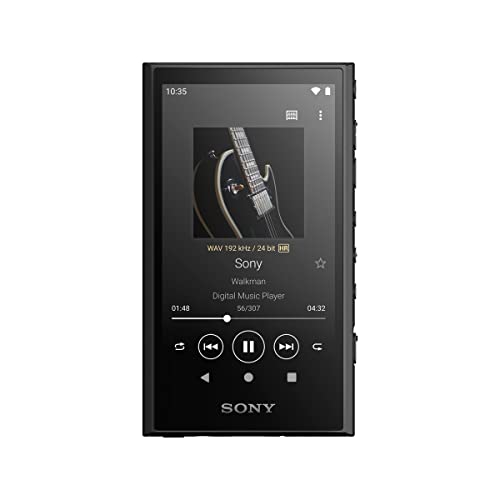
Sony NW-A306 Walkman
Badge: The pocketable mainstream pick
- Storage: 32GB built in, expandable by card
- System: Android-based, with Wi-Fi and Bluetooth
- Connection: USB Type-C
- Battery positioning: up to 36 hours in the listing’s stated use
- Focus: hi-res playback in a genuinely small body
The A306 is the player for someone who wants the DAP idea without the DAP bulk. It is small enough to disappear into a pocket that a phone already occupies, it runs the streaming services most people actually use, and it treats a personal library with the seriousness Sony has built into the Walkman line for decades. In daily life it behaves like a tiny, polite phone whose only job is music: quick to wake, easy to navigate one-handed, and undemanding to carry on a run or a commute. Its output suits earbuds and efficient headphones beautifully, which describes most real-world listening.
Strengths
- Properly pocketable size that larger audiophile players cannot match.
- Android with Wi-Fi covers streaming and local files in one device.
- Long battery endurance by the standards of screen-equipped players.
Trade-offs
- Output power is aimed at portable headphones, not demanding full-size wired sets.
- The 32GB internal storage fills quickly with lossless files, so a card is a practical necessity.
- No balanced headphone connection for listeners whose cables and headphones are built around one.
Best for: commuters, runners, and streaming-plus-library listeners with portable earbuds or easy headphones. / Not suited for: owners of power-hungry wired headphones who need a stronger, balanced output stage.

HiBy R4
Badge: Balanced output without flagship money
- System: Android 12
- Outputs: 3.5mm single-ended and 4.4mm balanced, per the listing
- Storage: 32GB internal with card expansion described as up to 2TB
- Connectivity: Bluetooth and Wi-Fi
- Positioning: a hi-fi DAP aimed squarely at wired listeners
The R4 reads like a checklist written by wired-headphone people. Both headphone connections are present, so a balanced cable is an option rather than a reason to upgrade the whole player later; the storage expands generously; and the Android base is recent enough that streaming apps behave as expected. In the hand it is a more serious, blockier object than the Sony — a tool rather than a pebble — and that honesty suits its purpose. Listeners stepping up from a phone dongle tend to hear the difference most in control: bass that stays tidy at volume, and quiet backgrounds behind delicate recordings.
Strengths
- Both 3.5mm and 4.4mm balanced outputs cover nearly every wired headphone a listener owns.
- Generous card expansion swallows a large lossless library.
- Android 12 keeps streaming apps and library management current.
Trade-offs
- Larger and more utilitarian in feel than the compact Sony.
- The experience centres on wired listening; Bluetooth is present but not the point.
- HiBy’s software polish trails the big consumer brands in small, everyday ways.
Best for: wired in-ear monitor and headphone owners who want balanced drive at a sensible tier. / Not suited for: listeners who mostly use wireless earbuds and want the smallest possible device.

FiiO M21
Badge: The DAC-heavy desktop companion
- System: Android 13 on a Snapdragon 680 platform, per the listing
- DAC hardware: four CS43198 DAC chips, per the listing
- Audio: hi-res support with DSD playback and LDAC Bluetooth
- Colour in the verified listing: blue-black
- Extra role: works as a USB DAC for a computer
FiiO builds players the way hi-fi companies build components, and the M21’s quad-DAC architecture is the headline expression of that habit. The practical meaning for a listener is a very quiet, capable output stage that also moonlights: plug the M21 into a laptop and it upgrades the computer’s sound for the desk hours, then unplugs and becomes the train player. That dual life makes it the easiest pick here to justify for someone who listens in both places, because it replaces a separate desktop DAC purchase rather than merely adding a gadget.
Strengths
- Serious DAC hardware delivers a clean, composed output for demanding headphones.
- USB DAC mode gives it a second job at a desk, improving value.
- Modern Android platform keeps apps smooth and current.
Trade-offs
- Component-first design means a chunkier carry than the compact players.
- Its abilities are wasted on wireless-only listening habits.
- Feature depth can overwhelm listeners who simply want to press play.
Best for: desk-and-travel listeners with good wired headphones who value one device doing both jobs. / Not suited for: minimalists who want the lightest possible pocket player.

JadeAudio/FiiO JM21
Badge: The lighter way into the FiiO ecosystem
- System: Android 13 on a Snapdragon 680 platform, per the listing
- Memory in the verified listing: 3GB RAM with 32GB storage
- Playback positioning: around 12.5 hours in the listing’s stated use
- Connectivity: Bluetooth and Wi-Fi, with USB DAC ability
- Colour in the verified listing: black
The JM21, sold under FiiO’s JadeAudio line, is the casual sibling: slimmer in the hand, simpler in ambition, and aimed at listeners who want a proper player for streaming and files without carrying a component. It keeps the essentials that define the category — a real headphone output, expandable thinking about storage, app freedom — and sheds the flagship hardware that most earbuds would never reveal. For a first DAP, that restraint is a virtue: it lets a listener learn whether the dedicated-player life suits them before the hobby starts suggesting upgrades.
Strengths
- Slim, light carry that suits everyday pockets and gym bags.
- Modern Android base with the FiiO ecosystem behind it.
- USB DAC ability adds desk usefulness beyond its tier.
Trade-offs
- Modest memory and storage specs ask for a card and tidy app habits.
- Output is tuned for portable headphones rather than the most demanding sets.
- Battery endurance is ordinary next to the compact Sony.
Best for: first-time DAP buyers and streaming listeners who want a light, honest player. / Not suited for: collectors with huge lossless libraries and power-hungry headphones.

Sony NW-WM1AM2 Walkman
Badge: The flagship, for listeners who hear the hobby calling
- Storage: 128GB built in
- Amplifier technology: Sony’s S-Master HX, per the listing
- Construction notes from the listing: high-polymer capacitors and an OFC milled block
- Positioning: Sony’s premium Walkman tier
- Focus: refinement of build, output, and ownership experience
Every category has a product that exists to show what the idea looks like with the budget gloves off, and in portable audio that product is the WM1AM2. The milled construction and component choices are about electrical quiet and mechanical solidity — the background behind the music stays black, and the device itself feels like an instrument rather than an appliance. Whether that refinement is worth its tier depends on the headphones attached and the listener’s appetite; paired with ordinary earbuds it is indulgence, paired with serious wired headphones it is a coherent endgame. We include it because a guide to this category that hid the flagship would be dodging the question readers most enjoy asking.
Strengths
- Reference-grade build and amplifier design from the Walkman flagship line.
- Generous internal storage for a substantial high-resolution library.
- An ownership experience — weight, finish, solidity — that cheaper players do not attempt.
Trade-offs
- Its tier only makes sense alongside equally serious wired headphones.
- Size and weight end any pretence of gym-friendly carry.
- Streaming-first listeners will never use most of what they paid for.
Best for: committed wired listeners building a long-term portable system around top headphones. / Not suited for: casual or wireless-first listeners, for whom the mid-range picks deliver the real benefits.
The five players compared
| Model | Character | Outputs and storage notes | Choose it if… |
|---|---|---|---|
| Sony NW-A306 | Compact all-rounder | 32GB plus card; USB-C; long battery positioning | You want the smallest serious player |
| HiBy R4 | Wired-first value | 3.5mm and 4.4mm balanced; card expansion to a large ceiling | Your headphones use balanced cables |
| FiiO M21 | DAC-heavy dual-role | Quad-DAC design; USB DAC mode for computers | You listen at a desk and on the move |
| JadeAudio/FiiO JM21 | Light first step | 32GB in the listing; slim body; USB DAC ability | You are trying the DAP life for the first time |
| Sony NW-WM1AM2 | Flagship statement | 128GB; S-Master HX amplification | Your headphones and library justify the top tier |
Read the table by your headphones, not by your aspirations. The player is the servant of the transducers you already own and love; upgrading the servant beyond the master’s needs buys specifications, not music. Conversely, listeners who already own demanding wired headphones will find the mid-range players transformative in a way no phone accessory manages, because the bottleneck was never the files — it was always the output.
Buying guide: the decisions that actually shape your listening
Begin with your headphones, honestly inventoried. Efficient in-ear monitors and portable headphones — the kind designed for phones — are driven well by every player here, so your choice can be made on size, software, and storage. Full-size wired headphones with a reputation for wanting power push you toward the HiBy or the FiiO M21, and toward balanced cables where the headphone supports them. If your listening is entirely wireless, be honest about that too: a player’s Bluetooth is a convenience feature, and the sound is then decided by the earbuds themselves, which makes the compact Sony or the JM21 the rational ceiling.
Storage is the second decision, and it is arithmetic rather than taste. A lossless album commonly occupies several hundred megabytes; a few hundred albums therefore need the kind of room that only card expansion provides at sane cost. Count your library, double it for the collection you will have in three years, and buy the expansion path that covers it. All five picks here can grow by card or start generously, but the discipline of counting first prevents the classic DAP regret of a beautiful player with no room for the music it was bought to play.
Software is the third decision, and the one showroom listening never reveals. Android players differ in how gracefully they handle streaming apps, offline downloads inside those apps, library scanning of tens of thousands of files, and gapless playback between tracks — the last of which matters enormously for live albums and classical works. If gapless matters to you, treat it as a headline feature, not a footnote. If you listen through a single streaming service, check that its app’s offline mode is fully supported on the player’s Android version, because a player that cannot download your playlists is a player that fails its main job.
Fourth, think about where the player will live. A device this personal gets carried, dropped, rained on, and left in gym bags. Smaller players survive more lives; larger ones reward listeners whose listening happens in chairs and on trains rather than on runs. Battery expectations should match the same map: a player used for two focused hours an evening lives a different life from one asked to soundtrack a working week, and charging habits — nightly, like a phone, or weekly, like a watch — should be chosen before the purchase, not discovered after it.
Finally, set a stopping rule. Portable audio is a hobby with a famously slippery slope, where each component suggests the next. Decide what would make you satisfied — your library, portable and properly driven, on the headphones you own — and let the purchase complete that sentence. The mid-range of this category is unusually competent; most listeners who stop there are not missing a secret tier of music, they are simply done shopping, which is its own luxury.
How to set up a new player for a library you already own
Step 1: Prepare the library before the player arrives
Tidy the files on your computer first: consistent folder structure by artist and album, embedded artwork at a sensible size, and tags you have actually checked. A player displays whatever metadata it is given, and an afternoon of tidying on a big screen saves weeks of squinting at a small one.
Step 2: Choose and format the memory card in the player
Insert the card and let the player format it if it offers to; this avoids the filesystem quirks that cause missing albums later. Copy music in batches by artist letter or genre rather than one heroic overnight transfer, so any problem is easy to locate.
Step 3: Let the library scan finish completely
Large libraries take time to index. Resist judging the player while its database is half-built — missing artwork and sluggish menus during the first scan are normal and temporary. Once the scan completes, check a handful of albums across formats to confirm everything landed.
Step 4: Set output and playback preferences deliberately
Choose your gain setting for your main headphones, confirm gapless playback is enabled if you want it, and decide whether any sound processing or equalisation is on. Start with everything flat and plain; you can season later, but you should first learn what your headphones actually sound like through the new output.
Step 5: Build the offline streaming side
Sign into your streaming service on Wi-Fi, download the playlists and albums you travel with, and test one in aeroplane mode before you rely on it at an airport. Offline failures are almost always download settings, and they are far easier to fix at home than at a gate.
Common mistakes new DAP owners make
The first is buying output power for headphones they do not own — purchasing a balanced powerhouse for earbuds that sip power, then wondering what the money bought. The second is the mirror error: pairing a gentle compact player with demanding headphones and blaming the headphones. The third is neglecting the library itself, copying a decade of chaotic downloads onto a fine player and concluding the player is disorganised. The fourth is format anxiety: chasing ever more exotic file specifications while listening on a train, where the honest difference between a well-made standard file and an enormous one is inaudible over the wheels. The fifth is forgetting the humble case and the card reader — the two cheap accessories that protect the expensive ones and make library management painless.
Final recommendation
Most readers should start where their headphones point. Portable earbuds and a streaming-plus-library life lead to the Sony NW-A306 for its size and polish, or the JM21 for a lighter first step. Wired listeners with balanced cables and real libraries belong with the HiBy R4, and desk-and-travel listeners with the FiiO M21, whose second job as a computer DAC makes it the easiest value case here. The WM1AM2 is the flagship to admire and, for the few with the headphones to justify it, to own. Whichever you choose, the reward is the same: music that gets its own device, its own battery, and your undivided attention.
Frequently asked questions
Do I need an mp3 player if I already stream on my phone?
Only if one of the three triggers applies: wired headphones your phone drives poorly, a personal library you want treated properly, or a deliberate wish to listen away from your phone’s interruptions. If none of those is true, your phone is already your player and this category can wait.
What is the difference between a DAP and an old-style mp3 player?
Classic mp3 players played local files and little else. A modern DAP adds an Android system with streaming apps, a far stronger headphone output stage, high-resolution and lossless format support, and expandable storage. The name on the box changed; the job — a device devoted to music — did not.
Is a balanced 4.4mm connection worth having?
If your headphones or earbuds offer a balanced cable, a balanced output can offer cleaner channel separation and more power, which demanding models appreciate. If everything you own is a standard 3.5mm plug, it is a future option rather than a present benefit, and should not by itself decide your purchase.
How much storage does a serious library need?
Count your albums and multiply by a few hundred megabytes for lossless copies, then double the total for growth. Most collectors land comfortably with a large memory card in any of these players; listeners with mostly streaming and a modest local collection will find even 32GB workable alongside a card.
Can these players work as a DAC for my computer?
Some can — the FiiO models here explicitly offer USB DAC behaviour, turning the player into an upgrade for a laptop’s headphone output. It is one of the strongest value arguments in the category, because the same hardware improves listening in two places.
Will a better player make cheap earbuds sound expensive?
No. A player can only deliver what the earbuds can reproduce, and the earbuds remain the bottleneck. Spend in the order the sound travels: headphones first, then the player that drives them properly. That sequence is the difference between an upgrade and a disappointment.
Related guides
our Momentum True Wireless 5 coverage
the Melomania P100 SE over-ears
Moondrop Aria 2 in-ear monitors
the best wireless earbuds for phone listening
choosing headphones for editing and critical listening
the beyerdynamic MMX 330 Pro headset
Formats, sample rates, and the hi-res question, without the fog
Readers meet a blizzard of terms here, so let us clear it in order. The everyday mp3 file is a compressed format: small, compatible with everything, and — when encoded well — far better than its reputation among purists. Lossless formats such as FLAC keep every bit of the original recording at the cost of much larger files, and they are the natural home format for a library you own. High-resolution audio extends the specifications beyond CD quality on paper; whether a given listener hears a benefit depends on the recording, the headphones, and the environment far more than on the numbers. DSD is a separate, older audiophile format found in specialist collections, supported by players like the FiiO M21 for the listeners who keep it.
The sane hierarchy for a new owner is simple. Keep your owned library in a lossless format where you have it, because storage is cheap and future-proofing is real. Do not re-buy or re-rip a collection chasing higher numbers on the box; the recording and its mastering outweigh format arithmetic every time. And judge any claimed improvement in a realistic setting — your train, your street, your office — rather than in a silent room at midnight, because a player lives in the world, not in a laboratory. Most listeners who follow that order discover their arguments about formats quietly disappear, replaced by arguments about which album to hear next, which is the correct argument to be having.
The rivals that are not players: dongles and Bluetooth DACs
A fair guide admits the alternatives. A good USB-C dongle DAC turns a phone into a genuinely capable wired source for very little money, and for listeners who always have their phone anyway, it may be the rational end of the search. Its limits are practical rather than sonic: it drains the phone, dangles from the port, shares your listening with every notification, and offers no storage or library of its own. A Bluetooth DAC-amplifier splits the difference, letting a phone stream wirelessly to a small box that drives wired headphones — convenient, but now the phone is still the library, the battery victim, and the interruption source.
The dedicated player wins when the whole pattern of your listening wants separating from the phone: long offline stretches, big owned libraries, demanding headphones, or simply the discipline of a device with one job. It loses when listening is casual, wireless, and woven through a phone-centred day. Neither verdict is a judgement of taste; they are descriptions of different lives. The most satisfied owners in this category are the ones who recognised their own pattern early and bought for it, while the least satisfied bought a flagship to fix a problem a modest dongle would have solved, or bought a dongle to fix a problem that was really about attention.
Four listening lives, four sensible setups
The commuter wants pocketability, offline reliability, and one-handed control in a crowd: the compact Sony or the JM21, a modest card of owned favourites beside the streaming downloads, and earbuds that isolate well enough to keep volume sane. The runner and gym listener wants the lightest device that survives a pocket and a playlist that never depends on signal; here the player is partly a phone-avoidance tool, keeping the expensive handset safe in a locker while the music takes the risks. The traveller wants battery and storage above all — long flights are where a big card and a downloaded library stop being specs and become the difference between a stocked jukebox and a dead screen over the ocean. The desk listener wants the dual-role device, the FiiO M21 pattern, where the player earns its keep all working day as a computer DAC and then leaves with you. Notice that none of these lives asks first about DAC chips; each asks about a day, and the hardware follows.
Battery, care, and the habits that keep a player young
Screen-equipped Android players live between phone and watch in their battery behaviour: used for focused listening with the screen mostly dark, they stretch impressively; used as small tablets with streaming over Wi-Fi and the display bright, they drain like the computers they are. The habit that matters most is charging rhythm. Lithium batteries age fastest when held at extremes, so a player charged little and often, and not left baking on a car dashboard, will hold its endurance for years. The listener who treats the player as a weekly-charge device will also be kinder to it than the one who runs it flat daily and charges it hot and fast every night.
Physically, the enemies are grit in the headphone socket, moisture in a gym bag, and drops onto hard floors. A simple case, a habit of coiling cables rather than wrapping them around the device, and keeping the player in its own pocket away from keys preserve both the finish and the sockets. The headphone jack deserves a mention of its own: it is a mechanical part, and yanking cables sideways is how good players develop crackly channels. Treat the socket gently and a player will outlast several generations of the phones it was bought to escape — one of the quiet satisfactions of the category, since a five-year-old player still plays a library perfectly while a five-year-old phone wheezes under its own software.
What to check in the first week of ownership
New owners should run a short, deliberate checklist before the return window closes. Confirm every format in your library plays and displays artwork correctly. Test gapless playback on a live album where tracks run together. Download streaming content and verify it in aeroplane mode. Pair your Bluetooth earbuds once, even if wired is your plan, so the option is proven. Listen for background hiss with your most sensitive earbuds at low volume — a clean output should be quiet — and check that both channels stay clean when the cable moves gently at the plug. Finally, copy a large batch of files and time it, because library transfers are a weekly reality and a player that makes them painful will slowly stop being fed new music. A player that passes that week without friction is a player you will still be using, happily, when the next phone generation arrives asking for your attention.
Equalisation and sound shaping: seasoning, not surgery
Most Android players offer system-wide equalisation, and used well it is the cheapest upgrade in this entire guide. The disciplined approach is subtractive and small: trim a couple of decibels where a headphone is known to shout — a harsh presence region, a boomy upper bass — rather than boosting everything you enjoy until the output clips. Save different profiles for different headphones if the player allows it, because the correction that flatters a bright in-ear monitor will dull an already warm full-size set. Listeners new to EQ should change one band at a time and live with it for a day; ears adapt quickly, and what sounds dramatic in the first minute often sounds wrong by the evening.
Equally important is knowing what EQ cannot do. It cannot give a gentle player the power to drive a demanding headphone, cannot restore detail a poor recording never captured, and cannot turn a closed, congested earbud into an open, spacious one. It adjusts balance, not physics. That is why this guide keeps returning to the pairing — player output matched to headphone need — as the decision that matters, with EQ as the final seasoning applied by a listener who already has the right ingredients in the bowl.
The second-hand and hand-me-down route
Players hold their usefulness unusually well, which makes the used market a legitimate door into the category. A previous-generation Android player with a healthy battery still streams, still plays every format that matters, and still drives headphones exactly as it did when it was current. The checks are the ones from the first-week list, applied before money changes hands where possible: battery behaviour across an hour of play, clean sockets, a screen without touch dead zones, and a factory reset completed so the device carries none of its previous owner’s accounts. Buyers who run those checks often end up with flagship-tier hardware for mid-range commitment, and the category’s long product lives mean software age is a smaller penalty here than in phones.
The same logic applies inside a household. A player retired by an upgrading listener makes a superb first device for a teenager, a parent who misses their old music collection, or anyone whose listening would benefit from a screen that cannot summon social media. Few technology purchases get a second life that gracefully; it is worth remembering when the flagship’s price makes you hesitate, because the device you buy today may serve two listeners across its years.
Why the category survives: a brief, honest history
The portable player was declared dead when the smartphone absorbed its job, and for the mass market that obituary was accurate. What survived was the part of the market the phone never truly served: listeners with serious headphones, owned libraries, and a preference for single-purpose tools. The specialist brands — FiiO, HiBy, and Sony’s Walkman line above all — rebuilt the category around Android, streaming, and output quality, turning the mp3 player from a storage device with a headphone hole into a small audio computer. The revival is modest and durable rather than explosive, which suits its customers: people who buy a player expect to keep it, and a category that sells patience rather than novelty tends to keep its promises.
That durability reframes the purchase decision one final time. A phone is replaced on a cycle set by batteries, cameras, and contracts; a player is replaced when it stops doing its one job, which may be many years away. Judged across that lifespan, even a mid-range player costs very little per hour of listening, and the flagship’s arithmetic improves too — though its premium still buys refinement rather than a different category of music. Buy the player your headphones and habits justify, keep it charged gently and cased honestly, and it will quietly out-serve flashier devices. In a technology landscape built on replacement, that is the most radical feature any of these five products offers.
Headphone pairings that show each player at its best
Because the player serves the headphones, it helps to think in pairings rather than products. Sensitive in-ear monitors — the kind that hiss on noisy sources and reach full volume quickly — pair beautifully with the compact Sony and the JM21, whose outputs are clean at low levels and whose size matches the pocketable nature of the earbuds themselves. The pairing to avoid there is a high-gain powerhouse left on its strongest setting, which compresses the usable volume range into the first few steps and makes fine adjustment fiddly. Mid-priced wired over-ears, the workhorses of home listening, find their match in the HiBy R4 and FiiO M21: enough authority to keep bass composed, balanced options for owners who recable, and no sense that the player is the weak link when a recording gets demanding. Planar magnetic headphones, famously thirsty, belong with the strongest outputs you can justify and with balanced cables; listeners in that world already know it, and for them the flagship conversation is a real one rather than an indulgence.
There is also a pairing for the ears rather than the hardware: listening level. A capable player makes high volume easy, and the discipline of keeping levels moderate is what lets a listener enjoy this hobby for decades. Players with fine-grained volume steps help, because the right level often sits between two coarse clicks on a phone. Treat the player’s headroom as dynamic freedom for the music — the quiet passages audible, the loud ones unstrained — rather than as an invitation to turn everything up, and the investment protects the very sense it was bought to please.
Troubleshooting the four problems every owner meets once
First, the library that will not scan completely: almost always a handful of files with broken tags or an unsupported oddity, cured by copying in smaller batches until the offending folder reveals itself. Second, the streaming app that will not download: check the app’s own storage permission and offline settings inside the player, because Android treats a new device cautiously until told otherwise. Third, Bluetooth that pairs with earbuds but sounds thin: confirm the player and earbuds have negotiated their best shared codec in the Bluetooth settings, and remember that a wired connection remains the reference the wireless one is approximating. Fourth, battery that drains overnight: a streaming app syncing over Wi-Fi is the usual culprit, and aeroplane mode during pure listening sessions is both a battery cure and, many owners discover, the purest way to use the device at all. None of these problems indicates a faulty player; they are the ordinary frictions of a small computer, and each has a settings-level answer.
Accessories worth owning, and the ones to skip
Three accessories genuinely earn their place beside any of these players. A fitted case is first, because the device is carried daily and its screen and sockets are its fragile points. A fast card reader for your computer is second, quietly transforming library management from a chore into a ten-minute task. Third, a short, well-made cable for your main headphones — or a balanced cable where your player and headphones both support one — because the cable is the most-handled, most-failed part of any wired system and a spare prevents a silent week. Beyond those, restraint pays. Exotic stands, boutique chargers, and audiophile USB cables promise transformations they cannot deliver to a battery-powered player; the money they ask for buys more music, or a better pair of earbuds, both of which you will actually hear. The accessory habit that matters is not acquisition but care: a small pouch for the player and its earbuds, kept in the same bag pocket every day, so the ritual of listening starts with everything in its place and ends with it returned there.
That ritual, in the end, is what owners describe when they try to explain the purchase to a sceptical friend. Not the specifications, not the formats — the ritual. A device that is only for music, a library that is truly theirs, headphones driven as they were designed to be driven, and an hour in which the rest of the digital world waits outside the door. If that sentence sounds like something your life is missing, one of the five players above is a sensible place to start; if it sounds like a solution in search of a problem, your phone has already answered, and you can close this guide with our blessing and your wallet intact.
For parents, students, and anyone buying a first player as a gift
A dedicated player makes an unusually thoughtful gift in a specific situation: the recipient loves music and is drowning in phone. For a student, a player carries the study playlist without carrying the group chat, and more than one family has bought one for exactly that reason — the homework hours get their soundtrack while the distractions stay in another room. For an older relative with a lifetime of CDs, a player loaded with their ripped collection, in a case, with one good pair of earbuds, is a gift that respects their history instead of asking them to start a streaming account. The buying advice for gifts is conservative: choose the simple, compact end of the range, preload it if you can, set the streaming app up before wrapping, and include the card reader. A gift that works in the first ten minutes gets used; a gift that begins with an afternoon of configuration becomes a drawer resident, whatever its specifications.
Students buying for themselves should weigh one more factor honestly: theft and loss. A player lives in bags and pockets in busy places, and the mid-range picks exist partly so that losing one hurts the heart more than the finances. That is not an argument against the flagship for those who can justify it; it is an argument for matching the device to the life it will actually lead, which has been this guide’s advice in every section, for every reader, from the first paragraph to this one.
Playlists, podcasts, and audiobooks on a music-first device
Not every hour on a player is music. Android-based players handle podcast and audiobook apps from the same store as the streaming services, which makes them quietly excellent spoken-word devices: downloads live offline, playback position survives the device sleeping, and the phone stays free for the maps and messages a trip actually needs. Listeners who walk with podcasts often prefer a player for the same attention reason as album listeners — the walk stays a walk, rather than becoming a scroll with steps attached. The one habit worth building is organising downloads before you need them, because spoken-word apps are generous with auto-download settings that can quietly fill a modest internal drive; point downloads at the memory card where the app allows it, and the player’s storage story stays as tidy as its owner’s intentions.
Playlists deserve a closing word, because a personal library rewards curation in a way an infinite catalogue does not. Owners consistently describe the same pleasure: a few dozen playlists that are unmistakably theirs, built over years, travelling from player to player as devices change. The files are portable in a way streaming playlists are not — they survive service changes, region moves, and account decisions — and the player is the natural home for them. If the streaming era has left your musical identity scattered across rented shelves, a device like the five above is where it can be gathered back into something you own.
A note on volume, hearing, and listening for the long term
Every benefit in this guide depends on ears that stay healthy, so a responsible player guide ends with the unglamorous truth: the most important specification is the level you choose. Capable players and isolating earbuds make it easy to listen louder than is wise, especially in noisy places where the instinct is to out-shout the train. The better habit is fit and isolation first — tips that seal properly let the music stay clear at lower levels — and volume second. Many players offer a volume limiter in their sound settings; setting it is a two-minute act of kindness to your future self. Take breaks in long sessions, keep the level where conversation would still be possible with the music paused, and treat any ringing after listening as the warning it is. The listeners who enjoy this hobby longest are not the ones with the finest equipment; they are the ones who can still hear it.
One last encouragement for the undecided: borrow the habit before you buy the hardware. Spend a week listening through a single-purpose routine — phone in another room, one album, start to finish — and notice what changes. If nothing changes, the phone was never your problem and no player will fix it. If the hour feels different in a way you want more of, you have just written your own buying guide, and the five players above are simply where that guide points.