Disclosure: As an Amazon Associate, reviewstook.com earns from qualifying purchases. Links on this page are affiliate links at no extra cost to you; prices and availability change frequently, so check Amazon for the latest.
Is a Budget Gaming PC Worth It? A Decision Framework, Not a Sales Pitch
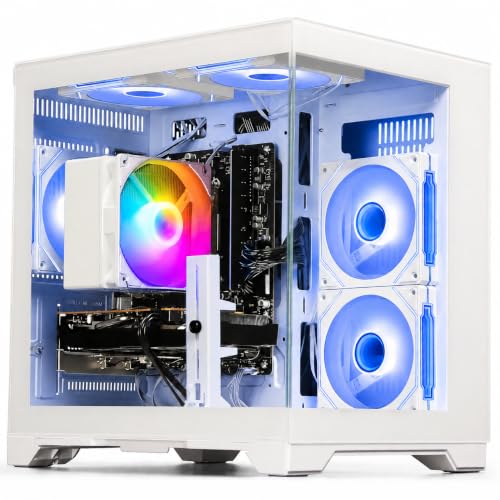
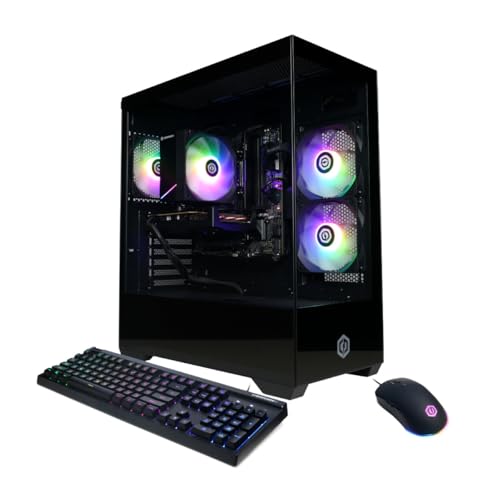
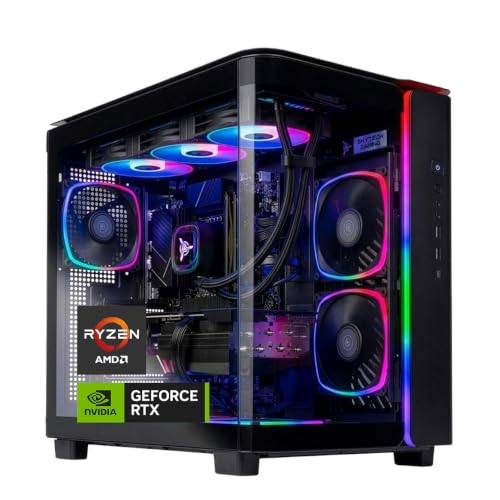
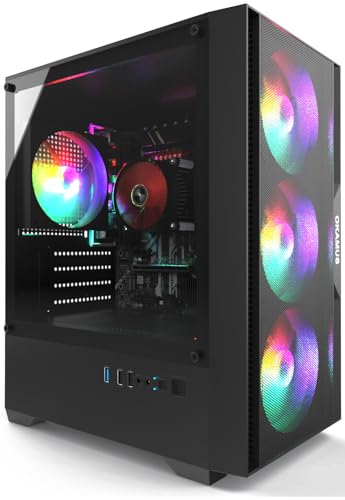
Asking is a budget gaming pc worth it deserves better than a yes with affiliate links attached. The honest answer is: worth it for identifiable people, in identifiable situations, for reasons that can be checked against your own life before you spend anything — and not worth it for other identifiable people whose money would serve them better elsewhere. This article builds the framework: what “worth it” actually decomposes into (cost per year, cost per hour, the value of everything the machine does besides gaming, and the option value of its upgrade path), then applies it to the real, verified machines on our current pick sheet — each cross-checked against Amazon’s catalog data on 2026-11-20 — so the framework lands on actual purchase decisions: the OKAMUS Pre-Built PC, the YAWYORE Gaming PC (Ryzen 5 5600GT), the CyberPowerPC Gamer Master (RX 6500 XT), the ZYNEEX Prebuilt Gaming Desktop (RTX 3050), the Volt X3 V1.2 Gaming PC (GTX 1070), and the stretch reference, the CyberPowerPC Gamer Master (RTX 5060 Ti).
Our verdict, in advance and with the reasoning below: for the way most people actually play — esports-heavy libraries, back catalogs, a machine that also does everything else — a well-chosen budget gaming PC is one of the best-value purchases in gaming. The failures of the category are failures of matching, not of concept. This article’s job is to make your match a deliberate one.
Where to Buy
When the framework below points you at a tier, the verified representatives are on Amazon: OKAMUS Pre-Built PC at the floor, YAWYORE Gaming PC (Ryzen 5 5600GT) as the platform play, CyberPowerPC Gamer Master (RX 6500 XT) for brand-backed entry, ZYNEEX Prebuilt Gaming Desktop (RTX 3050) as the complete budget package, Volt X3 V1.2 Gaming PC (GTX 1070) for older-GPU value, and CyberPowerPC Gamer Master (RTX 5060 Ti) above the tier entirely. Check the latest price on Amazon for whichever the framework selects — worth-it math at this tier is price-sensitive, and prices move. reviewstook.com links only configurations verified against catalog data.
In this guide
What “Worth It” Actually Means: Four Ledgers
Ledger one: cost per year of service. Divide what you will spend — machine plus its probable mid-life upgrades — by the years it will serve your library acceptably. Budget PCs shine here when the platform is sound: a machine that serves four years with one modest upgrade posts a yearly figure that premium hardware, replaced on the same cycle, cannot approach. They fail here when bought sealed and outgrown in eighteen months: the cheapest machine replaced soonest is the most expensive one you own.
Ledger two: cost per hour of play. Gaming hardware is entertainment, and entertainment is honestly priced per hour. A budget PC played ten hours a week reaches per-hour costs that make cinema tickets look extravagant within its first year. This ledger forgives a lot: even the stretch machines pencil out for heavy players. It condemns only the machine bought for a library that never materializes — the worth-it question is always, at bottom, about your actual hours.
Ledger three: the non-gaming dividend. A budget gaming PC is also a full computer. Homework, office work, streaming, editing, coding, the family photo library — every hour of non-gaming service is value a console never returns and a gaming-only accounting misses. For households and students, this ledger routinely carries the entire verdict by itself: the gaming is, economically speaking, the free part of a computer the household needed anyway.
Ledger four: option value. An upgradeable platform holds an option — the right, not the obligation, to become a much stronger machine for a part’s price. Options have value even unexercised: the YAWYORE owner who never adds a card still owned years of knowing they could. Sealed machines hold no such option, and their prices should be judged without one.
Add the four ledgers for your situation and the worth-it answer stops being a vibe. The next sections run the numbers qualitatively for the buyer profiles we see most — because prices move too fast to print responsibly, the arithmetic is in ratios and relationships, which stay true when the figures change.

Profile One: The Esports Player — Worth It, Emphatically
If your hours live in competitive and lightweight titles, the budget tier was built for you and the worth-it math is not close. The OKAMUS Pre-Built PC — integrated graphics, 8GB, 256GB, WiFi 6 — plays that library at the floor price of the entire category, and every ledger applauds: years of service in games that do not advance their requirements aggressively, hundreds of hours a year against a minimal outlay, a full everyday computer in the bargain. Its sealed upgrade path, the standard objection, barely matters to this profile because the ceiling sits above the library. The worth-it refinement for esports players is not a bigger PC — it is the desk: money moved from tower to peripherals (Best Budget Gaming Mice, Best Mouse Dpi For Gaming) buys more competitive performance than any internal upgrade at this level. Verdict: worth it, and the higher tiers are the waste. Check on Amazon
| CPU | Intel Core i5, up to 3.6GHz |
|---|---|
| Graphics | Integrated graphics only (no discrete GPU) |
| RAM | 8GB |
| Storage | 256GB M.2 SSD |
| PSU | 400W |
| Wireless | WiFi 6 + Bluetooth 5.3 |
| OS | Windows 11 Home |

Profile Two: The Student and the Household — Worth It on the Dividend Alone
For the buyer whose machine must do school or work first and gaming second, the non-gaming dividend carries the verdict before gaming is even counted — and the gaming that follows is effectively free. The YAWYORE Gaming PC (Ryzen 5 5600GT) is this profile’s reference machine: its maker lists game, design, and office use together because the configuration (16GB RAM, 1TB storage, strong integrated graphics, 550W 80PLUS PSU) is genuinely a good general computer that games well today and can game much better later. Run its ledgers: service life extended by the upgrade option, hours split across study and play, dividend paid daily. The CyberPowerPC Gamer Master (RX 6500 XT) serves the same household with a discrete card today and a brand’s support behind it — worth it where support is valued as insurance. Verdict for this profile: the most clearly worth-it purchase in this entire article. Check on Amazon Check on Amazon
| CPU | AMD Ryzen 5 5600GT (integrated graphics) |
|---|---|
| RAM | 16GB DDR4 3200MHz |
| Storage | 1TB M.2 NVMe PCIe SSD |
| PSU | 550W 80PLUS |
| Wireless | WiFi + Bluetooth |
| OS | See listing |
| CPU | AMD Ryzen 5 5500 |
|---|---|
| Graphics | Radeon RX 6500 XT 4GB |
| RAM | 8GB DDR4 |
| Storage | 500GB PCIe 4.0 SSD |
| Wireless | WiFi ready |
| OS | Windows 11 Home |

Profile Three: The Mixed-Library Player — Worth It, at the Sweet Spot
Your library mixes esports, back catalog, and current releases; you play several nights a week; you want one purchase to cover it without a project attached. This is the profile the ZYNEEX Prebuilt Gaming Desktop (RTX 3050) exists for — RTX 3050 with DLSS, 16GB, 1TB — and its ledgers are the budget tier’s best: a service life measured across the whole library rather than its lightest half, hours high enough to crush the per-hour figure, a dividend from streaming and editing capability the configuration genuinely supports. The worth-it question for this profile is really “budget sweet spot or stretch?” — and the CyberPowerPC Gamer Master (RTX 5060 Ti) frames it: the stretch buys headroom and a newer platform, at a premium that, spread over the same years and hours, is defensible but not necessary. Necessary is the operative word: the budget machine covers the library; the stretch machine covers it with margin. Margin is worth money to some players and not to others, and both answers are rational. Our lean: buy the sweet spot, bank the difference for the mid-life upgrade or the games themselves, and revisit in three years. Check on Amazon
| CPU | AMD Ryzen 5 5500 |
|---|---|
| Graphics | GeForce RTX 3050 6GB |
| RAM | 16GB DDR4 3200MHz |
| Storage | 1TB NVMe SSD |
| Cooling | ARGB air cooling |
| Wireless | Wi-Fi |
| OS | Windows (see listing) |

Profile Four: The Back-Catalog Explorer — Worth It, With Eyes Open
Your gaming joy is the vast, cheap, magnificent back catalog — which is also where budget hardware’s value concentrates, since those games were built for yesterday’s machines. The Volt X3 V1.2 Gaming PC (GTX 1070) is your profile’s interesting machine: its GTX 1070’s 8GB of VRAM and strong raster performance play that catalog handsomely, and PC sale pricing means your cost per game approaches pocket change. The ledgers: service life defined by a library that does not move its requirements — effectively indefinite for your purposes; hours as high as any profile’s; dividend standard. The eyes-open clause is the platform’s age: you are buying a machine whose story is its present, not its future, and the worth-it math holds precisely because your library does not ask for a future. If your exploring starts drifting toward current releases, re-run the framework — profiles change, and the machine should be allowed to change with them. Check on Amazon
| CPU | AMD Ryzen 5 2600, up to 3.9GHz |
|---|---|
| Graphics | NVIDIA GTX 1070 8GB |
| RAM | 16GB DDR4 |
| Storage | 512GB NVMe SSD |
| Wireless | WiFi + Bluetooth |
| OS | Windows 11 Pro 64-bit |
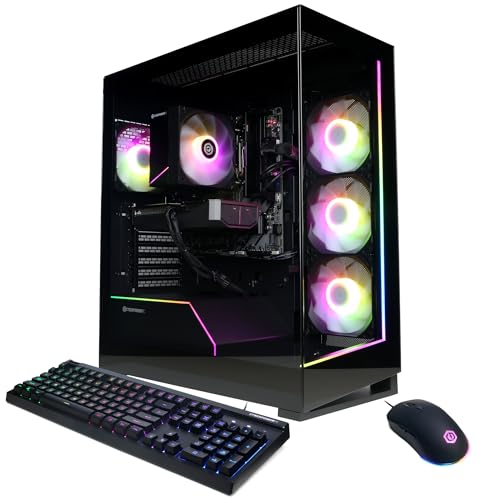
Profile Five: The Week-One AAA Player — Not Worth It, and That Is a Compliment to Your Honesty
Your library is the new-release calendar; presentation matters to you; a settings menu is a promise you intend to collect. For you, the budget tier’s central compromise lands exactly on your central pleasure, and no ledger rescues it: the per-hour cost of a machine you resent is infinite at any price. The worth-it answer for your profile is to skip the tier — save toward the CyberPowerPC Gamer Master (RTX 5060 Ti) class or beyond, where the experience you actually want lives. This profile’s section exists because “worth it” frameworks that cannot say no are advertisements. Budget PCs are worth it for most players; you, specifically, are not most players, and the framework’s credibility rests on telling you so. The tier comparison in Budget Gaming PC Vs Entry Level Gaming PC maps your alternatives precisely. Check on Amazon
| CPU | AMD Ryzen 7 8700F |
|---|---|
| Graphics | GeForce RTX 5060 Ti 8GB |
| RAM | 16GB DDR5 |
| Storage | 1TB PCIe 4.0 SSD |
| Wireless | WiFi ready |
| OS | Windows 11 Home |
The Hidden Costs and Hidden Savings, Both Directions
Honest worth-it math includes the line items nobody lists. Hidden costs of the budget tier: the probable RAM upgrade on 8GB machines; storage relief for small SSDs; the electricity is genuinely negligible, but the time cost of settings literacy is real for players who would rather not learn it; and on sealed machines, the replacement acceleration discussed above. Hidden savings, equally real: no online-play subscription, ever; game prices that undercut every other platform’s, with a back catalog priced like a used bookstore; free-to-play libraries of genuine quality; peripherals and monitors that carry across machines and decades; and the resale or hand-me-down value of a working PC, which in most households means the machine’s service life continues in a second room long after its gaming prime. Tally both columns for your profile before concluding — most buyers who do find the savings column longer, which is the category’s quiet secret. The formal balance sheet is Budget Gaming PC Pros And Cons; the selection method, once the verdict is yes, is How To Choose A Budget Gaming PC.
When the Answer Changes: Timing and Alternatives
Worth-it is time-sensitive in both directions. Prices at this tier move with sales cycles enough to promote a machine a full value class — the framework should be run at purchase time against live prices, which is why this article prints none. The alternatives deserve their honest sentence each: a console is worth it over a budget PC when pure gaming is the whole purpose and the TV is the venue; a gaming laptop is worth it when portability is a requirement rather than a preference; building your own is worth it when the building is part of the pleasure or parts are already owned; waiting is worth it when your current machine still serves your library and a known release or sale season is close. And doing nothing is worth it — the correct answer, occasionally — when the library you dream of playing exists mainly in the intention to buy the PC. Buy for the player you are, measured in hours actually played; the framework, the profiles, and the ledgers all reduce to that sentence.
One more timing consideration belongs to budget buyers specifically: the setup dividend. A budget PC’s worth-it math assumes the free performance in How To Set Up Budget Gaming PC is collected — drivers, memory profile, upscaling, display configuration. An untuned budget machine delivers perhaps four-fifths of the experience its price bought; the hour of setup is, in ledger terms, the highest-return hour in the entire purchase. Complete the desk on the same principle: Best Gaming Keyboard And Mouse Combos keeps the whole setup in budget proportion, and proportion is what makes the total figure — the one your bank account experiences — stay in the tier where all these ledgers sing.
Final Verdict
Is a budget gaming PC worth it? For esports players: emphatically. For students and households: on the dividend alone. For mixed-library players at the sweet spot: yes, with the stretch tier as a luxury rather than a necessity. For back-catalog explorers: yes, with eyes open about platform age. For week-one AAA maximalists: no — and a framework that can say no is the only kind worth trusting with your yes. Choose from the verified end of the field, set the machine up properly, and the budget tier returns what it promises: the most gaming, computing, and freedom per dollar available anywhere in the hobby.
The Comparison Nobody Puts in the Article: Doing Nothing
Every worth-it analysis quietly assumes the alternative is another purchase. Often the real alternative is the machine already on your desk, and the framework should face it: if your current PC still plays your actual library acceptably, a budget gaming PC is worth it only when something has changed — a new game that matters to you, a household that has outgrown one shared machine, a reliability problem that has stopped being charming. Upgrade and replacement decisions made from restlessness rather than from a named change are how good money follows vague feelings. Conversely, when the named change exists — the library has genuinely moved, the old machine’s ceiling genuinely binds weekly — delay has its own cost that the ledgers above can price: months of the hobby spent negotiating with hardware instead of playing. The framework’s discipline is symmetric. It talks you out of purchases your life does not support, and it talks you into, promptly and without guilt, the ones it does.
Worth It, Priced in the Currency of Games
One more ledger deserves development because PC gamers feel it intuitively and rarely see it stated: the games themselves. A budget PC’s owner buys games in an ecosystem of deep, frequent sales, vast bundles, subscription-optional libraries, and a back catalog priced like a thrift store — and mods extend the life of the games already owned, sometimes by years. Priced across a three-year span, a typical budget-PC library costs strikingly less than the same hours bought at full price on any closed platform, and the difference is not small change: for many players it approaches the price difference between the budget machine and the tier above it. This is the sense in which the budget PC can be more worth it than a nominally stronger purchase elsewhere — the platform’s economics subsidize the hobby continuously, long after the hardware decision is forgotten. Buyers comparing sticker prices across platforms are comparing the first chapter of two very different cost stories; the framework exists to read the whole book.
The Resale and Hand-Me-Down Ledger
Budget PCs exit their first life unusually well, and a complete worth-it accounting should credit it. A working tower with a standard case has a second career waiting in most households — the family PC, the kids’ machine, the media or file server, the relative’s first computer — and each year of that second service is value the purchase price already paid for. Machines with real platforms (the YAWYORE class) hand down best, since their next owner inherits the same upgrade options; sealed machines hand down as fixed appliances, still useful within their limits. Even the parts carry forward: the SSD, the monitor, the peripherals, often the case and power supply in a future build. Consoles hand down too, of course — but a general computer’s second life is broader, because the world’s need for another games console is narrower than its need for another computer. When the framework’s ledgers are close, this residual value is a legitimate tiebreaker, and it breaks toward the PC.
Regret, Studied: The Two Ways This Purchase Goes Wrong
Worth-it frameworks earn their keep by naming failure modes precisely, and this purchase has exactly two common ones. The first is aspiration mismatch: buying the floor machine for a library — or a self-image — that lives in current releases, then spending a year negotiating with settings menus and blaming the category. Its prevention is the honest game list, and its signature is that the buyer knew, at purchase time, and hoped otherwise. The second is false economy: buying the sealed machine when the platform machine was within reach, then paying the difference anyway — in an early replacement — with interest. Its prevention is the four-year ledger rather than the sticker, and its signature is a buyer who optimized the day of purchase against the years of ownership. Notice what is absent from the failure list: buying the budget machine and enjoying it for years, which is the modal outcome; buying the sweet spot and finding it sufficient, ditto; stretching to the tier above for a heavy library, which is the framework working as designed. Regret in this category is not random — it is scheduled by two specific mistakes, both of which you have now been shown in daylight. Avoid them, and the worth-it question mostly answers itself in the affirmative.
The Counterfactual Wardrobe: What the Same Money Buys Elsewhere
Worth-it judgments sharpen against alternatives, so let the same budget walk through the other doors. As a console plus its online subscription across a few years, it buys superb gaming value and nothing else — no homework machine, no creative platform, no upgrade path — and for the pure gamer that trade is often correct, as this article has conceded from the start. As a gaming laptop, it buys portability at a performance discount and an upgrade ceiling near zero; worth it exactly when the machine must move. As a tablet or phone ecosystem spend, it buys convenience and a different, smaller hobby. As parts for a self-build, it buys the best raw specification per dollar and charges the difference in time, risk, and the absence of a whole-system warranty — a trade this framework scores as worth it for the experienced and the enthusiastic, and not for the first-timer whose goal is playing games this week. And as money unspent — saved toward a higher tier — it buys the future machine at the cost of the present one’s absence, which is worth it precisely when the present library demands the higher tier, per Profile Five. The budget gaming PC’s claim survives this walk not by winning every door but by being the only one that opens onto gaming, computing, creating, and upgrading simultaneously at the lowest total price — the versatility ledger, again, doing the heavy lifting it has done throughout this article.
A Worksheet: Your Worth-It Answer in Ten Minutes
Close the article by running your own numbers through the framework, qualitatively but concretely. Write down: (1) your five most-played games and the tier they require; (2) your realistic weekly gaming hours — the per-hour ledger’s input, and the figure buyers most often flatter; (3) the non-gaming jobs this machine will do weekly, priced honestly against the alternative of buying or keeping a separate computer; (4) your upgrade temperament, from evidence — the last three devices you owned, improved or replaced; (5) the machine class the first four answers select, from the profiles above; and (6) the four-year cost of that class — purchase plus its one likely mid-life spend — divided by the years and compared against the same figure for the tier above. If the worksheet’s answer is the budget tier, buy it from the verified field without second-guessing; the analysis you have just done is more rigorous than most purchases ever receive. If it selects a higher tier, the framework has still earned its keep — a worth-it article that only ever concludes “yes” would not deserve the name, and neither would a budget PC bought against the evidence of your own worksheet.
The Opportunity-Cost Confession: What Budget Buyers Actually Give Up
A worth-it framework that lists only the other side’s costs is rigged, so here is this side’s honest bill. Buying budget means giving up the flagship experience in the specific titles that define each release season — not forever, and not entirely (upscaling and patience recover much of it), but the launch-week, settings-maxed, screenshot-worthy version of gaming is not this tier’s product, and pretending otherwise is how mismatch regret is manufactured. It means giving up a measure of effortlessness: the budget owner learns settings, watches a driver note, occasionally waits for an optimization patch that flagship hardware never needed. And it means giving up a certain social currency in hardware conversations, which is trivial and also real, and which the framework prices at exactly what it is worth to each buyer — zero for most, nonzero for some, decisive for none who have run the ledgers honestly. Set against the article’s four ledgers, these costs are the premium the other tiers charge to remove. Some buyers should pay it. The framework’s whole argument is that most players, most of the time, are buying removal of costs they would rarely have incurred — and that the players for whom the costs are weekly and central can identify themselves by Profile Five and act accordingly.
Five Years On: The Worth-It Answer at the End of the Story
Project the framework forward to the moment of replacement, when worth-it stops being a prediction. The budget machines that were worth it share a biography: they were matched to a real library at purchase, tuned in their first hour, upgraded at most once and on plan, and retired — usually into a second household role — with their owners describing them in the past tense of good tools. The ones that were not worth it share the opposite biography, and notably, it is never the hardware’s specifications that their owners cite; it is the mismatch, the sealed ceiling, the library that was imagined instead of listed. That retrospective is the framework’s final evidence: worth-it was never a property of the machine. It is a property of the match — between library and tier, temperament and platform, budget and time horizon — and matches are made by buyers, in the ten honest minutes the worksheet asks for. Spend those minutes and the budget gaming PC is, for the large majority of the people who play games, worth it in the only sense that survives five years: you would make the same decision again, knowing everything you know now.
The Inflation Test: What Happens to the Answer as Prices Move
Frameworks should declare their sensitivities. This one’s answer flips under three price movements, and knowing them tells you when to re-run the analysis rather than trust an old conclusion. If the sweet-spot tier’s price rises toward the stretch tier’s — as happens when a graphics generation turns over badly — the budget case weakens at exactly the profile (mixed-library) where it is usually strongest, and the stretch or the wait becomes the framework’s answer. If the floor and platform tiers discount deeply, as in clearance seasons, profiles that were marginal — the household hesitating between one shared machine and none — tip firmly into worth-it, because the dividend ledger was already carrying them and the price was the only objection. And if game prices or subscription costs on closed platforms rise, the PC’s ecosystem ledger lengthens without the hardware changing at all — the worth-it answer can improve while every machine in this article stays exactly the same, which is the surest sign that the framework was measuring the right things: not the box, but the life around the box. Re-run the ledgers at your purchase moment, with your moment’s prices, and the framework will give you your moment’s honest answer.
Worth It for the Planet and the Street: A Brief External Ledger
One final accounting, offered briefly because it decides few purchases and informs many. A budget PC — upgraded in place, handed down, retired into a second role — is among the least wasteful ways to own computing: its parts are standard, its life is long, its second careers are real. A sealed floor machine is the category’s exception, closer to disposable, and buyers who weigh this ledger have one more reason to choose the platform end. Local economies figure too: the second-hand market in standard PC parts is deep and liquid, meaning a budget PC’s components retain usefulness and modest value in your own community rather than in a landfill’s future. None of this outranks a library mismatch or a broken budget — the framework’s main ledgers govern — but as a tiebreaker it points the same direction as the economics do, toward the platform machines, and a decision that is right on the money and right on the externalities is a decision that tends to stay made.
The Answer, Delivered to Four Specific Doorsteps
Frameworks conclude in the abstract; let this one conclude at four doorsteps. To the parent at the electronics aisle, list in hand: yes — buy the platform machine, set it up with your kid, and let the graphics card be next year’s milestone; you are purchasing a computer, a hobby, and a curriculum in one box, and it is worth it on any ledger we know. To the student counting a semester’s savings: yes — the YAWYORE class was designed by the market for exactly your constraint, and its dividend starts paying the first week of term. To the lapsed gamer with a decade of unplayed purchases: yes, and emphatically — your library is the budget tier’s home ground, your cost per hour will be the envy of this article, and the Volt or the ZYNEEX will feel less like a compromise than like a key turning in a lock. To the enthusiast hovering over the floor machine because the price is dazzling: no — not for you, not this tier, and the dazzle is the mismatch forming in real time; save the difference, buy your actual tier, and let this article’s no be the most valuable sentence in it. Four doorsteps, three yeses and a no, each earned by the same framework — that ratio, roughly, is the category’s honest reputation, and it is a good one.
The Dissenting Appendix: The Strongest Case Against, Steelmanned
A framework that cannot state the opposition’s best case has not finished thinking, so here it is at full strength. The case against the budget gaming PC runs: gaming is a visual medium whose defining experiences each generation are set by flagship hardware; a budget machine therefore buys a permanently diminished version of the hobby’s center, while its versatility dividend is a rationalization — most households already own a computer-shaped object for the homework and the email. The cheap-games ledger, the dissent continues, flatters the platform: back catalogs are cheap everywhere eventually, and time, not money, is the real price of a library nobody finishes. And the upgrade path is a treadmill dressed as a virtue, converting one honest purchase into a subscription of small ones. This is a serious case, and the framework answers it seriously: the diminished-center argument is decisive for Profile Five and only for Profile Five, because most players’ hours demonstrably do not live at the center it describes; the dividend is not a rationalization in households where the gaming PC is the computer, which is most of the budget market; the cheap-games ledger survives because it is measured in the same years the dissent measures; and the treadmill is a property of sealed platforms and undisciplined owners, not of the platform tier chosen on purpose. The dissent’s residue — the part the framework keeps — is its warning against self-deception: do not call a mismatch a value. With that warning absorbed, the framework’s verdicts stand, and stand stronger for having faced their best opposition in print.
The Framework’s Final Stress Test: Three Rapid-Fire Cases
Before the verdict section closes the article, run the framework at speed against three cases designed to break it. Case one: the buyer whose library is one game. A single competitive title, played seriously for years. The ledgers collapse beautifully: the tier that game needs is the floor, the per-hour cost approaches zero within months, the dividend is whatever the machine does between matches, and the upgrade option is worthless because the game’s requirements barely move. Verdict: the OKAMUS class, worth it beyond argument — the framework’s easiest case, and a common one. Case two: the buyer whose taste is prestige. The games matter less than the having — the flagship, the settings, the screenshots shared. The framework’s honesty is tested here because the ledgers all say the budget machine suffices for the games, while the buyer’s actual utility lives in the ownership experience the budget tier does not sell. Verdict: not worth it for this buyer, and the framework says so without sneering — a purchase matched to a utility it cannot deliver is a mismatch whatever the spreadsheets claim. Case three: the household that will share one machine among four people. The dividend ledger explodes in value, the library is a coalition’s compromise, the platform’s longevity outranks any single player’s tier, and the storage and memory specs become the framework’s heroes. Verdict: worth it, in the ZYNEEX or YAWYORE form, by the widest margin in this article. Three cases, three different shapes of yes and no, one framework unbroken — which is what frameworks are for.
The Last Ledger: Time, Attention, and the Hobby’s Real Currency
Every ledger in this article has been denominated in money or its proxies, and the framework owes its final honesty to the currency that actually governs a hobby: time and attention. A budget PC asks for a modest tithe of both — the setup hour, the settings literacy, the occasional optimization evening — and returns, to the player who pays the tithe gladly, a hobby that is cheaper in money and richer in understanding. To the player for whom the tithe is pure cost, the same machine is a worse purchase than its ledgers claim, because its price was never only its price. This is the final form of the article’s recurring conclusion: worth-it is a match, and matches are made of temperaments as much as of budgets and libraries. You have now seen the framework from every side — its ledgers, its profiles, its dissent, its stress tests, its doorsteps. The answer it gives for most players is yes, and it gives that yes the way a friend should: with the exceptions named, the conditions stated, and the worksheet in your hand. Decide like it matters, because for the next several years of evenings, it does.
Postscript: The Question Behind the Question
People rarely ask “is it worth it?” about money alone. Underneath the arithmetic sits a quieter question — will I regret this? — and it deserves the article’s final direct answer. Regret, in this category, does not come from the tier; it comes from the mismatch, the sealed ceiling bought for a growing library, the flagship appetite fed a floor machine, the platform premium paid by a never-upgrader. Every one of those regrets is visible in advance through the framework’s lenses, which is a rarer property than it sounds: most purchases that disappoint do so for reasons nobody could have checked. This one disappoints, when it does, for reasons printed in this article. That is the deepest sense in which the budget gaming PC is worth it — not merely that its ledgers balance for most players, but that its risks are knowable, its terms are stated, and its buyer can walk in with both eyes open and both hands on the decision. Purchases like that are the ones people describe, years later, as money well spent. Make yours one of them.
Sign-Off: The Framework in One Breath
List your real games. Price the years, the hours, the dividend, and the option. Match the machine to the profile you actually are. Buy from the verified field, tune it in the first hour, and let the question close behind you. That is the whole framework, and for most players its answer is the one this article reached by the long road: yes — worth it, on purpose, with eyes open.
Frequently Asked Questions
Is a budget gaming PC worth it in 2026?
For most players, yes — the current field’s integrated graphics and entry cards are strong enough that the budget tier covers the most-played libraries completely, and the PC’s versatility and cheap games compound the value. The exception is the newest-release-focused player, for whom the tier’s compromises land on the point of the hobby.
How long before a budget gaming PC pays for itself versus a console?
There is no single date, but the mechanisms are steady: no online subscription, cheaper games, and the non-gaming dividend all accrue monthly. Households that needed a computer anyway are ahead from day one; pure gamers comparing hardware alone should weigh the console’s raw gaming value honestly, as Budget Gaming PC Buying Guide does.
What is the biggest risk to a budget PC being worth it?
Mismatch — buying a sealed floor machine for a growing library, or any budget machine for week-one AAA expectations. The second risk is skipping setup: an untuned machine returns a fraction of its value. Both risks are fully avoidable before and just after purchase.
Does the upgrade path really add value if I might never upgrade?
Yes, as an option: it extends the machine’s potential service life, which supports both its useful years and its hand-me-down value. But do not pay a large premium for headroom on a machine whose library will never need it — the OKAMUS’s sealed honesty beats unused potential for a fixed light library.
Is it worth stretching from a budget PC to an entry or mid-range one?
Worth it when your library includes current releases you play weekly — the headroom converts directly into experience. Not worth it when the stretch only buys insurance against games you do not play. The profiles above are the test; the ZYNEEX-to-5060-Ti comparison is the typical form of the question.
Are there hidden costs that change the math?
Small ones: a likely RAM upgrade on 8GB models, storage management on small SSDs, and your own time learning settings. They are outweighed for most buyers by the hidden savings — no subscription, cheap games, peripheral longevity — detailed in the hidden-costs section above.
What should I do first if I decide yes?
Run the selection method in how to choose a budget gaming pc against your real game list, buy from the verified field, then spend the first hour on how to set up budget gaming pc before playing. Our hands-on assessment of the current machines is in budget gaming pc review.