Disclosure: As an Amazon Associate, reviewstook.com earns from qualifying purchases. Links on this page are affiliate links; they cost you nothing extra. Prices and availability change often, so check the current Amazon listing before you buy.
A fortnite controller choice is really three choices: the connection (wired, 2.4GHz, or Bluetooth), the platform (PC, PlayStation, Xbox, or Switch — licensing decides what works where), and the extras that matter in a building shooter, above all back buttons for jump and edit without leaving the sticks. This guide works through all three and anchors on a verified, well-rounded wireless controller.
Fortnite on controller is a distinct discipline: aim assist behaviour, build and edit binds, and claw-versus-paddles ergonomics shape what ‘best’ means. The guide assumes you play on controller deliberately, and optimises for that rather than apologising for it.
Key takeaways
- Back buttons or paddles are the single biggest upgrade for building and editing
- Platform licensing is a hard constraint — a great controller that your console rejects is worthless
- Stick drift resistance (hall effect or TMR sensors) protects a controller’s second year
- Wired still wins for zero-latency simplicity; modern 2.4GHz is close enough for most players
Where to buy
Every linked pick in this guide is sold through Amazon, and each product section below carries a plain link to its listing so you can check price on Amazon and confirm the current configuration, colour, and bundle contents before ordering — those details change between listings under the same product name more often than readers expect, and for fortnite controller the configuration is half the decision. If a pick is out of stock in your region, the prose-only alternatives named in this guide cover the same roles without a link, deliberately, because they could not be verified to the same standard.
In this guide
Quick picks at a glance
| Product | Best for |
|---|---|
| 8BitDo Ultimate 2 Wireless Controller | The drift-resistant wireless pick with dock for PC and mobile |
How these picks were chosen
Each linked product below was checked against Amazon’s own catalog data for this site before the guide was written: the exact listing title, the configuration it describes, and an official product image all had to be present and consistent. Products that failed that check — wrong generation, ambiguous bundles, or listings whose titles did not match the product being discussed — were either dropped or demoted to prose-only mentions. That process matters for fortnite controller because this is a category where near-identical names hide meaningfully different products, and a link to the wrong generation is worse than no link at all.
Start with the decision that matters most
When readers ask about fortnite controller, the useful answer almost always depends on context they have not stated yet, so this section builds that context deliberately. Worth underlining: building and editing demand jump, edit, and confirm on buttons your thumbs never leave the sticks to reach. That one fact explains a surprising amount of the disagreement you will find in owner discussions and review comments. That is not a footnote for fortnite controller; it is the kind of detail that quietly decides whether owners recommend a product or quietly replace it. None of this requires expert knowledge — it requires being honest about your own habits for about five minutes.
Treat fortnite controller as a system of small trade-offs that add up, because no single headline feature decides the experience. In practice, measurements of your actual space, load, and usage beat every general recommendation, including this guide’s. That sounds like a small point, yet it shapes comfort, reliability, or cost every single time you use the product or follow the advice. That is not a footnote for fortnite controller; it is the kind of detail that quietly decides whether owners recommend a product or quietly replace it. The sections that follow keep returning to this idea from different angles, because it is the one most likely to change what you buy or do.
Reading the specifications like a sceptic
Treat fortnite controller as a system of small trade-offs that add up, because no single headline feature decides the experience. Worth underlining: aim feel depends on stick tension, deadzone settings, and the game’s own settings more than on brand. That one fact explains a surprising amount of the disagreement you will find in owner discussions and review comments. None of this appears in a specification table, which is precisely why it belongs in a guide rather than a listing. Hold onto that thought; the FAQ at the end answers the follow-up questions it usually raises.
It helps to separate what fortnite controller promises on paper from what changes in practice once it is part of your day. The practical test is simple to describe and hard to fake: keeping exact model numbers and purchase records matters, because support and resale both depend on precise identification. If an option handles that well, it usually handles the rest of the routine well too. Readers who internalise this point about fortnite controller tend to make one purchase and keep it, rather than cycling through alternatives. The sections that follow keep returning to this idea from different angles, because it is the one most likely to change what you buy or do.
Matching the technology to your room, desk, or ears
The honest way to judge fortnite controller is to picture a normal week of use rather than a single exciting first hour. The detail that matters here is that hall-effect and TMR sticks resist the potentiometer wear that causes drift, the most common controller death. Readers often skip past it because it is not glamorous, but it is exactly the sort of thing that separates a good outcome from an annoying one. None of this appears in a specification table, which is precisely why it belongs in a guide rather than a listing. The sections that follow keep returning to this idea from different angles, because it is the one most likely to change what you buy or do.
Setup decisions that lock in the experience
When readers ask about fortnite controller, the useful answer almost always depends on context they have not stated yet, so this section builds that context deliberately. In practice, trigger stops help shooting games marginally; in Fortnite the buttons matter more. That sounds like a small point, yet it shapes comfort, reliability, or cost every single time you use the product or follow the advice. Readers who internalise this point about fortnite controller tend to make one purchase and keep it, rather than cycling through alternatives. That is the lens to carry into the buying guidance below, rather than treating every criterion as equally important.
Keeping the result good over time
Before any comparison makes sense, pin down what fortnite controller has to do well in your own routine. This is also where expectations need adjusting, because gyro aiming transforms controller play on platforms that support it, notably Switch and PC. Going in with that understood prevents the most common disappointment with this category. That is not a footnote for fortnite controller; it is the kind of detail that quietly decides whether owners recommend a product or quietly replace it. If that matches your situation, weight it heavily; if it does not, you can safely care about the next section more.
The picks in detail

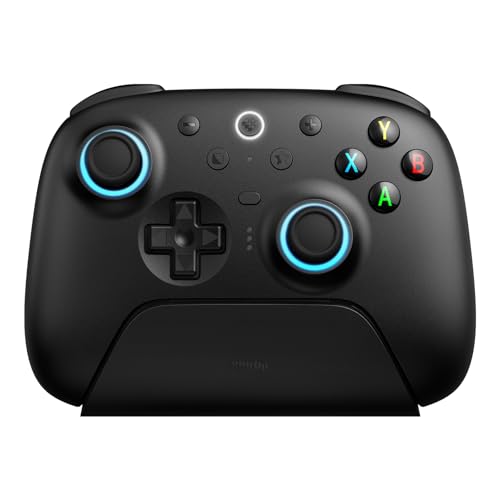
8BitDo Ultimate 2 Wireless Controller — The drift-resistant wireless pick with dock for PC and mobile
The drift-resistant wireless pick with dock for PC and mobile
This pick earns its place for a specific reason rather than by being adequate at everything.
According to its catalog listing, this is a wireless controller with TMR joysticks, hall effect triggers and a charging dock, aimed at PC, Apple, Steam and Android per the manufacturer listing. For fortnite controller, translate that into practical questions before you buy: does it fit the space, ears, desk, room, or system it has to live with; does its control scheme suit how you actually work or play; and does its support story — firmware, parts, warranty handling — look like something you can live with for years. Those answers, not the headline feature, decide whether this is the right pick for you.
Included in this guide because of its role in the fortnite controller decision: the drift-resistant wireless pick with dock for pc and mobile. Its verified listing describes a wireless controller with TMR joysticks, hall effect triggers and a charging dock, aimed at PC, Apple, Steam and Android per the manufacturer listing, and the sections around this pick explain where that specification set helps and where it does not.
Strengths
- Clear, well-defined role in this category rather than a vague all-rounder promise
- A mature product line with predictable behaviour and support
- Design choices favour daily usability over showroom novelty
Trade-offs
- Its strengths are quiet ones, so it rarely wins a five-minute first-impression test
- Not the natural choice if your priority is the single headline metric rivals advertise
- Availability of specific colours or configurations fluctuates between listings
Best for: readers whose fortnite controller decision turns on the drift-resistant wireless pick with dock for pc and mobile
Not suited for: readers who have already ruled out this style of product for reasons covered in the criteria sections above
How to judge fortnite controller properly
Performance headroom
Do not let a marketing label settle Performance headroom for you; the implementation matters more than the label. Here is the version that matters for fortnite controller: battery and dock convenience decide whether a wireless controller is ready at session start. It is not the most exciting line in any listing, but it is the one your future self will care about. This criterion alone explains most of the price spread in the category, so it is worth understanding rather than skipping.
Compatibility and standards
A fair test for Compatibility and standards takes about a week of normal use, which is why first impressions are unreliable here. In the context of fortnite controller, the deciding detail is that official licensing decides compatibility on PlayStation and Xbox in particular — read it before falling in love with a feature list. Once you know to look for it, product pages become much easier to read critically. Readers who get this right rarely return products; readers who guess are the ones writing frustrated comments later.
Thermals and noise
When two options look identical on paper, Thermals and noise is usually where the real difference hides. For fortnite controller specifically, the working detail is this: grip texture and weight decide long-session comfort in creative practice sessions. Build your shortlist around whether an option handles that well, and treat everything else as secondary polish. Score each candidate on this before you look at anything else, and be suspicious of any option that is vague about it.
Power and efficiency
Of all the criteria in this guide, Power and efficiency is the one readers most often misjudge in both directions. In the context of fortnite controller, the deciding detail is that a controller’s software — remapping, profiles, deadzones — is half the product for competitive players. Once you know to look for it, product pages become much easier to read critically. This criterion alone explains most of the price spread in the category, so it is worth understanding rather than skipping.
Upgrade path
A fair test for Upgrade path takes about a week of normal use, which is why first impressions are unreliable here. In the context of fortnite controller, the deciding detail is that price tiers in controllers buy durability and buttons, not aim. Once you know to look for it, product pages become much easier to read critically. Score each candidate on this before you look at anything else, and be suspicious of any option that is vague about it.
Physical fit and installation
Do not let a marketing label settle Physical fit and installation for you; the implementation matters more than the label. In the context of fortnite controller, the deciding detail is that cable routing and service access decide how painful the next upgrade will be, long before it happens. Once you know to look for it, product pages become much easier to read critically. If a listing cannot tell you this clearly, that vagueness is itself useful information about the option.
Value over the product’s life
A fair test for Value over the product’s life takes about a week of normal use, which is why first impressions are unreliable here. Here is the version that matters for fortnite controller: a stable system you understand beats a freshly changed one you do not, especially before important work. It is not the most exciting line in any listing, but it is the one your future self will care about. Readers who get this right rarely return products; readers who guess are the ones writing frustrated comments later.
Real situations, worked through
Picture (‘a PC player moving from keyboard for comfort’, ‘a feature-rich wireless pad with back buttons and a dock is the natural landing’). The temptation in this situation is to overbuy, but the better move is to match the option to the actual demand, which is that noise is a property of the whole system, and the loudest component sets the floor for all the others. Anything beyond that is money spent on headroom you may never use. Readers in this position should ignore most of the comparison table and focus on the two rows that map to this scenario.
Take a concrete case: (‘a PlayStation competitor’, ‘licensing narrows the field first; back buttons narrow it further’). What decides success here is not the headline feature but the fit between the option and the routine, and the routine has a fixed shape: if an upgrade path exists, write the intended order down; plans fade faster than hardware ages. Choose for that shape and the rest tends to fall into place. Readers in this position should ignore most of the comparison table and focus on the two rows that map to this scenario.
Picture (‘a Switch player’, ‘gyro support is the feature to shop for’). What decides success here is not the headline feature but the fit between the option and the routine, and the routine has a fixed shape: long-term ownership is shaped by headroom — in power, thermals, and capacity — more than by any peak specification. Choose for that shape and the rest tends to fall into place. If that is your situation, the recommendation in this guide narrows to one or two options very quickly.
Consider the reader who writes in most often about this: (‘a young player whose controllers keep drifting’, ‘drift-resistant sticks are the entire brief’). The failure mode in this scenario is predictable: people optimise for the impressive part and neglect the mundane part, when in reality standards evolve slowly and then suddenly, so checking the current revision before buying protects the whole system. Getting the mundane part right is the whole game here. That scenario is common enough that it gets its own mention in the mistakes section below as well.
A practical walkthrough
None of these steps needs special tools, but doing them out of order creates most of the problems readers report.
Step 1: Confirm your platform’s licensing first
Do not treat this as a formality. The point of the step is that compatibility is binary and decided before features, and skipping the check is how small setup errors turn into weeks of vague dissatisfaction.
Step 2: Map back buttons before judging them
At this stage the goal is simple: give jump and edit a full week on paddles before deciding they feel wrong. Do it slowly the first time, check the result before moving on, and write down anything that behaves unexpectedly so you can compare later.
Step 3: Set deadzones on your actual controller
At this stage the goal is simple: small, deliberate deadzone tuning beats copying a professional’s numbers. Do it slowly the first time, check the result before moving on, and write down anything that behaves unexpectedly so you can compare later.
Step 4: Charge through a dock or a routine
This is the step people rush, and rushing it is expensive later. The substance is that a controller that is always ready gets used; one that is flat gets blamed. Verify it in the most boring, literal way available before you continue.
Step 5: Re-check stick calibration monthly
This is the step people rush, and rushing it is expensive later. The substance is that software checks catch early drift while warranty still helps. Verify it in the most boring, literal way available before you continue.
The mistakes that cause most regrets
It is an understandable mistake, because the marketing points exactly the wrong way. In concrete terms, buying an unlicensed controller for a console that will reject it. Once you see the pattern, you will spot it in forum advice everywhere — and learn to discount that advice accordingly.
Nothing wastes money in this category quite like the following pattern. Specifically: judging back buttons in one evening and abandoning them. The fix costs nothing but attention, and it changes the outcome more than spending more usually does.
It is an understandable mistake, because the marketing points exactly the wrong way. What actually happens is that copying a professional’s full settings onto different hardware. The disappointment that follows gets blamed on the product, when the real cause was the decision process.
This error shows up in reader messages about fortnite controller more than any other. In concrete terms, ignoring drift resistance in a game played daily for years. Once you see the pattern, you will spot it in forum advice everywhere — and learn to discount that advice accordingly.
Most people meet fortnite controller through one specific frustration, and that frustration should drive every later decision. Worth underlining: when a specification is stated as an ‘up to’, plan around the sustained figure, because sustained behaviour is daily life. That one fact explains a surprising amount of the disagreement you will find in owner discussions and review comments. None of this appears in a specification table, which is precisely why it belongs in a guide rather than a listing. That is the lens to carry into the buying guidance below, rather than treating every criterion as equally important.
Most people meet fortnite controller through one specific frustration, and that frustration should drive every later decision. None of this is obvious from a product photo or a headline, which is why it is worth stating plainly: the used market rewards recognised models whose variants are easy to identify and verify. That is not a footnote for fortnite controller; it is the kind of detail that quietly decides whether owners recommend a product or quietly replace it. Keep that in mind as the later sections narrow the choice down, because it filters out options that look strong in isolation.
A useful rule for fortnite controller: the detail you notice every day matters more than the detail that impresses you once. None of this is obvious from a product photo or a headline, which is why it is worth stating plainly: changing one variable at a time is the only reliable diagnostic method when a system misbehaves. Readers who internalise this point about fortnite controller tend to make one purchase and keep it, rather than cycling through alternatives. Decisions about fortnite controller get much easier once this point is settled, and much harder when it is left vague.
Before any comparison makes sense, pin down what fortnite controller has to do well in your own routine. There is a second layer worth naming: cable routing and service access decide how painful the next upgrade will be, long before it happens. Once you see it, several otherwise confusing differences between options start to make sense. That is not a footnote for fortnite controller; it is the kind of detail that quietly decides whether owners recommend a product or quietly replace it. None of this requires expert knowledge — it requires being honest about your own habits for about five minutes.
When readers ask about fortnite controller, the useful answer almost always depends on context they have not stated yet, so this section builds that context deliberately. This is also where expectations need adjusting, because a stable system you understand beats a freshly changed one you do not, especially before important work. Going in with that understood prevents the most common disappointment with this category. None of this appears in a specification table, which is precisely why it belongs in a guide rather than a listing. That single clarification removes most of the noise from the decision, leaving a short list that genuinely fits.
Before any comparison makes sense, pin down what fortnite controller has to do well in your own routine. Consider how this plays out over months rather than minutes: noise is a property of the whole system, and the loudest component sets the floor for all the others. Long-term behaviour is where cheaper or simpler options quietly win or lose. If you take one practical habit from this section, let it be checking this point before money changes hands. That is the lens to carry into the buying guidance below, rather than treating every criterion as equally important.
Living with it: care, costs, and the long term
Start with the situation you actually face, not the spec sheet, when you think about fortnite controller. None of this is obvious from a product photo or a headline, which is why it is worth stating plainly: ownership costs stay predictable when you leave headroom in the power, thermal, and capacity budgets instead of running every component at its limit. If you take one practical habit from this section, let it be checking this point before money changes hands. Decisions about fortnite controller get much easier once this point is settled, and much harder when it is left vague.
It helps to separate what fortnite controller promises on paper from what changes in practice once it is part of your day. The practical test is simple to describe and hard to fake: standards in this area move slowly but decisively, so checking the current revision of a connector or rating before buying protects the whole build. If an option handles that well, it usually handles the rest of the routine well too. The effect compounds over time, so its importance grows the longer you own or live with the choice. None of this requires expert knowledge — it requires being honest about your own habits for about five minutes.
When readers ask about fortnite controller, the useful answer almost always depends on context they have not stated yet, so this section builds that context deliberately. The detail that matters here is that a five-minute measurement of your actual case, desk, or board space prevents the most common compatibility failure in this category. Readers often skip past it because it is not glamorous, but it is exactly the sort of thing that separates a good outcome from an annoying one. The effect compounds over time, so its importance grows the longer you own or live with the choice. The sections that follow keep returning to this idea from different angles, because it is the one most likely to change what you buy or do.
The honest way to judge fortnite controller is to picture a normal week of use rather than a single exciting first hour. In practice, keeping the purchase records and the exact model numbers matters, because support and resale both depend on identifying the precise variant. That sounds like a small point, yet it shapes comfort, reliability, or cost every single time you use the product or follow the advice. The effect compounds over time, so its importance grows the longer you own or live with the choice. Hold onto that thought; the FAQ at the end answers the follow-up questions it usually raises.
Start with the situation you actually face, not the spec sheet, when you think about fortnite controller. In practice, dust and heat are the two slow enemies of every build; a cleaning rhythm and sane airflow do more for lifespan than any single premium part. That sounds like a small point, yet it shapes comfort, reliability, or cost every single time you use the product or follow the advice. Readers who internalise this point about fortnite controller tend to make one purchase and keep it, rather than cycling through alternatives. None of this requires expert knowledge — it requires being honest about your own habits for about five minutes.
Before any comparison makes sense, pin down what fortnite controller has to do well in your own routine. Consider how this plays out over months rather than minutes: when a specification is stated as ‘up to’, plan around the sustained figure rather than the peak, because sustained behaviour is what you will live with. Long-term behaviour is where cheaper or simpler options quietly win or lose. That is not a footnote for fortnite controller; it is the kind of detail that quietly decides whether owners recommend a product or quietly replace it. If that matches your situation, weight it heavily; if it does not, you can safely care about the next section more.
Before any comparison makes sense, pin down what fortnite controller has to do well in your own routine. Worth underlining: the used market in this category is active, which rewards buying recognised models whose variants are easy to identify later. That one fact explains a surprising amount of the disagreement you will find in owner discussions and review comments. None of this appears in a specification table, which is precisely why it belongs in a guide rather than a listing. That is the lens to carry into the buying guidance below, rather than treating every criterion as equally important.
It helps to separate what fortnite controller promises on paper from what changes in practice once it is part of your day. Worth underlining: firmware and driver updates occasionally change performance behaviour, so a stable system you understand beats a freshly updated one you do not. That one fact explains a surprising amount of the disagreement you will find in owner discussions and review comments. It also explains why opinions about fortnite controller polarise: people are often reporting different situations as if they were the same one. If that matches your situation, weight it heavily; if it does not, you can safely care about the next section more.
Before any comparison makes sense, pin down what fortnite controller has to do well in your own routine. Worth underlining: cable management is not cosmetic here; it decides airflow, service access, and how painful the next upgrade becomes. That one fact explains a surprising amount of the disagreement you will find in owner discussions and review comments. That is not a footnote for fortnite controller; it is the kind of detail that quietly decides whether owners recommend a product or quietly replace it. Hold onto that thought; the FAQ at the end answers the follow-up questions it usually raises.
Before any comparison makes sense, pin down what fortnite controller has to do well in your own routine. Consider how this plays out over months rather than minutes: if a build will be upgraded in stages, write the intended order down now, because memory of a plan fades faster than the hardware does. Long-term behaviour is where cheaper or simpler options quietly win or lose. Readers who internalise this point about fortnite controller tend to make one purchase and keep it, rather than cycling through alternatives. Keep that in mind as the later sections narrow the choice down, because it filters out options that look strong in isolation.
Most people meet fortnite controller through one specific frustration, and that frustration should drive every later decision. Consider how this plays out over months rather than minutes: noise is a system property, not a component property — the quietest part cannot rescue a loud neighbour in the same case. Long-term behaviour is where cheaper or simpler options quietly win or lose. Readers who internalise this point about fortnite controller tend to make one purchase and keep it, rather than cycling through alternatives. None of this requires expert knowledge — it requires being honest about your own habits for about five minutes.
The honest way to judge fortnite controller is to picture a normal week of use rather than a single exciting first hour. In practice, testing a change one variable at a time is the only reliable way to know what fixed, or broke, a build. That sounds like a small point, yet it shapes comfort, reliability, or cost every single time you use the product or follow the advice. It also explains why opinions about fortnite controller polarise: people are often reporting different situations as if they were the same one. The sections that follow keep returning to this idea from different angles, because it is the one most likely to change what you buy or do.
Beyond the headline specifications
The honest way to judge fortnite controller is to picture a normal week of use rather than a single exciting first hour. The practical test is simple to describe and hard to fake: a build log — a simple note of parts, settings, and changes — repays its five minutes at every future troubleshooting session. If an option handles that well, it usually handles the rest of the routine well too. None of this appears in a specification table, which is precisely why it belongs in a guide rather than a listing. None of this requires expert knowledge — it requires being honest about your own habits for about five minutes.
Start with the situation you actually face, not the spec sheet, when you think about fortnite controller. There is a second layer worth naming: thermal behaviour in summer is the honest test of any cooling decision made in winter. Once you see it, several otherwise confusing differences between options start to make sense. The effect compounds over time, so its importance grows the longer you own or live with the choice. That is the lens to carry into the buying guidance below, rather than treating every criterion as equally important.
Most people meet fortnite controller through one specific frustration, and that frustration should drive every later decision. The detail that matters here is that the order of upgrades matters: relieving the true bottleneck first makes every later change feel larger. Readers often skip past it because it is not glamorous, but it is exactly the sort of thing that separates a good outcome from an annoying one. The effect compounds over time, so its importance grows the longer you own or live with the choice. That single clarification removes most of the noise from the decision, leaving a short list that genuinely fits.
The honest way to judge fortnite controller is to picture a normal week of use rather than a single exciting first hour. This is also where expectations need adjusting, because cable spares and a small kit of screws and adapters end more build delays than any premium component. Going in with that understood prevents the most common disappointment with this category. That is not a footnote for fortnite controller; it is the kind of detail that quietly decides whether owners recommend a product or quietly replace it. None of this requires expert knowledge — it requires being honest about your own habits for about five minutes.
A useful rule for fortnite controller: the detail you notice every day matters more than the detail that impresses you once. Worth underlining: when a system will be moved, serviced, or shipped, physical robustness becomes a performance specification. That one fact explains a surprising amount of the disagreement you will find in owner discussions and review comments. That is not a footnote for fortnite controller; it is the kind of detail that quietly decides whether owners recommend a product or quietly replace it. None of this requires expert knowledge — it requires being honest about your own habits for about five minutes.
When readers ask about fortnite controller, the useful answer almost always depends on context they have not stated yet, so this section builds that context deliberately. The practical test is simple to describe and hard to fake: benchmarks measure a moment; your workload over a month is the dataset that should steer money. If an option handles that well, it usually handles the rest of the routine well too. That is not a footnote for fortnite controller; it is the kind of detail that quietly decides whether owners recommend a product or quietly replace it. Hold onto that thought; the FAQ at the end answers the follow-up questions it usually raises.
Before any comparison makes sense, pin down what fortnite controller has to do well in your own routine. None of this is obvious from a product photo or a headline, which is why it is worth stating plainly: a quiet system at idle and a capable system at load are both achievable, but only when curves and components are chosen together. The effect compounds over time, so its importance grows the longer you own or live with the choice. If that matches your situation, weight it heavily; if it does not, you can safely care about the next section more.
A useful rule for fortnite controller: the detail you notice every day matters more than the detail that impresses you once. There is a second layer worth naming: keeping one known-good spare of the cheapest critical parts turns potential downtime into an inconvenience. Once you see it, several otherwise confusing differences between options start to make sense. Readers who internalise this point about fortnite controller tend to make one purchase and keep it, rather than cycling through alternatives. None of this requires expert knowledge — it requires being honest about your own habits for about five minutes.
Start with the situation you actually face, not the spec sheet, when you think about fortnite controller. In practice, documentation from the manufacturer, read once, prevents the majority of installation errors in this category. That sounds like a small point, yet it shapes comfort, reliability, or cost every single time you use the product or follow the advice. None of this appears in a specification table, which is precisely why it belongs in a guide rather than a listing. Keep that in mind as the later sections narrow the choice down, because it filters out options that look strong in isolation.
Before any comparison makes sense, pin down what fortnite controller has to do well in your own routine. Consider how this plays out over months rather than minutes: if a part will outlive the rest of the build, its warranty and support deserve weight beyond its price. Long-term behaviour is where cheaper or simpler options quietly win or lose. None of this appears in a specification table, which is precisely why it belongs in a guide rather than a listing. That single clarification removes most of the noise from the decision, leaving a short list that genuinely fits.
A useful rule for fortnite controller: the detail you notice every day matters more than the detail that impresses you once. None of this is obvious from a product photo or a headline, which is why it is worth stating plainly: second-hand components are rational when the model is recognised, testable, and priced for its age. None of this appears in a specification table, which is precisely why it belongs in a guide rather than a listing. That is the lens to carry into the buying guidance below, rather than treating every criterion as equally important.
Treat fortnite controller as a system of small trade-offs that add up, because no single headline feature decides the experience. Worth underlining: power, cooling, and acoustics form a triangle: improving one corner by ignoring the others moves the problem rather than solving it. That one fact explains a surprising amount of the disagreement you will find in owner discussions and review comments. Readers who internalise this point about fortnite controller tend to make one purchase and keep it, rather than cycling through alternatives. Decisions about fortnite controller get much easier once this point is settled, and much harder when it is left vague.
Most people meet fortnite controller through one specific frustration, and that frustration should drive every later decision. This is also where expectations need adjusting, because the best time to record your settings is the day they work, not the day they stop working. Going in with that understood prevents the most common disappointment with this category. If you take one practical habit from this section, let it be checking this point before money changes hands. Decisions about fortnite controller get much easier once this point is settled, and much harder when it is left vague.
A useful rule for fortnite controller: the detail you notice every day matters more than the detail that impresses you once. There is a second layer worth naming: a build that serves for years is usually the one whose owner resisted one unnecessary change. Once you see it, several otherwise confusing differences between options start to make sense. It also explains why opinions about fortnite controller polarise: people are often reporting different situations as if they were the same one. Hold onto that thought; the FAQ at the end answers the follow-up questions it usually raises.
Most people meet fortnite controller through one specific frustration, and that frustration should drive every later decision. The detail that matters here is that measuring before and after a change, however roughly, converts opinion into knowledge. Readers often skip past it because it is not glamorous, but it is exactly the sort of thing that separates a good outcome from an annoying one. If you take one practical habit from this section, let it be checking this point before money changes hands. Keep that in mind as the later sections narrow the choice down, because it filters out options that look strong in isolation.
It helps to separate what fortnite controller promises on paper from what changes in practice once it is part of your day. The detail that matters here is that compatibility lists exist because combinations fail in ways individual specifications never predict. Readers often skip past it because it is not glamorous, but it is exactly the sort of thing that separates a good outcome from an annoying one. Readers who internalise this point about fortnite controller tend to make one purchase and keep it, rather than cycling through alternatives. The sections that follow keep returning to this idea from different angles, because it is the one most likely to change what you buy or do.
Frequently asked questions
What is the best controller type for Fortnite?
Plan on it being a gradual difference rather than a dramatic one. Because a licensed pad for your platform with back buttons and drift-resistant sticks, the improvement shows up as fewer small annoyances across a week, not as a single obvious moment — which is exactly why it is worth having.
Are back buttons really worth it?
For most people, yes — with one condition worth stating. The condition is that for building and editing without claw grip, yes — they are the competitive standard. Meet it and the answer stays yes; ignore it and even the best-regarded option in the category will disappoint you in a predictable way.
Wired or wireless?
The short answer is that it depends on wired for simplicity; modern 2.4GHz wireless is effectively tied for most players, and the longer answer is the rest of this guide in miniature. For most readers the practical position is: decide that one variable first, then apply the criteria sections in order, and the right option usually identifies itself without much drama.
Does gyro matter?
The short answer is that it depends on on Switch and PC it is a genuine aiming advantage for players who learn it, and the longer answer is the rest of this guide in miniature. For most readers the practical position is: decide that one variable first, then apply the criteria sections in order, and the right option usually identifies itself without much drama.
How do I stop stick drift?
Not necessarily, and this is where generic advice misleads. The deciding factor is that buy drift-resistant stick technology and keep the controller clean; drift is wear, not bad luck. Readers whose situation matches that description should follow the main recommendation; everyone else should look at the alternative flagged in the scenario sections.
Can one controller cover PC and console?
Plan on it being a gradual difference rather than a dramatic one. Because some can; licensing decides, so check each platform you own, the improvement shows up as fewer small annoyances across a week, not as a single obvious moment — which is exactly why it is worth having.
Final verdict: Fortnite Controller
Filter by your platform’s licensing, demand back buttons and drift-resistant sticks, and give the paddles a week before judging them. The verified pick below is a well-rounded wireless example of that formula for PC and mobile players; console players should apply the same checklist inside their platform’s licensed range, using this guide’s criteria as the filter.