Disclosure: As an Amazon Associate, reviewstook.com earns from qualifying purchases. Links on this page are affiliate links; they cost you nothing extra. Prices and availability change often, so check the current Amazon listing before you buy.
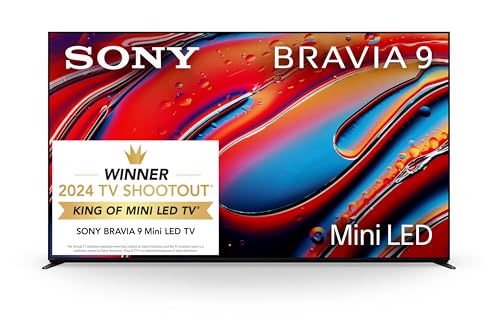
The flagship badge concentrates every argument a manufacturer knows how to make, and bravia 9 ii — the refreshed generation of Sony’s top television tier — arrives carrying all of them: the brightest panel the company sells, the fullest processing, the most ambitious design. Evaluating bravia 9 ii honestly means resisting both the brochure and the backlash, because flagship tiers are neither the rip-offs cynics describe nor the necessities showrooms imply. They are instruments for specific rooms and specific eyes.
This guide explains what the flagship tier exists to do, which of its advantages are visible from a real sofa and which live only in measurement charts, and how to verify the current generation’s claims as listings appear. The verified Bravia 3 II in this series anchors the other end of the range, and the distance between the two — in money and in picture — is itself the most useful review of both.
Key takeaways
- The flagship tier buys brightness headroom, the best dimming behaviour, and design — not a different brand of processing
- Its advantages are largest in bright rooms and in HDR highlights; in a dark room the tiers below close much of the gap
- Verify the current generation’s specification and measurements before paying flagship money
- Most households are better served by a lower tier plus a soundbar; flagship buyers should know exactly which gap they are paying to close
- The II refresh has no verified listing yet; the current Bravia 9 (K-65XR90) linked below is the verified flagship buy today — it is not the II model
In this guide
What a flagship tier is actually for
A flagship television is a manufacturer’s proof of capability, built to win showroom comparisons and measurement contests, and priced with a margin that subsidises the range below it. That is not a criticism — it is the economics that let the same company sell you an excellent mid-tier set. The flagship’s genuine gifts are headroom: brightness it rarely needs, dimming finesse visible in the hardest scenes, and build quality you feel in the stand and the remote before the screen ever lights.
Judged as a purchase, the flagship asks one question: does your room and your eyesight cash the headroom in? A bright, glass-walled living room spends brightness daily. A cinephile who watches in the dark spends dimming finesse nightly. A household that watches broadcast television on a wall across a normal room spends neither, and for that household the flagship is a beautiful answer to questions nobody asked. Sony’s own range makes the point — the tiers below share the processing DNA, which is the part of the picture that survives every lighting condition.
Brightness: the flagship’s loudest claim
Peak brightness figures headline every flagship launch, and they are real: the top tier’s Mini LED array can push highlights — sun glinting on water, an explosion’s core, stadium floodlights — to intensities that make HDR feel physical. The honest context is that these peaks occupy small areas for short moments, and that a well-mastered film spends most of its life far below them. The flagship advantage is therefore episodic rather than constant: invisible for long stretches, then suddenly, briefly, the whole point.
Sustained full-screen brightness is the quieter figure and the one bright rooms live by. A flagship that holds its output across a whole sunlit football pitch, without the automatic limiting that dims lesser sets, earns its tier in a glass-walled room in a way no dark-room measurement captures. When verifying this generation, look for sustained figures and thermal behaviour over minutes, not the laboratory’s favourite small-window peak. Retailers will quote the peak; reviewers who measure both are the ones to trust.
Dimming, design, and the remaining tenths
Local dimming at the flagship level is an exercise in restraint: thousands of zones deciding, frame by frame, how to spend light without halos around bright objects or crushed detail in shadows. The best implementations disappear; you notice them only when a lesser set in another room blooms around subtitles and you realise yours never did. This finesse, more than brightness, is what flagship owners cite years later, because it improves every dark scene rather than the occasional highlight.
Design completes the tier: slimmer profiles, premium stands with cable management that respects the room, remotes that feel machined rather than moulded. None of it changes a pixel, and all of it changes the ownership experience in a space you live in daily. Dismissing design as vanity is easy in a review and harder in a living room you sit in for a decade. The flagship premium is partly a furniture purchase, and it is more honest to admit that than to pretend the money bought only lumens.
The value argument, taken seriously
The case against any flagship is arithmetic: the tier below delivers the same processing and most of the picture for substantially less, and the difference funds a soundbar, a calibration, and a year of streaming subscriptions. That argument wins in most rooms, and this guide will not pretend otherwise. The flagship’s defence is narrower and specific — the bright room that defeats lesser sets, the enthusiast who sees dimming artefacts the way musicians hear a flat note, the buyer who keeps a television for twelve years and amortises the premium into irrelevance.
If you are in one of those defences, buy without apology and verify like a sceptic: model code on the manufacturer’s page, authorised seller, measured reviews, delivery-day uniformity checks. If you are not, the bravest sentence in television shopping is ‘the tier below is enough’, and Sony’s range — from the verified 3 II upward — is built to make that sentence comfortable. Flagships exist so that the rest of the range can be excellent; needing one is optional, appreciating one is easy.
The flagship as a decade purchase
Flagship pricing makes sense only across flagship timeframes, so evaluate the purchase as a decade of evenings rather than a season of novelty. Across ten years, the premium over the tier below divides into a modest monthly figure, and the set’s headroom — brightness that absorbs rising HDR standards, processing that ages slowly, build that survives moves and redecoration — is what that figure rents. The calculation fails only when the household replaces televisions on a short cycle, in which case no flagship from any maker survives its own arithmetic and the performance tier is the honest ceiling.
Decade thinking also disciplines the accessories: a mount rated with margin, cables of the current full specification run once and properly, surge protection worthy of the panel’s value. Flagships die of their installations more often than of their panels — a cheap mount, a cable pinched at installation, a decade of dust in an unventilated cabinet. Buy the set like infrastructure and install it like infrastructure, and the flagship tier’s promise of a long, uneventful reign is the one its makers can actually keep.
Showroom traps: how flagships are made to look inevitable
Retail environments are engineered for flagship separation: demo reels mastered to exploit peak brightness, lighting that flatters the most expensive panel’s strengths, and the tier below deliberately fed a lesser signal or left in a vivid mode’s distortions. A buyer who wants the truth should ask for the same content, in the accurate preset, on both sets — a request any serious retailer will honour — and should watch a dark scene and a bright one, because flagships win the bright reel by design and must earn the dark one honestly.
Distance is the other trap: showrooms audition at two metres, sofas sit at three or four, and several flagship advantages — fine dimming gradations, peak highlight detail — compress with distance toward the tier below’s performance. Judge from your sofa’s distance, with your room’s content, and the flagship must then justify itself in the only court with jurisdiction. Sometimes it will; that is what the tier is for. But it should win at your distance, in your light, or not at all.
What flagship money buys when the tier below is already excellent
The flagship question is the hardest in television buying because the honest answer begins with diminishing returns. The tier below a flagship is, in a modern range, a superb television; the flagship’s job is to find the remaining few percent in brightness control, processing finesse, design, and sound, and to serve the viewer who watches critically enough, in a demanding enough room, to collect those percent. This article’s framework exists to identify that viewer without flattering everyone into believing they are one.
| Axis | What the flagship tier typically maximises | Who actually collects the difference |
|---|---|---|
| Backlight control | The finest dimming the maker can build: more zones, smarter algorithms, less blooming | Dark-room film viewers who watch the darkest scenes in the catalogue |
| Peak brightness with discipline | Highlights that blaze without lifting the blacks around them | HDR enthusiasts with the discs and streams mastered to show it |
| Processing headroom | The best engine, given the hardest jobs: low-quality sources, motion, tone mapping | Households feeding the set broadcast and older content alongside premium streams |
| Design and materials | Finishes, stands, and cable management that treat the set as furniture | Rooms where the television is a visible object sixteen hours a day |
| Built-in sound | The maker’s best on-board audio, sometimes genuinely room-filling | Buyers who will not add a soundbar and want the set to carry films alone |
Notice that every row’s collector is a specific, describable viewer. That is the flagship’s nature: it is not a better television for everyone, it is a precisely better television for someone. The rest of this guide is about establishing, with evidence from your own viewing life, whether that someone is you.
Confirmed versus unconfirmed at the top of the range
Flagship refreshes attract the boldest claims in the industry, because the audience for them reads specifications like sports statistics. Until the maker publishes full specifications for the exact model and size, and independent reviewers publish measurements, the responsible description of a refreshed flagship is a lineage description: the role it inherits, the technologies its family is known for, and the specific questions its launch must answer. This guide maintains that discipline deliberately, and the sources note for this article records what is verified and what remains expectation.
- Safe lineage expectations: the flagship’s position above the mini-LED tier, the maker’s best processing generation, a full gaming feature set, and premium design and sound ambitions, because a maker does not demote its own flagship quietly.
- Claims that require verification: any specific brightness figure, zone count, new backlight technology naming, and pricing, each of which is a favourite of rumour and each of which the maker’s documentation will settle definitively.
- The buyer’s correct posture: treat launch coverage as a trailer, not a review. The film itself arrives with spec sheets and measurements, and flagship money is exactly the money that should wait for the film.
There is a second reason for patience at this tier: flagship pricing moves the most across a model’s first year. The early buyer pays for scarcity and novelty; the later buyer often pays remarkably less for the identical object, with a year of measurements as a free bonus. At attainable tiers that arithmetic is gentler; at the flagship it is a headline feature of the purchase.
The flagship audition: tests that separate tiers honestly
- The subtitle test. White subtitles over a near-black scene, in a darkened room. Blooming control, the flagship backlight’s core claim, is either visibly superior here or the tier gap is not in the backlight.
- The specular test. Sunlight on water, chrome, a torch in a cave: brief, intense highlights inside dark frames. This is the exact stress the flagship’s brightness-with-discipline engineering exists for, and lesser sets either dim the highlight or lift the cave.
- The bad-source test. An ordinary broadcast channel or an old favourite stream. Flagship processing earns its keep on the content you actually watch, and a set that only shines on demo reels is a showroom animal.
- The viewing-angle test. Flagships often invest in angle performance so the whole sofa gets the picture the centre seat paid for. Walk to your room’s worst seat and judge colour and contrast from there.
- The sound-alone test. One film scene with dialogue and score, no soundbar. If built-in sound is part of the flagship’s price justification in your plan, it should survive a scene you know well.
Run those five against the tier below, in the same store session if you can, and the flagship must win the tests that match your viewing or concede the sale. That is a fair fight, and flagships that fear it are telling you something.
The verified pick available today: the current Bravia 9

Sony 65 Inch BRAVIA 9 (K-65XR90) — the current verified flagship, not the II model
The flagship’s verified buy today, framed honestly: this is the current Bravia 9, not the unlisted II refresh
The same honesty rule applies here as throughout this guide: no listing for a refreshed Bravia 9 II model has been verified, and the set below is not presented as one. What has been verified is the current flagship — a 65-inch Mini LED QLED 4K HDR Smart Google TV (K-65XR90) with Dolby Vision and Dolby Atmos, dedicated PS5 features, XR Backlight Master Drive dimming, X-Wide Angle viewing, X-Anti Reflection screen treatment, and 4K movie credits included. That is the flagship proposition this guide keeps returning to: the range’s best backlight control, viewing-angle and reflection handling aimed at real rooms rather than dark showrooms, and the full gaming feature set. Judge it by the audition tests above, as the current generation — not as a promise about its successor.
Key specifications (from the verified listing): 65-inch Mini LED QLED panel; 4K HDR; Google TV; Dolby Vision/Atmos; PS5 features; XR Backlight Master Drive; X-Wide Angle; X-Anti Reflection.
Strengths
- The range’s flagship Mini LED backlight control via XR Backlight Master Drive
- X-Wide Angle and X-Anti Reflection target real, lit living rooms directly
- Dolby Vision/Atmos and dedicated PS5 features complete the flagship suite
Trade-offs
- It is the current generation, not the II refresh — flagship money should never pay for a badge that is not on the box
- In a fully dark cinema room, the tiers below close much of the visible gap
- Only the 65-inch size is verified here; other sizes need the same verification discipline
Best for: flagship buyers in bright, wide rooms who want the verified current generation now
Not suited for: buyers holding out for a specific II-model claim — wait for that listing to be verified instead
The alternative allocations: what else flagship money can do
- The tier below plus a serious soundbar is the allocation that beats the flagship for most film nights, because sound is half the experience and the tier below’s picture is already excellent. Price this combination honestly before defaulting to the flagship.
- The tier below plus a larger size trades the last contrast refinements for immersion, and in rooms with the viewing distance to support it, size is the upgrade viewers report noticing most a year later.
- The flagship plus patience remains a legitimate strategy: decide the model, set a price you consider fair, and let the model’s own pricing curve come to you across its first year, with measurements accumulating meanwhile.
- The flagship, full stop, is the right allocation when your room is a dedicated dark space, your content is premium, your viewing is critical, and the audition tests above showed you differences you cannot unsee. That buyer exists; this article’s respect for them is why it refuses to oversell the tier to everyone else.
Money spent at the top of a range should be spent with the clearest eyes in the whole purchase, because the amounts are largest and the marginal differences are smallest. Clarity, not enthusiasm, is the flagship buyer’s defining virtue.
The decade view: buying a flagship as a long-term object
Flagships are bought on launch weekends and lived with for a decade, and the decade’s perspective changes which specifications matter. Processing support and platform updates determine whether the set feels current in year six; panel behaviour determines whether it still delights in year eight; and the maker’s parts and service network determines whether a year-nine fault is a repair or a replacement. The launch conversation covers none of these, because they cannot be photographed, which is why flagship buying guides owe their readers a longer clock than the news cycle runs on.
The platform question has a reassuring answer at this level: flagship models sit at the top of their makers’ support priorities, receiving updates early and for longest, because their owners are the brand’s ambassadors. The panel question favours the flagship’s engineering headroom: a backlight and processing chain built with margin ages more gracefully than one built to a price, in the same way a larger engine works less hard at motorway speed. Neither advantage appears in a first-week review, and both compound quietly into the ownership experience that makes flagship buyers repeat the purchase a decade later.
| Ownership horizon | What matters most | Flagship’s position |
|---|---|---|
| Year one | Picture quality, features, the launch premium’s sting | At its most expensive and least proven |
| Years two to four | Software updates, household habits forming around it | Support priority shows; price regret fades |
| Years five to seven | Continued app support, panel consistency | Engineering headroom becomes visible against ageing lesser sets |
| Years eight to ten | Parts, service, and the platform’s eventual stick-based refresh | The maker’s network is the asset being tested |
Amortised across that decade, the flagship premium divides into a modest annual figure, which does not make it automatically wise but does make it honestly arguable. The buyer who will keep the set for three years and upgrade should not pay decade prices; the buyer whose last television served eleven years is the flagship’s natural citizen, and for them the tier below can be the false economy.
Design as function: stands, cables, and the room’s sightlines
Flagship design budgets are easily mocked as vanity until you live with their objects. A stand that allows a soundbar to sit beneath the screen without blocking it, feet whose positions adapt to narrower furniture, cable channels that make the rear of the set presentable in an open-plan room where the back is visible: these are functions disguised as styling, and they solve daily problems that lesser designs leave to improvisation and visible cable nests.
The screen’s own finish belongs in the same ledger. Anti-reflection treatments at this level are engineered rather than applied, and in rooms with lamps and windows opposite the set, the difference between a flagship’s reflection handling and a lesser set’s is visible in every evening scene. It is one of the few flagship advantages that operates in bright rooms as powerfully as in dark ones, and buyers auditioning only in darkened showroom bays systematically underrate it.
- Measure the furniture, not the diagonal. Flagships are wide objects with wide stances; the stand’s footprint, not the screen size, decides whether your cabinet hosts it. Bring the stand’s measurements to the listing, not just the panel’s.
- Plan the soundbar’s home before the set arrives. Centre-stand designs and soundbar modes that use the television’s speakers as a centre channel exist precisely at this tier; knowing whether your plan uses them changes which model in the range you should buy.
- Treat wall mounting as a design decision with a service cost. A flush flagship on a wall is a beautiful object that makes port access and cable changes into events. If your household swaps consoles and boxes often, a stand preserves your sanity at a small aesthetic price.
Design, in short, is the flagship tier’s promise that the object will fit your room’s life as precisely as its picture fits your eyes, and it should be audited with the same scepticism as the picture: in your room’s dimensions, with your furniture, under your lamps.
The flagship and the formats: HDR ecosystems and gaming futures
A flagship purchase is partly a bet on format ecosystems, because the set must speak the languages your sources will use across its decade. HDR format support is the visible part of that bet: the premium formats differ in how they carry scene-by-scene instructions to the panel, and a flagship that speaks all the major ones frees you from checking a disc’s or a service’s badge against your set’s list. The invisible part is processing headroom for standards still arriving, in gaming especially, where refresh and sync expectations have moved within single console generations.
Gaming at this tier should be audited as a future-proofing exercise. The checklist is the ports’ full bandwidth on enough sockets for two consoles and a PC, the sync technologies across both console and graphics-card ecosystems, and the set’s behaviour with the low-latency mode engaged, where some sets quietly surrender picture features the buyer paid for. A flagship that keeps its processing virtues in game mode is rarer and more valuable than its specification page admits, and reviewers who measure game-mode behaviour are the ones to read before flagship money moves.
None of this future-proofing is absolute, and the honest flagship buyer holds two ideas at once: this is the most prepared television its maker sells, and something in year four will still arrive that it cannot do. The premium buys the longest runway available, not immunity from the future, and buyers who understand that are the ones still satisfied in year eight.
The flagship audition, second sitting: living-room conditions or it did not happen
Flagship auditions fail in a predictable way: they happen in a darkened showroom bay, under controlled content, at the centre seat, which is to say under conditions engineered to maximise exactly the differences the flagship sells. The second sitting, the one this guide insists on, reproduces your conditions instead: your room’s light at your viewing hours, your worst seat, your worst source, and a scene you know well enough to notice what is missing. Retailers with genuine return policies make the second sitting possible at home, and at flagship prices the return policy is not a courtesy but a component of the product, to be valued in money when comparing sellers.
The home audition has a protocol worth writing down. Live with the set for several days before judging, because novelty flatters and irritates in equal, misleading measure. Run the five tests from this guide’s earlier audition section in your own light. Invite the household’s least technical viewer to use it unassisted, because a flagship that requires a resident engineer fails a family audition no specification can appeal. And keep the packaging, all of it, until the verdict is final, because the difference between a return and a regret is often a cardboard box discarded on day two.
If the flagship passes its second sitting, it has earned something no review can confer: proof, in the only laboratory that matters, that its remaining percentages are percentages you collect. If it fails, the tier below has not been diminished by the comparison; it has been promoted by evidence, and the money difference can begin its alternative career in sound, size, or savings with a clear conscience.
Flagship sound: when the television insists on being heard
Makers spend real flagship money on sound, through speaker arrays that use the screen itself as a radiating surface, through multi-channel systems hidden in the frame, and through processing that places dialogue with unusual care. The results, at their best, reach a level that changes the soundbar calculus: not better than a good dedicated system, but good enough that the soundbar becomes an upgrade to schedule rather than a rescue to perform. For rooms where a soundbar is aesthetically or practically unwelcome, that sufficiency is a flagship feature with daily value, and it should be auditioned with the same seriousness as the picture, on dialogue, on a score you know, and at the low volumes of late-night viewing where lesser systems lose the plot.
The centre-channel question is where flagship sound grows genuinely interesting for system builders. Sets that can serve as the centre speaker in a larger audio system solve the oldest placement problem in home cinema, the centre that never quite matches or never quite fits, by making the screen itself speak from the picture’s location. Owners planning a gradual build toward a full system should weigh that capability heavily, because it converts the television from a component the audio system tolerates into one it is designed around.
None of this repeals the physics that a large room and a serious film habit will eventually want dedicated speakers moving real air. It relocates the flagship’s sound from the brochure’s fine print to the shortlist of reasons the tier exists: for the buyer who wants one beautiful object to do everything well, the flagship’s audio is not an extra. It is half the proposition, and it should be priced as such when the alternatives are costed honestly.
Risk, timing, and the flagship’s first year as a financial instrument
A flagship’s first year has a price curve steep enough to deserve the language of instruments. The launch price buys novelty, scarcity, and the first season of viewing; the price a year later buys the identical object with a library of measurements and owner reports attached. Between those points lie the retail calendar’s predictable softening, the seasonal events, and the announcement of the next refresh, each of which historically moves flagship prices by amounts that would be headline news in any other appliance category. The buyer who can name their urgency honestly, a room finished now, a tournament this summer, a predecessor that has died, can price that urgency against the curve and decide whether the premium is buying viewing or merely earliness.
Risk runs the other way as well, and fairness requires naming it: late-cycle buyers accept thinner stock, fewer size choices, and the possibility that the specific model they researched is replaced by a refresh whose measurements reset the clock. The mitigation is to decide the acceptable alternatives in advance, the tier below at a larger size, the predecessor at a deeper discount, so that a stock disappointment becomes a planned branch rather than a pressured improvisation in a showroom.
Extended warranties and accidental-damage cover enter the conversation at this price with more legitimacy than elsewhere in the range, because the repair economics of flagship panels are unforgiving and the object is meant to serve a decade. Price the cover as part of the purchase, read its panel terms specifically, and let the total, set plus cover plus any sound plan, be the figure compared against the alternatives. Flagship buying done this way stops resembling a leap and starts resembling what it is: the largest, longest appliance decision in the house, deserving the house’s most careful arithmetic.
Flagship terms, translated without reverence
| Term | Plain meaning | Flagship significance |
|---|---|---|
| Backlight Master Drive (class) | The maker’s flagship programme for controlling the backlight with maximum precision | The core claim to audition: control, not merely brightness |
| Zone count | How many independently dimmed areas the backlight has | A means to blooming control, not an end; algorithms spend zones well or badly |
| Peak brightness (window) | The brightest small-area highlight, quoted at a stated window size | Compare only like windows with like; the small print is the figure |
| Colour volume | Saturation maintained as brightness rises and falls | Where flagships separate from bright-but-thin rivals in HDR scenes |
| Acoustic surface / screen audio | Systems that make the panel itself a speaker | Sound that originates where the picture is; audition dialogue by it |
| Calibration mode | Studio-referenced presets tuned with content makers | The flagship’s promise of the creators’ intended image, one setting away |
| Anti-reflection treatment | Engineered screen finishes that scatter room light | The flagship advantage that works in bright rooms as much as dark ones |
| Launch window | The model’s first months on sale | When prices are highest and measurements scarcest; a timing term, not a picture term |
Flagship language is engineered to induce reverence, and translation is the antidote: every term above names a behaviour that can be watched, in a scene, in your light, from your seat. The flagship that survives translation deserves its price; the one that needs its adjectives does not.
The flagship decision, compressed
- Buy the flagship when the home audition shows you differences in your content and your room that you cannot unsee, your horizon is a decade, and the total system price, set plus cover plus sound plan, still respects the household’s arithmetic.
- Buy the tier below plus sound when the audition’s differences are real but small against your actual viewing, because that allocation wins more evenings for most households than any other in this guide.
- Buy the predecessor flagship when its measurements satisfy the audition tests and its late-cycle price has descended; yesterday’s flagship is the most undervalued object in the range.
- Wait when the refreshed model is a rumour with a price attached. Flagship money should always be spent on measurements, and measurements are a crop that ripens a season after launch.
That is the flagship’s whole decision, and it is deliberately unglamorous, because glamour is the one input a flagship buyer must refuse. The set at the top of the range is a superb instrument for a specific viewer in a specific room; this guide’s work has been to help you establish, with evidence, whether the viewer is you and the room is yours.
The flagship among its household: reference screen and its discontents
A flagship television becomes, whether it wishes to or not, the household’s reference: the screen against which the bedroom set, the tablet, and the cinema itself are unconsciously graded. That status has pleasures, every film night is the best version available at home, and one genuine discontent: all other viewing is subtly demoted, and households report the odd experience of the second television becoming unwatchable for a month after the flagship arrives. The effect fades as eyes recalibrate, but buyers should expect it, and should perhaps warn the household that the upgrade taxes the rest of the fleet by comparison before it delights anyone.
The reference role also makes the flagship the household’s calibration teacher. Family members learn what their favourite films actually look like, how dark a night scene is meant to be, how restrained a colour grade can be, and that education permanently changes what the household asks of every screen and every cinema it visits. Flagship money, spent well, buys a standard of seeing, and standards, once installed in a family’s eyes, are the least depreciating asset in the entire purchase.
Professional and creator uses: when the flagship is a tool
A minority of flagship buyers are buying an instrument rather than an appliance: the colourist checking a grade at home, the photographer whose clients review work on the big screen, the game developer validating a title’s HDR on the class of panel their players aspire to. For those buyers the flagship’s calibration modes, its format breadth, and its processing honesty are professional specifications, and its price is a business cost judged against studio monitors costing multiples more. This guide’s consumer frameworks still apply, with the weights inverted: measurements first, measurements second, and the room’s domestic virtues a distant third.
- Calibration access matters professionally. The depth of the set’s calibration controls and its support for measurement software decide whether it can be brought to a reference standard and held there.
- Format breadth is a client-compatibility question. A tool must speak every format a client might deliver, which is the professional form of this guide’s consumer format advice, with invoices attached.
- Uniformity is a deliverable risk. A panel whose variation might be mistaken for a grading decision fails professionally even when it pleases domestically; the return window is a business tool here.
For everyone else, the professional constituency is useful as a quality signal: a tier that serves as the industry’s home reference is a tier whose engineering has survived hostile, instrumented scrutiny, and the domestic buyer inherits that scrutiny’s conclusions for free.
The flagship’s farewell: what replaces a flagship
Every flagship is eventually replaced, and the manner of its succession is the last test of the original decision. The well-bought flagship does not become worthless at succession; it migrates, to the family’s second room, to a relative’s first serious television, carrying its processing and its panel quality into a second career that can last another half-decade. Buyers who planned that migration at purchase, choosing the size with the second room in mind, keeping the stand the wall mount replaced, preserving the box, extract a total service life from the object that makes its original premium look, in retrospect, almost modest.
And the succession itself teaches the final lesson this guide has to offer at any tier: the replacement is bought by an owner who now knows their room, their content, and their eyes with a decade’s evidence, and who therefore cannot be sold a story. The flagship’s greatest gift to its owner may be that education. Buy the first one with this guide’s frameworks; you will buy the second one with your own, and it will be better for the same reason the second of anything, made by an educated maker, usually is.
The flagship and the cinema: projectors, discs, and the reference room
The flagship’s natural rival is not the tier below but the projector, and the comparison clarifies both. A projector owns scale and the cinema’s darkness ritual; the flagship owns brightness, contrast in ambient light, silence, and the ability to be a television at breakfast. Households choosing between them are choosing a room’s identity: a dedicated dark chamber that exists for films, or a living space whose screen must serve every hour. The flagship’s engineering, its anti-reflection, its sound, its daylight competence, is the argument that the second room deserves reference quality too, and for most houses, whose rooms must live double lives, it is the winning argument.
Disc collectors form the flagship’s most demanding constituency and its most loyal, because the disc is the source that spends the panel’s whole budget: full-bandwidth HDR, uncompressed audio paths, and scenes authored to the edge of what displays can do. A flagship fed by discs is the home format’s complete sentence, and the collector’s calculus, price per hour of reference viewing across a decade of library, is the one context in which flagship arithmetic becomes almost easy. The library is the asset; the set is its reading room, and reading rooms are not where a collector economises.
Succession planning inside the range: the flagship’s effect on the next purchase
Owning a flagship recalibrates the owner’s future in ways worth anticipating. The next purchase’s standard has been set by a decade of reference viewing, and the attainable tiers will be judged by eyes the flagship educated, which is the tier system’s quiet ratchet: it is easier to climb than to descend. Households should therefore buy the flagship with the same long honesty as any subscription to a standard of living, recognising that its cost includes the probability that future televisions will also be bought near the top, because the eyes will insist.
That ratchet is not a trap unless it is unexamined. Some owners climb deliberately, treating the flagship years as a season and returning to the attainable tiers when life reallocates their money, and they report the descent as surprisingly painless once the first month passes, because content reasserts itself over contrast in the memory’s accounting. The flagship’s education, it turns out, is portable in both directions: it teaches its owner what the last percentages are worth, and the answer, learned properly, can be that they were worth it once and need not be bought forever. That is the most mature verdict this guide can offer at the top of the range, and it is offered with respect for both decisions.
The flagship, argued in one sitting
The flagship’s case, compressed to its honest core, is that a small number of viewers, in dedicated rooms, with premium sources and critical eyes, can collect differences that the rest of the market rationally declines to pay for, and that for those viewers the flagship is not an extravagance but the correct tool, priced across a decade of nightly use. Everything else in this article, the auditions, the confirmed-versus-unconfirmed discipline, the alternative allocations, exists to protect that core from its counterfeits: the flagship bought for status, for launch fever, for a room that will never show what it can do.
Bought for the core, it is among the most satisfying objects a household can own, a reference instrument that teaches the family’s eyes and serves them nightly. Bought for the counterfeits, it is the range’s most expensive lesson. The difference is not in the television, which is the same object in both houses. It is in the honesty of the audit that preceded it, and that audit, reader, is the one part of this purchase that cannot be delegated to a guide. This one has taken you to its door; the room beyond it is yours.
On showing off, honestly
Let this guide’s final flagship paragraph concede what its frameworks have politely circled: part of a flagship’s function is display, in both senses, and there is nothing disreputable about it. A beautiful object that performs beautifully, in the room where a household receives its guests and its own evenings, earns a portion of its price as furniture, as craft, as the visible standard of a home that cares how things are made. The buyer who can say plainly that some of the premium is for the object itself has made the most honest flagship purchase of all, and will enjoy it without the low-grade doubt that haunts purchases justified by imaginary contrast ratios.
Own it proudly, then, if the audit and the arithmetic have both been served.
A note on the room’s other guests
A flagship television changes how a room receives people, and the social dimension deserves its honest sentence before this guide closes. Films shown to guests on a reference screen are simply better evenings, and those are real returns on the premium a buyer is entitled to count without embarrassment, provided the picture audit and the arithmetic have been served first. Delight shared is not a lesser justification than contrast measured; it is merely a later one, and this guide’s order, evidence before enthusiasm, has now been fully observed.
Questions readers ask about this topic
What does the flagship tier add over the 7 tier?
Primarily headroom: higher peak and sustained brightness, the most refined local dimming, the slimmest design, and the most ambitious built-in audio. Processing — upscaling, motion, colour — is largely shared with the tier below, which is why the flagship’s advantage concentrates in bright rooms and in the hardest HDR scenes rather than in everyday broadcast viewing. Price each addition against your room before paying for all of them.
Is a flagship worth it for a dark cinema room?
Partly. In darkness, brightness headroom matters less and dimming finesse matters more, and the flagship does lead on finesse — but the tier below, and OLED tiers especially, close much of the dark-room gap for less money. The flagship earns its premium most clearly in bright rooms. In a dedicated dark room, audition the OLED and performance tiers first; many cinephiles land there and never look back.
How long will a flagship stay satisfying?
Flagships age gracefully because their headroom absorbs rising standards: brightness and processing bought in surplus today become merely adequate in eight years rather than deficient. Owners routinely keep them a decade. That longevity is a real part of the value case — but it applies to the performance tier nearly as well, which is why the honest comparison is cost per year across both, not the flagship against nothing.
What should I verify before buying the current generation?
The full model code and specification on Sony’s own page, an authorised seller with a proper warranty, and at least one review with measured brightness — peak and sustained — plus dark-scene dimming footage. On delivery, check the model code on the box and run a night scene for uniformity before the returns window ages. Flagship money deserves flagship diligence. The current generation’s verified listing is the Bravia 9 (K-65XR90), given the full pick treatment in this guide.
Would the money be better spent on audio?
For most households, yes — and it is not close. The difference between tiers funds a soundbar or separates system that improves every minute of every programme, while the picture difference appears in highlights and hard scenes. The exception is the bright room that genuinely defeats a lesser panel, where no speaker fixes a washed-out picture. Fix the binding constraint first; in most rooms, the binding constraint is sound.
How does the flagship compare with the Bravia 3 II in this series?
They are the two ends of one philosophy. The 3 II delivers Sony processing for smaller rooms at the entry price; the flagship spends multiples of that on panel headroom, dimming, and design for main rooms and demanding eyes. Broadcast television looks recognisably related on both, which is the processing inheritance. Film nights in difficult light are where the flagship separates — and where its price is either justified or exposed, depending on your room.
Is the flagship worth it over the tier below for films?
For a dedicated dark room, premium sources, and a viewer who watches critically, the flagship’s backlight control and processing can be worth it, and the audition tests in this guide will show that viewer real differences in blooming, highlights, and shadow handling. For mixed rooms and mixed content, the same money usually works harder allocated to the tier below plus sound. The deciding evidence is not the specification gap but your own viewing diary: count your dark-room film hours honestly for a month, and let that number, rather than launch enthusiasm, cast the deciding vote.
When is the best time to buy a flagship model?
Flagship pricing typically softens substantially across the model’s first year, with the steepest movements around major retail events and again when the next refresh is announced. The patient buyer’s ideal moment is late in the cycle, when measurements and owner reports are plentiful and the price has descended, provided stock of your size remains. The exception is a specific feature you need now for a room that is ready now; in that case, buy from a retailer with price protection if you can, and consider the early premium the price of the months of viewing, which is at least an honest way to frame it.
Related guides
the verified Bravia 3 II review
Bose QuietComfort 45 versus Sony WH-1000XM4