Disclosure: As an Amazon Associate, reviewstook.com earns from qualifying purchases. Links on this page are affiliate links; they cost you nothing extra. Prices and availability change often, so check the current Amazon listing before you buy.
Search results for bravia 6 oled describe a set that would slot into Sony’s line as an OLED tier beneath the flagship models, and the interest is understandable: an OLED carrying Sony’s processing at a non-flagship price is exactly the gap many buyers wait for. What a careful buyer needs, though, is a way to evaluate bravia 6 oled claims as listings and reviews appear — which specifications define an OLED tier, what Sony’s numbering implies, and which questions separate a genuine step in the range from a badge exercise.
This guide began as a framework rather than a verdict, because honest reviewing starts with a verifiable product in hand — and that product has now been verified: the 55-inch Bravia 6 OLED listing checked through Sony’s range data below is real, specified, and linked in the pick section that follows. It explains what an OLED panel at this tier should deliver, how it would sit against the LED Bravia 3 II reviewed in this series and against Sony’s higher OLED tiers, and the checklist to run against any listing before money moves. When verified listings with confirmed specifications are available, the framework below is how to read them.
Key takeaways
- Treat any Bravia 6 OLED listing as a claim to verify: panel type, processor, HDMI specification, and sizes should all be confirmable
- OLED’s defining gains are per-pixel contrast and viewing angles; brightness remains the LED tiers’ counter-argument
- Sony’s processing is the differentiator to test, whatever the tier
- The verified 55-inch Bravia 6 OLED (K-55A60) linked below is the buyable set in this tier; the Bravia 3 II remains the smaller-room LED alternative
In this guide
Where a Bravia 6 Oled would sit in Sony’s range
Sony’s numbering ascends with panel technology and processing power, so a 6-tier OLED would logically stand above the LED foundation models and below the flagship OLED and Mini LED tiers. That position has a clear customer: the film lover whose room is light-controlled, whose seating is wide, and whose budget stops short of the flagship. The tier exists in every manufacturer’s line because OLED’s contrast is addictive once seen, and the only argument has ever been the price of admission.
Positioning also predicts the trims. A mid-tier OLED typically keeps the panel and the main processor while economising on peak brightness headroom, speaker systems, and design flourishes like ultra-thin frames and premium stands. If a listing for this model shows those economies, it is behaving like its tier. If it shows flagship everything at a mid-tier price, read the listing twice — the discrepancy is information, and rarely good information.
What OLED actually buys you
An OLED pixel emits its own light and can switch fully off, so black is not a dark grey approximation but an absence, and contrast becomes effectively infinite in a dark room. Stars in a night sky, a candle in a black room, the fade to black between scenes — these are the moments OLED renders with a physical correctness LED backlights approximate through dimming zones. Viewing angles are the second gift: the picture holds its contrast and colour from the edges of a wide sofa, where LED panels fade.
The counter-arguments are equally physical. OLED peak brightness, while much improved across generations, remains the LED tiers’ home ground, so a sunlit room narrows OLED’s advantage and can reverse it at midday. Static-image care matters too: news tickers and game HUDs left for hundreds of hours are OLED’s known weakness, mitigated by modern panel care features but not abolished. A mid-tier OLED is a dark-room film instrument first and an all-purpose family screen second, and buying it for the wrong room wastes its gifts.
The verification checklist for any listing
When a listing for this model appears, confirm five things from the manufacturer’s own specification rather than from marketplace copy: the panel is OLED rather than a marketing cousin, the processor named is the one the tier promises, the HDMI ports and their gaming specification are stated port by port, the sizes offered match the manufacturer’s range, and the model code follows Sony’s naming pattern for the current generation. Marketplace listings borrow text across models with cheerful abandon, and the model code is the one field that cannot lie without consequence.
Then check the seller and the warranty path. A new-tier television should be sold by the manufacturer or authorised retailers with a full warranty; a listing from an unknown seller at an implausible discount is a listing to photograph and report, not to buy. Finally, wait for independent measurements where you can. OLED tiers live and die by measured brightness and colour accuracy, and a fortnight’s patience after launch is the cheapest picture-quality insurance in consumer electronics.
How it would compare with the LED tier below it
Against the Bravia 3 II reviewed in this series, a 6-tier OLED’s case rests on the dark-room film experience and the wide seating plan. In a bedroom at night, the OLED’s blacks transform streamed cinema; the LED counters with a lower price, greater carelessness about static content, and brightness that shrugs at daylight. Neither is the better television in the abstract — they are instruments for different rooms, and the honest comparison always starts with the room’s light and the seating’s spread.
Gaming splits similarly. OLED response times are effectively instantaneous, which competitive players feel, while the LED tier’s gaming specification at the entry level is the more limited one. If the 6-tier carries the full high-refresh HDMI suite, as its position suggests it should, the gaming case strengthens considerably. Verify that suite port by port in the specification, because ‘HDMI 2.1’ in a headline has hidden many a single-port reality.
The verified pick in detail

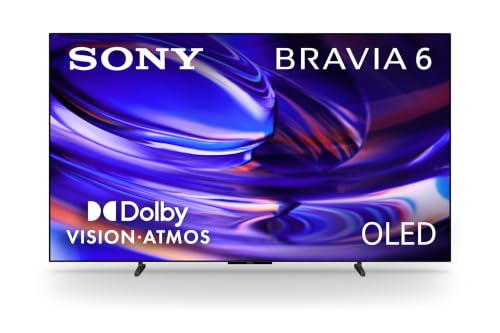
Sony 55 Inch BRAVIA 6 OLED (K-55A60) — the verified Bravia 6 OLED
The article’s own verified pick: Sony’s 55-inch OLED tier, confirmed as a real listing
The verified listing describes a 55-inch OLED 4K HDR Smart Google TV with Gemini, Dolby Vision and Dolby Atmos, OLED Contrast, Triluminos Pro colour, a wide viewing angle, four HDMI 2.1 ports, Google Cast, and free 4K movie credits. That specification answers this guide’s checklist directly: the panel is OLED rather than a marketing cousin, the model code K-55A60 follows Sony’s current naming, and the port count is stated in full rather than hidden behind a headline. Read it through the framework above — per-pixel contrast and wide seating are what this tier buys, and the four full-bandwidth HDMI ports make it a serious gaming screen as well as a film screen.
Key specifications (from the verified listing): 55-inch OLED panel; 4K HDR; Google TV with Gemini; Dolby Vision/Atmos; Triluminos Pro; 4x HDMI 2.1; Google Cast.
Strengths
- True OLED per-pixel contrast with a wide viewing angle for spread seating
- Four HDMI 2.1 ports — the full gaming specification, stated port by port
- Dolby Vision and Dolby Atmos support with Sony’s Triluminos Pro colour
Trade-offs
- OLED brightness still trails the brightest Mini LED tiers in sunlit rooms
- Only the 55-inch size is verified here; other sizes need the same checklist before buying
- Panel-care discipline from the ownership sections above still applies
Best for: film lovers with a light-controlled room and wide seating who want OLED contrast below flagship money
Not suited for: very bright rooms where a Mini LED tier’s brightness headroom matters more
Buying timing and the safe alternative
New tiers are worst value at launch and best value as their successors approach, a rhythm as reliable as any in consumer electronics. A buyer who needs a television this month, for a smaller or brighter room, is well served by the verified LED model in this series and loses little by it. A buyer whose dark cinema room can wait gains twice by waiting: verified reviews accumulate, and the price descends from its launch posture toward its street reality.
Whichever path you take, buy the room first. Measure the viewing distance, note the seating spread, and be honest about how much daylight the screen must fight. Those three facts choose the panel technology more reliably than any tier number, and they will still be true when the next generation’s badges arrive to be explained.
OLED tiers and the used-market alternative
A buyer drawn to a mid-tier OLED should also price the road not taken: last year’s higher-tier OLED at its clearance price, which regularly crosses the new mid-tier’s launch figure while carrying the flagship panel of its season. The used and clearance market is where OLED value hides, with the standard cautions — verify hours and panel care history on a used set, buy clearance from authorised channels for the warranty — and with one advantage no new tier can match: a year of measured reviews and owner reports, the complete absence of speculation. This guide’s framework was built to test claims exactly like these; a previous flagship remains one of the most verified products in the building.
Whichever route the OLED ambition takes, audition in darkness with your own content if a showroom allows it, and watch the scenes OLED exists for: a night sky, a candlelit face, credits rolling on true black. Then watch a bright afternoon’s sport and be honest about the room it will actually live in. Panel technology chooses its room as surely as its owner, and the audition’s job is to introduce them before the money does.
Panel care, warranties, and OLED ownership reality
Owning an OLED well is a small set of habits rather than a burden: let the set run its automatic panel maintenance when it asks, vary content rather than parking one channel’s ticker for a season, and keep brightness at the level the room needs rather than the maximum the panel offers. Modern sets automate nearly all of it, and the horror stories belong to the technology’s first generations and to commercial abuse — signage duty, static displays — that no living room replicates. A mid-tier OLED asks the same habits as a flagship one; the panel does not know what you paid for it.
Warranty terms deserve a read at this tier precisely because panel uniformity and longevity are the purchase’s substance. Confirm what the maker’s warranty says about the panel itself, what authorised service looks like in your region, and whether the retailer’s extended cover adds anything the maker’s lacks. A television is a decade-scale appliance; the paperwork is part of the product, and at OLED prices it is a part worth the ten minutes this paragraph is asking for.
OLED at the attainable tier: what the panel technology changes
An OLED screen makes light pixel by pixel, and that single fact rearranges the viewing experience more than any processing feature can. Black is not a dark grey produced by blocking a backlight; it is pixels switched off, sitting beside lit pixels at full brightness in the same frame. The result is a contrast structure that LED designs imitate with zones and algorithms, and the imitation, however good, is an imitation of this.
| Viewing situation | What per-pixel light control does | What to check on this class of set |
|---|---|---|
| A starfield or night city scene | Stars stay pinpoint and bright against true black, with no halo around them | How the set handles near-black detail just above darkness, where OLEDs can crush subtle shades |
| A candlelit drama scene | Faces glow against rooms that fall away naturally into shadow | Whether skin tones stay natural at low light levels rather than drifting grey or orange |
| Subtitles over dark scenes | Text appears without the glowing box that backlit zones create around it | Subtitle brightness settings, because per-pixel white text can feel intense in a dark room |
| Fast sport in a lit room | Pixel response is effectively instant, so motion clarity is excellent | Overall brightness against your room’s daylight, the one axis where this technology concedes ground |
| Gaming with HUD elements | Static elements sit on perfect black and look printed on glass | The set’s burn-in mitigation features and your own habits with static content |
The tier question for OLED is therefore different from the LED question. Stepping up within OLED buys brightness headroom, processing refinement, and size options; it does not buy the fundamental contrast character, which this attainable tier already possesses in full. That is why OLED ranges compress perceived differences between tiers in dark rooms, and why this level of the range is so often the recommendation for film-first buyers.
Brightness, rooms, and the honest OLED conversation
Brightness is where OLED discussions go to be exaggerated in both directions. The technology’s peak highlights are lower than the best LED flagships produce, and in a sunlit room showing a bright beach scene, that difference is visible and real. In the rooms and content where most viewing happens, mixed scenes at moderate ambient light, modern OLED brightness is ample, and the contrast advantage dominates perception so thoroughly that viewers routinely judge the OLED image as the brighter-looking one.
The practical test is your room at your viewing hours. An evening viewer with curtains owns the OLED’s ideal habitat and should weight its contrast accordingly. A daytime sports household with a wall of glass should audition carefully, ideally with the content they actually watch, and may rationally choose a high-brightness LED instead, not because OLED failed but because rooms vote. Neither verdict is a review error; both are the same physics meeting different lives.
Panel care belongs in this conversation too, briefly and without drama. OLED makers ship pixel-refresh cycles, screen savers, and logo dimming that run automatically, and normal varied viewing is not a risk pattern. The habits that matter are the obvious ones: do not leave a static news ticker or game HUD displayed for entire days, and let the set run its standby maintenance instead of cutting its power at the wall nightly. Treated like that, the panel’s longevity is a solved problem for ordinary households.
Gaming on this class of OLED
- Response time is the headline nobody exaggerates. Per-pixel switching is effectively instantaneous beside any backlit technology, so fast pans stay clean and the low-lag mode has very little left to hide. For players sensitive to motion blur, this is OLED’s purest gaming gift.
- HDMI features decide console happiness. High-refresh support, variable refresh, and automatic low-latency switching are the trio to verify on the specific size you buy, because feature sets can vary across a range more than brochures suggest.
- Dark-game visibility is a genuine tactical advantage. Shadow detail in horror and stealth titles resolves into readable information instead of grey fog, provided the near-black handling is set up with the game’s own brightness calibration rather than defaults.
- HUD habits are the one discipline asked of you. Varied content and the set’s own mitigation features handle normal play easily; marathon sessions of one title with blazing static elements, day after day, are the pattern to moderate with the built-in tools.
It adds up to a gaming display whose strengths are structural rather than tuned: the panel itself is fast, dark, and precise, and the remaining checklist is about ports and features, which a careful buyer can verify in an afternoon.
Where this tier sits against its own family
Within a maker’s OLED line, the attainable tier is best understood as the full technology with the volume turned slightly down. Above it, money buys peak brightness for bright rooms and HDR highlights, larger sizes, and sometimes panel refinements that matter to viewers who grade near-black performance professionally. Below it there is usually nothing, because OLED does not scale down in price the way LED does, which makes this tier the doorway to the technology itself.
The comparison that actually decides purchases, though, is sideways: this OLED against a similarly priced high-end LED. That contest is room against room and taste against taste: contrast and motion purity on one side, raw brightness and size-per-currency on the other. The sections above are designed so that by the time you reach that contest, you know which side your room, your content, and your eyes are already on.
Setup for OLED: the settings that protect the picture and the panel
An OLED rewards a careful first evening more than any other panel type, because its default showroom settings work against both its picture quality and its longevity. The accurate picture mode is the foundation, as with any set, but OLED adds two considerations of its own. The first is brightness discipline: the panel’s peak output is for highlights, and running the whole picture at maximum in a dark room both flattens the contrast the technology exists for and tires the eyes it was bought to please. The second is the panel-care suite, pixel refresh, logo luminance management, and screen movement, which should be understood and left enabled rather than disabled by an owner chasing a spec-sheet brightness figure.
- Calibrate brightness to the room, twice. Set it once for your evening viewing, where this panel will live its best life, and check it once in daylight so the daytime preset is honest rather than heroic. Two stored moods beat one compromised setting argued with nightly.
- Run the gaming calibration screens per console. Each console’s HDR setup maps its output to your panel’s actual behaviour, and the near-black detail this guide praised in dark games only appears when that mapping is done rather than assumed.
- Introduce static-content habits gently. Let the television’s own screen saver and your streaming apps’ timeouts do their work; the goal is a household where varied content is the norm, not a regime of anxiety about news tickers.
- Leave standby power connected. The panel’s maintenance cycles run while the set rests, and a television switched off at the wall nightly is a television whose care routine is being skipped. The standby draw is trivial; the maintenance is not.
None of these steps requires a meter or a professional, though this panel type also rewards professional calibration more than most, because its near-black behaviour is where calibrators earn their fee. The owner who performs the four steps above has captured most of that value with an evening and a remote.
OLED versus the high-end LED alternative, decided by content
The sideways contest at this price, OLED against flagship-class LED, is best decided by an audit of actual content rather than by specification duels. Count your week honestly: the proportion of films and prestige series watched in a dimmed room, the proportion of sport and bright programmes in daylight, and the proportion of gaming, split by whether its worlds are dark or bright. Technologies win audits, not arguments, and most households discover their week leans further one way than their self-image suggested.
| Your dominant content | OLED’s claim | High-end LED’s claim | |
|---|---|---|---|
| Films and drama in a dark room | Decisive: per-pixel blacks and shadow detail are the content’s native language | Good, and improving, but working to imitate the thing OLED is | |
| Sport in a bright room | Adequate and clean in motion | Decisive: sustained brightness against daylight is its home ground | |
| Mixed family viewing, lamps on | Strong; contrast still flatters everything | Strong; brightness headroom unused but harmless | |
| Dark gaming worlds | Decisive: response time and readable shadows | Good, with backlight behaviour to manage | |
| News and static-heavy channels all day | Workable with its mitigation features, honestly not its favourite diet | Untroubled; the natural choice for this pattern |
The mixed row, which describes most households, is why this contest produces so much argument: at genuinely mixed diets the two technologies are both excellent and the decision collapses into room light and personal taste. That is a liberating conclusion rather than a cop-out, because it licenses the buyer to decide by the audition and the room, and to stop apologising for a choice that the content audit already justified.
Sizes, seating, and the OLED sweet spot
OLED pricing climbs steeply with size, which makes the size decision at this tier a sharper version of the usual arithmetic. The technology’s gifts, contrast and response, are visible at every size, but its immersion argument strengthens with scale while its price argument weakens. The sweet spot for most rooms is the middle size, where the panel is large enough for film to feel cinematic at a normal sofa distance and the price remains in the territory this tier promises.
Viewing angle is OLED’s quiet gift to real seating plans. The picture holds its colour and contrast far off-axis, so the end-of-sofa seats and the armchair in the corner receive substantially the same image as the centre seat, which is not true of many LED panels whose best seat is a single cushion. Households that watch together, which is to say households, should weigh that democracy of seating heavily, because a television’s job is to serve the room’s worst seat as faithfully as its best.
Wall mounting flatters this technology particularly: the panels are slim and light for their size, and a mounted OLED in a dark room approaches the floating-picture ideal that showrooms promise. If mounting is the plan, budget for the mount and the cable management with the set, and confirm the port access the mount will leave you, because a beautiful installation that hides the HDMI ports from future consoles is a small tragedy in four screws.
The processor’s role in OLED ownership: near-black, motion, and upscaling
An OLED panel hands its processor a specific set of examinations that LED panels set less severely. Near-black handling is the first: the difference between a shadow that contains detail and a shadow that contains only darkness is decided by how precisely the processor drives pixels at the very bottom of their range, where small errors become visible as banding, noise, or crushed detail. This is why two OLEDs built on similar panels can look like different generations in a dark scene, and why this guide keeps directing buyers to night scenes in auditions: the processor’s signature is written in the shadows.
Motion is the second examination, and here the panel’s instant response creates a paradox: because pixels change state essentially immediately, the judder inherent in low-frame-rate film becomes more visible, each frame standing crisply until it is replaced. Processing that interpolates or smooths must therefore be tuned with unusual taste, enough to civilise pans without dissolving film into video, and the maker’s hand in that tuning is a large part of what a brand premium buys in this technology. Owners should audition a slow pan in a favourite film and set the motion options by that pan, once, rather than by ideology about smoothing in general.
Upscaling completes the trio, and it is where the attainable OLED quietly justifies itself against cheaper rivals with similar panels. Broadcast and older streaming content dominate real viewing hours, and a processor that renders them composed and natural, rather than merely sharp, is the difference between a television that flatters its owner daily and one that only flatters demo material. The panel may be the technology’s headline, but the processor is its daily byline.
Ownership rhythm: firmware, calibration drift, and the second-year set
An OLED in its second year is a slightly different instrument from the one unboxed, and owners who understand the rhythm are happier with both. Firmware updates across the first years typically refine near-black behaviour, gaming features, and platform performance, which means the set measurably improves in ways a first-week review cannot report. Panel behaviour also settles: the automatic compensation cycles even out early uniformity quirks, and owners who judge a new panel’s faint imperfections in its first hours are often grading a condition the set is already in the process of correcting.
Calibration, for owners who pursue it, has a timing lesson in the same rhythm: let the panel accumulate its first stretch of hours and its first compensation cycles before paying for precision, because calibrating a moving target wastes the fee’s accuracy on a state the set will leave. The same patience applies to judging brightness and uniformity, and it generalises into this guide’s broadest OLED counsel: this technology rewards owners who evaluate it across weeks rather than evenings, in both directions, forgiving early quirks and crediting later refinements.
The second-year set also reframes the value question that opened this article. An attainable OLED whose processing keeps improving, whose panel has settled, and whose owner has learned its rooms and moods is not the compromise purchase the tier chart suggested; it is a matured instrument. Buyers deciding between this tier and the one above should weigh how much of the higher tier’s advantage is present at unboxing, where comparisons happen, versus across the years, where ownership happens.
The OLED room: seating, light control, and sound in a dark-first space
Designing a room around an OLED inverts the bright-room playbook. Light control becomes the primary investment, not because the panel is fragile but because its gifts are denominated in darkness: every lamp reflection and every bright doorway spends contrast the owner paid for. Blackout curtains for film sessions, bias decisions about where lamps sit relative to the screen, and a wall colour that does not bounce light back at the panel together constitute the room’s side of the purchase, and they cost less than any tier step while delivering more of what the tier step promises.
Seating geometry rewards attention too. OLED’s wide, honest viewing angles free the seating plan from the single-cushion tyranny, letting sofas angle and armchairs scatter as the room prefers. Distance, though, still obeys the size arithmetic: the dark room tempts viewers closer, for immersion, and closer seating exposes source quality, which returns the conversation to processing and to the content audit. The room, the panel, and the catalogue are one system, and this technology makes their unity impossible to ignore.
Sound in a dark-first room has its own intimacy: lower volumes, closer listening, dialogue that must survive whispers and scores that must survive restraint. A soundbar or speaker system with a genuine night mode and clear voice handling serves this room better than raw power, and the television’s own audio, adequate elsewhere, is most fairly judged here against the room’s quiet, where it often performs more creditably than its reputation. The OLED room is a small cinema with domestic duties, and every element of it, panel included, should be chosen as cinema first and appliance second.
OLED terms, translated for the audition
| Term | Plain meaning | Audition significance |
|---|---|---|
| Per-pixel dimming | Every pixel makes and stops its own light | The technology’s founding fact; halos have nowhere to live |
| Near-black | The first steps above complete darkness in an image | Where OLED processors earn or lose their reputations; test with shadow detail |
| Peak brightness | The brightest small highlight the panel can produce | Relevant to HDR sparkle and bright rooms; not a whole-picture figure |
| ABL | Automatic brightness limiting on full-screen bright scenes | Why a beach scene and a starfield report different brightness from the same panel |
| Compensation cycle | The panel’s automatic maintenance, run in standby | Keep standby power connected; it is the panel’s housekeeping, not a fault |
| Burn-in / image retention | Permanent or temporary marks from static images | Temporary retention is common and clears; permanent burn-in is the extreme-use case the habits in this guide address |
| Colour volume | How saturated colours remain at high and low brightness | The quality that makes OLED highlights feel jewel-like rather than merely bright |
| Response time | How fast pixels change state | Effectively instant here; the reason motion clarity is this tier’s free gift |
Eight terms are the whole technical price of admission to judging this technology, and every claim in a listing or a review can be translated into them. The buyer who carries the table into the audition is no longer listening to adjectives; they are watching for the specific behaviours the terms name.
The OLED decision, compressed
- Buy this tier when your viewing leans to films, series, and dark games in a room whose light you can govern, and when the attainable OLED’s price is the one your budget reaches without strain. You are buying the technology’s essence at its most honest price.
- Step up within OLED when your room is brighter than the tier’s comfort, your screen size ambition exceeds its sweet spot, or professional-grade near-black behaviour is a quality you will genuinely audit weekly.
- Step sideways to high-end LED when your week’s audit is dominated by daylight sport, bright rooms you cannot or will not darken, and static-heavy channels played all day. That is a different excellent television, not a failed OLED purchase.
- Wait when the specific model you want is in its launch window and your current set still serves; this technology’s pricing rewards the patient measurably, and its measurements accumulate in your favour.
Compressed decisions are not lesser decisions; they are decisions whose reasoning has been done in advance, in this guide’s longer sections, and filed for use in the shop. The OLED choice, for the right room, is the easiest in this entire range to make and the hardest to regret, which is why this tier keeps winning recommendations from people who have audited their own viewing honestly.
OLED and the other screens in your life: a household consistency check
An OLED television joins a household of screens, phones and tablets increasingly OLED themselves, laptops split between technologies, and the viewer’s eyes calibrate across all of them nightly. The consistency has a subtle benefit: a household fluent in OLED’s contrast language reads its television without translation, and the phone’s night photographs and the television’s night scenes agree about what darkness looks like. It also has a subtle trap: the television will be judged against the phone’s tiny, perfect, arm’s-length panel, whose brightness in a dark room is a different physical proposition from a large panel across a room, and fairness requires remembering the distance when the comparison feels unflattering.
The gaming handheld and the monitor extend the household’s OLED education in both directions. Players who game on an OLED monitor arrive at this television pre-converted to its response and contrast; players who meet OLED first on the television often find their next monitor purchase decided by the encounter. Technologies spread through households by delight rather than by specification, and this tier, the attainable doorway, is where the spreading usually starts, which is a strategic fact about the range that its pricing quietly acknowledges.
Panel uniformity and the grey-screen conversation, honestly held
Every panel technology has a uniformity story, and OLED’s is told in near-dark greys: large areas of very dark grey can show subtle banding or tint variation that bright content never reveals. The honest account has three parts. First, the phenomenon is a manufacturing characteristic that varies by unit, visible mainly in test patterns and the darkest scenes. Second, it typically improves across the panel’s first compensation cycles, which is why this guide counselled patience before judgement. Third, the return window is the owner’s remedy for a unit whose variation crosses from characteristic into distraction in real content, and real content, a dark film scene you actually watch, is the only court whose verdict matters.
- Judge uniformity in content, not in test slides alone. A band visible at five percent grey in a pattern and invisible in every film is a measurement, not a defect in your viewing life.
- Give the panel its first cycles. The compensation rhythm needs hours and standby periods; a unit judged in its first evening is being judged mid-sentence.
- Use the window without guilt if content convicts it. Retailers price returns into the category; exchanging a distracting unit is the system working, and the replacement’s odds are good.
That balanced account is the one owners deserve, because both available exaggerations, that uniformity is a scandal and that it is a myth, serve sellers of something. The truth is a distribution, your unit is a draw from it, and the tools for a bad draw are patience first and the return window second, in that order.
The attainable OLED as a decade decision
Close the case for this tier where this guide closes every tier’s case: across the decade it will serve. The panel’s technology has no moving parts and a maintenance rhythm that runs itself; the platform will age and be refreshed by a stick when its time comes; the processing that flatters bad sources will still be flattering them in year eight, when the household’s catalogue is older and worse-sourced than today’s. The attainable OLED’s price, divided by that decade, is the figure to compare against the tiers above and below, and on that figure the doorway tier frequently wins the whole range.
What the decade asks in return is the modest care this guide catalogued: standby power for the panel’s housekeeping, varied content as a habit rather than a worry, brightness set for the room rather than for the specification sheet. Owners who give a technology its small courtesies tend to receive its full service life, and OLED, for all its exoticism, asks for less courtesy than most. Buy the room its darkness, buy the panel its patience, and the attainable tier stops looking like the range’s compromise and starts looking like its centre of gravity.
OLED for sport and fast content: closing the last objection
Sport is the objection most often raised against this tier by buyers whose rooms are otherwise dark, on the theory that brightness is sport’s first requirement. The fuller picture is kinder to the panel. Motion clarity, the quality sport actually consumes minute by minute, is this technology’s native gift: the ball stays a ball in a long pass, the pitch’s texture survives a pan, and there is no backlight behaviour to manage in the highlights of a floodlit kit. Brightness in a lit room is the genuine concession, and it is a room question, answerable by the curtains and the hour at which your sport is actually played, rather than a panel verdict.
The evening-sport household, which is most households for the biggest matches, sits squarely in this tier’s favour, and the daytime-sport household has this guide’s permission, honestly earned through the content audit, to choose the bright tier instead. What neither household should do is let a showroom’s noon demonstration decide for their evenings, because the demonstration’s light is the one light their room will never have during the matches that matter.
The panel’s relationship with sunlight, heat, and placement
- Direct sunlight on the screen is this technology’s one environmental enemy worth a rule: it heats the panel unevenly and ages it where it lands. Place the set so the sun’s path crosses the room rather than the screen, or let curtains handle the hour when it would.
- Heat sources near the set deserve the same respect as with any television, doubled by the panel’s thinness: radiators and fires belong at a distance the manual specifies, not at the distance the furniture prefers.
- Ventilation clearance is modest but real; a panel mounted with its specified gap cools itself by convection, and a frame that seals it to the wall for aesthetics is taxing the electronics for a shadow line.
These are small courtesies, and they complete the care picture this guide has drawn: standby power for its housekeeping, varied content for its pixels, and a placement that keeps the sun and the radiator in their own territories. A technology that asks so little and gives the night sky in return is not fragile; it is simply specific, and specificity, respected, is indistinguishable from reliability.
The attainable OLED, argued in one sitting
Compress this article to its essence and the argument runs in four steps. The technology’s defining gift, per-pixel light, is fully present at this tier; nothing above it in the OLED range adds to that essence, only to its brightness headroom, size, and refinement. The rooms where the gift matters, governed light and evening viewing, are the rooms most film and series households actually keep. The care the technology asks, standby housekeeping and varied content, is a small courtesy priced honestly. And the price, divided by the decade these panels serve, is the figure that should be compared, on which figure this tier is frequently the whole range’s best answer.
The counterargument is equally compressible and equally respected in these pages: bright rooms and static-heavy diets belong to the LED tiers, and no affection for this technology should argue a household out of its own audit. Between those two compressions lies the entire decision, and a buyer who can state both has no further reading to do, here or anywhere. The panel will be in the shop, patient as glass, waiting for the room that deserves it.
What the neighbours’ televisions will teach you
An unexpected consequence of owning this tier deserves a paragraph, because it shapes satisfaction more than specifications do. After a month with per-pixel blacks, every other screen in your life is regraded: the bedroom LED’s glowing dark scenes, the cinema’s grey blacks in a less-than-perfect auditorium, the laptop’s washed night photographs. Owners call this the OLED effect, and it cuts both ways, delight at home and a new critical itch elsewhere. It is not a reason to avoid the tier; it is a reason to enter it knowingly, the way you would adopt any standard that recalibrates your expectations of everything else.
One small, practical closing note: when the set arrives, photograph its serial label and store the image with the receipt. OLED ownership is measured in years, and the warranty conversation, if it ever comes, begins with that photograph. It takes ten seconds on the day when everything is at hand, and it is the kind of ten seconds this entire guide has been recommending in different forms: evidence gathered calmly, in advance, against a day that may never come.
A note on gifts and second rooms
This tier has a second career worth planning for at purchase: it is the television most likely to be handed on within a family while it is still genuinely excellent, because its technology does not date the way processing platforms do. The attainable OLED that anchors a living room for five years becomes, in its second life, a bedroom or a grown child’s first serious screen of a quality that room would never have been bought new.
And as a gift bought new, for the household member whose film habit has outgrown a lesser screen, this tier hits a sweet spot of generosity: the full technology, the complete experience, at a price that is a present rather than a family financial event. The giver who adds the first evening’s setup, the accurate mode, the room’s brightness judged, the console calibrated, gives the television twice, once in the box and once in the configuration, and the second giving is the one the recipient will actually live with.
Questions readers ask about this topic
Is the Bravia 6 OLED available to buy?
Yes — a 55-inch Bravia 6 OLED listing, model code K-55A60, has been verified through the site’s Creators API check for this series, and it is the linked pick in this guide. Availability still changes region by region, so use the checklist in this guide — panel, processor, ports, model code, authorised seller — against the listing before buying, and treat any other size or model code as unverified until it passes the same check.
What would make a 6-tier OLED better than the Bravia 3 II?
Panel physics: per-pixel light control gives true blacks and effectively infinite contrast in dark rooms, plus wide viewing angles that hold colour across a broad sofa. For film nights in a light-controlled room, that is a transformation rather than an increment. In bright rooms or at bedroom distances, the advantage shrinks, and the LED model’s price and daylight brightness argue back effectively.
Should I wait for it or buy now?
Wait if your room is a dark, wide-seated cinema space and your current set still works; new tiers reward patience with reviews and falling prices. Buy now if the need is current and the room is smaller or brighter, where the verified LED tier already delivers the Sony processing that matters most. A television bought for the room you have beats a television awaited for the room you imagine.
What specifications should I verify first?
Panel type stated plainly as OLED, the exact processor, the HDMI specification port by port including refresh support, the size range, and the full model code. Cross-check all five against the manufacturer’s own page rather than marketplace text, which is routinely copied between models. If any of the five cannot be confirmed, the listing has not earned your money yet.
Is OLED risky for gaming because of burn-in?
Modern OLEDs carry extensive panel-care systems — pixel refresh cycles, logo dimming, screen shift — and mixed gaming content is well tolerated. The residual risk concentrates in hundreds of hours of the same static elements at high brightness. Vary content, let the panel run its maintenance when prompted, and the practical risk for normal gaming households is low, though never literally zero.
How will I know a review of it is trustworthy?
Look for measured data — brightness in nits across window sizes, colour error figures, input lag timings — and for comparisons against named rivals in the same room. A review that reads like the manufacturer’s brochure, with no measurements and no criticisms, is marketing in a trench coat. The framework in this guide gives you the questions; a trustworthy review is one that answers them with numbers.
Is OLED worth it if I mostly watch sport and news?
Sport is a pleasure on OLED: the response time keeps fast pans and balls clean, and evening matches in a dimmed room look superb. News and bright studio content are where the technology’s advantages quieten and its one discipline, static tickers and logos, asks for the set’s built-in mitigation and some channel variety. If your viewing is overwhelmingly bright daytime content, a good LED may serve you as well for less; if sport arrives in the evening and films share the week, the OLED case becomes strong. Let your schedule, not the showroom, arbitrate.
How worried should I be about burn-in, honestly?
For varied, ordinary viewing, the honest answer is: minimally, with modern sets. Manufacturers build in pixel refresh cycles, logo detection, and brightness management that run without your involvement, and the risk pattern that remains is extreme and specific: the same static image, at high brightness, for many hours daily over long periods. Households that treat the television like a television, watching mixed content and letting standby maintenance run, are not the households in the cautionary tales. Buy the panel for its picture, observe the two or three simple habits described in this guide, and spend your worry budget elsewhere.
Related guides
the verified Bravia 3 II review
Bose QuietComfort 45 versus Sony WH-1000XM4