A weatherproof outdoor TV is built for patios, pool areas and covered porches, where an ordinary indoor set would struggle with moisture, heat and glare. These models use sealed enclosures, special coatings and brighter panels to cope with daylight. We have not used these products ourselves, so this guide helps you compare them rather than offering personal verdicts, and every weather claim is the maker’s own.
Placement is the first thing to decide. A fully covered porch asks for something different than an open yard facing the sun. Screen brightness and an anti-glare finish decide how well you can see the picture in daylight, while the cabinet design and cooling method decide how the set copes with humidity and temperature swings. Plan the mount, cable route and sound as part of the purchase. Use the table below as a checklist, and compare the maker’s listed details side by side before you choose a set for your space.
As an Amazon Associate we earn from qualifying purchases. Links on this site are affiliate links, and they do not change the information we give.

In this guide
Quick Picks
| Pick | Product | Best For |
|---|---|---|
| 1 | Samsung The Terrace 65-Inch Partial Sun (QN65LST7DAFXZA) | Best Premium Picture for Partial Sun |
| 2 | Samsung The Terrace 75-Inch Full Sun (QN75LST9DAFXZA) | Best for Full Sun |
| 3 | SunBrite Veranda 3 Series 55-Inch (SB-V3-55-4KHDR-BL) | Best for Full Shade |
| 4 | SYLVOX Pool Pro 2.0 55-Inch Full Sun Outdoor TV (OT55A2A1GF) | Best Full-Sun Value |
| 5 | SYLVOX Deck Pro 55-Inch Outdoor TV | Best for Covered Patios |
Our Picks

1. Samsung The Terrace 65-Inch Partial Sun (QN65LST7DAFXZA) — Best Premium Picture for Partial Sun
Samsung’s Terrace line is the picture-quality benchmark among outdoor TVs, and this 65-inch Partial Sun model pairs a Neo QLED 4K panel with Quantum HDR+ and an anti-reflection screen designed to hold up in bright, shaded outdoor spaces such as covered patios and screened porches. Samsung rates the set IP56 for dust and water resistance, and the wide viewing angle helps when seating is spread around a deck rather than directly in front of the screen. Dolby Atmos support and the built-in smart platform with Alexa mean streaming and sound are handled without extra boxes, though a Terrace soundbar can be added later if open-air audio needs help. The important limit is in the name: this is a partial sun model, so the maker intends it for spots shaded for most of the day, not an uncovered wall facing afternoon sun. At 65 inches it also needs a substantial mount and wall. If your space is covered and you want the closest thing to indoor picture quality outside, start here.


2. Samsung The Terrace 75-Inch Full Sun (QN75LST9DAFXZA) — Best for Full Sun
For a screen that has to live in direct sunlight, this 75-inch Full Sun Terrace is Samsung’s answer. It uses a Neo QLED 4K panel with Neo Quantum HDR+, an anti-reflection finish and weatherproof construction rated for full-sun outdoor placement, the category the guide above says to match to open yards and poolside walls. The smart platform with Alexa built in covers streaming without a separate player, and Dolby Atmos is on board for the audio side, although at this size and exposure most owners will still pair it with outdoor speakers or a soundbar. A 75-inch weatherproof cabinet is heavy, so the maker’s mounting guidance and a corrosion-resistant mount rated for the weight are part of the real cost of installation. It is also the most expensive route in this list by a wide margin. Choose it when the location is genuinely in full sun, the seating is far enough back to justify the size, and the budget allows for the mount and installation to be done properly.

3. SunBrite Veranda 3 Series 55-Inch (SB-V3-55-4KHDR-BL) — Best for Full Shade
SunBrite builds only outdoor TVs, and the Veranda 3 is its full-shade line for covered patios, porches and screened rooms. The 55-inch model has a 4K UHD HDR screen with Quantum Dot technology and a direct-lit panel the maker positions as far brighter than a typical indoor set, plus a native 120Hz refresh rate that suits sports. The cabinet is an IP55-rated industrial-grade aluminum weatherproof exterior, the remote is weather rated as well, and SunBrite lists an operating range from -24 to 104 degrees Fahrenheit. Unlike earlier Veranda generations, this one has Android TV built in for streaming apps, and there are two built-in 10-watt speakers, so a basic shaded setup does not need extra equipment. It mounts on a 400x400mm VESA pattern and weighs 47 pounds, so plan the bracket accordingly. It is not made for direct sun: if your wall catches hours of sunlight, look at the full-sun picks instead. For a permanently shaded spot, it is the specialist choice.
View SunBrite Veranda 3 Series 55-Inch on Amazon

4. SYLVOX Pool Pro 2.0 55-Inch Full Sun Outdoor TV (OT55A2A1GF) — Best Full-Sun Value
The SYLVOX Pool Pro 2.0 is the direct route to full-sun viewing without stepping up to the premium brands. Its headline figure is a 2000-nit panel, the brightness class intended for screens that face open sky beside a pool or on an uncovered deck, and the 55-inch 4K display is built into a waterproof weatherproof housing made for permanent outdoor installation. Smart TV functions are built in, so streaming does not require a separate player housed in a weather box. As with any full-sun set, check the maker’s stated temperature range and mounting requirements against your wall and climate before ordering, and confirm the VESA pattern suits your bracket. SYLVOX is a newer name than Samsung or SunBrite, so read the current listing’s warranty terms with the care the guide above recommends for outdoor installations. If the location is genuinely sunny and the premium full-sun models stretch the budget too far, this is the pick that keeps the key spec — full-sun brightness — in place.

View SYLVOX Pool Pro 2.0 55-Inch Full Sun Outdoor TV on Amazon
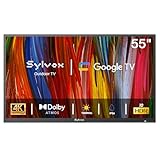
5. SYLVOX Deck Pro 55-Inch Outdoor TV — Best for Covered Patios
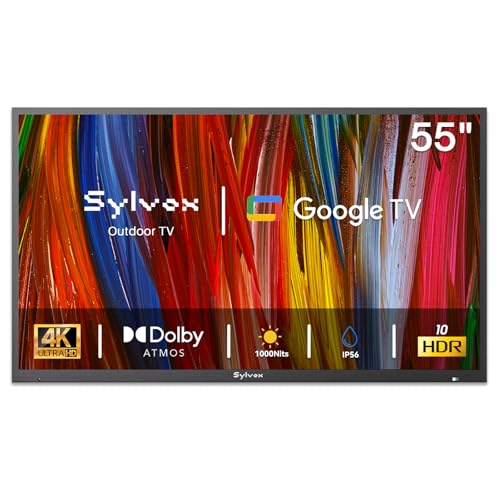
The SYLVOX Deck Pro series is aimed at the most common outdoor setup: a covered patio or porch where the screen gets weather but not hours of direct sun. This 55-inch model is a 4K smart TV on the Google TV platform, with an IP56 waterproof rating for dust and water protection, and brightness specified for partial-sun locations rather than open exposure. A matte, anti-glare style finish helps with reflections from bright sky and light-colored patio surfaces, which the guide above flags as a deciding factor in shaded spaces. Because it is a partial-sun set, placement discipline matters: mount it under real cover and away from direct midday sun, and it should not be asked to do a full-sun job. Check the listing for the current model’s VESA pattern, weight and temperature range before you commit to a mount. For covered spaces where a premium badge is less important than weather sealing, smart features and a sensible price tier, the Deck Pro is the practical choice of the five.
What to Look For
| Factor | Why it matters | What to check |
|---|---|---|
| Weather protection | Sealed housings and coated boards are meant to resist moisture and dust. | Read the maker’s wording on full sun, partial shade or covered use. |
| Brightness | Daylight washes out a dim screen. | Compare the stated brightness and whether it is designed for sunlight. |
| Anti-glare finish | A matte or coated surface cuts reflections from the sky. | Check the finish and the viewing angle information. |
| Temperature range | Heat and cold can limit when the set operates properly. | See the stated range and how the cabinet is cooled. |
| Mounting | Outdoor walls and posts need strong, corrosion resistant hardware. | Look for a compatible mount pattern and the stated weight. |
| Inputs and sound | Outdoor spaces are open, so audio needs extra thought. | Count the HDMI ports and look for built-in or external speaker options. |
Setup and Care Tips
- Choose a spot out of direct sun when possible, and angle the screen away from glare.
- Use cable routes made for outdoor use and weather caps on every connection.
- Wipe the screen with a soft dry cloth and avoid harsh sprays.
- Keep vents clear of leaves, webs and insects.
- Cover or unplug the set during severe storms if the maker advises it.
Mistakes to Avoid
- Mounting an indoor TV outside and expecting it to cope.
- Choosing a set for shade, then placing it in full sun.
- Ignoring audio, which is easily lost in open air.
- Using a weak wall mount for a heavy cabinet.
- Forgetting the power outlet needs weather protection.
Which weatherproof outdoor TV should you buy?
The right weatherproof outdoor TV is the one built for the sunlight your wall actually gets. Pick by exposure first, then by size, features and mounting.
- If your patio or porch is covered and you want the strongest picture quality, go for the Samsung The Terrace 65-Inch Partial Sun (QN65LST7DAFXZA).
- If the screen will face direct sunlight and you have the wall, seating distance and budget for a large set, choose the Samsung The Terrace 75-Inch Full Sun (QN75LST9DAFXZA).
- If the spot is permanently shaded, such as a screened room, the SunBrite Veranda 3 Series 55-Inch (SB-V3-55-4KHDR-BL) is made for that job and includes built-in streaming and speakers.
- If you need a full-sun screen beside a pool and want to keep the cost down, look at the SYLVOX Pool Pro 2.0 55-Inch Full Sun Outdoor TV (OT55A2A1GF).
- If you have a covered patio and want weather sealing with smart features at a sensible price tier, choose the SYLVOX Deck Pro 55-Inch Outdoor TV.
Two mistakes cause most regrets. One is buying a shade or partial-sun set and then mounting it where afternoon sun hits the glass. The other is choosing the largest size without checking the viewing distance, the wall strength and the mount.
If you are torn between two sets, ask which exposure you are certain about. A model matched to the real conditions beats a more impressive one used outside its design. Read each listing for the maker’s stated sun rating and warranty terms before you decide.
Full sun, partial sun or shade: which outdoor TV type fits your space?
Choose a full-sun outdoor TV if direct sunlight reaches the screen for hours, a partial-sun model if the area is mostly covered, and a shade model if the spot never sees direct sun. The names describe how bright the panel is and how it is cooled.
A full-sun set uses a much brighter panel and stronger heat management, which is why these models tend to be heavier and cost more. A partial-sun or shade set can use a less intense panel, so the picture often looks richer in dim conditions but washes out when sunlight falls on it.
- Full sun: open yards, pool decks and walls facing the sky. Look for a high brightness rating and a strong anti-reflection finish.
- Partial sun: covered patios and porches where light arrives from the side or in the morning and evening.
- Full shade: screened rooms and deeply covered areas. Weather sealing still matters because moisture and dust get in.
Watch the sun over a full day before you decide. Check the location in the morning, midday and late afternoon, and in the season when the sun sits lowest. A wall that looks shaded at lunch can catch direct light at the hour you actually watch.
Also think about heat. Even a shaded wall can trap warm air in summer, so check the maker’s stated temperature range and leave space around the cabinet for airflow.
What should you check before you buy an outdoor TV?
Check the sun rating, the mounting pattern, the weight, the inputs and the warranty terms for outdoor use. Each one can quietly decide whether the installation goes smoothly.
- Sun rating: confirm that the model’s stated exposure matches your wall.
- Weather rating: read the maker’s wording for dust and water protection and note what it does and does not cover.
- Mount pattern and weight: check the bracket pattern on the listing and make sure the mount and wall can carry the full weight. Use corrosion-resistant hardware.
- Inputs: count the HDMI ports and see whether a sound bar, game console or streaming stick can connect.
- Sound: built-in speakers can be lost in open air, so plan for outdoor-rated speakers or a sound bar if you want volume.
- Remote and apps: check whether the remote is weather rated and which streaming platform is built in.
- Power: plan a weather-protected outlet and, ideally, surge protection made for outdoor use.
- Warranty and returns: some coverage applies only to certain placements. Confirm the terms and return window on the listing.
Measure the wall space, not just the screen. Leave room for the mount, cable path and ventilation.
Think about seating distance too. A larger screen suits a deep patio, while a smaller one is easier to place on a short porch wall. Sit where you will actually watch and picture the screen at that spot, including how far it sits from doors, railings and overhead beams. Also check the climate where you live. Salt air, heavy snow, strong wind and frequent storms all raise the importance of the maker’s stated protection and temperature range, so read those lines on the listing closely.
How do you install a weatherproof outdoor TV safely?
Install it on a solid, level surface with a rated mount, sealed cable entries and a protected power source. Installation quality matters as much as the TV itself.
Start with the wall. Brick, concrete, stucco and wood framing all need different fasteners, so use hardware suited to your surface and find the studs or masonry that will carry the load. If you are unsure, hire a qualified installer, because a heavy cabinet falling is a real safety risk.
- Choose a mount rated above the set’s weight and made from corrosion-resistant material.
- Angle or tilt the screen away from reflections off pools, glass doors and light surfaces.
- Run cables through outdoor-rated conduit and seal wall penetrations so water cannot follow them inside.
- Add weather caps or covers on any connection that is exposed.
- Keep vents clear and avoid boxing the set in, since trapped heat shortens its working life.
Plan streaming gear too. If a player or receiver is not rated for outdoors, keep it indoors or in a ventilated, weather-safe enclosure. Check the Wi-Fi signal at the spot before you mount anything, because a weak signal makes built-in smart features frustrating.
For care, wipe the screen with a soft cloth, clear leaves and webs from vents and follow the maker’s storm guidance.
Is an outdoor TV worth the extra cost?
It is worth it if the set will live outside year round, because it is designed for moisture, dust, temperature swings and glare. For occasional use, a different approach may be cheaper.
Be clear about the downsides. Outdoor TVs cost more than indoor sets of similar size, full-sun models are heavy, and built-in speakers are modest in open air. Brighter screens and anti-glare coatings are about visibility, not about the deepest blacks you would get in a dark living room.
- Worth it: permanent patio, pool or porch viewing, especially where weather is harsh.
- Think twice: if you only watch a few times each season, a covered, removable setup may suit better.
- Skip it: if the wall cannot be made strong or the spot lacks a protected power source and you cannot fix that.
Putting an indoor set in an enclosure is possible but can trap heat and may affect warranty terms, so compare that route honestly.
Compare the picks above, check the current listing for the sun rating, mount pattern and what is included, then choose the set that fits where and how you will watch.
Going Deeper: An Outdoor Television Lives a Harder Life Than Any Indoor Set
An indoor television spends its life in the gentlest environment in your home: stable temperature, dry air, no direct sun, no insects, no frost. An outdoor television faces all of those at once, plus ultraviolet light on its cabinet, pollen and dust in its vents, humidity that arrives every night as dew, and temperature swings between a freezing dawn and a sun-baked afternoon that would be a stress test for any electronics. Understanding that difference is the key to this whole category, because everything you pay for in a true outdoor set — the sealed cabinet, the brighter panel, the treated internals, the rated operating range — is an answer to a specific item on that list.
Sunlight attacks twice. First, it washes out the picture: a screen competes with the ambient light around it, and in full sun that competition is fierce, which is why brightness and anti-glare treatment divide this guide’s picks into full-sun, partial-sun and shade models. Second, sunlight heats: a dark cabinet in direct sun can reach internal temperatures far beyond the air temperature, and heat is the quiet killer of panels and power supplies. A set designed for full sun is designed thermally as much as optically, with heat paths and components chosen for that punishment. Putting a shade-rated set in full sun does not merely give a dim picture; it gives the set a shorter life.
Water arrives in more forms than rain. Dew condenses on and inside anything that cools overnight, sprinklers reach farther than their owners think, pool splash carries chemicals, and coastal air carries salt that corrodes connectors and mounts over seasons. Purpose-built outdoor sets seal against these arrivals and use materials that tolerate them; indoor sets and enclosures improvise against them with mixed success. When you read the picks in this guide, read them as answers to your specific microclimate — your sun pattern, your water sources, your winters — rather than as a league table.
Cold deserves a word of its own, because it surprises owners in temperate places. Panels respond sluggishly in deep cold, and a set’s rated storage and operating ranges are real limits, not paperwork. If your winters are serious, the honest choices are a set rated for them, a routine of bringing the set in for the coldest months, or accepting a seasonal installation. The guide’s sections on year-round use cover this, and your climate — not the marketing — should make the decision.
How the Picks in This Guide Compare in Practice
The two Samsung Terrace models divide the premium end by sunlight, which is exactly the right way to divide it. The partial-sun Terrace suits the covered or east-facing patio, the pergola with dappled light, the space that is bright but never blasted at midday — and in those spaces its picture will look rich rather than merely adequate. The full-sun Terrace exists for the open deck and the poolside that takes the afternoon directly, where its extra brightness and thermal design stop being luxuries. Choosing between them is a measurement, not an aspiration: watch your space at the hours you will actually watch television, and let the sun you observe, not the sun you imagine, pick the model.
The SunBrite Veranda is the shade specialist, and it is the honest best answer for the fully covered porch or shaded patio where many outdoor televisions actually live. In permanent shade, a full-sun set’s brightness is wasted money and can even look harsh at night, while the Veranda’s tuning suits the environment it was built for. The SYLVOX picks widen the field at friendlier commitment: the Pool Pro aims at full-sun duty for buyers who want that capability without the premium tier, and the Deck Pro covers the covered-patio case. With value picks, the buyer’s work shifts to verifying the details that matter in their space — mounting pattern, connections, the maker’s support and the real brightness story — rather than assuming them.
Across all five, the pattern to notice is that placement class comes before brand. Full sun, partial sun and shade are three different products wearing similar screens, and a correct placement class from a value maker will delight you more than a wrong class from a premium one. Measure your light first, with your own eyes at viewing hours across a few days, and the shortlist in this guide largely chooses itself.
Planning the Installation: Power, Mounting and Signal Before the Set Arrives
Power outdoors must be planned as an outdoor system, not an afterthought. The outlet should be a weather-protected, ground-fault-protected exterior outlet, positioned so the set’s cord reaches without an extension lead living permanently in the weather. If new wiring is needed, that is electrician work, and it belongs in the budget from the start rather than discovered on installation day. Surge protection suited to outdoor use is a sensible companion, since outdoor lines meet lightning-induced surges that indoor sets rarely see, and the guide’s FAQ returns to this point because it matters.
Mounting is a structural question before it is a viewing question. An outdoor-rated mount, fixed into structure — studs, masonry, a properly set post — with hardware that will not corrode into weakness over seasons, is the foundation everything else hangs from, literally. Check the combined weight of set and mount against the mount’s rating with a margin, consider wind load on a large screen in an exposed position, and plan the tilt and height for seated viewing with the sun’s path in mind. A mount that lets you angle the screen slightly down often tames reflections better than any screen coating.
Signal and sound finish the plan. Decide how content reaches the set — its own smart platform on your Wi-Fi, a streaming stick in a protected spot, or a wired connection run with the power — and test the Wi-Fi strength at the mounting position with your phone before the set goes up, because a television that buffers is a television nobody uses. For sound, accept that outdoor spaces eat audio: there are no walls to help, and the honest solutions are the set’s own speakers at modest expectations, an outdoor-rated soundbar, or outdoor speakers placed near the seating. Planning these three — power, structure, signal — before the set arrives turns installation day into an hour of assembly instead of a weekend of improvisation.
Troubleshooting the Problems People Actually Report
The picture looks washed out in the afternoon
First, confirm the set’s placement class matches the light it is actually receiving at that hour; a partial-sun set that catches two hours of direct late sun will struggle exactly then, and the fix may be as simple as a shade sail, a repositioned mount or accepting a different viewing schedule for the brightest hour. Clean the screen as the maker directs, since a film of pollen and dust scatters light and mimics a dim panel. Then check the picture settings: an eco mode that dims the panel to save power is an indoor habit that has no place in a bright yard, and most outdoor sets offer a brighter mode intended for exactly these hours.
The set will not wake, or behaves oddly after a cold night
Check the rated operating range against your night’s low before suspecting a fault; panels and electronics near their cold limit can be slow, dim or reluctant until they warm. Give the set time, confirm the outlet has power — outdoor outlets trip their protection and get switched off indoors more often than any other cause in this category — and try again as the day warms. If cold reluctance is a pattern in your climate, the seasonal routine or a set rated for your winters is the honest answer, and forcing repeated cold starts helps nothing.
Sound is thin and dialogue gets lost
Outdoors, dialogue competes with distance, breeze and neighborhood life, with no walls to return the sound to you. Move the seating or the speakers closer before turning anything up; volume thrown across a yard mostly entertains the neighbors. A center-focused soundbar or a pair of outdoor speakers at the seating area transforms intelligibility in a way no television speaker in a thin cabinet can. Check also whether the set is sending sound to the right place after any streaming stick or cable change, since a silent re-routing is a common and invisible culprit.
Living With an Outdoor TV: Seasons, Covers and Cleaning
A cover is the cheapest life-extension in this category: a breathable, fitted outdoor cover keeps dust, pollen, bird gifts and casual weather off the set between uses, and takes thirty seconds to fit. Use it whenever the set will sit for more than a day or two, and always on a cool, dry set — covering a hot or damp set traps exactly what you are trying to exclude. In storm seasons, a cover plus secured cables is the difference between watching the weather and worrying through it.
Clean on a gentle schedule. Dust the cabinet and vents with a soft brush so cooling paths stay open, clean the screen only as the maker directs with a soft cloth, and inspect cables, connectors and the mount each season for corrosion, cracking and loosening. Outdoor installations loosen and corrode slowly and then fail suddenly; a seasonal ten-minute inspection converts most sudden failures back into small maintenance. In coastal air, shorten the interval and pay special attention to every metal junction, mount bolt and connector.
Decide your winter plan before the first winter. In mild climates the set stays, covered, with an eye on its rated lows. In hard winters the choices are a set rated for storage in that cold, a move indoors for the season, or a protected, unheated space — and any of the three is respectable if it is chosen rather than drifted into. Note the plan where you keep the manuals, with the mount’s hardware details and the outlet’s location, so that whoever handles the set next season — possibly you, having forgotten — starts from knowledge rather than archaeology.
Three Spaces, Three Sensible Installations
A covered porch used for morning coffee and evening films is the shade case at its happiest: the Veranda-class pick, a modest mount, the set’s own sound supplemented if the porch is large, and a cover for the dusty weeks. Its owners should spend their care on Wi-Fi strength and a comfortable viewing angle, since the environment is already doing them favors. A family pool deck is the demanding case: full sun at midday, splash and chemicals, children and wet hands — the full-sun class, a serious mount set into real structure, ground-fault power placed with a professional’s eye, and sound planned for open air. Its owners buy capability because their space genuinely bills for it.
A commercial-feeling terrace built for watching sport with a crowd sits between the two: partial sun for much of the day, many viewers at many angles, and sound that must carry conversation-level competition. There, screen size and viewing angles join placement class in the decision, and a soundbar stops being optional. In all three spaces, the successful installations share the same biography: the light was measured, the structure was real, the power was proper, and the set was chosen last — which is the order this guide has argued for from its first page.
More Questions Worth Asking
Can I use a streaming stick outdoors?
Yes, with protection and sense: the stick should sit in the set’s sheltered connection area or a weather-protected enclosure, out of direct sun and direct water, and it should be a stick you can afford to replace, since outdoor life shortens the life of indoor electronics even when sheltered. Many owners prefer the set’s built-in smart platform for exactly this reason — one less indoor device living outdoors — and use a stick only for a service the set lacks.
How far can the set be from my router?
Test at the exact spot, because exterior walls are formidable barriers to Wi-Fi and a signal that is strong indoors can be feeble one wall later. If the test disappoints, the fixes in order are a wired run made with the power work, a weather-suitable access point, or a mesh node placed just inside the nearest wall. Solve the network before the set arrives and the television will feel like an appliance; solve it afterward and it will feel like a project.
Should I leave the set on a timer or smart plug?
Be cautious: cutting power entirely can interfere with a set’s own maintenance behaviors and makes wake-up slower, and a smart plug outdoors must itself be outdoor-rated. Most owners are better served by the set’s own sleep and standby settings. If power must be managed — for a rental property, say — discuss the specific set with its maker rather than improvising, and never let convenience hardware compromise the ground-fault protection that outdoor power exists to provide.
Reading a Listing Like a Skeptic: Brightness, Ratings and the Word Outdoor
The word outdoor appears on everything from a purpose-built set to an ordinary television in a hopeful box, so read past it to the evidence. For brightness, look for the maker’s own figure and the placement class they claim — full sun, partial sun or shade — and notice whether the claim is made plainly or buried in lifestyle language. For protection, look for a stated ingress rating or a clear description of the sealed construction, and for the operating and storage temperature ranges, which reveal how seriously the set takes winters and hot afternoons. A maker who publishes all three — brightness with a placement class, protection with a rating, temperatures with real ranges — is describing an engineered product, and the picks in this guide were chosen because their makers do exactly that.
Be skeptical of the enclosure shortcut when it is sold as an equal. An enclosure can protect an indoor set from direct rain, and for a mild, covered space it can be a reasonable economy, but it cannot give the indoor panel brightness it never had, cannot easily solve the heat that builds inside a sealed box in the sun, and adds its own problems of condensation, glare from its window and awkward access to controls. Compare honestly: if your space is shaded and covered, an enclosure’s compromises may be acceptable; if your space is sunny, the comparison is not close, and the purpose-built picks exist for your case.
Check the unglamorous specifications that decide daily life: the mounting pattern’s compatibility with outdoor mounts, the position and protection of the connection panel, whether the remote is suited to outdoor use or must be kept indoors, and how the maker handles service for a product that lives outside. A set is a fixture of your home for years, and the quality of those years is written in these details more faithfully than in the headline picture specifications that every maker, honest or not, knows how to polish.
Designing the Viewing Space, Not Just Installing a Screen
The best outdoor installations think like garden designers. Seat the viewers first — where do people naturally sit, where does conversation happen, where is the shade at the hour you gather — and let the screen serve that geography rather than dictating it. A slightly smaller set in the right place, at the right height for seated eyes, with the sun managed by the space’s own shade, will be watched more and enjoyed more than a larger set hung where the wiring was easy. If the space fights you — glare at the gathering hour, a wall that takes the afternoon sun full on — a shade sail, a pergola side or a repositioned seating group may contribute more to the picture than any upgrade of the set itself.
Plan for the evening as carefully as for the afternoon. Outdoor viewing after dark is where these sets are at their most magical and where small things matter: a brightness that can come down gracefully, light from lanterns or a fire that does not reflect in the screen, and sound kept close to the seating so the night stays neighborly. Walk the space at both hours before the mount is fixed. The installation you design at noon and verify at dusk is the one that still delights in its third summer, long after the specifications have been forgotten.
One Last Decision: Let the Space Choose, Then Let the Set Serve
Before you order, stand in the space at the hour you will watch most, and describe it in one honest sentence: the light, the shelter, the distance to the seats, the weather it must survive. That sentence contains your placement class, your size range and your sound plan, and it will still be true in five years when the specifications are forgotten. Choose the pick in this guide that answers that sentence most directly, install it on real structure with proper power, and then stop optimizing. The owners who love their outdoor televisions are not the ones who bought the most capable set; they are the ones whose set fits their space so naturally that the technology disappears and only the evenings remain.
FAQ
Can I put an indoor TV in an enclosure?
Some people do, but an enclosure can trap heat and limit airflow. A purpose built outdoor set is designed to manage these issues.
How bright should an outdoor TV be?
That depends on how much sun reaches the screen. Compare the maker’s brightness figures and match them to a shaded or sunny location.
Can an outdoor TV stay outside all year?
Most weatherproof outdoor TVs are designed for permanent installation, but check the maker's temperature range and weather rating. Extreme cold, heat or storms may call for extra care. Follow the manual for guidance on cleaning, storms and long absences.
Do outdoor TVs have good speakers?
Built-in speakers usually work for casual viewing but can be hard to hear in open air. An outdoor-rated sound bar or speakers is a common upgrade. Check the inputs so you can connect one.
Can I mount an outdoor TV on a fence or post?
Only if the structure can safely carry the weight and resist wind and movement. Many people use a solid wall or a purpose-built stand instead. Check the mount rating and, if unsure, ask a qualified installer.
Is a partial-sun outdoor TV okay in direct sunlight?
No, a partial-sun model is meant for covered or mostly shaded spots and can wash out in direct sun. If sunlight hits the screen for long periods, choose a full-sun model. Match the rating to the real conditions of your wall.
Do I need a surge protector for an outdoor TV?
A surge protector made for outdoor use is a sensible addition, along with a weather-protected outlet cover. Lightning and power surges can damage electronics. Check the manual for any specific guidance.
How do I clean an outdoor TV screen?
Use a soft, dry or slightly damp cloth and avoid harsh sprays or abrasive cleaners. Turn the set off and let it cool first. Follow the maker's care advice for any coating on the screen.
Can I use a regular streaming stick with an outdoor TV?
Many sets have streaming built in, so you may not need one. If you add a stick or box, keep it protected from moisture and heat, and check that it fits your HDMI ports and Wi-Fi coverage.
Questions to Ask Before You Buy
An outdoor television lives in demanding conditions. These questions help you plan for them.
- Will the screen sit in full sun, in shade, or under a covered patio?
- Does the location see rain, snow, dust, or salt air?
- Is there a nearby outlet and a place to hide the cables?
- Do I want a wall mount, a ceiling mount, or a freestanding stand?
- Where will the audio come from, given open air and background noise?
- How will I use it: sports, movies, or casual background viewing?
Compatibility Checks
Mounting Surface
Outdoor walls may be brick, stucco, or siding. Pick hardware that suits your surface and check that the wall structure can carry the weight.
Connections and Cables
Outdoor-ready cable and sealed connection points help keep moisture away from ports. Consider how streaming devices and receivers will be housed.
Sound Setup
Built-in speakers often struggle outdoors. A soundbar made for outdoor use or weather-ready speakers may suit your layout better.
Feature Trade-offs
| Choice | Upside | Downside |
|---|---|---|
| Full-sun display | Stays viewable in bright light | Larger and heavier |
| Partial-sun display | Fits covered patios | Washes out in direct sun |
| Smart features built in | Fewer extra devices | Depends on wireless coverage |
| Anti-glare screen | Cuts reflections | Can soften the picture a bit |
Location decides most of this. A screen on a shaded porch has very different needs from one beside a sunlit pool, so match the model to the exposure instead of choosing the biggest size you can find.
Finally, check the warranty terms for outdoor installations, since some coverage only applies to certain placements.
Think about viewing angle and glare as well. Place the screen so that the main seating area faces it directly, away from reflective surfaces such as glass doors or pools. A small tilt bracket can make a big difference to what you see during daytime.
Cleaning is part of ownership. Dust, pollen, and spray collect on outdoor screens, so use a soft cloth and a mild cleaner made for displays, and follow the maker guidance on how often to wipe it down.
Lastly, remember power protection. A weather-ready outlet cover and a surge protector designed for outdoor use are sensible additions to any installation.
The Short Version
Match the model to the exposure of your space, then compare brightness, anti-glare finish and mounting. Plan the sound and cabling too, so the finished setup works comfortably in all seasons.