An outdoor TV enclosure is a rigid box that sits around a television and shields it from weather and dust. Unlike a simple fabric cover, it is meant to stay in place, so construction and mounting matter a great deal. Many designs include a hinged front or a clear panel, and the layout decides how easy it is to watch, clean and service the set. We have not used these products ourselves, so this guide does not claim first-hand results.
Because an enclosure is a bigger commitment than most accessories, take your time with the listing. Measure the television and the wall, compare them with the maker’s stated interior space, and read the construction details closely before you decide.
As an Amazon Associate we earn from qualifying purchases. Links on this site are affiliate links, and they do not change the information we give.
In this guide
Quick Picks
| Pick | Product | Best For |
|---|---|---|
| Best Overall | Storm Shell SS-55 Outdoor TV Hard Cover (45-55 Inch) | Most mid-size patio TVs |
| Best for Smaller TVs | The TV Shield 36-43 Inch Outdoor TV Enclosure with Fan | Compact sets that need airflow |
| Best for Security | acrtmatic 50-55 Inch Weatherproof Outdoor TV Enclosure with Lock | Locking steel and polycarbonate build |
| Best for Large TVs | The TV Shield E-Series 58-65 Inch Outdoor TV Enclosure | Big screens with a lockable shell |
| Best for Sound | Storm Shell XL 65 Inch TV and Soundbar Enclosure | TVs paired with a soundbar |
Our Picks
1. Storm Shell SS-55 Outdoor TV Hard Cover (45-55 Inch) — Best for most mid-size patio TVs
The Storm Shell SS-55 is a two-piece hard enclosure sized for flat screens from 45 to 55 inches, and it comes with the TV wall mounting bracket in the box, which answers the guide’s mounting question in one purchase. The shell measures 54.6 x 33.8 x 8 inches, so compare those outside figures and the stated fit against your set’s width, height and depth before ordering, exactly as the guide advises. The front section lifts off when you want an unobstructed picture and drops back on to seal the screen against rain and dust when the TV is idle, which suits households that watch outside regularly but store the set covered between sessions. The maker describes the cover as waterproof and impact resistant. Because the front comes away completely rather than opening on a hinge, plan a spot to set it down while you watch, and think about sound in advance, since a closed hard shell can muffle built-in speakers when the cover is on.
View Storm Shell SS-55 on Amazon

2. The TV Shield 36-43 Inch Outdoor TV Enclosure with Fan — Best for smaller TVs that need airflow
This second-generation TV Shield is the pick that speaks directly to the guide’s ventilation factor: it is the 36 to 43 inch size and it includes a fan, so a smaller set is not left sealed in a still box on warm afternoons. Outside dimensions are 42.25 x 27.1 x 7 inches and the enclosure weighs 25 pounds, figures worth checking against both your television and the wall or post that will carry the combined load. The maker describes the Shield as a universal enclosure for LCD, LED and OLED sets that guards against water, dust, theft and tampering, with a clear front panel you watch through rather than a cover you remove. That watch-through design keeps the screen protected during viewing as well as storage, which is the main reason to choose an enclosure over a fabric cover. Measure the set’s depth with its mount fitted, since that is the fit mistake the guide warns about most.
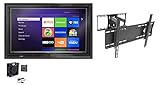
3. acrtmatic 50-55 Inch Weatherproof Outdoor TV Enclosure with Lock — Best for security
The acrtmatic enclosure covers 50 to 55 inch televisions with a hard shell built from polycarbonate and steel, the construction mix to look at if the guide’s durability and access factors matter most to you. A built-in anti-theft lock secures the front, and the left-side door opening gives you a defined way in for cables and controls instead of a panel that has to come off entirely. The maker includes a full motion TV wall mount built from heavy gauge steel with a coated finish, plus two cooling fans, which addresses both the mounting and ventilation rows of the guide’s table in a single kit. The clear front is described as dust-proof, so the set stays viewable while it is covered. Between the steel mount, the lock and the fans, this is the option aimed at exposed or shared spaces, such as a commercial patio or an unfenced yard, where a plastic shell and a latch may not feel like enough.
View acrtmatic 50-55 Inch Enclosure on Amazon
4. The TV Shield E-Series 58-65 Inch Outdoor TV Enclosure — Best for large TVs
The E-Series is The TV Shield’s value line, and this 58 to 65 inch size (model TVSES5865) is the large-screen option in the group. The housing is ABS plastic with an ASA coating for UV resistance, and the maker backs the housing with a two-year limited warranty against cracking and breaking in normal consumer use. Maximum inside width is 58.2 inches and the outside measures 64.7 x 38.5 inches, with the enclosure itself weighing 39 pounds, so this is the pick where the guide’s advice to measure the set, the mount and the wall matters most. The design is lockable and a TV mount is included, covering the access and mounting factors without extra purchases. As a hard cover in the Storm Shell style, the front shields the set while it is stored outdoors year-round. Choose it if you have a big television for a covered patio and want a lockable shell without moving up to the maker’s heavier professional range.
View The TV Shield E-Series 58-65 Inch on Amazon

5. Storm Shell XL 65 Inch TV and Soundbar Enclosure — Best for sound
The guide warns that a box can muffle a television’s built-in speakers, and the Storm Shell XL is the one design here that plans around the problem: alongside a TV up to 65 inches, it has room for a soundbar inside the same weatherproof enclosure. The shell is ABS, rated waterproof by the maker, and an extendable, articulating TV and soundbar mount is included, so the bar and the screen sit behind the same cover rather than the bar living outside it. The front cover removes for viewing and locks back in place when the setup is not in use, giving the same store-covered, watch-uncovered routine as the smaller Storm Shell. Outside dimensions and the combined weight of enclosure, TV and soundbar all need checking against your wall, following the guide’s mounting advice. Pick the XL if dialogue clarity is the thing you refuse to give up when the television moves outside.

What to Look For
| Factor | Why it matters | What to check |
|---|---|---|
| Interior size | The set, mount and cables all have to fit with room for air. | Compare the stated interior width, height and depth with your television and mount. |
| Construction | Metal, plastic and composite shells wear differently outdoors. | Read the maker’s description of materials, coatings and corrosion resistance. |
| Screen panel | The front panel affects clarity, glare and how easily it can be cleaned. | Look for details on the glass or acrylic and any anti glare treatment. |
| Ventilation | A television makes heat, and a closed box can hold it in. | Check for vents, fans or filtered openings, and the maker’s guidance on use. |
| Mounting | The box and its contents add weight to the wall or pole. | Read the stated weight, the supported mounting patterns and the hardware supplied. |
| Access and locks | You will need to reach the ports, power and controls. | Check the door style, hinges, lock type and cable entry points. |
| Sound | A box can muffle built in speakers. | Consider an external speaker and look for audio pass through options. |
Setup and Care Tips
- Choose a wall or frame that suits the full weight of the box and the television, and follow the maker’s instructions for mounting.
- Run cables through the supplied entry points and seal any gaps as the maker describes.
- Keep vents clear of leaves, webs and nesting insects by checking them regularly.
- Clean the front panel with a soft cloth and a mild glass cleaner suited to the material.
- Think about shade, since direct sun on the box can cause glare and warm the contents.
Mistakes to Avoid
- Buying an enclosure that fits the screen size but not the thickness of the mount.
- Blocking the vents with wall hangings, plants or furniture.
- Skipping a sealed cable entry and leaving a path for moisture and insects.
- Forgetting to plan for sound and remote control signals through the front panel.
- Choosing a design that cannot be opened easily when the television needs attention.
Which outdoor TV enclosure should you buy?
The best outdoor TV enclosure is the one whose interior fits your television and mount and whose features match your spot. Use the buyer types below to narrow the five picks.
- If you have a mid-size patio set and want a straightforward hard shell with a bracket, go for the Storm Shell SS-55 Outdoor TV Hard Cover. The front lifts off for viewing and returns to seal the screen.
- If your television is smaller and you worry about heat, choose The TV Shield 36-43 Inch Outdoor TV Enclosure with Fan, which adds a fan and a clear watch-through front.
- If the set sits in an exposed or shared space, look at the acrtmatic 50-55 Inch Weatherproof Outdoor TV Enclosure with Lock, built with steel and polycarbonate and fitted with a lock.
- If you own a large screen and want a lockable shell without stepping up to a professional range, pick The TV Shield E-Series 58-65 Inch Outdoor TV Enclosure.
- If good dialogue matters and you use a soundbar, the Storm Shell XL 65 Inch TV and Soundbar Enclosure gives the bar a place inside the same shell.
When two options look close, let the television size decide first, since the enclosure must fit the set with room for the mount. Then weigh security, airflow and sound in that order of importance for your situation. Always compare your measured width, height and depth with the stated interior space on the listing before you order.
How do you size an outdoor TV enclosure correctly?
Size an outdoor TV enclosure by comparing the stated interior width, height and depth with your television plus its mount and cables. A listing that says it fits a screen range is only the starting point.
The screen diagonal does not describe how thick the set is or how far the mount pushes it forward. Several fit problems come from depth, so measure from the wall to the front of the screen with the mount fitted.
- Measure the width and height of the television frame at its largest points.
- Measure depth with the mount attached and any ports or cables that stick out of the back.
- Check whether the enclosure supplies its own mount or expects you to use yours.
- Allow clearance for air to move around the set and for the door or front panel to open.
Remember the enclosure’s own outside dimensions, because they decide whether it fits the wall space, the porch beam or the pergola post where you plan to hang it. Check the listing for the enclosure weight too, then add the weight of the television and any soundbar.
If your set falls between two sizes, read the stated interior figures for both, then pick the one that leaves a little room. A tight fit can block airflow and make cables hard to route.
Do outdoor TV enclosures need a fan or vents?
Many do, because a television produces heat and a closed box can hold it in. Whether you need a fan depends on the climate, how long the set runs and what the maker advises.
A fan or vent helps move warm air out, which matters most on hot days and in direct sun. Sealed shells are simpler and keep out dust and insects well, but the maker’s guidance on running the set inside them is the key detail.
- Fan models add airflow and suit smaller sets in warm spots, but they have a part that can wear and need power.
- Vented shells let air pass through openings, so check for screens that keep out bugs and debris.
- Sealed shells are best treated as storage protection, and you should read the manual on whether the television can run while enclosed.
Shade makes a large difference. An enclosure on a north-facing or covered wall will run cooler than one in full afternoon sun, so placement can matter as much as the fan.
Check your television’s manual for the operating temperature range, because the enclosure cannot make a set tolerate conditions it was not built for. If the maker of the enclosure recommends removing the front panel while the set is on, follow that advice.
How do you handle security and sound in an outdoor TV enclosure?
Handle security with a lockable shell and a sturdy mount, and handle sound by planning an external speaker or a soundbar before you install. A hard front can muffle built-in speakers and block remote signals.
For security, look at the lock type, the hinge or removable front design and what the mount is made of. A lock slows a casual thief but does not make the set impossible to remove, so mount hardware matters too. Anchor the enclosure to solid framing, not just to siding.
- Check whether the lock is built in or whether you must add your own.
- Look at how the front attaches and whether the fasteners are reachable from outside.
- Consider whether a camera or light covering the area makes sense for you.
For sound, a television’s built-in speakers are usually small and face forward or down. Behind a hard cover they can sound dull. The Storm Shell XL is described as having space for a soundbar inside the shell, and other options leave you to place a separate speaker outside.
Remote controls can also be affected. Many remotes use infrared signals that a thick front may weaken, so check whether the maker mentions remote pass-through or suggests a repeater. Plan where cables for audio will exit, and seal any entry points.
What to check before you buy an outdoor TV enclosure
Before you buy an outdoor TV enclosure, check the interior size, the mount, the weight, the ventilation and what is included. Taking those steps helps avoid a box that does not fit.
- Interior dimensions: compare width, height and depth with your set and mount.
- Mount included or not: some kits include a bracket, and others do not. Confirm that it supports your set’s mounting pattern.
- Wall or post strength: confirm that the support can take the enclosure plus the television.
- Ventilation: look for a fan, vents or the maker’s guidance on use.
- Access: check the door style, lock type and cable entry points.
- Front panel: read about clarity, glare and cleaning.
- Warranty and returns: some makers describe a limited warranty on the housing, and terms differ by seller, so confirm both on the listing.
- Installation help: think about whether you need a second person or a professional for a large, heavy unit.
It is worth reading how many people rated each product and what they said about fit and assembly, not just the headline score. Installation instructions can also differ widely, so look at the manual if the listing offers one.
Think about upkeep as well. Plan to wipe the front panel, clear the vents of leaves and webs, and look over the seals and cable entries at the start of each season. A shell that is easy to open makes these jobs quicker, and it matters if the television or a connected device ever needs attention.
Also decide how the set will be powered and connected. A weatherproof outlet nearby, cables routed through the supplied entry points and a sealed connection all reduce the chance of moisture finding a path inside. If you are unsure about outdoor wiring, ask a qualified electrician.
Finally, check local rules or landlord and homeowner association requirements if you plan to mount something large on an exterior wall.
Is a TV enclosure worth the extra cost, and who should skip it?
An enclosure is worth it if the television stays outdoors much of the year and you want a rigid shell you can watch through. It is more than you need for occasional use, where a cover or bringing the set indoors may be simpler.
The trade-offs are fair to state. Enclosures are heavier and more involved to install than covers, so they ask more of your wall and your time. A closed shell may muffle sound and limit airflow, and you still need to keep vents clear and the front clean.
Who should skip an enclosure:
- Anyone who uses the television only a few times a year and can store it indoors.
- Renters who cannot drill into an exterior wall or post.
- People whose wall or beam cannot safely carry the added weight.
Should you pay more for a locking, steel or fan-equipped model? Pay more only for features you will use. A covered patio with little theft risk may do well with a simpler shell, while an open yard or a shared space makes the lock more useful.
Compare the picks above, check the current listing for interior size and what is included, then choose the enclosure that fits your television, your wall and how you will use it.
Going Deeper: Judging Outdoor TV Enclosures in Real Life
An outdoor TV enclosure turns an ordinary television into a permanent outdoor fixture: sealed against weather, ventilated against heat and tough enough for public or exposed positions. It is a bigger commitment than a cover, in cost, mounting and planning, and it rewards buyers who think through heat, glare, sound and security before the wall fixings go in.
Longevity belongs in the same conversation. Materials, moving parts, firmware support and the availability of ordinary consumables decide whether a purchase stays satisfying or slowly becomes a chore. A slightly less exciting option that is easy to clean, easy to update and easy to live with will usually beat a fragile showpiece once the novelty has worn off.
The Buying Criteria That Deserve a Second Look
Earlier sections of this guide cover the headline checks. The points below are the quieter ones that experienced owners raise after months of use, and they are worth working through before you commit to any of the picks above.
Heat management inside a sealed box
A television in a sunlit box is an oven experiment, so fans, vents and thermostatic control are core features, not accessories. Consider your climate’s hottest afternoon and the enclosure’s orientation to the sun, because a west-facing wall in summer is the true specification test. Models that manage heat actively protect the television every day, not only on the dramatic ones. In practice this matters more than a headline specification suggests, because it shapes how the setup feels every single day rather than only on the first afternoon. Judge it against the way you actually work and live, not against an idealised demo, and be honest about which compromises you will notice after a month and which ones will fade into the background within a week.
The viewing window and glare
You will watch every programme through the enclosure’s front panel, so its clarity, tint and reflection behaviour become part of the television’s picture quality. Anti-glare treatments help in bright positions but can soften the image slightly; clear panels shine in shaded spots. Judge the window as you would a screen, because optically, that is what it is. A useful test is to picture the busiest, least convenient moment this product will face in your home or studio, then ask whether this point still holds up under that pressure. Buyers often optimise for the best case and then live with the worst case, so weighing this factor for tired evenings, rushed mornings and guests who know nothing about the gear leads to a far better long-term match.
Security and tamper resistance
For gardens that face public space, businesses and shared areas, locks and robust construction protect both the television and the enclosure itself. Even in private gardens, a lockable enclosure deters the opportunistic theft that a fabric cover cannot. Weigh your location’s exposure honestly, including how visible the setup is from the street. Treat this as a check you can perform before ordering rather than a hope you carry afterwards. Measure, list or sketch the relevant details of your space and routine, compare them with what the maker publishes, and only then decide. Ten minutes of checking at this stage routinely saves a return, a workaround purchase or years of low-level frustration with an otherwise capable product.
Sound escaping the box
Sealing a television in a box muffles its speakers, so plan how sound gets out: enclosure designs vary, and many owners add a soundbar inside or outside the enclosure. Decide the audio plan before installation, because retrofitting sound into a sealed, mounted box is awkward. Dialogue clarity at your seating distance is the test that matters. This is also where households and shared spaces diverge from solo setups. A choice that suits one careful owner can annoy a partner, a bandmate, a colleague or a visiting relative who interacts with the same equipment casually. If other people will use it, favour the option that stays forgiving and predictable in untrained hands, even when a more specialised alternative looks cleverer on paper.
Mounting, access and servicing reality
The enclosure plus television is heavy, needs serious fixings and will occasionally need opening for a cable change, a remote receiver adjustment or the television’s own servicing. Check how the front opens, whether one person can manage it safely, and whether your wall and mount are rated for the combined load. An enclosure you dread opening will slowly fill with outdated connections nobody dares fix. Longevity belongs in the same conversation. Materials, moving parts, firmware support and the availability of ordinary consumables decide whether a purchase stays satisfying or slowly becomes a chore. A slightly less exciting option that is easy to clean, easy to update and easy to live with will usually beat a fragile showpiece once the novelty has worn off.
Use Cases, Worked Through in Detail
The family patio cinema
On a sheltered family patio the enclosure’s job is permanence: the television lives outside ready for film nights and match days without a carrying ritual. Heat and glare management matter more than security, and sound deserves planning because family films need dialogue everyone can follow. This scenario rewards choosing the enclosure and television as one system from the start. The lesson from this scenario is that context beats raw capability. The same product can feel generous in one setting and cramped or fussy in another, so match the pick to the setting you have rather than the setting you imagine building one day. If your situation sits between two scenarios, favour the more demanding one, because headroom in space, power or capacity is rarely regretted once real life starts adding clutter and people.
The pub garden, café or shared space
Commercial and shared settings add rough handling, public access and long operating hours to the weather problem. Locking construction, impact-resistant windows and dependable cooling become the headline criteria, and the installation should be treated as a fixture, with fixings and cable runs to match. Here the enclosure is closer to street furniture than to an accessory. Notice how little of this scenario is about the product alone. Placement, habits, the other gear already in the room and the people passing through it all shape the result as much as any specification. Work through those surrounding details before ordering and the product itself usually falls into place, while skipping them is how capable gear ends up blamed for a planning problem.
The poolside or coastal position
Chlorinated splash, salt air and fierce sun make this the harshest common environment. Sealing quality, corrosion-resistant materials and heat control all face their sternest test, and mounting should keep the unit out of direct splash zones where possible. Owners in this scenario should inspect seals and fans more often than anyone, because the environment audits the equipment continuously. If this scenario sounds familiar, write down its two or three hardest constraints and keep them beside you while comparing the picks in this guide. Constraints have a way of quietly changing as you shop, and the shortlist drifts toward whatever is newest or shiniest. Returning to your own list keeps the decision anchored to the problem you actually set out to solve.
How the Picks in This Guide Differ in Daily Use
Specifications make the picks in this guide look closer than they feel in a real room. The notes below compare them only on ground this guide has already covered, focusing on the kind of owner each one suits and the trade-off that owner accepts in return.
Storm Shell SS-55 Outdoor TV Hard Cover (45-55 Inch). This hard-shell model is the mainstream enclosure choice, balancing weather protection and value for the typical mid-size patio television. Compared with the The TV Shield 36-43 Inch Outdoor TV Enclosure with Fan, the difference shows up less in headline capability than in routine: how much attention it asks for, how forgiving it is of imperfect placement or habits, and how well it tolerates the other people and equipment around it. Choose it when its particular balance matches your priorities rather than because it wins on a single specification.
The TV Shield 36-43 Inch Outdoor TV Enclosure with Fan. This fan-equipped enclosure targets smaller televisions that need active airflow, suiting warm spots where passive cooling would struggle. Compared with the acrtmatic 50-55 Inch Weatherproof Outdoor TV Enclosure with Lock, the difference shows up less in headline capability than in routine: how much attention it asks for, how forgiving it is of imperfect placement or habits, and how well it tolerates the other people and equipment around it. Choose it when its particular balance matches your priorities rather than because it wins on a single specification.
acrtmatic 50-55 Inch Weatherproof Outdoor TV Enclosure with Lock. This lockable design puts security at the front, for gardens and premises where the television must be protected from people as well as weather. Compared with the The TV Shield E-Series 58-65 Inch Outdoor TV Enclosure, the difference shows up less in headline capability than in routine: how much attention it asks for, how forgiving it is of imperfect placement or habits, and how well it tolerates the other people and equipment around it. Choose it when its particular balance matches your priorities rather than because it wins on a single specification.
The TV Shield E-Series 58-65 Inch Outdoor TV Enclosure. This larger enclosure serves big screens in a name known for the format, aimed at owners building a permanent outdoor viewing wall. Compared with the Storm Shell XL 65 Inch TV and Soundbar Enclosure, the difference shows up less in headline capability than in routine: how much attention it asks for, how forgiving it is of imperfect placement or habits, and how well it tolerates the other people and equipment around it. Choose it when its particular balance matches your priorities rather than because it wins on a single specification.
Storm Shell XL 65 Inch TV and Soundbar Enclosure. This extra-large model adds soundbar space to the equation, solving the enclosure’s audio problem inside the same protected shell. Compared with the Storm Shell SS-55 Outdoor TV Hard Cover (45-55 Inch), the difference shows up less in headline capability than in routine: how much attention it asks for, how forgiving it is of imperfect placement or habits, and how well it tolerates the other people and equipment around it. Choose it when its particular balance matches your priorities rather than because it wins on a single specification.
Setup, Placement and the First Week
Choose the wall and height with the sun’s path in mind, confirming the structure can carry the combined weight with the specified fixings, and plan cable routes and power before the unit goes up. Fit the television, connect and test everything with the enclosure open, set up the remote and any sound solution, and only then close and seal it. Run the system through a hot afternoon and an evening film before calling the job finished, because heat and glare only reveal themselves in real conditions.
Work slowly through the first setup even when the steps look simple, because most later problems trace back to a rushed first hour. Keep the manual open, keep packaging until everything has been tested in its real position, and change one thing at a time so that when something improves or worsens you know exactly which adjustment caused it. Once the basics work, spend a few sessions deliberately testing the edges: the far seat, the longest cable run, the busiest time of day, the least experienced user. Small weaknesses are easy to correct while your layout is still flexible, and far more annoying to fix after furniture, mounts or habits have settled around them.
Care, Maintenance and Troubleshooting
Keep vents and fan intakes clear of leaves, insects and dust, and confirm fans actually run on warm days rather than assuming. Wipe the viewing window with a soft cloth and suitable cleaner as directed, since harsh chemicals can haze some panels. Inspect seals seasonally for perishing, and open the enclosure on a dry day a few times a year to air it and check for uninvited residents of the six-legged kind.
The TV shuts down on hot afternoons
Heat protection is doing its job; your task is to help it. Verify fans run, vents are unobstructed and the enclosure is not in trapped, sun-baked air behind a fence or glass. If the position bakes unavoidably, shade for the enclosure itself or a model with stronger cooling is the honest fix, because repeated thermal shutdowns shorten the television’s life.
The picture looks hazy or reflections spoil films
Clean the window inside and out first, since a film of dust and pollen is the usual culprit. Then assess the sun’s angle at your viewing times and consider whether seating or the enclosure angle can shift to escape the worst reflections. Evening viewing flatters every enclosure; judge yours at the times you actually watch.
Sound is muffled or boxy
The enclosure is behaving like the sealed box it is. Check the television’s audio settings for an enclosed or wall-mounted mode if offered, raise dialogue clarity features, and consider the soundbar route the design allows. Small enclosures especially benefit from moving sound production outside the box entirely.
Condensation forms inside the window
Moisture entered as humid air and condensed on the coolest surface. Open the enclosure on a dry day to air it fully, inspect seals for damage that lets driven rain in, and check any cable entry points. Occasional light misting after wild temperature swings can happen; persistent water means a seal or drainage path needs attention.
Planning the space around the purchase
Before anything arrives, clear and measure the exact spot the new equipment will occupy, including the unglamorous margins: door swings, cable paths, ventilation gaps, walking routes and the reach of the person who will clean around it. Photograph the space and keep the measurements with your order notes. This simple record answers most fitting questions instantly, prevents the classic mistake of discovering a clash only after unboxing, and gives you a baseline to compare against when you later wonder whether a wobble, shadow, echo or blind spot was always there or arrived with a later change.
Building a simple routine around it
New equipment settles into a home best when it gains a small, repeatable routine: a weekly glance, a monthly clean, a seasonal check, a fixed home for its remote, cable or accessories. Attach those moments to habits you already keep, such as the weekend tidy or the first evening of the month, rather than relying on memory. Routines like this are what separate gear that still delights after two years from gear that slowly degrades, drifts out of alignment or gathers dust in a corner while everyone assumes someone else is looking after it.
Knowing when to stop adjusting
There is a point in every setup where further tweaking stops improving anything a normal viewer, listener or user can perceive, and starts costing evenings. Learn to recognise it: when changes become a matter of preference between two good outcomes rather than a fix for a visible or audible problem, stop, save or note your settings, and simply enjoy the equipment for a few weeks. You can always revisit with fresh eyes later, and you will judge far better after real use than after an afternoon of anxious comparison.
Documenting your settings and choices
Keep a short note, on paper or in a phone, recording the settings you settled on, the positions you chose and anything you deliberately decided against. Memory rewrites these details surprisingly quickly, especially after updates, moves or a helpful relative pressing buttons. A two-minute record turns future troubleshooting from guesswork into comparison: you can restore a known-good state in minutes, spot exactly what changed, and explain the setup clearly to anyone else who shares the space.
Thinking about the second user
Most buying guides quietly assume one expert user, yet real households contain partners, children, guests, cleaners and colleagues, all of whom will touch the equipment with varying care and knowledge. Choose settings, positions and default modes that remain safe and sensible for the least experienced person likely to use the product, and keep genuinely delicate adjustments out of casual reach where you can. A setup that survives other people gracefully is worth more than a fragile setup tuned to perfection for an audience of one.
More Questions Worth Asking
Can any TV go inside an enclosure?
Most televisions of the right size can, provided the enclosure’s internal dimensions, mounting pattern and weight limit suit it, and the remote can still be received through an extender or the window. Brightness matters: a brighter television copes better with the window and daylight. Measure the television’s full depth with its stand removed and cables fitted, not just its screen class.
Enclosure or cover: which should I choose?
Covers suit sheltered spots and televisions that can come indoors in the worst season, at a fraction of the commitment. Enclosures suit permanent, exposed or public installations where the television truly lives outside. The deciding questions are exposure, permanence and security; answer those and the choice usually makes itself.
Do enclosures protect against theft?
A locked, solidly mounted enclosure is a meaningful deterrent and keeps the television itself out of sight and reach. It is not a safe, and determined thieves with tools and time defeat most domestic security. For most homes and gardens, deterrence plus invisibility is the realistic and sufficient goal.
How do I control the TV through the closed front?
Most setups pass infrared through the window adequately, while others use a small repeater or the television’s app and voice control. Test your exact remote from your exact seating before finalising the installation, because discovering a control problem after sealing the unit is the definition of an avoidable annoyance.
FAQ
Can the TV be used inside the enclosure?
That depends on the design and on the television. Read the maker’s guidance on ventilation and working temperatures, and follow the television manual as well.
Is an enclosure better than a cover?
They solve different problems. An enclosure stays up all year and gives a rigid shell, while a cover is lighter to store and easier to remove, but it offers less structure.
Do outdoor TV enclosures work with any TV brand?
Many are described as universal, but you should confirm on the listing. What matters is the size of your set, its mount and its depth, not the brand name. Compare your measurements with the stated interior space.
Can I run my TV while it is inside an enclosure?
It depends on the enclosure and on the television. Some designs have fans or watch-through fronts made for use, while others are mainly for storage protection. Read the maker's guidance and your TV manual before powering the set.
How heavy is an outdoor TV enclosure?
Weight varies a lot by size and material, so check the stated weight on each listing. Add the weight of the television and any soundbar to know the total load. Make sure the wall or post can carry it.
Does an outdoor TV enclosure muffle the sound?
It can, because a hard front sits in front of built-in speakers. A soundbar placed inside, as one pick here allows, or a separate outdoor speaker can solve this. Plan the audio setup before you install.
Can I install an outdoor TV enclosure myself?
Many people can, but large units are heavy and need solid mounting points. Use a helper, follow the instructions and seek a professional if you are unsure about the wall or wiring. Seal cable entries as the maker describes.
Will an outdoor TV enclosure stop theft?
A lock helps deter casual theft, but it does not make removal impossible. Secure the mount to solid framing and consider the visibility of the location. Check the lock and fastener details on the listing.
How do I clean the front of an outdoor TV enclosure?
Use a soft cloth and a mild cleaner suited to the panel material, which may be glass or a plastic. Avoid abrasive pads that can scratch. Check the maker's care notes first.
What is the difference between an enclosure and a weatherproof TV?
An enclosure protects an ordinary television inside a shell, while a weatherproof TV is built for outdoor conditions from the start. An enclosure can be cheaper for a set you already own, but a purpose-built set avoids the box. Compare how you will use it.
The Short Version
Measure the set and mount, compare interior space, and read the construction and ventilation details with care. Plan for sound, cables and access before you buy, and follow the maker’s instructions during installation.