Disclosure: As an Amazon Associate, reviewstook.com earns from qualifying purchases. Links to Amazon on this page are affiliate links; they cost you nothing extra.
Powered speakers are the easiest match for a turntable. They have amplifiers built in, so you connect the player directly if it has a built-in preamp.
If your turntable lacks a preamp you need a phono preamp. This guide covers products sold on Amazon. It is built from product listings, not our own testing, so confirm specs on each product page.
By the Reviewstook Editorial Team. Last updated: October 31, 2026.

In this guide
Quick Picks
| Product | Type | Best for |
|---|---|---|
| Edifier R1280T | Powered bookshelf speakers | Two aux inputs for turntables |
| Edifier R980T | Powered bookshelf speakers | A cheap wooden pair |
| Edifier MR3 | Powered studio monitors | TRS and RCA inputs |
| Edifier R1280DBs | Powered Bluetooth bookshelf speakers | Optical input and a sub out |
| Audio-Technica AT-SP3X | Bluetooth bookshelf speakers | Bluetooth plus dual RCA |
Our Picks
Top pickBest for turntables with built-in preamps
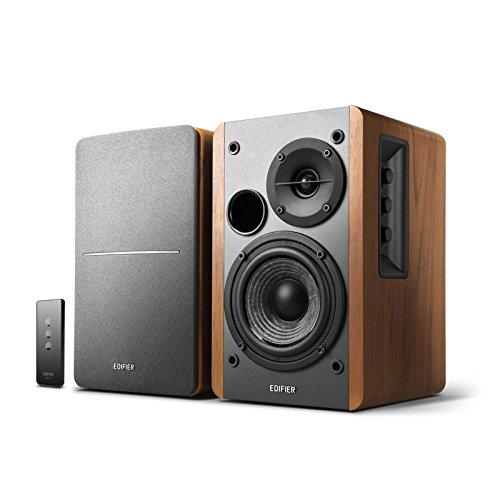
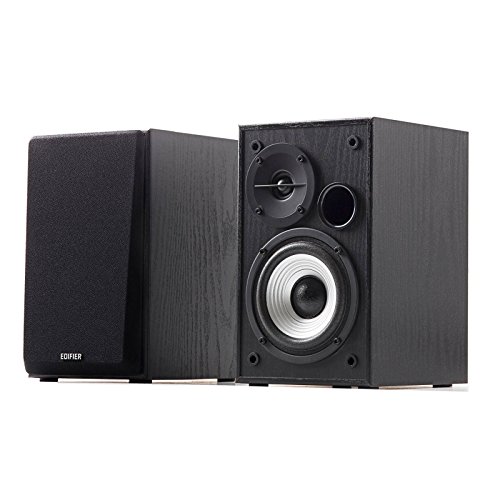
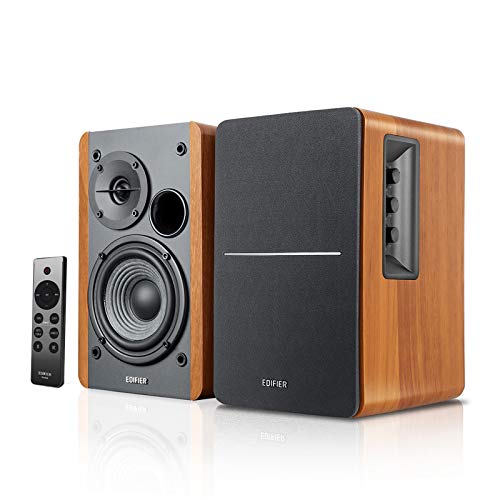
1. Edifier R1280T
Powered 2.0 speakers with two aux inputs for 3.5 mm or RCA devices, per the listing. Check price on Amazon for the current listing.
Good for: Turntables with built-in preamps. Strengths: Two inputs. Weaknesses: No Bluetooth. Skip it if you want wireless.

Best for small rooms
2. Edifier R980T
Active bookshelf speakers with 24 W RMS and wooden cabinets, per the listing. Check price on Amazon for the current listing.
Good for: Small rooms. Strengths: Low price. Weaknesses: No Bluetooth. Skip it if you want Bluetooth.
Best for desk setups
3. Edifier MR3
A powered studio monitor with Hi-Res certification and TRS, RCA and aux inputs, per the listing. Check price on Amazon for the current listing.
Good for: Desk setups. Strengths: Balanced and unbalanced inputs. Weaknesses: Small size. Skip it if you want a subwoofer set.
Best for tV, PC and music setups
4. Edifier R1280DBs
Active Bluetooth speakers with optical and coaxial inputs and a subwoofer output, per the listing. Check price on Amazon for the current listing.
Good for: TV, PC and music setups. Strengths: Many inputs. Weaknesses: Large for a small desk. Skip it if you want a tiny speaker.

Best for vinyl and Bluetooth listening
5. Audio-Technica AT-SP3X
Compact speakers with Bluetooth and dual RCA inputs, per the listing. Check price on Amazon for the current listing.
Good for: Vinyl and Bluetooth listening. Strengths: Known brand. Weaknesses: Higher price. Skip it if you want the cheapest.

Best Picks by Category
These labels summarize listing data and are not hands-on test results.
- Top rated: Audio-Technica AT-SP3X — the premium-tier pick; check price on Amazon.
- Most reviewed: Edifier R1280T.
- Best value: Edifier R980T — the budget-tier pick; check price on Amazon.
- Lowest price: Edifier R980T — the budget-tier pick; check price on Amazon.
- Premium option: Audio-Technica AT-SP3X — the premium-tier pick; check price on Amazon.
Price, Rating and Review Comparison
The table compares the picks by price tier. Prices change often, so confirm the current price on Amazon.
| Product | Price | Rating | Ratings | Price tier |
|---|---|---|---|---|
| Edifier R980T | Check price on Amazon | — | — | Budget |
| Edifier MR3 | Check price on Amazon | — | — | Mid-range |
| Edifier R1280T | Check price on Amazon | — | — | Mid-range |
| Edifier R1280DBs | Check price on Amazon | — | — | Mid-range |
| Audio-Technica AT-SP3X | Check price on Amazon | — | — | Premium |
How Much Feedback Backs Each Rating
A high average from a handful of ratings is weaker evidence than a slightly lower average from thousands. Here is how the sample size looks for each pick.
- Edifier R1280T: a large sample of feedback.
- Edifier R980T: a large sample of feedback.
- Edifier MR3: a moderate sample of feedback.
- Edifier R1280DBs: a large sample of feedback.
- Audio-Technica AT-SP3X: a moderate sample of feedback.
How to Choose
Preamp
Turntables output a weak signal that needs a phono preamp, built in or external.
Inputs
RCA inputs make connection simple.
Size
Bookshelf speakers suit shelves and desks.
How We Chose These Products
We start from products sold on Amazon with a full product name and clear specifications, and we skip results that show only a brand name or a vague title. We then read the listing and any manufacturer information for each one and note the features that matter for speaker and audio products: power and connections, size and placement, and the formats supported. We do not run our own lab tests, and this guide contains no hands-on measurements. Use it to build a shortlist, then check current prices, dimensions and return terms on the Amazon page before you buy.
Buying Guide: What to Check Before You Choose
Powered or passive, and where they go
Powered speakers have an amplifier built in and plug into a source. Passive speakers need a separate amplifier or receiver. In-wall and in-ceiling speakers save space but are harder to change later, while outdoor and marine speakers need weather and corrosion resistance. Check impedance and power handling when pairing passive speakers.
Soundbar size, channels and subwoofer
Soundbars range from compact two-channel bars to 5.1 and Dolby Atmos systems with a wireless subwoofer and rear speakers. More channels and a subwoofer give wider sound and deeper bass but need more space and cost more. Match the bar to your room and TV: a bar much wider than the TV stand will not fit, and a small room rarely needs a full surround set.
Connections: HDMI eARC, optical and Bluetooth
HDMI eARC (or ARC) lets one cable carry TV audio to the bar and usually allows the TV remote to control volume. Optical works with most TVs but carries less. Bluetooth is handy for music but is not ideal for TV because of possible delay. Check which port your TV has and what the bar supports, especially for Dolby Atmos.
Quick Reference: Which Pick Suits Whom
- Edifier R1280T: suits turntables with built-in preamps
- Edifier R980T: suits small rooms
- Edifier MR3: suits desk setups
- Edifier R1280DBs: suits TV, PC and music setups
- Audio-Technica AT-SP3X: suits vinyl and Bluetooth listening
Common Mistakes to Avoid
- Buying a bigger system than the room can use.
- Ignoring the ports on your TV or amplifier.
- Assuming higher wattage always means better sound.
- Skipping the return window and warranty details.
- Overlooking placement, such as wall mounting or cabinet depth.
Setup and Care
- Place speakers at ear height and away from walls where possible.
- Run the TV or app setup and check audio output settings.
- Use a short, good-quality cable for the main connection.
- Adjust bass and treble gradually, then leave them.
Phono Stages and Why They Decide How You Connect
The single most common reason a new turntable and a new pair of speakers sound wrong together is a missing or doubled phono stage. A cartridge produces a tiny signal, far below what a speaker input expects, and it also arrives with its frequency response bent on purpose. The phono stage amplifies that signal and straightens the curve. Without it, records sound thin, quiet and tinny. With two of them in the chain, the result is harsh and distorted.
There are three places a phono stage can live. Many turntables have a small switch on the back, often labeled phono and line, and when it is set to line the player has already done the work. Some amplifiers and receivers have a dedicated phono input. And a stand-alone phono preamp can sit between the turntable and anything else. Powered bookshelf speakers almost never include one, which means a turntable with no built-in stage needs a small box in the middle before it can talk to them.
Before you buy anything, look at the back of your player and at its manual. If you find a preamp switch, set it to line and connect straight to the speaker input. If you do not, plan to add a phono preamp to the budget. The speakers in this guide are listed as having RCA, aux or similar inputs, and none of that information changes the rule: the input on a powered speaker is a line input, so it expects a line-level signal.
- Switch set to line, or a model described as having a built-in preamp: connect directly to the speakers.
- No switch and no mention of a preamp in the manual: add a phono preamp first.
- Switch set to phono while a stand-alone preamp is also connected: you will hear a muddy, overloaded sound until one of them is bypassed.
Cartridge type matters a little here too. Most turntables at this price use a moving magnet cartridge, and most inexpensive phono stages are designed for that type. Moving coil cartridges put out an even smaller signal and need a stage built for them, so check before you pair a premium cartridge with a budget preamp.
Powered Speakers Versus a Separate Amplifier Setup
A powered pair, where one speaker contains the amplifier and feeds the other through a cable, is the simplest path to vinyl playback. You get one power cord, one signal cable from the turntable, and a volume knob on the speaker. The cost is flexibility. The amplifier and the speaker drivers are matched at the factory, and you cannot upgrade one without replacing both.
The alternative is a small stereo amplifier or receiver driving passive bookshelf speakers. That route costs more and takes more space, but it gives you a phono input, several other inputs, and the freedom to change speakers later without touching the amp. It also lets you add a second pair of speakers or a subwoofer in a way many powered pairs do not support.
For most people starting with a turntable in a bedroom, dorm room or apartment, powered speakers are the saner choice. They reduce the number of parts that need to be compatible, and the cables are short. A separate amplifier makes more sense if you already own good passive speakers, if you plan to add components over time, or if you want a phono input without buying an extra box.
Within the powered category, a few details separate models:
- Input variety. Two inputs let you leave the turntable connected while also keeping a phone, laptop or TV on the second input. The Edifier R1280T is listed with two aux inputs for exactly this reason.
- Balanced inputs. A model such as the Edifier MR3 lists TRS inputs next to RCA, which is useful if the speakers will also serve a desk with a studio interface.
- Subwoofer output. The R1280DBs listing mentions a sub out, which leaves room to add low-end weight later without replacing the speakers.
- Wireless. Bluetooth is a convenience for streaming from a phone, but it does nothing for the turntable connection, which stays wired.
Placement and Room Basics That Cost Nothing
Records are physical objects played on a physical machine, and the room affects them more than people expect. A turntable can pick up vibration from the speakers through a shelf or table, and that vibration returns through the cartridge as a low rumble or a loud, muddy boom when the volume rises. The fix is distance and isolation rather than equipment.
Keep the turntable on a separate, solid surface from the speakers when you can. If both must share a piece of furniture, put the speakers on stands, desktop pads or foam isolators so their cabinets do not shake the shelf. A turntable on a wobbly table skips more easily and sounds worse at any volume.
Speaker position then comes down to a few habits:
- Aim the tweeters at ear height when seated. Small speakers on a low shelf will sound dull unless they are angled up.
- Keep them a few inches from the wall behind them. Ported cabinets in particular can sound boomy when pushed against a surface.
- Form a rough triangle with your listening spot. A pair placed too close together gives a narrow image, and a pair too far apart leaves a hole in the middle.
- Avoid tucking one speaker into a corner or behind a curtain while the other sits in the open.
Hard floors and bare walls create harsh reflections, and a rug or a bookcase on the side wall can calm them. These changes are cheap and often have more effect than moving up a price tier in speakers.
Matching Speakers to Your Listening Situation
Different rooms and habits favor different features, and it helps to decide which describes you before reading specifications.
A desk or small bedroom
Nearfield listening means you sit a couple of feet from the speakers. Power matters less here than it seems, because a few watts per side fill a small space. Look for a compact cabinet, front or top controls you can reach, and a headphone jack if you listen late. Studio-monitor style models like the MR3 are built for this distance.
A living room with shared use
If the same speakers will serve a TV, a streaming service and the turntable, inputs become the priority. Optical or coaxial inputs for television, Bluetooth for guests and RCA for the record player cover most of that. The larger Edifier R1280DBs lists all of those, though it needs more shelf space than the smaller pairs.
A listener who wants to grow into hi-fi
If you expect to upgrade the turntable in a year or two, think about which parts you will keep. Speakers with balanced inputs or a subwoofer output keep their value as the rest of the system improves. A phono preamp with a good reputation is another part that usually outlasts several turntables.
Fixing Hum, Buzz and Other Connection Problems
Turntables are more sensitive to interference than most audio sources, and a few simple problems account for most complaints.
- A low, steady hum usually points to a grounding issue. Most turntables have a thin ground wire ending in a small spade or pin. It needs to be attached to the ground terminal on the phono preamp or amplifier. Powered speakers with no ground terminal can sometimes hum with a turntable that has no built-in preamp, and the fix is a preamp that provides a grounding post.
- A buzz that changes when you touch the cables often means a power adapter or router is too close. Move cables and adapters apart and avoid running signal cables beside power cords.
- One channel missing usually means a loose RCA plug or a bent headshell lead. Reseat each connection and check the left and right colors, red for right and white for left.
- A sudden thump when you power on can come from the amplifier, not the record. Turn the turntable and the speakers on in a consistent order and keep the volume low as they come up.
- Distortion at moderate volume is often a double phono stage, as described earlier, or a gain setting that is too high on a preamp.
Protecting Records and the Stylus
The speakers you choose will not damage a record, but the way you set them up can. Records are worn by dust, static and a dirty or worn stylus. A carbon fiber brush before each play removes surface dust at almost no cost. Store records upright in their sleeves, away from heat and sunlight, since warping is permanent.
The stylus is a consumable. Makers usually give an hour rating in the specification, and a worn tip begins to damage grooves quietly. Keep track of how much you play and replace it when the rating is reached, not when the sound is already bad. Clean it with a soft stylus brush from back to front, never side to side.
Budget Versus Premium: Where the Extra Money Goes
The speakers in this guide span budget to premium tiers, and the differences are fairly consistent across the category. Lower-priced pairs usually offer a basic set of line inputs, a wooden or vinyl-wrapped cabinet and modest power. Mid-priced models add inputs, Bluetooth, remote controls and sometimes larger drivers. Higher-priced models tend to put more into cabinet construction, wireless features and brand support.
The actual sound gains between a good budget pair and a mid-range one are real but not dramatic. A bigger improvement often comes from fixing placement, using a proper phono stage and replacing a worn stylus. If your budget is fixed, spend on a clean signal path first and a more feature-rich speaker second.
Listening First: What Vinyl Playback Asks of a Small Speaker
A record player is a revealing source. Alongside the music, the cartridge picks up everything the record and the room give it: a little surface texture between tracks, the occasional crackle on an older pressing, the low rumble of a less-than-perfect bearing, and any hum the cabling has collected on the way. A speaker that flatters a compressed stream can sound harsh or tiring with vinyl, not because the speaker is poor, but because vinyl asks it to reproduce a wider, less polished signal honestly. That is why the picks in this guide lean toward balanced, forgiving bookshelf designs rather than bright, exaggerated ones.
It also explains why volume behaviour matters more with records than with digital sources. A phono signal passes through equalisation and gain stages before it reaches the speaker, and each stage has its own comfortable working range. If the turntable output is low and you compensate by pushing the speaker volume to its limit, you also raise the noise floor of the whole chain. A healthier approach is to keep each stage in the middle of its range: the preamp doing its proper job, the speaker amplifier working without strain, and the listening level set by placement and room rather than by electronics run at their extremes. The speakers in this guide all have enough clean output for nearfield and small-room listening when they are fed a healthy signal.
Finally, remember that vinyl listening is usually seated listening. You put a record on, sit down, and stay in roughly one place for a side at a time. That habit rewards speakers with a wide, stable sweet spot and even dispersion, so the music holds together when you lean back or share the sofa. It punishes speakers that only sound right in one exact head position. When you compare the picks below, that seated, sustained kind of listening is the test that matters most.
Comparing the Picks in Real Rooms, Not on a Spec Sheet
The two simplest picks here, the Edifier R1280T and the Edifier R980T, suit listeners who want the fewest possible decisions. Both are self-powered, both connect with ordinary line-level cables once a preamp is in the chain, and both keep controls minimal. Between them, the choice is mostly about size and presence. The R1280T is the fuller-sounding option for a living-room shelf, while the R980T fits tighter desks and smaller shelves where a compact cabinet matters more than the last measure of low-end weight. A listener in a small flat who mostly plays records in the evening will rarely feel short-changed by the smaller pair; a listener filling a larger room will notice the difference on bass-heavy pressings.
The Edifier MR3 comes from a different tradition. As a studio-leaning design it aims for a flatter, more literal presentation, which some vinyl listeners love because it lets the character of each pressing come through, and others find a little plain for relaxed evening listening. It suits a desk-based setup where the same speakers also serve a computer, and where honesty matters more than warmth. The Edifier R1280DBs, by contrast, is the convenience pick in this group: its extra digital and wireless inputs mean the same pair can handle the turntable, a television and a phone without cable swapping. If your record player shares a room and a shelf with everything else, that flexibility is worth more than a small difference in tonal balance.
The Audio-Technica AT-SP3X is the tidiest option for a dedicated little vinyl corner. It is compact, simple to place, and voiced for close listening, which makes it a sensible partner for an entry-level deck in a bedroom or study. Who should skip what? Skip the smallest options if your room is large and your taste runs to full-scale orchestral or electronic records played at generous levels. Skip the studio-leaning option if you know you prefer a warm, relaxed presentation. Skip the feature-rich option if you will never use the extra inputs and would rather have the simplest possible signal path. There is no weak pick here, only picks matched to different rooms and habits.
A First-Week Setup Routine That Settles a New System
Day one is for placement, not judgement. Put the speakers roughly where they will live, tweeters near ear height when seated, a similar distance from the listening seat as from each other, and far enough from the turntable that the cartridge is not sitting in the speakers’ strongest vibration field. Connect everything with the power off, set every volume control low, and play a familiar record quietly first. Walk the level up slowly. If something hums, distorts or plays in one channel only, stop and fix it at low volume rather than pushing through; connection faults are much easier to find calmly than over loud music.
Days two and three are for small movements. Move the pair a hand’s width closer to or further from the wall and listen to what happens to the bass: nearer the wall usually means fuller but sometimes boomier low end, further out usually means cleaner but lighter. Angle the speakers slightly toward the listening seat and then slightly away, and notice which position keeps voices centred and stable. Make one change at a time and live with it for a whole side of a record. Chasing perfection in five-minute bursts leads most people in circles.
By the end of the first week, set the gain structure properly. With a record playing at your normal listening level, the speaker volume control should sit in a comfortable middle range rather than near its minimum or maximum. If it lives near the minimum, the incoming signal is too hot and fine volume adjustments become jumpy. If it lives near the maximum, the incoming signal is too weak and noise becomes audible between tracks. Adjust at the preamp or source end where you can, and write down the settings that work. A settled system you understand beats a theoretically perfect one you are afraid to touch.
Getting More From the Pair You Already Chose
The cheapest upgrades in vinyl playback are mechanical. Decouple the speakers from a resonant shelf with simple isolation pads or even firm rubber feet, and you often gain cleaner bass and less muddle in the midrange, because the furniture stops joining in. Keep the turntable on the most solid, level surface in the room, and never on the same flimsy shelf as the speakers if you can avoid it; the cartridge is a vibration sensor by design, and it cannot tell music from footfall.
Tone controls, where fitted, are for room correction rather than taste correction. A small bass reduction tames a corner placement you cannot change. A small treble reduction calms a hard, bare room with wooden floors and little soft furnishing. Make small adjustments, listen for several records, and resist stacking several corrections at once. If you later add a subwoofer, keep its level lower than you first think and cross it over where the bookshelf speakers naturally fade, so it extends the bottom octave instead of announcing itself on every track.
Care is simple. Dust the cabinets and drivers with a soft, dry cloth, keep drinks off the shelf the turntable shares, and check cable connections every few months, since a slowly loosening plug is a common cause of an intermittent channel that owners blame on the speakers. A system treated this way stays consistent for years, and consistency is what lets you hear your records rather than your equipment.
Reading a Room: Hard Floors, Soft Furnishings and Honest Expectations
Two identical pairs of speakers can sound like different products in different rooms, and vinyl listeners feel this more than most because they sit still and pay attention. A sparsely furnished room with wooden floors, bare walls and a large window returns a lot of reflected sound to your ears, which blurs detail and hardens the top end. The same speakers in a carpeted room with a sofa, curtains and bookshelves sound calmer and more focused, because those surfaces absorb the reflections. Before blaming or praising any pick in this guide, take stock of your room’s surfaces; a rug and a pair of curtains have improved more systems than many equipment changes.
Speaker position works with the room rather than against it when you follow a few habits. Keep the pair a similar distance from side walls so reflections arrive evenly. Avoid one speaker in a corner and the other in open space, which unbalances both bass and image. If a speaker must live inside a bookshelf or cabinet, expect a fuller, sometimes chesty sound from the enclosure joining in, and compensate with the tone controls rather than pretending it is not happening. Small rooms forgive a lot provided the speakers are not jammed against the wall behind them.
Expectations deserve the same honesty. Bookshelf speakers of the size in this guide reproduce the body of music beautifully in small and medium rooms, but they do not move air like floor-standing speakers, and no tone control changes that. Judged on what they are for, seated listening at sensible levels in real homes, they are entirely convincing. Judged as party speakers for a large open-plan space, they will disappoint, and the disappointment belongs to the brief, not the product.
Records Themselves: Pressing Quality and What Your Speakers Reveal
New vinyl listeners are often surprised that two records through the same system can sound like different decades. Pressing quality, mastering choices and the condition of the vinyl vary enormously, and a revealing speaker reports all of it faithfully. A well-mastered record on any pick here will sound open and engaging. A worn record with groove damage will sound worn, and that is the system telling the truth, not failing. Learning to hear the difference between a record’s limits and a system’s limits saves a great deal of unnecessary equipment anxiety.
Practical habits follow. Clean records before important listening, because dust in the groove is audible crackle and it also wears the stylus faster. Store records vertically, in their inner sleeves, away from heat, so warps never enter the conversation. When a particular record sounds harsh, try another before adjusting anything: if the second record sounds right, the first was the problem. Speakers cannot fix a bad pressing, but a balanced pair like the ones in this guide will never make a good pressing sound worse than it is, which is the real test of a vinyl speaker.
Volume, Dynamics and Why Records Feel Different at the Same Setting
Listeners new to vinyl often notice that a record seems quieter than a stream at the same volume setting, then seems louder on choruses, and wonder whether something is wrong. Nothing is wrong. Records are cut with their dynamics intact in a way that much streamed pop is not, and the phono stage’s job includes restoring the bass that was deliberately reduced when the record was cut. The practical result is that the volume control lives a few notches higher for vinyl, quiet passages are genuinely quiet, and peaks arrive with a physicality that surprises people raised on compressed sources. Your speakers are reporting the format honestly.
This has a placement and power implication. Because average level is lower while peaks are just as demanding, a powered speaker that sounds ample with streaming can feel strained on a loud orchestral or rock pressing played at a spirited level. The cure is rarely a different speaker; it is gain staging, as described earlier, so the phono stage delivers a healthy line-level signal and the speaker’s amplifier keeps its headroom for the peaks instead of spending it on making up a weak input. Set up that way, every pick in this guide handles domestic listening levels on vinyl without strain.
It also changes how you should compare speakers in a shop or from memory. A speaker demonstrated loud with a dense, compressed track flatters itself; the same speaker at home with a dynamic record has to work harder in the moments that matter. If you audition, take a record you know, play the quiet introduction as well as the famous loud passage, and judge whether the speaker keeps its composure across both. Composure across a record’s full dynamic range, at the distance you actually sit, is the quality that survives the journey home.
Room noise belongs in this picture too. Vinyl’s quiet passages compete with the fridge, the traffic and the household, and a speaker cannot win that contest on your behalf. Listening a little later in the evening, closing a door, or simply accepting a slightly higher average level are the realistic tools. Chasing the problem with ever more powerful speakers treats the symptom expensively and the cause not at all.
Finally, protect your hearing with the same honesty. Dynamic music tempts listeners to set the level by the quiet parts, which makes the peaks genuinely loud. Set the level by the loudest passage of the side instead, and let the quiet parts be quiet; that is what the artist and the cutting engineer intended, and it is the level at which these speakers sound their best anyway.
A Short Word on Second-Hand and Older Models
Powered bookshelf speakers of the kind in this guide circulate second-hand in large numbers, and a used pair can be a sensible way into vinyl listening, provided the buyer checks the things that age. Listen for hiss at idle, which should be minimal, test every input the pair offers, and check that both speakers play evenly with a familiar record. Remote controls go missing and matter more than expected on models whose settings live on them, so confirm what is included. A pair that passes those checks, from a seller who can demonstrate it working, carries little risk, because there is little inside such speakers to wear out beyond the occasional swollen capacitor in genuinely old examples.
Frequently Asked Questions
What speakers go with a turntable?
Powered speakers with RCA inputs.
Do I need a receiver?
Not with powered speakers.
Can I use Bluetooth?
Some speakers also accept Bluetooth.
How do I choose the right speaker?
Start with where it will be used, then check connections, power and size. Read the product page for dimensions and supported formats.
Do I need a subwoofer?
A subwoofer adds low-frequency impact and helps with movies and music. It is optional in small rooms or for casual listening.
Are wireless speakers as good as wired?
Wireless is convenient, and quality depends on the model and the connection. For critical listening, a wired source is more consistent.
Do I need a phono preamp for powered speakers?
It depends on the turntable. If the player has a built-in preamp, or a switch set to line, you can connect it straight to powered speakers. If not, you need a phono preamp between the two, because speaker inputs expect a stronger signal than a cartridge produces.
Why does my turntable hum through my speakers?
A steady hum is most often a grounding problem. Attach the thin ground wire from the turntable to the ground post on your preamp or amplifier. If the speakers have no ground terminal, a phono preamp with one usually fixes it. Moving power adapters away from cables also helps.
Can I connect a turntable to speakers with a 3.5 mm input?
Yes, with the right cable. A cable with dual RCA plugs on one end and a 3.5 mm plug on the other works, provided the turntable outputs line level. A turntable without a built-in preamp needs a phono preamp before that cable.
Is Bluetooth useful on speakers for a record player?
Bluetooth is useful for streaming from a phone, but the turntable still connects by cable. It does not improve vinyl playback. Treat it as a bonus for casual listening and focus on the wired inputs, which carry your records.
Where should I place speakers relative to my turntable?
Keep the speakers on separate stands or a different surface from the turntable so vibration does not reach the cartridge. Place them roughly at ear height, a few inches from the wall, and angled slightly toward your seat for a clear stereo image.
Can I use the same speakers for my television as well as my turntable?
Yes, provided the speakers have a spare input or you swap cables, and several picks in this guide include extra inputs for exactly that reason. Keep the turntable chain wired through its preamp as normal, connect the television through its own output, and remember to select the right input when you switch sources. The most common confusion is a silent television because the speaker is still set to the turntable input, so check the input before checking anything else.
Why does one speaker sound slightly louder than the other?
Start with placement: a speaker nearer a wall or corner will sound fuller and louder than its partner in open space, and the fix is usually to balance the positions rather than the electronics. Next, swap the left and right cables at the speaker end. If the louder side follows the cable, the imbalance is in the source or preamp. If it stays with the speaker, check that speaker’s own controls and connections. Records themselves are sometimes mixed with a slightly dominant side, so confirm with a second record before concluding anything.
Should the speakers and turntable sit on the same piece of furniture?
Ideally not, and especially not on a light or hollow piece of furniture. Vibration from the speakers travels through the shared surface to the cartridge and can colour the sound or, at higher volumes, build into feedback. A separate, solid stand or a different surface for the deck is the clean solution. Where space forces them together, isolation pads under the speakers and a sturdy, level board under the turntable reduce the problem a great deal.
How loud should I listen to records on bookshelf speakers?
At the level where the music feels present and detailed without you raising your voice to hold a conversation over it, which for most small rooms is a moderate level. Bookshelf speakers of this size are designed for exactly that kind of listening. If you regularly want much more volume, the honest answer is that you need larger speakers or a separate amplifier system, because pushing small powered speakers to their limit adds strain and noise long before it adds enjoyment.
Bottom Line
For value, the Edifier R980T. For two inputs, the R1280T. For Bluetooth and RCA, the Audio-Technica AT-SP3X.
Related Reading
- Soundbar Buying Guide: Channels, Atmos, HDMI ARC and Subwoofers
- 6 Best Soundbars for TV
- 6 Best 2.1 Computer Speakers with Subwoofer: PC and Gaming
- 4 Best 4×6 Car Speakers: Pioneer, Kicker, Pyle
- 4 Best 5.25-Inch Car Speakers: Pioneer, Kicker, BOSS
More Speaker Guides
- Best Record Players with Speakers
- How to Connect Speakers to a Turntable
- Best Powered Bookshelf Speakers
- Powered vs Passive Speakers
- All speaker guides
Related Guides
- 6 Best Portable Bluetooth Speakers: Pocket to Outdoor (2026)
- 6 Best Waterproof Bluetooth Speakers: IPX5 to IP68 Explained
- 6 Best Shower Speakers: Bluetooth, Waterproof and Suction (2026)
- 5 Best Party Bluetooth Speakers: Loud, Bassy and Portable (2026)
- 5 Best Bluetooth Speakers Under $50: Cheap and Waterproof (2026)