Disclosure: As an Amazon Associate, reviewstook.com earns from qualifying purchases. Links to Amazon on this page are affiliate links; they cost you nothing extra.
A good portable Bluetooth speaker balances size, battery life, sound and durability. Bigger speakers sound fuller but are harder to carry.
This guide covers six portable speakers sold on Amazon. It is built from product listings, not our own testing, so confirm battery life, water rating and codecs on each product page.
By the Reviewstook Editorial Team. Last updated: October 31, 2026.

In this guide
Quick Picks
| Speaker | Type | Best for |
|---|---|---|
| Soundcore 2 Portable Bluetooth Speaker | Portable waterproof speaker | A long-running budget favorite |
| JBL Go 5 | Ultra-portable IP68 speaker | A pocket speaker with JBL sound |
| Bose SoundLink Flex (2nd Gen) | Portable outdoor speaker | Hi-Fi style audio with waterproofing |
| Soundcore Boom 2 | Outdoor Bluetooth speaker | 80W with big bass |
| BassBloom ROAR 3 | Budget waterproof speaker | A very cheap 20W portable speaker |
| BolaButty Portable Bluetooth Speaker | Budget TWS speaker | Two speakers can pair for stereo |
Our Picks

Top pickBest for budget buyers who want a rugged, long-lasting speaker
1. Soundcore 2 Portable Bluetooth Speaker
A portable Bluetooth speaker with IPX7 waterproof protection and up to 24 hours of playtime, per the listing. Check price on Amazon.
Good for: Budget buyers who want a rugged, long-lasting speaker. Strengths: IPX7 waterproofing and 24-hour battery claim at a low price. Weaknesses: A small speaker with limited bass. Skip it if you want a big party speaker.

Best for people who want a tiny, rugged speaker
2. JBL Go 5
An ultra-portable IP68 waterproof and drop-proof speaker with ambient edge lighting, per the listing.
Good for: People who want a tiny, rugged speaker. Strengths: IP68 protection, small size and JBL tuning. Weaknesses: Small size limits volume and bass. Skip it if you want a loud party speaker.
Best for listeners who want a premium-brand portable speaker
3. Bose SoundLink Flex (2nd Gen)
A portable Bluetooth speaker that the listing describes as waterproof and dustproof with Hi-Fi audio.
Good for: Listeners who want a premium-brand portable speaker. Strengths: Bose sound tuning and a rugged build. Weaknesses: A premium price. Skip it if you want the cheapest option.

Best for outdoor and backyard use
4. Soundcore Boom 2
An 80W outdoor Bluetooth speaker with 24 hours of playtime and a bass-focused design, per the listing. Check price on Amazon.
Good for: Outdoor and backyard use. Strengths: Strong bass claim and long battery. Weaknesses: Larger and heavier than pocket speakers. Skip it if you want a tiny speaker.


Best for budget buyers who want a rugged speaker
5. BassBloom ROAR 3
A compact 20W portable Bluetooth speaker with IPX6 waterproofing, dual EQ modes and a carry strap, per the listing. Check price on Amazon.
Good for: Budget buyers who want a rugged speaker. Strengths: IPX6 protection and low price. Weaknesses: A lesser-known brand. Skip it if you want premium audio.

Best for budget buyers who might pair two speakers
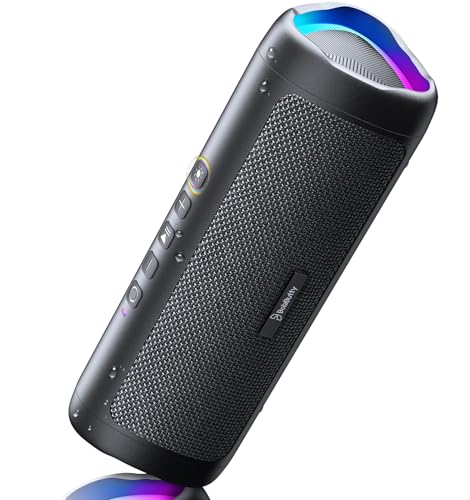
6. BolaButty Portable Bluetooth Speaker
A portable speaker with two full-range drivers, IPX5 water resistance, up to 24 hours of playtime and true wireless stereo dual pairing, per the listing. Check price on Amazon.
Good for: Budget buyers who might pair two speakers. Strengths: TWS pairing and 24-hour claim. Weaknesses: A lesser-known brand. Skip it if you want brand support.
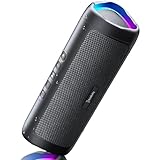
Best Picks by Category
These labels group the picks by use case and price tier. They summarize listing data and are not hands-on test results.
- Top rated: Bose SoundLink Flex (2nd Gen) — check price on Amazon.
- Most reviewed: Soundcore 2 Portable Bluetooth Speaker — check price on Amazon.
- Best value: JBL Go 5 — a budget-tier pocket pick; check price on Amazon.
- Lowest price: JBL Go 5 — a budget-tier pick; check price on Amazon.
- Premium option: Soundcore Boom 2 — a premium-tier outdoor pick; check price on Amazon.
Price, Rating and Review Comparison
The table groups the picks by price tier. Prices change often, so confirm the current price on Amazon.
| Product | Price | Rating | Ratings | Price tier |
|---|---|---|---|---|
| JBL Go 5 | Check price on Amazon | — | — | Mid-range |
| Soundcore 2 Portable Bluetooth Speaker | Check price on Amazon | — | — | Mid-range |
| BolaButty Portable Bluetooth Speaker | Check price on Amazon | — | — | Mid-range |
| BassBloom ROAR 3 | Check price on Amazon | — | — | Premium |
| Soundcore Boom 2 | Check price on Amazon | — | — | Premium |
| Bose SoundLink Flex (2nd Gen) | Check price on Amazon | — | — | n/a |
How Much Feedback Backs Each Rating
A high average from a handful of ratings is weaker evidence than a slightly lower average from thousands. Here is how the sample size looks for each pick.
- Soundcore 2 Portable Bluetooth Speaker: a large sample of ratings.
- JBL Go 5: a large sample of ratings.
- Bose SoundLink Flex (2nd Gen): a large sample of ratings.
- Soundcore Boom 2: a large sample of ratings.
- BassBloom ROAR 3: a moderate sample of ratings.
- BolaButty Portable Bluetooth Speaker: a large sample of ratings.
How to Choose a Portable Bluetooth Speaker
Portable Bluetooth speakers range from palm-sized models to heavy outdoor speakers, and picking among them is mostly about where you will use it. The six speakers in this guide include tiny pocket speakers, a premium compact speaker and a bass-heavy outdoor speaker. This section explains the decisions. As with all our guides, it is built from product listings and manufacturer information, not our own testing, so confirm battery and water ratings on each product page.
Water and dust ratings (IP codes)
IP ratings describe how well a speaker resists dust and water. The first digit is for solids and the second for liquids. The Soundcore 2 lists IPX7, which means it is protected against immersion in shallow water for a short time. The JBL Go 5 lists IP68, which adds full dust protection to deep-immersion resistance. The BassBloom ROAR 3 lists IPX6, which means it resists strong water jets, and the BolaButty lists IPX5, which means it resists water jets. An X in place of the first digit means dust protection is not rated. Higher is better, but no rating covers salt water, sand or physical damage forever. Rinse a speaker in fresh water after beach use if the maker says it is safe.
Battery life: read the claim carefully
Several listings quote up to 24 hours of playtime (Soundcore 2, Soundcore Boom 2, BolaButty). Playtime claims are measured at moderate volume, and real life at high volume is shorter. Bass-heavy music and loud playback drain the battery faster. Consider how you charge: USB-C is common, and some speakers can charge your phone.
Size, bass and loudness
Physics limits small speakers: a tiny speaker cannot move enough air for deep bass or very loud volume. The Soundcore 2 and JBL Go 5 are small speakers that are loud enough for a desk or a picnic blanket but limited in bass. The Soundcore Boom 2 is an 80 W outdoor speaker with a bass-focused design, so it fills a yard. The BassBloom ROAR 3 is rated at 20 W with dual EQ modes. Decide whether you want portability or volume.
Stereo pairing (TWS)
True wireless stereo (TWS) lets you pair two identical speakers for left and right channels. The BolaButty lists TWS dual pairing. Pairing two small speakers gives a wider soundstage, and some brands let you link many speakers for party mode.
Bluetooth range and stability
Typical Bluetooth range is around 10 meters in open space and less through walls. Keep your phone close to the speaker for the best connection.
Extras: lighting, straps and apps
The JBL Go 5 has ambient edge lighting, and the BassBloom ROAR 3 comes with a carry strap. Apps can adjust equalizers, but not all speakers need them.
The Six Speakers in Depth
Soundcore 2 Portable Bluetooth Speaker
A portable Bluetooth speaker with IPX7 waterproof protection and up to 24 hours of playtime, per the listing, at a very low price. It is a good starter speaker, and the water rating and battery claim make it suitable for travel and outdoor use. The small size means limited bass.
Choose it if you want a rugged, long-lasting budget speaker. Think twice if you want party volume.
JBL Go 5
An ultra-portable speaker with IP68 waterproof and dust protection, drop-proof construction and ambient edge lighting, per the listing. JBL’s tuning is known for a pleasant, punchy sound for a tiny speaker. The size limits volume and bass, but it fits in a pocket or backpack.
Choose it if you want a tiny, rugged speaker from a known brand. Think twice if you want a loud party speaker.
Bose SoundLink Flex (2nd Gen)
A portable Bluetooth speaker described as waterproof and dustproof with Hi-Fi audio, per the listing. Bose is known for sound tuning and build quality, and the Flex line is designed for rugged use with a clear, balanced sound. It costs more than the budget options.
Choose it if you want a premium-brand portable speaker. Think twice if you want the cheapest option.
Soundcore Boom 2
An 80 W outdoor Bluetooth speaker with 24 hours of playtime and a bass-focused design, per the listing. It is larger and heavier than the pocket speakers, and suits backyard gatherings, beach days and larger spaces. Check the weight, ratings and whether it floats or has lighting features.
Choose it if you want a loud outdoor speaker with strong bass. Think twice if you want a tiny speaker.
BassBloom ROAR 3
A compact 20 W portable Bluetooth speaker with IPX6 waterproofing, dual EQ modes and a carry strap, per the listing. It is a budget speaker with a rugged feel. The brand is lesser known, so check reviews for sound quality and support.
Choose it if you want a rugged budget speaker with a strap. Think twice if you want premium audio.
BolaButty Portable Bluetooth Speaker
A portable speaker with two full-range drivers, IPX5 water resistance, up to 24 hours of playtime and TWS dual pairing, per the listing. The ability to pair two speakers for stereo is the draw. The brand is lesser known.
Choose it if you might pair two speakers on a budget. Think twice if you want brand support.
Which Speaker for Which Situation
| Situation | Best match | Why |
|---|---|---|
| A rugged starter speaker | Soundcore 2 | IPX7 and 24-hour claim |
| Pocket-size and drop-proof | JBL Go 5 | IP68 and tiny size |
| Premium compact sound | Bose SoundLink Flex (2nd Gen) | Known tuning, waterproof |
| Backyard and beach | Soundcore Boom 2 | 80 W and strong bass |
| Budget with a strap | BassBloom ROAR 3 | IPX6 and carry strap |
| Stereo pair on a budget | BolaButty | TWS pairing |
Getting Better Sound From a Portable Speaker
- Place it near a wall or on a hard surface to boost bass, away from corners that make it boomy.
- Raise it off the ground to project sound.
- Use a good source file and avoid maxing out the phone volume and the speaker volume together.
- Pair two speakers for stereo if supported.
- Update firmware through the maker’s app.
Care and Maintenance
- Keep charging ports dry and closed with their cover.
- Rinse off sand and salt as the maker advises, and let it dry fully.
- Do not leave it in a hot car; heat damages batteries.
- Charge it every few months if you store it.
Common Mistakes When Buying a Portable Speaker
- Expecting big bass from a tiny speaker.
- Ignoring the IP rating. Check the water and dust rating for your use.
- Trusting battery claims at high volume.
- Using the charging port wet.
- Skipping the return window.
Where to Go Next
Browse waterproof Bluetooth speakers, under $50, party speakers, JBL speakers, shower speakers, outdoor speakers and smart speakers.
How to Choose
Size vs sound
Pocket speakers travel easily. Larger ones give more bass and volume.
Battery claims
Playtime is quoted at moderate volume. Real life is shorter at high volume.
Water and dust rating
Check the IP rating on the product page; IPX7 and IP68 allow brief submersion.
How We Chose These Products
We start from products sold on Amazon with a full product name and clear specifications, and we skip results that show only a brand name or a vague title. We then read the listing and any manufacturer information for each one and note the features that matter for speaker and audio products: power and connections, size and placement, and the formats supported. We do not run our own lab tests, and this guide contains no hands-on measurements. Use it to build a shortlist, then check current prices, dimensions and return terms on the Amazon page before you buy.
Buying Guide: What to Check Before You Choose
Battery, water resistance and range
Portable speakers trade size for battery life and loudness. Look at the listed hours, the charging port and the waterproof rating; an IP rating describes dust and water protection, and a higher second digit means better water resistance. Bluetooth range is typically a few meters indoors, less through walls.
Soundbar size, channels and subwoofer
Soundbars range from compact two-channel bars to 5.1 and Dolby Atmos systems with a wireless subwoofer and rear speakers. More channels and a subwoofer give wider sound and deeper bass but need more space and cost more. Match the bar to your room and TV: a bar much wider than the TV stand will not fit, and a small room rarely needs a full surround set.
Connections: HDMI eARC, optical and Bluetooth
HDMI eARC (or ARC) lets one cable carry TV audio to the bar and usually allows the TV remote to control volume. Optical works with most TVs but carries less. Bluetooth is handy for music but is not ideal for TV because of possible delay. Check which port your TV has and what the bar supports, especially for Dolby Atmos.
Quick Reference: Which Pick Suits Whom
- Soundcore 2 Portable Bluetooth Speaker: suits budget buyers who want a rugged, long-lasting speaker
- JBL Go 5: suits people who want a tiny, rugged speaker
- Bose SoundLink Flex (2nd Gen): suits listeners who want a premium-brand portable speaker
- Soundcore Boom 2: suits outdoor and backyard use
- BassBloom ROAR 3: suits budget buyers who want a rugged speaker
- BolaButty Portable Bluetooth Speaker: suits budget buyers who might pair two speakers
Common Mistakes to Avoid
- Buying a bigger system than the room can use.
- Ignoring the ports on your TV or amplifier.
- Assuming higher wattage always means better sound.
- Skipping the return window and warranty details.
- Overlooking placement, such as wall mounting or cabinet depth.
Setup and Care
- Place speakers at ear height and away from walls where possible.
- Run the TV or app setup and check audio output settings.
- Use a short, good-quality cable for the main connection.
- Adjust bass and treble gradually, then leave them.
What to Check Before You Buy
- Check the water and dust resistance rating (IP).
- Compare battery life and charging.
- Look at stereo pairing options.
- Consider size and weight for travel.
- Read about sound balance and bass.
Pocket, Midsize or Outdoor Party: Matching Size to Use
Portable speakers range from palm-sized cubes to large barrels with carry handles. Size affects bass, volume and battery capacity, so decide where you will use the speaker before you compare models.
| Class | Good for | Trade-off |
|---|---|---|
| Pocket size | Backpacks, desks, hotel rooms | Light bass and modest volume |
| Midsize | Patios, kitchens, small gatherings | Heavier, but fuller sound |
| Large outdoor speaker | Parks, beaches, group events | Bulky, needs a bigger charge |
| Rugged model | Hiking, bikes, wet areas | Often prioritizes durability over fine detail |
Do not assume a bigger speaker always sounds better. Placement, volume level and the type of music all change how a speaker feels in a room.
Reading Durability and Water Codes
Product pages often show a code such as IP67. The first digit describes protection from dust and the second describes protection from water. Higher numbers generally mean more protection, but the exact conditions are defined by a standard and the maker, so read the listing carefully.
- Dust protection: look at the first digit if you take the speaker to a beach or a trail.
- Water protection: splashes, rain and brief submersion are different levels, so check which one the code claims.
- Salt and chlorine: many makers advise rinsing with fresh water and drying fully after exposure. Follow the manual.
- Drop resistance: check for rubber edges and metal grilles, but do not assume a speaker survives any fall.
- Port covers: keep the charging port cover closed when near water.
- Floating designs: useful near pools, though not all models float.
Connections, Battery and Features Worth Comparing
Most portable speakers connect over Bluetooth, and some also offer an auxiliary jack or USB input. Check the Bluetooth version and the pairing options, such as linking two speakers for stereo or party mode. Battery life is the maker estimate at a moderate volume, and loud playback shortens it. Some models can charge a phone through a USB port, which is handy but drains the speaker faster. Look for a clear indicator of battery level, a strap or hook, and a microphone for calls.
When you pick a spot, set the speaker on a stable surface at ear height or higher so the sound spreads. Avoid hot cars and direct sun for long periods, which can stress batteries. Charge with the cable and adapter in the box or ones that meet the stated power needs. Wipe the grille with a dry brush, and store the speaker with some charge if you will not use it for weeks, following the maker advice.
Before You Order
Think about weight if you will carry it far, and read the warranty terms. Look for firmware or app support if you want equalizer controls, and check whether the strap is replaceable. A seller with a clear return window gives you room to confirm the sound suits your space.
How Portable Speakers Actually Sound Outdoors
Indoor listening flatters small speakers. Walls reflect sound back to you, the room adds warmth to the bass, and modest volume fills the space. Take the same speaker outside and the physics change completely: there are no walls to reinforce the low end, ambient noise from wind, traffic and conversation competes with the music, and listeners are spread over a wider area. This is why a speaker that sounds full on a kitchen counter can sound thin on a patio, and why the larger models in this guide — the Soundcore Boom 2 in particular — earn their size when the setting moves outdoors. They are not louder for vanity; they are moving air in a space that swallows it.
Placement becomes a genuine skill outdoors. A speaker on the ground near a wall or in a corner borrows reinforcement from those surfaces and gains noticeable bass; the same speaker on an open table in the middle of a lawn loses that help. Pointing matters too, because small speakers project most of their clarity forward from the driver. Angle the speaker toward the listeners rather than toward the sky or the neighbours, keep it off vibrating surfaces that add their own buzz, and raise it toward ear height when you can. These free adjustments routinely matter more than the difference between two models on a shelf.
Volume, distortion and honest expectations
Every small speaker has a volume ceiling where the sound stops getting better and starts getting harsher, as the driver and amplifier reach their limits. The useful volume of a portable speaker is the range below that ceiling, and it differs more between models than headline loudness suggests. A good habit is to treat the top portion of any small speaker’s volume range as emergency headroom rather than a listening level: back off slightly from maximum and the music usually sounds fuller, because the speaker is no longer straining. If you regularly need more than a speaker’s comfortable range, the correct answer is a bigger speaker or a stereo pair, not permanent residence at maximum volume, which also drains the battery fastest.
Battery Life in the Real World
Battery claims are measured under gentle conditions — moderate volume, a steady connection, sometimes a single repeated track — and real use is rarely gentle. Louder volume is the biggest variable, because moving a driver harder costs energy in a way that adds up over hours. Cold weather shortens effective runtime, a weak Bluetooth connection that keeps renegotiating wastes power, and using the speaker to charge a phone, where that feature exists, spends the battery on someone else’s device. Treat the claimed figure as a best-case ceiling and expect a solid fraction of it in mixed use, which for most of the speakers here still means a full day out without anxiety.
Charging habits decide how long the battery stays healthy over years. Lithium batteries age fastest when kept at extremes, so a speaker that lives permanently on a charger at full, or sits empty in a drawer for months, will lose capacity sooner than one that is used and charged in a normal rhythm. If you store a speaker for a season, leave it partly charged rather than full or empty, and top it up before the first outing rather than discovering a tired battery at the beach. USB-C charging, now common across this class, is worth valuing simply because the cable you need is the one already in your bag.
Two speakers or one bigger speaker?
Where a model supports true wireless stereo pairing, two identical speakers create a genuinely wider and more convincing sound than one, with instruments placed left and right rather than squeezed through a single point. A pair also covers a space more evenly, because each listener is closer to a speaker. The costs are obvious: two purchases, two batteries to manage, and pairing that occasionally needs to be re-established. One larger speaker is simpler, usually offers deeper bass than either half of a small pair, and never has a pairing mood. Choose the pair if stereo image and coverage matter and you will use both regularly; choose the single larger speaker if it will mostly play alone and simplicity wins. Several households end up owning both patterns over time — a small speaker that travels daily and a bigger one that owns the garden.
Bluetooth Behaviour Worth Understanding
Bluetooth range figures describe open space with a clear line of sight, and real homes are not open space. Walls, floors, metal appliances and the human body all absorb signal, so a speaker that plays happily across a garden may stutter through two interior walls. The practical fixes are boring and effective: keep the phone and speaker in reasonable sight of each other, avoid burying the speaker behind metal objects, and remember that your own body blocks signal when the phone is in a back pocket. Newer Bluetooth versions improve connection management and efficiency, and multipoint connections — staying paired to a phone and a laptop at once — are increasingly common and genuinely convenient, though they can cause the occasional tug-of-war when both devices try to play at once.
Latency is the other Bluetooth topic that matters if you watch video. Music does not care about a small delay, but dialogue does, and speakers vary in how much delay their processing adds. If you plan to use a portable speaker as a casual video speaker for a tablet or laptop, test it with speech-heavy content early in the return window; a speaker that is wonderful for music but visibly out of sync with lips is the wrong tool for that job. Some sources and apps can compensate for delay, which is worth checking before blaming the speaker.
Calls, voice assistants and extras
Built-in microphones turn many of these speakers into speakerphones, useful around a kitchen or a campsite table, though wind and distance quickly test their limits. Voice-assistant access through the speaker simply borrows your phone’s assistant, and its usefulness depends mostly on the phone hearing you clearly. Treat these as pleasant extras rather than reasons to buy: the speaker’s core job is music, and the models in this guide were chosen for how they do that job across sizes, from the pocketable JBL Go 5 to the outdoor-leaning Boom 2.
Choosing by Scenario, Worked Through
For travel, weight and size dominate everything else, because a speaker that stays home has no sound quality at all. A pocket or jacket-sized model like the JBL Go 5 disappears into luggage, survives being tossed into a bag, and is loud enough for a hotel room, a balcony or a quiet picnic for two. Frequent travellers should also value simple charging and a case or strap that keeps the speaker attached to a bag rather than loose inside it. The travel speaker’s real competition is the phone’s own speaker, and even a small dedicated unit beats that by a wide and immediately audible margin.
For home use that moves room to room — kitchen in the morning, desk at noon, bathroom shelf, garden in the evening — a midsize model such as the Soundcore 2 or the Bose SoundLink Flex earns its place through balance: enough body for music to sound like music, small enough to carry one-handed, and durable enough not to be precious about. This is the size class most households should buy first, because it covers the most hours of the most days. For gatherings, barbecues and outdoor exercise groups, step up to the largest class in the guide and accept the weight, because coverage and headroom are the whole job there.
Water, dust and the honest limits of ratings
Ingress ratings describe tests with clean water under controlled conditions, and they are a good guide to rain, splashes and poolside life. They are not a promise about salt water, chlorinated pools over years, hot showers or being dropped onto concrete, all of which age seals and grills in ways a rating does not capture. Rinse a speaker that has been in the sea, let ports dry fully before charging, and never charge a wet speaker. A speaker that floats or that can be rinsed under a tap has practical advantages at a pool that a merely splash-resistant one lacks, so match the rating to the wettest day the speaker will actually see rather than to an imaginary one.
Getting More From the Speaker You Buy
Small habits compound. Keep the firmware current if the maker’s app offers updates, since connection reliability improvements are common. Learn where the speaker sounds best in your main rooms — often a shelf or counter near a wall rather than the middle of a table — and let it live there. Use the app or onboard controls to set an equaliser flavour you like once, instead of fighting the sound daily; a gentle bass lift at low volume and a flatter setting at high volume suits many small speakers, because human hearing perceives less bass at quiet levels. And protect the battery rhythm: charge before big days, avoid leaving the speaker baking in a hot car, and it will repay you with years of service.
Finally, buy for the listening you actually do. A podcast-and-radio listener needs clarity at low volume more than bass heroics. A family that hosts needs coverage and battery. A commuter needs size and durability. The six speakers in this guide were chosen to span those lives honestly, from the smallest pocket model to the outdoor anchor, and the best one is simply the one whose strengths line up with your most ordinary week — not your most ambitious one.
When to replace rather than repair
Portable speakers rarely offer economical repairs beyond cables and, occasionally, batteries in serviceable designs. The usual end-of-life signs are a battery that fades within an hour or two, a charging port that only works at an angle, or a driver that buzzes at moderate volume. Before replacing, rule out the free causes: a failing cable, a dirty port, an outdated connection pairing that a reset cures. If the battery is truly gone, weigh replacement honestly — a new speaker in this class often brings better efficiency, newer Bluetooth and a fresh warranty for less trouble than a repair hunt, and the old unit can retire to a low-demand job near a charger, where its remaining strengths still serve.
Sound Quality Terms, Translated Into Listening
Reviews of small speakers lean on vocabulary that deserves translation. Clarity means voices and lyrics stay intelligible at low volume, which is the quality podcast listeners and kitchen listeners should prize most. Warmth describes a gentle emphasis on the lower midrange that makes music feel relaxed rather than analytical. Bass extension is how low the speaker can reach at all, while bass weight is how much of it you feel; small speakers can have one without much of the other, and a model that reaches low but quietly often sounds more natural than one that thumps a single note loudly. Soundstage, in a single small speaker, is mostly about dispersion — how evenly the sound spreads so listeners off to the side still hear a balanced picture rather than muffled remnants.
Your own test material matters more than any vocabulary. Keep a short playlist of tracks you know intimately: one with a clear vocal, one with acoustic instruments, one with electronic bass, one quiet passage. Play the same list, at the same volume, in the same room position for any speaker you are judging, ideally in the first days while returns are easy. Familiar music exposes differences instantly because you know how it should sound; unfamiliar demo tracks flatter everything. Judge at the volume you will actually use, since speakers change character as they work harder, and a model that wins at maximum volume may be ordinary at the gentle level where it will spend its life.
Why two households disagree about the same speaker
Room size, furnishings, musical taste and listening distance all shape what a speaker sounds like, which is why equally honest listeners recommend different models from this very list. A small, carpeted room rewards a compact speaker and punishes an over-large one with boominess; a tiled kitchen reverses some of that. Treat recommendations — including this guide’s — as a well-reasoned starting shortlist, and let your room have the final vote during the return window. That is not indecision; it is how audio has always been bought well.
One last practical note: register the purchase or keep the receipt somewhere findable, and note the charging cable the speaker uses. Portable speakers are bought for outings, and outings are exactly when receipts, cables and spare batteries are hardest to improvise. A labelled cable in the bag and a photograph of the receipt on your phone are thirty seconds of organisation that future-you, standing in a holiday kitchen with a silent speaker, will be extremely grateful for.
Accessories that are actually worth it
Most portable speakers need nothing, which is their charm, but three accessories earn their keep. A simple protective case pays for itself the first time a speaker travels in a bag with keys and bottles, protecting the grill and finish that carry the sound out. A short, sturdy charging cable dedicated to the speaker’s bag ends the borrowed-cable hunt. And for speakers with a strap or loop, a carabiner turns fences, branches, shower rails and backpack straps into speaker stands, which outdoors is often the difference between sound aimed at the group and sound aimed at the grass. Skip elaborate mounts and novelty add-ons; the speaker was designed to be picked up and put down anywhere, and the best accessories protect that simplicity rather than decorating it.
Consider, too, where the speaker will live between outings. A speaker with a home — a particular shelf, a hook by the door, a spot in the travel bag — gets used constantly, while one that migrates between drawers gets forgotten until the day it is needed and found empty. The best portable speaker is ultimately the one that is charged, findable and playing; everything in this guide, from size to battery to durability, is in service of that simple outcome.
Sharing speakers and household peace
In shared homes, a portable speaker is a small exercise in diplomacy. It will be borrowed, moved, paired to someone else’s phone and occasionally left in surprising places. Models that reconnect quickly to known devices and make pairing a new device painless reduce the friction of that shared life considerably. Agree on a charging spot so the speaker’s home and its charger agree with each other, and if two people regularly want different music in different rooms, that is the honest signal that a second, smaller speaker will earn its keep. Many households end up exactly there: one main speaker for gatherings and one personal speaker that follows its owner, a pairing that costs less than endlessly negotiating over a single unit and ends the low-level tug of war entirely.
Portable speakers for work and calls
A growing number of people use a portable speaker as a work tool: background music at a desk, podcasts during chores, and a louder, clearer voice for calls taken away from the computer. For that life, the microphone and the speaker’s behaviour at low volume matter as much as its party credentials. Test call quality early with a patient friend, because microphone placement in a small speaker varies and a windy or echoing room exposes weak designs quickly. Desk users should also value a speaker that can play while charging without hum or interruption, since a work speaker lives near its cable. None of this changes the shortlist above — the midsize models here handle the double life gracefully — but it changes which strengths to test first when your speaker arrives, and testing the right strengths in the return window is the whole secret of buying audio well.
Frequently Asked Questions
What is the best portable Bluetooth speaker?
It depends on size and budget. The JBL Go 5 and Soundcore 2 suit small, rugged use; the Boom 2 suits outdoor parties.
How long do batteries last?
Many listings quote about 24 hours at moderate volume.
Can I pair two speakers?
Some support TWS pairing for stereo.
How do I choose the right speaker?
Start with where it will be used, then check connections, power and size. Read the product page for dimensions and supported formats.
Do I need a subwoofer?
A subwoofer adds low-frequency impact and helps with movies and music. It is optional in small rooms or for casual listening.
Are wireless speakers as good as wired?
Wireless is convenient, and quality depends on the model and the connection. For critical listening, a wired source is more consistent.
Are waterproof speakers fully submersible?
Only to the stated rating; check the IP code.
How loud do I need?
Small rooms need less; outdoor use needs more.
Bottom Line
For a pocket speaker, the JBL Go 5. For budget, the Soundcore 2. For premium, the Bose SoundLink Flex (2nd Gen). For outdoors, the Soundcore Boom 2.
Related Reading
- Soundbar Buying Guide: Channels, Atmos, HDMI ARC and Subwoofers
- 6 Best Soundbars for TV
- 6 Best 2.1 Computer Speakers with Subwoofer: PC and Gaming
- 4 Best 4×6 Car Speakers: Pioneer, Kicker, Pyle
- 4 Best 5.25-Inch Car Speakers: Pioneer, Kicker, BOSS
- Soundcore 2 vs JBL Go 5: Which Portable Speaker?
- Soundcore Boom 2 vs BassBloom ROAR 3: Outdoor Speaker?
- Is the Soundcore Boom 2 Outdoor Speaker Worth It?
- Is the JBL Go 5 Portable Speaker Worth It?
- Is the Bose SoundLink Flex (2nd Gen) Worth It?
More Speaker Guides
- Best Waterproof Bluetooth Speakers
- Best Shower Speakers
- Best Party Bluetooth Speakers
- Best Bluetooth Speakers Under $50
Related Guides
- 6 Best Waterproof Bluetooth Speakers: IPX5 to IP68 Explained
- 5 Best Party Bluetooth Speakers: Loud, Bassy and Portable (2026)
- 5 Best Bluetooth Speakers Under $50: Cheap and Waterproof (2026)
- 6 Best Bluetooth Speakers For A Dorm Room (October 2026)
- 6 Best Bluetooth Speakers With FM Radio (October 2026)